Corsica Low Cost For a few years we had been thinking of Corsica as a possible destination for a summer holiday able to combine our passion for "on the road" travel with a love of the sea, without spending a fortune, since next year we are getting married!! So it was that I (Federico Chierichetti from Milan) and my future little wife Daniela booked online a car space and a cabin on the Corsica Ferries ferry leaving Savona for Bastia on 5 August at 11 pm. We booked the return on the 16th (a daytime crossing) from Bastia to Livorno (with a view to a few extra days of holiday in Versilia). Once we had sketched out the route (from Bastia to Bastia, following the coast anticlockwise and stopping each evening in a different place), we also booked the hotels online, contacting the individual properties directly.
That way we were sure we wouldn't have to spend every day looking for a room in the middle of August, and we could even reach the various hotels late in the evening (the bookings were almost all guaranteed by credit card). The costs: for two people over eleven days, travelling by car, always staying in nice 2- or 3-star hotels and dining in mid-priced restaurants, we spent 2500 euros in total. Of this, about 350 euros for the return ferry (including the cabin on the way out), 1000 euros for hotels and 600 euros for dinners (60 euros on average per evening). The rest went on petrol (on the island we covered 1200 km), shopping, etc... Needless to say, you can spend muuuuch less, booking only a deck passage (or travelling by day), sleeping at a campsite and eating food you prepare yourself.
We opted for an on-the-road holiday, yes, but also a fairly comfortable one, denying ourselves nothing, in short. And so here is what we managed to see of Corsica in 10 days.
Day 16 Aug 2006
Capo Corso, from Bastia to Canari (120 km covered)
The ferry arrives at dawn in Bastia. We're rested because we slept peacefully in our cabin. First thing, we treat ourselves to a mega breakfast of croissants in the huge Place Saint Nicolas. We then devote a couple of hours to touring the city, walking between the old port and the fortified citadel "Terra Nova." The weather is cool and also a bit cloudy. We then set off north along the road that circles Cap Corse. The landscape already lets us understand a few things: Corsica means cliffs dropping sheer into the blue sea with narrow, winding roads that run along the whole coast and that often branch off toward the mountains. Yes, because Corsica is also and above all an enormous mountain in the middle of the Mediterranean. We're already satisfied to have come to this sliver of France that, if it weren't for the birth it gave to Napoleon, has very little in common with France.
The first stop is at Macignaggio, from where we know the "customs officers' path" starts. There's nice sunshine and we decide to walk part of it. From the beach of Macignaggio we take the little (signposted) path, and in an hour we reach the gates of the Capandula nature site, a beautiful stretch of coast, where we stop to soak up some sun and take our first swim! We return to the car around one o'clock and set off for Barcaggio, the northern tip of the "big finger." We stop at Tollara, a tiny bit further west, where we eat a goat cheese pizza in a little bar right on the beach. The next destination is the splendid landscape of Centuri. From here the road heading south, along the west coast of Cap Corse, becomes if possible even more vertiginous. We find a half-deserted little beach and stop for another swim. We reach Canari, the destination of the day, in the late afternoon.
The hotel is actually a restored convent adapted into a bed & breakfast. It's called Residence i Fioretti and it's on a hill, with a splendid view of the sea, 400 meters below. The rooms are basic, but clean and cozy, and on top of that it's cheap: 75 euros. Quick shower and a seafood dinner by the sea at the restaurant U Scogliu in Marina di Canelle, a small uninhabited village at the foot of Canari.
In mountain bike in the Agriates
Day 27 Aug 2006
From Canari to St. Florent (80 km covered)
Up early. The first stop is Nonza, a village perched over the sea with a splendid Genoese tower and an immense, deserted pebble beach. To reach it on foot (if you want, you can also reach it by car by taking a dirt road 2 km north of Nonza), count on a quarter-hour descent along a very strenuous little road that starts from the center of the village (the climb is terrible, especially if it's hot). As good sports, we don't let ourselves be scared and reach it easily. It's truly very beautiful, even though it's not easy to swim because there are strong currents. We settle for sitting at the water's edge and letting ourselves be submerged by the waves. We continue to Patrimonio, just outside St. Florent, famous for its wine. We tour a few wineries and bring home an excellent sweet muscat and a few bottles of red. It's really pleasant to visit these wineries and taste their good wine.
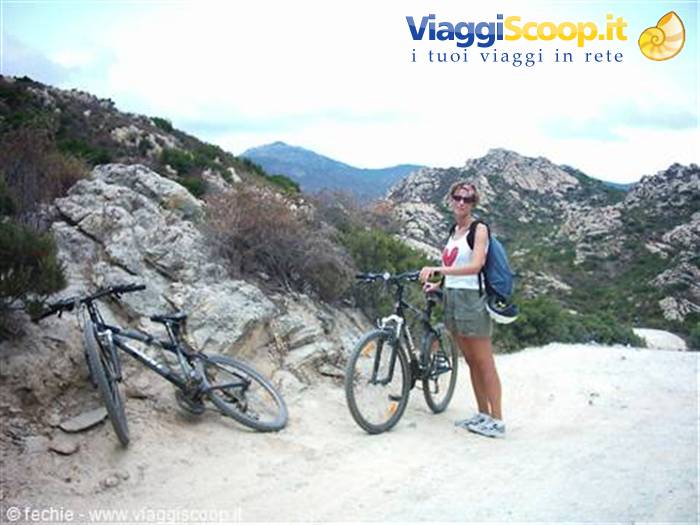
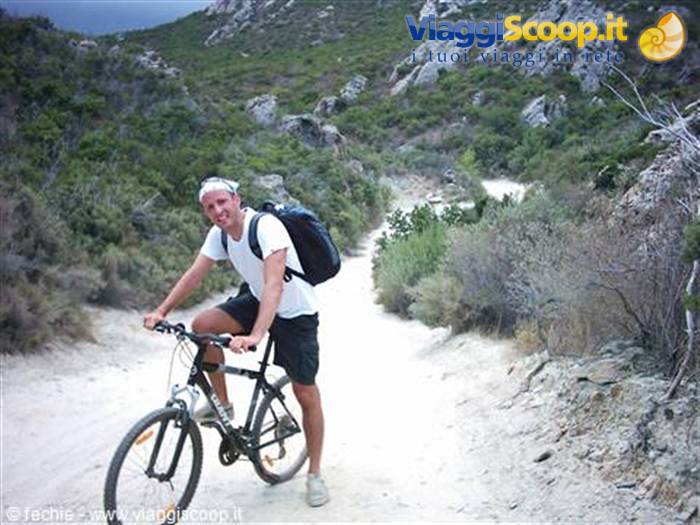
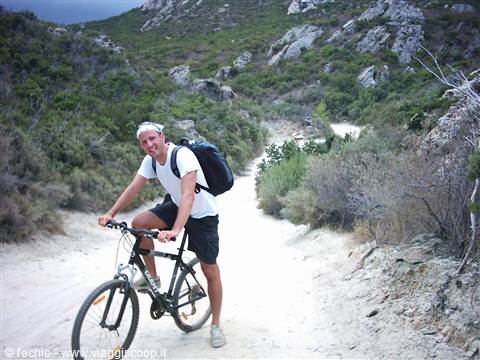
We arrive in St Florent in the afternoon. We'll stay here two nights, because we'll devote a whole day to riding the trails of the desert des Agriates by mountain bike (bikes are rented everywhere). The hotel is La Dolce Notte, just outside the center. It's really nice and the rooms all have sea views and a terrace that is literally half a meter from the water! That's why breakfast is served only in the room! Truly recommendable. It costs 130 euros per night. By car we do a few rounds and also go to the tourist office to decide which of the many Agriates trails to ride by bike the next day. In the end we decide on a 24 km round-trip trail that starts from the hamlet of Casta (8 km west of St Florent) and leads to the beach of Saleccia. We book the mountain bikes at the Relais de Saleccia, right at the start of the trail.
After a swim and some sunset sun, and after a quick shower, we take a walk in the center of St. Florent (really nice and full of life) and have dinner at the port at La Gaffe.
In mountain bike in the Agriates
Day 38 Aug 2006
St Florent (desert des Agriates)
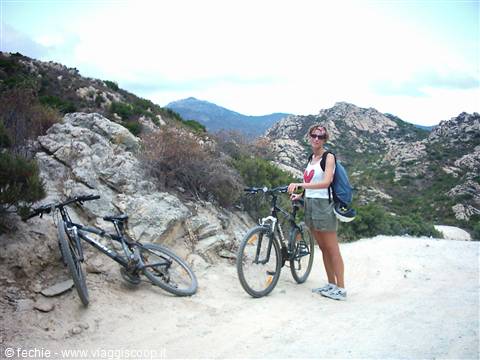
Early in the morning we set off for Casta, where we park the car and pick up the bikes. Our backpacks are well stocked with water and provisions! Luckily it's cloudy, so it's not too hot to tackle the adventure by mountain bike. The outward leg presents no difficulty because it's all downhill. In an hour and a quarter we cover the twelve km that separate us from the beach of Saleccia, immersed in a wild and fascinating landscape. Everywhere Mediterranean scrub with the air invaded by the scents of summer. Of course, seeing the descent we've just ridden, we're rather worried about the return! Anyway, we arrive at the beach satisfied (beautiful, surrounded by the sea and by a salt marsh that is a nature reserve) and we stay until it becomes too crowded (it can in fact also be reached by off-road vehicles).
The return is really tiring, and I strongly advise anyone who isn't at least a little trained not to try it, especially if it's hot. We, who have good stamina, take just under two hours and consume, for the return alone, more than a liter of water each. Luckily, I repeat, it's cloudy and not at all hot. We arrive at the end exhausted but truly happy to have made it and to have had a fun experience! We rest for an hour at the hotel and have dinner again at the port, at the pleasant Petit Caporal, cheaper than La Gaffe (55 euros versus 80). Recommendable. Early to bed.
The gulf of Girolata from the Palmarella pass
Day 49 Aug 2006
From St. Florent to Porto (170 km covered)
We get up early because today the longest leg of the trip awaits us, from St. Florent to Porto, along the road that crosses first the Balagna and then part of the Corsica regional park. The first stop is Ile Rousse, a city more than a village. Beyond the historic center it isn't particularly interesting, so we prefer to continue toward Calvi. We decide, however, not to follow the coastal road, but to detour inland. We want to visit some of the villages perched on the mountains of the Balagna. And so we visit Pigna, Calenzana and St Antonino (described as one of the most beautiful villages in all of France). We reach Algajola, on the coast before Calvi, around two. We choose a deserted little cove (rocks) along the railway, just past the tourist office (the beach at Algajola is too crowded). We take a nice swim, eat our packed lunch and soak up some sun.
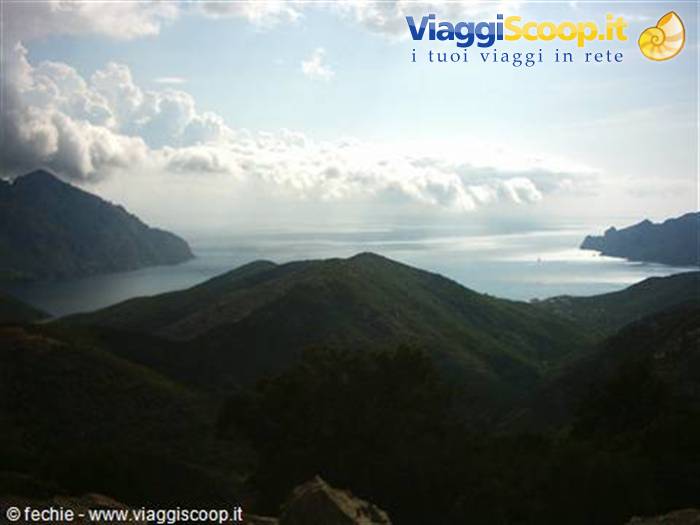
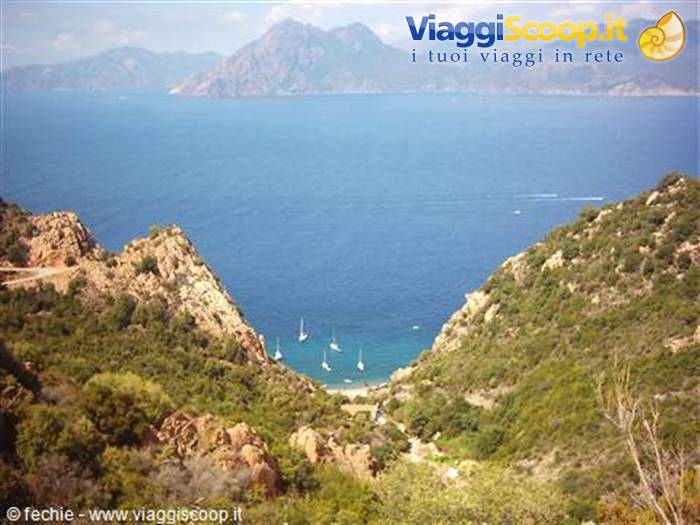
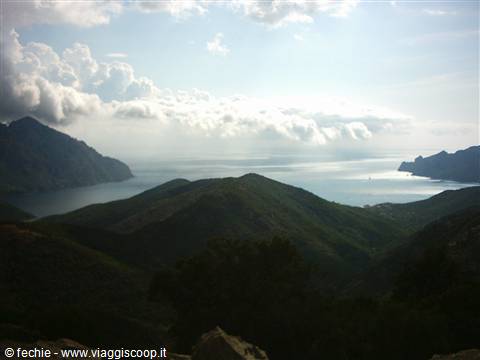
We arrive in Calvi in the early afternoon. The city, which revolves around the marina, is really lovely, full of little alleys with small shops that immediately catch Dany's attention. We visit the citadel, truly imposing. A cool wind makes our walks less tiring. We set off again toward Porto. The roughly 50 km that remain are along a truly beautiful road. Shortly before Galeria the road leaves the coast to climb the valley of the Fango river then, as if by magic, after crossing the Palmarella pass, it looks out again over the gulf of Girolata and the Scandola reserve. We stop at the edge of the road right at the pass (we're not the only ones) and the view, from 500 meters up, is truly breathtaking. It's almost 5 in the afternoon and the sun begins to give the landscape a warm color.
From here a trekking route starts that in 2 hours leads to Girolata, a small village reachable only on foot or by sea. We continue toward Porto. The road becomes more and more sheer, luckily there's construction work going on that is widening the roadway. The color of the rocks gradually turns reddish as if heralding the approach of the Calanques, a stretch of coast between Porto and Piana declared a natural site protected by UNESCO. We arrive in Porto around 7. We settle into the hotel (Les Flots Bleu, nice, with new rooms and a view of the sea and the Genoese watchtower) and we still have time for a quick tour of the village, visiting the Genoese tower that dominates the bay and has been well restored. It's sunset and the view is exceptional. After a shower we have dinner at the restaurant La Mer, expensive (90 euros) and not particularly good, but on the plus side right on the sea.
A concert in the nearby central square keeps us company.
Les Calanques (Piana)
Day 510 Aug 2006
From Porto to Cargese (70 km covered)
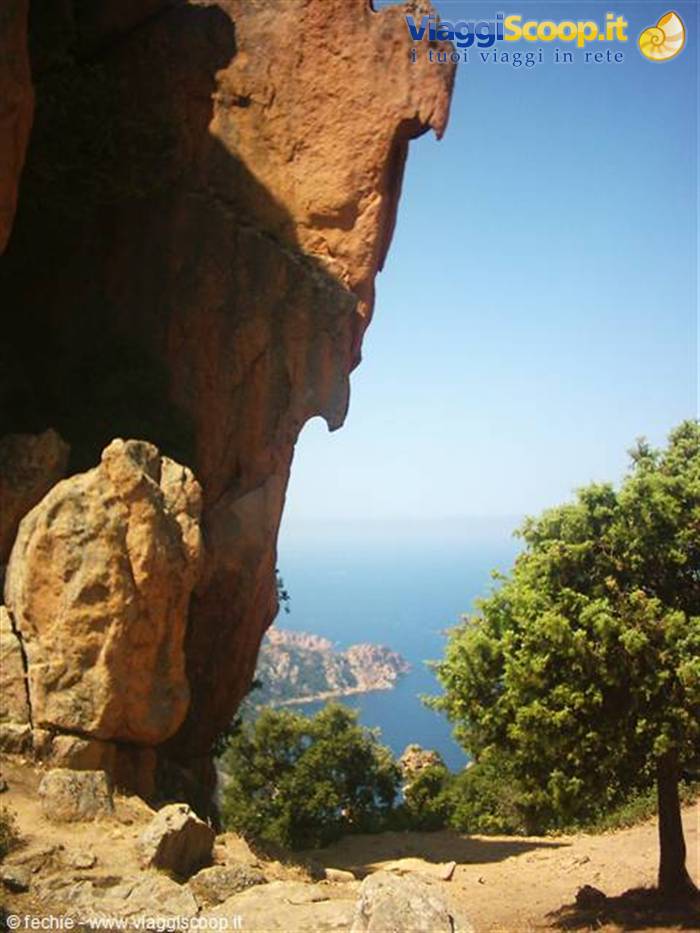
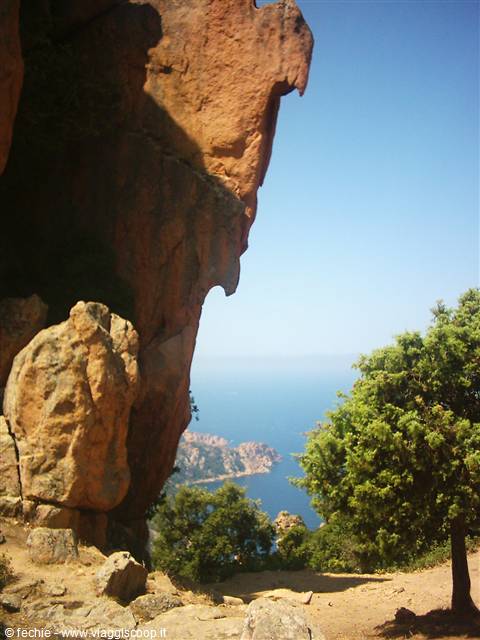
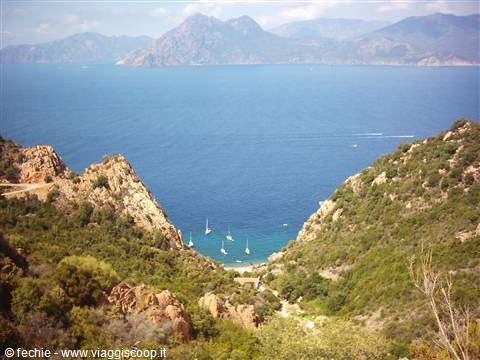
We spend a couple of hours relaxing on the enormous (and deserted given the time, it's 9) beach of Porto. Then, in a few minutes by road we reach the famous Calanques, just before the small village of Piana. We park as best we can (there are no parking lots, but people stop everywhere) and we take the "Testa di Cane" walk which in half an hour leads into the middle of this spectacle of nature. Truly a photogenic place! Red rocks sheer above the blue sea. 400 meters below the sea is invaded by boats of every kind. I imagine how beautiful this place must be seen from the sea. The next stop is the beach of Marina di Ficajola. You reach it by taking a detour from Piana. The road is extremely narrow! The little cove is delightful, though a bit crowded, but we move aside, preferring the nearby rocks to the sand.
Just the time for a swim and a packed lunch and then we set off again toward the beach of Arone a little south of Capu Rossu. Here we stop a bit longer and even doze off in the sun. We arrive in Cargese in the afternoon. The small village is nothing special, there are two churches (one celebrates the Orthodox rite). The hotel (Les Saint Jean) isn't great, but it's clean and cheap (75 euros). We do a quick shop at the Spar and then stretch out on the beach until sunset. We have dinner at the restaurant with the same name as the hotel. It will be the best dinner of the trip and at an affordable price (50 euros eating Corsican dishes and fish). Truly recommendable.
Marina di Ficajiola
Day 611 Aug 2006
From Cargese to Porto Pollo (150 km covered)
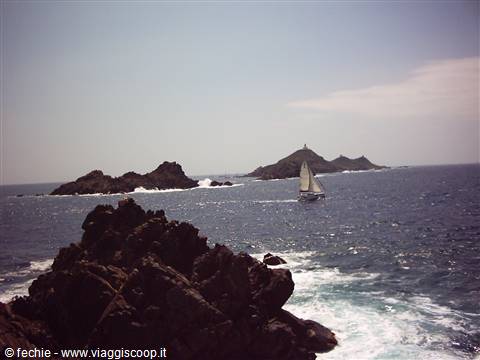
The first stop is another beach, that of Liamone, a little south of Sagone. In the morning it's beautiful, deserted and swept by the wind that stirs the sea. We continue toward the Gulf of Lava where another beach of fine white sand awaits us. We arrive in Ajaccio around midday. First we visit "Point de la Parata" that is the tip of the promontory west of the city, dominated by the ever-present Genoese tower and with a view of the famous Sanguinarie Islands, sanctuary of numerous species of migratory birds. On the way back we visit Ajaccio, Napoleon's birthplace. The obligatory stops are the Maison Bonaparte and the church where Napoleon was baptized, a walk through the streets of the center and a visit to the Fesch Museum.
A quick visit to the rooms allows us to see some works by Italian artists such as Titian, Botticelli, Veronese etc… With the same ticket we also visit the chapel where the remains of the members of the Bonaparte family are kept (Napoleon excluded, naturally, who rests at Les Invalides, Paris). Ajaccio really deserves a stop. It's a cheerful and cosmopolitan city, full of interesting places. We set off again toward Porto Pollo, detouring from the main road to visit the small village of Coti Chiavari preceded by the ruins of a prison abandoned in the early 1900s. We arrive at our destination in the late afternoon. The hotel is Les Eucaliptus, nice (we, who booked only one night, get one of the few rooms not yet renovated. They're comfortable anyway and cost less than the others. We spend 75 euros).
We have dinner at Les Pirates, a place that at first sight doesn't inspire much confidence, but then the cooking turns out to be quite respectable (excellent the warm goat cheese with honey). We spend about 55 euros.
Filitosa
Day 712 Aug 2006
From Porto Pollo to Tizzano (100 km covered)
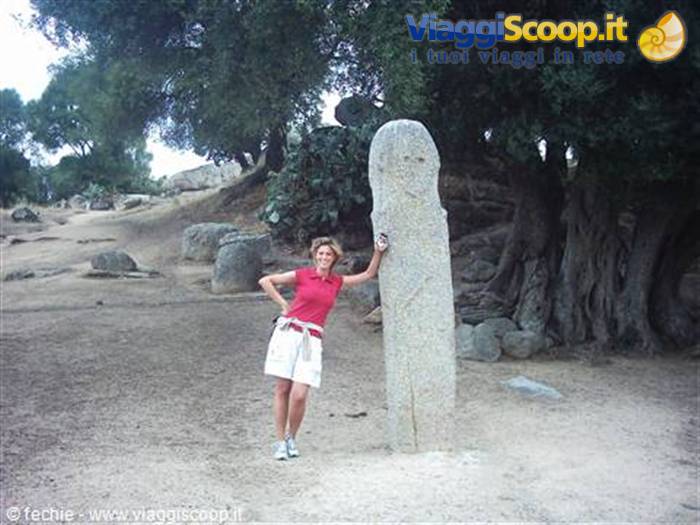
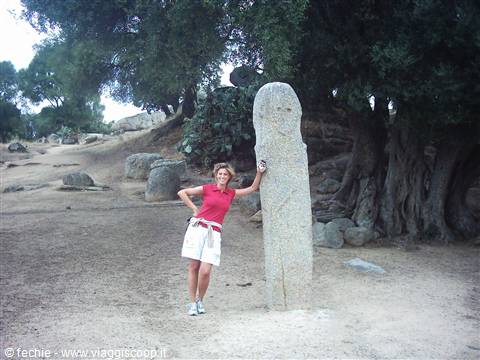
The day isn't very beautiful. Better, given that today we'll do little sea and many visits. The first stop is at the prehistoric site of Filitosa, the most famous in Corsica. The visit is very interesting, all among Dolmens and Menhirs. The setting is truly evocative. Moreover the somewhat gray, cool and windy climate gives it something mysterious. We continue toward Sartene, the most Corsican of Corsican towns. The small village, a maze of narrow alleys, is perched on a spur and to reach the historic center you go up a very steep staircase. We take the opportunity to buy some honey and jams. Sartene is beautiful, it really deserves a stop. We continue toward the tiny village of Fozzano, the place that gave birth to Colomba, the famous Corsican heroine. The place is deserted, decidedly off the tourist itineraries. But it allows us to perceive how quiet the island must be out of season.
Go there only if you have an extra hour to spare. We have a packed lunch on the road in the company of a group of cows curious about my Figatello sandwich. We continue south and stop to visit the small village of Campomoro dominated by a splendid Genoese tower from which you enjoy a beautiful view of the whole promontory. A few kilometers before Tizzano we stop at the prehistoric site of Palagghiu. Here, walking on the uneven ground I lose my balance, fall and scrape my elbow and leg. Nothing serious, I put on a couple of band-aids and we continue. We arrive in Tizzano just in time to settle into the hotel (Hotel du Golfe, great setting, overlooking the sea, even more than in St Florent). After a shower we have dinner at Chez Antoine, a very nice outdoor place with a terrace. It's windy and a bit chilly, but the dinner, again based on Corsican dishes and fish, is excellent.
We spend less than 60 euros.
Palagghiu
Day 813 Aug 2006
From Tizzano to Bonifacio (100 km covered)
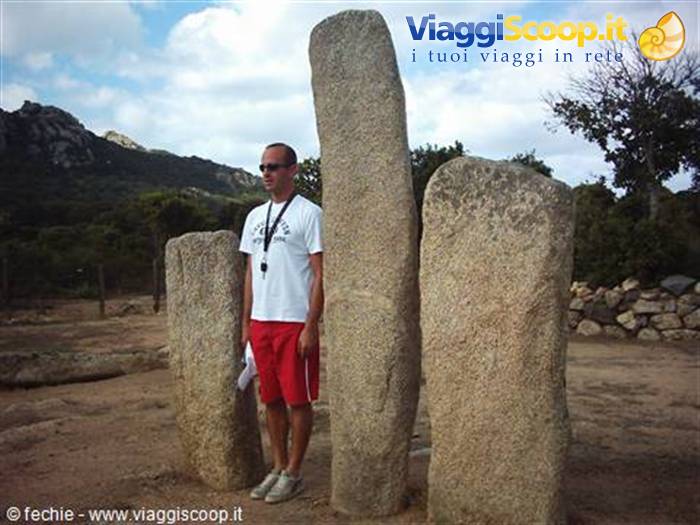
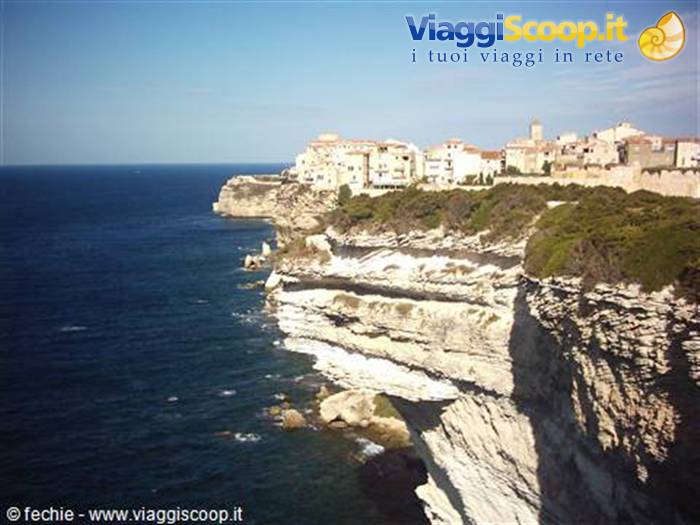
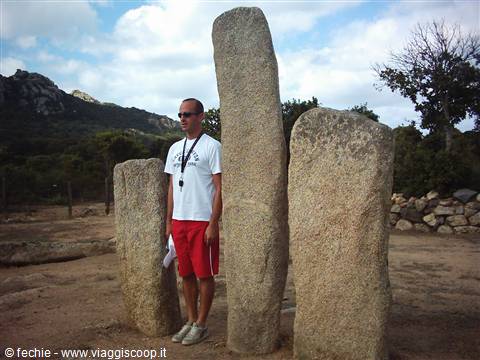
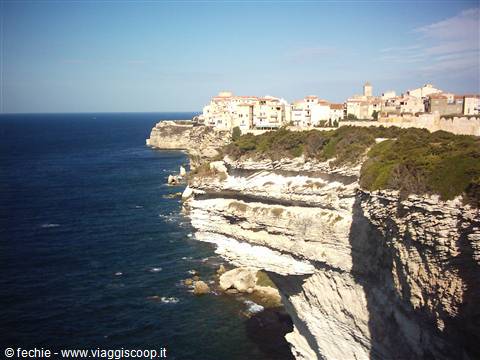
The first stop is the archaeological site of Cauria which includes the Menhir alignments of Stantari and Rinaiu as well as the famous Dolmen of Fontanaccia. We do the entire route (free) absolutely alone. Stunning. We then stop for a packed lunch at the beach of Punta di Roccapina in front of the famous rock shaped like a Lion. The dirt road is rather rough, but our C3 doesn't suffer particularly. We arrive in Bonifacio in the early afternoon. We settle into the hotel (Hotel Le Caravelle, the most expensive of the trip, at 170 euros, but truly welcoming). First of all for 20 euros we take a boat that in an hour shows us Bonifacio in all its magnificence: from the sea. It's truly impressive to see where the houses have been built.
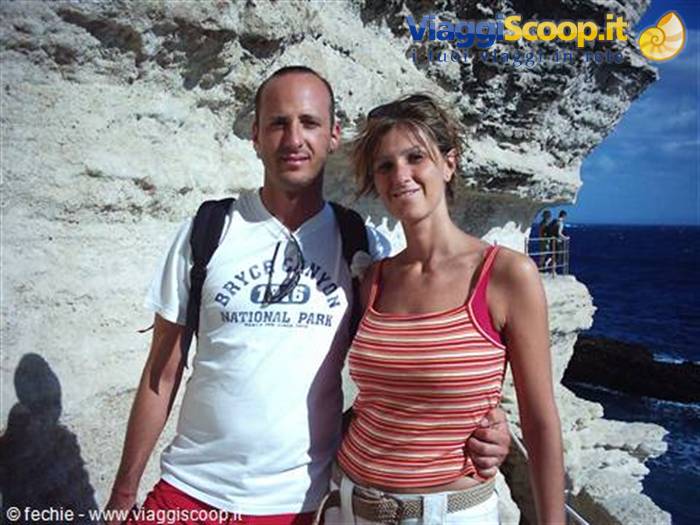
Everything seems so precarious! The ever-angry sea and the proverbial wind of the Straits crumble the limestone cliffs as evidence of the fact that this city will not be eternal! Back on land we go up to the old town and lose ourselves in the endless little alleys and on the viewpoints sheer above the cliffs that make Bonifacio a unique place. We go down along the "Scala dei Turchi" a very steep staircase that in 200 steps carved into the cliff leads from 150 meters almost to sea level (all things considered each step is about half a meter high!). We have dinner at U Campanilu. We eat reasonably and spend less than 70 euros (good the mule a la mariniers), quite fair considering that Bonifacio is the most expensive place in Corsica.
Bonifacio
Day 914 Aug 2006
From Bonifacio to Pinareddu (90 km covered)
We dedicate the morning to the wonderful walk that starts from the hill of Saint Roch and leads to Capo Pertusato, the southernmost point of Corsica (a few miles away Sardinia is clearly visible). The path follows the edge of the cliffs and is the most evocative point from which to photograph Bonifacio. Back at the hotel we pay the very steep bill and leave. This time heading north, along the east coast. The obligatory stops are the famous beaches that dot the coast between Bonifacio and Porto Vecchio. We stop at that of Rondinara, very crowded: if you happen to be there in August, I recommend reaching the extreme northern tip of the beach (on the left, looking at the sea) which, being relatively difficult to reach (10 minutes on foot), is almost deserted.
The effect is managing to enjoy the beach and the wonderful sea without the racket of families with very noisy children in tow! In the afternoon we arrive in Porto Vecchio. Unfortunately we have no time to dedicate to the small village and we get an idea of the place by driving around it. Really nice, too bad we can't stop! On the plus side we grab a spot at the beach of Palombaggia, also crowded, but very beautiful, immersed in a forest of maritime pines. We reach Pinareddu in the evening. We stay at the Hotel U Paesolu. Here we're forced to have dinner at the hotel because the rooms in August are rented only with half board. The hotel isn't bad, but the restaurant is truly sad! We spend, with half board, about 200 euros.
Bonifacio
Day 1015 Aug 2006
From Pinareddu to Corte (120 km covered)
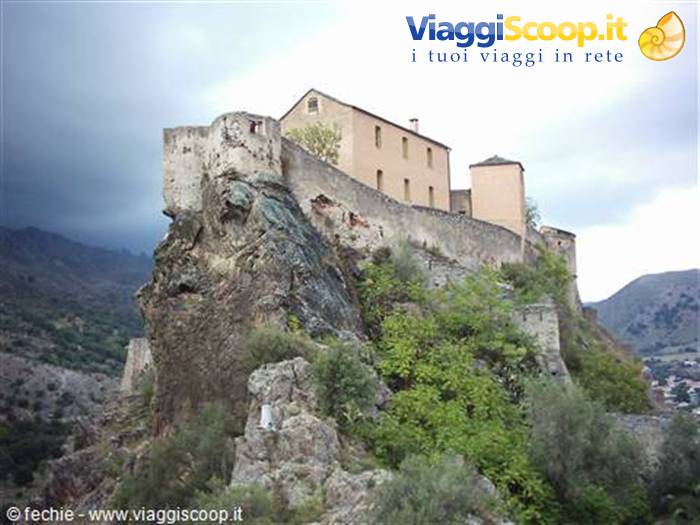
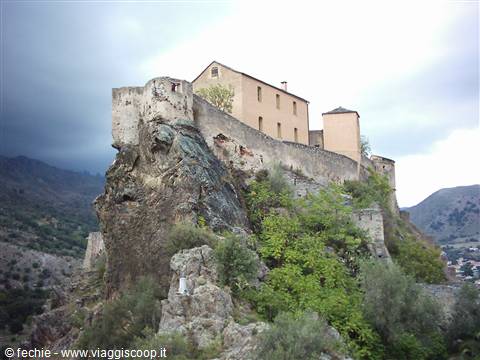
We dedicate the morning to the long beach of Pinareddu. The sea is wonderful. We then go back up north. The coast from Pinareddu to Bastia is a long strip of sand interspersed with ponds and villages. Decidedly less picturesque than the west coast, but certainly more suitable for families with offspring in tow. We stop at Ghisonaggia for another swim, but then, as was our intention, since the coast isn't particularly beautiful, we decide to detour inland. We book by phone a hotel in Corte, the city located in the geographic center of Corsica, surrounded by mountains. We reach it in no time. We settle in (hotel De La Paix, very clean and cheap). We dedicate the whole afternoon to visiting this city. The climate is rather cool and cloudy. Corte is the ideal starting point for trekking lovers, since it's in the middle of the mountains. And also the city is delightful.
Moreover, being the seat of the only university in Corsica, it's full of young people and pubs, so much so that before dinner we drink a beer in the square de Gauffry. We have dinner at U Museu (Corsican dishes at cheap prices. We spend 50 euros).
Corte
Day 1116 Aug 2006
From Corte to Bastia to Livorno. (140 km covered)
The ferry that will take us back to Italy leaves at 13:30, so we have time for an excursion in the Castagniccia region, northeast of Corte. Besides being an area full of chestnut trees (which is one of the symbols of Corsica), it's also an agricultural area of great charm. We pass through Morsaglia (birthplace of Pasquale Paoli), Piedicroce and finally we stop at Orezza from where the spring of the most famous (and expensive) Corsican mineral water flows. We take a look at the tiny plant, drink a sip of water directly from the spring and then in about 2 hours we arrive in Bastia. The ferry is on time and after 4 hours of sailing we dock in Livorno.


0 reader comments