The story
In the summer of 2003 we took on France by camper with my wife and children. For the rental of the vehicle we turned to an agency with branches in various parts of Europe (Barcelona, Rome, Paris) and the service/assistance it offers is excellent (Sea Rent of Orgeval). Having loaded the camper with provisions we headed straight for the northern main road in the direction of Rouen. On the way we passed through Giverny. Here Claude Monet lived, painting the famous water lilies and the little bridge of his "Japanese" garden. We are at the entrance to Normandy. Rouen is very beautiful, an absolute must-see. The Gothic Cathedral of Notre Dame has a long history and is also famous for the series of paintings Monet dedicated to it. Here Joan of Arc was imprisoned and executed on 30 May 1431, although the place where it happened remains very anonymous and doesn't arouse particular interest.
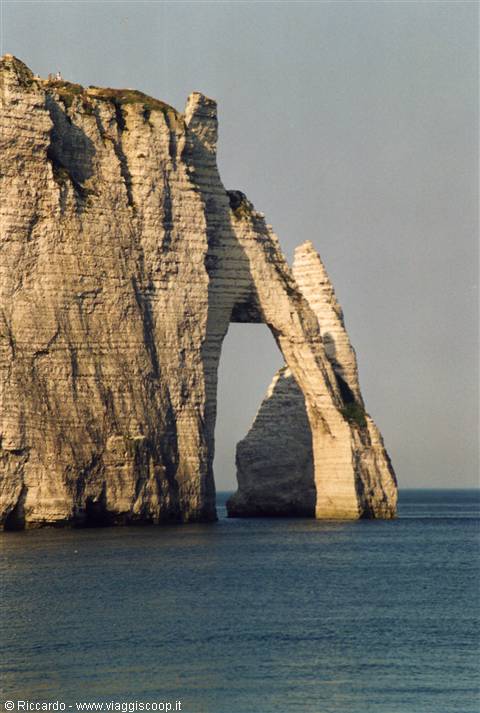
The Tour Jeanne d'Arc, the place of her imprisonment, is certainly more worthwhile. We take the road north (exclusively main roads) in the direction of Etretat. Between Rouen and Vernon the landscape is dominated by the Seine. At Etretat the landscape is breathtaking. The cliffs (broad cliffs on the Ocean) fill the eyes with the beauty of the Porte d'Aval and the Aiguille. The white pebble beach invites you to lie down for a moment and enjoy the natural spectacle. I must say we were very lucky with the weather and the day even allowed us a swim in the clear, icy waters of Etretat. There's a path that leads onto the Falaise d'Aval and offers a view from above. The village, even if a little touristy, is certainly worth a visit. We set off again following the northern coast of France.
At Le Havre we find the imposing Pont de Normandie, a full 2141 m long (be careful, there's a toll and it's a steep one). Close to the bridge there's a very beautiful little village on the coast, which I remember with great pleasure as we found it extremely beautiful with its lovely little harbour. I'm talking about Honfleur, painted many times by the Impressionists. If you travel by camper you'll find a large parking and service area in this little village. Our journey, still long, sees us make a detour inland to visit some of the most famous distilleries of Calvados, Cidre and Pommeau, the typical liqueurs of these parts. Among the most important, worthy of note, is Coeur de Lion, which besides being one of my favourite Calvados, offers a unique welcome.
A splendid complex of typical houses built of wood and thatch, original from the 16th and 17th centuries, where you can learn all about the making of Calvados. Tasting is a must. Nearby, on the RN177, we visited a typical Norman village, Pont l'Eveque. We carry on, criss-crossing this area, which offers landscapes typical of Normandy: between Caen and Lisieux there are typical chateaux: Chateau de St. Germain de Livet, Chateau de Crevecoeur-en-Auge and the Chateau de Canon at Mezidon. At Bayeux we find a beautiful Cathedral with the tapestry of Queen Matilda. Once the pleasant detour is over we find ourselves on the Atlantic coast on the famous D-Day beaches: Omaha Beach. Apart from a monument to the fallen and the symbolic value of the place, I don't think it's worth spending much time on the visit. We carry on along the coastal road towards the legendary Mont St.
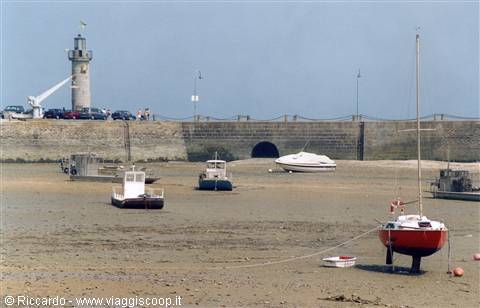
Michel, and for campers I recommend staying the night in the car park opposite, to enjoy the spectacle of the tide at sunset. Don't visit the town by day along with the crowd of tourists, but do it in the evening. The spectacle is certainly better. We leave Mont St. Michel and with it Normandy, to enter the territory of Brittany. We pass the beautiful beaches of Cancale and the lovely Ile du Guesclin, to arrive at the very famous St Malo. Its visitable fortifications are very characteristic, typical of a corsair city. The tide here can reach more than ten metres and seeing some boats resting on their side is a very frequent sight. The locals take advantage of low tide to go and gather seafood and then resell it to tourists.
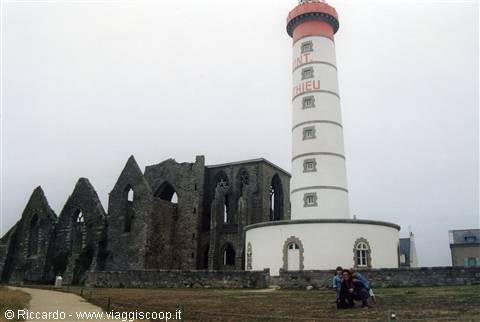
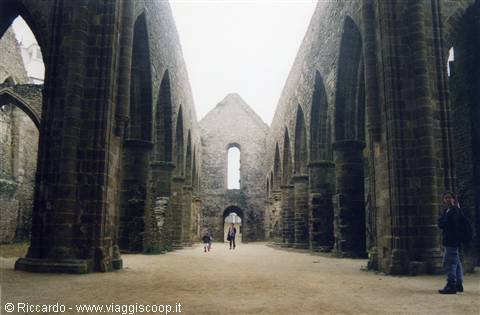
We keep following the road along the coast, passing through Dinan (a lovely medieval town) and Fougeres, with its castle and adjoining citadel, to arrive at Cap Frehel, a stunning cliff plunging into the sea. We carry on towards the far western tip of France. The weather has definitely changed compared with Normandy, but the big clouds and daily drizzle make the landscape even more characteristic. We arrive at Ploumanac'h, a coast of pink granite with the most incredible shapes created by nature, and the beautiful lighthouse. After stopping for supplies at Lampaul-Plouarzel, we head for the westernmost tip of France with the Pointe de Saint-Mathieu lighthouse. Beyond the lighthouse there's a beautiful ruined cathedral which, on the right day, makes the atmosphere truly surreal. We leave this beautiful part of France reluctantly to head south.
Locronan, a medieval village near Quimper, is worth visiting, as is the important port of Concarneau. We preferred to make a detour towards the Crozon peninsula rather than Quiberon, the latter being far more touristy. Camaret is a typical Breton town. Carnac with its 3,000 menhirs and dolmens, where you can visit the alignments of Menec, Kermario and Kerlescan. We leave the coast and head inland to visit Josselin. Along the way you absolutely must stop at the Calvary of Guehenno. Their story dates back to the 15th century, when on the menhirs, stone steles that symbolised eternity and had been erected by the Neolithic civilisations that first inhabited these areas, crosses were planted by the ecclesiastical authorities to prevent the pagan worship still practised at that time.
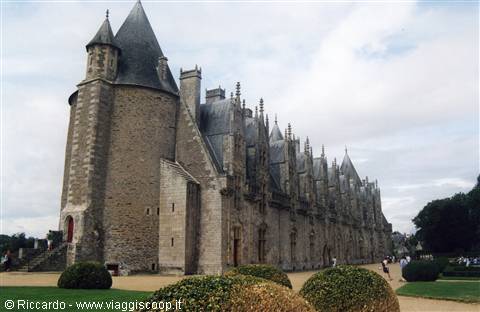
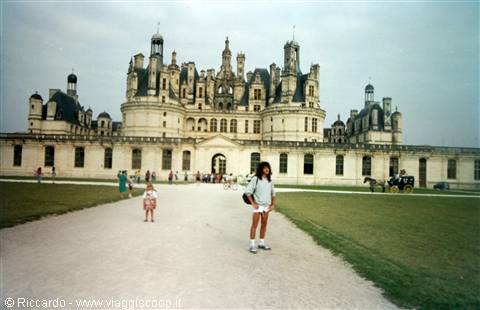
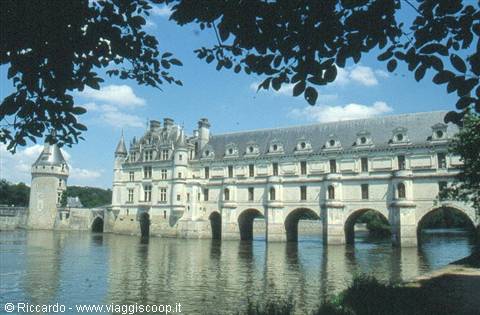
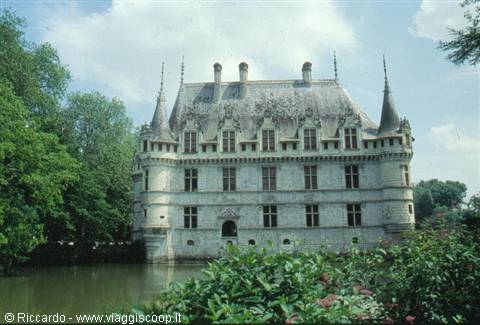
Subsequently the crosses became increasingly sophisticated, until they represented a sort of multi-layered "comic strip" of the life and passion of Christ. Josselin is a very beautiful village with a visitable 11th-century castle. We made the return to Paris passing through the Loire region, visiting the beautiful chateaux of Chambord (the "little" Versailles), Amboise, Chenonceau, Azay-le-Rideau, the medieval town of Bourges, Orleans, Blois and Tours.
The journey's photographs
16 photographs · click to open them full screen





1 reader comments
che bello un anno prima anche noi abbiamo fatto un viaggio simile ed è stato molto bello, comprendo il vostro entusiasmo...un buon augurio per mille di questi viaggi. un saluto esserevento