Day 118 May 2015
We were in Paris, we decided on this excursion
Following our usual habits, we set aside one day to visit a far-off attraction, and this time it was Rouen's turn, one of France's historic cities. We set off early in the morning from Gare St. Lazare and, after 80 minutes, get off at Gare Rive Droite (ticket 10 euros each way). The city's historic heritage is concentrated in the area between the station and the Seine. The city is known for the martyrdom of Joan of Arc, but it is also a city with a medieval art heritage among the greatest in France, though it was repeatedly devastated by wars right up to 1945, lying close to the areas of the Allied landings. We head down Rue Jeanne d'Arc, which crosses the whole historic district; indeed, all the historic monuments are found on the perpendicular streets.
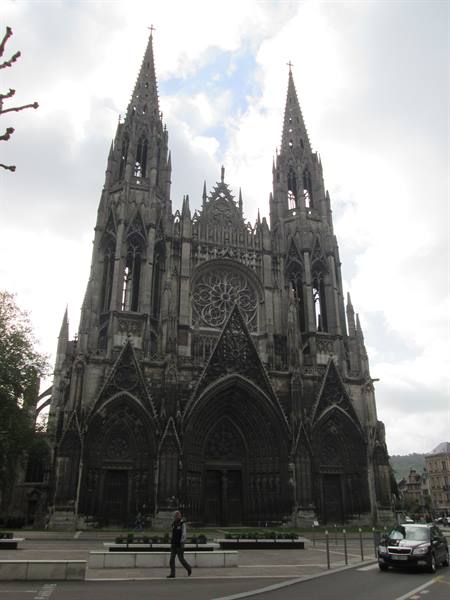
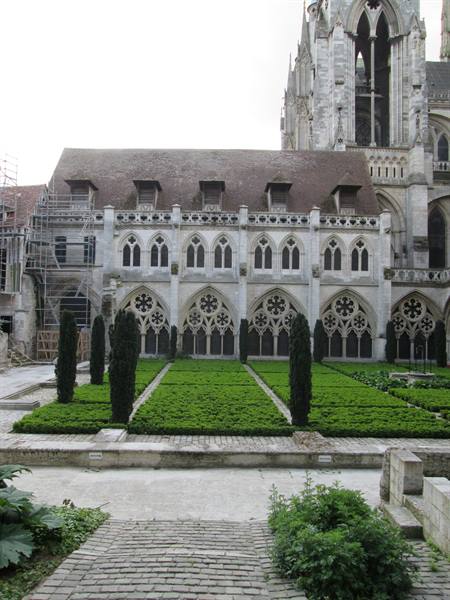
The first we come across is the Tour de Jeanne d'Arc, where the saint was tortured (1431); cylindrical in shape, it is what remains of a fortress and can be visited (1 euro), but we did not climb to the top because we did not feel up to tackling the narrow, steep staircase (123 steps). We then reach the Benedictine abbey of Saint-Ouen, built over 200 years between 1300 and 1500 in the Flamboyant Gothic style; the present facade is 19th-century, the stained-glass windows (about 80) date from the 14th century and were partly remade after the French Revolution; the church is one of the largest in France. We carry on to the church of Saint-Maclou, also in the Flaming Gothic style, which we only see from the outside as it is a closing day; the porch with its five carved arches is lovely all the same.
In the afternoon we visit Notre-Dame Cathedral: Gothic architecture with some Romanesque elements, the portals decorated with hundreds of sculptures telling stories from the Bible and the life of Christ are magnificent; we especially liked the tympanum of the portal with the sculptures of the Passion. Of the two towers, one, the Tour Saint-Romain, has a Romanesque base with the rest Gothic, while the other, the Tour du Beurre, is 15th-century. The interior has three rather narrow naves. The stained-glass windows with stories from the Old and New Testaments are exceptional; some are from the 13th century and the latest from the 16th century, almost a history of the art of stained glass. I recall that the great Impressionist painter Claude Monet painted a series of canvases to capture the effect of light on the cathedral portal at different times of day.
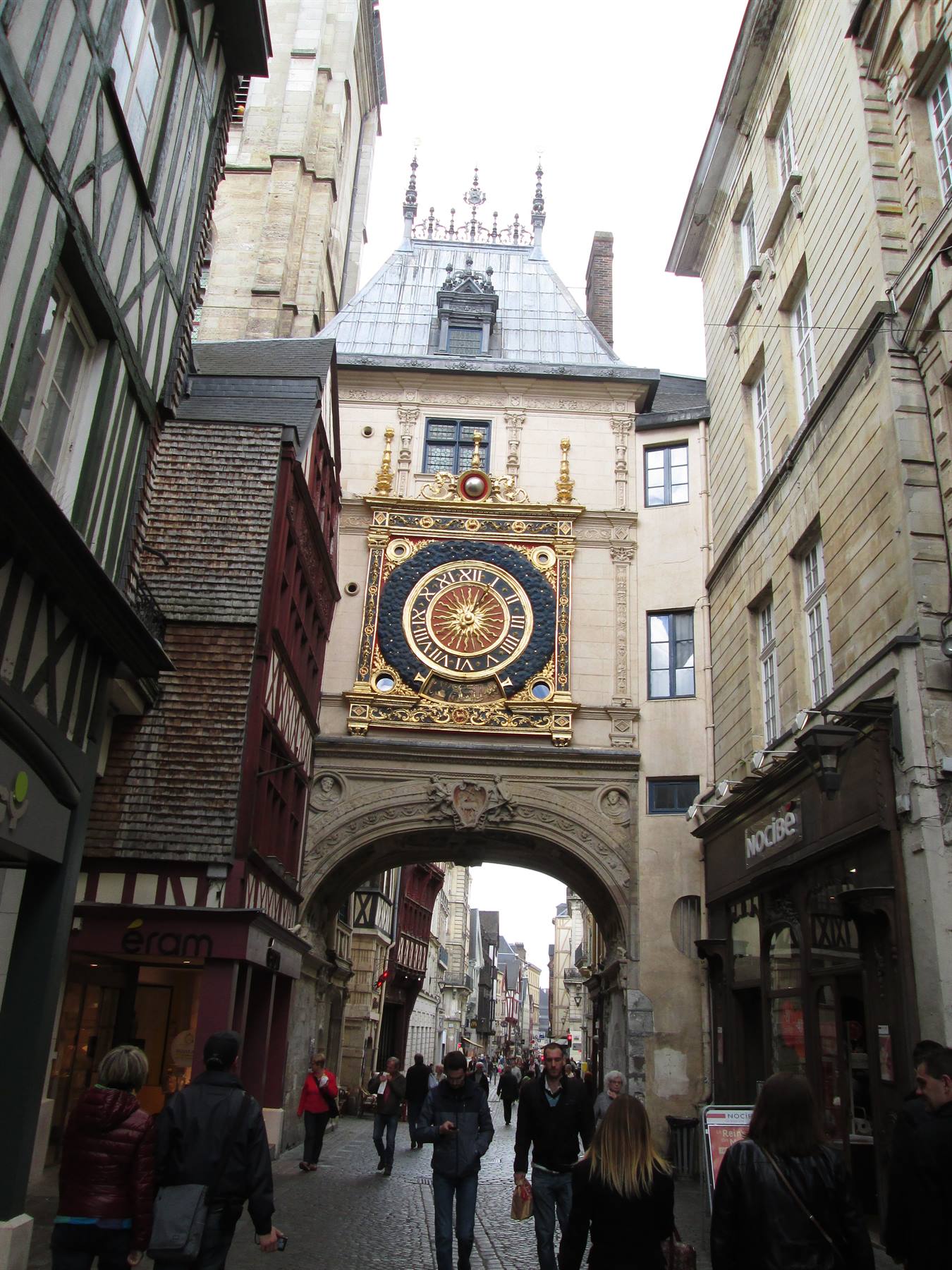
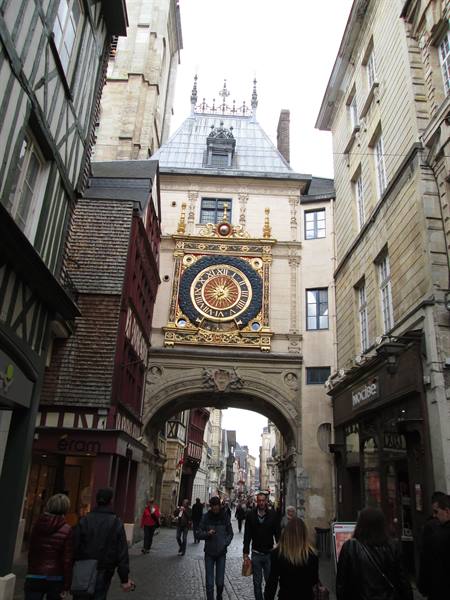
Then we turn onto Rue du Gros-Horloge, so named for the great 14th-century clock decorated with allegorical figures, set on a Renaissance-style arch over the street, with a tower beside it. In the area, starting from Rue Saint-Romain, are the famous half-timbered houses, though they are found almost everywhere in the old town; these are buildings with exposed wooden structures that look almost like decorative elements of the building. In New York I had seen cast-iron-framed houses; here the structure is timber, and I note that some of these buildings end in gables similar to those of Belgium and the Netherlands. We then reach Place du Vieux-Marché, the site of Joan of Arc's execution, where a tall crucifix marks the exact spot of the pyre.
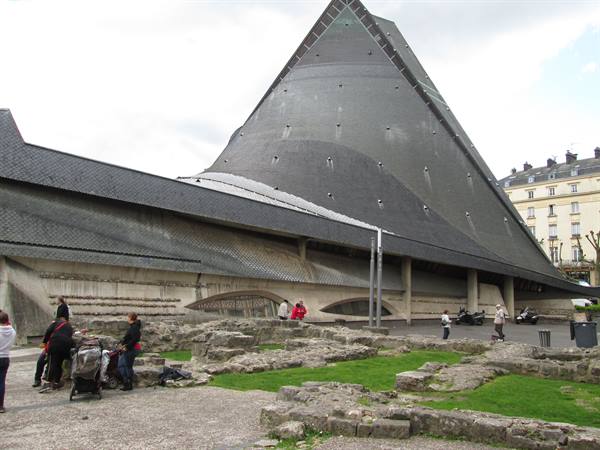
Beside it stands the modern church dedicated to the saint, a modern architecture shaped like an upturned ship, as you notice on visiting the interior with its wooden vault; the altar is small, and the Renaissance stained-glass windows are beautiful, saved from an old church destroyed by the 1944 bombings. Then a glance at the Seine, and back to Paris.
We were in Paris, we decided on this excursion
4 photographs · click to open them full screen
0 reader comments