Low-cost do-it-yourself trip organised on the web,
Day 17 May 2011
Arrival
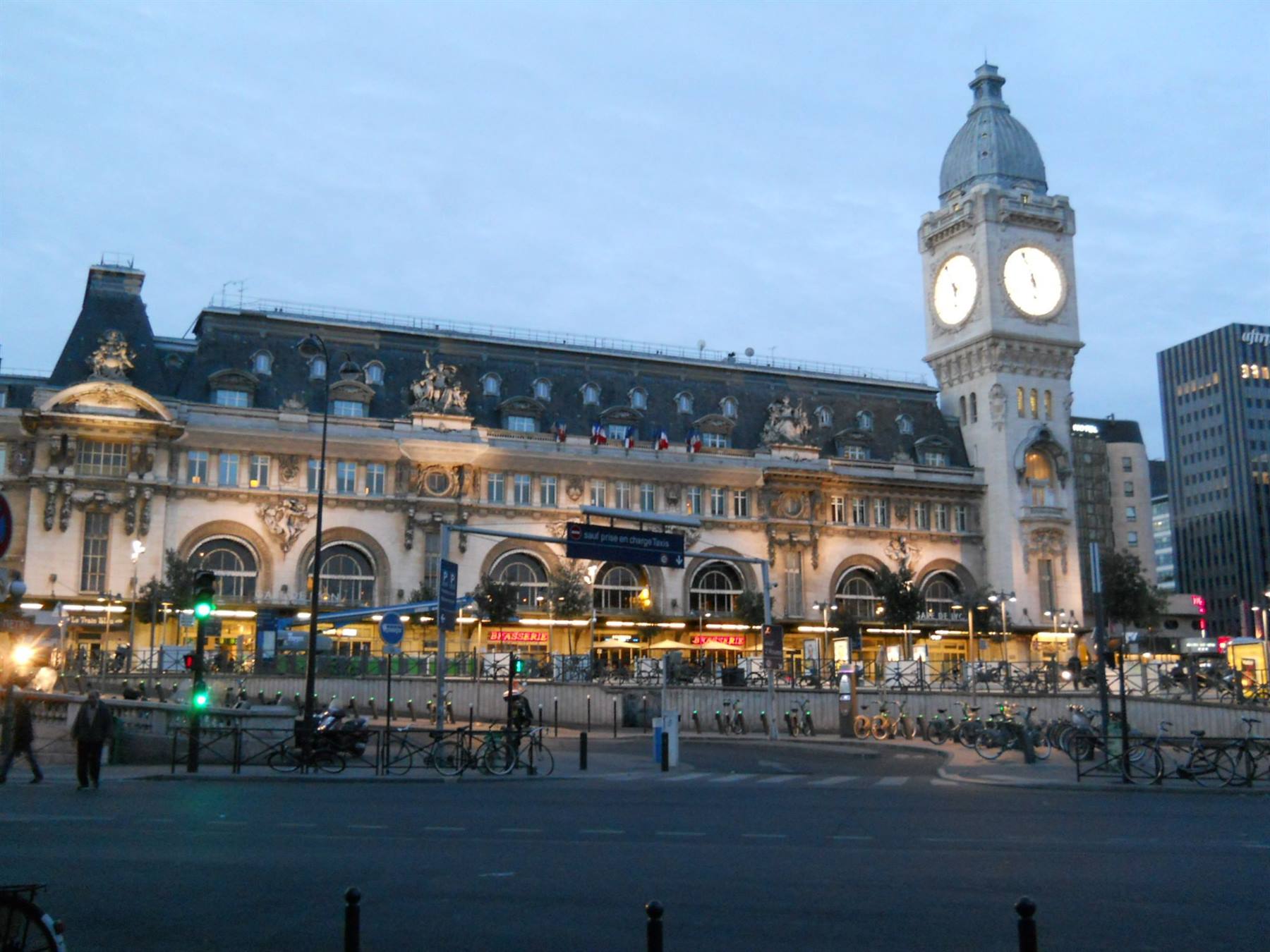
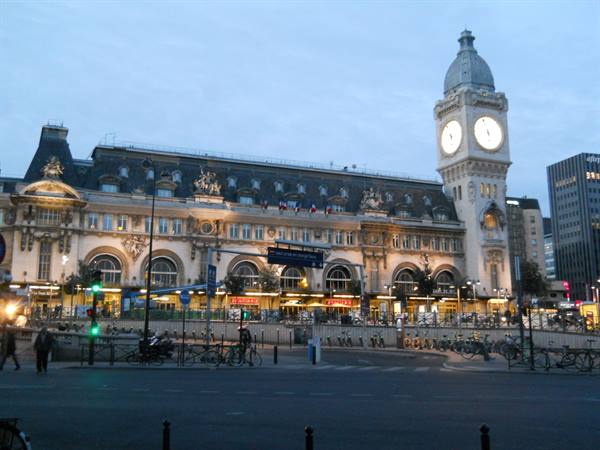
Trip organized via the web, reading many travel accounts and reviews on various sites. We leave from Turin Saturday May 7, 2011 with the 8 o'clock TGV (round trip cost for two 120 euros, booking in advance), we arrive at the Gare de Lyon around 2 pm, equipped with a photo we buy the Navigo decouverte card that will allow us to travel on all the city's transport from Monday to Sunday, taking into account that only for the metro the zones don't apply, we reach the Hotel Jules Cesar, about 400 meters away, they assign us room no. 11 on the courtyard side (quiet), quite spacious, full bathroom with shower and bidet. Free wifi, elevator, cost 80 euros per night, without breakfast.
Let me preface by saying it's not the first time I've visited Paris, this one is dedicated above all to deepening our knowledge of Gothic architecture, for this reason we've equipped ourselves with good binoculars that will allow us to see the stories contained in the stained-glass windows and the sculptures.
We start the tour, visiting the area near the hotel: Place de la Bastille, on one side the big and modern Opera theater, of the revolution nothing remains, then Place des Vosges (17th century), one of the most beautiful and elegant squares I have seen, square, symmetrical with 36 magnificent stone buildings all alike (9 per side) full of history, with magnificent pediments, a splendid sun highlights the reddish color of the buildings and the slate roofs, in the center of the square a large garden with a monumental fountain, crowded with kids lying on the grass, under the arcades, bars, crowded restaurants and shops, always the residence of VIPs of every era such as Cardinal Richelieu, Victor Hugo to name just a few. We go into rue saint-Antoine, the royal street where the personalities of the court arrived.
Near the Seine we see the Hotel de Sens (15th century), a building that despite the renovations preserves elements of medieval architecture even though it looks like a fairy castle. We rest at the edge of the Seine, crowded with people of all ages, on the river an almost continuous line of bateaux mouches packed full. We continue with the small island Saint Louis, by now an elegant residential district with elegant 19th-century buildings, we stop to have dinner at the restaurant – gelateria Pom. Cannelle, a simple place, we eat gratinated onion soup, mixed salad, ice cream and sorbet, satisfying cuisine, average prices. Sunday: La Défense, the futuristic and technological district of Paris with a great concentration of skyscrapers, not by chance the area is called "the forest of skyscrapers".
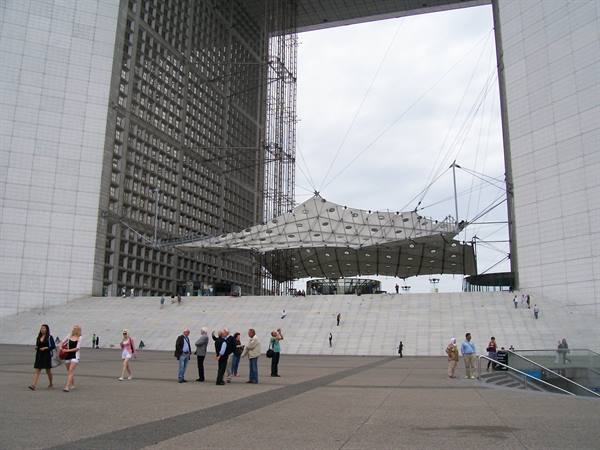
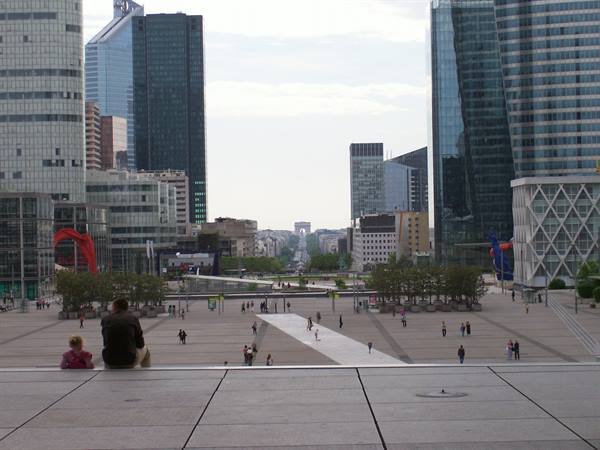
From the large square (the Esplanade) we go up the wide staircase of the Grand Arche, an enormous cube of white marble, glass and steel that measures more than 100 meters per side, empty inside, it's a modern triumphal arch with a sort of floating steel canopy, and despite the cloudy weather you can see the Arc de Triomphe (the famous one... of the Etoile). Then we get lost in Saint Germain de Près, one of the symbol districts of Paris, crowded streets, restaurants, bars, shops, visit to the abbey (6th century), several times destroyed and rebuilt, the exterior preserves some trace of the original appearance, its bell tower dominates the district, the central nave is from the 11th-12th centuries, it's the result of the 19th-century renovation, beautiful the historiated stained-glass windows, some are from the 13th century. Church of S.
Sulpice, a large Gothic church, with a beautiful neoclassical-style facade in two levels with colonnades, over time it has undergone radical transformations that make it seem almost Baroque, in the first chapel on the right frescoes by Delacroix, also beautiful is the elevated pulpit (18th century), it has an enormous organ, many are attracted by the "gnomon", a meridian line built in the 18th century by the Paris Astronomical Observatory, which moreover is partially covered by the chairs, I think the current interest is also due to the films of the Da Vinci Code series. Lunch at the Pizzeria Vesuvio, nothing special.
Then the Latin Quarter where we visit the Gothic church of S.Severin (13th century), like the others it has undergone considerable modifications over the years, beautiful are the ornaments of the vaults and the historiated stained-glass windows belonging to different eras, ranging from the Gothic style to the modern, the oldest illustrate the lives of the saints and biblical tales, the modern ones (from the 70s) the sacraments (if I hadn't read it on the sheet at the entrance I wouldn't have understood), also remarkable are the columns shaped like palms, not to be missed for those who want to see the evolution of historiated stained-glass windows over time. Dinner at the restaurant L'Epicerie in rue Montorgueil, a pedestrianized street, beside the church of St. Eustache, the restaurant with outdoor tables, we'll come back several times.
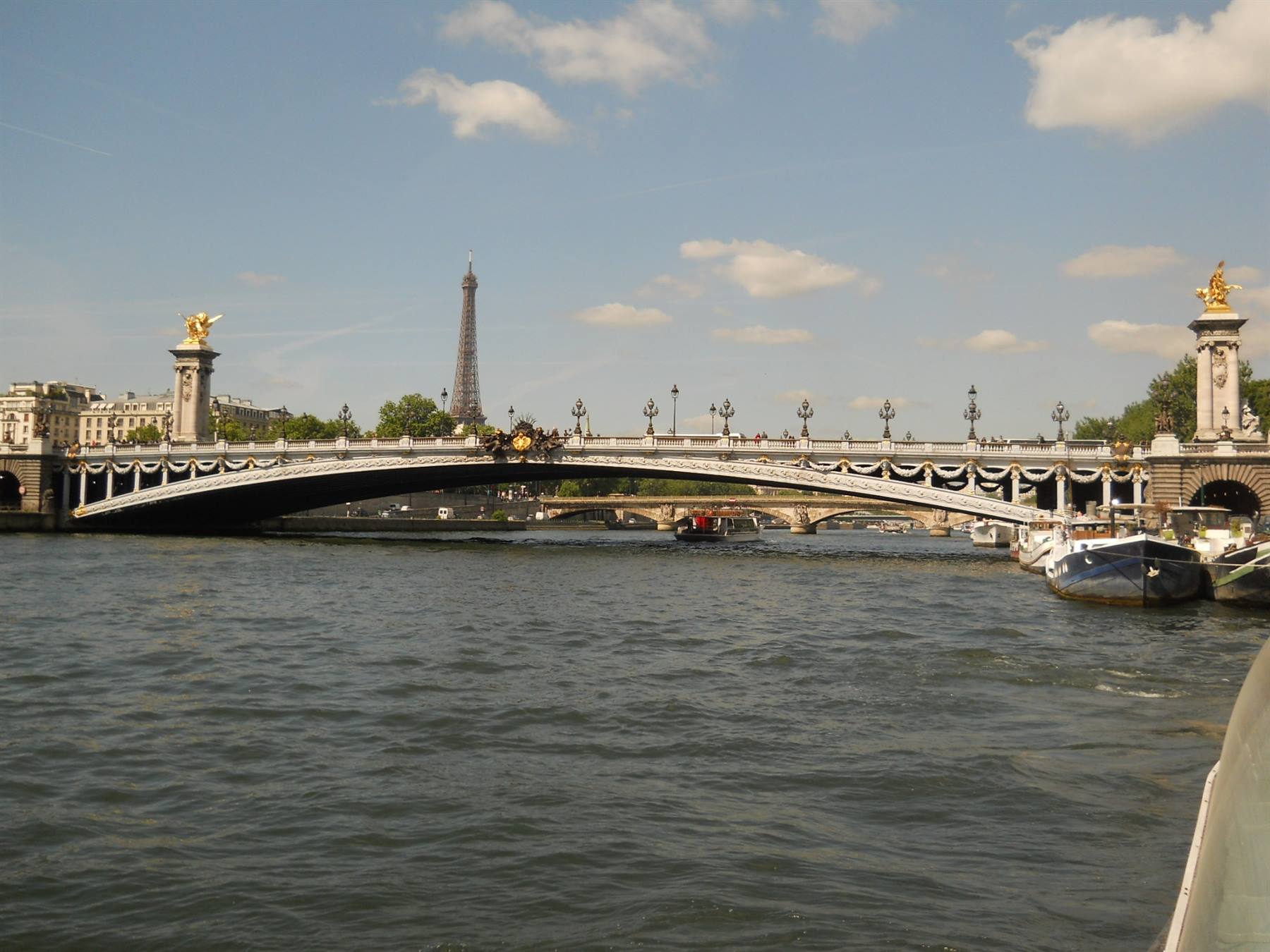
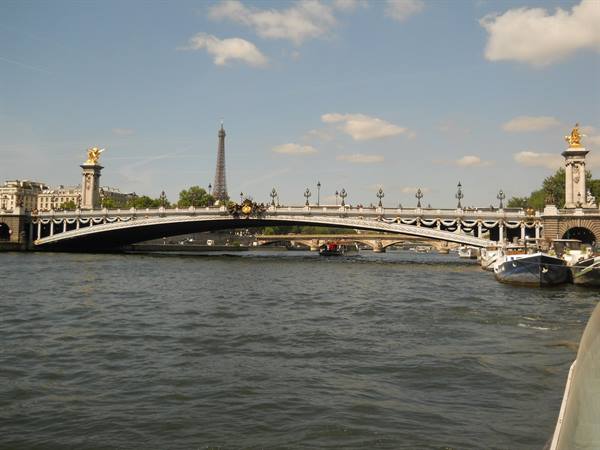
Panorama from the Seine
Day 29 May 2011
the visit continues
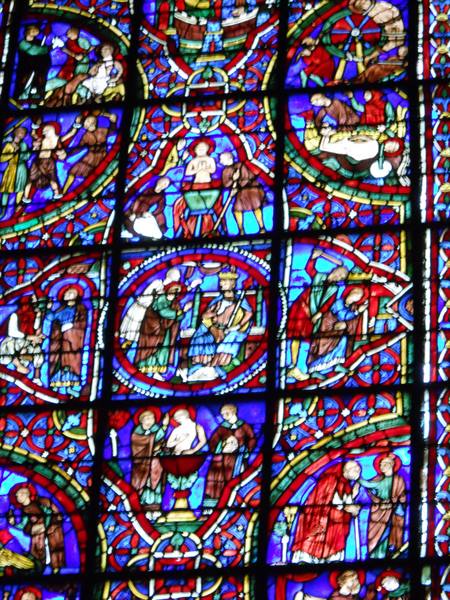
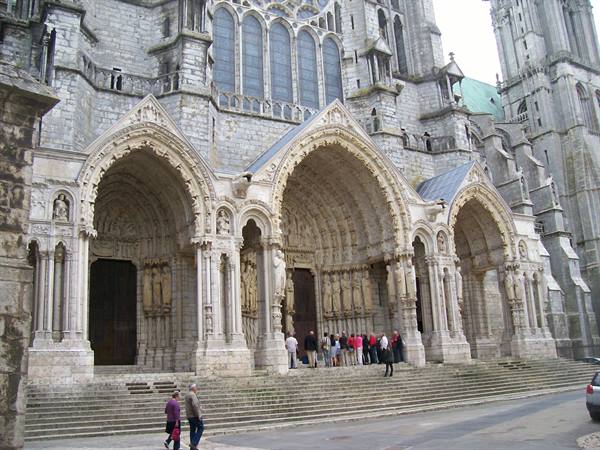
Monday: visit to Chartres, we leave from the gare de Montparnasse, we arrive in an hour (21 euros round trip each) The famous cathedral dominates the city, it's one of the greatest masterpieces of Gothic architecture, we immediately notice that the west facade is covered by a tarp for work in progress, fortunately the sculptures of the three portals are visible, they're not all original, but I believe it's the best-preserved Gothic cathedral. Often binoculars aren't enough, to distinguish the sculptures, and the stories contained in the stained-glass windows, I recall that cathedrals were defined "books of glass and stone" that illustrate stories of the Bible and the New Testament.
The cathedral appears rather dark, but this wasn't the impression at the time of construction, in fact, people were used to the light of lanterns or candles, consequently the concept of an illuminated place was different, moreover the architecture of Gothic cathedrals is based on the Platonic concept that God is light, and this is the reason for the large historiated stained-glass windows that let the sunlight pass through. It's quite evident that at the Sainte Chapelle or at Notre Dame, which are also illuminated by electric light, one doesn't think about this fact, one must also consider that the sculptures of the cathedrals were colored, now they're gray. Hidden among the chairs we see stretches of the famous Labyrinth, an original spiral penitential path on the floor, which was probably done on one's knees.
It should be noted that the cathedral (and not only this one) has often been frequented for the esoteric symbolism and for the alchemical meanings that some have attributed to certain sculptures and stained-glass windows. We take the opportunity to do a complete tour of the exterior, being the only cathedral of the Ile de France where you can do a complete tour, we remain astonished by the system of architraves and buttresses that support the cathedral. Tuesday: La Sainte Chapelle, the Promenade Plantée and Branly Museum La Sainte Chapelle (13th century) built as a chapel connected to the royal palace, is practically incorporated into the courthouse.
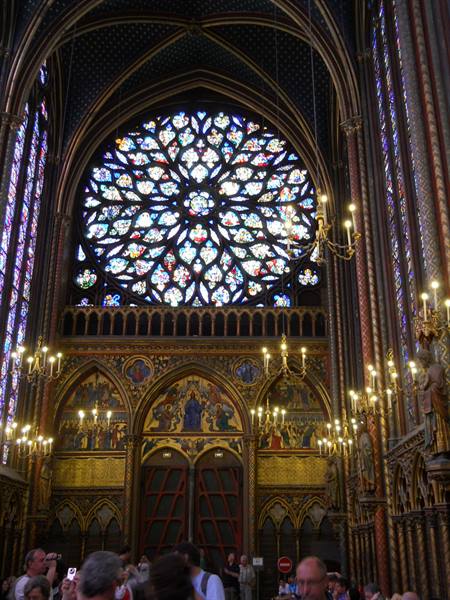
It's composed of two chapels, the lower one reserved for the palace staff, the upper one for the royal family which kept the relics, inside the red and blue colors dominate (symbol of France), not original, but the result of the 19th-century renovation, the vault is also decorated with stars, the upper chapel is fantastic, around us magnificent historiated stained-glass windows (about 600 sqm) from stories of the Bible and New Testament, they are about 60% original, I think it's the place where stained-glass windows are seen best, not to be missed.
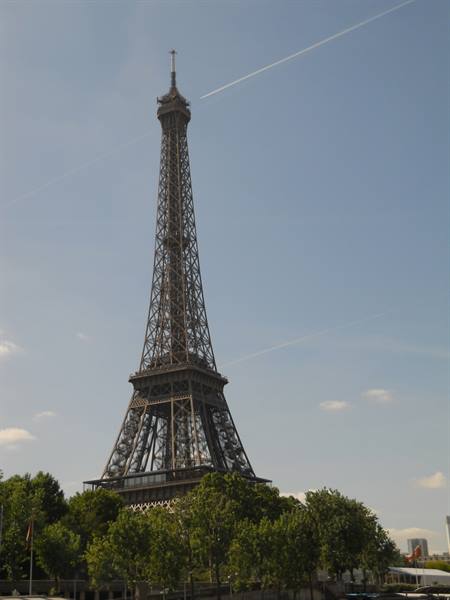
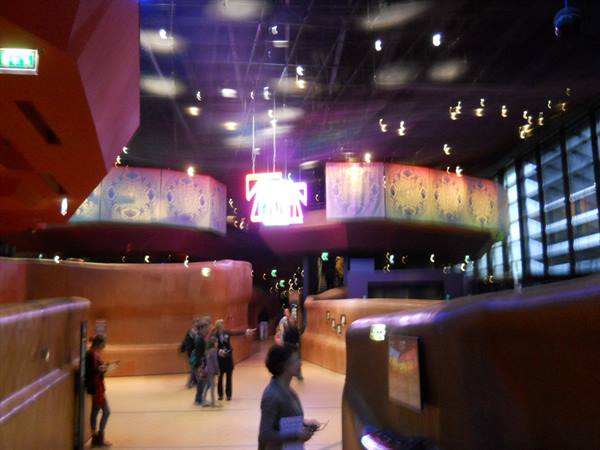
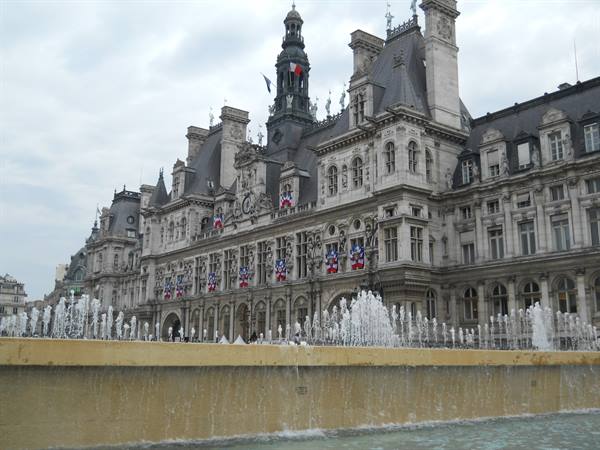
Then to the Musée du Quai Branly, located in the Tour Eiffel area and at the edge of the Seine, in an architecturally very modern building, it contains an enormous collection of objects of civilizations belonging to the four continents, exceptionally displayed, among other things on the screens images and sounds are broadcast, you walk among evocative corridors, bridge structures, with along the sides display cases with objects, paintings, in an absolutely original structure with a botanical garden on the outside too. Then lunch with Rita (who had gone to the Promenade Plantée) at the Bazar of the Hotel de Ville, which on the 5th floor has a large self service at moderate prices, in a large panoramic room, we'll come here almost every day.
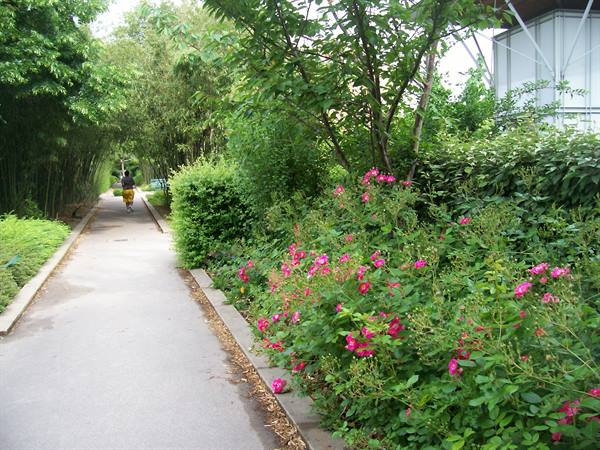
Rita tells me that the Promenade Plantée: it's a splendid green area obtained from the transformation of a disused railway, a green path among flowers, gardens, sculptures, that begins not far from the gare de Lyon, about 5 kilometers long, frequented by those who jog, school groups of children who draw on the benches, it's hard to think that this place is in the city center, the walk rests on the Viaduc des Arts very frequented by tourists for the artisanal workshops. We then go to visit two temporary exhibitions in the nearby Hotel de Ville, one about the Commune where photographs of the uprising are exhibited, the other relative to Paris in the time of the Impressionists, with works coming from the Musée d'Orsay (under renovation), very interesting, free entry.
We then go to the Jardin des Tuileries, a large garden in the very center of the city, located between the Louvre and the Concorde, there are many chairs and deckchairs available, pools where kids sail their remote-controlled boats, many decorative statues. In the evening dinner in the Beaubourg area and tour of the district, beautiful the illuminated Beaubourg.
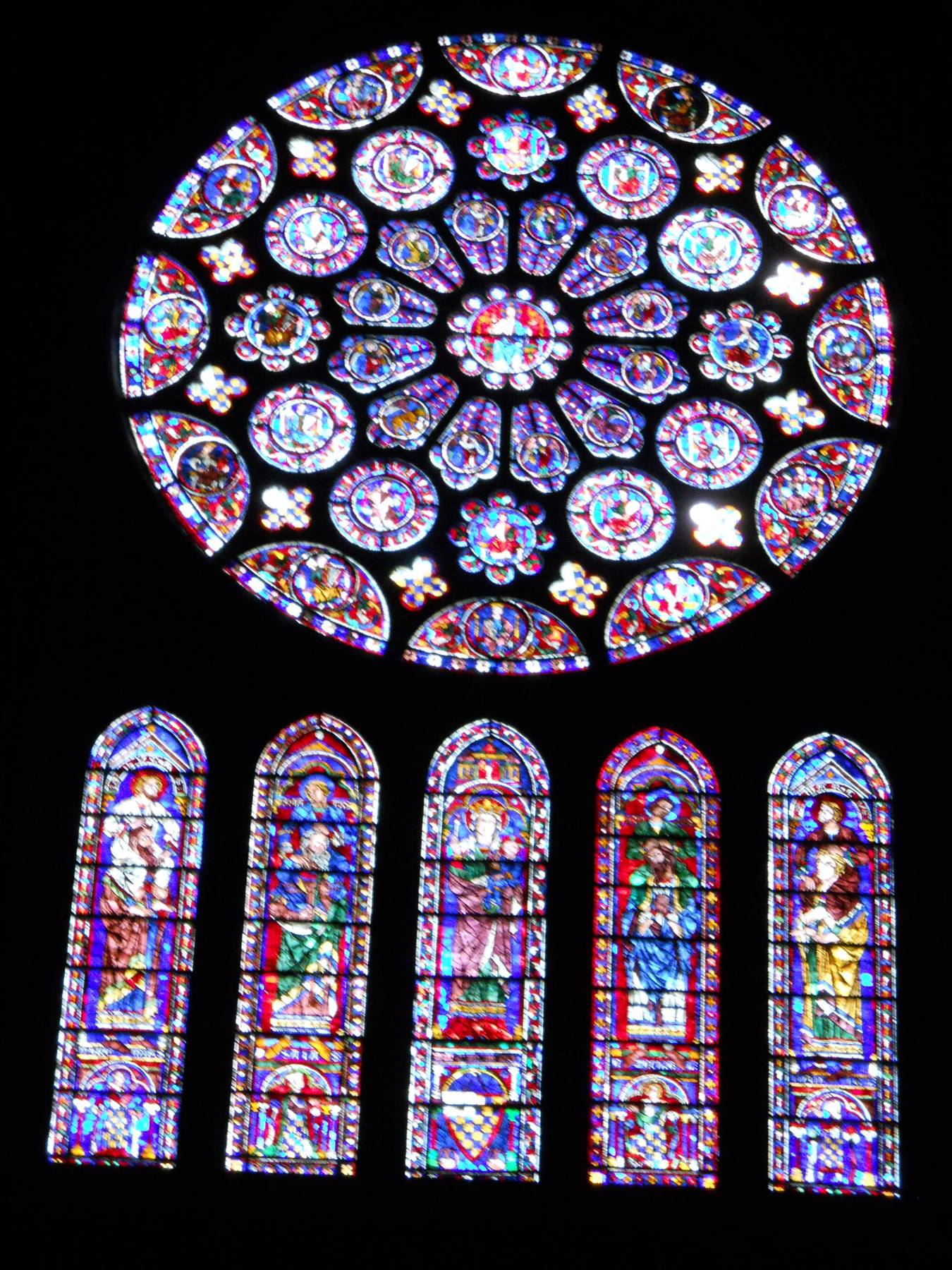
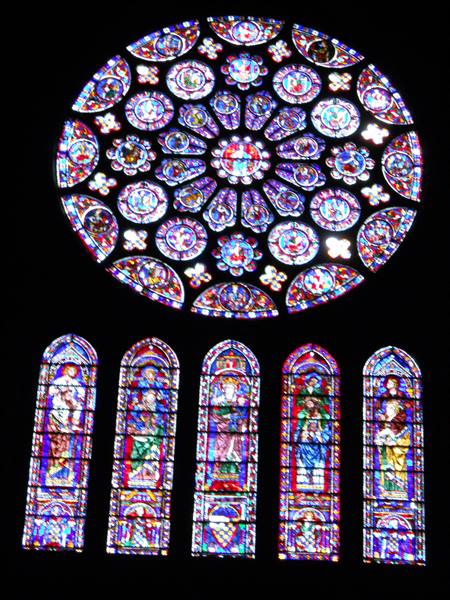
cathedrals rose windows and lancets
Day 311 May 2011
the visit continues
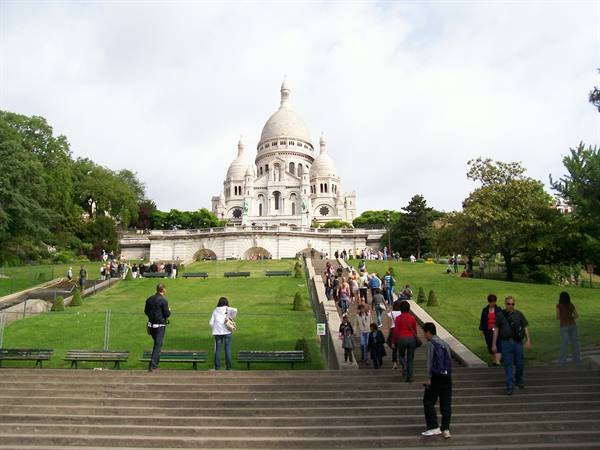
Wednesday: Montmartre, Saint Denis, Champs Elisée, Arc De Triomphe. We reach Montmartre, one of the districts most frequented by tourists who hope to find the atmosphere of times past, in fact, it was considered the district of artists, especially Impressionists, still today it's characterized by narrow streets, paved with "pavé", full of stalls that however sell the usual souvenirs, certainly the Place du Tetre and the rue des Abesses are very crowded, the old charm is no longer there. We then go to the Church of the Sacrè Coeur (19th century), located on a small hill, I go up with the funicular (the navigo card is valid), while Rita prefers to take the staircase, a choice she'll regret. We enjoy the panorama of the city, the church is of white marble, with four domes, in Byzantine style, lots of crowds both inside and outside.
Then by metro to the Cathedral of Saint Denis (the navigo card is valid, if you go by metro), the Romanesque facade is imposing, perhaps less decorated compared to those already seen, a single tower (the other had collapsed), in height the facade seems divided into three levels, the 3 portals are magnificently decorated with tall and narrow statues, inside a very high nave, naturally large window-walls, with historiated stained-glass windows, with stories of the old and new testament but few are original, very beautiful the north rose window, the cathedral was chosen as a cemetery by the kings of France, and the sculptures placed on their tombs are a real museum of funerary art (paid visit), I particularly noticed the tomb of Dagobert, the first king to be buried. Then relaxing with Rita at the Champs Elisées, with Berthillon ice cream, sitting in a bar near the Arc de Triomphe.
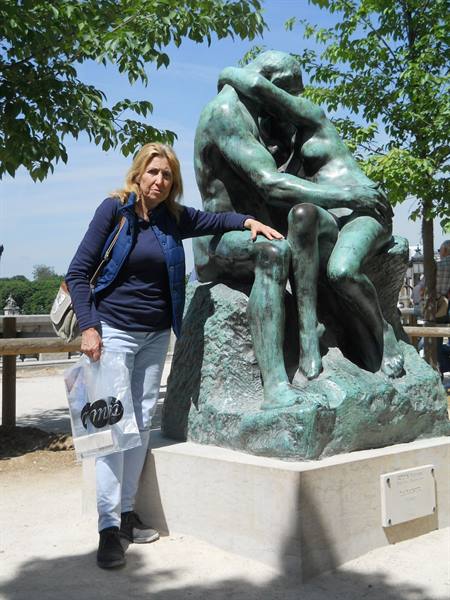
Dinner at the restaurant Swann e Vincent, not bad. Friday: we make use of the Batobus, the regular Paris water buses, to continue the visit, they dock in many locations especially tourist ones, the cost is 9 euros valid for unlimited rides for one day (for 5 days the cost is 21 euros). We go to visit the Orangerie museum, located practically inside the Tuileries gardens, in front of the museum a splendid sculpture by Rodin, paid entry, inside the splendid and enormous panels of Monet's Water Lilies and the rich collection of great Impressionist painters such as Paul Cézanne, Henri Matisse, Pablo Picasso, Pierre-Auguste Renoir, to name just a few, photos allowed.
Not to be missed In the afternoon a walk in the Latin Quarter, with a visit to the small church of St Julien le Pauvre (6th century), the church is all fenced, of the ancient past little is seen, also due to the transformations undergone over time.
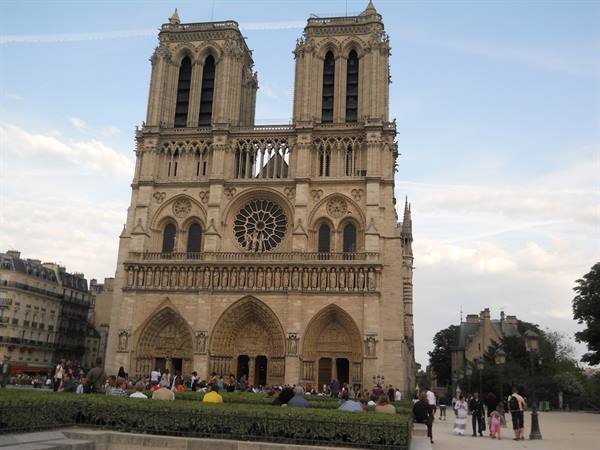
Currently it's a Melkite rite church, the interior has been almost entirely redone Then church of Saint Etienne du Mont (15th-17th century) built where one of the oldest abbeys of the city existed, inside an interesting wooden pulpit, and a bridge structure (ambo), which perhaps in the past was a large pulpit, with interesting staircases on the sides, the whole thing seems to me Baroque style, also interesting are some 17th-century stained-glass windows, outside we see the Tower of Clovis, which however belongs to another structure, on the opposite side the Pantheon, but we view it only from the outside Saturday: Morning along the Seine where we linger at the stalls that sell souvenirs, prints and books In the afternoon visit to the cathedral of Notre Dame, in the Ile de la Citè, in front the Parvis, a large square with garden, the result of Haussmann's renovation, the view of the western
facade is very evocative, taking into account that the sunset sun makes the colors more beautiful. Magnificent the three large portals finely carved with stories of the testaments, it's one of the masterpieces of Gothic, even though over time it has had many vicissitudes.
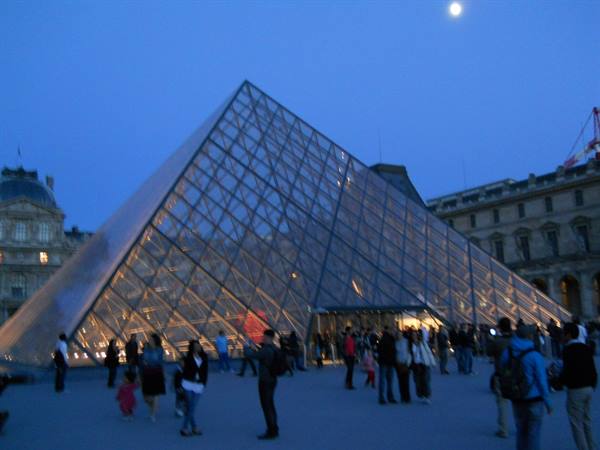
Sitting on a low wall of the Parvis, with binoculars we examine the sculptures of the portals, higher up the large and typical rose window, inside the great central nave, the vaults are at about 35 meters, the choir with sculptures, not to mention the magnificent historiated stained-glass windows, even though not all are original, in particular the glass of the north and south rose windows are certainly original, with scenes of the old testament, the west rose window is partially covered by the organ In the evening visit to the Louvre (it was the night of museums, free entry to all museums), one of the largest museums in the world, and there are proposals for expansion, today if you want to walk all the corridors you do 15 kilometers, we linger on the sections of Greek and Roman antiquities, then Flemish painting, finally in other sections to see some masterpieces of the 15th-16th century
period, which we had noted down, on the way out we see the evocative illuminated pyramid. Late dinner at the Bistrot S. Eustache, period furnishings, French cuisine, small cabaret with songs, an excellent end to the evening. Sunday: Rita returns to Notre Dame to attend the mass with Gregorian choirs while I go to the church of Saint Germain l'Auxerrois (14th-15th century), located in a beautiful square, imposing the bell tower (it gave the signal for the start of the massacre of the Huguenots), on the facade one can distinguish a balustrade frame, Gothic portal from the 13th with sculptures and tall and narrow statues, while the interior is from the 15th century, it was the church of the Louvre, when the sovereign resided there Then back to the Louvre to see the building and the cour Carrè, and the Pyramid.
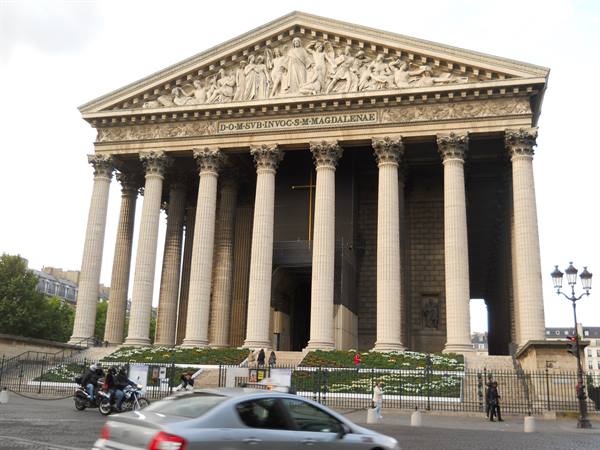
In the afternoon we visit the Madeleine area, on the square of the same name the large church that looks like a Greek temple, in fact, it's surrounded by tall Doric columns, on the outside it bears no sign that it's a church, there are no bell towers or crosses, inside a long nave (about 80 m) and remarkable 19th-century sculptures, it should be noted that the entrance staircase is practically covered with flowers, on the square the Fauchon delicatessen, known throughout the world. Then last evening walk along the Seine. Our trip is practically at its end, what can I say.... Paris is always Paris and as always it has a lot to offer to anyone who visits it, certainly some things we wanted to see again weren't available such as the Picasso Museum, the Musée d'Orsay, but we know we'll return. Ferny Forner



0 reader comments