The story
Self-organised trip, everything arranged on the internet: Departure 12 May 2011, TGV Paris Gare du Nord-Brussels Midi return 50 euro per person; IC train Brussels Midi-Bruges return 5.20 euro per person. Rita and I were on holiday in Paris and decided to go to Bruges, departure at 7 on 12 May, then with bus 11 into the city centre, we know the places to visit are within a radius of 15-20 minutes on foot. We arrive at 10, there are still not many people in the streets, so we take the chance to stroll along the characteristic streets and squares, not yet crowded, and take a boat trip.
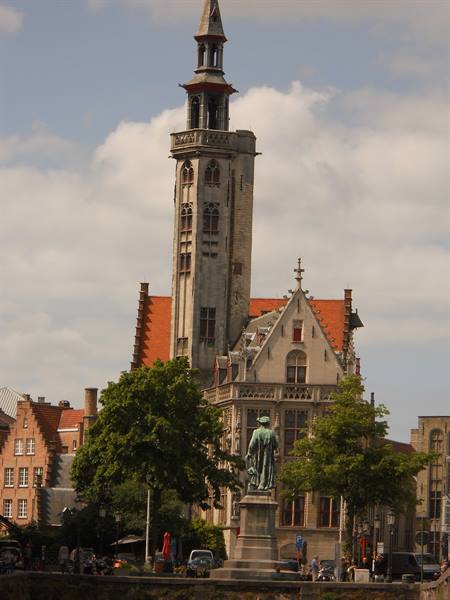
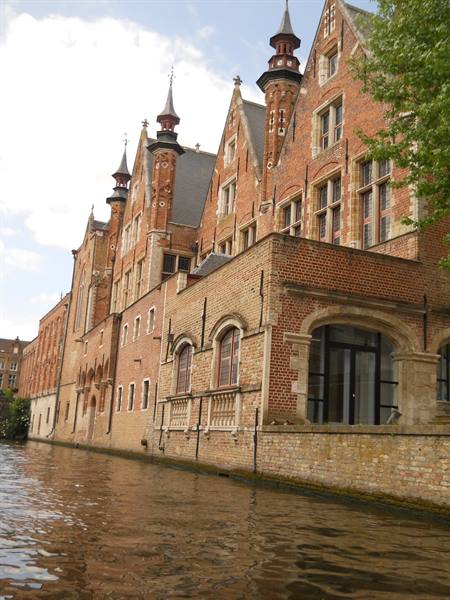
We pass between buildings of Renaissance and northern architecture, tall and narrow, with pointed façades and stepped gables, like Amsterdam to be clear; the canals are crossed on stone bridges shaped like a donkey's back, on the boat you often have to lower your head to pass, unexpected and evocative corners of a city that has preserved many features of the fourteenth and fifteenth centuries, so of late Gothic and Renaissance; especially seen from the boat, it seems that time in Bruges has stopped, the lovely sunny day (but a cold breeze blows) brings out its colours, it feels like being inside an illustrated postcard, the canals flow between buildings that follow one another without gaps, with the façades reflected in the water, images we see from the bridges or from the boat, swans are numerous, a historical memory of the city.
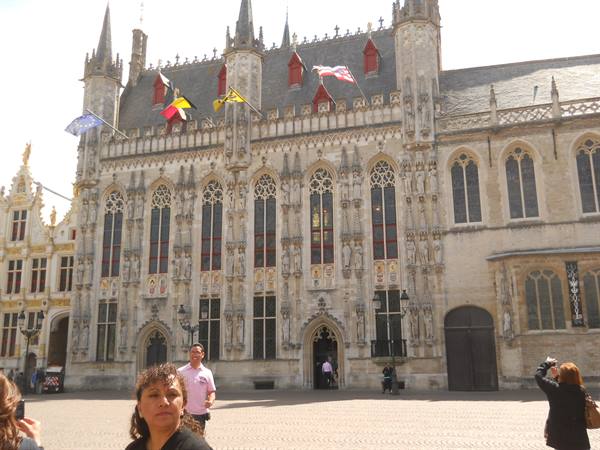
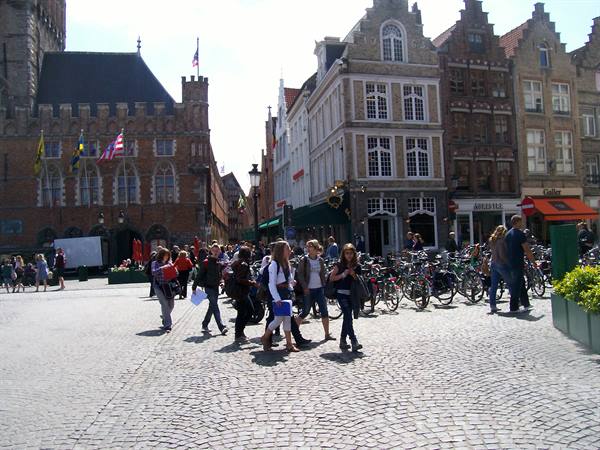
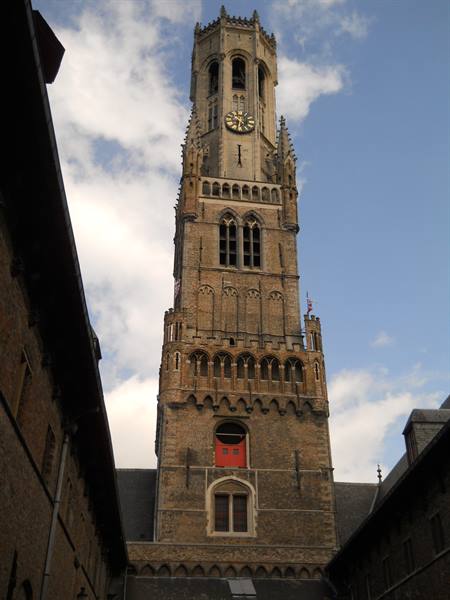
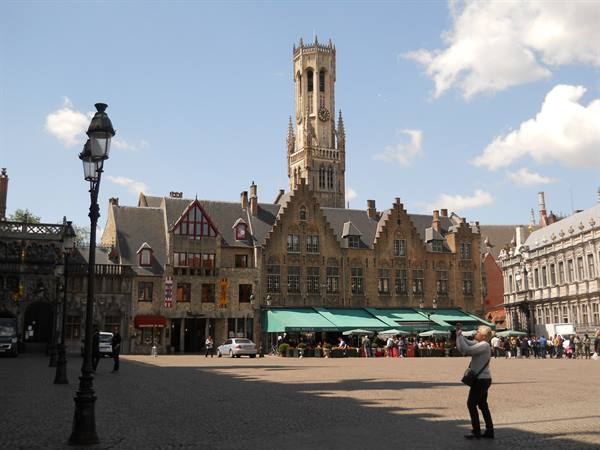
In Bruges, planning a boat tour is essential to get a precise idea of the city but also to see panoramic corners not visible otherwise. Naturally, on the walking tour we also visited the Bruges of museums and monuments. The Markt and the Burg make up the historic centre, they are large, lively and crowded squares, horse-drawn carriages, many bikes, red-brick buildings, towering over all is the Beffroi, a tower about 80 metres high, in the past a military tower, now practically a belvedere (paid entrance, 360 steps, no lift); notable are the Palace of the Halles, the Hotel de Ville, the Ancient Civil Notariate, the Palace of the Province, to name a few, in particular the Hotel de Ville in Gothic style from 1400, an elegant palace much decorated with statues, the originals were destroyed by the French revolutionaries, some had been painted by the great Van Eyck.
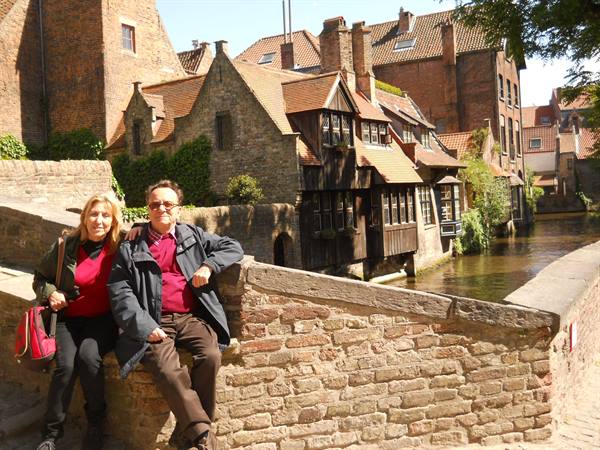
In the Burg we visit the Basilica of the Holy Blood, where some drops of the blood of Christ are venerated, Gothic façade, made up of two overlapping churches, the lower one (which was closed), the other in late Gothic, with a Baroque-style interior, it was a day of veneration, an elderly priest seated at the altar holds the relic with both hands and the faithful in line take turns to grasp the ampoule and recite a prayer. The Church of Notre Dame, with a bell tower more than 120 metres high, passing over the donkey-back bridge of St Boniface, which is one of the favourite spots for tourists to immortalise themselves in photos.
Inside the church, the group of the Virgin and Child, by Michelangelo, the white marble sculpture depicting the Virgin seated with a young and serene appearance holding the Child, the interior of the church is mainly Baroque, along the walls works by the Flemish Primitives, if you wish you can visit the choir with the funerary monuments (paid). In the Groeninge Museum are exhibited works by fifteenth-century Flemish painters, among them Memling, Van Eyck, Provost (no photos). Hospital of Saint John (twelfth-century building), one of the oldest hospitals, one side is lapped by the canals, in a large hall are displayed ancient surgical instruments and works by Flemish painters, inside the museum dedicated to Memling with only 6 works, the Shrine of St Ursula is fantastic, shaped like a small chapel, with walls painted in miniature, worth the visit on its own (no photos).
We leave the museum, a final stroll in this jewel of a city to see again the Minnewater, a small lake, and the Beguinage (thirteenth century) that we had seen from the boat. Then, exhausted, to the station to return to Paris after walking for almost seven hours, except for a snack in the square of the Burg, which we prefer not to remember. Ferny Forner.
The journey's photographs
8 photographs · click to open them full screen

0 reader comments