The story
In 2002 I went to Cuba for the 1st of May. Through a Cuban friend I met in Rome, I was able to stay with a friendly family in central Havana, all extremely likeable, die-hard Castro supporters and great rum drinkers.
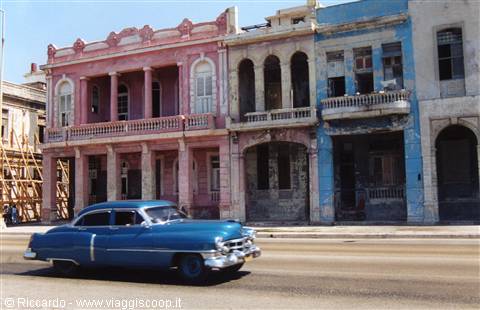
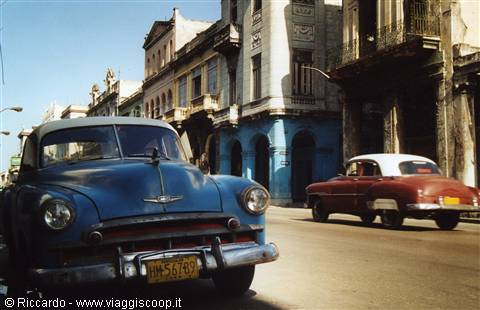
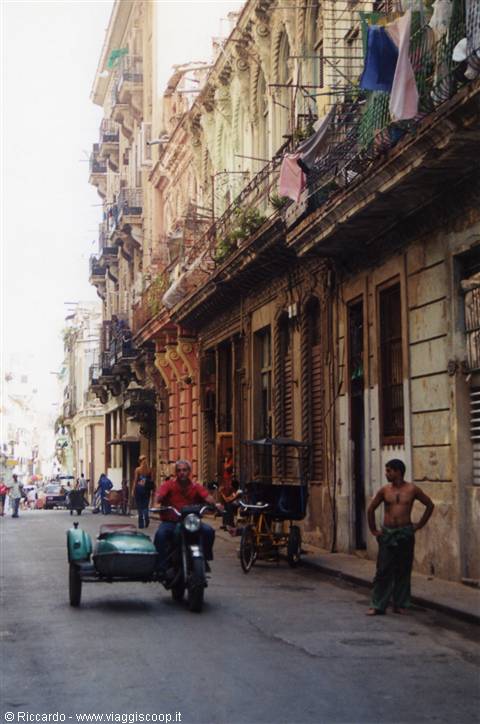
Havana is a very beautiful city and, if only there were more economic income in the country to allow serious renovations, it could be considered among the most beautiful of all.
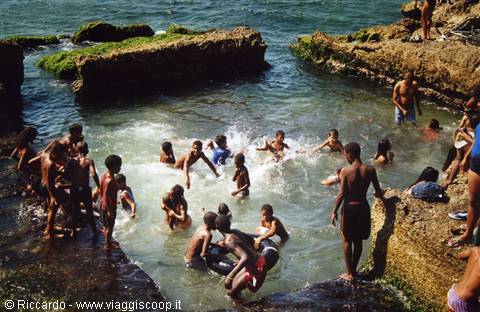
The walks along the Malecon, with the beautiful colonial-era façades right against the Ocean, the children diving from the low walls into water very different from the water lapping the tourist beaches of Varadero, their sincere smiles, the people: these are the unforgettable images of Havana.
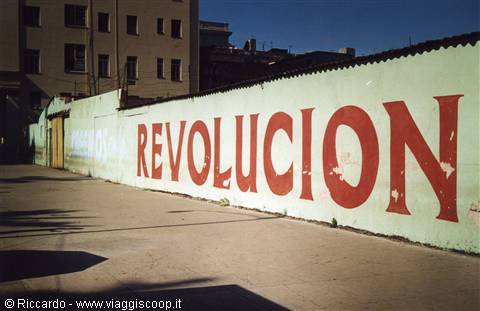
No point talking about the thousand contradictions of this country, of Fidel's politics, of the embargo strangling the local economy; it would be pointless in this context and I leave everyone their own opinion on the matter. I'll just say that this people has a dignity that's frightening; poor in money but immensely rich in spirit, ready to defend with their teeth the little they have, and as long as something of that famous revolutionary spirit that brought Cuba's liberation from Batista's oppression remains in their hearts, this country will stand out from the others as the only country still capable of believing in a dream, in an ideal, shareable or not.
Apart from all that, anyway, Old Havana offers a variety of venues where music is played at all hours, even in the morning, and excellent mojitos are drunk.
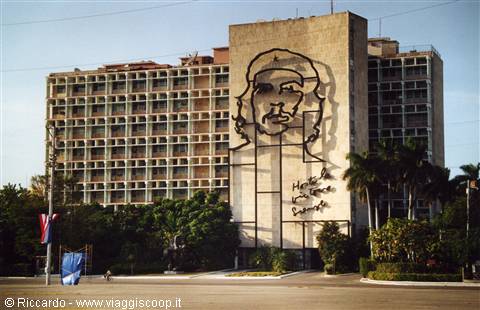
Impressive is the Plaza de la Revolucion with the imposing monument to José Martí over 140 m tall. Che's face towers over the square from the façade of the Ministry of the Interior.
The Cathedral of S. Cristobal in the heart of Havana Vieja, in Baroque style, is surrounded by beautiful 18th-century buildings. Nearby is also the famous Bodeguita del Medio, famous for Hemingway's visits, as well as the Floridita (where he savoured the daiquirí), though very touristy. The mojito is better elsewhere.
The Monastery of S. Francesco (1730) has a beautiful inner cloister (photos you either pay for or steal, incredible), with a tower overlooking the port directly.
The Plaza de Armas is beautiful in the evening with its second-hand bookshops and its venues, Calle O'Reilly, the most "glamorous" street in Havana, the Teatro San Martì, still very well kept (Caruso sang here too).
In the evening I was taken to the Fortaleza S. Carlos de la Cabana, which dominates the entrance to the bay, where the English had positioned themselves to seize the city. Used as a prison, it is today the seat of the Military Academy. Every evening at 9 pm, a squad of soldiers in costume fires a cannon shot towards the bay in memory of the curfew signal that closed the city's entrance. To get there you have to take the tunnel under the canal that joins the two shores.
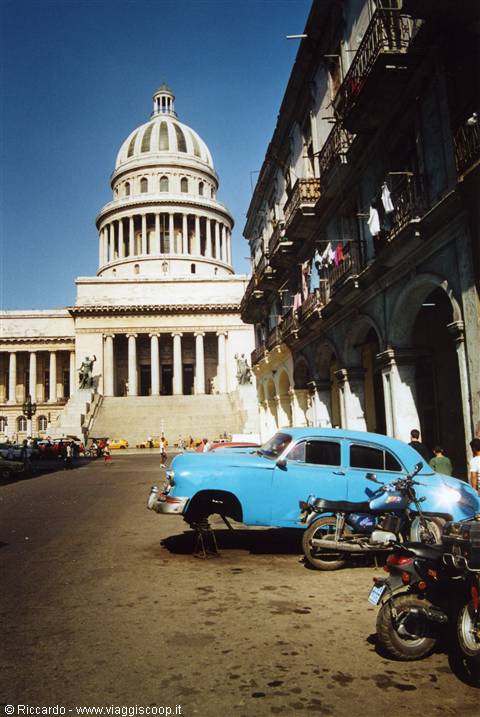
The Capitolio is the classic monument recalling US influence. Architecture copied from the Washington Capitol. At the entrance a huge statue about 11 m tall depicting the Republic.
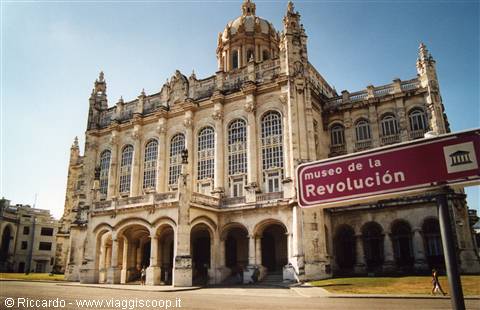
A visit to the Granma Memorial and therefore to the Museo de la Revolución is inevitable.
Aline, the lady who hosts me in Havana, is a history teacher and, given my interest in her country, thought it best to introduce me to real experts. In a peripheral neighbourhood of Havana, where "santería" is commonly practised, a syncretic cult in which Catholic figures and values mix with those of animist and African tradition, live the two most important scholars of Ernesto Guevara, Froilan Gonzales and Adys Cupull. Their house, besides being full of very particular objects, is a genuine gallery dedicated to Che, unique in the world and, incredibly, not open to the public, but visitable only thanks to particular friendships. Here Aline takes her class on a visit and I, who would never have thought I could enjoy the sight, will never stop thanking her for this experience.
About 200 km from Havana heading east I arrive at Santa Clara. Esteban, Aline's husband, accompanies me, together with Juan Carlos, a friend, in his car, and for lunch we stop first at Santa Isabel de Las Lajas, a country spot where some of his campesino relatives live. A great welcoming party, long drinks of Cuban rum with a pig happily wandering among us and one being finely butchered for lunch. The town is famous only for having given birth to the famous Cuban musician Benny Moré, the "barbarian of rhythm", and here they've even made a museum of him that they're all very proud of. The landscape here is entirely made up of sugar-cane fields.
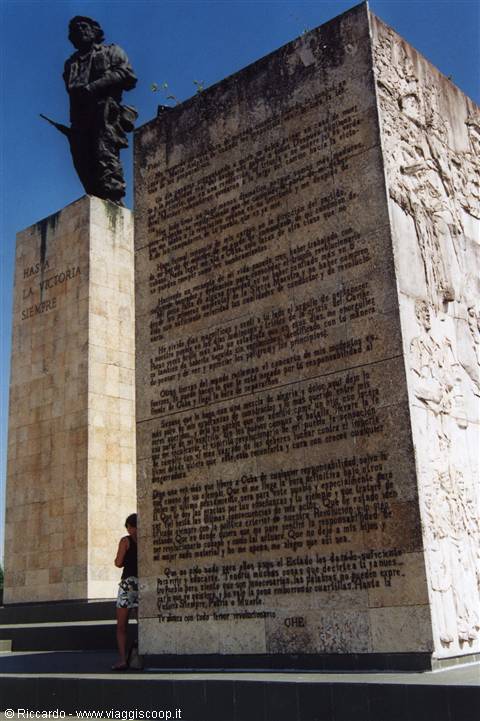
On the outskirts of Santa Clara we find the Mausoleum to Commander Ernesto Che Guevara. Here rest the remains of Che, who died in Bolivia; you can also visit the three carriages that made up the train full of Batista's weapons and soldiers (the Armoured Train), derailed by the guerrilla commanded by Che himself.
Apart from this, Santa Clara doesn't offer much more, but a visit to the city centre is equally a duty. Parque Leoncio Vidal is the main square of the city.
We move away from Santa Clara to return to Havana.
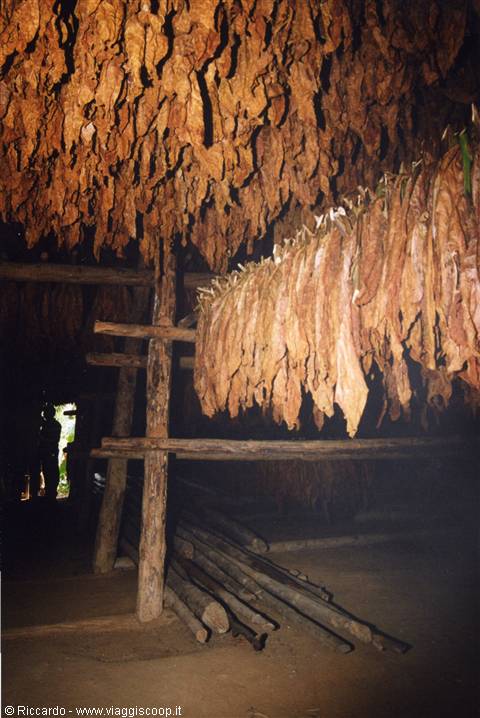
Esteban tells me he has to go west tomorrow and I take the chance to join him to visit that part of the island. Here the landscape is completely different. At Vinales the fields are entirely planted with tobacco (at least in this season) and the pyramid-shaped straw buildings are interesting, visible even from afar, where the leaves are put to dry. Inside, the smell is really pleasant, pure tobacco. The characteristic Mogotes are the typical heights towering over the area; they're practically a few hundred metres tall and covered in tropical vegetation. The area is famous for its countless karst phenomena with immense caves visitable inside.
I visited the Cueva del Indio, which extends for about 500 m on foot and then continues by boat through the underground channels.
Unexpectedly, Aline got me a front-row seat at the 1st of May demonstration in the Plaza de la Revolucion. At 7 in the morning Party representatives come to pick me up to take me directly on site with a special pass. I'm practically next to the top levels of power and I still can't take it in until I reach the Plaza, which, to say it's packed to the brim, doesn't do it justice. The multitude of Cubans, each with their little flag, is right there in front of my feet. I start thinking about how many Italians come here to Cuba to lie on the white beaches of Varadero or to pick up some beautiful girl from Havana, while I, poor madman, stand here enjoying this spectacle.
The arrival of the Commander in Chief, Fidel Castro, in his classic military fatigues, is cheered by more than a million Cubans. A very long speech, as tradition dictates, and a final show close this incredible day. Many surely don't approve of this kind of demonstration, which then leaves unsolved the many problems Cuba really has, both internally and in relation to the world. Still, the fact remains that the visual impact of such an expression, charged with that revolutionary spirit of which little remains in the hearts of young Cubans, is still an image worth noting and, without wanting to go into detail, will remain a happy memory for me.
The journey's photographs
15 photographs · click to open them full screen




1 reader comments
hasta la victoria siempre!! Max