Dedicated to all the people dear to me who, for reasons of work, age or health, could not share the beauty and harmony of these enchanting places.
Raffaele Banfi
Day 110 Oct 2006
Info ...
Here I am again, setting off on another trip; this time the destination is Myanmar, the former Burma (which, for convenience, I will continue to call by its old name) and Cambodia. Countries a thousand and a thousand miles away, with cultures different from ours and a history read quickly in books, heard on television through the events of recent decades in the Indochinese peninsula. The information gathered from guidebooks and the internet gives a partial picture of the current situation, so I don't know what I will find in these countries totally unknown to me. The suitcases are being prepared, along with the camera and spare memory cards (I recently converted to digital, abandoning my glorious mechanical Pentax), my inseparable notepad, pens, passport, travel program, guidebooks and not least the indispensable plane tickets.
For the trip I have chosen two guidebooks; • For Burma (Myanmar): the first is the Ulisse Mozzi - 2003 edition - (very good for the descriptive parts, which allow you to learn about the history, customs, geography and ethnic groups), the second is the Lonely Planet-EDT - 5th Italian edition, March 2006 - (very useful for the list of places and monuments to visit, as well as providing other "useful information" for the trip). • For Cambodia: the Ulisse Mozzi - 2003 edition - and the Lonely Planet-EDT - 5th Italian edition, January 2006 -. In the diary I will refer to the places I visited by indicating the reference page for the Ulisse Mozzi guide with (M pag.), while for the Lonely Planet-EDT it will be indicated with (L pag.), so that anyone wishing to delve into historical and cultural details has all the necessary references.
Buddha statue draped in orange cloth inside a gilded decorated niche
Day 210 Oct 2006
Towards Bangkok
I leave home heading to the railway station of Saronno (VA) where the group is forming; we are 29 people, with some I have already shared other trips, some I know, others I don't, and the first impression is good. At the station there are those who arrive by car, by train, by a minibus from a local association that kindly offered to transport the travelers' luggage. We buy our train tickets and board the 11:16 Malpensa Express, the train that quickly connects Milan to Malpensa airport, making few intermediate stops. At 11:37 we are at the Lombardy airport; the boarding procedure is slowed down by the airport computer's tantrums as it fails to recognize some tickets, but after a few minutes of standby it restarts and the group can check in the luggage.
The plane to Bangkok is full; the group blends in with other passengers traveling some for work, some for trekking in the Himalayas, some returning to Thailand, some like us heading to other countries in the Indochinese peninsula. The flight is enlivened by the excellent service of Thai (the Thai airline) and after 11 hours of flying through a blanket of clouds, we arrive in sight of Bangkok airport.
Buddha statue draped in orange cloth inside a gilded decorated niche
Day 311 Oct 2006
Yangoon - Part one
We land, the airport structure of steel and tarpaulins is modern, vast, clean and tidy, it resembles a continuous sail, it really is imposing. Long corridors lead to the boarding gates for those who, like us, are only in transit; we proceed for over 1 km on moving walkways and, having gone up to the upper floor, we pass through the boarding check for Yangon, the capital of Burma; we sit down at the gate, I look at my watch, it's 6:35, the sun is already high in the sky, sleep is starting to set in, during the flight practically no one slept, some were reading, some were watching a film on the plane's LCD TV monitors, some were playing, some were listening to music. After a short wait we resume our flight bound for Yangon, the flight is short, about 50 minutes.
The Thai hostesses, to the women on the plane, before disembarking presented a colourful and stunning orchid, a truly welcome welcome gift. Looking out of the window, the landscape appears as a flat expanse, an endless rice paddy. Irregular rice paddies with many nearby waterways, some large adjacent rivers, you can see houses and palms, some dwellings are new, others look like huts. We land and I see people working at the edge of the runway, the first impression is of having arrived in a developing country. The plane stops, we get off, waiting for us is a very dilapidated bus that over a distance of just a few metres takes us to the arrival area for international flights.
The airport gives more the impression of a large open building site, where those in transit must watch out for the scaffolding present and the workers working, men and women are on scaffolding without any protection, balancing on simple wooden planks. We pass through the check for entry into Burma, we prepare to collect our suitcases and look for the guide who will accompany us for the tour. We find a Burmese girl who speaks Italian, she is a tour guide who is on her way home, she gives us a hand in locating our local guide, gradually as the suitcases arrive, they are collected and we go through airport customs, they are at the end of the belt and.... my suitcase doesn't arrive. Thanks to the Burmese girl I ask for information and they tell me that if the suitcase hasn't arrived, it might arrive in the evening on another Thai flight and that in any case these things happen.
At that point we have to fill in the report form, there's a queue, from what I understand 4 suitcases haven't arrived. Once the bureaucratic formalities are completed, speaking with our guide, he tells me that the agency will take care of locating and delivering the suitcase directly to the hotel. I'm not entirely at ease. Thank goodness that in my hand luggage I brought a change of clothes, as well as my camera and notebook. Finally I manage to reach the others on the bus which is parked outside the airport, getting on I immediately notice something strange, the vehicle's steering is on the right, but the direction of travel is like in Italy; the bus dates back to when traffic was in the English style, so you get on from the left side of the bus, that is, from the middle of the road.
We set off towards the hotel, the guide introduces himself, his name is Soe Min Tun, but he says to shorten his name to Sosò; he is a jovial young man, he speaks fluent Italian, the first impression is excellent. During the journey of over an hour towards the hotel, Sosò hints at something about the situation in his country, which matches what I read in the guidebooks and found on the internet; the political situation in the country is delicate, the regime is military and for control it makes use of an efficient internal espionage service. Mobile phones don't work, I ask for an explanation and he tells me that only Burmese SIM cards work, all others are unusable. No mobile phone connection with Italy, it's possible to stay in contact via the hotel telephone and via email, where he can be reached.
From the airport, I noticed that people don't dress in Western style, only the military and the police wear trousers, all other people wear a kind of skirt whose length varies from the ankle to the knees. I ask Sosò, who explains that it is the longyi, the traditional Burmese garment, used by both men and women, it is comfortable and practical. The common footwear for Burmese people is the flip-flop, comfortable, practical, easy to take off and put on. Custom dictates that in homes people walk barefoot, so before entering, you must remove your footwear, another reason for the convenience of flip-flops. Furthermore, access to sacred places, as a sign of respect, is only permitted barefoot. I think: if the suitcase doesn't arrive, I could buy a longyi, or go looking for Western clothes? I'll see how the situation develops in the evening.
As we head towards the hotel, I notice a striking urban contrast, new buildings alongside dilapidated dwellings built in an indefinable style, modern in construction, but neglected. You can see very chaotic urbanisation, almost without rules with a jarring contrast between the buildings, the residential area is very well kept, with houses in English colonial style. During the journey, from the bus, you can see pagodas with golden roofs, we pass near the imposing, elegant and glittering Shwedagon Paya, the pagoda that is the destination of the afternoon tour. We arrive at the hotel, welcome cocktail and settling into the rooms. I'm on the 19th floor, looking at the panorama from the window, although sleepy I see more clearly the contrast of the buildings seen from the street.
After the journey a sleep of a few hours is really needed to recover from the difference created by the time zone, we are 5 hours ahead of Italy, here it is already well into the day we practically haven't slept a night. The phone rings, it's 11:45 local time, and it's the start of the tour, welcome to Burma seems to announce the wake-up call.... The meeting point is in the hotel lobby, the guide tries to reassure me about my suitcase which "maybe" will arrive this evening, thank goodness I was forward-thinking with the change of clothes in my hand luggage (prevention is always better than cure).
We get on the bus and crossing the city we arrive near a lake, where in a Chinese restaurant, we taste some dishes of Burmese/Chinese cuisine, shrimp rolls wrapped in a rice pastry and fried, soup with chicken and mushrooms, beef with vegetables, fish, duck, cooked vegetables, all accompanied by boiled white rice. They are new flavours, the lunch ends with excellent fresh fruit, white melon, papaya, watermelon. The flavours vaguely recall our Chinese restaurants, the service is excellent. Fortunately, according to Sosò, this was supposed to be just a brief stop for a snack before starting the tour. The temperature is hot and humid, over 35 degrees with 80% humidity, the monsoon has just passed and we should only find residual disturbances.
We get back on the bus and driving around the city we see some "rather dated" buses, they are old English vehicles, dating back to the Second World War, once used for troop transport and now converted into city buses. Some are packed with people, Sosò explains that everyone pays for a ticket, but only the luckiest get to sit, others travel standing, others travel clinging to the outside of the bus. At one stop I notice the empty interior of these buses: the seats consist of 2 wooden benches placed longitudinally along the sides under the windows and another 2 wooden benches placed centrally.
Buddha statue draped in orange cloth inside a gilded decorated niche
Day 411 Oct 2006
Yangoon - Part two
. We continue through the city and quickly arrive near a structure that looks like a shed, but the entrance is embellished and finely decorated, we are at Chaukhtatggi Paya (L95 – M96): as it is a sacred place we must remove our shoes to enter, an imposing reclining Buddha statue, 72 metres long, appears before our eyes. The respect for sacred places is enormous, you must always enter barefoot and, in the major temples, dressed with your legs and arms covered (we will apply this respect throughout Burma and in the major temples of Cambodia). The Buddha statue dates back to 1962, it is made of solid bricks, finely coated and painted; the colouring is a detail much appreciated by the Burmese. The shed is supported by some pillars decorated with silver and mirrors.
Near the statue, display cases collect the offerings of the faithful, offerings that are used for the maintenance of the statue and the entire complex. The statue's cushion is made with decorated glass. In the shed there is a photo of the original statue, which was demolished and replaced with the current one. The soles of the Buddha statue's feet are decorated with 108 panels depicting flowers, animals and habitats. They are a point of reference of the Buddhist religion, these panels represent the essence of the Buddhist faith. They depict the 7 mountains that must be crossed and the 7 seas that must be crossed to reach Mount Meru, the central point of the Buddhist religion. Furthermore, all the levels that make up heaven are depicted, representing the reincarnations expressed by Buddhism.
Heaven is composed of 26 levels of which 6 lower, where the angels live and 20 upper, then there exists the current level where people and animals live, finally there are 4 levels of hell. In total there are 31 levels. We leave the imposing statue and Sosò accompanies us to visit the adjacent monastery, where hundreds of monks live and study. As we walk around, he tells us about the daily life of the monks; at dawn they get up, have breakfast and then with a black pot in their hands, completely wrapped in their dark brown cloak, they walk barefoot around the country asking for charity, the food is poured for them by the faithful into the black pot (usually boiled white rice). The monk has two meals a day, the first at dawn and the second in any case before 12 and until the following morning he does not ingest food. In the afternoon, the monk may walk with one shoulder uncovered.
The fully covered clothing of the morning is a sign of respect for the faithful who offer them food. Walking around the monastery we see how Burmese houses are structured, first of all you enter barefoot, shoes and flip-flops must be left on the doorstep. Usually the first room you find is a living room where an altar is positioned with a Buddha statue on top, in front of which are placed 5 small glasses representing: Buddha, the monks, the benefactors, the parents and the teachers. We visit the house where the monks live, a living room with the altar, very simple facilities, a sink, a room with mats placed on the floor, where the monks sleep, finally a pantry room where the head and deputy head of the monks sleep. The building is entirely made of wood, the interior is simple and welcoming, the windows let in light that illuminates the places dedicated to reading and study.
We visit the entire monastery: situated on a hill, it consists of wooden houses, the internal paths are entirely protected by coverings, sheltering from the sun and rain. Outside their residences, some monks are washing, wearing their brown cloak they pour water over themselves using some iron basins (a custom I will find throughout Burma). Other monks rest on wooden benches placed under plants that are in any case near the dwellings. We leave the convent, get back on the bus and put our shoes back on, but shortly after we make another stop, we have arrived at the imposing and extensive Shwedagon Paya pagoda (L87 – M87) with its golden stupa.
I have just spoken of pagoda and stupa, but what do they mean? We Westerners use the term pagoda indiscriminately to indicate any Buddhist religious structure, but there are fundamental differences, let's see them: • the pagoda is a religious complex where several structures are present; • the stupa is a solid brick building, usually the shape recalls the leaves of the "Ficus Religiosa" or "Pipal tree", the tree where Buddha attained enlightenment and whose leaves, with a shape that vaguely represents an upside-down heart, have become the model for the construction of stupas, usually golden, but the Burmese also like to colour them white. At the base of the stupa can be kept: relics of Buddha, or relics of monks, or a copy of the three sacred books of Buddhism, or a votive tablet.
The stupa ends with a decorated top the "hti", with the shape of an umbrella or a votive crown; at the top of the hti a pennant always flies, the "hingetmana". The hti is made of gilded iron or gilded bronze and, in the most important constructions, even of gold studded with precious stones. • the temple is a place of worship, of prayer, it is accessible to the faithful and contains statues of Buddha. But let's return to our tour, the bus stops, we remove our shoes and prepare to enter the complex accessing from the west portal. In the pagoda there are 4 entrances, one for each cardinal point, the original entrances were in decorated wood, they were redone starting in 1997 and finishing in 2002.
The entrances to the pagoda appear as corridors entirely covered by a roof, the white walls support a series of seven green roofs embellished with golden workmanship, which slope upwards, at the end the roof is surmounted by a pinnacle also gilded, the gaze is lost towards infinity looking at the beauty of such coverings. The covering of the temples and other buildings is called "pytthat", it appears with several overlapping roofs, decorated with golden wood or tin tracery, which gradually narrow towards the top. To access the pagoda, we avoid climbing the stairways of the entrances and using a recently built lift we quickly arrive at the top of the hill, having a unique view over the city, the surrounding hills and the overall landscape, the view that presents itself is truly fascinating, green hills as far as the eye can see.
We enter the perimeter of the pagoda, immediately we see an altar placed under a "Ficus Religiosa", the atmosphere appears surreal and the religiosity perceived in this place is immense, we walk among golden pinnacles, we walk among clouds of incense and praying people. The sky is grey, but a patch of blue breaks through the clouds, the sun illuminates the imposing golden stupa, a structure 99.6 m high. You walk around the structure clockwise, the stupa is surrounded by statues that indicate the planetary points with depictions (L92) representing those born in the morning or afternoon of each day of the week; where the natives pray and offer offerings to the corresponding statues. The stupa is surrounded by a white marble floor that is constantly cleaned by volunteers twice a day following precise and rigid formations, the cleaning takes place in the morning and in the afternoon.
In the area there are many white or golden stupas built by private individuals until 1999, after which their further proliferation was prohibited.
Yangon - Shwedagon Paya
Day 511 Oct 2006
Yangoon - Part three
We continue our tour clockwise and arrive at a building containing a 20-ton bell, the bell is divided into 3 distinct parts, the first is the rim, the second illustrates stories of Buddha, the third has astrological references. Near the bell a building contains wooden frames, they are frames on which on the night of the full moon, on the occasion of the Buddhist festival celebrated, the women weave a fabric; it is a competition that in the end will see a winner who will be rewarded with a lot of money and her precious fabric will be used to dress a Buddha statue. A little further away there is a Buddha statue with a hand-operated fan, popular belief holds that waving this fan serves to ward off personal enemies.
We continue always barefoot, and in a building we find an interesting photographic gallery of the pagoda, there are black-and-white photos and colour photos that bear witness to the various vicissitudes the complex has gone through over the course of history. There are stunning colour photos of the hti, positioned on the highest point of the stupa, containing a 76-carat diamond, it is completely golden and studded with precious stones; the current hti was placed in 1999, replacing the previous one of gilded bronze. The stupa is entirely covered with gold leaf. There are photos that bear witness to the imposing restoration works carried out, the rebuilding of the buildings and their embellishment; a fine and important testimony that also shows the respect for this sacred place for Buddhists. A little further away, under a wooden temple, a 40-ton bell is kept.
Continuing the tour, we see a chapel with a golden statue of Buddha studded with precious stones, this is a particular place for prayer and meditation. Leaving the pagoda and heading towards the lift that will take me back to the base of the hill, I notice that the sun is setting, breaking through the grey sky, it sends its rays onto the golden coating of the stupa, also illuminating the other dozens of golden stupas, what better welcome to Burma could one have wished for?
I have spoken of the Buddha statues we have seen so far, but let's look at the three positions of classical iconography that we will encounter most in the itinerary in Burma and Cambodia: • the seated Buddha, with the right hand touching the ground and the left hand resting on the lap, this position symbolises meditation; • the standing Buddha, with the right hand outstretched and the index finger pointing indicates the way, with the left hand raised as a sign of greeting, indicates reassurance; • the reclining Buddha with the legs bent represents the attainment of nirvana, with the legs extended it is the act before death; So far the statues seen were those of the seated Buddha which symbolises meditation and, they will also be most of those we will see in the visits, should the statues be different I will point it out each time in the account.
Returning to the hotel we take a stroll through the Chinese market, I notice the wealth of colours of the fruit, I savour the smell of grilled meats, I see clothing shops (which I note down, in case the suitcase doesn't arrive), cosmetics and jewellery shops. The market stalls are made with wooden supports, the planks are of woven bamboo and the cloths are made with enormous leaves, where the food for sale is placed. Countless are the dried fish on display whose names I don't know, even the varied fruit presents vegetables unknown to me, among those known, I identify the white melons we tasted at lunch. We return to the hotel for a shower, I change (with what I have in my hand luggage) and then we set off again by bus for a restaurant also situated on a lake.
The restaurant, made of masonry, has a shape similar to a boat, it is a place only for tourists, and the mediocre quality of the food proves it. The evening is enlivened by a musical show of traditional dances and then a puppet show. The dinner passes quickly and we return to the hotel around 9:30 pm. Sosò warns everyone to prepare a light bag for a one-night stay, for the excursion the following day. My suitcase hasn't arrived at the airport, consequently my backpack is perfectly suited to the occasion, in the meantime I retrieve a few T-shirts. In the room, after the flight and the day spent between bus and visits, with the spectacle of the golden pagoda and the enormous Buddha statue still in my eyes, I collapse into a deep sleep.
Yangon - Shwedagon Paya
Day 612 Oct 2006
Towards the Golden Rock - Part one
In the morning Yangon appears wrapped in a blanket of fog, from the 19th floor of the Traders Hotel the view ranges over the dwellings and the port, taking the lift I can glimpse on the hill the Shwedagon Paya visited the day before. Having a few landmarks to orient oneself is better. Breakfast at the hotel, we get back on the bus and cross the city heading towards the Golden Rock: the Golden Rock. Crossing the city, given the heavy traffic, Sosò takes the opportunity to begin illustrating some aspects of his country to us. The first curiosity concerns vehicle number plates which have 5 colours, red for vehicles used for public transport, black for private vehicles, white for the vehicles of the authorities, light blue for buses and finally yellow for the vehicles of the monks (very few indeed).
We see children walking in orderly lines along the edge of the road, they are dressed in the green "longyi" and white shirt, they are students on their way to school, the school cycle resembles the Italian one, elementary, middle and high school. But in Burma there is a meritocratic system, and only according to the grades obtained in high school does one gain access to university faculties, where the best students access medicine and engineering, while access to other faculties decreases according to the grades obtained in high school. In Burma three calendars are used, the Gregorian (the one used in the West), the Burmese calendar (which corresponds to 1300) and the Buddhist calendar (which corresponds to 2500). The last two calendars follow the lunar phases, they have periods of 28 days and in various ways compensate to reach the 365 days of the Earth's journey around the sun.
During the journey we pass near a hospital, Sosò explains that there are 3 types of hospitals. The first is a purely outpatient structure where only the doctor is present who prescribes the prescriptions, the patient must then go and buy the medicines at a pharmacy, usually located near the doctor's office; this service is reserved for the population. The second type of hospital is reserved for state employees, where only state employees and their family members have access; these structures use Chinese medicines of poor therapeutic effect. There are then military hospitals, accessible to military personnel and their family members, they are the best healthcare structures in the country, equipped with Western machinery and medicines.
Finally, but outside the three types described above and only in the large cities, there are hospitals for monks, only and exclusively the monks of the various convents have access; during the journey, crossing Yangon, we will pass several times near a hospital for monks, a large and very modest building. Sosò continues describing other characteristics of life in Burma; it is a country that seems to be made up of castes, the military, state employees, farmers and then the rest of the population. Being able to enter the military ranks and get through the first hard periods provides the possibility of accessing the military schools which also serve as advancement in rank.
The other category of people who have benefits are state employees, who, differentiated by ministry, enjoy a series of state "benefits", some receive vouchers for public transport, some travel free, some have discounts on electricity, some receive rice and oil for themselves and their family. From what has been recounted, Burma appears a country very similar to others, where only some are granted certain privileges and benefits. From the explanations and from what I read before leaving, it emerges that here too corruption is a constant presence in many activities and some scandal involving well-known public figures is fairly recent. As a yardstick also related to this phenomenon, we have some figures, the average salary of a state employee is 80 dollars a month, to buy a new Land Rover (and quite a few are around), it takes 150,000 dollars, most of which are government taxes.
This parameter could explain the plague that allows someone to get rich. An apartment in the city costs much less than a car. Burma is the world's seventh largest producer of rice which turns out to be one of the main export items. The land is owned by the state and is given to farmers for a period of 60 years, payment can occur in two ways; the first is pure rent, the second way is 10% of the harvest, calculated on the estimate of the average production of the rice paddy area, but in this case there could be serious problems in the event of famine, as this system creates indebtedness for the farmers themselves. To the farmers, the state provides rice and oil at very low prices and the oils used by the Burmese are: palm oil (harmful to health), peanut oil and sesame oil.
We continue towards the outskirts of Yangon and stop near a shrine; a place where all vehicle drivers stop to give thanks to Saint Christopher, protector of drivers: in fact, any vehicle passing by stops for a moment and then sets off again. We drive a few kilometres and then make a stop at the allied cemetery, where 27,026 English and their allies fallen in the Second World War rest; the gravestones indicate first and last name, battalion and nationality, they are well kept and we see staff busy cutting the grass and polishing the bronze of the gravestones. The maintenance of the cemetery is of absolute and rigorous precision, a fine order in pure English style. We set off again and a short distance away a toll booth, it is the access to the Burmese motorway, two asphalted lanes per direction and at the sides....
pedestrians and then the track for ox-drawn carts and for tractors: truly a unique motorway. The road surface has a few potholes, and after 80 km covered in over an hour, we arrive in the city of Bago where we stop to see the Shwethalyaung Buddha (L145 – M109), a colossal reclining Buddha statue 55 m long and 16 high. In this case too, as in the previous one, the statue is made of solid bricks, coated with mortar and finely decorated. On the back of the statue some depictions illustrate the history of the statue; at the head, the base is covered with coloured glass tiles illustrating the story of Buddha. Here too the place is a pilgrimage site and, as all over the world …... does a pilgrimage site exist without the adjacent little market? An excellent reason for some members of the group to start shopping.
We resume the journey heading towards Mon State (one of the regions of Burma), and travelling along a road full of potholes our pace slows down a lot, but this allows us to observe the rice paddies well and to take a few photos from the bus. At a certain point the vehicle stops beside a rice paddy, the two drivers get out and start tinkering.... I can't see what they're doing, but they are taking water from the rice paddy … Sosò informs us that they are adding water to the radiator. We resume the journey and crossing a river, on an iron bridge built by the English, we pass the regional border and entering Mon State, we approach the hills where the landscape changes, the rice paddies give way to tropical forest, cultivated fields and immense plantations of rubber trees can be seen.
Yangon - Shwedagon Paya
Day 712 Oct 2006
Towards the Golden Rock - Part Two
Another stop, we are in a village built along the road, the bus has problems with the cooling system, even the air conditioning is down, the drivers get out, open the engine bonnet and try to replace a hose, an attempt that failed as the non-original part proves unsuitable for the replacement so the old hose is put back. Once the stop is over, during which we dedicated ourselves to taking a few photos of the village inhabitants, the children and the dwellings, the journey resumes; the sky, which during the stop had turned dark grey, begins to pour rain, thank goodness we are travelling and not visiting some monument, the bus shelters us from the tropical rain. We stop at a restaurant for lunch, we are on the edge of a very green valley and in the distance you can see the hills that are the destination of our journey.
Burmese cuisine offers: soup, chicken with peanuts, duck, vegetables, fruit. Even today, as yesterday, Sandro and I eat with bamboo chopsticks. Once lunch is over, we get back on the bus and set off again skirting the tropical forest. After 40 minutes of travel, we arrive at the village of Kinpun (154 – M110), where the bus stops. We get off and make our way to a raised platform, on the sides of the platform trucks are parked, in whose cargo bed wooden planks have been placed that serve as seats. We place our backpacks in a cage at the back of the truck and try to take a seat on this singular means of transport. As we Europeans are taller than the Indochinese, our long legs struggle to find the right position among the narrow planks that serve as seats.
All 30 of us having climbed onto the truck, we set off; the road is cemented and winding, you can't see anything, we are all jostled by the pace and the jolts caused by the uneven surface. The front row positions itself standing and looking beyond the roof of the truck cab warns the other passengers of what the road is like, it's a continuous "right bend", "left bend", "uphill", "downhill", "bump"... behind, the shouts mixed with laughter make the journey unforgettably pleasant. We meet other trucks coming down, then a stop at a checkpoint, where the road becoming narrow imposes alternate one-way traffic. I take the opportunity to take some photos of the group sitting on the planks in the truck bed.
We resume the climb, the road is truly narrow and climbs sinuous and steep, at a certain point the road is lined with red flowers, a barrier indicates that we are at Yatetaung Bus Terminal (L154), the 11 kilometres of the route were covered in 45 minutes. Among the hills, we find an enormous square, the truck stops, we get off and, picking up our backpacks, we prepare to make the last stretch of the climb that separates us from the Golden Rock, it is over 200 metres of elevation gain. In the centre of the square are parked the trucks used for transporting pilgrims, on the sides there are huts with shops, bars and rest points for those who want to rest. The square is animated by the porters who, with their unmistakable blue shirt, offer to carry the suitcases and backpacks of the pilgrims who want to go up towards the Golden Rock.
For those who have difficulty walking the steep road, the porters offer a sedan chair service, a deckchair supported by two sturdy bamboo poles. Some of the group take advantage of the service, negotiate the round-trip price and set off, others instead negotiate the price for backpacks or suitcases and entrust them to the porters who, with bamboo baskets, start climbing quickly. The group also begins to climb, the climb immediately proves steep, in a short time the compactness of the group unravels. As we climb, we meet trucks going up or down carrying local pilgrims, for safety reasons, given the road, the service is reserved only for Burmese; indeed the trucks are overloaded and carry many more people than the 30 expected. Climbing, along the road you come across shrines with Buddha statues, refreshment points, sellers.
At every step you are constantly assailed by porters who ask to negotiate the price and to accept a ride in a sedan chair; the cemented road climbs and at times is very steep. After a few hairpin bends the destination can be glimpsed; the Golden Rock appears increasingly clearly. The sunset has begun and the Golden Rock is coloured by the sun's rays. We continue climbing, the porters' insistence persists and as you climb the price drops. At a hairpin bend that turns to the right, on the left a dirt road opens up that is less steep than the previous one, and passing among huts used both as shops and dwellings, in a short time we reach a cement staircase ending in an iron arch with writing in Burmese, we are at the end of the climb. We continue along the road which, flat, leads towards the hotel, we are always surrounded by porters who this time try to negotiate the price for the return.
In a few dozen metres we reach the hotel where we are welcomed with excellent hot green tea, the drink is truly a pick-me-up after the climb made in the great heat and humidity present. We leave our backpacks in the hotel lobby and continue in the direction of the Golden Rock, it is now evening. As we approach the top of the hill, which is a sacred place, we must take off our shoes and continue barefoot, we proceed on a shiny marble floor and in a short stretch we reach the Golden Rock which, imposing, looks over the valley. Legend has it that the rock is held in place by a hair of Buddha, indeed the rock appears precisely poised over the valley below.
This is one of the greatest pilgrimage sites for Buddhists; approaching the Golden Rock we try to take a few night photos and given the time, we decide to return to the hotel, low clouds are arriving that envelop everything and increase the already considerable humidity. Before returning to the hotel, we take a brief stroll among the stalls of the little market and some hotels intended for pilgrims. We return to the hotel, we are assigned the rooms, they are very modest and damp. At 20:30 dinner is served in the dining room that looks towards the Golden Rock, dinner is Burmese/Chinese, lentil soup, chicken, fish, vegetables, rice noodles and the inevitable boiled rice. Dinner passes with chatter, we chuckle at the conditions of the rooms, some found mushrooms, some a frog, some dragonflies, some geckos....
We return to the rooms and try to sleep, the fan in operation should bring some relief, and I think: "who knows if my suitcase will arrive? Here the humidity is high and my change of clothes is now dirty, I must find a way to wash them..."
Yangon - Shwedagon Paya
Day 813 Oct 2006
Bago
An infernal night, high humidity, the fan makes noise and only moves humid air, when I turn it off the cicadas outside keep us awake and when the cicadas stop the people on the road returning from the Golden Rock start making noise. They are pilgrims who have stayed since the previous evening in the sacred place and gradually make their way down. At 5:30, with a knock on the room door, the wake-up call arrives inviting us to get up to go and see the sun rising and illuminating the Golden Rock. We get dressed and go, always barefoot on the top of the hill, at this hour the marble of the floor covering the hill is cold and slippery, you have to be careful when walking. The rising sun is hidden by the clouds, but gradually it gets the upper hand and illuminates everything, its warmth begins to remove the cold night humidity from our clothes and bones.
On an altar positioned in the immediate vicinity of the Golden Rock, numerous pilgrims offer food, some of them leave the top of the mountain and others arrive, it is a continuous coming and going of people. We return to the hotel, I prepare my backpack for the descent, breakfast and then we set off; on the descent we meet many pilgrims going up, near the dwellings/shops, curious about dozens of little jars, I stop to see what they sell, besides the classic souvenirs, there are many products of medicine and/or folk tradition, bones of various animals, various oils, potions, drinks, roots, everything suitable for curing and/or soothing ailments and/or improving certain purely masculine performances.
The climb that the evening before seemed steep is confirmed in its reality, the descent is also challenging; after about an hour from departure the group is in the plain of Yatetaung Bus Terminal where the porters of the baskets and sedan chairs are paid. Here the bargaining never ends, they always ask for more citing a thousand and one excuses; the weight of the person, the heat, the thirst, the humidity etc, etc, but they are only ways to extort more money. These porters are insatiable leeches who are silenced only by keeping firm the price agreed the previous day. The group reassembles, we take a truck and quickly cover the 11 km that take us back to the valley floor where we find the bus which has been repaired and we set off for the city of Bago.
Along the road we stop in the village of Woo, a fishing village, situated along a river, where we can observe the various types of fish caught and the various stages of processing and drying. We arrive in the city of Bago and stop to visit the Shwemawdow Paya (L145 - M109), this great pagoda also has 4 entrances, the central stupa entirely golden with its 114 m. is the tallest in Burma; raised several times over the centuries and several times destroyed by various earthquakes, today it appears imposing and mammoth. Near the stupa there is a museum where photos from past years are kept, as well as precious relics from other temples destroyed over the centuries. Outside the museum we sit on benches positioned under an enormous tree, Sosò explains that the fruits of that tree are used by the monks to dye their robes brown.
Indeed the robes of the religious are made with pieces of other fabrics sewn together, and to avoid possible polychromy, everything is coloured with the brown vegetable dye extracted from the fruits of the tree, the dye is so strong that it covers any other colour. We continue the tour of the pagoda seeing chapels and temples with statues and depictions of the life of Buddha. At the base of the stupa a piece of the terminal part is visible, disastrously collapsed in the 1937 earthquake. In the temples and near the stupa we see display cases that serve as collection points for the offerings made to hold the full moon festival, a festival where the monks pray uninterruptedly day and night for the donors of the offerings.
We leave the Shwemawdow Paya and quickly head towards the Hintha Gon Paya (L146 – M109), a pagoda of animist origin, where the festival of the spirits is celebrated; Burmese tradition states 37 spirits, and during the ceremonies and various rituals, effeminate men and women act as mediums. The structure is situated on a hill and always barefoot, we climb towards the temple, where deafening and repetitive music welcomes us, they are men and women dancing to the sound of that music. We continue and visit the upper part of the temple, where in the centre is an altar with gilded bronze sculptures representing 2 birds, which are the symbol of the city of Bago, surrounded by a series of Buddha statues. A few photos of the altar and the panorama of the whole city and the imposing golden stupa of the Shwemawdow Paya; to exit we retrace the access staircase and by bus we head towards
Bago - Shwethalyaung Buddha
Day 914 Oct 2006
Towards Inle Lake - Part One
Wake up and pack the suitcases; we're off to the interior of the country. Those in the group who can leave behind some of the clothes they won't need for the rest of the tour; we'll pick the suitcases up again in a few days when we return to Yangon before leaving for Cambodia. In the afternoon we have the direct flight to the city of Heho in northern Burma, and we spend the morning visiting the capital some more. Our first stop is at a square where an octagonal Pagoda stands, unique of its kind, which was "spared" during the construction of a long avenue by the English, who dominated Burma for decades. It was the custom of the Anglo-Saxons, to build roads, to tear down everything in the path; but the pagoda was an important sacred place, and so a delegation went to London to Queen Victoria to explain the reason for respecting the site, and the Queen ordered that the pagoda be left alone.
Today the pagoda is adjacent to a square and a park where the Independence monument stands. The city hall building is also in the same square. We leave the coach and continue on foot through the city streets: since it's Saturday morning there isn't much traffic and it's easy to walk. We pass through a neighborhood characterized by colonial buildings, see the courthouse, some banks, and then a visit to the Strand Hotel (L107 – M97), an extra-luxury hotel of colonial origin, recently restored, offering 23 richly furnished rooms whose cost ranges from $475 to $1,000 per night. We get back on the coach and head to the river port of Sin Ho Oan, where we see all kinds of boats, from barges for transporting goods to passenger boats to simple, light wooden boats for crossing the river.
The water is brown, but that doesn't stop it from being used for personal hygiene: bathing in the river is a natural thing for many people. On the dock, vans and trucks of every type used for transporting goods are parked; there are also many warehouses, a sign of the commercial importance of this port, which is only 45 km from the sea. At the port, on the benches, we see the poorest part of Burma; some poorly dressed and unwashed people are sleeping or tidying up the few things they own. We leave the port on board the coach and head to visit a monastery of Buddhist nuns. Nuns, like monks, live on offerings, but while for monks the alms round is daily, for nuns it's permitted only twice a week; for this reason they receive help from family members and donors; if no help arrives, they eat boiled rice and dried fish.
Arriving at the monastery, we can observe that today is a special day: it's a lady's birthday, and her donation allows the nuns to have lunch. Inside the monastery, in the dining hall, food is served on very low round tables and the nuns have to sit on the floor to eat; the food is laid out on shared plates from which the diners, 6 per table, help themselves. Tomato sauce, shrimp with peanuts, vegetables are already served on the table; the rice is placed on individual plates: everything gets cold; some flies buzz around the hall, and only on the donors' tables are there protections against them. At eleven, in single file, the nuns arrive, all wearing their pink robes, their heads shaved, their ages indistinguishable. Entering the refectory, they take their places at the tables; the seats are pre-assigned and each has her own bowl marked with a name or a symbol.
Lunch begins with a communal prayer of thanks for the donors. The only hot dish served is a vegetable soup, which, taken from an enormous pot with a ladle, is poured into the diners' bowls. I leave the nuns to their lunch and take a walk around the monastery; I pass through the pantry where some sacks of rice are stacked, which will be used on days without donations; I continue along the outer corridors that lead to the rooms, and going up to the first floor I reach the Buddha temple; the hall is rectangular, located above the refectory, the floor is teak wood, and the French doors on the sides let in a lot of light; a balcony runs around the structure. Opposite the entrance stands the altar with the statue of Buddha on it; on the walls rectangular paintings depict episodes from Buddha's life.
Along the sides of the hall, placed between the French doors, are small tables to study at: in a cabinet on the left wall there's a small library with copies of the three sacred texts of Buddhism: the history, the commandments, the meditation. Returning toward the monastery entrance, we leave the nuns to their lunch in the company of the benefactress and head to the restaurant for lunch; it's only 11:30, but since we have a plane to catch, we have to eat early. In the Burmese restaurant we sample lentil soup, pork, spicy shrimp, watercress, eggplant with onions, rice, and fresh fruit (papaya, watermelon, and white melon). A curious detail related to the Burmese table: I noticed that only a fork and spoon are provided; the knife is never set on the table. It's also true that I eat with chopsticks, but seeing Sosò eating with only a fork and spoon I ask why there's no knife.
He explains that the Burmese, having a cuisine similar to Chinese, where the food is cut up in the kitchen, use fork and spoon, or Chinese chopsticks. At the end of lunch, tamarind candies are served; one is digestive, but three become... laxative. Then a piece of news that seems incredible: espresso coffee exists!!! Not the usual instant coffee, but an espresso, and as good Italians we take advantage of it: the taste is decent. When lunch is over, we set off for the airport, and shortly before, in a military zone, we stop to see two albino elephants; their skin color is pink, similar to that of pigs, but compared to the black skin of other pachyderms they do indeed appear white. The elephants have chains on their hind legs to prevent them from moving (a practice used by other peoples to tame elephants) and are freed only in the evening.
We arrive at the airport to take the flight that will bring us to Heho; the airport structure is always a work in progress; they're working to finish the new section that will be for international flights. We head to the old section, where international and domestic flights share the same entrance. Though dated, the facility has a series of efficient checks; we get through them and enter the waiting room near the "Gate 1" exit. The room is very hot; since there's no ventilation the sweat pours abundantly — a real sauna. Our plane arrives; it's an ATR 2 from Air Mandalay (owned by the Burmese president's son-in-law); after a few dozen minutes we board; the plane is empty, entirely at our group's disposal.
We're about to prepare for takeoff when the aircraft returns to the airport; two technicians with worried expressions come on board and head quickly to the cockpit; after a while they come out smiling, and finally we take off. From above we can see villages and houses surrounded by palms; all around, as far as the eye can see, the green rice paddies where, given the season, the rice is almost ready for harvest. Every now and then in the villages and countryside some golden pagoda shines. Rivers and canals furrow and mark the land; the flowing water is always brown, a color due to soil erosion.
Bago - Shwethalyaung Buddha
Day 1014 Oct 2006
Towards Inle Lake - Part Two
After a few minutes of flight a blue lake appears, it seems incredible after so much brown water. From above, an extensive plain appears, a few hills furrowed by dirt roads whose brown stands out against the shades of green, kilometers of forest follow one another, highlighting a myriad of blue lakes and brown rivers. The eye gets lost in this repetitive and poetic sequence; a river from which a diversion canal branches off, the rice paddies and then at the edges the forest begins, then another river, other canals, other rice paddies and finally forest...... During the flight the plane, completely at our disposal, allows the group to indulge in all sorts of chatter; Italians always have the great ability to be cheerful.
We fly over a gravity river dam; the artificial lake disperses into the surrounding hills in a thousand rivulets along the jagged shores, it seems to have the shapes of a Chinese dragon. Near a mountain range completely covered in forest, we begin our descent; cultivated rice terraces appear; then the earth changes shade, even the brown of the soil looks different, the rice paddies give way to cultivated fields, and with their yellow color the fields of blooming sesame make a fine sight; other plowed fields give the landscape varied and pleasant shades to look at. We land at Heho airport where it has just stopped raining; to our right the clouds are black, while to our left the sky looks clear, the asphalt is completely wet; we hope we're heading toward good weather. We are in Shan State, Sosò tells us that in Burma there are 37 ethnic groups and on our tour we will meet 6 of them.
Leaving the airport we drive along a road between fields that, due to the flood, look like rice paddies; this year the monsoon has brought a lot of rain and the flooded areas are truly extensive. As we travel, the guide tells us that the only monuments of antiquity that have come down to us today are the pagodas, the only structures built using bricks, while all other constructions, whatever they were—dwellings, monasteries and even the royal palace—were built of wood; over time, deterioration, earthquakes and fires mean that only very few structures have survived to our days. We make a stop at the Shwe Yaunghwe Kyaung monastery (L191 – M169), an 18th-century structure entirely built of teak wood.
At the oval windows young monk boys appear; it starts raining again and we have to leave our shoes outside to enter the monastery, I begin to understand the usefulness of the flip-flops used by the Burmese. We climb a concrete staircase made slippery by the rain and enter the monastery, we see a gilded wooden Buddha statue surrounded by colored mirrors. On the wall a blackboard indicates the offerings received and the names of the donors; we can also read some Italians. We leave the temple; it is still raining; we have to put on windbreakers to avoid getting wet. In the immediate vicinity of the monastery there is a brick building: it is the Shwe Yan Pye temple (L191 – M169) with polychrome interiors, containing 999 Buddha statues.
Originally the statues were in marble and alabaster, but following looting today only the original niches remain, inside which modern statues have been placed, and at the base of the niches the donor's name appears. The building consists of many rooms, one chapel is covered with polychrome glass while the side decorations are partially original. The interior walls, rich in niches containing Buddha statues, are painted red with gold decorations, while on the upper part of the wall there are mosaic figures with colored glass. We leave the building and as we climb back onto the coach it seems the rain is ending; in the gray and gloomy sky patches of blue are appearing. We head toward Inle Lake, we arrive in the town of Nyaungshwe (L189 – M169) where, near a bridge, the paved road ends: the town is completely flooded.
People walk in water up past their waists, the houses are submerged, boats ply the streets instead of cars, it feels like being in Venice, but here we are in the midst of a tragedy. From the coach the sight appears almost surreal, someone laughs at what they see; though tourists and protected by the coach, we are witnesses to a flood that has submerged much of the country. The coach stops, turns with difficulty to the left, we proceed along a dirt road bordered on the right by huts and on the left by a canal. At a crossroads the vehicle stops, we get off and see a body of water with blue boats; I think these are our new means of transport, but instead our boats are moored a short distance away, they are red. The boats have a very slender keel and shallow draft, each carries 5 people plus the driver, the boats are powered by a diesel engine manufactured in Burma.
We get on them and gradually move away from the shore toward the calm waters of Inle Lake; what seemed like a simple body of water was the northern part of the lake, 22 km long and 11 km wide. We begin our navigation a few minutes before sunset, we set off swaying a little, but as the boat gains speed, stability increases. The air is cool, the landscape unforgettable; alongside the lake the mountains rise in a circle, the waters first brown, as we travel along the lake become green, reflecting the color of the surrounding mountains; we pass through a village of stilt houses surrounded by aquatic plants and travel along a series of canals plied by wooden boats. To me as a tourist, it feels like losing my bearings, but the local people of the various canals know their most hidden secrets.
As we sail we pass near stilt houses, shortly after we cross paths with fishermen's boats; the silence of the lake is broken only by the roar of the diesel engine pushing the boat, traveling toward the approaching night, the biting air, the light gradually disappearing, it feels like being in a living poem, and crossing other boats, we jolt on the waves furrowing the calm waters of the lake. By boat I pass beside aquatic plants that look like flowerbeds where pink bellflowers and blue water hyacinths appear. Sunset arrives, the lake seems to want to give us a splendid welcome for the wonderful things we will see in the following days; on a dugout we meet the first local rower who rows solely with his right leg, a characteristic of the Intha people, the "children of the lake" (M167), unique in the world, for steering a boat; this is possible because Inle Lake has calm and placid waters.
The navigation to the hotel lasts over 30 minutes; in memory remain the green of the mountains, the gray of the sky, the colors of the water, the pink of the splendid sunset, in the distance a flash of lightning brightens the lake, perhaps it will rain. Lights placed near the shore indicate a passage and the helmsman steers the boat toward the hotel's dock, we stop at the pier and get off the boats, we are at the hotel and are welcomed with a welcome cocktail and even the mosquitoes welcome us; but a spray of repellent solves the problem. We take our room keys, we are lodged in cottages built on the lake, the rooms are little houses of wood and bamboo, very nice, spacious and with a balcony directly overlooking the lake surface; the beds are fitted with mosquito nets to prevent insects from biting during sleep.
The air in the rooms is hot and humid, I open the windows protected by mosquito nets, letting a little fresh air circulate.
Bago - Shwethalyaung Buddha
Day 1114 Oct 2006
Towards Inle Lake - Part Three
I have a 1 hour 30 minute break before dinner; I take the opportunity to organize my diary, jotting down the observations and feelings experienced during the navigation. Then a nice, regenerating shower and I devote myself to reading about the sites seen during the day, as well as a glance at tomorrow's program. At 8:30 pm we go to the hotel restaurant, located on the hill adjacent to the lake; the table service is done with lacquer dishes, the dinner is characteristic of the area;. Appetizer of fried fritters, rice, soy with sesame seeds, chicken with almonds, peanuts, vegetables, small and spicy leeks, dessert. We leave the restaurant and head across the lake toward the cottages, the sky is starry and given the latitude it is difficult to pick out the familiar constellations, I pause to contemplate the beauty of the night in the total silence that reigns over the lake.
I enter the room and leave the windows open to let the air circulate; the bed covered by mosquito nets promises a restorative sleep; from the lake come the sounds of the night, you can hear frogs croaking, some insect flying bumping against the mosquito nets; the splashes of animals in the waters of the lake form the backdrop to the sleep that is coming.
Bago - Shwethalyaung Buddha
Day 1215 Oct 2006
Inle Lake - Part One
At 6:00 am we are awakened by music coming from the village near the hotel, which I will later discover is a local festival; the awakening allows us to see the first lights on the lake. The sky is cloudy and gray, the clouds are very low and cover the peaks of the surrounding mountains, I don't know what weather awaits us during the day, but if the morning is anything to go by, it might even rain. It's Sunday, Holy Mass, breakfast and departure by boat for a tour on the lake that will last all day; the sun rises behind the mountains and tries to make its way through the clouds, the lake water takes on color according to the light it receives, at times it is gray, at times green, in other spots blue.
We sail for almost an hour on the calm waters and as we travel we see the floating gardens, we notice fishermen and farmers gathering algae from the bottom of the lake that they will use as fertile base for the gardens. We pass through villages where some of the stilt houses, though high, are flooded; the lake's depth is usually 4.5 m, but following the abundant rains the water these days exceeds 7 m. We leave the lake and venture into a tributary whose water is brown; traveling along the winding river we arrive at a boat dock, we are at Indein (L197 – M173), a village on the right bank of the river we are going up; we leave the boats and on foot cross the village passing through the local small market, we pass near an elementary school and arrive at the entrance to a wooden colonnade supported by 403 white masonry columns on each side.
Under the colonnade dozens of stalls are scattered with souvenirs and local products on display; all around, hundreds of small pagodas. Walking along the colonnade, on the outside we see some tombs, they belong to simple monks; in the past only they were buried while the head monks were cremated. The pagoda complex dates back to the 18th century, there are 1,045 in total. There is a main temple, stupas and small temples are arranged laterally, scattered on the hill, and together with the greenery they create a dense network of spires, some brown (those to be restored), some white and some gilded, the spectacle is unique and the gaze gets lost amid so much enchanting beauty.
The pagodas originally all had a light yellow decorative coating made with pozzolana (a natural sand); today time, earthquakes and tomb raiders have destroyed much of it, which is nevertheless visible in "leopard spots." The existing pagodas, most of which are small temples, have been subject to predation by tomb raiders and looters, who, searching for treasures or relics, removed or damaged the statues inside the structures, but all this does not diminish the uncontested charm of the place. On the walls of the temples and above the doors there are statues, representing guardian angels for protection; the statues with various figures represent various symbolisms, dating back to different eras and cultures.
Climbing the hill we reach the main temple, built in the 12th century in pure Burmese style; all around there are dozens of gilded stupas recently restored, and at the base of each stupa is the donor's name. The temple is shaped like an inverted T, the entrance is frontal to the altar where a Buddha statue is placed; to the left, relative to the entrance, there is an altar decorated with colored glass and mirrors, with other Buddha statues; to the right an exit allows access to the other side stupas. The temple walls are decorated with polychrome glass and mirrors, on the upper part of the walls there are paintings depicting stories from Buddha's life; the ceiling is red with gold decorations, the floor is ceramic tiles over which bamboo mats are laid.
Sosò explains that the mirrors placed behind the Buddha statues serve as a reflection of oneself and one's actions; consequently, to be able to see oneself in the mirror without shame, one must have and maintain correct behavior. We leave the temple and head to the base of the hill walking along the long covered colonnade; I notice that the stalls have increased, since we arrived early the traders had not yet set them up when we arrived. On the stalls you can find characteristic local handicrafts such as lacquer containers with bas-reliefs, while knives, pearl reproductions, silverware and decorated lacquer objects come from other parts of the country. We cross the village again and passing near the school, we see the children enjoying their recess and, as all over the world, their desire to play and laugh is unmistakable.
We arrive near the boats and while waiting for the group we stop at a kiosk to drink some coconut milk; fresh, tasty and thirst-quenching. Someone has made purchases at the stalls, I take a look too, I see some nice t-shirts that I buy to take home. We get on the boats and traveling along the river we re-enter the lake; after half an hour of navigation we arrive near a village where the Phaung Daw Oo Paya (L197 – M172) stands imposingly, a square-shaped temple with a red roof decorated with gilded iron, descending over seven levels and with a very tall gilded hti at the top that seems to get lost in the sky. Inside the temple the ceiling is completely lacquered red and decorated with gold; on the walls there are paintings depicting events from Buddha's life; placed in the center is an altar with 5 small statues, three Buddhas and two Monks.
The statues covered with millions of gold leaves over the years today appear completely deformed, they are a shapeless mass of gold. Near the temple, under a shed, a black boat with gold decorations is moored; it is the boat used for the lake festival, which has just ended. The festival has very distant origins; initially the five statues were all carried on the prow of the boat where, touring all the villages of the lake, it stopped for an entire night; a custom still present today, and since there are 20 villages, the festival lasts 20 days. In 1956 during the festival, a storm sank the boat carrying the statues; searches for the sunken statues began immediately, but despite the efforts made, only four of the five statues were recovered from the bottom; the smallest was missing.
At nightfall, when they brought the four statues back to the temple, on the altar they found the fifth, wet and dirty with lake debris; how it got there is to this day an inexplicable fact. In 1957 on the occasion of the lake festival, as soon as the statue left the temple, a storm suddenly broke out and the people, mindful of what had happened the previous year, decided to bring the statue back into the temple; as soon as the statue was placed on the altar, the storm ceased; from that year on, during the festival only the other four statues are carried in pilgrimage. Below the temple there is a small market of local handicrafts; you can find agricultural tools, knives, fabrics, bags and blouses.
Leaving the complex, the lake water reflects the blue of the sky, on the sides of the lake the green mountains form a frame, in the sky a few small white clouds, the sun is truly hot; the climate is ideal for navigation.
Golden Rock
Day 1315 Oct 2006
Inle Lake - Part Two
We leave the crowd of the temple and after a few minutes of navigation, we arrive in a quiet area made of wooden and bamboo stilt houses; it is the restaurant; a nice and welcoming structure that allows us to observe some aspects of the lake well. I take advantage of the stop to ask Sosò for clarifications on the construction of the stilt houses; already in the morning I had noticed bamboo dwellings with thatched roofs and wooden dwellings with metal roofs. The guide tells me that the dwellings seen represent the two different styles of houses; the former are built entirely of bamboo, from the support posts to the outer walls, the posts last 6 years and the walls last 3 years; the windows, in most cases, are also made with bamboo mats.
The wooden houses are made with teak posts and walls in another local wood; the lifespan of these houses is about 50 years, and it avoids continuous maintenance, furthermore it allows for wooden and glass windows. Bamboo has a temperature-regulating function, it allows the walls to maintain a cooler microclimate during the summer period and retains less humidity during the rainy season. Taking advantage of Sosò's expertise and patience, I ask how they make the floating gardens I saw earlier; he explains that to make them the farmers stick long bamboo canes into the bottom of the lake that must emerge from the lake's surface, forming fixed poles on which they place the algae fished from the bottom, which will constitute the "earthly" base, creating a very fertile layer.
Once the layer takes on the right consistency, other bamboo canes are driven into it, serving as supports for growing vegetables or flowers. Since the garden floats on the lake, the "farmers" move exclusively by boat for all the cultivation work. The explanation is interrupted by lunch, which is about to be served; chicken with peanuts, pork, zucchini, fish, rice noodles, white rice, tea. After lunch we resume navigation and I notice boats loaded with people; they are flood victims who, with their houses unusable, are moving to monasteries or to relatives. Continuing our tour of the lake, we arrive at some stilt houses connected to each other by wooden piers; we are at a weaving center where artisans produce cotton and silk fabrics; the silk comes from Mandalay, here it is dyed and woven.
All the phases of dyeing, weaving and creating the designs are purely artisanal; for coloring, natural dyes obtained from bark and roots are used. We walk around the buildings observing women who, with wooden looms, create fabrics with varied and colorful designs. In one building we see a unique craftsmanship: the creation of a thread using lotus flower stems; bundles of stems are made and cut into pieces about 10 cm long, from which they extract a filamentous resin that, joined together, creates a thin thread; this thread is left to dry and then worked. To create a fabric of 200 x 30 cm, 22,000 stems are needed. This precious fabric was once used for the clothes of Buddha statues; today the fabrics are produced for the Japanese market, where demand is very strong.
The final fabric has a rough texture, a light hazelnut color, has a truly high temperature-regulating function and costs almost twice as much as a refined silk fabric. We leave the building and walking on the wooden piers that connect the buildings, we take a little stroll among the stilt houses; at a certain point we find a sign reading "espresso," but is it real or a hallucination? Taken by doubt and curiosity, while some women are in the shop to look at the fabrics produced, others in the group go in search of the precious black beverage, and like all fairy tales, the happy ending arrives; a bar is equipped with a coffee machine and the beverage served is good.
After tasting the coffee, we get back on the boat; crossing villages and passing by floating gardens we head toward Nga Hpe Chaung (L196 – M170), the "Monastery of the jumping cat." We dock and getting off the boat we prepare to visit the structure; inside the temple, wooden altars from other temples are kept; the grouping of so many altars seems to make it a single and incomparable museum of sacred art of the Shan ethnicity. The altars are in gilded wood, finely worked, embellished with colored mirrors. Besides the altars, there are ancient Buddha statues; the statues are wooden, some are gilded and others colored, all typical of Shan art (recognizable by the earrings and jewels present). Near the statues there is a throne where a monk sits during the temple festivities.
A short distance away, on the floor a series of mats indicate the place where a monk makes cats jump (hence the origin of the monastery's name), an attraction invented more for tourists than for the faithful; the felines are "invited" to jump through a hoop held about 80 cm from the ground; if the cat jumps it is rewarded with food. Given the size of the cats, they must be good at jumping through the hoop and there is no shortage of food. The monastery, built in 1843, is entirely made of wood and measures 60 by 40 m; the floor is completely in laminated teak, the roof is supported by over 200 columns of worked teak. The descending roof has three layers, originally there were five levels, but this does not reduce the beauty of the place; the entire roof is decorated with wooden panels painted with episodes from Buddha's life.
We get back on the boats and return toward the hotel, passing through the village of Kye Za Gong, completely surrounded by floating gardens. The gardens, arranged in long rows, are surrounded by calm water; all around, "walls" made of aquatic plants create an impenetrable barrier to boats and to the waves that crash against the walls, protecting the gardens. Inside the perimeter the water is calm, which allows the farmers to work peacefully on their wooden boats to cultivate vegetables and flowers. It is truly unusual to see on the water green rows with bamboo trellises on which tomatoes, zucchini and flowers grow. One detail catches my attention: the tomatoes are not brought to full ripeness; they are harvested still unripe, placed in closed wooden crates and thus taken to market. We will have the chance, a few days later, to taste these fruits fully ripe.
Sailing among the villages, I am struck by the fact that we are tourists and we are traveling in the midst of an imposing flood, a natural event that sees hundreds of displaced people: I am struck by the calm, the composure and the desire to carry on of the Burmese people, truly a fine example for us Westerners who struggle to live with natural events of this magnitude. I return in the late afternoon; I take the opportunity to organize my notes and then, after a nice shower, at 8:00 pm, Burmese dinner; fried potatoes, pork, beef, chicken, vegetables, the inevitable boiled rice and... surprise... an espresso coffee machine appears. After dinner some in the group spend the evening playing cards.
Golden Rock
Day 1415 Oct 2006
Inle Lake - Part Three
Before going to bed I write in my notebook the characteristics of the boats that ply the waters of Inle Lake. The boats are of two types: the first are those used by fishermen, about 4 metres long, with a flat bottom and flat ends, which allows one to work comfortably on the boat and to row from the bow using the right leg to manoeuvre the oar; this boat is used by fishermen, for work in the floating gardens, as well as a means of transport for families. The second boat is used for transporting goods and several people, 8 to 10 metres long, with a shallow draught, driven by a diesel engine that is started by a manual flywheel and whose speed is then adjusted by a knob on the engine.
The extremely simple but functional engines are manufactured in Burma; the propeller is connected to the engine by a long shaft of at least three metres which also serves as a speed variator for the boat by immersing it more or less deeply in the water. When these boats carry tourists, they are fitted with 5 little seats lined up along the bottom of the boat; you get on one person at a time and sit down immediately, to avoid capsizing the boat: indeed, as the boat has little keel, the possibility is not very remote.
Golden Rock
Day 1516 Oct 2006
Pindaya - Part One
The alarm is at 5.15, at 5.45 the suitcases are outside the rooms, we have breakfast while the first light of the sun illuminates the lake, the sight is truly evocative, red water lilies have bloomed in the stretch of lake water in front of the cottage; the sky is partly cloudy and the clouds seem to be lowering. I hope it doesn't start raining because we have to take the boat to return to the coach. We cross the lake heading north, and as we proceed the water turns from blue to brown; along the way I notice fishermen and lotus flowers. Near the shore, among the reeds, fog appears, a strange sensation to land in the fog.
We dock and on dry land we follow a dirt road that leads to the town of Nyaungshwe, where the coach is waiting for us near the market; as I walk along the path I see moored fishermen's boats, and the fishermen themselves are unloading and transferring onto small vans parked nearby sacks containing fish that will be sold at the markets of nearby towns. We get on the coach and cross the town that two days ago was completely flooded, we pass through streets that were submerged, the water mark is visible on the walls of the buildings. We travel along the only paved road that leads to the airport, we pass it and continue towards Pindaya, the distance is 80 km, the estimated travel time is 3 hours.
It seems an implausible time, but past the airport, after a few km the strip of asphalt narrows and becomes passable by only one vehicle, the road is full of potholes and when meeting oncoming traffic, you have to use the dirt track on the side of the road where farm carts and tractors pass. The landscape is hilly, the rice fields have given way to various crops, the reddish earth gives a particular colour to the panorama; the journey is pleasant, the eye ranges continuously over the hills in a unique succession of colours of ploughed fields and cultivated fields, the red of the earth mingles with the green of the crops and the yellow of the flowering sesame fields, it is a succession of plants, cultivated hills and rivers.
We continue the journey and after two hours we arrive at the town of Taunggyi (L201 – M173) with houses of concrete and brick, the huts seem to have disappeared, it is an area of farmers and traders; it feels like being in another country, the houses are tidy, surrounded by fenced land, the appearance seems more Western than Eastern. We stop and take a walk around the market; fruit, fish, traditional and modern clothing (of Chinese manufacture), various tools. A few purchases by the group and then we set off again for Pindaya. On the green hills pine trees appear, we are at about 1,400 metres above sea level; the road continues to have the characteristics described above, and the traffic is heavy because of the farmers and the population going to the market, we meet tractors overloaded with people, we see people waiting for the bus to take them to the city.
With every vehicle we meet, the coach driver has to slow down and, putting 2 wheels on the dirt (where we don't find puddles of water), passes the other vehicle; the difficulties increase when we meet trucks or coaches. Along the road, in the fields there are farmers working. Sosò explains to us that here, among the Paho ethnic group, the men plough the field with the plough drawn by oxen, the women take care of all the other field work, sowing, cultivating, while the men only lend a hand for the harvest and the pest control of the plants; it is a traditionally rigid division of tasks. Along the road, we meet many carts, some drawn by two oxen, others lighter drawn by a horse, along the road we see an artesian well, it is the only well where people can draw water, even though it is brown.
After 4 hours from departure we arrive at Pindaya (L184 – M163), a town famous in Burma for three characteristics; the beautiful lake, the ubiquitous centuries-old and imposing ficus trees and the caves. Approaching the town we turn left and begin to climb the mountain, with steep hairpin bends we head towards the Pindaya Caves (L185 – M164), the Caves of Pindaya. The coach takes us as far as the entrance where a canopy leads to the lift that takes us to the entrance of the main cave. At the entrance of the canopy there is a statue of an enormous spider, symbol of the local legend that sees seven princesses surprised in the cave by the spider, which was then killed by the prince who freed the princesses.
Near the lift we leave our footwear and climb towards the entrance of the limestone cave, 150 metres long with stalactites and stalagmites, divided into several rooms of different sizes, it houses over 10,000 statues of Buddha, the largest statues number 8,094. Inside there are statues of every size, most are of stuccoed and gilded masonry, others are of wood, alabaster, lacquer, marble, some are blackened by the smoke of candles, almost all the statues are covered with gold leaf. In one hall, near the floor, a cavity opens up, a short and narrow corridor leads to a further room with Buddha statues, it is a place of meditation for the monks.
Continuing through the rooms we see a wooden statue of a standing Buddha, other lacquer statues which, subjected to the dripping water of the cave, cannot be covered in gold; it is a bit startling to see two black statues among thousands of gilded ones. Continuing into the cave we see an enormous stalactite, concave inside, once used as a gong (today it is no longer used for this function), in a recess there is a temple that was offered by the current government, and frankly it is a little garish and jars with the harmony of the older statues present. In one cave a small pagoda has been created, we see an altar dedicated to a hermit monk who lives on a river and who during the rainy season is called to the villages to make the rain stop and prevent flooding (and it seems that now and then his intercession works).
In the caves the dripping of water is continuous, the floor is slippery, and having to continue barefoot we must pay great attention. We leave the cave and it is raining, fortunately the canopy protects us, all around on the mountain we see a succession of canopies that lead to various minor caves, each cave contains about 200 Buddha statues. We take the lift again which takes us to the base, we put our shoes back on and go down along the access staircase where, in the nearby square, the coach is waiting for us, it is raining and we use umbrellas to reach the vehicle. Shortly afterwards it stops raining and I understand the convenience of the flip-flops used by the Burmese: even though they wet your feet, in a few minutes they dry.
The coach leaves the mountain and approaches the town, on the outskirts of Pindaya we stop to visit a factory of traditional umbrellas made with a bamboo supporting structure, the spokes are made of mulberry and the fabric is cotton. Here they also make fans made of mulberry and bamboo paper fabric, all products are decorated by hand using natural dyes. The workshop is pervaded by a pungent smell, it is the glue used in the various stages of processing. We see a craftsman working with a pedal lathe, pieces of bamboo destined for the umbrellas.
Golden Rock
Day 1616 Oct 2006
Pindaya - Part Two
Pindaya is known, besides for the aforementioned characteristics, also for the cultivation of tea and coffee, it is the only area of the country where the coffee plant finds the ideal habitat for growth. We stop for lunch in a restaurant with the Latin name "Memento", we are served fried fritters, bean soup, fish, beef, chives, carrots with buffalo mozzarella, the inevitable white rice; for fruit a red banana (very sweet and delicate), the desserts are delicious sesame and butter biscuits. Finally, given the Lavazza advertising on the tables, we taste a good espresso. At the restaurant we meet other Italians, a Tuscan couple on their honeymoon, a few words with our compatriots and then we set off again; the weather turns threatening, I have the impression that on the way back we will find rain.
We are slightly late and we have to reach Heho airport to catch the flight to Mandalay; after two hours of travel, we arrive at the airport. We get off the coach and on our shirts they stick a sticker of Air Mandalay, check-in is very quick, Sosò hands out the tickets and after the checks we enter the waiting room, where the entrances are separate for men and women. In the room other passengers are waiting for their flight, a man hears Italian being spoken and approaches, he is a Pime missionary priest, a native of Bormio, and has lived in Thailand for 32 years. He is in Heho to teach theology and philosophy to seminarians; now he is returning to Thailand for a short period and then will come back to finish the teaching year, here residence permits are not very long and he has to continually leave and re-enter the country.
We discover that in Burma Catholics number over 700,000 divided into 13 dioceses, a truly surprising figure in a country with such a strong Buddhist faith. The airport is very busy, three ATR 42s are parked on the runway, two take off and two arrive, truly unusual for the airports seen so far and completely different from the desolation of two days ago when, on landing, ours was the only plane in the area. We take off and I see, not far away, the hills that border Inle Lake, a last look at the lake and then the plane turns right, other landscapes appear, you can see cultivated hills furrowed by canyons, some deep, carved by water, the red earth eroded by water appears like conspicuous wounds among the green of the fields and forest; the flight is short, just past a mountain range the descent begins.
Sosò, during the return from Pindaya, had told us that the road to Mandalay is impassable due to the flood that destroyed some bridges, and the city too is partially submerged by water; until a few days ago military trucks were used to transport tourists to the city airport. We land and take the coach, we set off and head towards the city, the planned route will take at least 1 hour.
Mandalay is a city where the contrast with the poor is evident, the city has been "invaded" by the Chinese dedicated to the trade of precious stones, they have obtained from the government a 60-year lease of the land on the mountains where they search for emeralds, rubies and other precious stones, and over time they have transformed Mandalay into their commercial centre; the same traders have created chains of shops where they sell clothes and Chinese products imported by them and, until recently, even opium was not excluded from their trafficking. Currently the social gap between poverty and wealth is very evident. Having left the airport we travel on a beautiful paved road, when we see shacks and tents on the sides: they are the makeshift dwellings of the flood-affected population.
Near a bridge the road is blocked by water, we turn left and take a secondary road that passes through the outskirts of the city; the poorest part of the town. Along the route there are uninterrupted tents and makeshift shacks; hundreds or perhaps thousands of people crowded together without a break. People cook on fires lit at the roadside and just behind they have mats to lie down on to rest, all around pots and utensils recovered from their homes submerged by more than a metre of water. Life is truly desolate in those conditions; alongside the people every kind of animal, cattle, horses, pigs, goats, ducks. Shortly before 7 pm, arriving in the city, we skirt an immense moat, over two km long: it is the moat of the Royal Palace of Mandalay (L244 – M139). The walled enclosure is over 1.6 km long on each side, with four entrances and three gates per side.
Originally each side had a specific function; the South was the entrance for Kings and Rulers, to the North the entrance for monks, to the East the entrance was destined for the people and visitors, finally the West side was reserved for the exit of the deceased within the royal palace. The palace was entirely of wood and was destroyed during a bombing in the course of the Second World War. After more than two hours from departure from the airport, we arrive at the hotel, a modern and welcoming structure that seems almost unreal compared with the camps we have just seen. Buffet dinner and then retreat to my room, my room has a view of a hill from which I glimpse, on its top, a gilded and illuminated pagoda. I fall asleep thinking of the people dear to me who cannot share this sight with me.
Inle Lake - Panorama
Day 1717 Oct 2006
Mandalay - Part one
The awakening is greeted by the sun that illuminates the hill where the pagoda is, the contrast between the sparkling gold of the pagoda and the green of the forest covering the hill is truly strong. We go down for the buffet breakfast, everything is really well cooked, the jams, the sweets, the savoury foods, the fruit, the coffee though "American style" allows us to start the day well. Shortly afterwards we get on the coach and set off for another day as tourists. During the transfer Sosò explains to us that the rules of Buddhism are written in 40 books that monks should know by heart, since total knowledge is arduous, there exists a "scale of knowledge" with relative privileges. Those who know one book by heart can ride the buses for free, those who know two can travel by ship for free, while those who know all 40 books travel the world at the expense of the Burmese state.
The best monks are often invited by wealthy people to stay in the most luxurious hotels, and indeed, the previous evening a monk was wandering around the hotel where we were staying followed by a crowd of people. By coach we are heading to the port of Mandalay and along the way we see the celebration of a wedding, someone from the group gets off the coach to see the ceremony; local custom dictates that in exchange for a gift, which is generally money, the newlyweds give a fan on which their names are written. We resume the journey and after a few minutes we arrive at the river port where we board a boat heading for Mingun (L269 – M150), a place about 11 km from Mandalay.
During the crossing the boat suddenly turns into a little market, the crew members and some of their relatives show various merchandise, the women of the group, attracted by necklaces, tapestries, postcards, paintings, little bags, fans, give themselves over to bargaining. The more the merchants sell, the more goods arrive on the boat's terrace, it feels like being in a bottomless pit; the last item to appear, but which finds absolutely no success, are marionettes in traditional Burmese costumes. For the record, it is fair to say that before the sale of the products, part of the group had devoted itself to gymnastics, a series of exercises performed on the stern of the boat "enlivened" by a hot and humid temperature, so a thought for "our gymnastic heroes" is more than due.
During the crossing we are on the upper terrace of the boat which is covered to protect from the sun and water, the temperature is hot and humid and, even though the boat is sailing in the middle of the river, the ventilation is limited, we sweat copiously. During the crossing I see islets with the cultivation of sorghum, destined for the production of brooms, along the river boats and barges for collecting sand and transporting various merchandise. The land of the area, not suitable for rice fields, has been destined for the cultivation of peanuts, on the mainland shortly afterwards we will see terraces with peanuts laid out to dry.
Slowly, but unstoppably the boat ploughs the brown waters of the river, we approach Mingun (L269 – M150), along the very muddy bank of the river the boat tries to dock several times and after a few attempts succeeds, we go down along a wooden gangway and in a short time we reach the shore, where inevitably vendors of handicrafts await us. We head quickly towards the monuments to visit, the first we see is the Pondaw Paya (L 270), a white model "only" 5 metres high of the unfinished pagoda, whose construction stopped at the first terrace and whose imposing bulk dominates the area. A short distance away a pagoda with access from the river, where two white leogryphs, angels in the form between the lion and the griffin, are placed at the entrance as guardians: it is the Settawaya Paya (L270).
Completely white, with only the gilded hti, the pagoda stands out against the blue of the sky creating a beautiful contrast, a lovely sight (the colour white is considered very beautiful by the Burmese, and they use it to paint pagodas and stupas). The structure is over 30 metres high, at the entrance there are three access stairways with precise functions, that for ministers or important people, that for monks and that for the people. This division reminds me of medieval European monasteries, where on several floors the roles of the time were symbolised, religious, emperors and finally the people. Inside the temple there are 4 Buddha statues, the originals were destroyed or damaged over the centuries, and have been replaced with recently built statues; near the statues the footprint of Buddha carved on marble and, traditionally the water contained in the footprint is considered sacred.
The footprint is carved with all 31 planes of reincarnation, the 26 planes of heaven, the current plane and the 4 hells. The king who wanted to build in the area intended to carry out 4 great works; the pagoda 150 metres high (unfinished), a bell (completed), statues of lions that served as protective angels (completed) and a protective dam to prevent the river from flooding the area (unfinished). A short distance from the Settawaya Paya with its 150 metres is the Mingun Paya (L270 – M150), which was to have been the tallest pagoda in the country, but an omen of the destruction of the city caused the works to be suspended in 1816. Three years later the king who built it died. The current structure is square and is 72 metres wide, 50 metres high, entirely made of solid bricks.
Over the years earthquakes have created conspicuous cracks in the structure and part of the bricks have collapsed to the ground, the faithful have made an external staircase of 174 steps and, taking the bricks from the ground, carry them to the top, the belief says that this serves for the fulfilment of wishes. In front of the unfinished pagoda there are the remains of two imposing lions, placed to protect the sacred place, the statues were 30 metres high and represented the animals in the act of leaping, but following earthquakes the statues collapsed and now only the rear part remains. Continuing among huts, stalls for tourists and devotees, we arrive at the Mingun Bell (L270 – M151), an enormous bell of 90 tonnes; built on the opposite bank of the river and transported to the site by creating a teak wood raft.
It is the largest playable bell existing in the world, and like all Buddhist bells it has no clapper. Made in several pieces using bronze and iron; the pieces were then joined together but the weld lines and the different thicknesses of the castings are visible. We continue towards Mingun and arrive at the entrance of the Hsinbyume Paya (L271 – M151), a completely white, round pagoda, with complex and fascinating symbolism. It is built on 8 levels, it represents the seven seas and the seven mountains that must be crossed to reach Mount Meru; the architecture is unique, from the top the view is lost among undulating structures that represent the seven seas, the structure is dedicated to princess Hsinbyume (from whom the pagoda takes its name).
The pagoda originally contained an emerald Buddha statue; currently inside the temple there are two statues, the first you see is recent, while the one placed behind is ancient. We tour the pagoda besieged by a group of children who want to sell everything; they try to figure out which country we come from, then when they discover we are Italian, they put together a few words, even correctly.
Inle Lake - Panorama
Day 1817 Oct 2006
Mandalay - Part two
The attitude of these children and their insistence are absolutely not typical of the Burmese people; a negative effect that mass tourism causes in some places. Having left the pagoda, the visit to Mingun is over, we must return to the boat. Some of the group decide to use the local "taxis": carts drawn by oxen. I return on foot and take the opportunity to see the places again and observe details I had not noticed before; on my ever-present notebook, I take notes and make a few drawings to remember what I have seen. The group meets near the river, we board the boat and head towards Mandalay, the little market reappears on the boat, but immediately we notice that the prices are higher than the stalls, nobody buys anything. The crossing is calm, the group of Italians enlivens the monotony of the crossing.
We arrive in Mandalay, we take the coach and we notice that the air conditioning is not working, the heat begins to be felt. Lunch at the Chinese restaurant; shrimp spring rolls, vegetable soup with quail eggs, pumpkin (stuffed with chicken, crab, and vegetables), chicken with almonds, lacquered duck, beef, vegetables, rice, fish and fruit (watermelon, white melon and papaya). The restaurant, located opposite the imposing walls of the west side of the royal palace, allows a beautiful and evocative view. Having finished lunch, we get back on the coach and note that the air conditioning really does not work. We skirt clockwise the imposing walls of the royal palace and, having completed the north side, turn left, we enter the enclosure of the Shwenandaw Kyaung (L244 – M142), the "monastery of the Golden Palace".
This monastery is made of inlaid and gilded teak wood, there are 2 rooms coming from the 114 of the royal palace, destroyed by a fire during the Second World War. The two surviving rooms had been detached from the palace in 1880 as a gift from the king to a very learned monk. The architecture of the building is fascinating, the structure completely in finely worked teak, on the outside angels appear to protect the building, lotus flowers
Inle Lake - Panorama
Day 1917 Oct 2006
Mandalay - Part three
We go to a Thai restaurant for dinner and, as we enter, by pure chance we cross paths with some people leaving the place; Fernanda recognizes a priest who has been in Italy, we stop to talk a little and arrange to meet the following evening, when we will give him some clothing, a small help to continue his work, as well as some medicines brought from Italy that we hadn't used. Dinner passes quietly; spring rolls, fried wontons, cabbage soup with cheese, fried prawns, chicken with vegetables, vegetables, fish with vegetables, meat skewers, the irreplaceable white rice. For dessert comes a bowl with a white batter and green balls; it is wheat softened in coconut milk. It has a strange taste, but it's good. In this restaurant too, to the great joy of the Italians, we find espresso coffee.
In the place there is a group of French people staying at our hotel; 2 girls speak Italian correctly, they are from the Como area, one is from Como and the other from Lomazzo, they have been living in France for some time; one of them, talking with Fausto, discovers that she is the sister of a friend of Fausto's: the world truly turns out to be small. After dinner, we return to the hotel; I fall asleep watching the illuminated pagoda on the hill and the stars shining in the sky.
Inle Lake - Panorama
Day 2018 Oct 2006
Mandalay - Amarapura - Sagaing - Part one
Wake-up at 6:15 am, we are enveloped by low clouds and during the night it rained; looking from the window the day appears gray, but a few minutes after the sun appears, the clouds thin out leaving the sky clear; another hot, muggy day is announced. We go down for breakfast and I notice that throughout the hotel there are fresh, fragrant flowers; besides decorating, they serve as a deodorant. At 7:30 am we leave by coach to see the most famous Buddha statue in Burma, a sacred place and destination of many pilgrimages. After a few minutes we arrive at the Mahamuni Paya (L245 – M142); a colonnade leads to the temple where the bronze statue is kept, made in six pieces with an original weight of 12 tons, with the head studded with precious stones.
Today, after the continuous application of gold leaves by the faithful, the statue weighs 13 tons; practically a ton of gold has been applied unevenly, deforming it; it looks like a body full of swellings. An ancient tradition repeats every day; at 4:00 am every morning the temple is opened to the faithful and at 4:15 am the face of the statue is carefully washed. The original temple was in teak wood; in 1880 it was rebuilt in masonry and to this day has not been modified; the arches are in colonial style, the roof is entirely gilded and at the top there is a grille to protect the golden hti from possible thieves. Women are not allowed access to the center of the temple where the Buddha room is and must remain at the sides, beyond the barriers; guards strictly control access to the room; one must be dressed in long trousers and wear t-shirts, headwear is not allowed.
Anyone wearing inappropriate clothing is stopped and "invited" to wear tunics that the guards kindly provide. Consequently, the application of gold leaves on the statue is reserved only for men who, climbing side stairs, reach the base of the statue and can thus apply the gold. We leave the temple and a short distance away, in a building we see some bronze statues; they are of Thai origin, from the 8th century, the result of booty from the 1784 war. The statues had been taken to be melted down to make weapons, but the king, a lover of art, decided to keep them for his collection. Over time, popular belief attributed healing powers to the statues; to this day, by touching the statues in the part where one feels pain, it is thought they help in healing. The result is that the statues are shinier and smoother in some points than in others.
Originally the statues were studded with precious stones, but today only the hollows that contained the stones are visible. Adjacent, another building where a bronze gong weighing five tons is kept, on whose back a peacock and a rabbit are engraved; tradition holds that the gong serves for the distribution of particular merits. Placed near the enormous gong, with only a decorative function, are two bronze statues representing angels, each weighing two tons. Leaving the temple, we walk along the initial gallery that houses a small market of stalls where you can find Buddha statues of various sizes, bracelets, necklaces, lacquer objects and various merchandise.
Since my sandals came unglued the day before, I decide to buy some flip-flops; who knows, maybe I'll manage to dress even partially like a Burmese? Sosò calls us back to punctuality since we are behind schedule, but then again, passing through a market with women is equivalent to an "indefinite" delay. We leave Mahamuni Paya and, leaving the city of Mandalay, we stop to see the sculpting of marble Buddha statues; the stone comes from quarries located in the mountains adjacent to the city. The work is done starting from a single block of marble; the artisans, who are all pieceworkers, according to their own ability work various parts of the block, giving shape to the statue. The face is the most delicate part and is worked exclusively by expert artisans.
The marble is worked with hammers, chisels and grinders; men, women, boys and girls work shaping the statues without any protection for their eyes, mouth and nose. Marble dust, the result of the abrasion of the grinding discs, envelops everything and everyone, creating a white cloud visible from afar and making the air unbreathable. The average life expectancy of the artisans is very low due to asbestosis produced by inhaling the dust. These marble statues are destined for pagodas, most are destined for export; the Burmese, who are very superstitious, use bronze or wood statues in their homes, as they believe that marble statues in the house bring bad luck.
We leave Mandalay traveling along the central streets that were flooded when we arrived; in the city center the buildings are modern, while as we approach the outskirts I see bamboo dwellings, alternating with colonial buildings, a juxtaposition that has its own particular charm. We travel along a road surrounded by huts and rice paddies, and after a few km we arrive at Amarapura (L262 – M146), where we head to the Maha Ganayon Kyaung (L263 – M148), an important monastery where thousands of monks reside; it has just past 10 and we can walk around the monastery discovering its inner life; we see many buildings, some intended as rooms where the monks sleep in community; only the teachers are allowed to sleep alone. Other buildings are places of study, others are schools of every level.
Placed between buildings, low walls hide the place where the monks do their toilet; they wash clothes and, using bowls, pour water over themselves; water is always present in various tanks placed around the monastery; we are warned that it is forbidden to photograph the religious while they wash. Walking around we arrive at the kitchen where there are enormous pots with shrimp, meat, rice, green tea. On the fire they are cooking meat; a short distance away aluminum pots contain the boiled rice that will be served for lunch to the monks. Inside the kitchen there is a pantry with sacks, dried shrimp, sacks of onions and wooden crates containing tomatoes (from Inle Lake). Many foods are the result of offerings; the monastery cooks are paid by a wealthy person from Yangon, who in this way makes his offering.
In the nearby dining hall we can see the places reserved for the monks and those reserved for the donors. Continuing the tour of the monastery I see some dwellings with elderly women: it is a hospice within the monastery; in exchange for the hospitality they receive, these women daily dedicate themselves to cleaning the rice for the monks' lunch. We have come to the monastery to witness the procession that precedes the monks' meal; Sosò warns us to avoid photographing the monks while they eat lunch. We arrive at the main entrance of the refectory; outside there are tables with the offerings made by today's donors; besides the meat seen in the kitchen, on the tables there are sweets and fruit. At 11 o'clock sharp a first sound of the bell; suddenly the central avenue fills with monks, each dressed in his brown robe carrying the black bowl that serves as a plate.
Pindaya Caves - Statue
Day 2118 Oct 2006
Mandalay - Amarapura - Sagaing - Part two
The religious line up in two Indian files and slowly head toward the dining hall; the order in the lines is not random, it responds to a precise rite and code that I cannot decipher. A second sound of the bell announces that it is possible to enter the dining hall; the monks, entering the courtyard in front of the dining hall, hold out their bowls to the donors who fill them with rice, take their portion of meat, the sweet, the fruit and go to sit in the dining hall; the table is low and they must sit on the floor to eat their lunch. Today the meal is rich and abundant; on days without donations, the monks lunch on a dish made with rice, dried shrimp, onions and chili; that is, the ingredients we saw accumulated in the pantry. The monks, entering the dining hall, sit without a precise order, they lunch in absolute silence; only sick monks are served their meal in their room.
When lunch has been served to all the monks, whatever remains will be distributed to the poor. We leave the Maha Ganayon Kyaung monastery and by coach we head a short distance away, to the shore of Taungthaman Lake; the vehicle stops and we get off to see the U Bein bridge (L263 – M148), the longest teak bridge in the world; a full 1,200 meters. The place is purely touristy, full of vendors and stalls; with every excuse an endless, continuous swarm of children try to sell everything. Near the bridge, rowing boats vaguely resemble Venetian gondolas. The bridge has a very simple structure: two rows of wooden posts driven into the bottom of the lake at a distance of about 2.5 m from each other, connected by wooden beams, and on top of these, nailed planks create the walkway to walk on; the structure lacks side railings, but people walk on it calmly.
About every three hundred meters there is a small wooden house that serves as a rest stop and observation point; at the middle of the bridge, where there is a curve, the little house is equipped with a staircase that descends into the lake; here is a crossroads of boats that pick up tourists and transport them to shore; some people in the group decide to return to shore by boat, but the return time by boat turns out to be much longer than expected and we have to wait for the latecomers. The kids selling handicrafts prove to be polyglots, they have a remarkable learning ability and assimilate foreign words very quickly.
On the stalls you can find everything: wooden lecterns, sculptures, decorations, necklaces and bags made with watermelon seeds, black-and-white drawings and watercolors, necklaces and bracelets of various stones, fan hats (with a bamboo structure and colored), wide-brimmed straw hats typical of Asia. We leave the teak bridge and on the way to the restaurant we stop at an artisan workshop where they work silver. We see the various phases of metalworking: melting, chiseling, polishing, which is done using fruits and a local stone with an untranslatable name. The silver is melted in a crucible fed by a hand bellows, poured into thin sheets and then chiseled. This artisan produces bracelets, earrings, necklaces, vases, boxes, furnishings of every shape, taste and price; in the shop there are also necklaces, earrings and rings with precious stones.
We leave the artisan and continue on our way, traveling alongside a river; at a certain point an iron bridge crosses it; the bridge's structure has a railway track in the center and on both sides roads on which motorized vehicles, cyclists, pedestrians and carts travel. The bridge, built by the English, was destroyed by the Japanese in the Second World War, rebuilt in 1952; currently it is a structure considered unstable and for this reason the Burmese government is building a bridge adjacent to the old one. We continue the transfer and stop for lunch at a Chinese restaurant; in the bathrooms, rolls of toilet paper replace hand towels, but at least they are disposable. We lunch on dragon clouds, soup, chicken, prawns, pork, rice and fruit.
Leaving the restaurant, we get into some vans and begin the climb up Sagaing hill (L268 – M152); during the climb we stop at the Umin Thounzeh temple (L268 – M153), the temple of the thirty caves; the crescent-shaped temple containing 45 Buddha statues, built in honor of the 45 years in which Buddha traveled preaching. The structure is entirely tiled with ceramic; even the floor of the terrace adjacent to the temple is in white ceramic. On the terrace Sosò explains that Buddhist monks eat two meals a day, the first when they wake up, usually at dawn, and the second, after asking for alms, always before 12, and until the following day they consume no more food. This custom was introduced over time, since the monks did little meditation: the long fast should also serve to help them in meditation. While I take notes in my notebook, some curious monks come to see how I write and smile.
At the exit of the temple, near some stalls some artisans are making necklaces, little bags and keychains using watermelon seeds; a swarm of children follows us: they want to sell the objects produced by the artisans. We get back into the trucks and continue toward the top of the hill where we find a temple with inside a Buddha statue that indicates the founding of the city; on the hill there is also a monastery and a cemetery, clearly not Buddhist. We walk around the hill and can observe the beautiful, entirely gilded stupa standing out against the blue sky. We walk along a colonnaded corridor entirely tiled and protected by a roof, where on the sides there are rectangular drawings depicting the 15 nightmares had by the king and the related interventions of Buddha; in which the Enlightened One explains their meaning and predicts what will happen in the future.
A short distance away, a temple contains a stone; it is the "stone of judgment" used by students to find out whether an exam will go badly or well; they lift the stone a first time, make an offering and then lift the stone again; if the stone seems lighter, it means the exam will be passed; if the stone seems heavier, the exam will hardly be passed. We leave Sagaing hill and, still aboard the minivans, we descend toward the plain along a different road from the one used for the ascent. We set off again for the return to Mandalay and along the way we stop to visit a tapestry factory. Tapestries are distinguished according to design and finish; if the tapestry contains little worked surface it is to be considered of little value, whereas if it has a heavily embroidered surface it is to be considered valuable.
Inside the factory, seated at each table, four girls work piecework producing tapestries; their age is indeterminate, some might be truly young. We continue the tour and shortly after we stop at a workshop where they make the gold leaves to be applied to Buddha statues and in sacred places. From 26 grams of gold come 4,000 gold leaves, each with a surface of a few cm. The artisans work in the area barefoot, as it is considered sacred
Pindaya Caves - Statue
Day 2218 Oct 2006
Mandalay - Amarapura - Sagaing - Part three
The gold placed between bamboo sheets, held and tied by deerskin, is beaten with a mallet; in this way the layer of gold gets thinner. Then the bamboo sheets are opened and the gold leaf divided into two parts; the sheets are closed again and the beating continues. This process is repeated for five passes; at the end they obtain a very thin gold leaf, which, packaged in little envelopes, is sold outside the pagodas and temples. The bamboo sheets used for this process are left to age in water for two years, while the deerskin that holds together the wooden sticks and the bamboo sheets is the only leather resistant to the mallet blows struck by the artisans. The thinned leaves are finished by the women, who arrange them in a square shape and envelope them. Packs of 10 envelopes have a value, in the shop, of 1,500 kyat, or €1.50.
Adjacent to the workshop there's a shop where you can find various gold objects, from religious ones to beauty items. Returning toward the hotel near the moat of the Royal Palace walls, we stop to take some photographs. Back at the hotel, shower, and then I settle down to organize the notes taken during the day. We have dinner at a Burmese restaurant: lentil and onion soup, fish, chicken, beef, vegetables, rice, and for dessert, fried bananas. The open-air restaurant makes you fully "savor" the hot, muggy temperature; when dinner is over, we return to the hotel; I go to bed with my gaze on the illuminated pagoda at the top of the hill.
Pindaya Caves - Statue
Day 2319 Oct 2006
Monywa - Part one
Wake up and settle the suitcases, breakfast, and with the luggage loaded onto the coach, we set off for Monywa. Leaving the city, I notice how it's overrun with bicycles and mopeds; since it's morning, people are coming into the city from the countryside to work, each carrying their own "mess tin" with the day's lunch. Leaving Mandalay, we retrace the road toward Sagaing, cross the iron bridge again, and this time we continue straight without stopping on the hill. We drive along the paved road lined with the huts of the flood victims and stop to photograph the Kaunghwmudaw Paya (L269 – M153), a pagoda erected in 1636 with a very white dome; legend has it that it represents the perfect breast of a Burmese queen. The height of the dome is 46 meters. I snap some photos and, checking them, get on the coach but...
have they changed the driver? No, it's me: walking without looking, I got on the wrong coach and boarded the one with the French tourists. I get off immediately and board the right coach, parked behind the French one. Taking advantage of the journey, Sosò recounts curiosities, customs, and traditions of Burma; superstition is very strong and completely permeates all of life. If houses have their entrance to the south or east, the dwelling is sought after and takes on good economic value; if instead the entrance is to the west or north, the economic value drops considerably. In shops and market stalls, merchants are convinced that the first customer who enters the shop or stops at the stall, if they buy, the day will be positive; if they don't buy, the day will have a negative effect on business.
For this reason, merchants are willing to apply very steep discounts to the first customer just to sell and thus have a positive day. In Burma you can get a moped license at 18; after six months, you can get a car license; after two years, a coach license; and after five years, a truck license. Cell phones have a very particular story; walking around the capital I noticed ads for latest-generation phones, but the SIM cards only work locally. The cost of the devices is equivalent to the Italian one, but the activation card costs $5,000 (all government taxes). There's a national lottery where the winner gets a prize consisting of a phone activation card for "only" $1,500, and given the economic situation of the Burmese, many times the prize is sold in exchange for money.
Also on the subject of telecommunications, landline phones have considerable activation costs too; the line costs $1,500. Along the road we stop for a "plumbing break" at a restaurant on the roadside; even though it's morning, there are ready-made dishes on the table, such as fried sparrows and fresh cheese. We resume the journey and Sosò continues illustrating life in his country. Homes consist of a main room where in many cases there's an altar dedicated to Buddha; you always enter homes barefoot; the rooms, besides the parents', are divided between males and females; even married children, when they visit their parents, sleep in separate rooms. Every Burmese, to be a proper person, should respect five duties: Buddha's teaching, respect for parents, for children, for teachers, and for students.
Along the way we cross an agricultural area planted with cotton; the flood reached here too, and there are makeshift shacks lining the road. The road connecting Burmese cities has the same characteristics as those previously traveled: a strip of asphalt about 4 meters wide, flanked by two dirt tracks used by tractors and agricultural carts; pedestrians and those traveling by motorcycle don't have very precise rules, but they tend to travel on the asphalt. When coaches and trucks meet, the vehicles put their outer wheels on the dirt, so speed varies depending on the traffic encountered. As we approach the city of Monywa, Sosò points out imposing buildings with extensive, well-kept lawns next to them; these are the university faculties, built by the government around the cities. Being decentralized locations, students are guaranteed regular public transport.
I continue listening to other characteristics of life in present-day Burma, where social services are absent, pensions don't exist, the elderly must hope for their children's help, otherwise they have to go to poorhouses. Salaries are tax-exempt for workers, civil servants, and military personnel; only port stevedores and tour guides have to pay 10% tax. While we're traveling, the coach's air conditioning breaks down — it's really a torment on this tour — we continue with the windows open. Along the way we come to a closed level crossing; a railway worker with a green flag announces the manual closing of the barriers and the arrival of the train; the railway is still the one built by the English, and the passenger train has a diesel locomotive and consists of four cars.
Once the train has passed, we resume the journey, driving alongside cultivated fields, and along the road we see stalls with watermelons. The description of life in Burma continues: gasoline distribution is regulated by the State; citizens are entitled to 4 gallons a week; the remaining need is bought on the black market at a cost three times higher, about 4,500 kyat per gallon (€3). The Burmese chew betel leaves mixed with areca and lime; by chewing this concoction their gums and tongues are corroded by the friction of the lime. The lime is prepared by placing it in a pot with water and cooking it, then the water is poured off and only the lime remains; the process is repeated five or six times. Prepared this way, the lime wrapped in betel leaves is chewed; it takes away hunger and sleepiness.
The saliva turns red; the Burmese who chew betel leaves spit continually, and walking on the roads you can glimpse many red spots, the result of their spitting. The use of chewing betel leaves is of Indian origin. Women, from a very young age, love to apply "tanaka" on their faces, a product used to protect and beautify the skin. The bark of the tanaka wood is grated and finely ground, then applied to the face. When the bark is finished, the pieces of wood are ground and used to make creams for hand care. We arrive at Thanhoddhay Paya (L274 – M155), a temple in pastel colors, containing 600,000 statues of Buddha, of every size. We get off the coach and before entering the temple, strictly barefoot of course, we see squirrels running on the ground and up a tree.
The temple, built by a monk named Leonardo, is truly unusual; the pastel colors of pink, blue, green, white, and yellow get lost and continually blend with the white little Buddha statues placed outside the temple on the pinnacles, on the stems, as decoration. Near the temple, a basin containing fish is surrounded by a border decorated with panels describing Buddha's life. Buddhists buy fish and birds (which, by the way, we saw for sale on the teak bridge the previous day) and then set them free. Adjacent to the basin, two women sell food for the fish; the food bought by pilgrims and tourists is given directly to the fish in the basin. We leave the basin and enter the temple; it's full of gladioli, the flowers of faith; their scent spreads and, mixed with the incense burning on the altars, makes the air truly pleasant.
Pindaya Caves - Statue
Day 2419 Oct 2006
Monywa - Second part
. Inside the temple there are statues of Buddha with various positions of the fingers of the hand, as a sign of teaching. I take some photos of this particular and colorful temple and then we head among cultivated fields to another sacred area, on the hills of Po Khaung (L274 – M154) where there's an imposing statue of a reclining Buddha; the length of the statue is 90 meters. We access this area through a zone where there are 10,000 Ficus Religiosa plants; we climb a tower that is the best observation point for the pagoda and the reclining Buddha statue. Behind this statue, an enormous scaffolding hints at another standing Buddha statue under construction; its height is imposing — when the work is finished, the statue will be 167 meters tall.
We leave the area and head toward the city of Monywa, where we arrive at lunchtime; we stop at a toll booth to pay the toll that allows access to the city. Sosò explains that for road construction, people "voluntarily," under state imposition, worked one day a week. The state, to reward this contribution, splits the toll collection in half: 50% goes to the State, and 50% stays with the city and is used for road maintenance and other public works. We arrive at the restaurant: fried potatoes (always appreciated by Italians), chickpea soup, beef, pork (excellently cooked), vegetables, pineapple. The hotel is nice; the rooms are wooden stilt houses, very clean and pleasant.
After lunch, we take the coach to the city port, where we board boats to ferry across to the other bank of the river, where, adjacent to a chaotic market, off-road vehicles await us to take us to visit the Hpo Win Daug Caves (L275 – M155), the Shaman Caves. We get into the vehicles and set off for the caves, crossing the plain characterized by countryside; shortly after we pass near extensive fenced areas, and mountains of crushed stone indicate that we're in the state-owned mining zone, where they extract copper. The guide says that at night, the village people take the earth to extract the precious mineral and sell it. We leave the plain and begin climbing the hills; the road is dirt and the bridges are wooden; the driver proceeds at a fairly sustained speed, continuing to honk the horn every time he encounters someone.
After about 45 minutes of travel we stop in a small clearing; we've arrived at the Shaman Caves. The first caves were dug out of the sandstone in 900; in 1400 they were frescoed, and the frescoes, though partially damaged, are still visible today; in 1780 the first bronze Buddha statues were placed; in 1900 restorations began and numerous still-visible statues were installed. The origin of the caves' name is lost in the mists of time; it seems to derive from the fact that the place was frequented by shamans who gathered to prepare various potions. We enter the first cave; it's preceded by a masonry temple; originally the temple was wooden, and today only the carved teak doors remain, visible at the sides. The cave is dug out of the sandstone; inside are a Buddha statue and frescoes depicting his life.
We continue along the slopes of the hill; it's a succession of caves, some visible, others half-hidden by the tropical forest; monkeys appear and, even at close range, ask us for food, and wouldn't you know it, some kids are selling bags of peanuts to give to the monkeys. We continue the tour on the hills, seeing caves of every shape and size; some are fairly well kept, others show the signs of time and humidity. In some we can observe frescoes depicting the imprint of Buddha's foot or lotus flowers; a local belief holds that passing under these frescoes brings good luck, so since we're here, why not take advantage of it? At the top of a hill, a cave contains a statue of the dying Buddha; the distinguishing feature is the legs completely extended and not bent, as in the statues seen previously; this was the first cave dug among those present.
We go down the hill a bit and find a clearing surrounded by temples; in the clearing the villagers have gathered and dozens of screaming monkeys have appeared. We visit a cave containing four large Buddha statues and one smaller one; this cave was restored in 1901. Despite the overall restoration of the site, which began in the early 1900s, conservation work has only been carried out recently, and if it doesn't continue quickly, I'll be able to say I visited the caves just a few decades before their destruction due to humidity, water infiltration, and the forest enveloping everything. On the mountain face, we see a cave with a representation of Mount Meru; beside the entrance, a pyramid shape carved into the rock represents the seven mountains and seven seas to be crossed to reach the mountain sacred to Buddhists.
In the carving, the part representing the mountains is in high relief, while the part representing the sea is in low relief, with fish carved into it. Above the pyramid shape, the 26 levels of heaven are represented. A short distance away, a cave contains the largest statue in the complex: it represents a reclining Buddha and is 27 meters long. Following a path at the edge of the forest, we come down from the hill and, having gotten back into our off-road vehicles, retrace the road we took on the way there, returning to the river. On the journey we pass near fenced lands where herding is widespread; instead of the classic stilt houses I notice dwellings, which means that here rainfall is lower than in other parts of the country.
We arrive at the river and I realize I'm covered in the dust raised by the off-road vehicles ahead of us; my face is really covered, and this is quite noticeable when I take off my sunglasses. Lucky there's a nice shower waiting for us at the
Mingun - Settawaya Paya
Day 2520 Oct 2006
Pakkoku - Bagan - First part
In the morning, the coach that had had broken air conditioning the day before was replaced with another, because having to cover a lot of ground we would have had to travel with the windows open. Indeed we find another coach, but........ it's the one we had changed two days earlier, and this one also had non-functioning air conditioning!!!! Let's call it a "return to the past." Breakfast and we set off for Pakkoku; leaving the city of Monywa I notice bamboo and teak stilt houses; along the road there are sawmills, where, under government concession, they work teak wood. The road is bordered by acacia plants with red and yellow flowers: the combination is very pleasant. The road connecting the two cities was built in 1992; it has countless potholes and for long stretches it is unpaved.
For maintenance, the road is divided into sections, and the execution of the work is contracted out to family groups. In this activity the whole family unit works; the men take stones from the quarries and by hand break them down into small grains that are placed in the potholes. The women, the young people, and sometimes even children are an active part of the work; they carry stones from the quarries to the road or deposit the little stones inside the potholes, which are then covered with asphalt and tamped down with weights. The work is not done "by the book," so that maintenance is continuous and consequently the contract for the work is "guaranteed" over time. After two hours of travel, we stop in the village of Mau, built entirely of bamboo and palm in 1997, after a fire had completely destroyed it.
As soon as we get off the coach, we see women busy with the artisanal making of incense sticks, which they make with the help of a mixing machine; they place a bamboo stick and, closing the little machine, allow these sticks to pass through a gray paste that coats them. The process is done individually for each stick, and the sticks are then laid on the ground, supported by a piece of wood, for the paste to dry. The incense sticks require a second coating that is done elsewhere; various essences will give the desired scent when the stick is burned. While the women are busy making the incense sticks, artisans work palm leaves creating furnishings and household objects.
Near the village we see 12th-century pagodas and, scattered through the forest, the remains of other pagodas; the guide "invites" us not to venture into the tall grass present, to avoid an unpleasant encounter with some slithering reptile. We continue toward the pagodas; some are white, some are in a state of abandonment; after a short walk we arrive at a clearing where some schools stand. Sosò gives notebooks and pencils to the first-grade children; the children, very happy, thank him for the donation. A little farther away, in another school, I see boys and girls busy in physical education class; the physical exercises appear like "regime" gymnastics and recall the old newsreels of the Istituto Luce from the period before World War II.
On the way back to the coach, as we cross the village, we first see fields cultivated with sesame, with yellow-flowered plants; then a group of women going to the temple; it is the seventh day after the full moon and in the Buddhist calendar it is a holy day. As we take the partially paved road toward Pakkoku, Sosò continues describing Burmese traditions; the gifts offered by foreigners to the children are kept as souvenirs. Pens and stationery too are not used. In Burma, pens and stationery, available at low prices, come from neighboring China, but the quality is not high. Passing near palm plantations, he describes the use of its parts.
The palm takes 15 years to produce coconuts; the plants are male and female; the females produce coconuts and the males produce pods; farmers, using ladders made of bamboo tied to the trunk, climb to the top of the plant and, cutting the pods, place containers to collect the liquid inside them. This liquid is fermented and produces a beverage called Toddy (L72), similar to a light beer. Everything of the palm is used; the leaves serve to make the roofs of dwellings, the side walls, and mats; the trunk is used to make the posts on which to build dwellings; the roots, once gathered, are cleaned and, once boiled, are edible. Sosò recounts that tradition identifies the existence of five enemies of the people: the flood, fire, the rejection of a person who doesn't want me, the Governor or the King, and finally the thief.
We arrive in Pakkoku (L298 - M134); compared with the original program, we skip the visit to the ruins of the Pakhangyi Monastery and stop at the town market, which is partially closed because today is a holiday for Buddhists. Since there are some stalls and shops open, we take a walk looking for the fabrics characteristic of the place, since this is the production area of Burmese textiles. Wandering through the market we find a nice fabric shop and go in to see what there is; inside I also see black bowls, the ones the monks use to beg for alms. I inquire and learn that the bowls can be made with three different materials: the traditional ones are in glazed terracotta or lacquered bamboo; the more modern and less beautiful ones are made of enameled iron.
Pakkoku is a city famous for its tobacco plantations and its processing; the cigarette factories are state-owned, while cigars are produced by local artisans. The cotton weaving mills are also well known and widespread in the city; here are the factories making garments for all the various ministries of Burma, each with its own style. We stop in town for the lunch break: fried shrimp, vegetable and fish soup, chicken, french fries (abundant, following precise instructions from Sosò, who had noticed how eagerly we had eaten them on previous days), bananas. We set off again by coach and head to a village of huts on the riverbank; we are surrounded by children and by fabric sellers; they transfer our suitcases onto boats, we get on, and set off toward Bagan.
During the navigation on the calm waters of the Ayeyarwady River, I see barges and boats loaded with merchandise, some loaded with bags of rice and some loaded with empty metal drums (I understand they are empty because the boat's waterline is high). This river has the characteristic of not having a current twice a day; indeed, navigating on the still waters of a river is very unusual. The navigation proceeds calmly; only the sound of the diesel engine breaks the silence of the river; at a certain point, waves suddenly appear; the current has begun moving the still waters again. Along the river the sandy banks are very high, a sign of the erosion produced by the river; only near tributaries do the high banks slope down and then rise again. Above the banks, beyond the grass overlooking the river, scattered huts indicate that there are cultivated areas.
At a certain point the forest begins; we proceed along its edge, when suddenly from the green of the plants brown pagodas appear and one, very imposing, golden.
Mingun - Settawaya Paya
Day 2620 Oct 2006
Pakkoku - Bagan - Part two
The navigation continues in a succession of pinnacles that, standing out against the sky, are lost as far as the eye can see. The view ranges from the brown of the river and is lost in the blue sky lit by a warm sun; on the bank the green of the forest is fragmented by the colors and shapes of hundreds of pagodas, a vision that leaves you amazed by so much beauty. We moor at Bagan (L282 - M125) after having navigated for several kilometers on the river; around us there are cruise boats, the green of the forest, and the pagodas. Since the composition of the soil is sandy, it has never allowed rice to be cultivated, so historically this area has been dedicated to the building of pagodas. Today, around the 42-square-kilometer archaeological area, fields cultivated with peanuts, corn, and beans extend.
In Bagan there were originally 4,400 pagodas; then with abandonment, earthquakes, and the action of time, many collapsed. Currently there are 2,230 pagodas, between originals and restored ones. In 1975 an earthquake caused the top spires of all the existing pagodas to fall, and an imposing restoration effort began, funded by UNESCO, an effort that is currently suspended due to some tensions between the international organization and the Burmese government. In the area there are three types of pagodas: the originals, the restored ones, and the rebuilt ones. Along the road toward the city of Bagan I notice the construction of a pagoda. The sun is about to set and the spectacle is unique; dozens of pagodas emerge from the forest; the sun illuminates their brown, white, or golden tips standing out against the blue sky; it is a beautiful prelude to tomorrow's day.
We arrive at the hotel, enter the lobby, and remain enchanted; it is entirely covered in lacquer: columns, walls, ceiling, everything covered with finely decorated lacquer. It seems to say "welcome to the kingdom of lacquer work." In the free time before dinner, some members of the group leave the hotel for a little stroll, some by horse-drawn cart, some on foot. I position myself near the pool and devote myself to reading the history of the place and the sites I will visit tomorrow; I am truly in the heart of the kingdom of pagodas; the atmosphere you breathe is magical. Dinner is a real surprise; it is Western-style: fresh salad, potato soup, grilled chicken with vegetables and potatoes, and for dessert a delicious crème caramel, all served on plates and platters. After so many Burmese and Chinese meals, a dinner with our own flavors.
After dinner, suddenly the lights go out; what's happening?...... a cake illuminated by candles appears; it's Mariarosa's birthday! Sosò, you're great!! He surprised everyone by independently arranging the birthday celebration; on this occasion too he proved himself to be a truly wonderful and attentive person. The evening passes sitting at the edge of the pool chatting with the members of the group.
Mingun - Settawaya Paya
Day 2721 Oct 2006
Bagan - Part one
Wake up and when we leave the refrigerated room, the day turns out hot and muggy, breakfast and then we set off to visit the pagodas. We travel across part of the Bagan plain and arrive at Shwezigon Paya (L331 – M131), adjacent to the golden stupa, the prototype of the stupas of all of Burma, we find some wooden structures from the 17th century. The pagoda dates back to 1058; on the inner walls there are small plaques with the story of Buddha's life. The original cladding of the pagoda was of pozzolana, currently it is disintegrated, making the bricks of the structure visible. In front of the pagoda there are white bowls used to collect offerings; this is the second most important temple in Burma.
Near the stupa, a rectangular building is the temple of transition from the animist period to the Buddhist period; inside the building there are the 37 statues linked to the animist tradition, as already seen in the Hintha Gon Paya pagoda in Bago. The decorated wooden statues had the function of granting wishes. Adjacent to the temple there is an inlaid wooden pavilion, dating back to 1880, containing panels that describe 10 stories of Buddha, the columns are decorated with coloured glass. A short distance away a building contains animist statues and the stone to be lifted to grant wishes, similar to the one seen in Mandalay; two statues represent the period of transition of the religions, the father is animist, the son Buddhist.
Continuing around the pagoda we see a wooden pavilion containing a statue of a standing Buddha with a sycamore flower, the ceiling of the pavilion is carved and decorated. A short distance away, a sandstone slab emerges from the ground on which the history of the pagoda is engraved; it was tradition that all pagodas had similar slabs, but in many cases they have been broken or looted. We see a small well set in the ground about 10 cm in diameter, containing water that creates the reflection on which it is possible to observe the tip of the pagoda; tradition holds that the king could not raise his head to see the tip of the pagoda, otherwise his crown would fall and this would bring misfortune and disasters, including the fall of the kingdom. But the king, using this small well, could observe the top of the stupa while keeping the crown firmly on his head.
We leave Shwezigon Paya and quickly head towards Kyan Si Tha Umin (L332), a temple with frescoes inside that was originally a meditation centre. The structure has a series of corridors with barrel vaults and in the inner chambers there are inlaid wooden doors; the corridors are frescoed with stories of Buddha; the chambers have groin vaults. On the walls we see frescoes depicting dancers and Mongols (invaders of the 13th century), the structure is from the 11th century, the frescoes are from the 13th century. We cross the road and see another temple, that of Wet Kyi Inn, we climb a staircase and enter the temple containing frescoes depicting stories of Buddha, but due to earthquakes and water infiltration, the frescoes are partly irreparably ruined; the frescoed door has been entirely covered with lime.
We continue our tour of the temples and stop to see the temple of Wet Kyi In Gubyaukggyi (L323 – M133), built in Indian style, with pointed arch ceilings. The walls are divided into three bands of decoration; in the lower part there are geometric plaques with designs of Buddha positioned inside and outside each plaque so as to give continuity. The middle band consists of a Greek key pattern with designs shaped like an inverted drop, the band towards the ceiling presents a fresco with geometric shapes depicting the life of Buddha. These panels were partially removed by a European and are visible in a museum on the old continent. The rear part of the temple is shaped like a cross, the temple is completely frescoed and the artists used up to six layers of lime to be able to completely smooth the surface and decorate them.
We leave the temple of Wet Kyi In Gubyaukggyi and go to visit the temple of A Loto Pye, it is a temple of the first period. But what does first period mean? The temples in the Bagan area were built in three distinct historical periods; the first period lasts from 849 to 1113, the second period from 1114 to 1174 and finally the third period from 1175 to 1287. Each period has its own architectural characteristics, the buildings of the first period have pierced windows through which little light enters, the bricks used to build these temples are large-format; the temples of the second period are taller, have large windows and are embellished with flower designs; the third period is characterised by the construction of large temples built in modern style, much brighter than the previous ones and decorated on the outside with pozzolana.
This period sees the flowering of temples built by queens and ministers. Let us return to the description of the temple of A Loto Pye, called "Granting wishes", built in 1090; according to Burmese tradition this is the first temple to visit; it is a temple usually overlooked by tourists and frequented mainly by Burmese. At the entrance we find a wooden building, inside there are four statues of Buddha, kept in niches, on the walls polychrome frescoes, the vault is groin vaulted. The statues of Buddha are covered with precious stones, diamonds, rubies, sapphires, pearls and emeralds. Adjacent to the temple, a stupa called "green pagoda" is the only pagoda in all of Burma to be covered with glazed glass tiles of green colour.
Being a stupa, climbing to the terrace is allowed only to men; I go up and from the terrace you dominate the plain which, although covered by tropical forest, appears dotted with pagodas of various shapes, sizes and colours; a truly unique spectacle, I take a few photos and go back down. I reach the group which, a short distance away, is climbing onto the terrace of a temple, where access is also allowed to women; the group, enchanted by so much beauty, stops to admire and photograph. We come down from the temple terrace, leave the pagoda enclosure and by coach head to the temple of Htilommlo Phato (L322), the "temple of the king and the umbrella".
The name derives from a legend linked to the sovereign who had the temple built; having four sons and wanting to have a temple built for his youngest son, his favourite, he decided that the temple should be dedicated to whoever was chosen by a falling umbrella; having brought his sons to the site, the umbrella he held in his hand "miraculously fell" on the youngest son, so he had the temple built with the name of his son, who later also became king. This temple too was covered with decorated pozzolana; on the facade of the temple, in the part where the pozzolana has fallen away, it is possible to observe the positioning of the bricks that make up the structure.
Placed in horizontal layers, they are interspersed with a vertical layer; this, besides creating an embellishment of the facade, considerably strengthens the structure, in fact this arrangement has allowed the building to withstand the various earthquakes over the centuries. On the walls you can see pieces of the original pozzolana cladding with Greek key and flower motifs, all finely worked, alternating and covering part of the wall, giving a vague idea of what its original beauty must have been.
Mingun - Settawaya Paya
Day 2821 Oct 2006
Bagan - Part two
The building is constructed on two floors, the pointed arch windows allow a lot of light to pass through. Inside there are frescoes, whose designs were made with tempera on sand. On the right wall, as soon as we enter, we find a fresco representing a horoscope; the temple built in 1218 preserves the original gilded bronze statue of Buddha. The ceiling is entirely covered with frescoes with floral designs, the doors and ceilings are pointed arches and display a beautiful harmony. In the structure of the temple there are four entrances, all with ceilings decorated with flowers.
We continue our tour and arrive at the seventh building of the morning, it is the temple of Ke Min Ga, a construction from the 12th century; inside the ceiling is a crossed pointed arch, the walls are entirely frescoed, there is a sandstone statue of Buddha, on the upper floor to support the structure there are two crossed sandstone architraves, on the lateral edges of these statues of Buddha have been built, where the head rests on the beams and, below in the space between the beam and the floor, the body of the statue has been made. Climbing onto the terrace to see the statues, I can enjoy a panorama stretching as far as the eye can see over the pagodas. Near the temple of Ke Min Ga, a smaller temple contains unique frescoes of green colour, a colour obtained from tea leaves.
We get on the coach and head to the restaurant for lunch; along the way we pass near a large wall; it is the enclosure of the ancient royal palace, of which we see the imposing moat and an area where archaeologists have calculated the royal palace stood; since it was made of wood, no trace remains. On the opposite side of the road, the Burmese state has rebuilt a full-scale model of the ancient royal palace using red bricks, the roof is in green sheet metal with gilded iron decorations; the structure, although imposing, reflects very distantly the beauty of the original palace. A break at a restaurant located along the river, we have lunch outdoors covered by an enormous canopy, below us the Ayeyarwady river flows placidly.
Fried vegetables, vegetable soup, pork, beef, grilled prawns, vegetables, pomegranate and papaya; once lunch is finished we return to the hotel to avoid the heat of the early afternoon hours of this hot and muggy day. In the mid-afternoon we get back on the coach and continue the tour of the temples. We make a stop to visit the Builthy Siem Nyet, built in the 12th century; the complex, built in honour of two sisters, consists of a temple and a stupa; the two buildings, although completely different from each other, were built with the same number of bricks; here too the exterior was decorated with pozzolana.
We leave the complex and continue towards the Manuha Paya (L326 – M133); on the square of the pagoda there is an enormous gilded sandstone bowl; once a year the bowl is filled with rice, which is then distributed to the poor: the offering serves to remind us that death can always, suddenly, arrive. The complex contains a building where there are two statues, which recall a king and his wife captured during a war; deliberately not killed, they were taken prisoner and segregated in this place. The king, to manifest the suffering he felt at being a prisoner, even though he was in a golden prison, but still a prison, decided to have a temple built containing enormous statues of Buddha, precisely to manifest the suffering he experienced during his imprisonment.
The temple, with a maximum internal height not exceeding 25 metres, contains statues; the largest is 16 m tall, on the sides two other statues 11 m tall; opposite the entrance, another statue of reclining Buddha, 27 m long. A few metres away we visit the Man Paya (L327), a construction made entirely of sandstone; it is said that this was the prison of the aforementioned king. The building is one of the four fundamental temples of Bagan; built by the Mon ethnic group in the first period when Hinduism was still very present. The temple has pierced windows that allow little air and light to pass through; inside the walls are of carved sandstone, in the walls there are niches and hooks that served as supports for the lighting lamps.
We leave this complex and head towards Shwe Gugyi (L 319), it is a temple with a particular position; from every window of the building, a pagoda can be seen; it is unique of its kind. Inside it has a barrel vault ceiling, on the altar there is a golden statue of Buddha, the windows are pointed arches. Shortly afterwards we visit the temple of Than Dan Gya, "the king's yawn", built in 1284; inside we see a statue of Buddha made with bricks of volcanic origin, the statue is unfinished. Here too the cladding was of decorated pozzolana. We leave the temple and encounter a small green snake, we clearly move away leaving the reptile to rest. We continue our tour and arrive at the Lokahteik, a temple from the 12th century; the interior is completely frescoed, the ceiling is groin vaulted, there is an altar with a golden statue of Buddha on top.
We come out when it is late afternoon, we prepare to reach the 14th and last temple of the day, tiredness is beginning to be felt, we arrive at the Shwesandaw Paya (L324 – M131) just as the sunset is about to begin, we climb the steep steps that lead to the terraces and as we climb we look at the panorama. Some of the group stop, I continue and climb all five terraces, turning on the highest terrace I observe the hundreds of pagodas that can be seen everywhere as far as the eye can see. The sun is setting behind the clouds, the pagodas are lost among the palms, the white, the gold, the brown of the pagodas gradually fades, leaving room for the night that is falling.
We come down from the temple terraces, get on the coach and return to the hotel, I organise the notes taken during the day, the references to look up are really numerous, shower and then off again for dinner with a puppet show in a Burmese restaurant. Along the road to the restaurant we cross the plain with the temples we saw during the day, a few golden stupas are lit up and the gold glitters in the darkness of the evening, the spectacle is truly fascinating and sublime. We arrive at the restaurant, we have dinner outdoors in a courtyard; on one side of it there is a space dedicated to the orchestra and the stage for the puppet show. The show begins, structured in several monographic scenes; telling various stories, 28 subjects pass by, plus a jester. The whole show is accompanied by music and songs. The pleasant performance lasts almost the entire dinner.
It is a show made more for tourists than for the Burmese, who "neglect" any form of traditional performance. During dinner they serve us fried rice wafers, lentil soup, cabbage with lemon, dried prawns seasoned with chilli (a traditional Burmese dish, very spicy), cooked vegetables, fish, pork; the cuisine is truly tasty. Towards the end of dinner a dish arrives... Grana Padano!!! Mariella brought it from Italy, she shares it with everyone, it is a surprise for the whole group. To end the dinner come bananas flambé and a good coffee. The whole dinner is accompanied by white rice seasoned with coconut juice, it is an excellent pairing for all the dishes. At the end of dinner we return to the hotel, the sky appears clear and starry but in the distance flashes can be seen lighting up the night; who knows what tomorrow's day will be like?
Mandalay - Kuthodaw Paya
Day 2922 Oct 2006
Bagan - First part
It's Sunday, let us sanctify the holiday, breakfast and then we set off for the Bagan plain; the first stop of the day is the local market in the Gnaö district, the women's happiness is uncontrollable, after the previous day entirely dedicated to visiting temples, a bit of shopping was just what was needed. On the road to the market we pass through the temple area; although we are on the moving coach, through the windows statues of Buddha can be glimpsed in some temples. We arrive at the town market where, wandering around it, you find everything: fabrics, lacquer objects, local handicrafts, statues, jewellery, rice, fish, meat and... the possibility of buying grilled cooked meat, a local speciality: rodents from the countryside.
Exactly!! Grilled rats; different country, different customs! We leave the market and resume the tour of the temples, we arrive in the "monks' area", we see some low square buildings, they were the dwellings of the monks, today abandoned since the area has become purely archaeological. The first temple we visit is the Payathonzu (L330), "the three temples"; the building appears rectangular on the outside and, as the term says, encloses three distinct temples with independent entrances but connected to each other by an internal passage. The temple, built in the 13th century, was not finished due to the Mongol invasion. The frescoes present are original; of the three statues of Buddha present, only one is original. The three temples have groin vault ceilings, the doors and windows are pointed arches.
From the entrance, the left temple has walls completely covered with polychrome frescoes, the central temple has almost finished frescoes, and the right temple is entirely frescoed and preserves the original statue. The statues were installed only when the frescoes were completely finished; the incompleteness due to the Mongol invasion allows us to see the various stages of the work. We continue the visit seeing Tham Bula Paya (L330), the temple takes its name from the queen who had it built, the external plaster is decorated pozzolana, the internal one is pozzolana frescoed with episodes from the life of Buddha and of the monks. The third temple we visit is Tayoke Pye Paya (L330), built in 1287, it is a spectacular construction for the countless spires present that create a harmonious composition.
A curious fact must be reported: once the construction of the temple was finished, the dome collapsed. During the transfer to the next temple, we stop to visit the village of A Nout Pwa Saw. We get off the coach and take a walk around this village inhabited by the Mon ethnic group, dedicated to herding and agriculture; in the village made of bamboo huts all fenced in, we see an oil press that, driven by cows walking in circles, operates the millstone for the production of sesame oil. Subsequently in a hut, we can observe the artisanal working of bamboo to produce lacquer objects. The bamboo is divided into thin strips that are used to give shape to the objects. Of the bamboo the central part of the stem is used, the outside is discarded and only the core is used. These craftsmen produce objects made with four layers of lacquer.
We resume our itinerary for the temples and visit the Gubyaukgyi Myin Ka Bar (L326); the temple with a square plan has pierced windows, and also in this case, the air that circulates and the light that enters are limited. At the centre of the temple a chapel, also square, houses a coloured sandstone statue of Buddha; the corridor that exists between the outer perimeter structure and the inner chapel has walls completely frescoed. They are the most beautiful frescoes of the entire Bagan plain; made on a layer of pozzolana they are polychrome, depicting stories of Buddha. On the walls, besides the frescoes, there are inscriptions of the Mon ethnic group. In the outer walls of the central chapel, there are niches containing small statues of Buddha.
We leave the temple and a short distance away we visit a pagoda containing a stele written in four languages; it is the first document written in Burmese and dates back to 1113. The first form of Burmese writing used square characters, while current writing uses exclusively round-shaped characters. We continue the tour arriving at the fifth temple of the morning, it is Ananda Pahto (L321 – M129), the temple par excellence, the temple of 10,000 spires. Imposing, white, surrounded by an enclosure accessed through four portals that lead into colonnades; the structure of the temple, on the outside, manifests the story of Buddha in three ways: • through 1,447 glazed tiles placed on the building; • through the frescoes; • through the statues. It is the only temple of the entire Bagan plain built in the shape of a Greek cross, the structure develops over several floors.
The temple has pointed arch windows, inside the light enters and illuminates the corridors, it is truly a unique style for the beauty and harmony expressed. At the four entrances there are statues of Buddha, two are original, made from a single piece of gilded teak wood. The statues have a structure whose face seems to change with perspective; in fact, observing it from a distance, the statue seems to have a very severe appearance, as you get closer, the serious expression transforms into a sweet smile. The entrance doors are 10 m tall and weigh a tonne per leaf. Inside the temple has a square interior, surrounded by two corridors that run along the entire perimeter, one more external and the other more internal; on the walls of these there are niches containing gilded statues of Buddha in wood and sandstone.
We leave Ananda Pahto and prepare to visit the last temple of the morning, and during the journey we stop to photograph a stupa entirely covered in gold, the pagoda of Da Ma Ra Zika; the cladding and night lighting were commissioned and paid for by the prime minister of the Burmese government. We continue the journey and arrive at the temple of Dhammayangyi (L324 – M131), built by a sovereign who, to ascend the throne, had killed his father and brother: to demonstrate his repentance he had this temple built. The construction of the structure proceeded deliberately slowly, in order to create a solid and well-settled structure, resistant over the centuries to earthquakes. Currently, the interior is inhabited by bats and we pause to observe the imposing temple from the outside, take a few photos and then set off again.
The morning has passed quickly and lunchtime is approaching; we go to a restaurant located on the riverbank where they serve us: fried vegetables, lentil soup, beef, chicken, grilled prawns, vegetables with garlic, fried bananas, Nescafé. At the end of lunch, since it is the last day before departure for Cambodia, we give Sosò a small gift for his helpfulness, professionalism and thoroughness; a bit of emotion creeps through the group.
Mandalay - Kuthodaw Paya
Day 3022 Oct 2006
Bagan - Part two
We leave the restaurant and go to visit a craft workshop where they create lacquer objects; lacquer is a varnish obtained from the latex extracted from the bark of the lacquer tree (Rhus Vernicifera) and dried under specific conditions of temperature and humidity. The lacquer comes from Shan State. As we had already seen in the village of A Nout Pwa Saw in the morning, the bamboo is cut into thin strips that are used to shape various objects; to make particularly flexible objects (like cups), the strips are woven with horsehair. Once the object has taken on the desired shape, the craftsman applies a first layer of black lacquer; then the object is placed in a cellar for proper drying; this stay lasts a week; thus the craftsmen proceed with the various layers of lacquer. The objects produced here have 12 layers of lacquer, so a good 84 days are needed just for proper drying.
Once the layers of black lacquer are finished, coloured layers are applied; the coloured layer is applied and fixed with an acacia resin, then another colour is applied and also fixed with the resin, and so they proceed with all the layers of colour that the artist decides to apply. Once this processing is finished, they move on to decoration; the first phase is carried out with an iron pen, which is used for engraving on the lacquer; men work on the large figures, women finish the details and particulars. The work is a team effort, where each one with their own skill and art creates the premise for the finished product to be of high beauty.
Being in the kingdom of Burmese lacquer production, what better occasion than to proceed with purchases? With the last purchases the Bagan tour ends, we return to the hotel to check our suitcases and freshen up quickly before leaving for the airport, headed to Yangon. At Bagan airport we board the flight direct to the capital; unfortunately the stay in Burma is coming to an end. During the flight I take the opportunity to check the photos taken and see how many I still have available on the card: 470, certainly enough for the stay in Cambodia. The feeling I had while travelling around Burma is that of passing through familiar places, it really is a strange perception, will I be a case of reincarnation? If so I hope to be in one of the 26 paradises of the Buddhist religion.
I don't know what awaits me in Cambodia, but Burma is truly beautiful, Sosò states that on this tour we have seen the most beautiful places of his country. Personally I would have liked to stay a few more days and be able to wander freely through the cities and villages, observing people's lives more closely, and to be able to visit other places less travelled by tourists and more frequented by the population. We arrive in Yangon and head to the hotel, we pick up the suitcases left a few days ago. During the buffet dinner in the hotel, we rediscover a few European flavours, always welcome after a few days of Burmese and Chinese cuisine. After dinner we dedicate ourselves to packing for departure and to organising the notes of the trip in Burma.
Mandalay - Kuthodaw Paya
Day 3123 Oct 2006
Towards Cambodia
Wake up, breakfast, and before leaving the hotel I leave Sosò the few kyats I have left along with some t-shirts and trousers to give to lepers; Sosò thanks me also on behalf of his people. With all our suitcases we get on the coach and, crossing Yangon one last time, head to the airport. We stop to take our last photos of the city, we pass near Shwedagon Paya, which was the first pagoda visited; the sun is on the opposite side, almost as if wanting to hide the beauty of the golden stupa, the sky is bright blue, I interpret this sight as a nice farewell and an invitation to return to this wonderful land dotted with thousands of golden pagodas. We quickly arrive at the airport and Sosò, with a colleague from the agency, busy themselves with all the procedures for departure; truly an excellent and complete service provided by the Burmese agency.
Once the suitcases are checked in, we say goodbye to Sosò and the whole group, passing through check-in, and stop in the waiting room waiting for the plane to Bangkok. I look at the airport which is under construction, on the runway some planes are stationary, every now and then a military plane takes off in various shades of colour: green, brown, blue and white. We are in a hall of the old airport structure, you can tell it is dated. We take off with a Thai plane, the on-board service is always excellent, the journey brightened by a snack of fish and rice. In my backpack I put away the Burma guidebook and take out the Cambodia one; I take advantage of the flight to read the history and some information about the country we are heading to.
Moving from one country to another, though neighbouring, is always a considerable mental leap; culture, history, traditions and customs that are different always create some problem in the immediate adjustment. The "zero knowledge" technique always works, never take anything for known or established, but always adapt to the country you go to. We land at Bangkok, finally I can turn on my mobile phone and read the texts that had arrived in the meantime; here it is mid-morning and in Italy it is still night, it is "a bit indelicate" to phone at that hour. I send texts saying where I am and that I am well and, during the stay at the airport, some calls and texts arrive from Italy, "welcome back to civilisation..." reads one of the texts; in fact it's true, used to the services offered by technology, not being able to communicate freely was a bit limiting.
After a few hours of waiting we board an ART 72 of Bangkok Airways, the aircraft is full, we take off late. During the flight we fly over endless cultivated plains, the mountain ranges seem absent, from above only a few small hills are seen scattered here and there. It seems like seeing enormous expanses cultivated with rice; I notice green patches located near the villages and along the river courses, they are palm plants and stretches of forest. For several minutes we fly over flooded land, I don't understand what it is, in the end I notice that the water laps the airport runway. I will later discover that it is Lake Tonlé Sap, which following the abundant rain of the previous days is at its maximum level. We land at Siem Reap airport (L114 – M92), a city located in the north of Cambodia.
At airport customs we have to present our passports, visas, photos and everything required by Cambodian bureaucracy. Waiting for us is a representative of the local agency, who collects all our documents and takes care of our entry; we leave the airport and get on a 30-seat coach, while the suitcases are loaded onto vans and will be delivered directly to the hotel. We get acquainted with the guide who will accompany us during this short stay, his name is Sarath, he speaks non-fluent Italian, but with attention he is understandable. Due to the flight we are late; we should have seen the sunset on the lake from a hill, but given the hour the programme is changed. By minibus, as we approach the city we see many people on bicycles leaving the city centre heading towards the countryside.
Sarath explains to us that they are construction workers who get up at 5 in the morning, arrive in the city where they work until 5 p.m.; to get to work they travel up to 20 km. Siem Reap is 310 km from the capital of Cambodia; a state that, after the dictatorship of the Khmer Rouge, which ended in 1979, has still not recovered. During the journey I notice that the dwellings are of bamboo, teak and bricks, all on stilts and the supporting pillars are of teak or cement. Having crossed the city, we quickly arrive at the Tonlé Sap (L51 – M91); the lake, following the rains, has a very high level, we board a boat and while sailing we see a floating village, the dwellings are made on rafts or on barges; during the navigation the sun setting behind the mountains creates a suggestive effect.
We stop at a boat that serves as a shop and bar; adjacent to the boat, an enclosure in the water contains crocodiles bred for leather goods. We return towards dry land in the dark, the helmsman guides himself by the stars and the reflection of the water, towards the shore a boy with a torch helps him to light up the lake surface and avoid running over some pirogue present. From the floating houses you see scenes of daily life, the boats are destined as dwellings, shops, bars, even a hospital and a church. The whole floating village follows the movement of the lake's water. After the rains the surface of the lake becomes 10,000 square km, while at the end of the dry season the surface is reduced to 3,000 square km.
In the dwellings, I notice men and women lying in hammocks, children playing, families at dinner, TVs working, in short a cross-section of the normal daily life of these people. Many immigrant Vietnamese live here, whose children, on dry land, insistently beg for charity. The calm navigation is disturbed by swarms of mosquitoes that descend on us; we attract them, we abandon the boat and, having got on the minibus, we head towards Siem Reap; the traffic has noticeably decreased, along the road you can see small markets. One detail catches my attention: the traffic lights are equipped with a timer that indicates the time remaining before they change colour; it stops for 30 seconds on red and 30 seconds on green.
The impact is that of being in a country very different from Burma; here mobile phones work, many cars drive around, there are petrol stations, hotels and shops appear tidy and clean; the facial features of the people are different from those of the Burmese. We arrive at the hotel; it is large and luxurious, truly another level of comfort compared to Burma. Dinner is a buffet, with an Oriental cuisine that tries to approach Western taste, or perhaps it is just an impression because we have changed country? At the end of dinner I try to go out of the hotel, but the humid heat is unbearable, I go back in and with the air conditioning it is decidedly better.
Mandalay - Kuthodaw Paya
Day 3224 Oct 2006
Angkor Thom - First part
Wake-up at 7.00, the hotel is full of Japanese; at breakfast they seem like hungry locusts, they devour everything, and as tradition dictates, they are armed with every kind of technological product; with their cameras they photograph everything, including the hotel lobby and the adjacent rooms. We set off for the day's excursions on board the minibus; this is the standard for the buses that travel here, 30 seats calculated on the size of Asians, we struggle to stay seated for long, our legs are practically wedged between the seats. We set off and cross Siem Reap; Sarath, making an effort to speak correct Italian, explains a few things about Cambodia to us. The nation is 90% Buddhist, illiteracy is at 25%, 70% are farmers.
Currently the nation is focusing on tourism as its primary source of foreign currency; for this reason many hotels are under construction, partly with the participation of foreign capital. The construction of the buildings that I can notice along the roads is curious: once the roof is finished, the external finishing is immediately done and subsequently the internal works continue, as if wanting to show off the beauty of the construction. Sarath sometimes gets confused with Italian terms, one needs great attention to listen to him and taking notes in these conditions proves a little complex. Crossing the city we arrive in the archaeological area of Angkor Thom (L159 – M112); we stop at a check-point, we are given personal passes with name and photo, valid for access to the archaeological area.
From an organisational point of view, truly a great idea to be able to tour all the temples without further queues to pay for the ticket; this could be a model to import into our Italian art cities. Angkor (L137 – M101) was the capital of ancient Cambodia; the temples built in the area were made from 802 to 1434, in the two periods of "classical Cambodia"; we will see works dating from the Hindu period up to the Buddhist period, these two religions are a constant presence. Entry to the area takes place through an enormous portal set in the outer wall. The stone used for the construction of most of the temples is sandstone; the grey colour of the stone blends with the green and brown of the lichens grown on the stone itself. The colour and the shapes strongly recall the Maya temples present in Mexico; after all, here "only" the Pacific Ocean divided the two cultures.
Before entering the entrance portal we cross a bridge on whose side are placed statues that support an enormous serpent, the naga, the mythical serpent of the Buddhist tradition, often depicted with several heads, up to seven; it is a symbol much used in Angkorian architecture. These figures, positioned at the entrance, protect the entire structure. On the wall and on the door, carved in the sandstone, we see decorations depicting lotus flowers, dancers, elephants and a 5-headed horse. The enormous entrance portal is decorated on the sides with a three-headed elephant. The bridge, the statues and the portal are partially damaged due both to the forest that until a few years ago covered everything, and to the wars and the domination of the Khmer Rouge, during which many monuments were the object of target practice.
We pass through the portal and enter what was once the religious zone and seat of the royal palace. We get on two small minibuses that accompany us to see the monuments present in this area. The stones used for the construction of these temples come from quarries 50 km away, transported here on rafts; the building of these structures required the employment of thousands of workers. Having entered the archaeological area, the first temple we see is the Bayon (L160 – M113); the name of the temple was changed under French rule, part of the structure has collapsed due to time and the advance of the forest; Cambodia, having alluvial terrain, is not subject to earthquakes.
Starting from the outer wall you can see remains of naga supported by angels, as well as by lions; the outer wall of the temple is completely covered with bas-reliefs depicting 15 stories; the extent of these bas-reliefs is 1,200 m. The temple, built on three levels, had 54 Gothic spires containing 216 gigantic faces of the king; practically the impression while walking inside the temple is that of being constantly observed and controlled by the king. Entering the second level of the temple, we see stories of Buddha, with polychrome colouring from the 12th century. Here restoration work is underway by Japanese archaeologists.
From the base, the complex with its spires appears a dishomogeneous mass of stones; only by climbing to the third level, where, unlike the other two square levels, there is a circular platform, do the faces of the king appear clearly and, as the builder wanted, the king's gaze always observes you. The temple was begun in 1181 and finished in 1190. The symbology identifies the ruler with the deity and we will find this characteristic everywhere in these temples. We leave the temple of Bayon and a few hundred metres later we find the Baphuon (L163 – M114), a monument that is the representation of Mount Meru, a building constructed before the Bayon; this building too has three levels, with 12 lateral towers plus a central one. It is currently under restoration by a French team.
The stones of the temple were laid on a sandy bed; over time the roots of the plants penetrated between the blocks, moving them, thus allowing rainwater to penetrate and remove the sandy bed underneath, which made the temple collapse ruinously. In 1960 the first restoration works began by the French, interrupted due to the civil war; currently the restoration continues, and thanks to the photographic documentation of the last century the sandstone blocks are put back in their original position and, if they are too damaged, they are replaced with new blocks faithfully reproduced with the help of the documentation in the archive; today you can see two of the 12 towers, faithfully restored. The entrance of the temple was to the east, preceded by a sandstone platform 200 m long.
We continue the tour in the immense area and, having passed an enclosure with a perimeter of 600 by 350 m, we enter through a portal, restored in 1990 by Indochinese archaeologists, towards
Mandalay - Kuthodaw Paya - Seller
Day 3324 Oct 2006
Angkor Thom - Second part
A little further on, a smaller terrace has a statue at its top; originally it was the statue of the "God of Death" and was positioned in the place where kings were cremated; people called it "the statue of the leper king" (L165 – M115); the origin of the popular name comes from the fact that the sandstone statue has mutilated fingers and, looking at it in such a clinical way, it really resembles a leper. We leave the archaeological site and head back to the hotel, buffet lunch, a short stop and then we set off again. We return to the temple area, checkpoint where you have to show the permits, which are scrupulously checked by the guard, and shortly afterwards we arrive at Angkor Wat (L154 – M108); this building is the second complex protected by UNESCO: the temple par excellence of Angkor, begun in 1113 and completed in 1150.
We enter from the west entrance, the one intended for the passage of rulers. The sun illuminates the building, instilling a particular light; it really is one of the wonders of the world. The construction, originally Hindu, is majestic and imposing, also made of sandstone; it represents Mount Meru; it is surrounded by a moat symbolizing the seven mountains and the seven seas that must be crossed to reach the sacred mountain. Near the moat, in the calm waters covered with water lilies, the temple is reflected, creating an atmosphere and a vision worthy of the most beautiful photos. We meet a group of Italians from Milan; exchanging a few words with fellow countrymen is always nice.
We walk around the moat, we approach the imposing building; the entire outer wall is surrounded by a colonnade, on the wall is carved a bas-relief with Hindu stories; in the 16th century the bas-relief was painted, and some traces of color are still visible. On the raised level the building has four courtyards surrounded by fully covered colonnades; in the center of the courtyards, accessible by a flight of steps and surrounded by a border, there are pools that were used to collect rainwater. The sandstone has been deteriorated by time and by the forest; this temple too rests on a sandy bed, so in the basins it is best that rainwater stays as little as possible in order to avoid further damaging the structure (only the outer moat, which we saw earlier, has a non-sandy base that allows the water to remain).
In the porticoes there are 1,000 statues of Buddha dating back to the 16th century; the frames of the portico roof are decorated with the head of the naga, the sacred serpent. The portico consists of a structure made up of four columns topped by a ceiling with a particular shape; the columns are arranged so as to create a wider central passage and two narrower side passages; in the two side passages the ceiling is a quarter circle, where the lower part is on the outside and the upper part on the inside. In the central part the ceiling consists of two sandstone walls that rise vertically and then of blocks, also of sandstone, which, sloping upward in a triangular shape, close the vault. Continuing the visit of the building, passing through a narrow and steep staircase we reach the second level, where the terminal pyramid is located in a courtyard.
The group stops in the courtyard and only a few of us climb the pyramid; access to it is given by a steep staircase that narrows as you go up; from the top the view sweeps over the surrounding temples and over the details of the structure below. The descent is made easier by a rope; the steps of the pyramid are really high and narrow, and I wonder how the Khmer managed to go up and down, given that their height is not great. We leave the temple as sunset is approaching, illuminating every detail of the stone in orange; the view is truly evocative, it really is one of the wonders of the world. We continue the tour and a little further on the bus stops because we are at the base of the hill where the temple of Phnom Bakheng stands (L168 – M111). It is possible to reach the top of the hill using an elephant-back transport service.
Some of the group take advantage of this service, but since there is no more availability I go up on foot along a forest road that gently winds around the 60-meter-high hill. At its summit stands the temple, a destination for many tourists more to see the sunset over the plain below than to visit this structure built on 5 terraces with stairways adorned with lions. From the top you can see the sun setting, gilding the water of the lake and the plain at the base of the hill; the contrast with the forest is always strong, light and shadow perpetually struggle and the light gives way to the darkness of the night that falls. We go back down the hill, when night now prevails; the last meters are done in the dark, fortunately someone had flashlights. We return to the hotel, shower, buffet dinner and then....
the group meets in the hotel bar; it is Luigia's birthday, which we celebrate with a good cake. Happy birthday!! This tour is characterized by birthdays; really nice. At the end of the celebration, a bit of conversation with some of the group and finally a restorative sleep.
Mandalay - Kuthodaw Paya - Seller
Day 3425 Oct 2006
Angkor Thom - First part
Breakfast and then, off for the tour of the last temples; Sarath always greets us with "good morning ladies and gentlemen, how are you, all good?"; it is a greeting that has become a pleasant ritual. Like all Cambodian guides, Sarath wears his uniform; black shoes, blue trousers, khaki shirt with tourist guide badges on the sleeves. Walking around the temples, guides are always easily identifiable. We return to the archaeological area and the first temple we see is Banteay Srei (L178 – M123), "The temple of women", built in 967, made of pink-yellow sandstone which gives it a very pleasant appearance; the colors are delicate and the entire structure is entirely decorated. In the portal the bas-reliefs illustrate Hindu stories of the god Vishnu; inside the enclosure, beside the main temple, stands a finely decorated building, the library.
Some bas-reliefs "taken" by a Frenchman (and still present in Parisian museums) have been replaced with faithfully reproduced copies. The bas-reliefs carved in the colored sandstone give the sensation that the structure is carved wood and not stone; the colors are warm, harmonious and enveloping. Outside the temple, insistent, at times exasperating sellers try to sell souvenirs. Along the road there is a small market: comparing prices with Burma, in Cambodia they are much higher; it could be the effect of much more widespread tourism here than in the other country. We set off towards other temples and along the way we stop in a village where farmers prepare sugar using the fruit of palm trees.
With spartan ladders, practically a simple bamboo pole with leaf offshoots tied to the trunk, the farmers climb the plants collecting the products of the female plants (coconuts still in the embryonic stage) and the pods of the male plants; they bring them to the ground and, using a rudimentary tool, crush them to release the liquid they contain. This liquid is boiled in oval pots placed on a wood fire and after two hours of cooking the product is left to cool; a brown and very sweet sugar is ready. We leave the village and continue to the temple of Banteay Samré (L174); this temple too was built by Hindus for the god Vishnu; originally it was the temple of the farmers, but it was used by the Khmer Rouge as a prison. The entrance to the temple, raised above the surrounding ground, is located at the end of an avenue set on a terrace flanked by statues of lions and nagas.
The internal structure of the temple is made of gray sandstone, while the perimeter walls are built with brown laterite; the interplay of colors creates a beautiful chromatic contrast; inside the temple there are other perimeter walls and a series of courtyards, as well as a series of colonnades and bas-reliefs. Heading towards the hotel, along the route we see the temple of Pre Rup (L174 – M119), a unique structure with four towers positioned towards the cardinal points and one in the center; the imposingness of the five towers can be seen even from a distance. We return to the hotel for the buffet lunch, a short stop to avoid the heat and then we set off again to visit the temple of Preah Khan (L171 – M119); the temple was completely enveloped by the forest, which made it collapse; partially restored by the Americans, it has many blocks of sandstone scattered disorderly on the ground.
The temple, originally Hindu-Buddhist, has bas-reliefs on the walls and on the architraves supported by colonnades; there are a series of bas-reliefs depicting dancers. The center of the temple is characterized by a room from which, on the four cardinal sides, corridors open, studded with columns topped by beams. The optical effect is truly beautiful; wherever you look, the perspective is the same (apart from the collapsed and unrestored parts). We continue the visit and see the fourth temple of the day, Preah Neak Pean (L172 – M120). The temple is built on an embankment where, all around, a water containment dike was built for irrigating the rice fields; the temple is reached by traveling on a dirt road surrounded by water. The complex is made up of a central part and four side basins.
The square central part is also surrounded by a basin; at the center of it a round building constitutes the temple; at the base there are two nagas with crossed tails, their heads facing east and their tails facing west. It was once a place of veneration and treatment of the sick, who drew water from the central basin and used it to heal from ailments. At the sides, adjacent to the four side basins, are four chapels, each containing a statue/symbol: to the east the statue of the man, which means wisdom; to the north the statue of the elephant, which means happiness; to the west the statue of the horse, which means speed; to the south the statue of the lion, which means power. We continue the tour visiting the last temple of the day, Ta Prohm (L166 – M117); perhaps it is the most famous temple in the area, completely enveloped by the jungle, photographed and present in all tourist guides.
The plants, having placed roots among the sandstone blocks, have grown and torn apart much of the complex; enormous plants, with their large roots, entwine the enormous sandstone blocks. Restoration works are currently underway. Inside the temple there is a statue of Buddha with incense lit. Originally the statue was embellished with precious stones, which over time have been removed. We return to the city and stop in a tourist shop; here too you have to negotiate the price but the goods, even if artisanal and traditional, are very much for tourists. During the return trip Sarath illustrates the situation of Cambodia and Siem Reap; the city has 80 hotels; in Cambodia there are only seven tourist guides who speak Italian, since Italians have been present in an organized way for only two years.
We pass by elementary schools, which are present throughout the country; middle schools, on the other hand, are located only in the big cities and for farmers it is impossible to send their children to school because of the costs involved. Farmers grow rice, of which they make only one harvest a year, and then sow watermelons; to increase their earnings, they cut timber in the forest and process sugar from the palms. The rice fields are well kept, the annual natural flooding is well exploited, the land is surrounded by palms for coconuts and for sugar production. In Cambodia there are some artificial basins that serve to retain rainwater to feed the rice fields. State employees receive a salary of about 50 $ a month; corruption, here too, is very widespread.
Cambodian houses are stilt houses with wooden or concrete pillars; the height of the dwellings serves to avoid floods or as a storage place for rice and various products; to access the upper floors there are always wide and decorated wooden staircases. We pass near a structure under construction; it is the Siem Reap fair; on November 25 there will be an international fair with the presence of 121 foreign countries; around the fair, access roads are under construction; we see a truck carrying sand overturned in a ditch due to the ground giving way.
Mandalay - Kuthodaw Paya - Seller
Day 3525 Oct 2006
Angkor Thom - Part two
The Cambodian economy is based on rice production, which in the end is sufficient for national needs; fruit is imported from neighboring Thailand and Vietnam. Exports include clothing and silk; manufactured goods are exported to China, Malaysia and the United States. We return to the hotel in the evening, shower and then dinner outdoors, enlivened by a show with Cambodian dances and music. After dinner, a few words with the group and then off to bed.
Mandalay - Kuthodaw Paya - Seller
Day 3626 Oct 2006
Phnom Penh - Part one
Wake-up at 6:15, we prepare our suitcases for the return home; the heavy clothes are kept within reach to be retrieved this evening before boarding for Italy, where the temperature is decidedly less hot than here in Cambodia; for the last day we wear light trousers and a t-shirt. Breakfast and then, before leaving, we give Sarath some clothes to distribute to local farmers and workers. Leaving the hotel we head to the city airport to take the flight to the capital; in order to board we have to pay an airport tax of 6 $. Having paid the tax we can access the waiting room and with an ART 72 we fly to Phnom Penh. In Italy it is 3 o'clock, here it is 8. I notice that the airports of Cambodia and previously of Burma display the words ISO 9001 everywhere, almost as if to demonstrate that everything is fine, that they comply with regulations and the international quality system.
We take off and fly over the orderly rice fields surrounded by palms; I see the extent of the Tonlé Sap, then more rice fields; a river cuts across the plain and with sinuous curves loses itself on the horizon; a mountain range covered with forest interrupts the rice fields that stretch as far as the eye can see. We land in Phnom Penh and find the guide who will accompany us for the whole day; his name is Ra, he is Cambodian and has been in Italy for seven years; he worked as a metalworker in the province of Brescia; he speaks correct Italian with a Brescian accent. Walking through the streets of the capital we notice that the traffic is a bit "free"; indeed, bicycles and mopeds seem to move without any rules, and it seems the rule is "whoever passes first, passes".
Ra tells us that in Cambodia insurance is optional for Cambodians but mandatory for foreigners; in the event of an accident, matters are settled between the two parties involved, and in the event of a fatal accident there is prison. We observe that Cambodian women tend to cover their faces; Ra explains that this serves to avoid sun exposure; it is a very widespread belief that tanned people are farmers and consequently women who are not very tanned have a better chance of finding a husband. The first stop in the capital is at the National Museum (L80 – M73); the museum is structured following the four historical periods of Cambodia and the rooms are organized by objects made with similar materials, almost to show the evolution. The museum tour begins with the room containing bronze statues from the 11th to the 18th century; some of high craftsmanship.
In the next room there are sandstone statues, schist and marble statues; many of them come from temples, since before the 14th century there were no monks in the temples, only statues. We continue through the museum and see chairs for monks and saddles for the royal elephant, famously an albino elephant. Royal palanquins made of bamboo and embellished with golden fabrics are on display. In other rooms we see fabrics, ceramics, terracotta vases, and finally a room containing statues of Buddha from various pagodas. We leave the national museum and head towards the Russian Market (L104 – M75), where in a covered structure you can find everything: clothing, artisanal products, hardware, jewelry, musical products; prices are sometimes negotiable, sometimes much less so; some of the group buy and some just wander among the stalls.
We cross the city to go to the restaurant located on the riverbank; along the way we see the building under construction of the parliament, and in a square the colossal and modern Mausoleum of Independence (L83 – M77). We arrive at the restaurant; finally the chance to taste real Cambodian cuisine and not just the international buffet offered by the Siem Reap hotel; peanuts, rice rolls, rice pasta with shrimp, Cambodian carpaccio (beef, onion, peppers, all seasoned with local fruit juices), sautéed vegetables, a local dish (fish, mushrooms and lemongrass), desserts (pineapple in rice batter and fried, coconut pulp in banana leaf and other local sweets), and at the end of lunch fruit: pineapple, banana and watermelon.
We leave the restaurant to head towards the Royal Palace (L78 – M69); in the courtyard the Cambodian flag flies on a flagpole; this means that the king is in the country, otherwise the flag would be positioned lower. Near the palace a very decorated building catches the eye; it is the place where rulers are cremated. We enter the palace, in the part accessible to the public. The palace, built in 1913, in strict respect of tradition was only in wood; today rebuilt, it is a solid masonry structure embellished with golden decorations. The palace has a total of five entrances, each dedicated to a very specific passage, such as: the king's entrance, the one for the people, the one for monks, the one for the exit of deceased rulers; the visitable part of the palace is only three sections.
All the buildings are decorated and colored with four colors: green, which represents vegetation; blue, which represents the royal color; yellow, which represents Buddhism; and white, used for the columns, which represents Hinduism. We enter a courtyard and a series of buildings all finely decorated appear before us; the harmony is remarkable, the gardens are perfectly tended, the atmosphere is deeply royal. An imposing building with a wide staircase indicates the throne room; to enter you have to remove your shoes as a sign of respect; you may only walk on the right side of the room; the room is imposing, the ceiling is frescoed with stories of deities. The golden throne is used only for the coronation of the king; the side walls are frescoed with geometric and floral motifs in white and yellow that give a unique touch of preciousness.
Behind the throne used for the king's coronation, the queen's throne can be glimpsed. We leave the throne room and on the left (looking at the entrance to the room) we visit a museum where the clothes of the king, the queen, and the soldiers of the royal palace are kept; all are golden and finely crafted. At the back of the room, mannequins wear the clothes used by the king's handmaids; there are seven models, in seven different colors representing the seven days of the week and seven planets. In display cases along one wall you can see silver objects and priestly garments used in royal ceremonies. A little further on, a decorated iron building is the pavilion donated by Napoleon III to Cambodia.
We walk through the courtyard, pass beyond an enclosure and access another sector of the palace, surrounded by porticoes entirely frescoed; in a courtyard we see many perfectly kept flowerbeds with plants and flowers, whose colors brighten the entire sector. At the center is the Silver Pagoda (L79 – M72); after removing our shoes we can enter this temple, whose name comes from the silver tiles that make up the floor; at the center of the temple a statue of Buddha catches the eye; it is life-size and made with 90 kg of gold. Behind an altar that in its vertical development reaches the ceiling, we see a statue of Buddha entirely in emerald. Along the walls there are statues of Buddha: in gold, gilded, in jade, in marble. In a display case you can see the funerary masks and the royal palanquin. There are numerous votive objects (gold statues, gold and silver vessels).
Bagan - View of the plain
Day 3726 Oct 2006
Phnom Penh - Part Two
The surveillance service is discreet and constantly present; in the structure there are no large electronic surveillance systems, but if anyone merely attempts to steal any object, the guards raise the alarm and the "unfortunate" is subjected to a "summary judgment" by the people in the public square. A simple and effective method to discourage any ill-intentioned person. We leave the royal palace with its colors, its gardens and its buildings that display refined beauty, and crossing the city we arrive at the base of an artificial hill: Wat Phnom (L82 – M77). Commissioned by Princess Penh, the hill was built in 1372; the name of the capital derives from this union: "the city of Phnom and the hill of Penh".
At the top of the hill is a temple, still today a destination for many pilgrimages; inside, an altar with four gilded wooden Buddha statues; at the center of the temple another statue of Buddha. The walls are studded with paintings, oil on wood panels, depicting the life of Buddha. We leave the temple and go down the hill surrounded by children who want to sell everything; along the descent we find beggars and from the surrounding park monkeys appear. We continue the route towards the airport and stop to see Wat Ounalom (L82 – M77), the central monastery; inside there is a stupa with an inner temple that encloses an eyelash of Buddha; the golden 14th-century stupa has recently been restored; the internal structure of the temple is in sandstone.
Outside there are 13th-century bronze statues; they come from various temples and, as we already saw at the national museum, they were the statues present in the temples before the arrival of the monks. On the right and left sides of the central stupa there are a series of six smaller white stupas. We resume our journey and stop to see the confluence of the four rivers that merge into one; here some stalls sell delicacies for Cambodians. I look carefully, and I cannot believe my eyes! I go closer and realize that my sight is not deceiving me; on the stalls, arranged in well-ordered and divided piles, there are: black spiders, cockroaches, silkworms, shrimp, grasshoppers, all fried, as well as roasted quails and crabs.
The seller, delighted with what he is displaying, invites someone from the group to taste these "delicacies"; a polite refusal seems the best choice; we get back on the bus, struck by the particular taste of the Cambodians. We continue the city tour and stop to photograph the modern Mausoleum of Independence that we had glimpsed in the morning. We resume the journey towards the airport amid chaotic and disorderly traffic, where it really seems that whoever passes first has priority wherever he wants to go. Ra tells us that in Cambodia public healthcare is for everyone, but the healthcare that works is private; pensions exist only for state employees. We leave Phnom Penh as the sky is clouding over and threatening rain; we really experienced post-monsoon days, a few downpours, but all in all we didn't get very wet.
We arrive at the airport and before checking in the suitcases headed for Milan, we take out the heavy clothes we had prepared. The 31 suitcases are checked in; moving as a group increases waiting times a little, but when there is organization everything goes well. The exit checks are rigorous and "rigorous" is also the unexpected airport tax to leave the country, 25 $, a real theft. But it is an "elegant" way to ask for a contribution for the construction of the airport and a new bridge; if the Italian state adopted this system, we would avoid part of our taxes. We fly towards Bangkok; the flight proceeds smoothly; after about an hour a myriad of lights appears below us; we are in Thailand; we land in Bangkok; as soon as the plane turns I see four planes behind us preparing to land.
For the umpteenth time we pass through the airport; a few hours of waiting for the flight to Italy; we change, abandon our light trousers and t-shirts and put on our sweatshirts. I take advantage of the stop to organize my notes and write the first reflections of the trip. We board, welcomed by the hospitality of Thai; the flight to Milan Malpensa is smooth; at 7:40 Italian time we land; in Burma it is 12:40. In my eyes are the thousand golden pagodas, the hundreds of Buddha statues, the imposing constructions of Angkor.... Writing this diary, my mind retraces the whole journey like a long film, and I hope that the reader too can be carried away by these sensations. And..... as a good curious traveler, even though Burma particularly struck me with its beauty, my mind is already thinking about where to go on the next trip....
Bagan - View of the plain
Day 3827 Oct 2006
Three good reasons to go to :
Burma
• Going to Burma today means traveling back a few decades compared to Italy, but this must not be a deterrent but a stimulus to visit this wonderful country where people are polite, hospitable and respectful of those who approach them with simplicity. • Being able to travel in a country where colors, scents, flavors are characteristics of daily life; where history, art, culture and religiosity blend into one, creating a unique reality of unrepeatable beauty. • Going to this country also means helping the population to grow in order to achieve autonomy and a sustainable economy; to develop a change towards a better future that must no longer see children working in the fields, in craft workshops, in road maintenance.
A constant presence would make it possible to bear direct witness to dramatic events, such as the authorities' decision to flood huge areas by opening a river dam, with enormous human, material and cultural damage to the population.
Cambodia
• Going to Cambodia is equivalent to coming into contact with a nation that has only recently emerged from the repression of the Khmer Rouge. It means being able to observe a civilization that is in full evolution, where cities are expanding urbanistically and where rural life is still the predominant characteristic. • Visiting Cambodia today allows you to see, in the archaeological area, many temples still enveloped by the forest and thus to be witnesses to the rediscovery of the signs of an ancient civilization. • Traveling in this nation means making use of tourism that is already perfectly organized, where Italians are well regarded and awaited by the Cambodian people.
Bagan - View of the plain
Day 3927 Oct 2006
Acknowledgements
At the end of this work, I feel I must express my personal thanks to all those who made possible such a beautiful and fascinating trip; rich in religious, historical and cultural sites but also imbued with the humanity and dignity of the peoples and the people I had the chance to meet. Gratitude also to those who urged me on and to those who assisted me in creating this diary.
A special thanks to: • Don Maurizio Corbetta, Parish Priest of Rovello Porro (CO), creator of the trip. • The travel agency Alohatour of Pavia ( - tel. 0382.5395.65) for the overall organization. • The tour operator Antichi Splendori of Turin ( - tel. 011.8126.715) for the well-structured program and the useful information provided. • Sosò, the Burma guide, for the high level of professionalism shown; for introducing us with competence, preparation and absolute respect to Burmese culture and tradition. • Sarath and Ra, the Cambodian guides, for the effort they showed in speaking Italian and for their preparation. • The partner agencies in Burma (Interconnection Travels Myanmar) and in Cambodia (Monsoon Tour Phnom Penh), for the excellent competence shown in organizing the stays and all land, river and air transfers. • The company Micro-e of Saronno ( - tel.
02.9602.887) for the technological and IT material and for the assistance provided to me in creating the multimedia version of the diary. • To those (Francesca, Natalia, Francesco, Laura and Pietro) who in various ways contributed to the planning, presentation and proofreading of the diary and to the creation of the hypertexts.
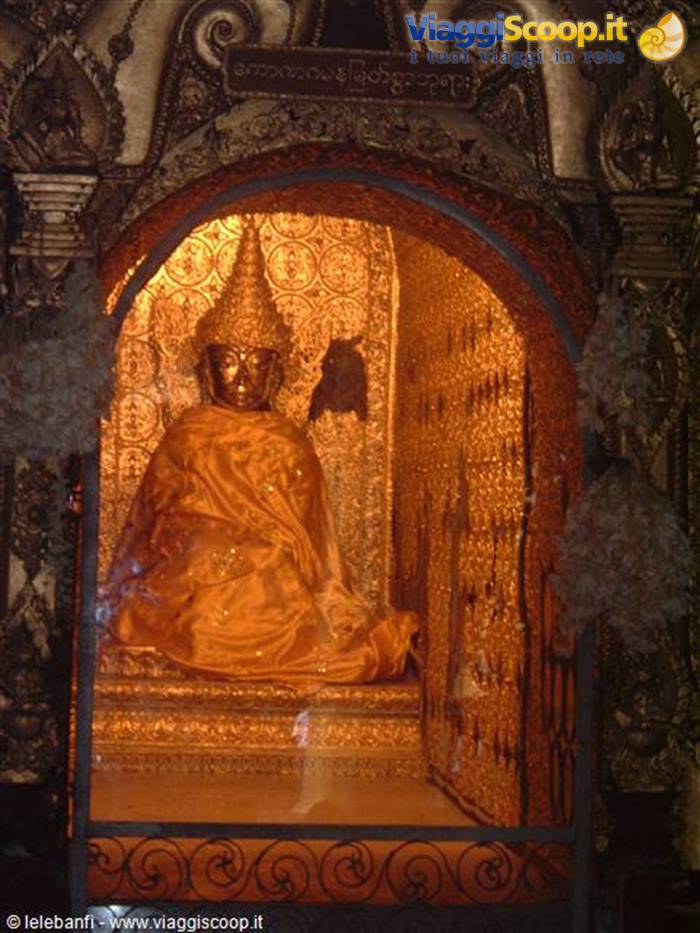
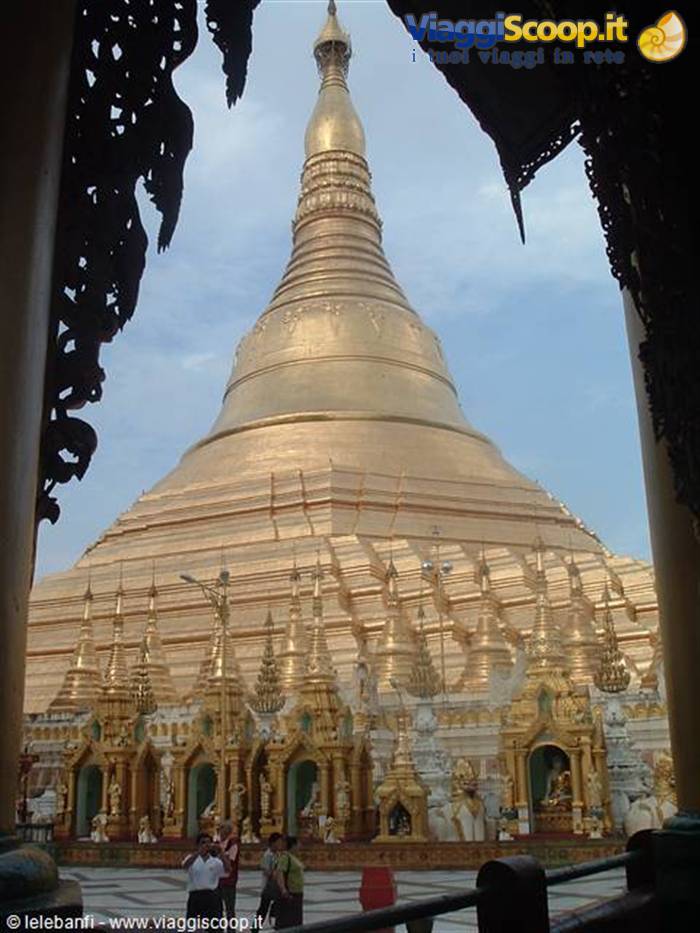
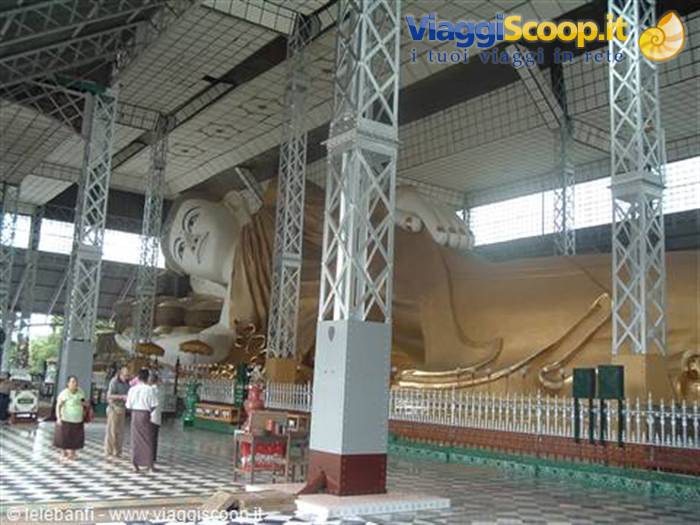
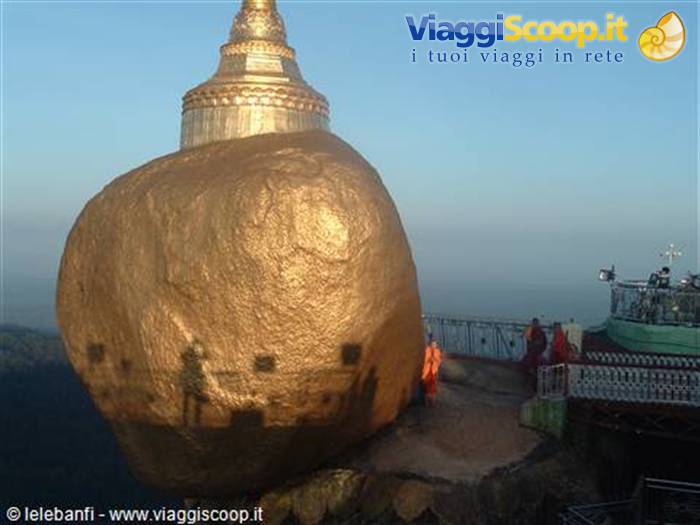
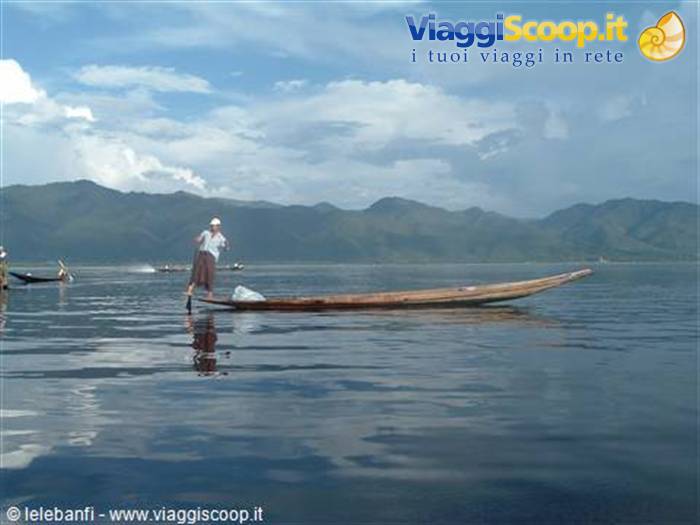
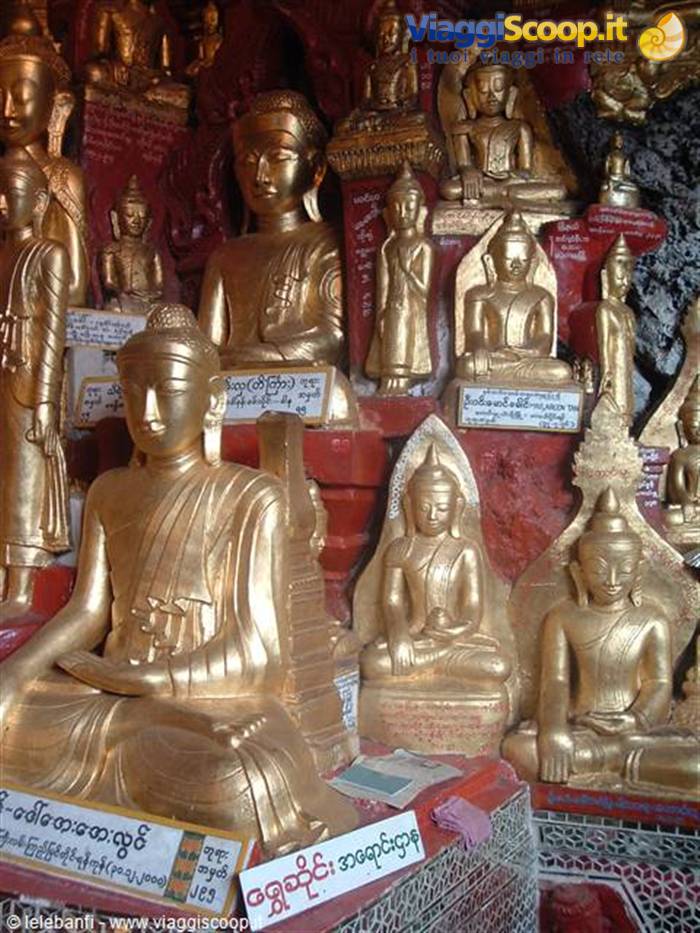
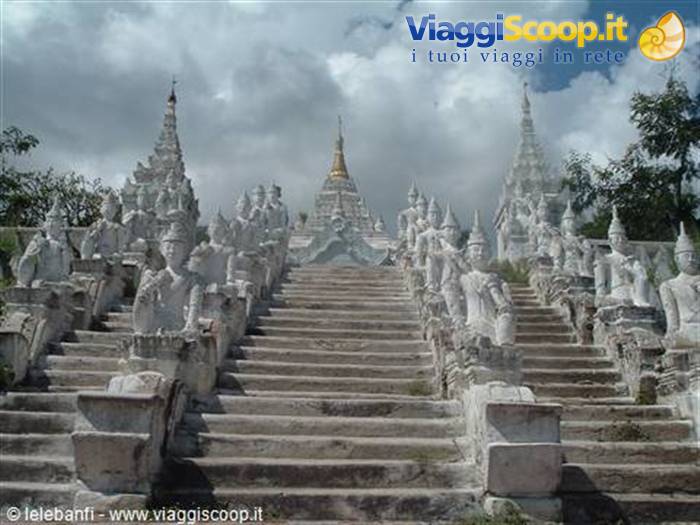
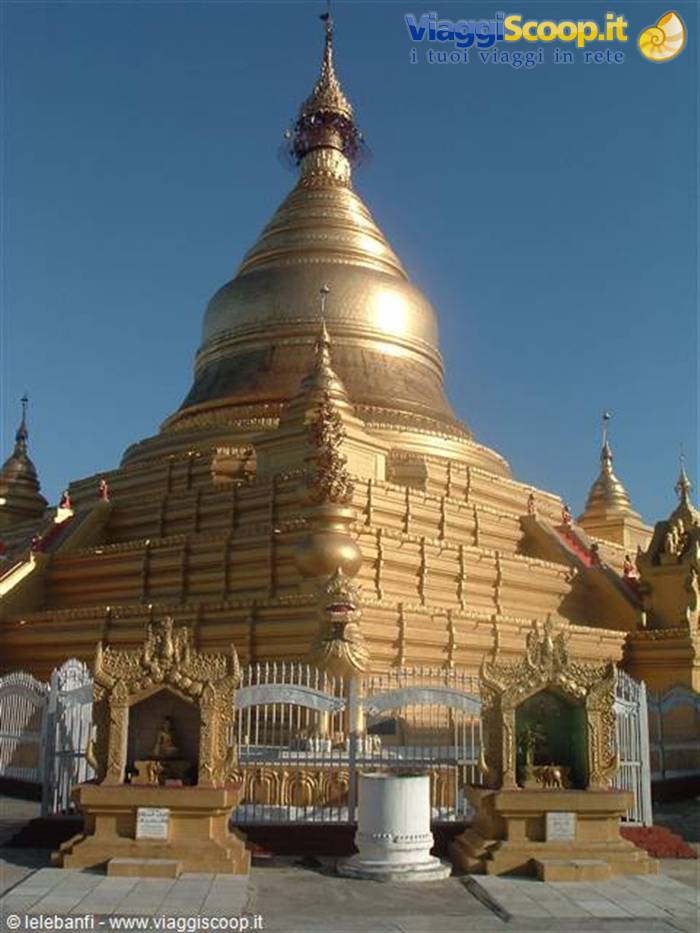
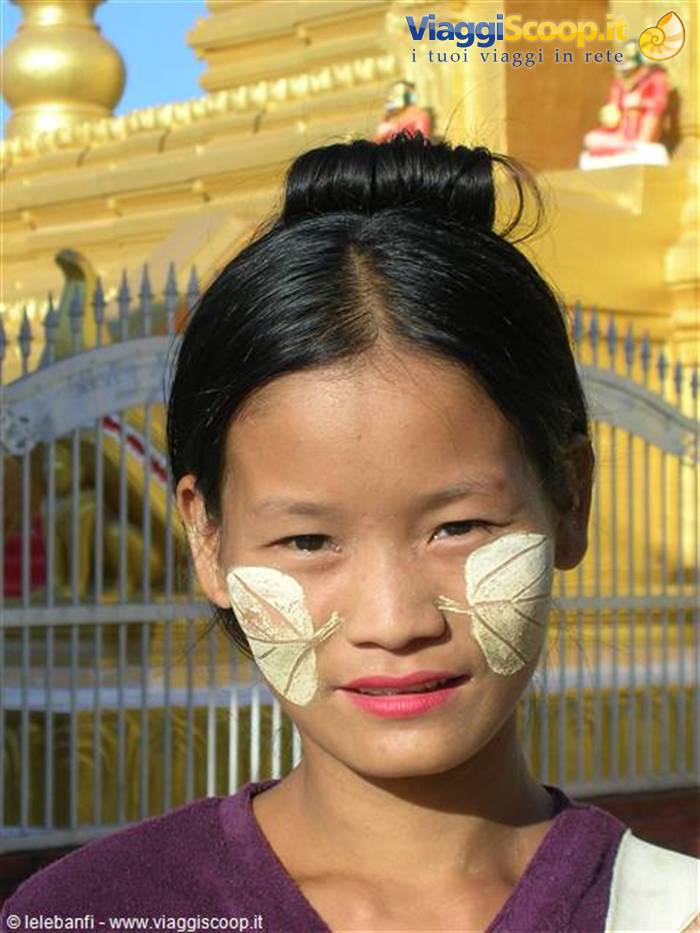
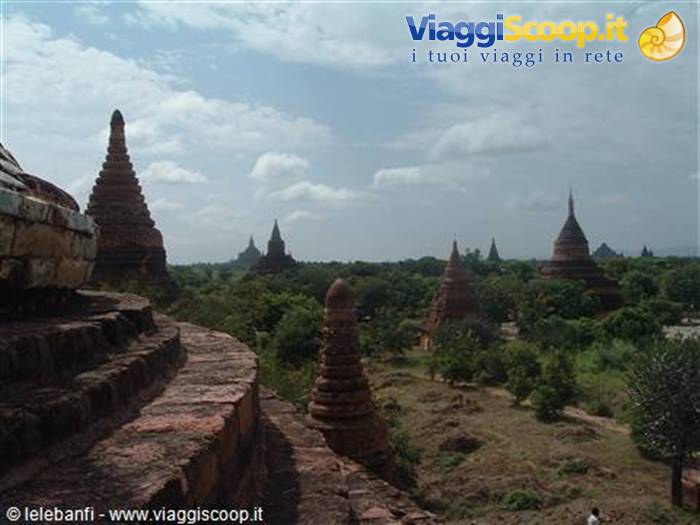

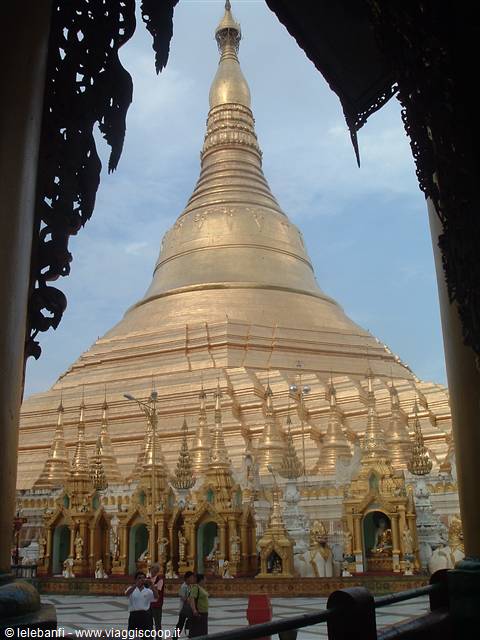
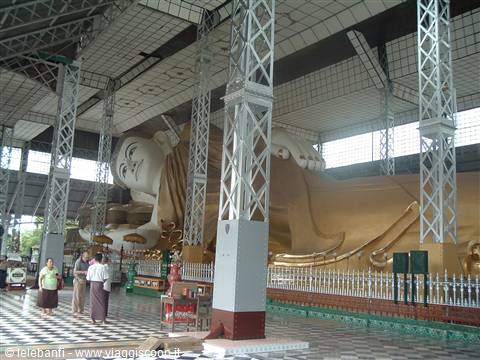


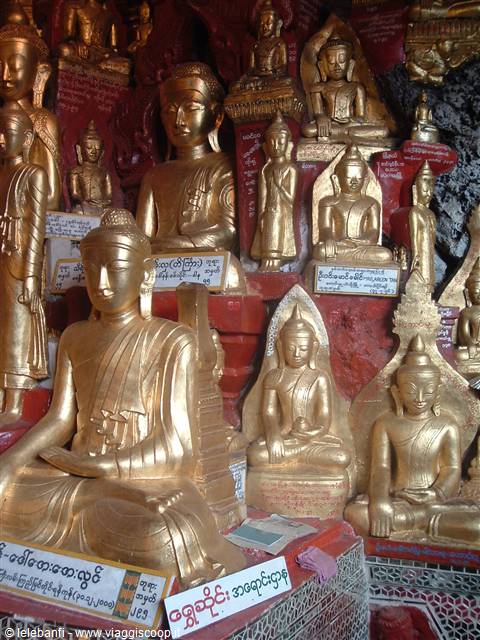
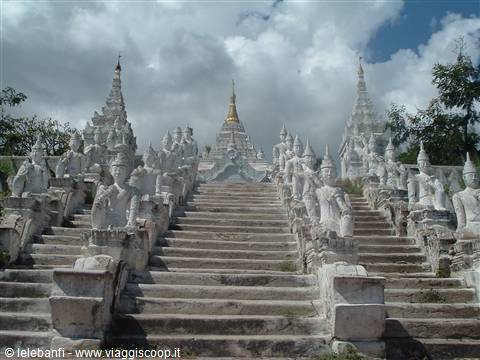

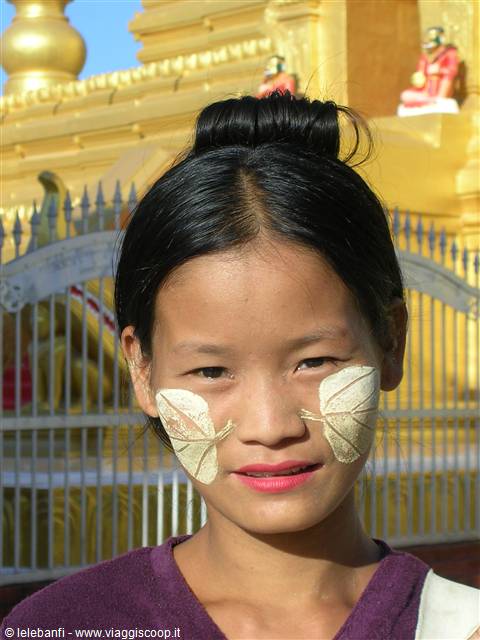

0 reader comments