The story
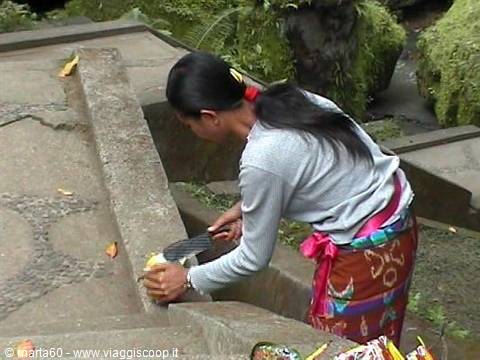
Bali, or the island of the Gods, what better definition for this island of the Indonesian archipelago located between the island of Java and the island of Lombok. It really is the island of the Gods, where more than 20,000 temples dot the Balinese territory and religion dictates the rules of the whole life of its people. From birth to death tradition holds that life is marked by ceremonies in honour of the spirits, and while the women spend their days feeding them with smoking little altars, the men devote themselves to crafts, in which they are masters of wood carving, sculpture and painting, alternating art with the cultivation of the fields. These ancient farmers who celebrate their dead with popular festivals flooded with gamelan music (their traditional music) where you breathe a joyful and serene air.
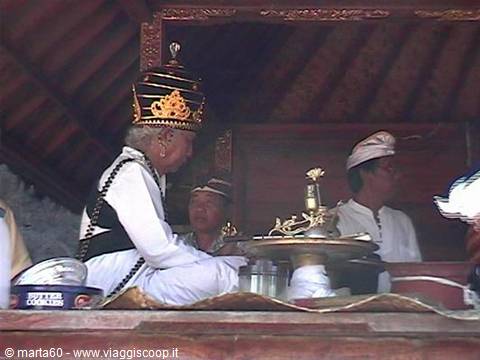
The cremation of the dead is for the Balinese the most important ceremony, the occasion for a lively celebration with a procession through the city with lights, colours, the scent of incense, music and cheerfulness. It is not difficult to come across one during a holiday in Bali. While visiting Ubud, a town in the interior of the island, we witnessed the cremation of a deceased member of the royal family. You walk along the street, strictly dressed from head to toe (both men and women cannot have bare legs), in the midst of a crowd of noisy people, dazed by the noise, the music, the smells, enchanted by the cheerfulness of a ceremony to which we are utterly alien.
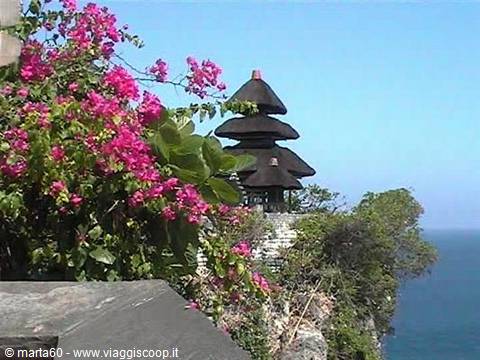
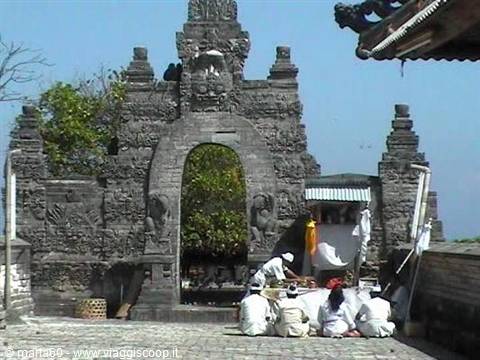
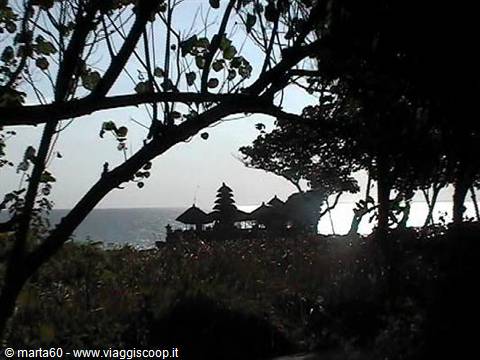
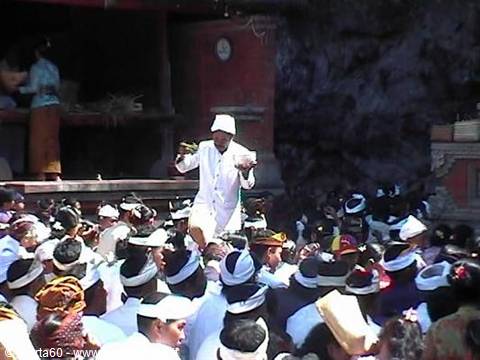
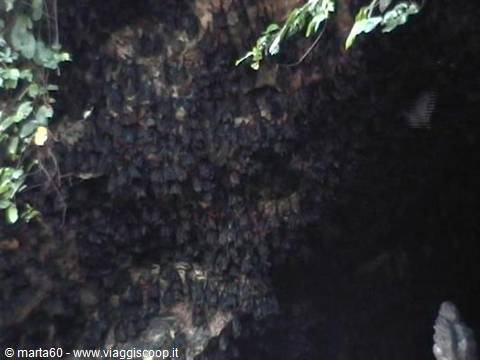
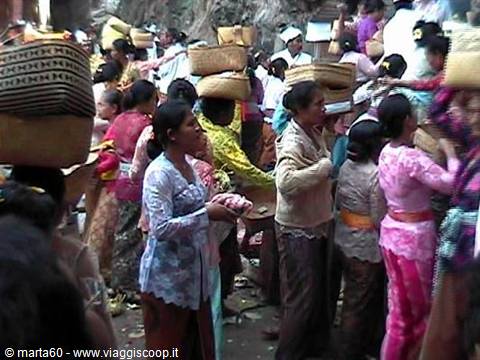
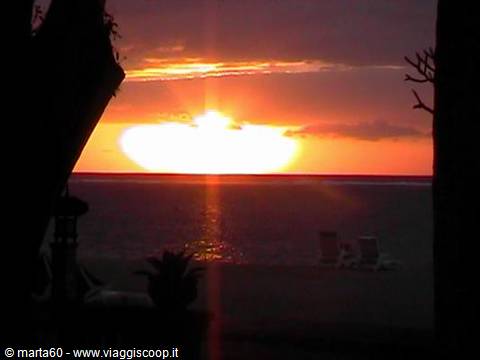
In Bali you visit temples; you cannot miss the main ones, which are the most evocative and full of atmosphere: The temple of Pura Luhur Uluwatu, perched on top of a cliff sheer above the ocean near Kuta, (favourite destination of surfers from all over the world); the Pura Tanah Lot temple, still inhabited by monks, set on the seashore where you can admire the most beautiful Balinese sunset; the bat cave temple of Goa Lawah, with quite a strong impact: we witnessed a religious service during which tips were collected for the gods, amid a crowd of people busily and frantically carrying baskets and the like to the altar in honour of the gods. But the impressive thing is that the altar is placed at the foot of a cave inside which (and I'd say outside too) thousands of peaceful black bats live packed one against the other.
And so in this temple (one of the most famous) the background music to the ceremony is the shrill sound of all these bats, considered sacred and untouchable by the people. In our opinion you cannot leave Bali without having visited at least these three temples; we saw others too: The Elephant Cave temple, a short distance from Ubud; north of it, however, is the temple of Gunung Kawi, the temple dating back to the 11th century where 10 kings are buried; the particularity of these precious ancient stones is that they are immersed in a green valley with dense tropical vegetation, among waterfalls and rice terraces and superb palms.
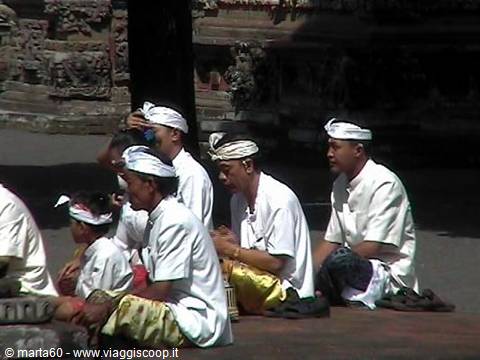
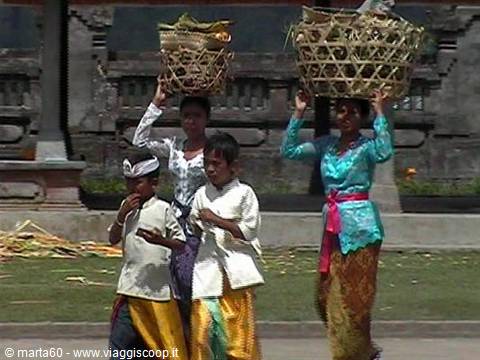
But perhaps also not to be missed is the water temple of Ulun Danu, dedicated to the goddess of the lake, located on Lake Batur, in a vast garden with fragrant flowers, surrounded by altars with pagoda roofs made of palm fibre, where colourful people walk carrying on their heads with perfect balance woven baskets of palm leaves full of offerings for the gods. To visit the temples it is necessary, as a sign of respect for the gods, to wear a sarong to cover the legs and wear a cloth sash around the waist. The nature of the island of Bali is explosive: volcanoes, lakes, mountains, white beaches and black beaches, rice fields and palms everywhere. We were struck by the many terraced rice fields cultivated with effort by these Balinese farmers who have tried to wrest cultivable land from extremely lush vegetation.
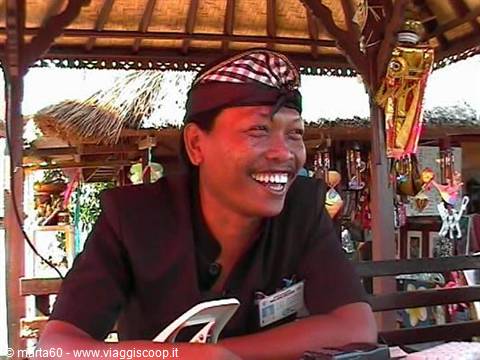
The monsoons assure Bali abundant rain from December to April, so the best period to visit it is from May to October, when the climate is drier. Life on the island costs very little and perhaps what is not worth seeing is the capital Denpasar, where whole families travel precariously balanced on polluting scooters amid traffic and smog in an oppressive heat. But as soon as you pass the walls of this city, everything else is silence, peace, the scent of incense, flowers of shifting colours and rice fields, temples and gentle, smiling people.... this is Bali
The journey's photographs
14 photographs · click to open them full screen


0 reader comments