The story
I set off on this cruise full of enthusiasm, mindful of two previous cruises that were always with Costa. This time, unfortunately, my expectations of the ship's services were almost entirely disappointed by the extremely poor quality of everything offered on board the Costa Romantica. Starting with the food, which was truly awful, and ending with the cleanliness. Luckily the beauty of the places we visited made up for the dreadful hygienic conditions of the ship, which, more than a cruise ship, could have been described as a ferry between the islands of the Indian Ocean. The good thing about a cruise is that in a couple of weeks you can visit several places; the bad thing is that the stops are clearly short, so you have to cram everything into one or at most two days and be lucky enough to have clement weather, otherwise you've wasted the opportunity.
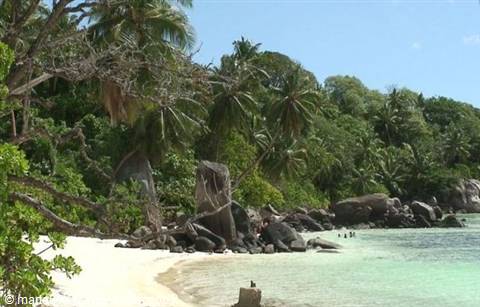
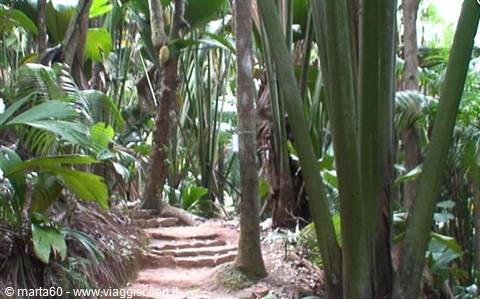
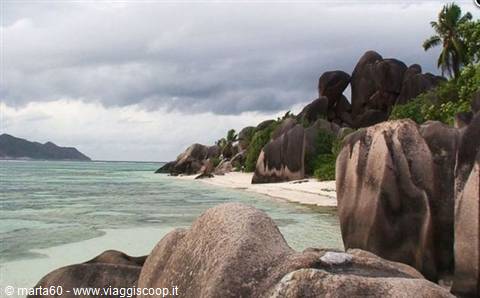
We wasted ours in the Seychelles: unfortunately the only rainy day fell exactly during our visit to the enchanting island of La Digue, precisely when we would have so wanted brilliant sunshine. Once we arrived in the Seychelles and were ready to leave Mahe (the main island) by boat for La Digue, the sky began to grow darker and darker, and by the time we reached the most famous beach in the world, Anse Source D'Argent (the one from the Bilboa advert, or the location of the first Cast Away), the colours of the marvel before us were, unfortunately, drained by the threat of rain coming from above. Still, despite everything, a spectacle of nature at its finest was laid out before us! How beautiful these islands are! How lovely the walk through the "Vallee de Mai" on Praslin.
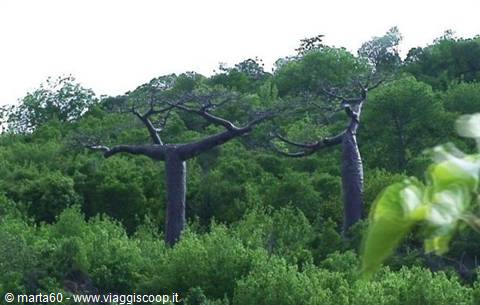
This forest, the only place in the world where the Coco de Mer grows, is said to be regarded as a copy of the Garden of Eden... and I have no doubt in believing it. We had already been to Mauritius in '90, and returning to Ile aux Cerfs, which I remembered as deserted and untouched, was not pleasant! Unfortunately the tourist wave of the last 20 years has made it an over-exploited island, inevitably stripped of part of its former charm! Madagascar was a pleasant surprise. We expected Africa, but, so to speak, not so African! Misery was the constant across the three stops at Nosy Be, Diego Suarez and Tamatave.
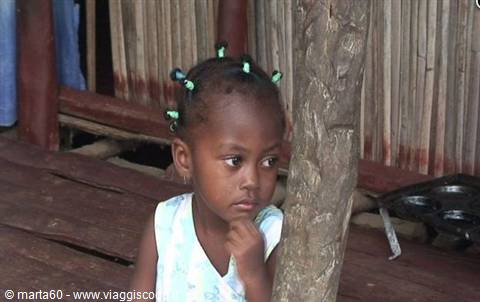
From Nosy Be we reached the island of Nosy Komba in less than half an hour by small boat, and walking along the little reddish-earth lanes that crossed the stilt village, where people greet you with tribal songs and dances, we admired the explosion of lush, luxuriant vegetation, rich in palms with enormous, bright green fronds, complete with lemurs, snakes, chameleons and giant tortoises... accompanied by smiling children, happy in their poverty, who humbly and tirelessly asked for a "cadeau". The arrival at Diego Suarez felt like the most stifling, weather-wise. The temperature was above 30 degrees but the humidity was very high... in any case we knew that December is definitely not the best time to go to these countries, which enjoy their best climate from April to October... We had read that the bay of Diego Suarez was the third largest in the world, after Rio de Janeiro and Sydney...
well... they certainly mean in size, because as far as beauty goes... it's a bit of a disappointment: the bay is large and in the middle rises the Pan de Azucar, but for anyone who has seen Rio's, this one could be called a "sugar lump". Beautiful, on the other hand, a short distance from the bay of Diego Suarez, were the Bay of Dunes and the Bay of Pigeons: dazzling white sand and crystal-clear sea... practically deserted! The stop at Tamatave was almost pointless (perhaps the ship needed to refuel); although it is the country's most important port, I don't think it's a stop that's worth it...
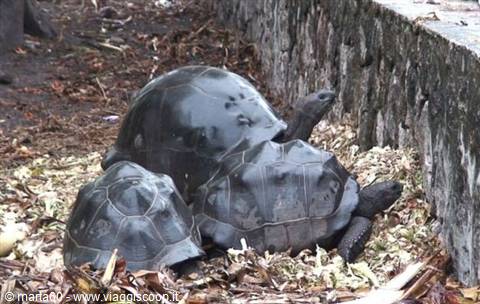
After visiting Ivoloina National Park and gorging once more on every species of lemur, chameleon and tortoise, small, medium and large, on the way back to the port we stopped at the market to buy spices (cinnamon, black, white and red pepper, nutmeg and vanilla), with the usual haggling over the price (they clearly prefer euros to dollars), but unlike many countries where you start at a price and end up paying less than half, here they aren't willing to come down much. To give you an idea: for a little bag of pepper they ask 5 euros and you can barely get them down to 3, and that's a lot when you consider that their average wage is about 40 euros a month. We distributed their hypothetical wage in a few minutes across a couple of stalls.
Exhausted by the heat, we climbed back onto the ship, which we had renamed, from Costa Romantica, the Costa Poor and Dirty; we're at the end of our tether and also at the last stop: Reunion (a French island). On our arrival a group of taxi drivers was waiting for us and the usual haggling began to take you around... (we tried to hire a car, but in vain since it was Christmas and everything was closed). There was no way to get below 400 euros per minibus, so we teamed up with other holidaymakers and split the cost! From what we managed to see, the island is really ugly, and if Tamatave wasn't worth a stop, Reunion was even less so!! The beaches are ugly (some black, some greyish); even the one we'd read was the most "in" at St-Gilles-les-Bains was a real disappointment! In the capital, St-Denis, total desolation reigned (perhaps also because, being Christmas, nothing was open).
Probably the only thing worth noting could have been the visit to the volcano, which we couldn't do for lack of time... In short, to sum up: the trip is definitely worth it for the Seychelles (a true paradise) and for Nosy Be... and in any case better on a cruise than in the cold back in Italy!!!
The journey's photographs
8 photographs · click to open them full screen


0 reader comments