By bus, train and car between Delhi, Agra and Rajasthan: a beautiful and at the same time very tough experience, one that marks you inside and makes you think. Because India fascinates and frightens at the same time. And you never forget it.
Day 18 May 2008
FIRST STOP, AGRA
We arrive at Delhi's "Indira Gandhi" airport after a night flight and a three-hour delay kindly offered by Air India. Then, however, despite fears about bureaucratic slowness, and a hint of a brawl at the passport control desks between the officials and a particularly agitated Indian man, before nine in the morning we are ready to get into the taxi that should take us to the central bus station. The conditional comes naturally because the car is extremely beaten up, our driver lives with his hands on the horn and drives like a madman, heedless of the highway code and above all of logic. But we are not faced with a single act of madness: that taxi driver behaves exactly like all the others. There are no directions of travel, traffic lights, or no-turn rules; people at the wheel more or less do whatever they want, and we simply have to get used to it.
Even if it is not easy to get used to the idea that a truck, or simply a cart pulled by a camel (which in India is one of the most popular means of transport), can suddenly appear in the middle of the road, going the wrong way, and even claim to be right. But this too is India, and to get by you have to learn quickly. We also quickly learn that Delhi's central bus station, which by the way seems to be standing by a miracle, has no buses leaving for Agra, our first destination. A rickshaw driver (a kind of auto-rickshaw that instead of a cargo bed has two seats for passengers covered by a plastic tarp; curiously Indians write rickshaw) offers to take us to the right bus station for 100 rupees (one euro and a half). We trust him, and all in all we do well, even though the bus we get on is the sad version of one of our local trains.
It stops every two kilometers to pick up people summoned by the ticket taker's obsessive "agrà agrà agrà," it is dirty (but already on the first day we understood that almost nothing is not), it goes slowly because it has to avoid obstacles of every kind, and it even forces us to keep our backpacks between our legs. Moreover, obviously, it has no air conditioning, not a minor problem in a place where at 9 in the morning it is already 35 degrees. After a terrible journey, which takes 6 hours to cover 250 kilometers, we arrive in Agra. We witness the second brawl of the day when the rickshaw drivers scuffle to decide who will have the honor of taking us to Hotel Sheela (a good recommendation from the Lonely Planet even though it has no hot water, towels, or toilet paper), where we will spend our first two nights in India.
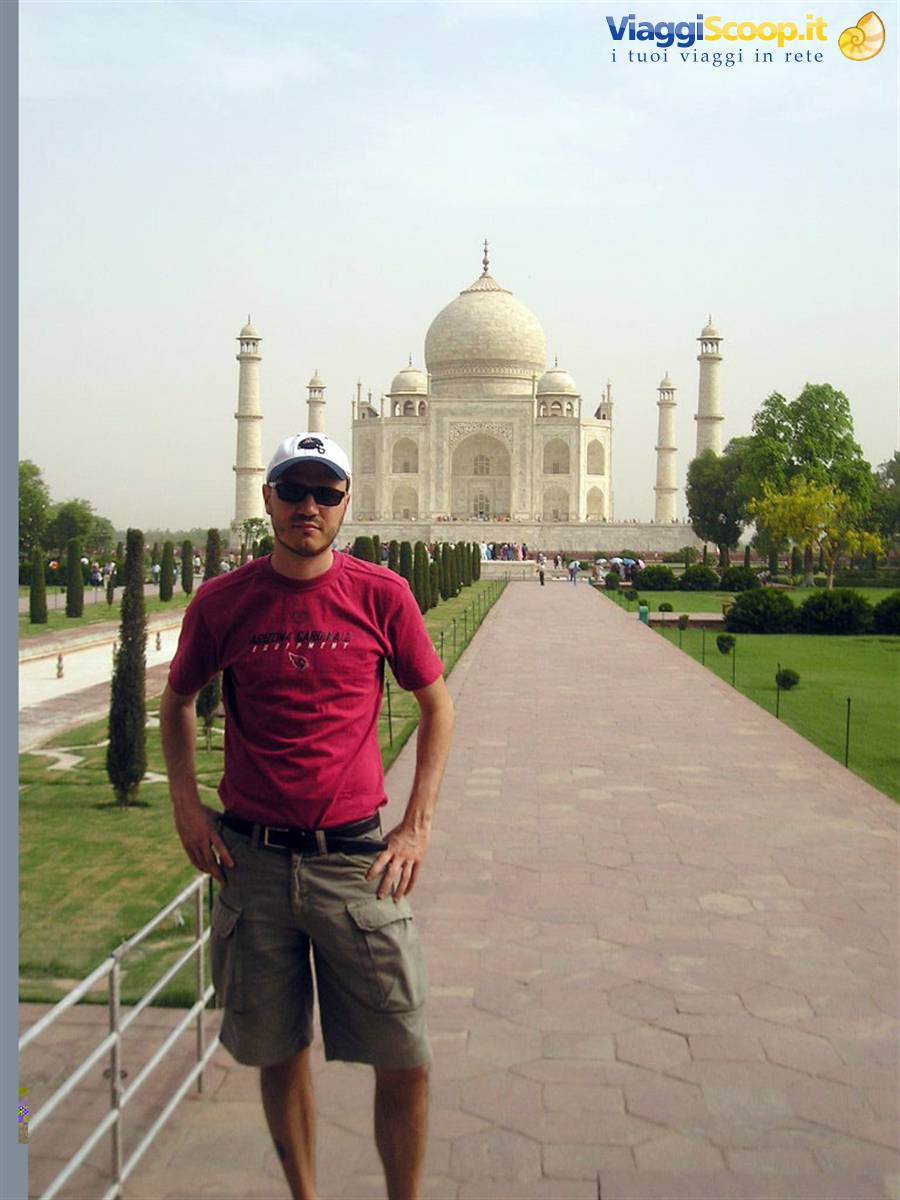
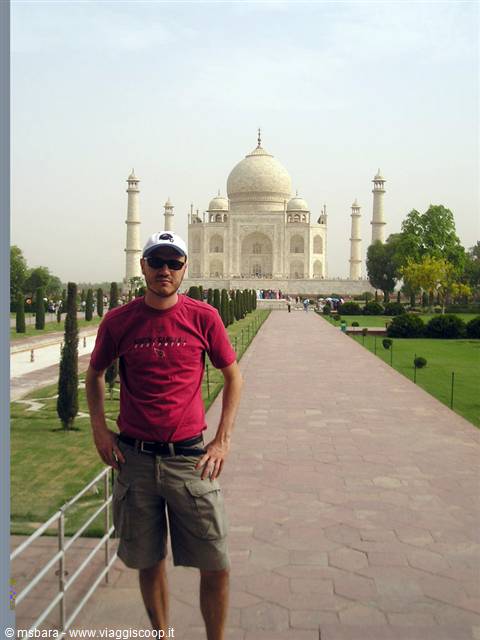
Before our deserved sleep we take a short stroll around Agra, truly making acquaintance for the first time with the faces, houses, shops, streets, sewers, excrement, and smells of this crazy country. There is of course also time for the first dinner: a small rooftop restaurant with a view of the Taj Mahal, where for 3 euros for two we eat rice and chicken, the basis of our diet for 20 days, although we did not know it yet. The next day we devote to visiting Agra: the Taj Mahal, the funerary monument built by the Muslim emperor Shah Jahan in 1631 for his wife Mumtaz Mahal, who died while giving birth to their 14th child. It is decidedly the symbol of India: seen and seen again, it is nevertheless beautiful, majestic, romantic. And expensive, since admission for Indians costs 20 rupees, but for foreigners 750 (14 euros, more than our hotel).
Afterwards we go to Agra Fort, another majestic sandstone construction, while in the afternoon we visit Fatehpur Sikri, a stone city abandoned for centuries, which was the capital for a brief period (from 1571 to 1585, then the lack of water sealed its end) of the Mughal empire that dominated this part of India.
inevitable Taj Mahal
Day 212 May 2008
A LITTLE PATCH OF GREEN The following morning we set off, by car because this route is not served by trains or buses, toward Sawai Modphur: 5 hours to cover over 300 kilometers, leave the state of Uttar Pradesh and enter Rajasthan: a journey that in these parts, also thanks to the help of air conditioning, can be called comfortable. In Sawai, where for 16 euros we sleep at the Anurag Resort (a complex of charming bungalows complete with a huge and very beautiful swimming pool), is the entrance to Ranthambore National Park. We devote more than half a day to the park, and despite the 40 degrees it is definitely worth it. You enter through a gorge, where a tower and a small lake complete with crocodiles defended the entrance. In the park there is a ruined fortress and several hunting lodges dating back to the time of the maharajas.
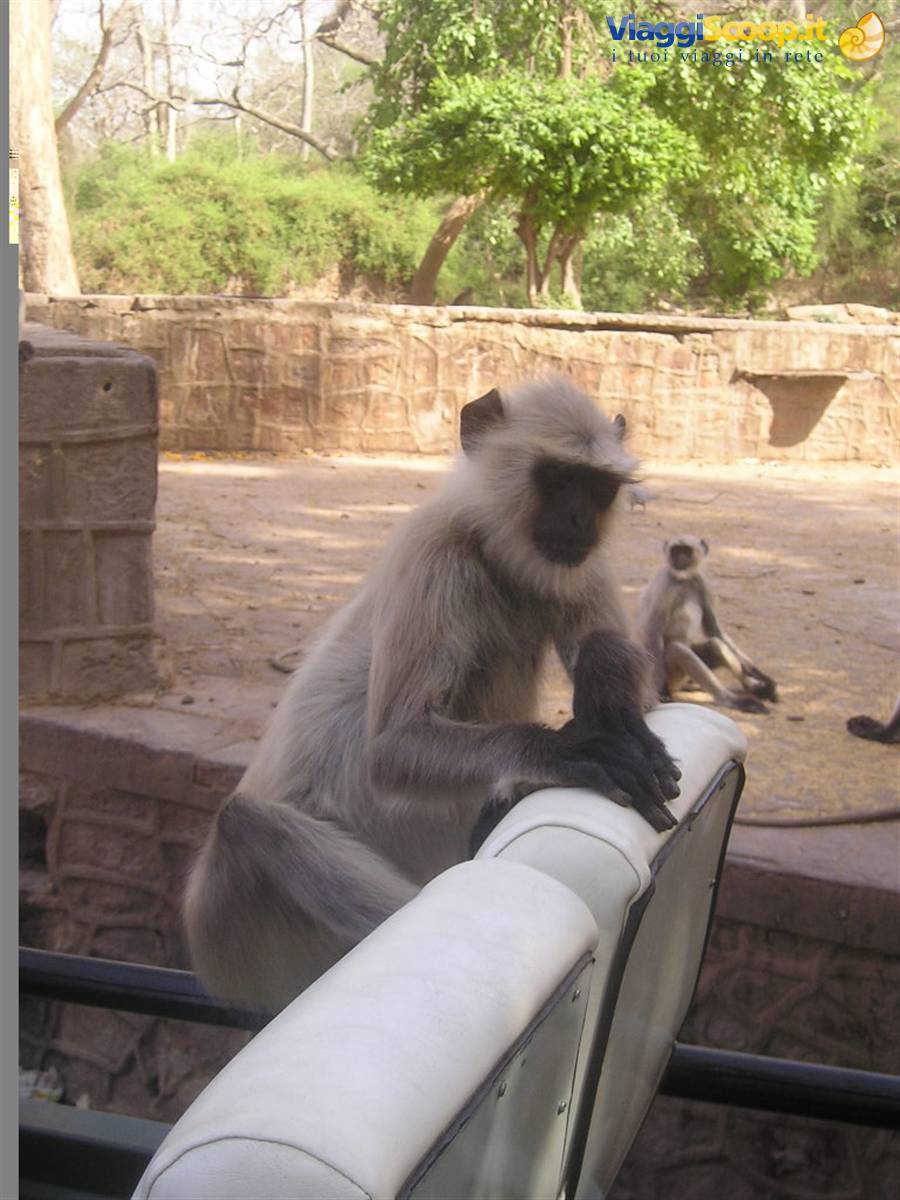
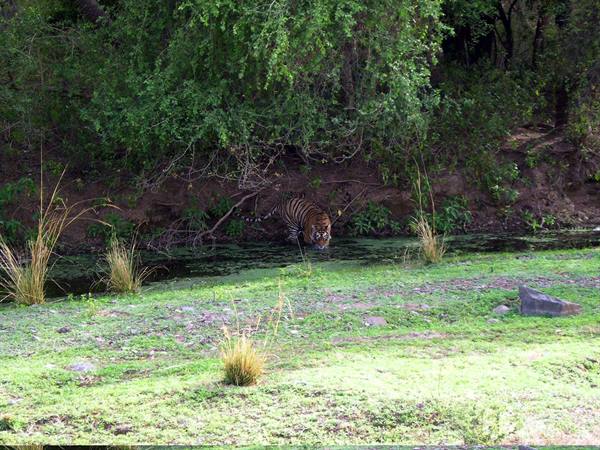
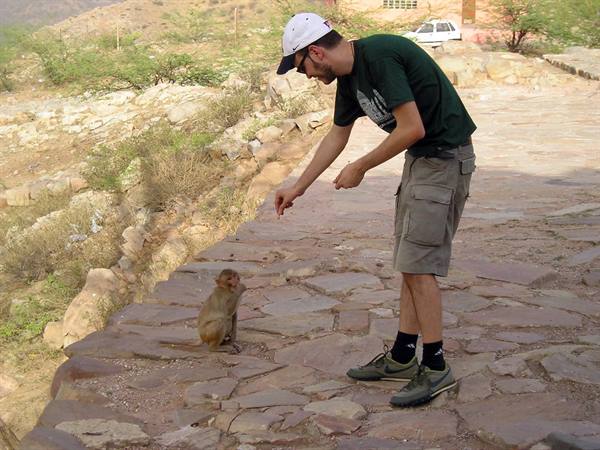
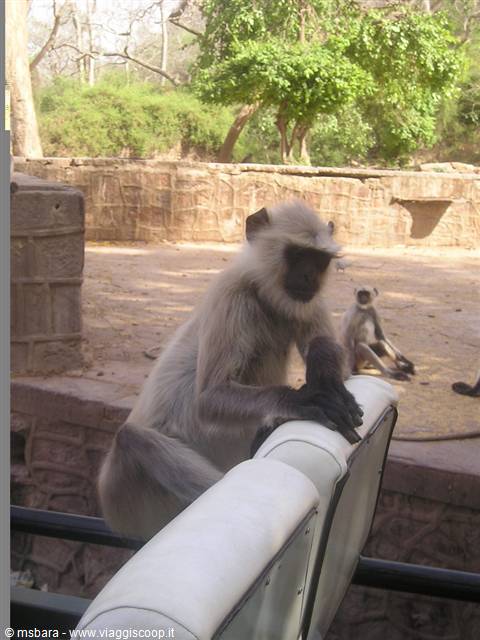
By now these ruins are inhabited only by monkeys, and looking around you have the distinct impression that here "The Jungle Book" is something decidedly real. The monkeys are certainly not the only animals in this very green park (a true oasis in the barren landscape of Rajasthan) which, besides an enormous lake, hosts deer, antelopes, buffaloes, wild boars, an impressive number of birds, and above all tigers. We are lucky enough to see one while it is bathing in a pool of water. Thanks to our canter (a kind of open jeep, only a little bigger), we manage to get within no more than 10 meters to enjoy one of the most intense emotions of the entire trip.
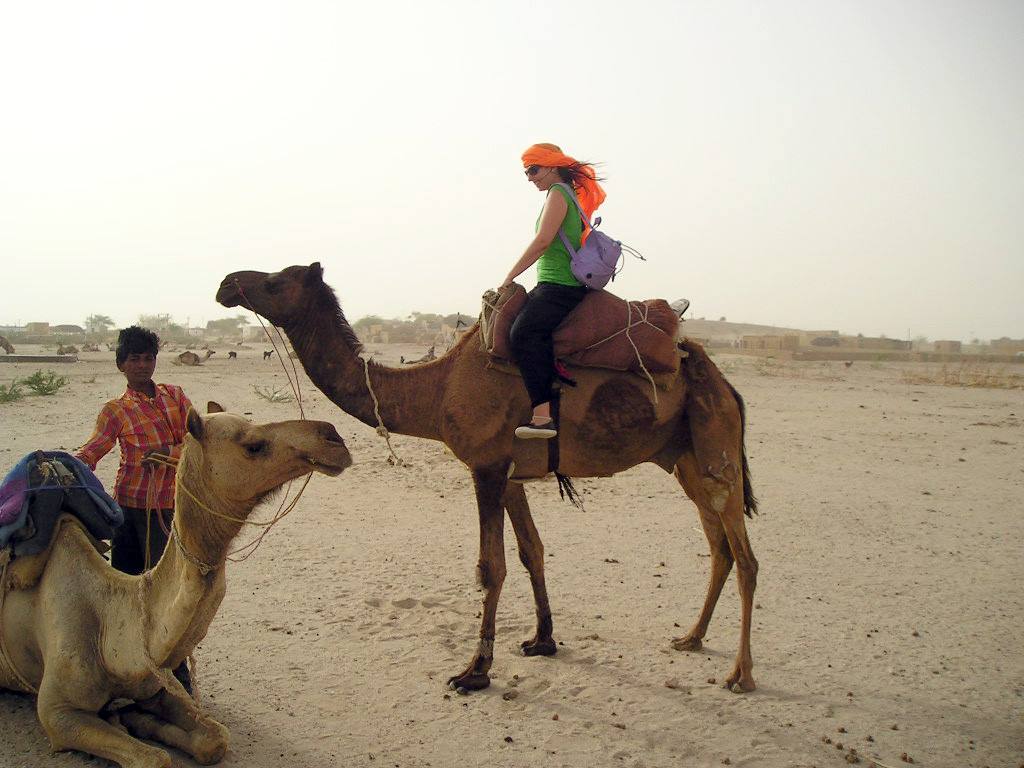
in the saddle...
Day 314 May 2008
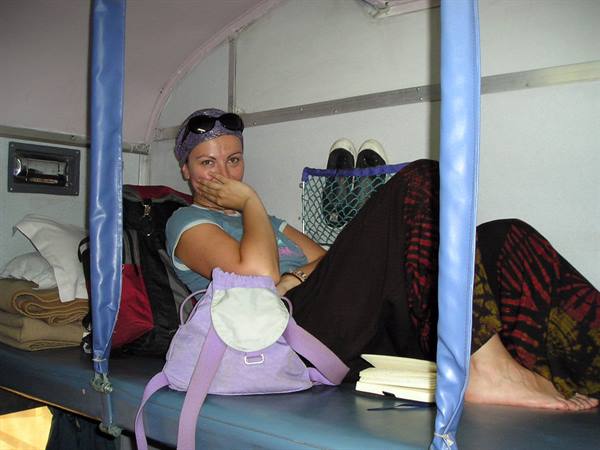
A TRAIN FOR UDAIPUR That same evening we leave Sawai, an ugly city that offers nothing, for Udaipur. Our train leaves at half past midnight and will arrive at 9 in the morning. Entering an Indian station at night is an experience that makes you think. We had already begun to reckon with the poverty of these people, but we did not know that the homeless gather in the station to find a place to sleep: in the square in front of the entrance there are hundreds of people, some lying on a mat, others on a blanket, others directly on the ground, while police officers armed with sticks maintain public disorder. We have booked two berths in first class, and despite the worn seats, the wet or torn sheets, and the very dirty bathroom, we get on that train knowing that all things considered we have very little to complain about.
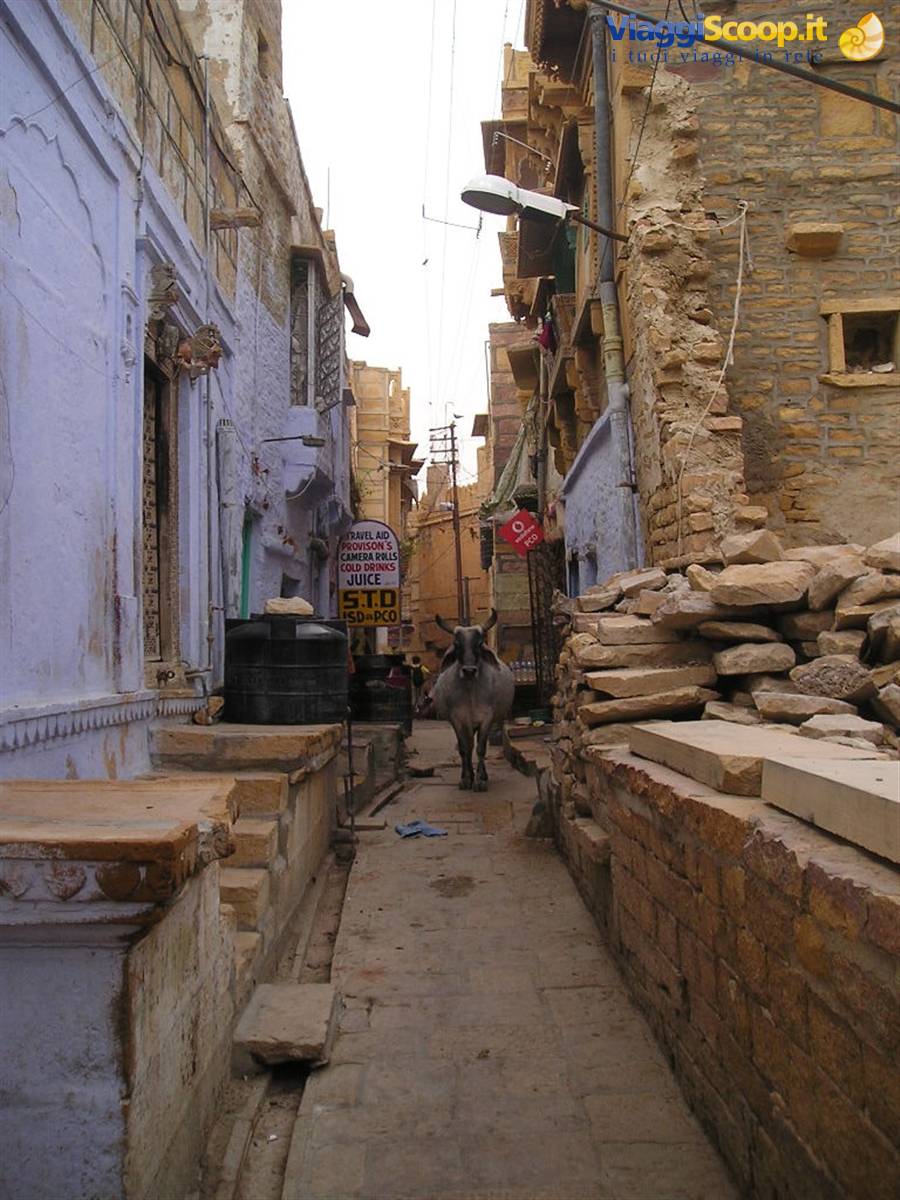
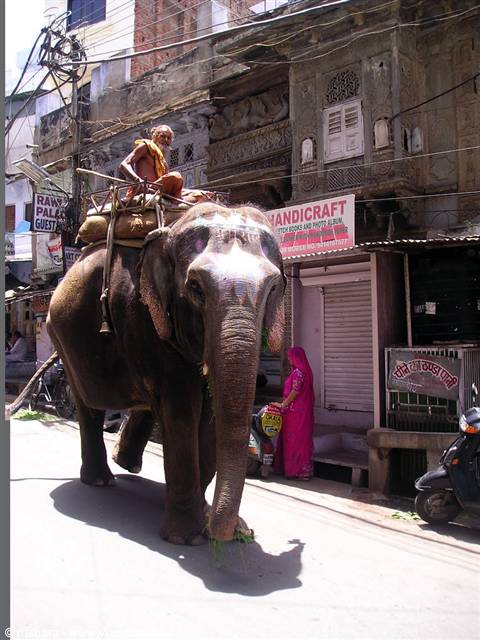
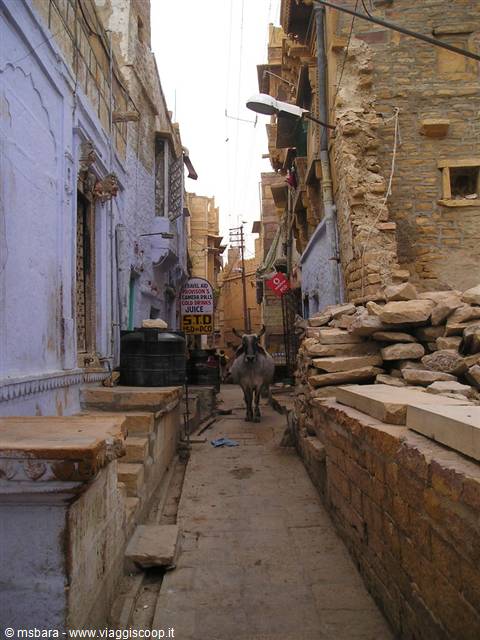
Udaipur is in southern Rajasthan, overlooking the shores of Lake Pichola, which pays tribute to the dry season by appearing stagnant in several places. But Udaipur remains a fantastic city, full of museums, Hindu temples, palaces, and havelis with a splendid view of the lake (magnificent noble residences, often turned into beautiful hotels like our Jagat Niwas), with small streets packed with shops and restaurants, where you may happen to encounter, besides the usual more or less sacred cows, elephants walking placidly through those narrow alleys.
And even if here too tourists are scarce because it is not the season (as in Sawai, we are the only guests of the hotel), which makes us the object of desire for a swarm of shopkeepers, sellers, deal brokers, rickshaw drivers, and various and sundry others whom we increasingly rudely shake off, Udaipur remains a very beautiful city: with the many flaws of an Indian city, but very beautiful.
do I go or do you go?
Day 417 May 2008
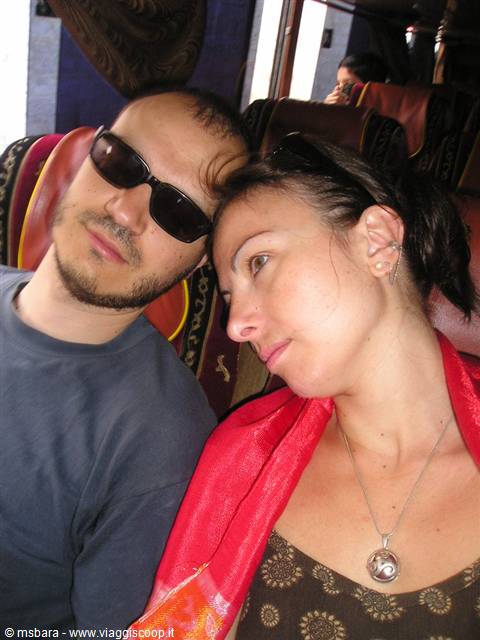
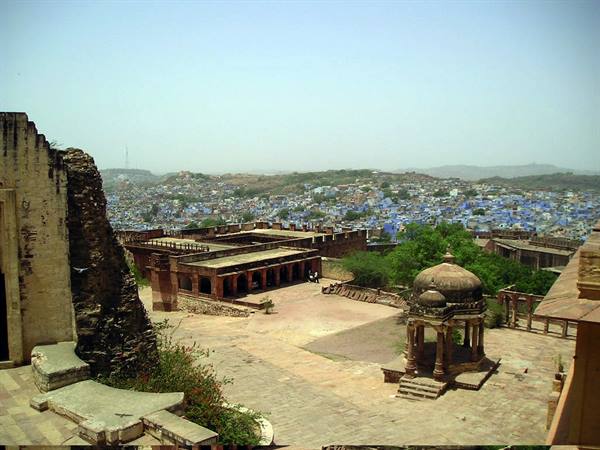
TOWARD THE DESERT We cannot say the same, however, about Jodhpur, which we reach a couple of days later, entrusting ourselves to a double-decker bus (so to speak—the upper part has only berths), which in the regular 7 hours allows us to cover about 250 kilometers in a climate that is nothing short of scorching. We are in fact at the edge of the Thar Desert, but air conditioning remains an optional extra that they don't give us even if we pay for it. And to think we would gladly have paid for it. Jodhpur has sites of extraordinary beauty, such as the Mehrangarh, a stupendous fort built 120 meters above the city, from which you can enjoy an extraordinary view over the houses all painted blue in the old quarter, the mausoleum of Maharaja Jaswant Singh II, the Umaid Palace.
But it is also a chaotic, dirty city (if possible even dirtier than the others), smelly, made unbearable by the heat and by the insistence of those who have something to pawn off on us. Perhaps it's our fault too, because the cooler (a sort of air conditioner that cools with water) in our room doesn't work well, and in India, under these conditions, you cannot afford not to find relief at least in the hotel. Perhaps we should have changed rooms and maybe everything would have been easier, the impression of the city different. But we didn't, and two sunrises later, when we set off on the usual bus (and as usual we were the only tourists, and as usual everyone stared at us like white flies, and as usual someone even wanted to touch us), we left Jodhpur without regrets.
Six hours later we arrive in Jaisalmer, a small city perched on a hill in the heart of the Thar Desert, about 100 km from the border with Pakistan. The main attraction of the city is the fort that contains the old part, as well as small shops, restaurants and guest houses. We, however, decide to stay in the first outskirts because, the guidebook says, tourists sleeping inside the fort contribute to its water and structural deterioration. We choose the immense Jawahar Niwas, a princely sandstone palace, in the past, needless to say, the residence of a maharaja. We are once again the only guests, and the porter, just to keep us there, gives us a stunning room for 30 euros a night, cutting the price by a flat 50%.
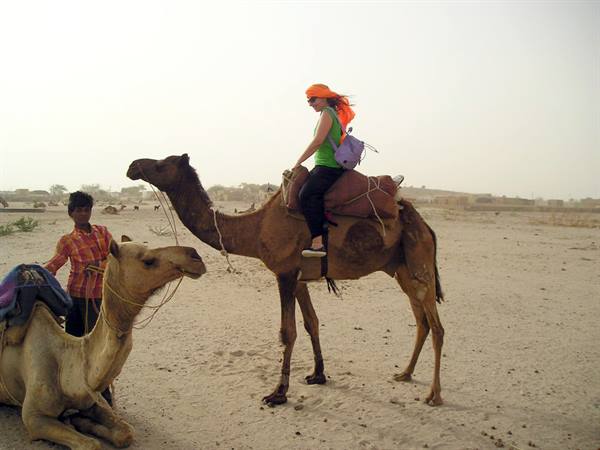
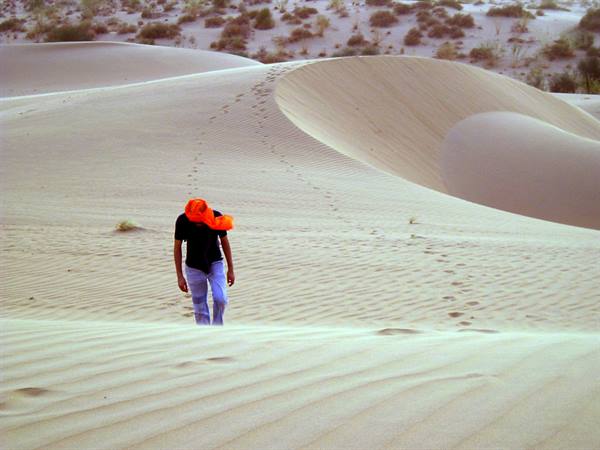
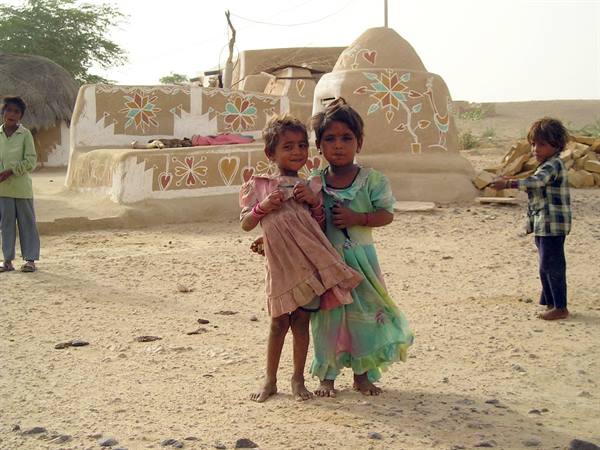
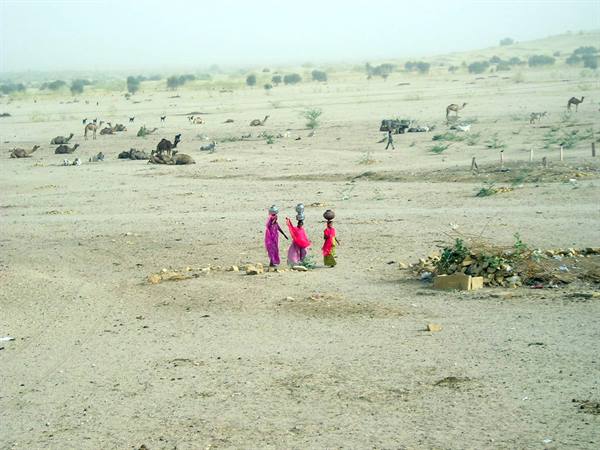
Jaisalmer is a dream of a place, it seems like a magical city emerging from the sand (it is also called the golden city because of its color), a city defended by more than 90 bastions that make it practically impregnable. Inside one of these is Little Italy, a lovely restaurant where you eat on cushions. Actually the spaghetti with pesto and the pizza aren't bad, especially because they allow us to escape, for once, from the rice/spicy chicken routine. We spend our second day in Jaisalmer in the Thar: armed with plenty of water and turbans on our heads, in a jeep we head deep into the desert. On our way, or rather our track, especially goats and camels, but also many villages of huts where, with that 40 degrees and the total absence of vegetation, it seems impossible that anyone could live.
Yet people do live there, and it's precisely in one of those villages that we arrive after three hours by jeep. They offer us water and boiling hot tea before putting us on the camels that will take us to the sand dunes. A tourist experience, of course, but made more interesting and real by the total absence of other travelers. We head into the desert together with Akra, our young camel driver. He speaks good English, which is not something everyone can do at these latitudes, and he is kind and helpful. And he asks me how much my cell phone costs as soon as he hears the beep of an inopportune incoming message.
When I answer him, a little embarrassed (maybe I should have explained that it's a lot for me too, that it was a gift, that I don't deserve it), that it costs 15,000 rupees, about 250 euros, he thinks about it for a bit and then explains to me that the camels aren't his, that he is paid to drive them, but that one day, if he ever has that much money, he will buy an animal and go into business for himself. At that point I ask him how much a camel costs, and he tells me 20,000 rupees. Only 300 euros, but 300 euros that might be enough to change his life. And that are for me a reason for further embarrassment, as I try to articulate a decent if not exactly intelligent thought.
Maybe Akra notices, because then he changes the subject: he explains that he is Hindu and belongs to the warrior caste (castes were abolished long ago, but in reality they are still the basis of Indian society; the most important is that of the Brahmin priests, then the warriors, then merchants and artisans, then peasants, and finally the untouchables now defined as belonging to the Scheduled Castes, the protected castes). He tells me he has a fiancée in another village, a fiancée he has seen only once and whom he will marry next year, when he turns 23. After about two hours on the camel, Akra has us dismount and leaves us on the dunes to enjoy the sunset view while he gathers wood for dinner. Meanwhile the two boys with the jeep have caught up with us, and they will help Akra prepare the food.
On a makeshift camp they cook rice with vegetables, bake roti (an excellent very thin bread that looks like the piadina of Rimini), give us mango to peel and fresh water to drink. We have dinner there, together, in the sand, suspended in the darkness of the clear, starry night, surrounded by dung beetles (beautiful and harmless) emerging from the sand. A shepherd with a turban joins us, incredibly passing by: perhaps in the desert water and a bit of rice are not denied to anyone. Or else it's because we paid for all this stuff ourselves... When dinner is over we set off again for Jaisalmer. As we take Akra back to the village, and after leaving him a tip that earned me an invitation to his wedding, I ask him about the camels. He explains that he left them in the desert, where they will enjoy a night of freedom.
Tomorrow, if they haven't come back on their own, he will go and retrieve them. We arrive at the hotel at ten in the evening, exhausted and with sand even inside our underwear. But thinking back on it, if someone asked me when I felt happy, I could truly answer that time in the Thar Desert.
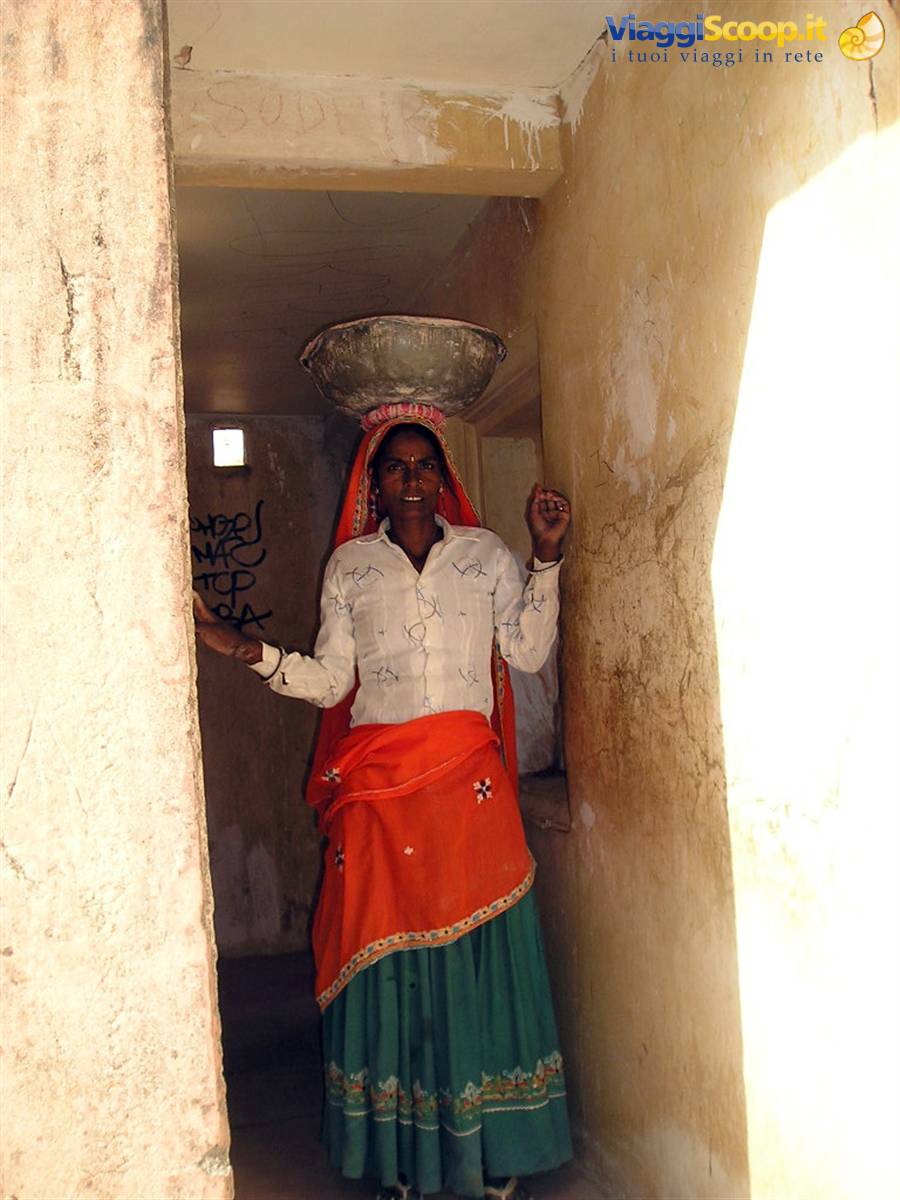
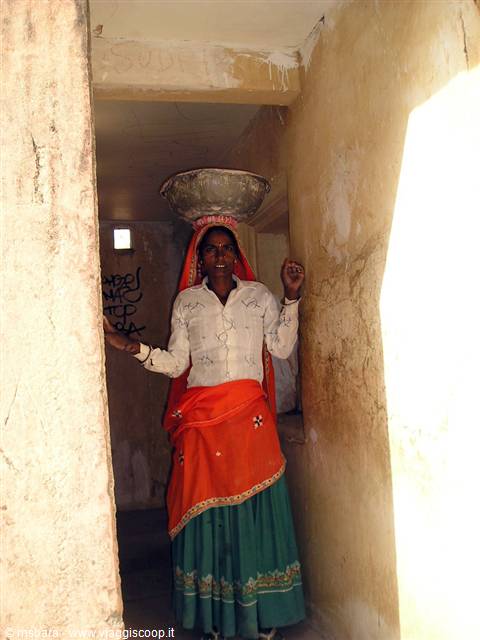
Woman in red and green sari balancing a metal basin on her head in a corridor
Day 521 May 2008
JAIPUR, SMELLS AND COLORS The next day, after a bit of shopping, we leave Jaisalmer and head for Jaipur. It's almost 700 kilometers, it would take two days and two buses, too much of everything. By train it takes, so they say, just 13 hours, and so we choose this solution, even though the train in question does not offer first class. A little worried after seeing the conditions of the sleeper and third-class carriages, we arrive at the station where, while we wait, a shoeshine man notices that my sneaker with the swoosh is coming unglued, worn down by that heat, and for 100 rupees he fixes it on the spot, making me wait standing up. Then we get on our carriage and relax: second class is almost like first, but it has no compartments, only dividing curtains. You basically sleep all together, but you do sleep.
Early in the morning we arrive in Jaipur, where we have ourselves taken immediately to the Madhuban Hotel. Also recommended by the guidebook, it's a perfect choice. Well-kept, clean, with pretty rooms and an eye for tradition, an elegant pool, a nice garden where you can have breakfast, at 20 euros a night it becomes our refuge from the smelly chaos of Jaipur, capital of Rajasthan and a city of 5 million inhabitants. We explore it thoroughly, going to the City Palace, the Hawa Mahal, the Iswari minaret, the monkey temple. From Jaipur we set off for a visit to Amber Fort, beautiful but not as much as the Mehrangarh, and then to go to Pushkar, a holy city that houses the only temple dedicated to Brahma, for Hindus the creator of the universe.
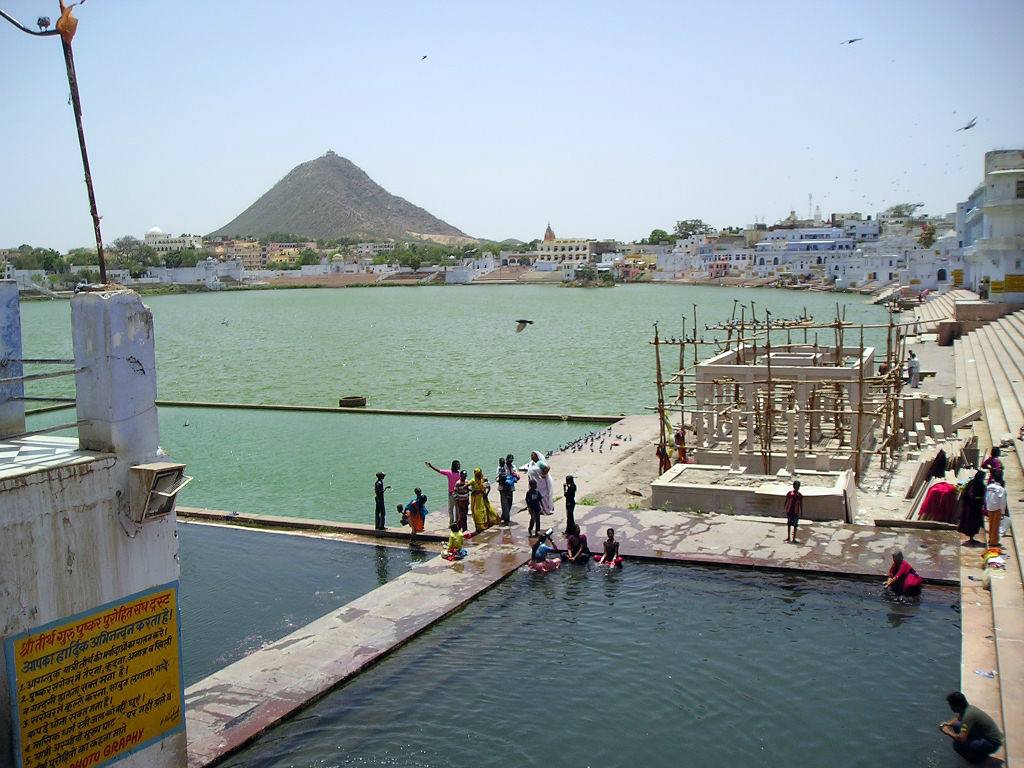
Pushkar has a small lake at its center, surrounded by the Ghats (the steps leading down to the water) where the faithful pray and wash with the sacred water. In Pushkar there are many holy men but above all many swindlers (usually people who want money in exchange for blessings) and several vaguely hippie Westerners who have come to smoke a little, chasing the myth of an India that no longer exists. In the evening we return to Jaipur, spend the last night at the Madhuban Hotel, and then the next morning we set off for Delhi.
stowaway on board
Day 624 May 2008
DELHI, NO ANSWER For the occasion, by now inured to every discomfort, we even find a bus with air conditioning, good anyway for beating the muggy heat that, far from the desert, becomes more oppressive. I don't think you can say that Delhi is an ugly city, but finding yourself together with another 17 million people doesn't help, and if you're in India it helps even less. Among other things, hotels have exorbitant costs by local habits (unless you go without air conditioning, an intolerable hypothesis at this time of year), and our rickshaw man, who must have gotten his nice commission, in the end convinces us to go to the De Holiday Inn. It has a round bed and wouldn't even be bad, if it weren't in Paharganj, a central but horrible area of the city. Our room looks directly onto piles of garbage, and the window glass doesn't save us from the barking of dogs or the honking of horns.
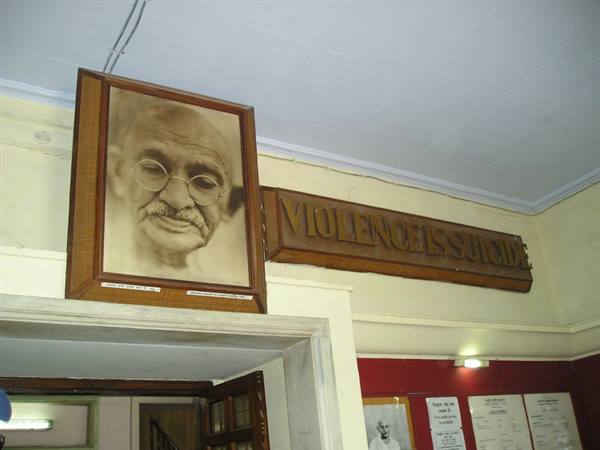
But we've been in India for over two weeks, and by now we can put up with certain things. We spend our two days in Delhi visiting the imposing Red Fort, yet another symbol of Muslim domination in India, then an English stronghold during the colonial period, the Jama Masjid, the largest mosque in the entire country, capable of holding 25,000 worshippers in prayer, the Gandhi museum, going to see the place, now a site of pilgrimage, where the Mahatma was cremated, India Gate, a memorial to the 90,000 fallen of the First World War, the contemporary art museum and more. We also spend a lot of time in the very central Connaught Place, the hub of the New Delhi desired by the English, an area of tree-lined avenues, shops, restaurants and parks. There is also a McDonald's that serves neither beef nor pork, thus accommodating both Hindus and Muslims, and it is literally stormed by young Indians.
Young people from a different India than the one we had seen up to then, young people in tight jeans and designer T-shirts, children of that Shining India we had only read about. The one that has four of the ten richest men in the world, that has an economic growth rate second only to China, that has the most highly trained and sought-after graduates in the world. But as we leave Connaught Place we see a little girl, 7-8 years old at most, filthy, half-naked, lying on the sidewalk, under that sun, her face turned toward the street, her gaze lifeless and her mouth wide open. She looks dead, but she probably isn't, or at least not yet, because when we pass by there again, a few hours later, she has moved a few centimeters. And even though we have seen so many ragged, dirty and hungry children that we can't take any more, this image hurts much more.
It confuses, dismay, freezes the blood: because, naive as it may be, seeing the specter of death, right there, near wealth, is still more horrifying. The next day, during the return flight, while I repeat for the umpteenth time that I have failed to understand almost anything about this crazy country, I do arrive at understanding something. I arrive at understanding that India, at the moment, is absolutely incomprehensible. Too many differences between us and them, but above all too many differences among themselves. Too many inequalities, too much wealth and too much poverty, too many illiterates and too many super-graduates, too many open sewers and too many mega hotels, too many donkey-drawn carts and too many SUVs, too many women in saris who cover their faces when they see you and too many Bollywood divas who bare their breasts.
India is an enormous chaos capable of leaving you speechless, without ideas, without comments. The feeling of not having grasped the essence of this strange country, in the end, no longer seems like a fault. That India probably is not meant to be understood. It is meant to be endured. Even before being loved.



0 reader comments