For my second experience in Kenya, after Mambrui a year ago, this time we choose the peerless sand of Watamu in search of little Mwikali
Day 114 Dec 2006
Preparations and departure
We are three couples aged between 45 and 59. With previously organized programs, itineraries and excursions for Mambrui changed, we leave Rome on the night of December 13 bound for Watamu. At Mombasa airport, our friend Nunzio gets firsthand experience of the corruption of the customs police who, without beating around the bush, ask for—without getting it—"kito kidongo" (that is, "a little something" which, in plain terms, means 5 Euros or a pack of cigarettes) so as not to open the luggage. The transfer from the airport to Watamu takes two and a half hours, about 120 kilometers of ruined road.
Mwikali's family
Day 215 Dec 2006
Mwikali - Zucchero- Francesca -
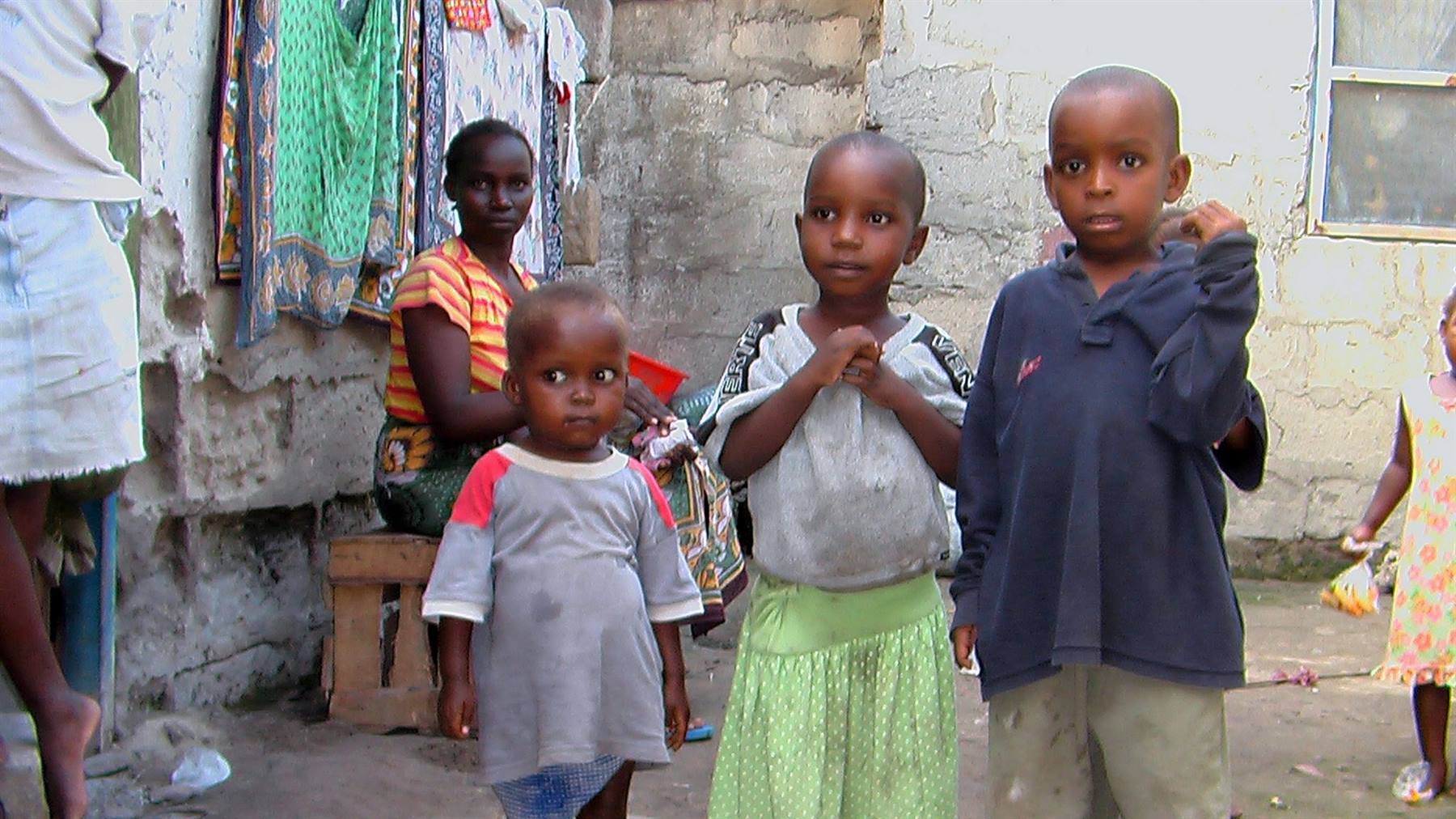
MWIKALI - ZUCCHERO Before leaving I had made a commitment to Francesca (a student I met via e-mail) to deliver to "her child" Mwikali—pronounced Muikalì—a package of lovely little dresses and personal hygiene products. Mwikali and Francesca had met a few months earlier during a vacation of Francesca's and our fellow countrywoman immediately grew attached to this shy child, despite the objective difficulty of communicating verbally. They had met by chance on the little road in front of the Eurotel Aquarius Beach hotel and Francesca fell in love with two big eyes that remain enchanted admiring the fortunes of us Europeans, without ever begging for alms. The commitment I made to deliver the package to Mwikali also influenced other choices, since to deliver the little dresses I needed someone who could take me to the little girl's home.
And so comes the role of our Beach Boy - Zucchero - who contacts me by SMS already upon arrival in Mombasa and who makes sure to be in front of the hotel at the moment of our arrival. We therefore agree with our Beach Boy - cell. 00254735266394 e-mail jayjirah@yahoo.com - on the cost of the excursions at 230 Euros per person, that is: 2 days of safari at Tsavo East with overnight stay at Voi Safari Lodge, Blue Safari excursion with lobster barbecue at Mida Creek, tour of Malindi, plus excursion to the Marafa hell's kitchens and accompaniment to Mwikali's home.
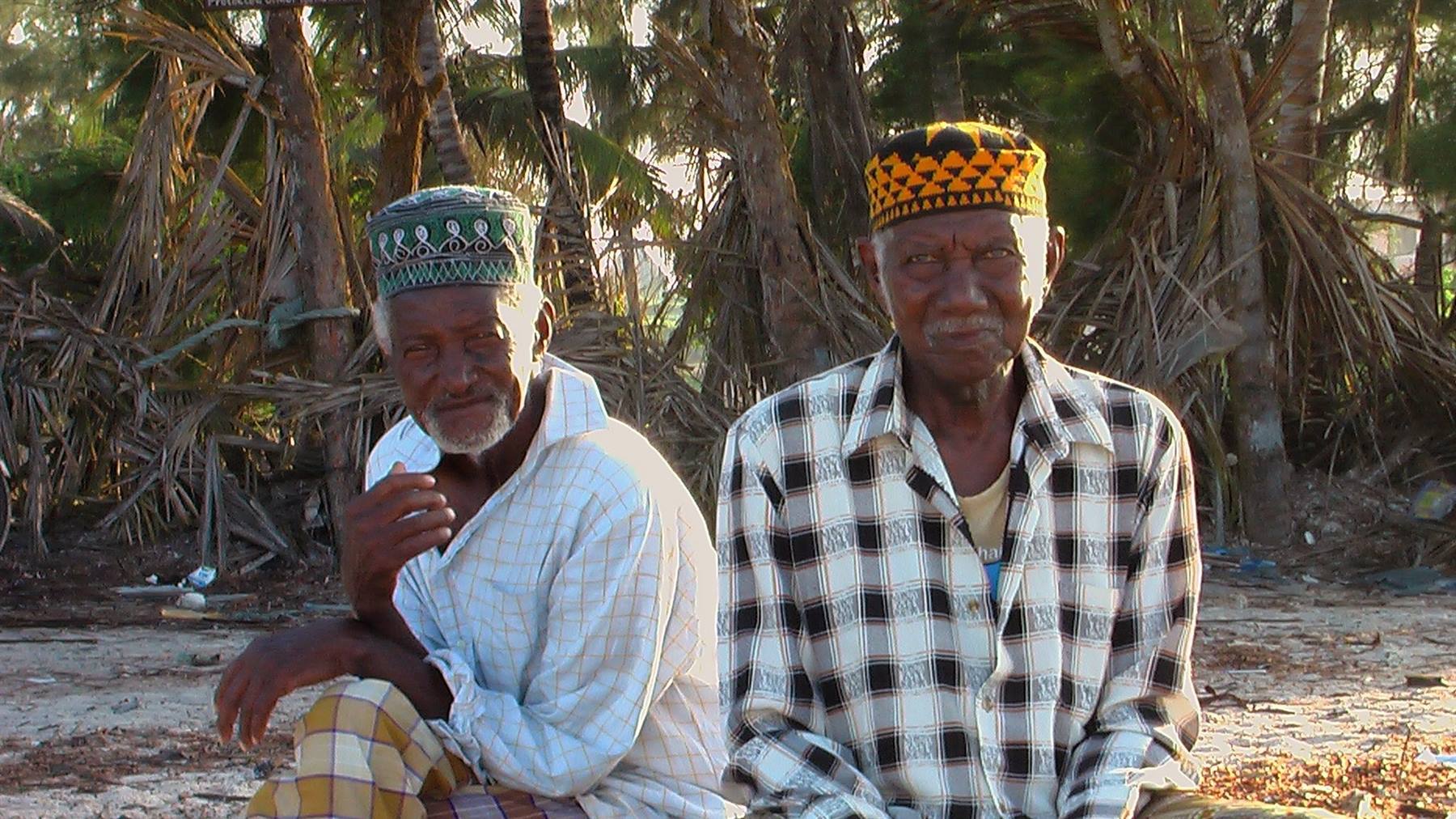
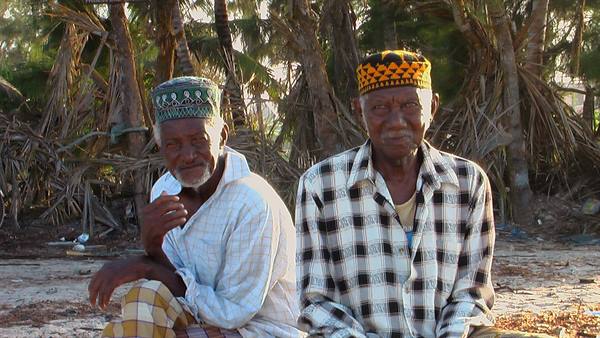
Watamu: old fishermen
Day 316 Dec 2006
Accommodation at the village
The first impression of the property is not exciting because of its decidedly poorly maintained exterior. However, once past the first impression, over time I was also able to find extremely positive elements, such as the care taken with the gardens, the professionalism of the staff and Italian cuisine beyond all expectations. The rooms are spartan but functional; a few little ants on the sinks and the air conditioner being too noisy do not negatively affect the overall judgment. The property is divided into two parts; the more internal one consists of the rooms, a pool and the buffet restaurant. To reach the second part you have to leave the hotel for a few meters and face a myriad of friendly vendors lying in wait to sell you anything (a young man of about 20 wanted to rent me his sister of about 16—naturally I always pretended not to understand).
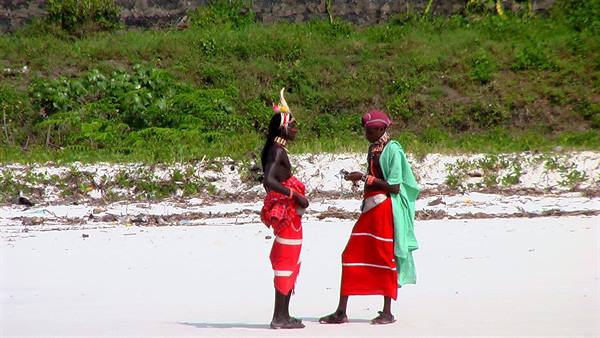
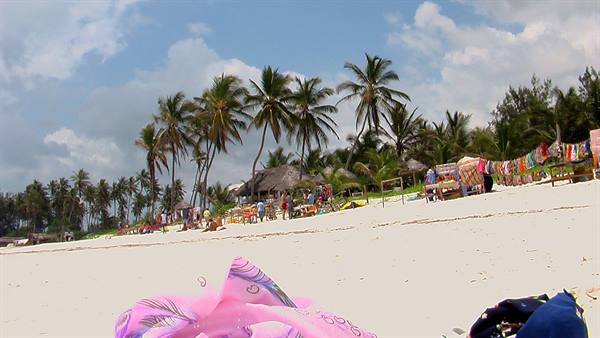
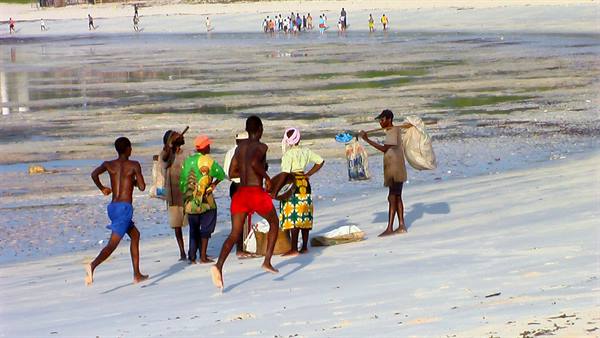
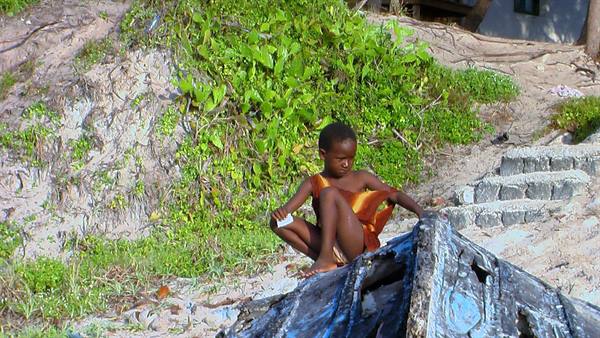
The second part of the hotel property consists of rooms still under construction, a pool, and a bar and restaurant both with extra charge, and from this part you have direct access to a beach of very white sand, very tall palm trees and a multitude of brightly colored fishermen busy at work on their primitive boats (the dhows) BEAUTIFUL!! truly beautiful. Another distinctive note is the presence of the askaris armed with a stick. These private guards are positioned at every entrance of the hotel, always with a stick in hand, to protect the "Mzungu" tourist (Mzungu = White man).
Fishermen at Mida Creek
Day 417 Dec 2006
Watamu: the beach, the reef, the tides and the town
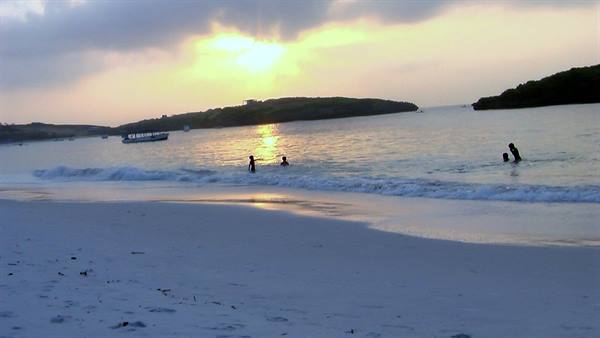
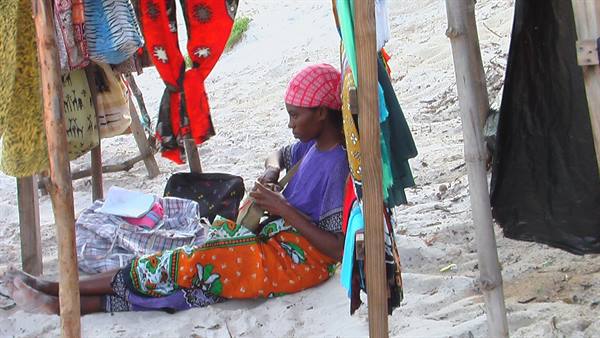
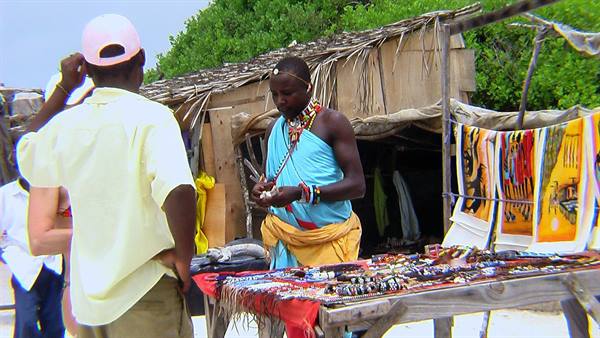
The beach at Watamu is of an unusual white color that is almost impossible to admire without sunglasses. It is surrounded by small hotel-villages with the characteristic makuti roofs and by very tall palm trees that bring to mind the most beautiful images of dream landscapes. Periodically the tide deposits a bit of seaweed on the beach which is promptly removed. Near the hotels there are rudimentary shacks that serve as shops for the sale or barter of typical local craft products (such as soapstone or little objects carved from wood).
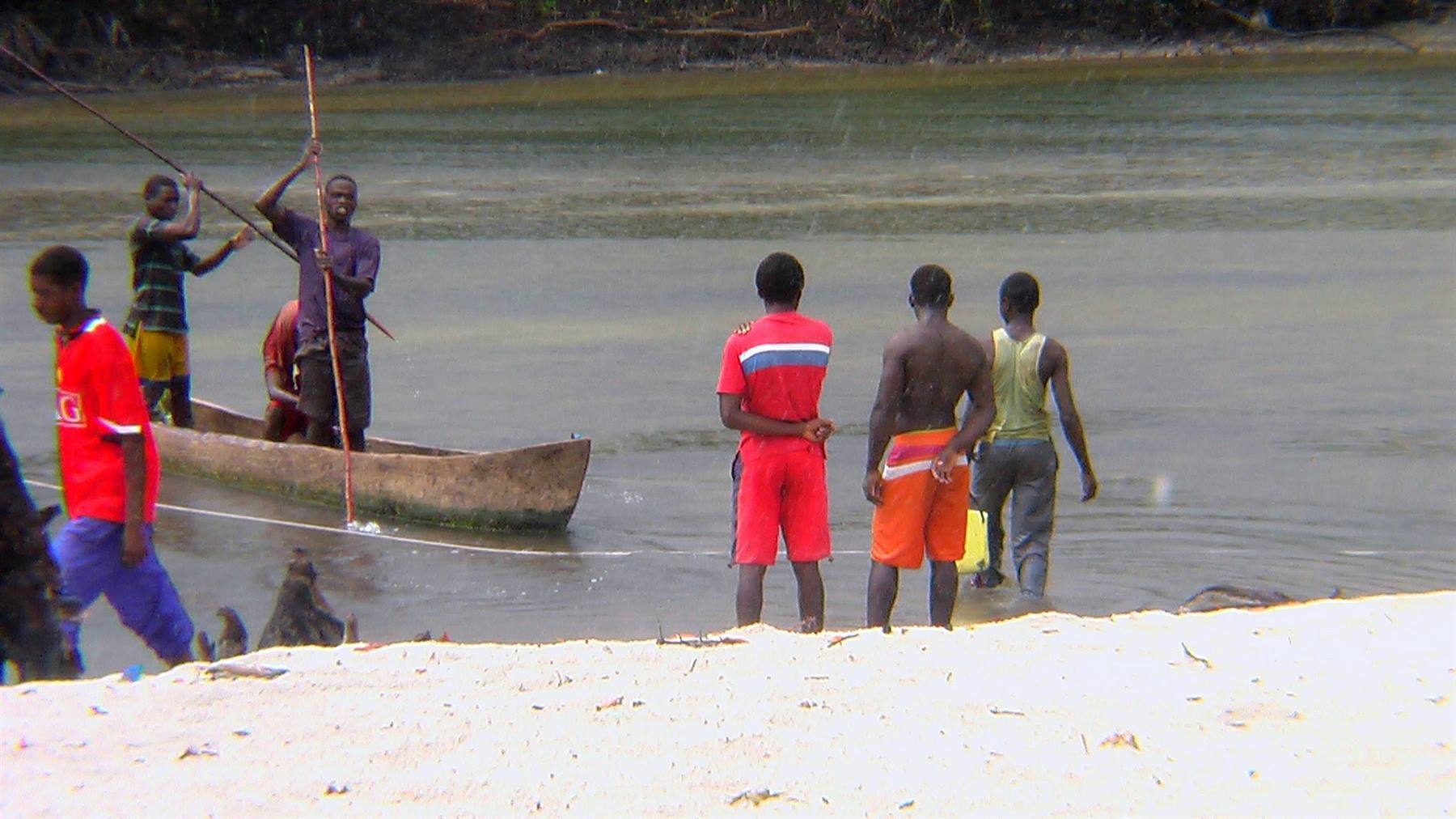
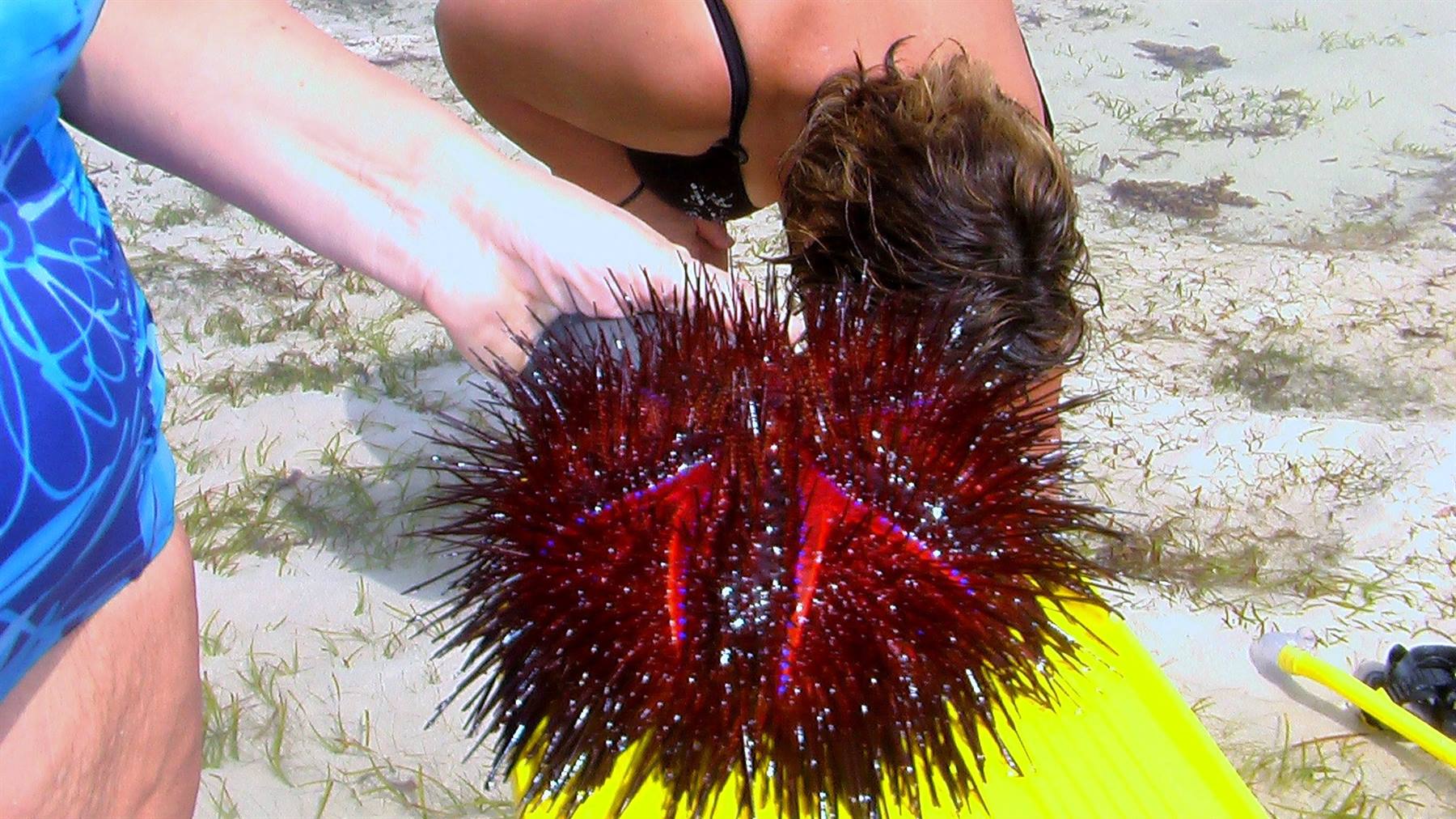
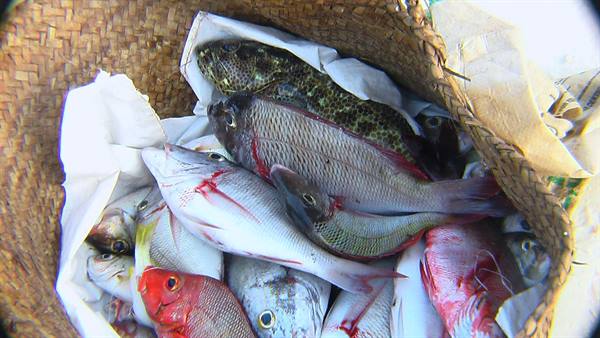
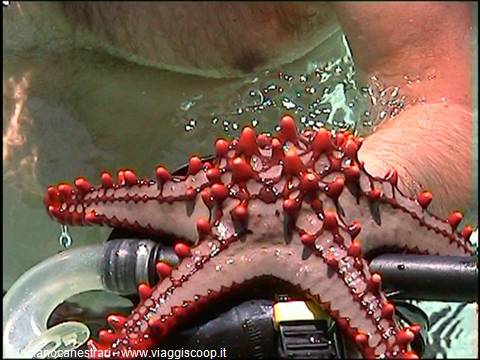
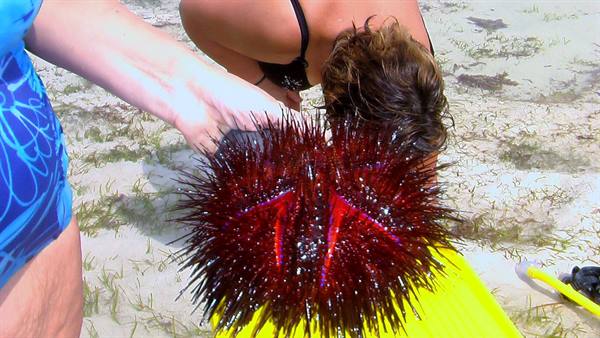
You can barter anything; my wife was asked for the plastic bag from a Roman supermarket, Achille was insistently asked for the socks he was wearing!! At dawn you can get wonderful photographs of the fishermen returning with their catch and their women patiently waiting for the men who have faced the ocean in unstable pieces of artisanal hollowed-out trunk... and who in the end, proud of the fruit of their labor, will be able to feed their family. The living part of the coral reef, unlike the Red Sea, is not near the beach but is found a few hundred meters out to sea. Between the beach and the "living" reef, depending on the tide period, a buffer zone forms where, with about half a meter of water, it appears or disappears, periodically changing the entire landscape. During low tide, some pools form where you can photograph wonderful starfish, shells, sea urchins and white moray eels.
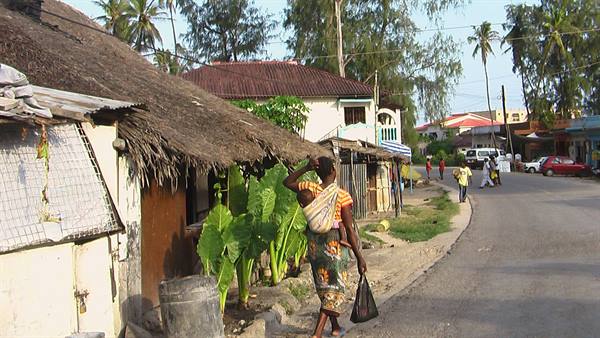
Some young Kenyans "make a living" by accompanying the Mzungu tourist on the pools with the moray eels and starfish.... and equipped with a stick, with a piece of fish tied to the tip, they manage to make the moray eels come out of the pools for the photos and little videos of our fellow countrymen. The town of Watamu is little more than a cluster of shacks with a Catholic church and a Muslim mosque; the majority of the population is of Muslim religion and I did not notice any sign of intolerance. Along the only paved road, where the little goats lie down to sunbathe, you find Mama Lucia's market to buy postcards, water or even half a kilo of flour for the children who, after getting to know you, ask you for it politely.
Mida Creek; Fishermen with the Dhow
Day 518 Dec 2006
Photo safari in Tsavo East
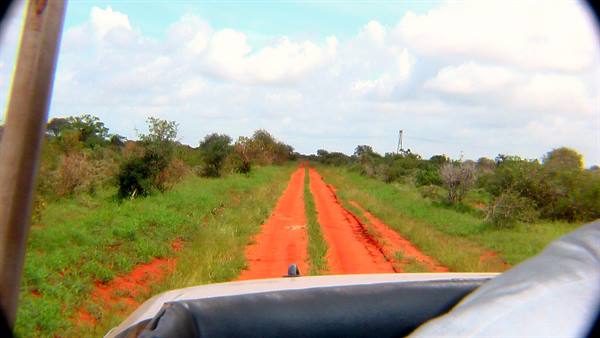
As usual, we set off at dawn to reach the vicinity of the natural park around 9 o'clock; at the entrance to Tsavo we make a short stop for any physiological needs and take the opportunity to photograph the crocodiles and the Marabou storks that live in the Galana River. Once inside the park, the driver of our vehicle struggles quite a bit to get past some mud pools encountered along the route. The savanna is lush because of the rains that have fallen recently; despite this, the red dust of the park gets everywhere in our clothes and in the corners of the video cameras. Since my last safari in February, the vegetation is more luxuriant, but this works against spotting predators, who are better able to hide. King Lion Simba, unlike last February, did not want to cooperate and I barely managed to get a poor few-second shot. The other animals, however, gave me splendid photos.....
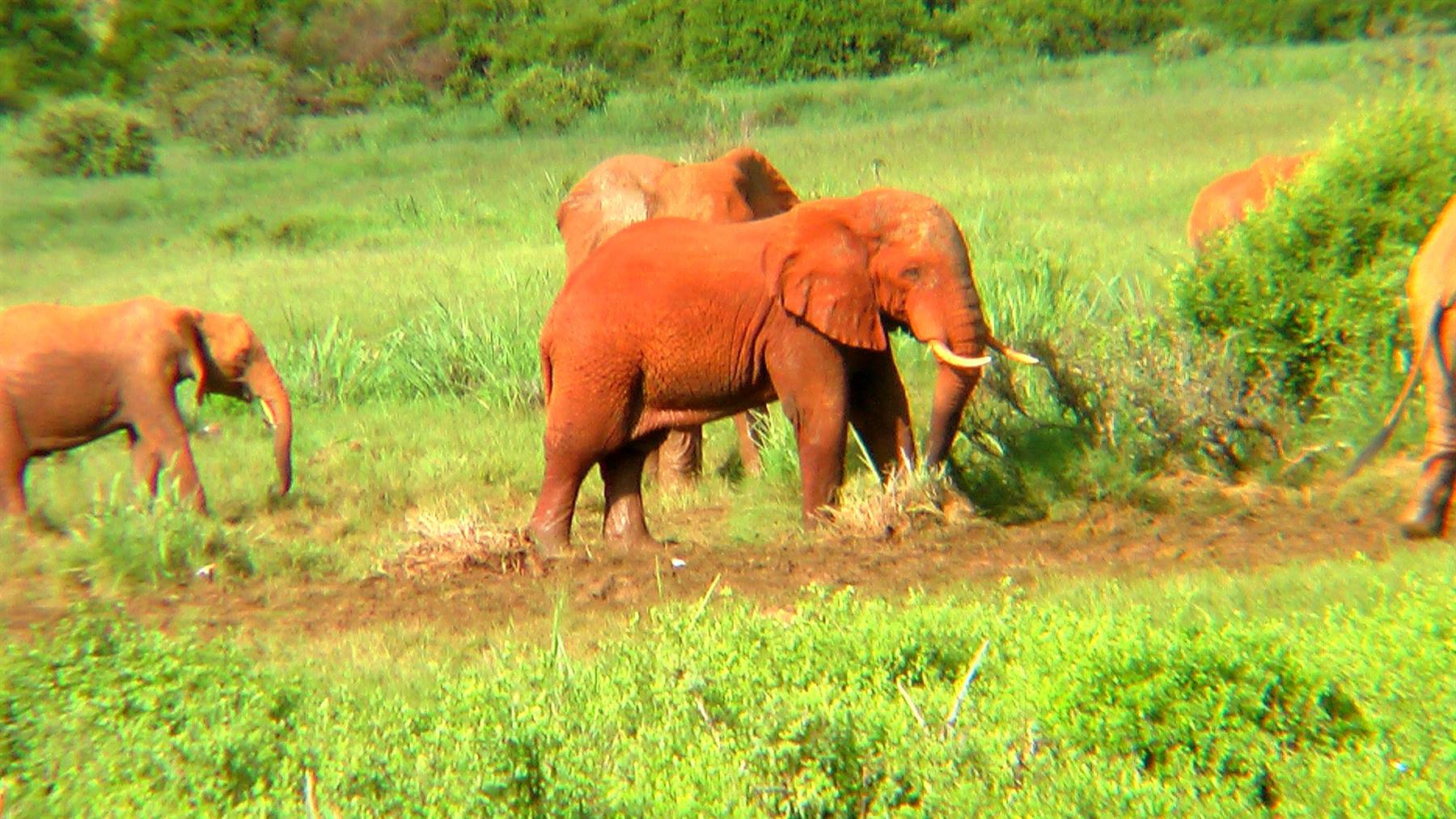
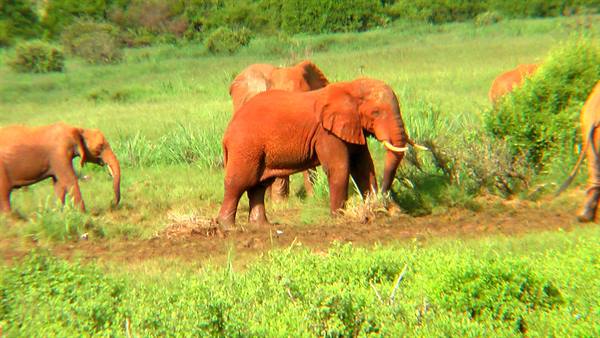
Tsavo East Park is one of the largest in the world; it is about the size of an Italian region. With the exception of the rhinoceros, of which there are few specimens, all the other animals are present in large numbers and it is not difficult to see them. The characteristic that most distinguishes this park is the soil of a very striking red color.... to the point that from a simple photograph of an elephant it is possible to tell whether it was taken in Tsavo or not, since the color of the elephants (normally lead-gray) inside this park, because of the dust they cover themselves with, takes on a red color. I will not go on further about the safari, but I want to spend a few words on the Voi Safari Lodge, since online I found no description in Italian.
Watamu: giant sea urchin
Day 619 Dec 2006
Voi Safari Lodge
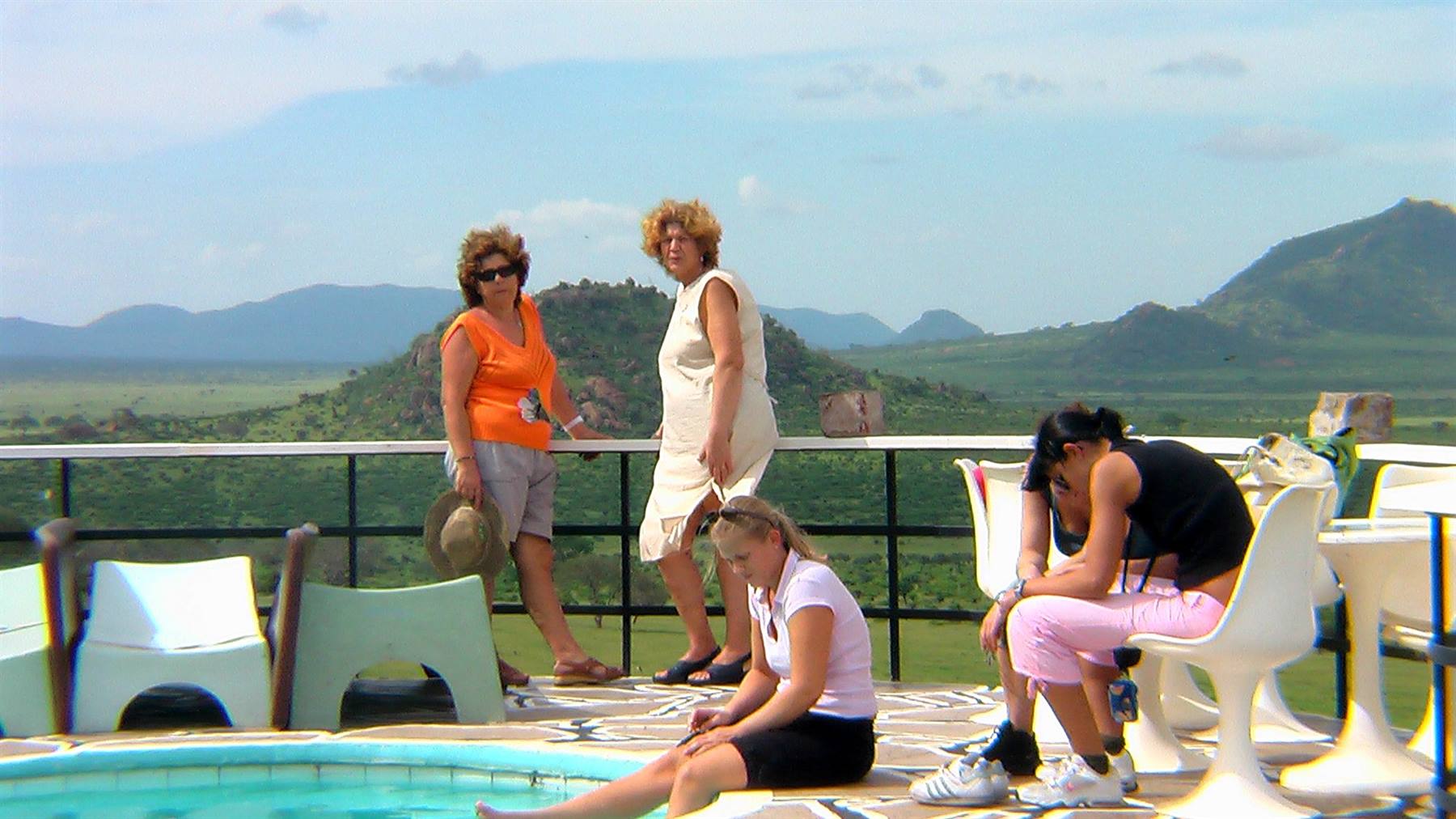
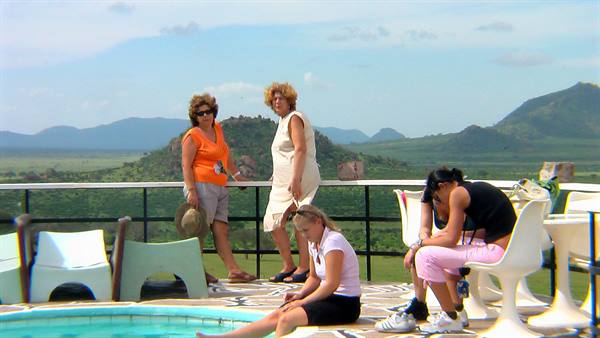
It is located inside Tsavo East near the exit for the city of Voi, on the road connecting Nairobi with Mombasa; from a purely aesthetic point of view it is a harmonious building of rare beauty; it consists of two dining rooms, about 20 rooms, a terrace for animal watching, a pool and a "viewing room" located a few meters from a waterhole in the open savanna. To reach this room (protected by steel bars) you have to go down some underground stairs in a kind of tunnel about 70 meters long. The rooms are welcoming and as clean as possible; at reception they ask us not to leave doors or windows open and give us two vouchers for dinner and the following breakfast.
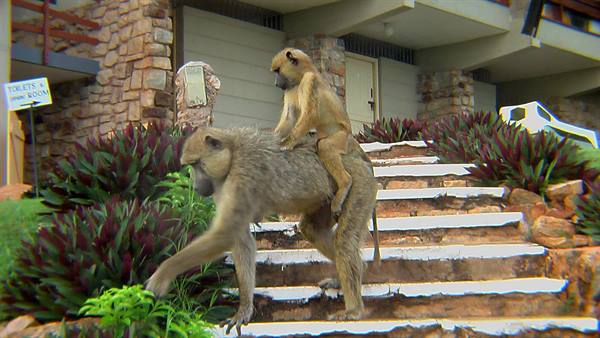
We prepare to have dinner under a fantastic starry sky but... The dining room is circular and the lodge staff sets our table at the extreme edges where you enjoy the best view, and given that in the open savanna you cannot see any lights on from any side of the horizon, you cannot even remotely imagine how many and what kinds of insects gathered under the table's lighting. After dinner, eaten with plate in hand and at a considerable distance from the lights that attracted every kind of insect, we went to our room for a well-deserved rest, but the surprises were not over. In Nunzio and Simona's room our friends had received a visit from one or several baboons, since all their clothing had been turned upside down and on the floor remained the wrappers of about thirty candies cleverly peeled, probably they had not followed the advice to close all doors and windows.
At dawn, as expected, we go down to the viewing room. The tunnel's lighting attracts a huge number of insects and on the stairs you encounter dozens of dung beetles; having reached the bottom of the stairs we find ourselves below ground level, just a few meters from a waterhole for the animals to drink, protected by some iron bars but without glass; Achille and I, armed with video cameras, tripods and good intentions, went to the bottom of the stairs to try to take some photos. We resisted the insect assault for only a handful of minutes, just long enough to film a couple of very suspicious jackals, and then we fled in a less than honorable retreat. This experience, partly negative, is nonetheless repaid by the beauty of the place and I, with the necessary warnings, highly recommend it.
Tsavo East: on the terrace of the Voi Safari Lodge
Day 721 Dec 2006
Excursion to Mida Creek
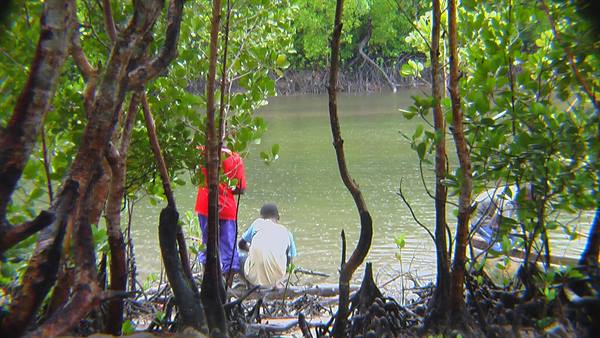
We set off around 8 o'clock from the beach in front of our village; the sea is relatively calm but, because of the low tide, we have to walk to the reef where the wave breaks and the boat cannot get too close. After sailing a few hundred meters, therefore right along the coast, we spot a pod of dolphins that will accompany us for almost an hour. Nunzio and I, having put on fins and masks, dived in to play with these delightful bottlenose dolphins that seemed curious about our presence; from above the boat my wife captured this perhaps unrepeatable experience with the video camera. The navigation continues within the Watamu marine park where we encountered and photographed many pink flamingos, a very dense mangrove forest and finally, on a small island, we had our meal with shrimp, rice, lobster and Coca-Cola.
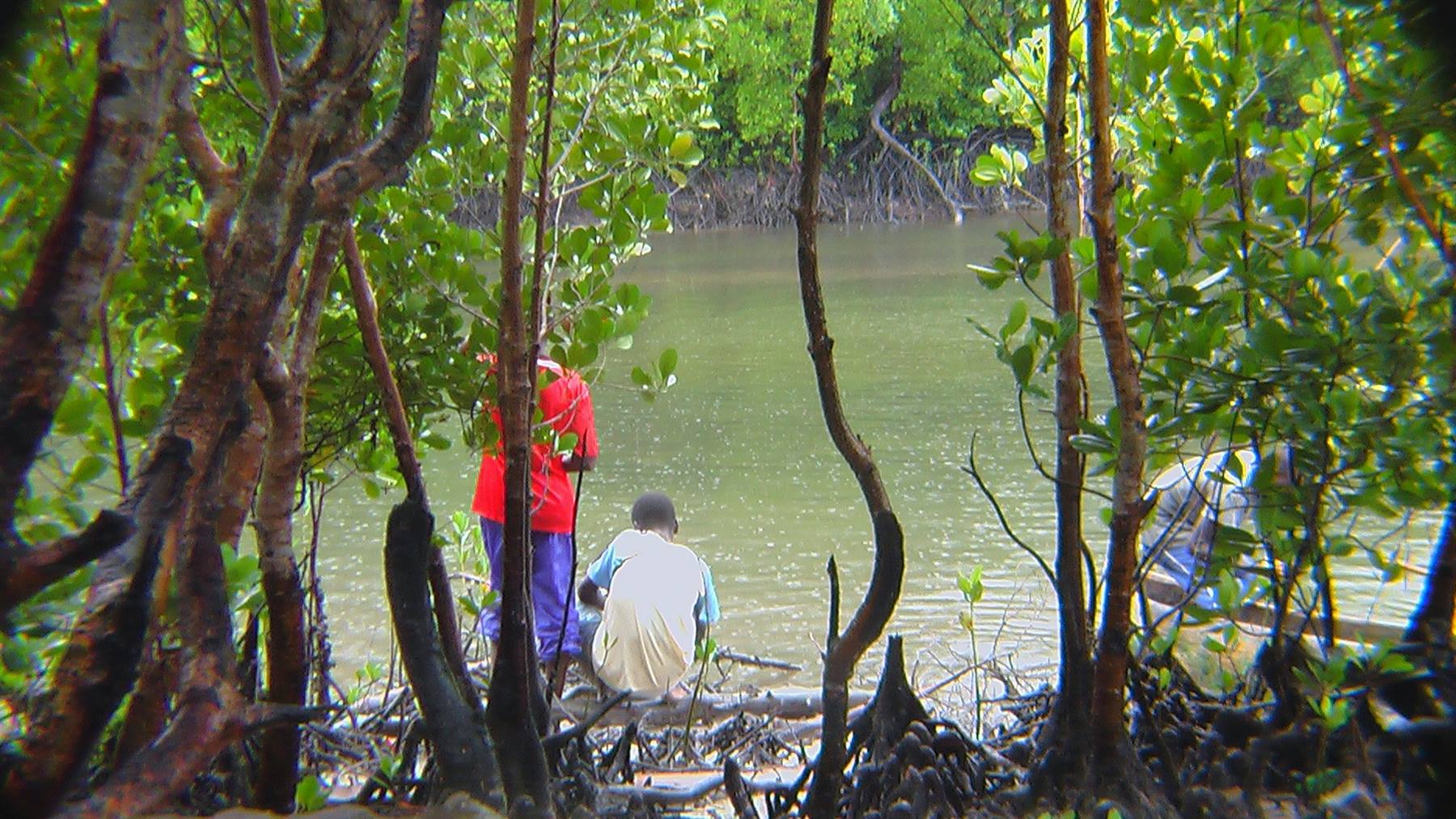
Not to forget that we were in the season of the short rains, suddenly a torrential rain began that lasted almost an hour. We—that is, Nunzio, Ornella, Achille and I—not at all frightened, accepted the offer of a trip in a dhow to discover the channels that penetrate into the mangrove forest.
All this happened between December 13 and 23, 2006. Luciano and Stefania Canestrari












0 reader comments