This is the diary of my trip to Venezuela: besides describing the places visited, I've included many practical tips and also the prices of hotels and transport, plus lots of pointers that may be useful to anyone wanting to undertake a trip to this beautiful country. Total cost of the trip: 660 euros for the Venice-Caracas return flight + 850 dollars for the holiday (all inclusive, souvenirs too!) Trip duration: 16 days
Day 114 Jun 2004
June 14, 2004
After trying to catch the flight the day before (flight moved due to a problem with the ticket), here I am, at Venice airport, ready to begin this adventure. After a whole day of flying, my brother Federico and my cousin Francesco and I arrive in Caracas at 2:30 pm. Once out of the airport I immediately have a first encounter with South America: a myriad of people trying to change your dollars, improvised guides offering to help you.
After changing 150 $ (strictly on the black market, 1$ = 2500 bolivares against the official rate of 1920; I later discovered that in financial newspapers like the Financial Times such rates are quoted, for example at the end of June the dollar is quoted at 2650 Bs, so on the street if you find it at 2500 Bs you are getting a very good deal!) we entrust ourselves to Joel, a local guy who offers to accompany us to the Rodovias terminal, where we bought tickets to Ciudad Bolivar (24500 Bs). The first impression Caracas gave me is that of a poor city, shantytowns crowding on the green hills, dirt on the streets and numerous cars without plates, people rummaging through the rubbish, poverty and disorder.
Once we arrived at the terminal, to pass the time we had Joel take us to eat spit-roast chicken with hot sauce and juca, a tuber similar to potatoes, much used in Venezuela, especially in the south-eastern area: after devouring two chickens between the four of us and having drunk 3 beers each (I don’t know if it’s the best way to prevent dehydration, but that’s fine all the same!) we said goodbye to our improvised guide and set off for Ciudad Bolivar, where we have planned the excursion to Salto Angel.
los roques- cayo de agua
Day 215 Jun 2004
After 10 hours of travel and after nearly freezing to death, we reached Ciudad Bolivar. As soon as we arrived at the bus station we met Carlos, who offered us 2 trips, one to the Caura river (110 $) and then to Salto Angel (160 $), including 2 nights in Ciudad Bolivar at the hotel Union. After dozing for a couple of hours we went for a walk on the malecon of the Orinoco: an imposing river, it has nothing to do with our Po…. After drinking a few Polar along the main street of the city and admiring the local beauties, we went to take a nap: never a bigger mistake, six hours of sleep, so we went out to dinner at ten in the evening, in a deserted city. In the evening, in fact, because of crime, the streets empty and only the police remain (many of them, to tell the truth) stationed near the banks, jewellers or other places potentially sensitive to possible robberies.
los roques- cayo de agua
Day 316 Jun 2004
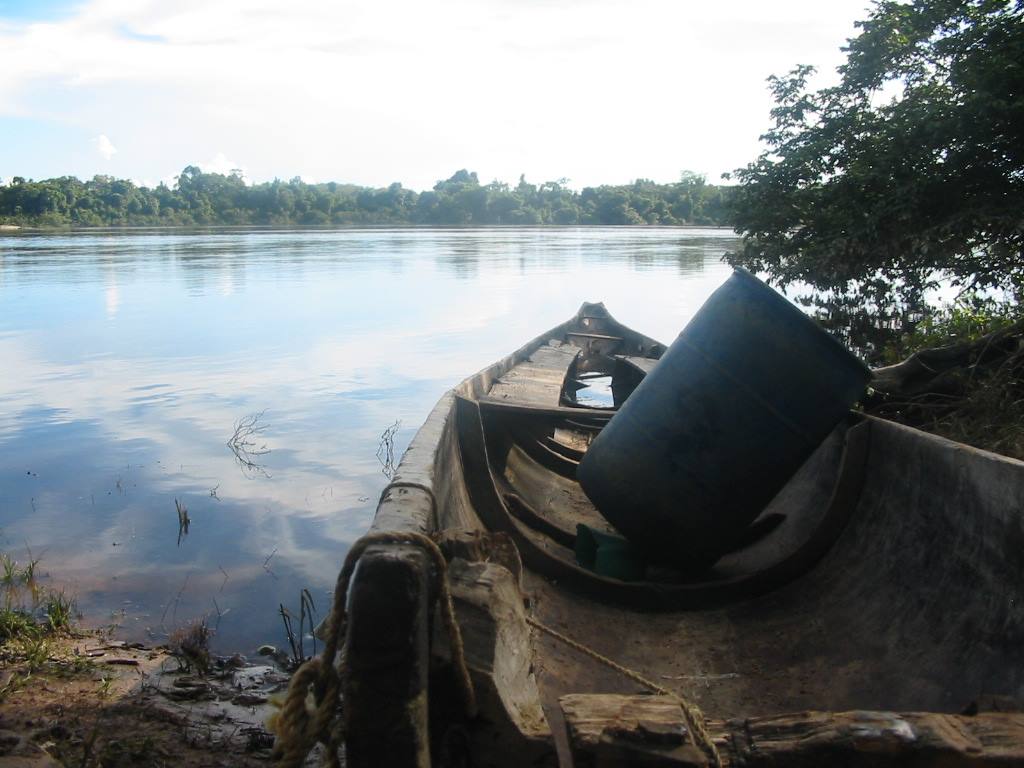
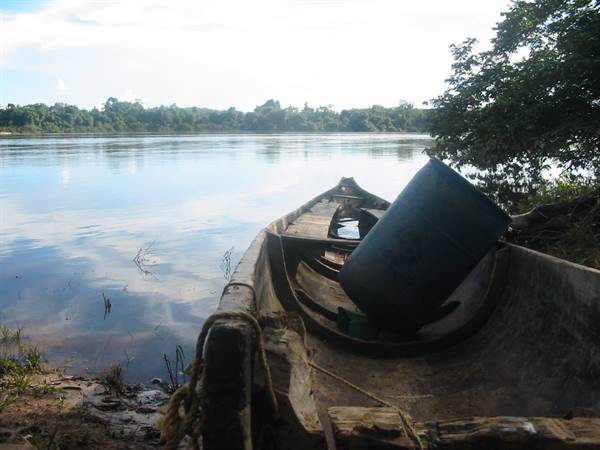
It is 9 pm and we are sitting in the camp on the bank of the Caura river: it has been a wonderful day, a corner of paradise… but let’s go in order: 9 am departure, 10 am break because the jeep broke down, a series of stops to organise the trip, and finally departure aboard an Uno, yes, you read that right, a FIAT UNO in the forest!!!! Four hours by car, of which an hour and a half on dirt road: so cool! A red road in the midst of the greenest vegetation, interrupted however by stretches that have been deforested and burned… At the end of the journey we arrive at the Caura: a spectacle, a very black river (because of the presence of tannin) and placid, and the most generous vegetation, life proliferating, butterflies, birds, flowers, fruits as big as watermelons… To end the day we took a trip on the river, where we saw river dolphins in the cano chiribito.
The sunset is then one of the most beautiful I have ever seen: it doesn’t even seem real, it looks like a film set…. Now it’s time to sleep, in the open air, in hammocks, on the river bank of course! We are in the Amazon… (actually the Amazon is a bit further south)
rio caura
Day 417 Jun 2004
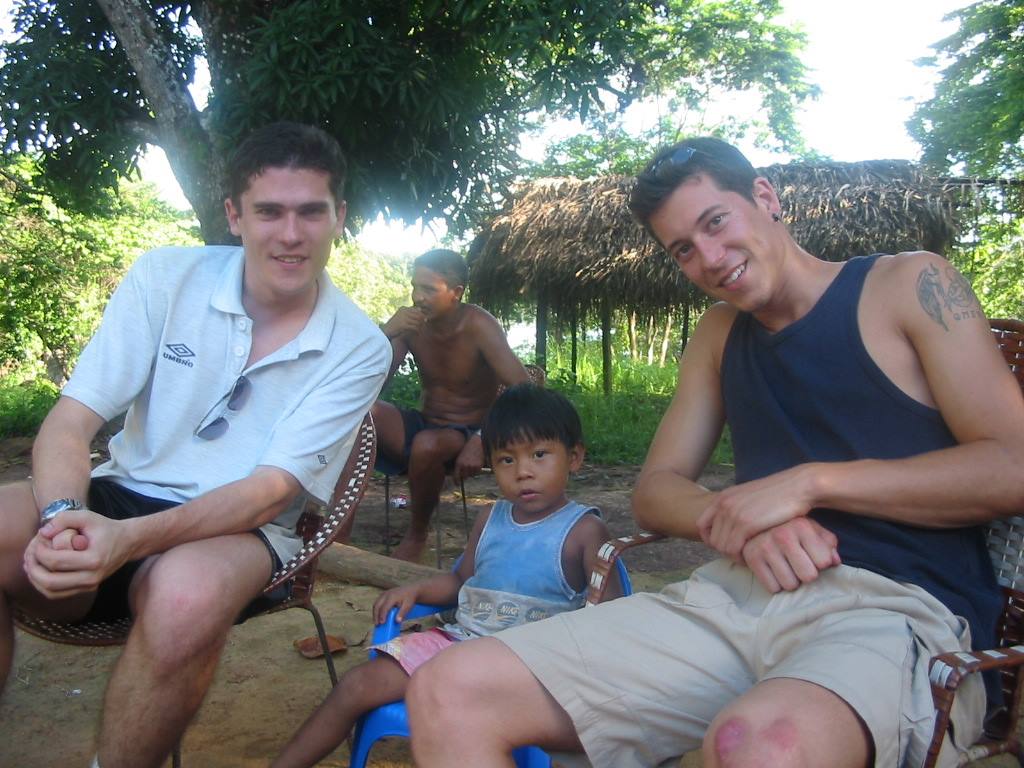
5 pm: I am lying on a granite rock on the bank of the Caura river, keeping an eye out for the 24 ants (they are called that because if they sting you they give you only 24 hours to live), which this morning Francesco took delight in disturbing! Let’s go in order: this morning we had breakfast at the camp in the company of a little animal called a lapa, but which my cousin insists on saying is a capybara! After sorting things out on the boat, we set off on this adventure. After ten minutes of exploration we began to see the first toucans and Neville, our guide, also spotted some mono guarato (monkeys that make inhuman noises), which however we could not distinguish among the vegetation. He then took us into the forest: among the vegetation the heat is less suffocating, although the humidity is considerable; whether it rains or not, drops fall from the trees anyway...
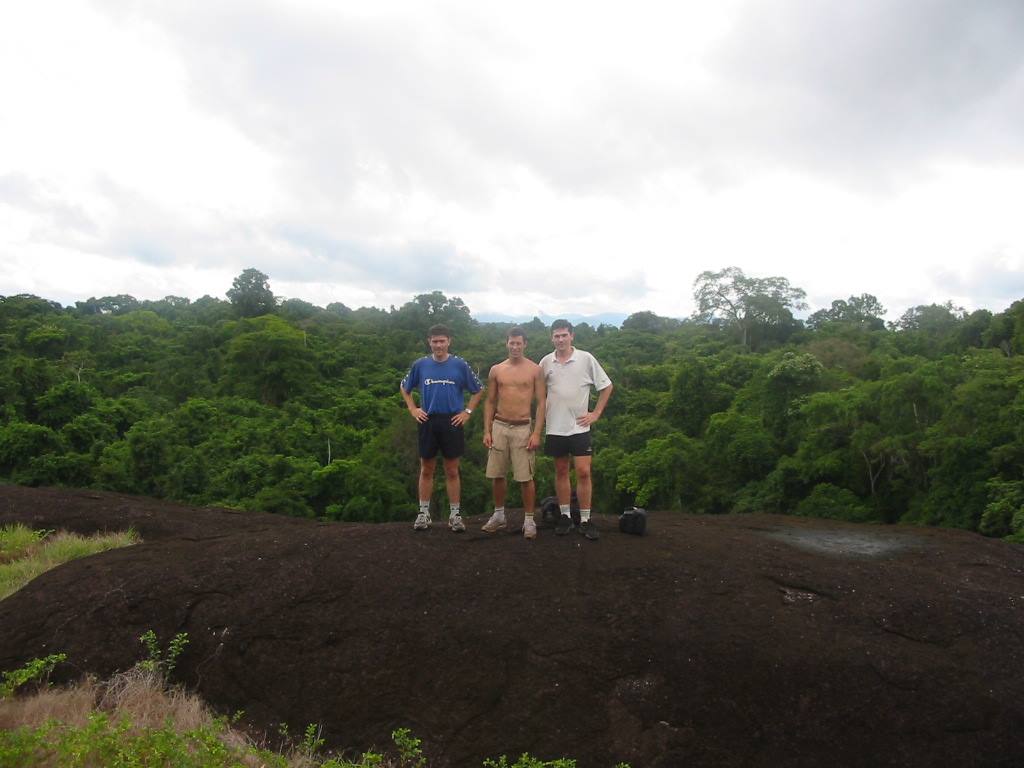
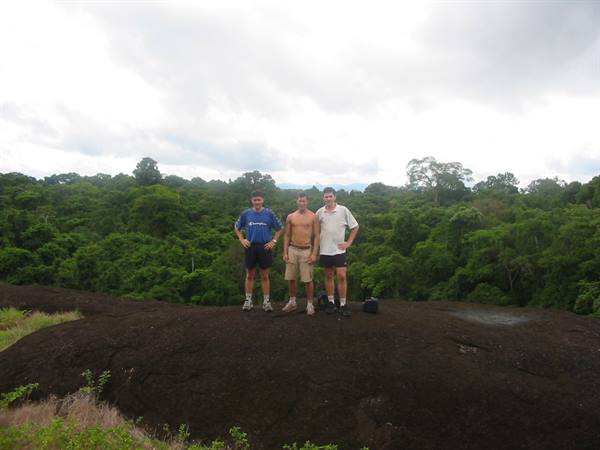
After passing through an area that had just been burned and cultivated with rice and juca, we crossed another stretch of forest to reach a black hill, made of granite covered with plant substances that give it its characteristic black colour: I swear that at first I had thought they were rocks of volcanic origin! From the top of this hill the spectacle is so extraordinary, when the heat is suffocating…. As can be seen in the photo below, you can see a long stretch of forest and on the horizon you can even make out the border with Colombia, at the height of Puerto Ayacucho, an area where the Guahibo Indians live.
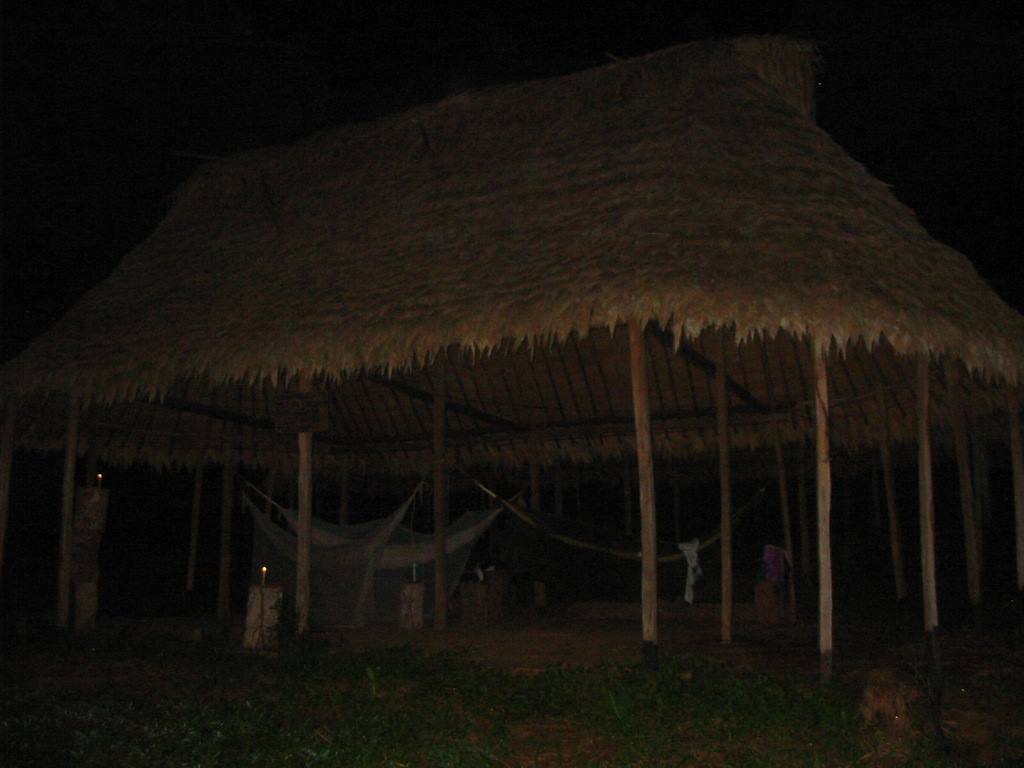
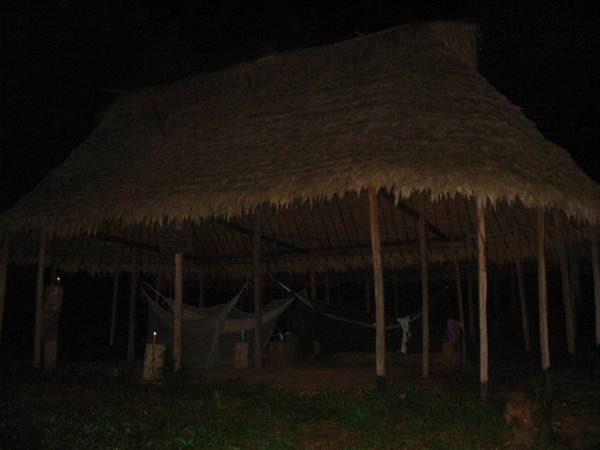
After this excursion in the forest we returned to the boat, with which we headed towards Jokori island, where we saw some strange birds that emitted equally unusual cries and some big lizards almost as large as iguanas! After this visit we went to the island where we were supposed to sleep, where we found our camp destroyed: some other guides previously, in an attempt to burn a palm, had also set fire to the hut where we were supposed to sleep…. no matter, there is another hut anyway, although not in good condition (it has some holes in the ceiling; mind you, it is not the one in the photo below, by comparison that one is a 5-star hotel!). After unloading the provisions and the luggage (I think we can leave them here unattended… there isn’t much foot traffic!), we went to visit two indigenous communities, the Pemon and the Chirichano.
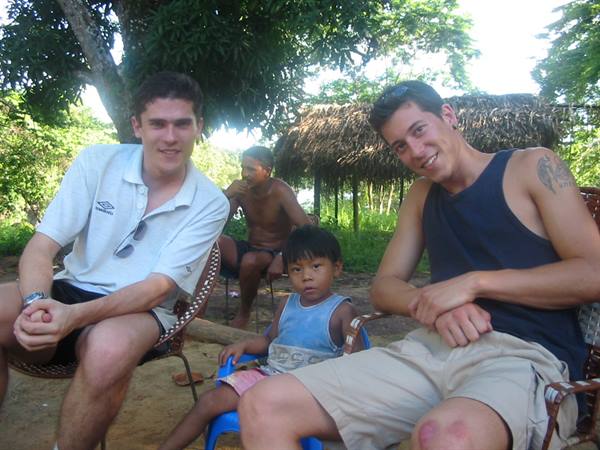
From the Pemon we also bought objects made by them, while from the Chirichano we couldn’t take photos: they wanted money in exchange! (With the Pemon, on the other hand, I didn’t feel like taking photos; just visiting their camp I already felt a bit like an intruder, imagine if I take photos of them… it’s as if tourists came into my home and on top of that started acting like Japanese tourists, I would kick them out and throw the cameras out the window!). Although they are very close to each other, the two groups have different physical features and, according to Neville, our guide, the Chirichano are shorter and also more stupid and are not even great workers. From the latter we also saw how from the juca, a tuber similar to sweet potatoes, they manage to extract a flour used to make breads similar to Romagna piadine, but in my opinion less tasty….
Juca is the main food in their diet and is also used to produce an alcoholic drink with the same alcohol Content as wine. (I tasted it and it seems like a slightly alcoholic cereal yoghurt, not great…). To end the day we went to see two plantations of pina, juca and plantains, we tasted the cacao fruit (you don’t eat the seed, from which cacao is in fact extracted, but the gelatinous part that contains the seeds) and in the end we returned home (to the camp) with our trophy, a freshly picked pineapple (very good). Well, now I’m going to take a dip in the river, let’s hope there are no piranhas!
campamento rio caura
Day 518 Jun 2004
Rio Caura. The night was anything but quiet…After chatting with Neville about his work and fantasising about the possibility of opening a travel agency in Ciudad Bolivar, we went to sleep. At 10 pm, in total darkness it starts to rain, or rather a real wall of water comes down and Francesco, who was with his hammock under a hole in the roof, was hit by a flooding river! Incredible darkness, general mobilisation to move the hammocks! The thing that struck me most is the darkness of the night: we are used to city lights and therefore, even if the night sky is overcast, we have no way of having complete darkness…here instead, when it rains at night and the sky is overcast, the darkness is frightening…. The spectacle of the starry sky, then, is something incredible…..
At 11 pm, in the most absolute darkness, Francesco is heard shouting: “Damn!” at an ant, which fortunately turned out not to be a 24 ant! In the morning, after loading the boat, we set off again to visit a nearby island while Neville prepared breakfast. After eating we returned to the camp of the first day, where we tasted the Lapa and talked with a local guy, Kebin, about the history of the Rio Caura: in the months of January and February the river shrinks and fills with life: fish, capybaras, armadillos, anteaters, jaguars,….., while in the rainy season, although fewer animals are spotted, the landscape is more beautiful and the river has a decidedly greater flow. At 10:30 we went piranha fishing (what sharp teeth!) and then we went to pick up a few Indians at the edges of the river.
After lunch we left for Ciudad Bolivar, with a jeep packed with Indians (there were 11 of us, plus the luggage!). 6:15 pm arrival in Ciudad Bolivar, dinner and then a cervesa at “la mi casa”, the only place open at night!
campamento rio caura
Day 619 Jun 2004
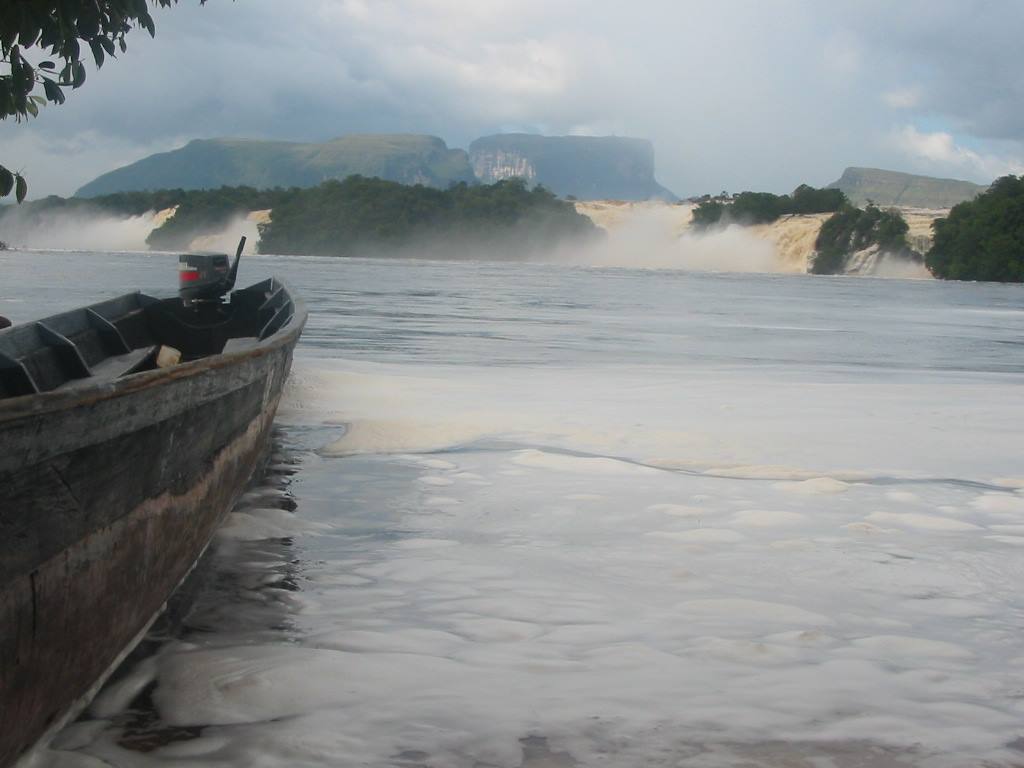
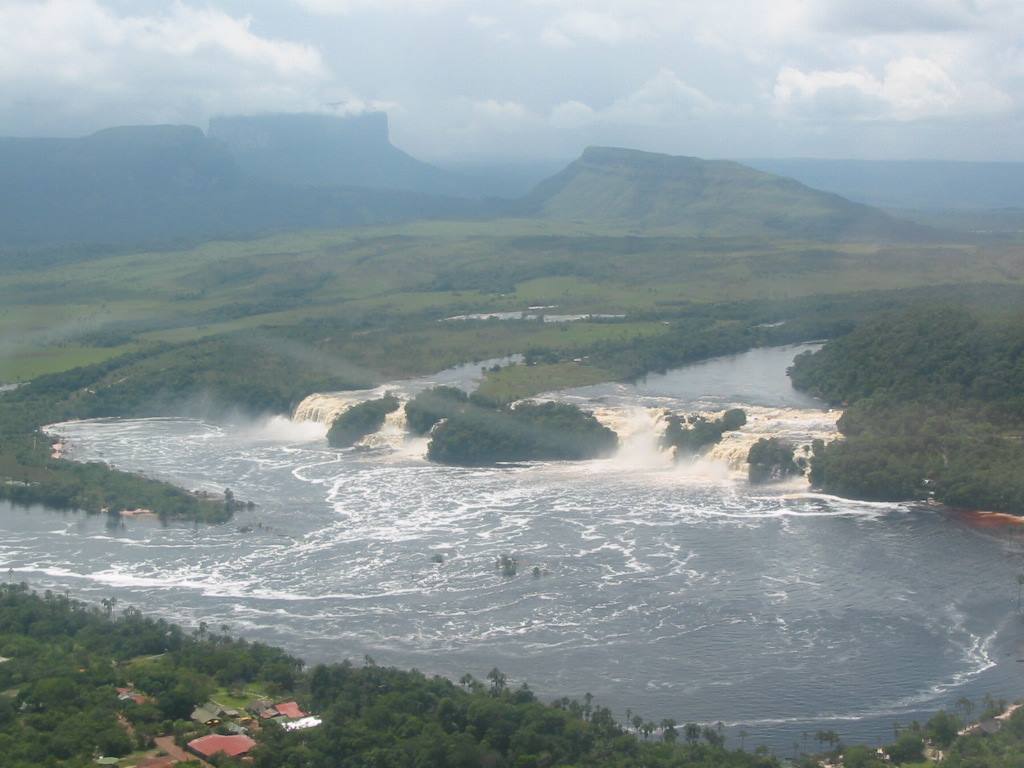
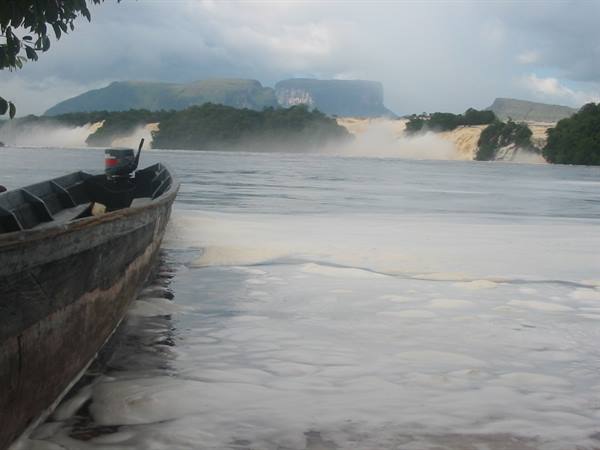
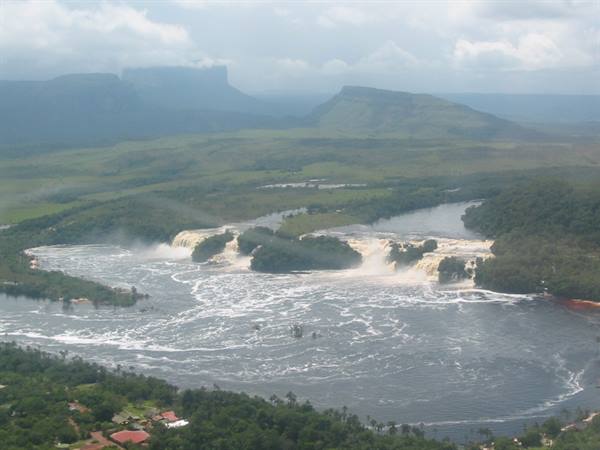
7 am breakfast and departure for Canaima (trip at 150$, 135$ if departing from La Paragua airport) 8:30 am: departure with the tourist plane from Ciudad Bolivar: the spectacle of the Tepuis is fantastic, the Canaima lagoon is simply breathtaking, a myriad of waterfalls, each more beautiful than the last. After paying the entrance fees (8000 Bs) we set off for Salto Angel: 20 minutes on foot, 20 minutes by launch, then another 20 minutes on foot through the Sabana Mayupa, a green expanse similar to a savannah, surrounded by the Tepuis, then 2 and a half hours by launch through the rapids, until close to Salto Angel. From the way I describe it, it might seem like a stroll, if it weren’t for the rain and the rapids, which however make the journey more fun.
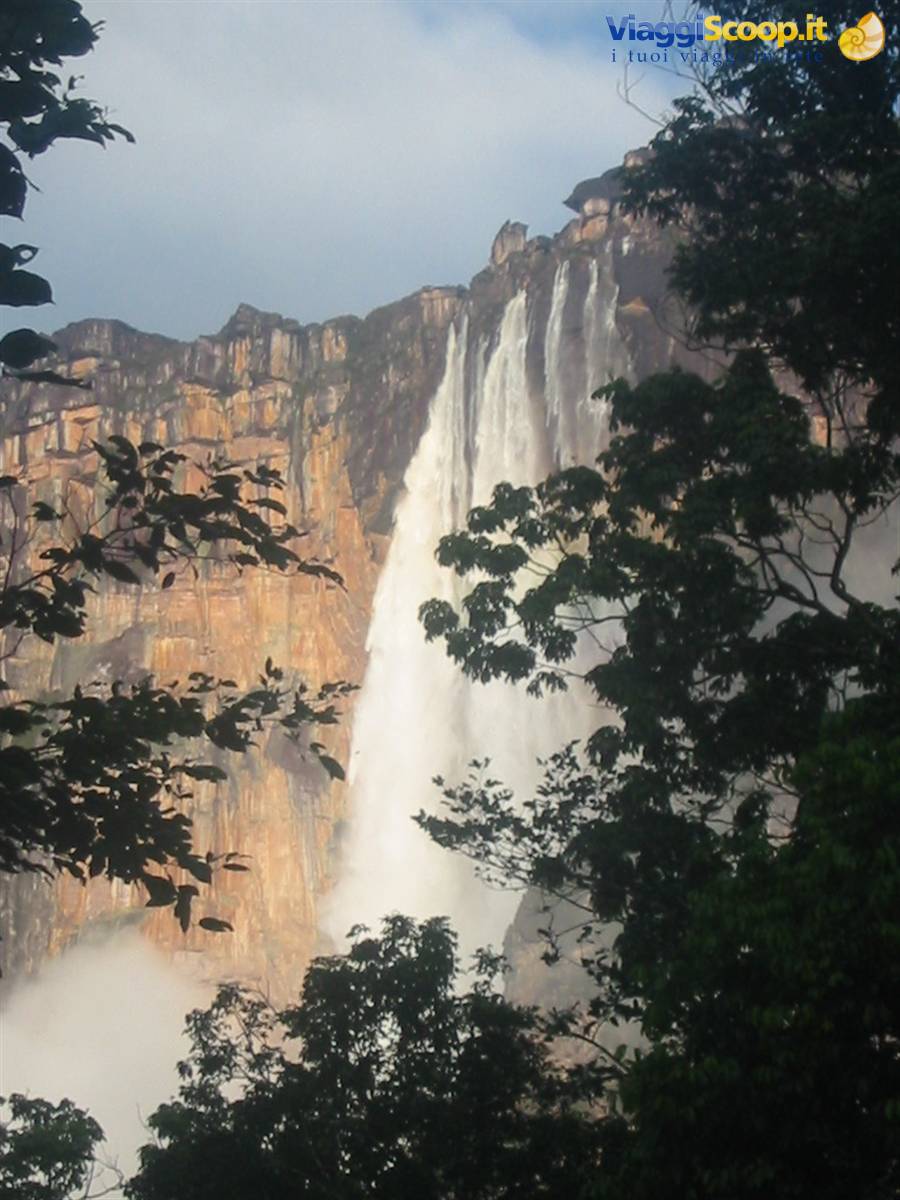
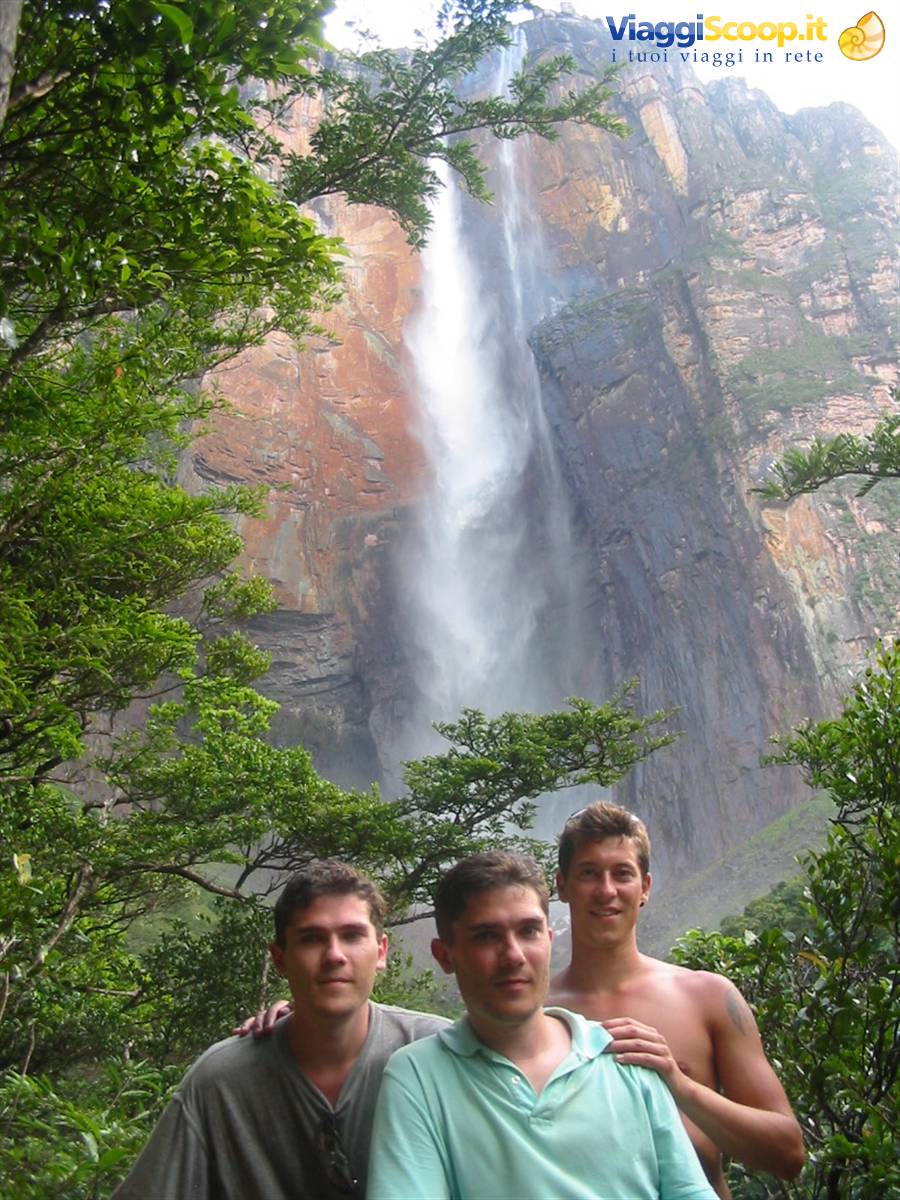
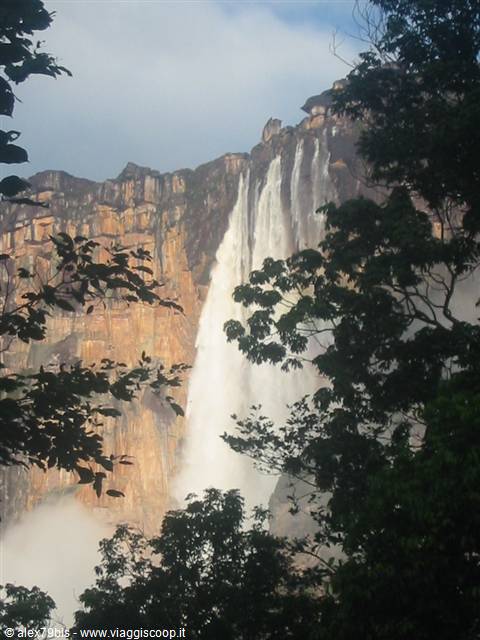
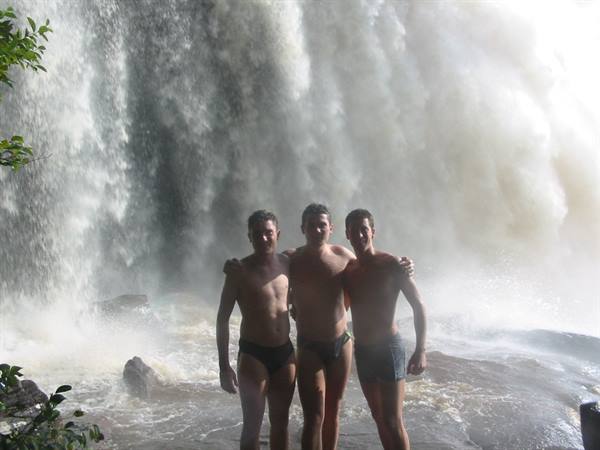
The programme called for visiting Salto Angel the following day, but since the weather is good, the guide decided to take us there today itself. After 40 minutes of walking we finally arrived at the mirador of Salto Angel. The majesty and beauty of the Salto are indescribable: I tried to concentrate to fix the details of this spectacle, hoping to then remember as many things as possible about this marvel of nature, but what remains are the feelings of astonishment and the excitement that this sight can arouse. Swimming at the foot of the waterfall was then an equally thrilling thing…. At 6 pm we went back, taking another memorable soaking: at 7:30 pm we were still in the jungle, in total darkness.
Other guides came to help us and to return to the camp we had to ford the river; the forest is that too! Dinner and a chat with the guys accompanying us on this adventure: Jeroem, a Dutchman born in Mexico and living in London, Alice, Australian, and her boyfriend Patrick, Belgian, who in 6 months intend to visit all of South America (they are already on their fourth) and finally a family of Canadians who travel the world with their sailing boat: a truly very interesting group….
rio caura rainforest
Day 720 Jun 2004
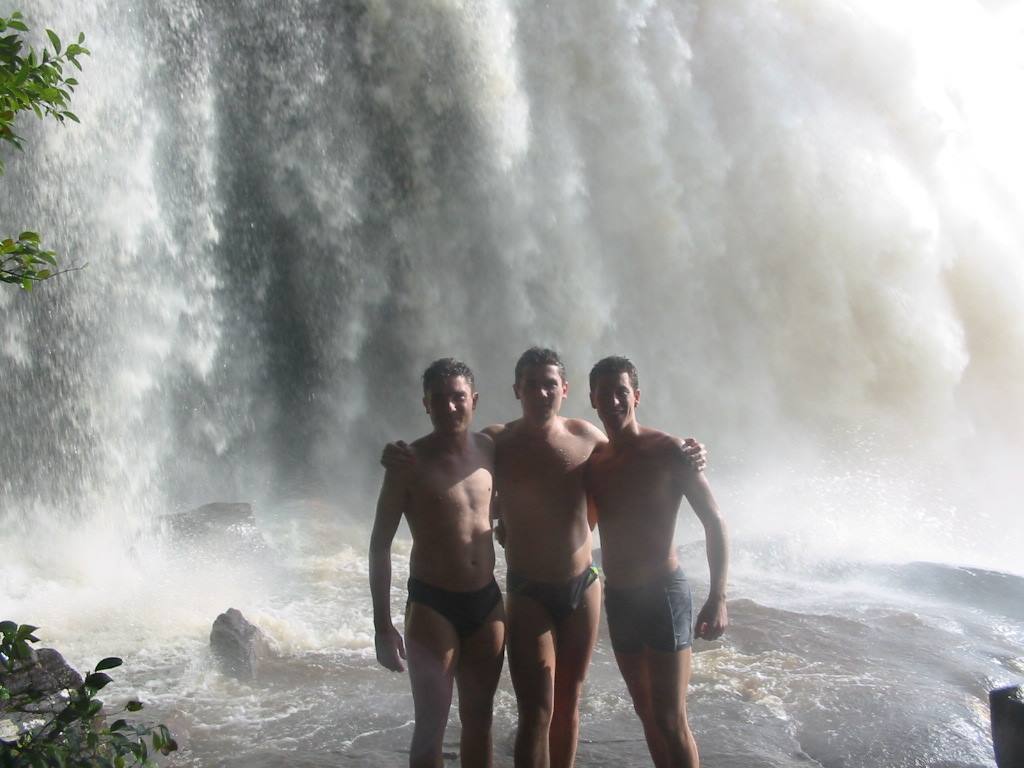
This time the night passed peacefully, even though it rained for hours, so in the morning the level of the Carrao river rose by 1.5/2 metres. After an abundant breakfast we set off for the Poso de la Felicidad, where we swam: wonderful! If you go, try to pass behind the waterfall, defying the strong current: behind there is a cavity, like in fairy tales! At 12:30 we arrived at Canaima and after eating we set off for the tour of the waterfalls: the first was Salto Golondrina, followed by salto Wadaima and the most beautiful, salto Hacha. After this short boat tour we continued on foot towards salto El Sapo, and here comes the good part: first we admired it from below, then, something truly extraordinary, we “crossed” it from behind the waterfall, in a sort of cavity that passes through the entire fall.
This passage was great fun, because inside, kinds of water vortices form that hit you with a certain violence, a kind of typhoon! We then moved on to Salto Sapito and admired the landscape seen from its top: extraordinary, a greenest meadow, with palms and tepuis in the distance.
I cannot understand how such beauty has not become a mass tourist attraction…well, better this way, perhaps that is also why places like Canaima and the Caura river fascinated me so much, a fascination increased by the awareness of being one of the few who have been able to see such beauties of nature! In conclusion, so far the experience has been exceptional, Salto Angel is wonderful, like all the other waterfalls, and the Caura river has remained in my heart: the jungle, however inhospitable, knows how to give you feelings that only a person who has come all the way here can understand, an attraction is created for these wild places that also makes you forget all the discomforts you have to face, a region that I recommend to all lovers of nature and strong emotions, they will not be disappointed! In the evening after dinner we went to the party organised by the villagers of Canaima: a w
omen’s five-a-side football match, while watching which we tasted an alcoholic drink made from fermented juca, and then a dance party where I tried my hand at salsa with some local girls who kindly lent themselves to having their feet stepped on…the effort was there, I wasn’t exactly a wonder of skill!
canaima lagoon
Day 821 Jun 2004
After breakfast, while waiting for the flight to Ciudad Bolivar, we played a five-a-side football match: Patrick, Jeroem, me, Federico and Francesco against a group of Venezuelans; we lost 5-4 also because we suffered a bit more from the suffocating heat…. Once we arrived in Ciudad Bolivar, we said goodbye to our travel companions and after changing some dollars, we set off for P. La Cruz (bus, 4 hours, 10000 Bs each, car 51000 for three).While changing the money we also risked a little: they took us into a room inside a rather run-down block (Bronx style); as soon as we entered, our “escort” closed the door behind us (a grate like prison ones) and in front of us stood a character who looked like he had come out of “The Godfather”, coloured shirt, cigar, Rolex and gold chains on his wrist, with a 200-kilo gorilla at his side.
As soon as we entered, a bit scared, we told him we had to change some money and he, without hesitation: “Let me see the dollars!”. Fortunately Francesco said we had left the money at the hotel; I don’t think he swallowed that bullshit, the fact is that, perhaps moved to pity, he let us go, and even gave us his business card, in case we needed anything at all! Having arrived in P. La Cruz at 9 in the evening we stayed at the hotel Riviera (three stars, 70000 for the triple).
canaima lagoon
Day 922 Jun 2004
After breakfast (4,500 Bs), we set off for our first excursion to Mochima National Park, specifically to El Faro Island (8,000 Bs), famous for the iguanas that roam the beach. The island is bare, the beach is clean but not particularly beautiful (there are no white sands or palm trees), the coral reef, which is only found at the ends of the beach, is nice but not exceptional; in short, it wasn't an unforgettable trip. Francesco didn't feel well today, I hope he'll be better tomorrow.
canaima lagoon
Day 1023 Jun 2004
Francesco is still unwell today, so we decide to set off just the two of us, this time heading for Santa Fe (buseta 1,000 Bs). Once we arrived (about 40 minutes), we immediately looked on the beach for a boat that would do an excursion to the islands of the park (Isla Caracas, Arapo, Arapito, the pool…): to our great surprise we ran into Patrick, Alice and Jeroem. In good company, we set off to discover the most beautiful part of Mochima Park. Right away we encountered a group of dolphins, beautiful, then we arrived at Isla Caracas, where we did a bit of snorkelling. Afterwards we landed on the beach at Arapo, with the "pool" next to it, very beautiful but nothing compared to the beaches of the Thai islands I admired on my last trip. After snorkelling (I even saw a ray) we went to the restaurant where we ate some good fish (30,000 Bs).
Then we went back to Santa Fe and had an ice cream together with Jeroem, Patrick and Alice, and then said goodbye, this time I think for good. Worth pointing out is Santa Fe, in my opinion much cleaner, quieter and more welcoming than P.LA Cruz (it's also less expensive) and I recommend it as a base for visiting Mochima Park. We then took the buseta again (it's awesome, a colourful bus with music blaring), we even managed to see Playa Colorada, from a distance it really is very beautiful. During the journey we also met some girls who then offered to come with us to Los Roques; I personally stalled to see if a spot would free up in my suitcase where I could hide them…. Joking aside, they were very kind, they walked us to the hotel, but we said "adios" to them because the next day we would finally be going to Los Roques, the last stop of our trip.
los roques
Day 1124 Jun 2004
Transfer leg to Caracas by bus, then to the airport by taxi (12,000 Bs for the bus, 25,000 Bs for the taxi), then once we arrived at the airport, the surprise: no flights until the following morning, so we had ourselves taken to a hotel in Macuto (Hotel Santiago, 68,000 Bs for the triple room), on the seafront. Dinner (51,000 Bs for three) and then off to bed, hoping to leave the next day. (Caracas-Gran Roque flight $150 round trip, but paying in Bs it's as if it were $110).
cayo de agua los roques
Day 1225 Jun 2004
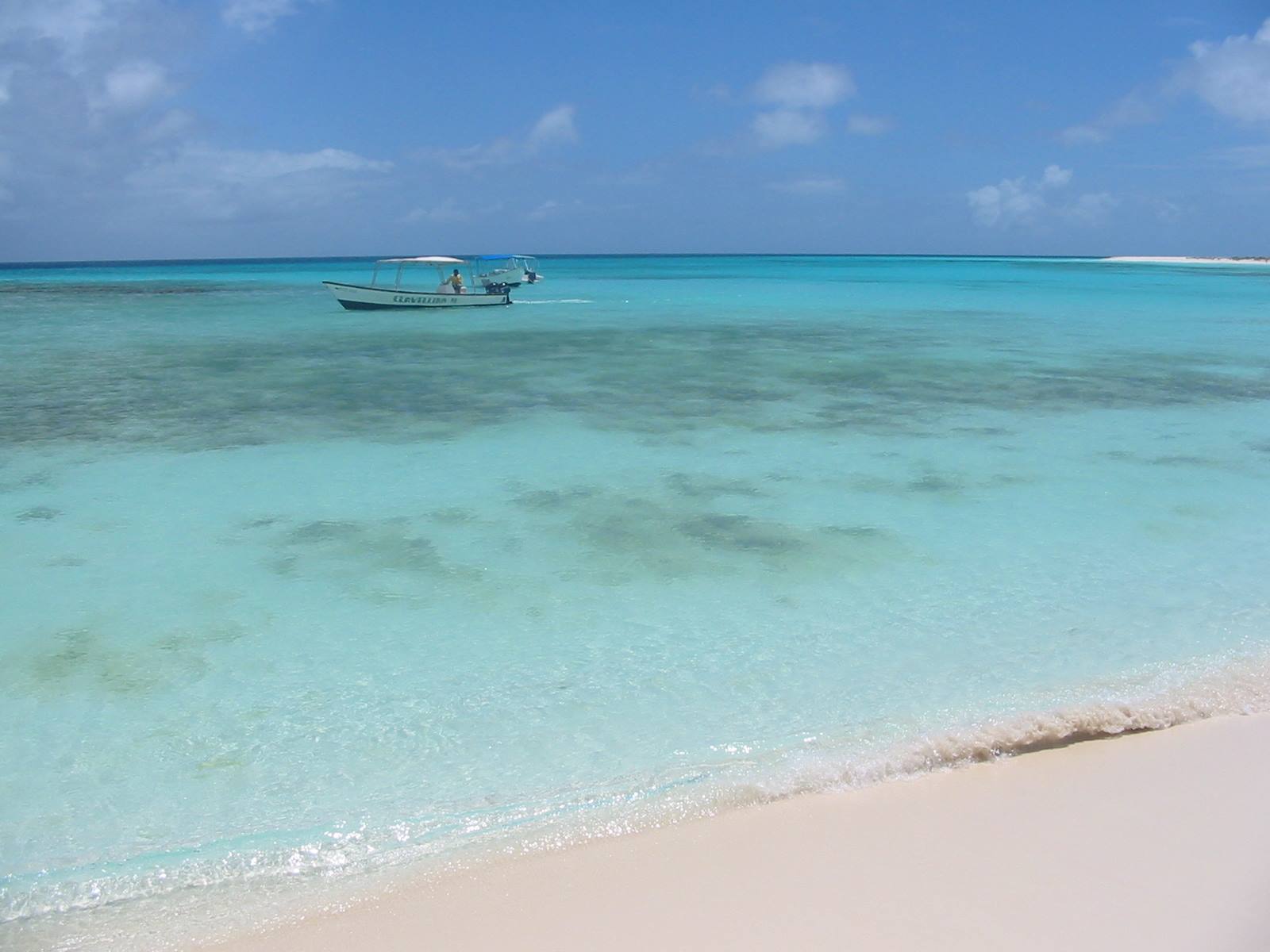
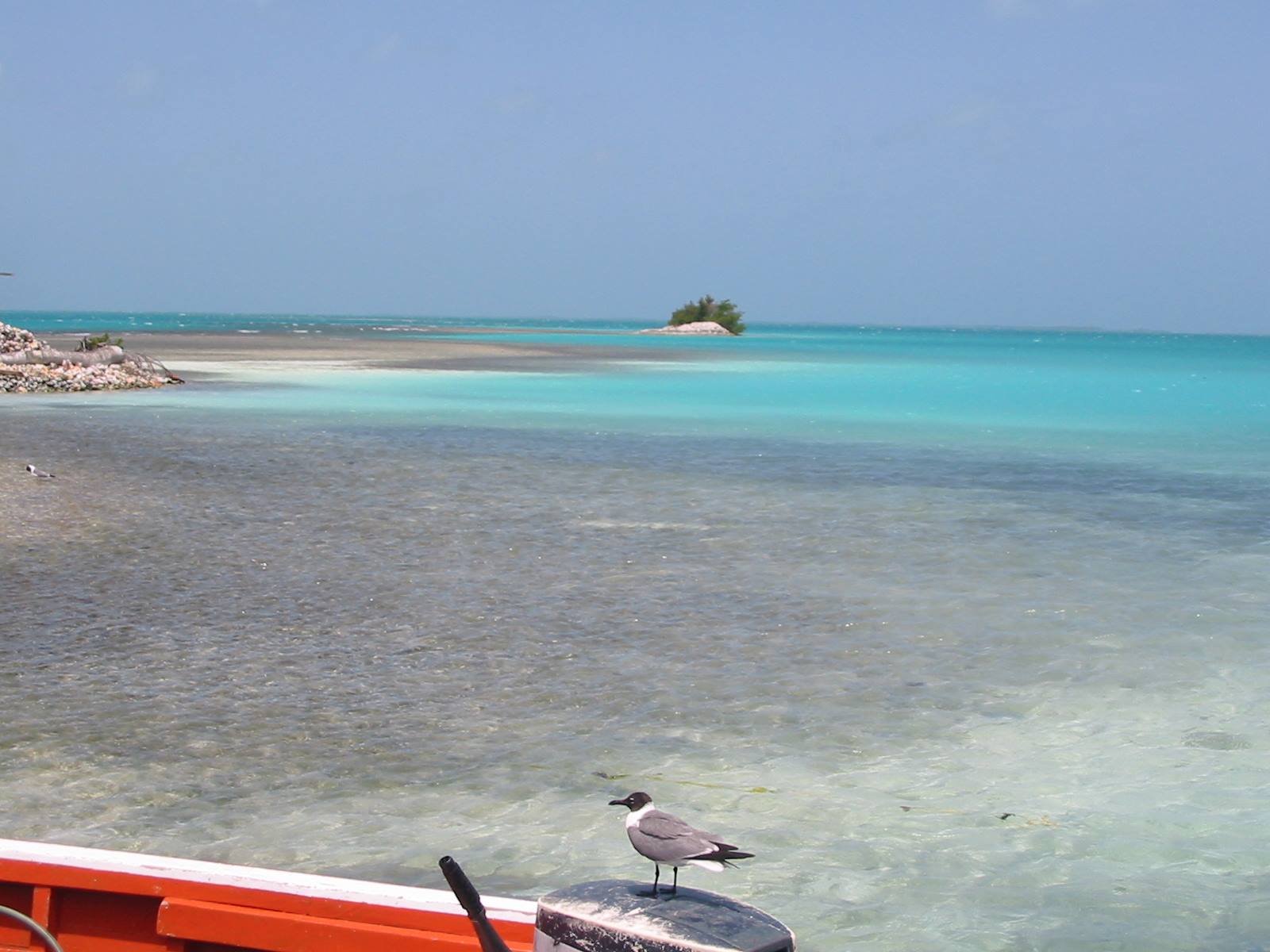
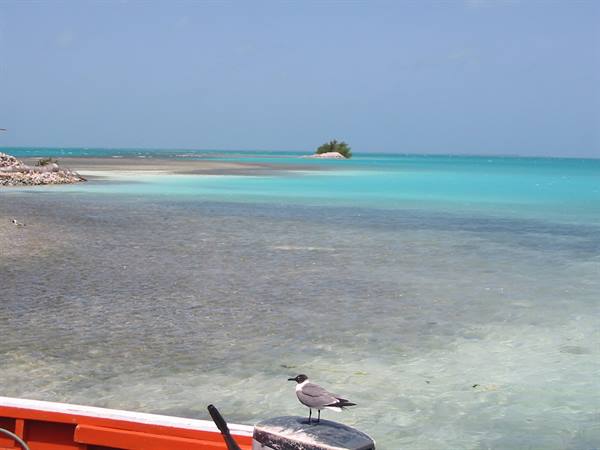
7:30, departure for the airport, change dollars into Bolivars (2,400 Bs) and then off to Los Roques. After a 35-minute flight, there before us is an extraordinary spectacle, a myriad of shades of light blue, turquoise, purple, a breathtaking vision. As soon as we landed we paid 25,000 Bs for the entry tax and then went to Posada Magalis, the cheapest on the island (triple room at 35,000 Bs per person, with breakfast and dinner). Here we met 2 Italian guys, who had just arrived in Venezuela and intended to stay for another 2 and a half months. After chatting a bit, we ventured behind the landing strip where there's a small white beach, with the coral reef: even here the snorkelling is very nice, lots of fish, although the corals aren't particularly beautiful, still the spectacle of colours is truly stunning.
After the swim we organised the next day's trip: the most expensive excursions are $20 and be careful: if you have to pay in bolivars, 20$=60,000, that is 1$ = 3,000 Bs, a rip-off. In the evening, at sunset, we went to drink a moito by the sea, beautiful…. Dinner based on fish and then an evening in Plaza Bolivar, which is certainly not Moscow's Red Square…, but it's nice, even if it isn't teeming with life. The impression I got right away is of a beautiful archipelago that fortunately hasn't yet been exploited by tourism; there are still no big resorts, only small posadas, run by Venezuelans and Italians. The atmosphere is that of the small towns of southern Italy, a quiet place where everyone knows each other.
rio caura
Day 1326 Jun 2004
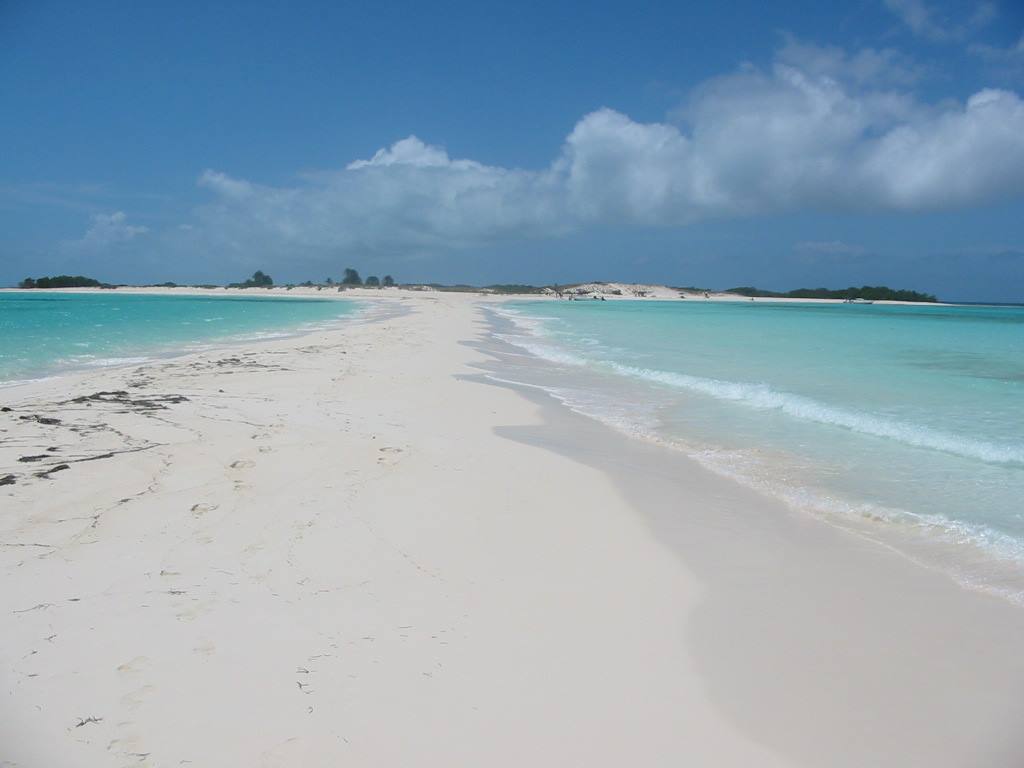
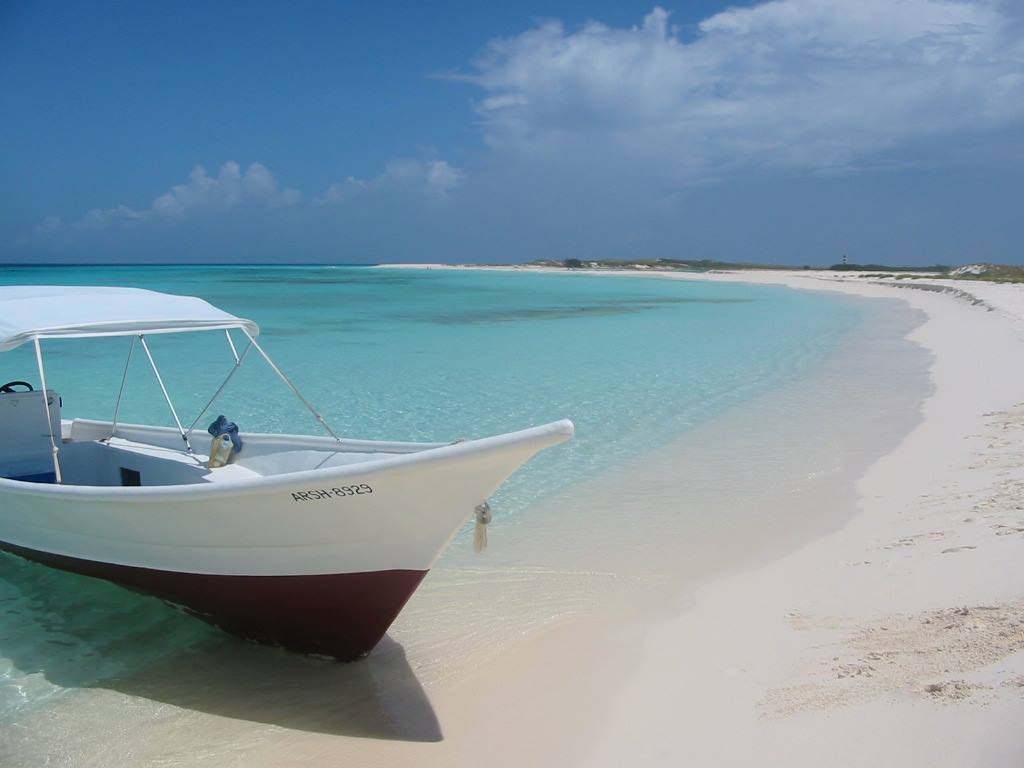
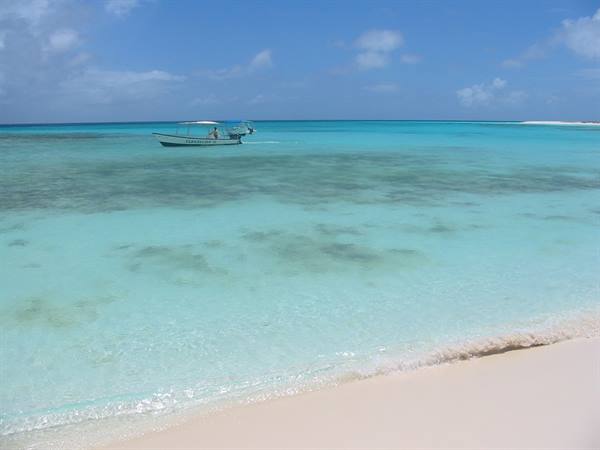
9:30, after an abundant breakfast we set off for Cayo de Agua, which is one of the most beautiful beaches in the entire archipelago ($20 for the whole trip, drinks and meals excluded). The departure was postponed by about twenty minutes due to a violent downpour, then off we went, setting off across a sea of a thousand colours. After about an hour of sailing, here we are: the "vision" is extraordinary, a very white beach, a strip of sand that cuts a turquoise and blue sea in two… Blinded by such beauty, we immediately take a walk along the beach, in search of the best spots to take photos. After spending about three hours splashing around in the water and snorkelling, we set off heading for Los Moschises, an island where you can visit the turtle rehabilitation centre.
After this stop we continue on to the island of Esparky, where we swim in what in my opinion is so far the most beautiful beach I've seen in the archipelago (for Federico and Francesco it's Cayo de Agua instead; anyway, look at the photos and judge for yourselves: there's plenty to choose from!). After taking the requisite photos we set off again to return to Los Roques. As a first excursion I was struck by the beauty of these islands, a little less by the coral reef, although the quantity of fish is truly remarkable. In the evening, as usual, a cocktail by the sea watching the sunset.
rio caura
Day 1427 Jun 2004
We arranged to visit the island of Norinkys ($10 without lunch), famous because turtles lay their eggs there. The island is actually made up of 3 atolls, each separated by a stretch of sea just a few metres wide: as always the spectacle is extraordinary, the white beaches and the kaleidoscope of colours of the sea are by now a constant! After exploring the island we spent the day snorkelling and sunbathing. The coral reef isn't extraordinary and in its most beautiful part it's so shallow that you can't swim without hurting yourself. Despite this, there are lots of fish and I was especially struck by the turtles and by the sight of a school of barracuda. The day passed very quickly, this trip was wonderful too.
Tomorrow we might go to Boca de Cote, the best place for snorkelling; there you can even find sharks, let's hope we survive! In the evening, after the usual drink by the sea, we did the usual round of Plaza Bolivar (ten metres in diameter) and met two beautiful local girls. At 11:30 I had to leave them because, struck by the curse of Montezuma, I had to take refuge in the posada.
salto angel
Day 1528 Jun 2004
Today we did the most beautiful excursion of all: at 9 we arranged to visit Boca de Cote, an opening in the thin line of sand that protects the Los Roques archipelago to the south. After half an hour of sailing towards what is the paradise for snorkelling in the archipelago, we realise we've forgotten masks and fins, a minor detail! Luckily we stop at what will be the second extraordinary stop of this trip, to pick up snorkelling equipment. Boca de Cote is a stretch of open sea where it's possible to see turtles (seen), barracuda (seen and decidedly big ones too), and sharks (unfortunately not seen). Being open sea, the current is strong, as is the swell.
Finally we see a beautiful coral reef, beautiful fish and even seabeds that reach 15 metres: finally I see what I wanted to see! After a stop of about an hour, we set off for a fishermen's stilt house in a lagoon of a thousand colours, one of the most spectacular places in Los Roques, in my opinion even better than Cayo de Agua. We stopped for about half an hour for the requisite photos: here you can find piles of botutos heaped in stacks (some are alive), starfish and in a shell we even found a moray eel! To finish the tour we ended up at Crasky, an island with an endlessly long beach of blinding whiteness. In the middle of the beach there's a little hut with parrots and a restaurant with a sea view where freshly caught fish is cooked.
After eating prawns and squid with arepas (a kind of fried polenta, used instead of bread), rice, salad and ice-cold Polar beers (68,000 Bs for 3), we devoted ourselves to relaxing and reading. 5 p.m., back home, shower, and now a climb up the hill of Gran Roque to see the sunset, see you later…
salto angel
Day 1629 Jun 2004
This morning we go to explore Francisky, in the company (much to our dismay) of all Italians. This island is extraordinary too; it has a lagoon, known as the pool, beautiful both for the variety of shades of blue and for the lovely coral reef and the abundance of fish. Unlike most of the islands, it is of volcanic origin, although the side facing Gran Roque consists of a beautiful coral beach. When evening comes, after countless swims, we return to the posada, where we have dinner with an Australian girl, a Texan and Gigi, a diplomat "forced" to come to Los Roques. We spend the evening chatting about Venezuela, politics, travels, arranged marriages in Sicily, in short, a bit of everything!
salto el sapo - canaima lagoon
Day 1730 Jun 2004
After doing a bit of shopping, we say goodbye to Maria, the landlady, Gabriel, a guy you'll certainly meet if you go to Los Roques, and then we set off for Caracas. I'm writing from the plane now and I confess that looking at the archipelago from above, I almost get emotional. I think back on the good times spent during this holiday, the people I've met, the beauties this country can offer, and I think I'm very lucky to be able to have the chance to experience these moments. I heartily recommend to all those who aren't travellers and who happen to read this diary to stop dreaming and saying: "How lovely it must be, I'd like it too,…" and buy a plane ticket and set off, it's so easy……and you won't regret it: to travel the world and discover new places, all you have to do is want it!
Ciao!!!
ho letto il tuo diario e mi viene naturale chiederti qualche consiglio visto che partirò anche io per il Venezuela il 28 dicembre e starò per 16 giorni.. io vorrei visitare Morrocoy anzichè Mochima perchè mi sembra di aver capito che dovrebbe essere più bello come parco e come spiagge..tu cosa consoglieresti??
poi mi sposterò a Merdia e infine a CiudadBolivar per organizzare da lì una settimana circa giorno più giorno meno nella GRan Sabana-Saltos Angele e Rio Caura.
Soprattutto per queto sapresti darmi qualche dritta? come vi siete organizzati voi? con che agenzia? qualiasi consiglio utile?? infine Los Roques..consigli per il viaggio e per la posada in cui alloggiare???
Ti ringrazio in anticipo, se potessi darmi qualche consiglio idea, qualsiasi cosa te ne sarei infinitamente grata!!!
Ciao Giulia



1 reader comments
Ciao!!! ho letto il tuo diario e mi viene naturale chiederti qualche consiglio visto che partirò anche io per il Venezuela il 28 dicembre e starò per 16 giorni.. io vorrei visitare Morrocoy anzichè Mochima perchè mi sembra di aver capito che dovrebbe essere più bello come parco e come spiagge..tu cosa consoglieresti?? poi mi sposterò a Merdia e infine a CiudadBolivar per organizzare da lì una settimana circa giorno più giorno meno nella GRan Sabana-Saltos Angele e Rio Caura. Soprattutto per queto sapresti darmi qualche dritta? come vi siete organizzati voi? con che agenzia? qualiasi consiglio utile?? infine Los Roques..consigli per il viaggio e per la posada in cui alloggiare??? Ti ringrazio in anticipo, se potessi darmi qualche consiglio idea, qualsiasi cosa te ne sarei infinitamente grata!!! Ciao Giulia