Andrea, Dionigi, Paolo · @ritornoalparallelozero · Treviso
How
Travel diary
The story · 3 days
Day 115 Jun 2005
Puno
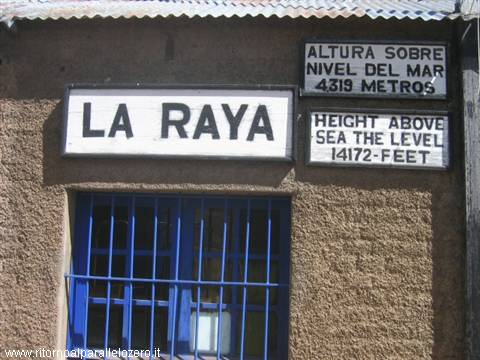
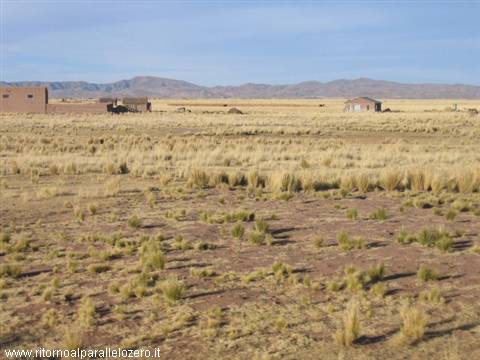
We thought the journey would last no more than six hours, and instead this time too we were contradicted by the evidence. To get to Puno it took us a good ten hours, with a brief stop at La Raya, the highest station reached by the little train of the Andes (4,319 meters above sea level). Having arrived at our destination, as usual there was a good man in charge of picking us up, who led us to the hotel. This new destination too was not exactly worthy of the previous ones... a very small and cold room adapted to accommodate three people, with a bathroom full of drafts: we had to rent a (tiny) stove from the owner to try to warm the place up a little. No big deal, in this hotel too we weren't going to have to stay long, since the very next day we would be leaving bright and early for a two-day excursion among the islands of Lake Titicaca.
So we went down to look for a cheap little restaurant where we could have our dinner and then headed straight to our beds.
Home sweet home
Day 216 Jun 2005
Lake Titicaca: floating islands of Uros, Amantanì
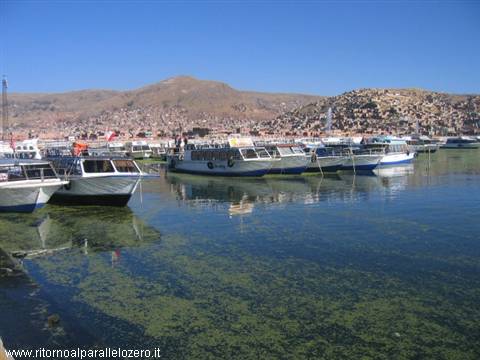
The following morning, as instructed, the alarm went off at six o'clock sharp and after an abundant breakfast, as usual included in the price, we waited for a kind young man who had us get into the taxi and escorted us to the pier where we boarded for our adventure. Obviously we weren't alone... the group was made up of fifteen people in total with different nationalities (French, Canadians, Americans and even two Maltese). Obviously a guide was not missing, Alexander, with a pronounced "sweet tooth" and truly very likeable.
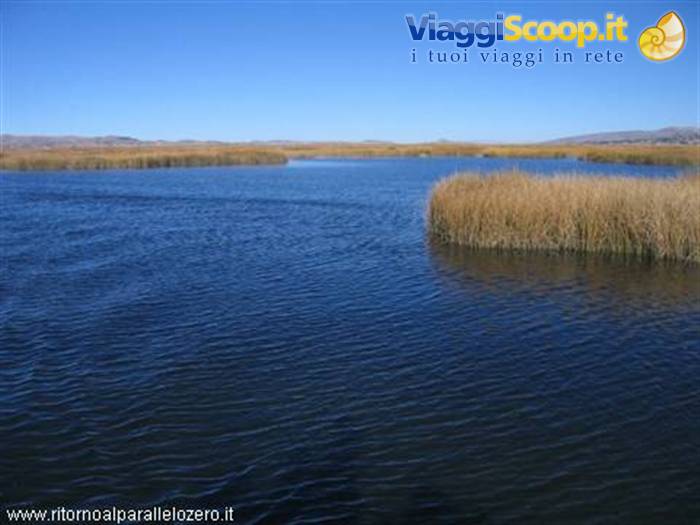
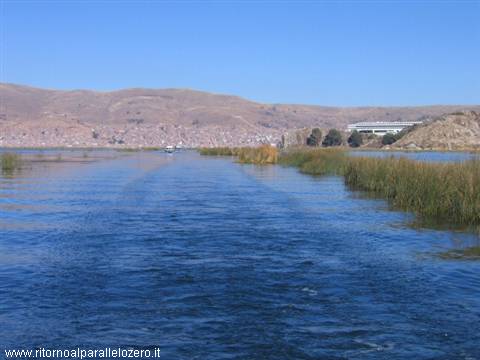
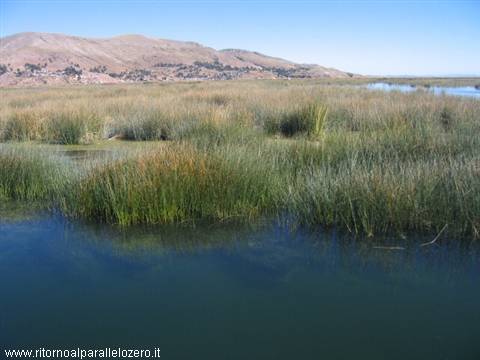
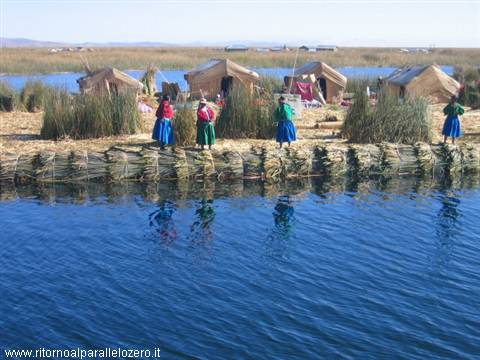
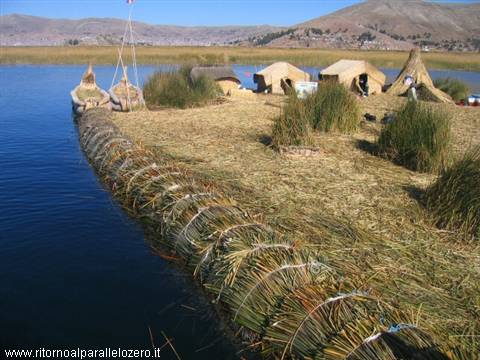
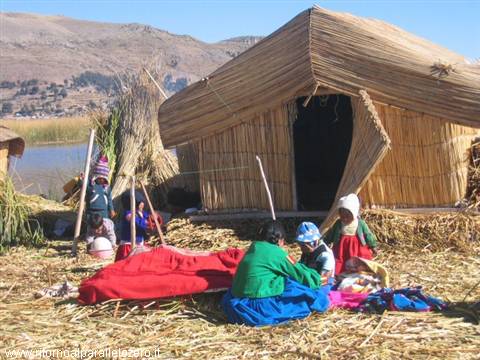
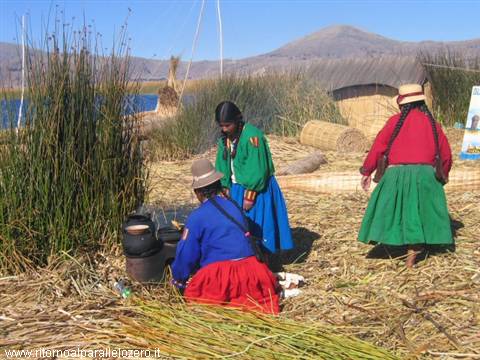
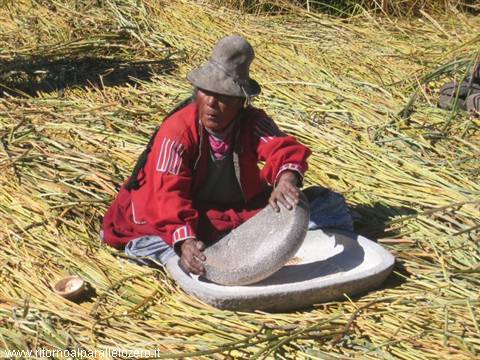
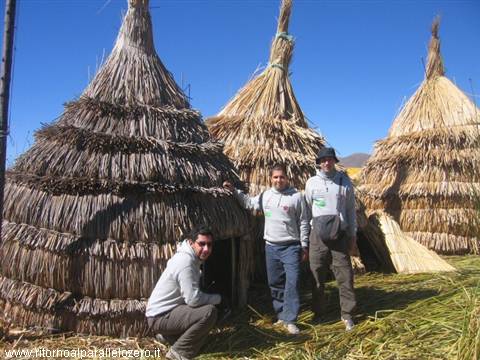
The first stop was planned at the floating islands of Uros, the closest and also for this reason the most touristy, but no less beautiful and interesting for that. The peculiarity of these islands is that they are not made of earth and rock, but built by man, using a particular reed that populates Lake Titicaca. They are a sort of large floating platform anchored to the bottom of the lake and on which people have built their homes and where small communities spend their entire lives. We stopped at two floating islands, where we were shown what these people live on, the tools they use, the interiors of their houses and the animals they raise: truly characteristic!
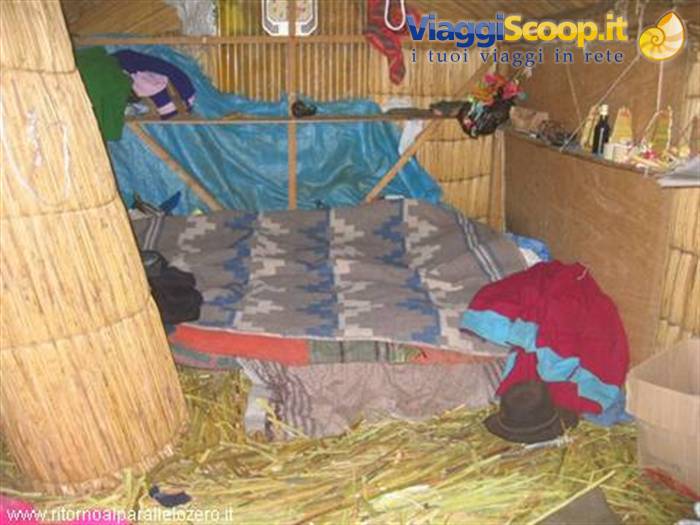
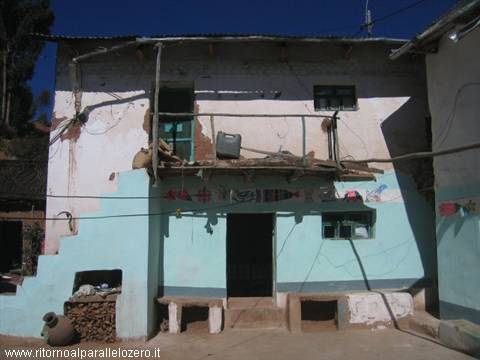
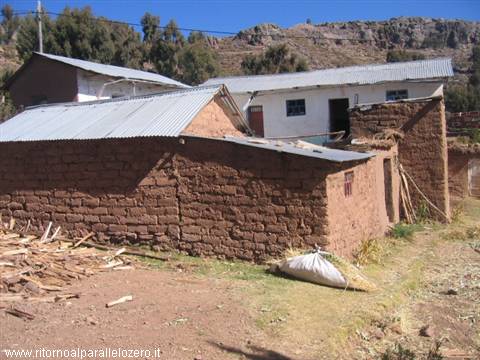
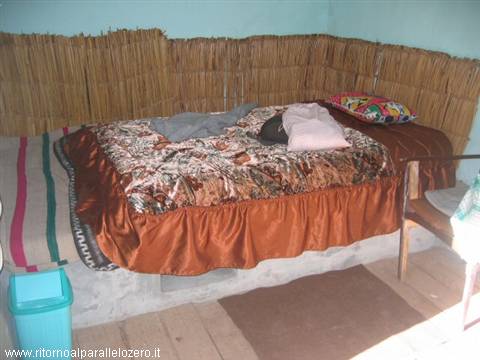
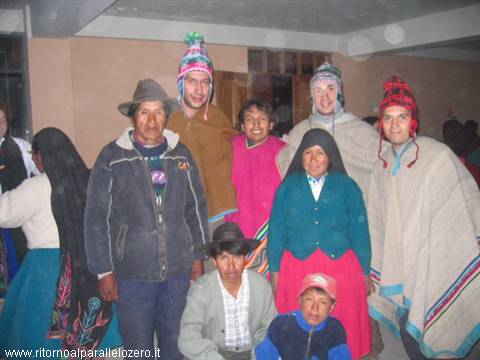
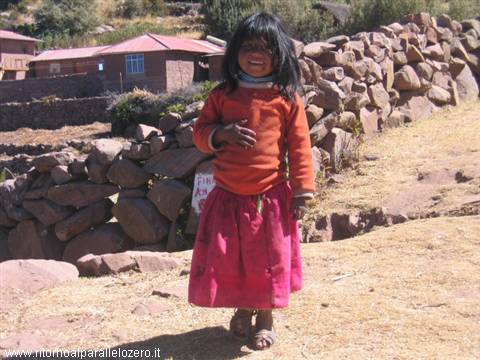
After about an hour we got back on the boat to head toward another island (this time a real island in the common sense of the term), where we would spend the night at the home of a local family. We arrived at Amantaní after three hours of slow sailing and were welcomed by the president of the village that would host us. Along with him were some friendly and very colorful ladies, who for an entire day would be our "mommies" taking care of us. Once we reached the center of the little village, the distribution of the tourists among the various mommies began: we three ended up with a very young Ilda, who led us to her home and showed us our accommodations. It was a classic dwelling of mud and straw, partly built on two floors, and beside this building there was a smaller and even more spartan building used as a kitchen.
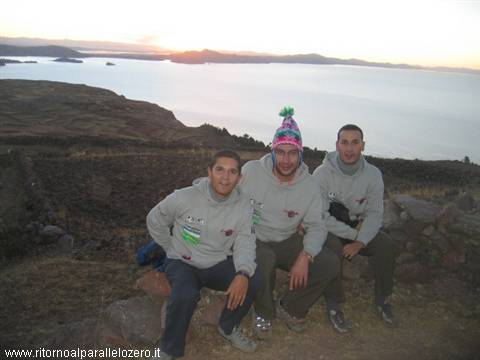
Having gotten to know the entire family unit, we immediately took advantage of Ilda's culinary skills, and she served us lunch in our room, based on tubers and more tubers. Just enough time to digest and it was time to gather in the town center, for a long walk all together, up to the summit of the highest hill on the island, from where one could admire the sunset over Lake Titicaca.
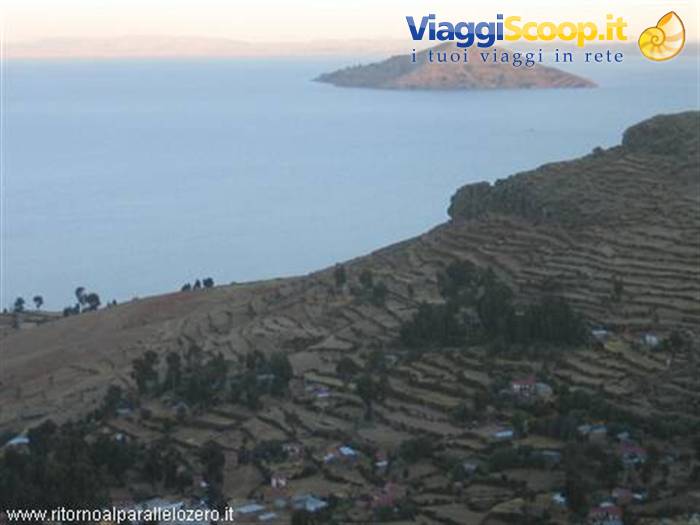
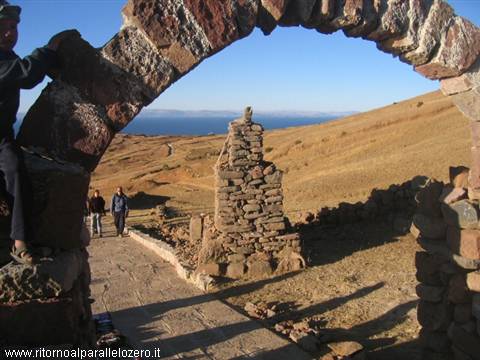
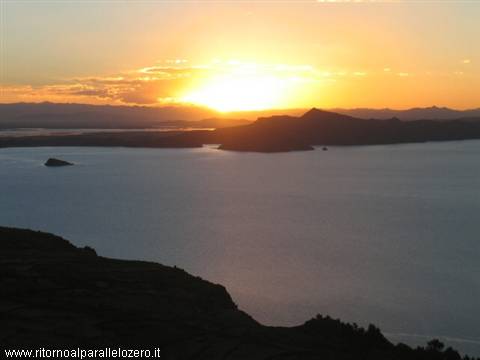
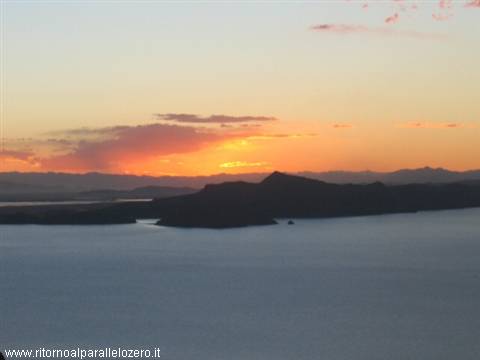
The climb didn't prove difficult at all, perhaps cheered by a splendid panorama over the little village we had just left and gradually over the entire island. Tradition says that once you reach the top you must walk three times around the perimeter of the old building (once dedicated to religious worship) located at the summit of the mount, and then you can make a wish. So we did the same... no sooner had we finished the third lap than the sun was already setting over the lake. Needless to say, the sunset was a wonderful moment, made of infinite shades of red sinking into the waters of Titicaca. Darkness had now fallen and a long descent toward our little village awaited us. Along with the darkness, the temperature also dropped, considerably. Perhaps that is why for dinner the family invited us to eat with them, in the tiny kitchen heated by a fire lit in the floor.
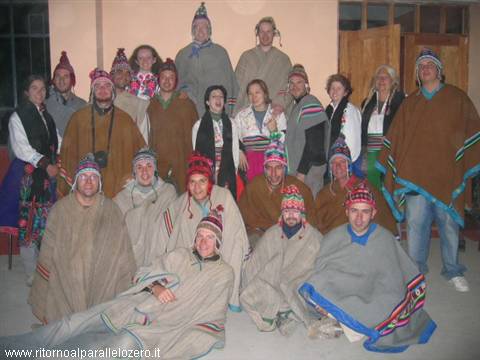
Yes, because on the island there is no gas, no electricity, no running water, all things we now take for granted. Dinner consisted of a soup of tubers and vegetables, rice, potatoes and tubers. In the middle of dinner, a strange change in wind direction played a nasty trick on us and caused a semi-intoxication of the RPZ Association: an attack! Having overcome this rough patch too, the evening promised to be a dancing one: the inhabitants of the village had organized a sort of party, to involve the tourists in the typical local dances, perhaps in an attempt to warm them up! For the occasion, in an attempt to fight a biting cold, Ilda had decked us out with a big wool poncho and a typical Peruvian hat: scandalous!
The dancing went on for about an hour, after which sleep got the better of us and we headed to our little room.
Amantane island
Day 317 Jun 2005
Taquile Island, Puno
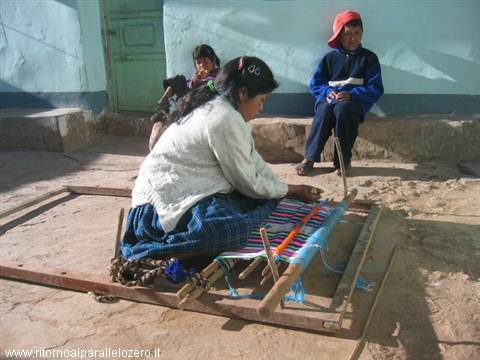
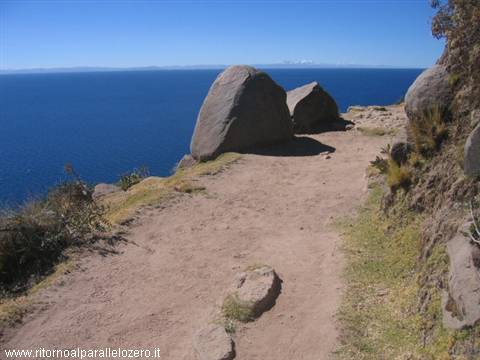
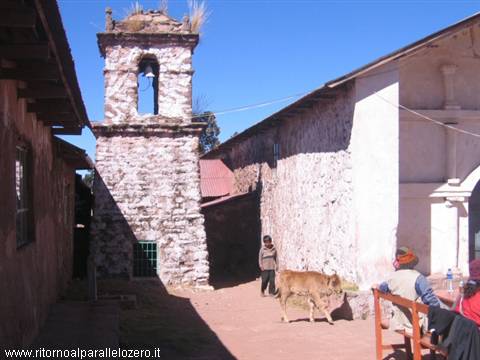
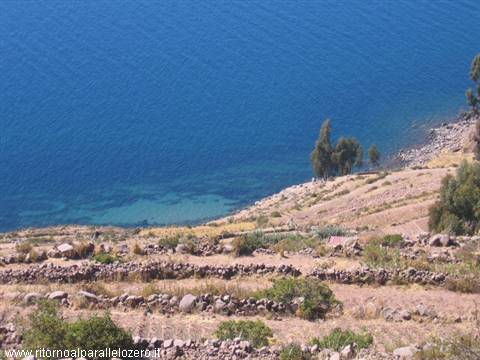
The next morning we woke to the rooster's crow and, after having breakfast again in the smoky kitchen, we headed back to the pier to board for our next destination: the island of Taquile. After half an hour of sailing we were already there. The activity involved a long walk to reach the town centre, passing along a little path with a stunning view over Lake Titicaca. Once we reached the town centre and paid a brief visit to the crafts shop, we stopped for lunch at an open-air "restaurant". Once we'd finished our dishes, there wasn't even time to digest before we had to set off again to reach the other side of the island, where our boat was waiting for us. With our legs now going their own way, we made it to our boat and from there we boarded for another four hours of travel that would take us back to Puno.
As usual, the return journey turned out to be harder and heavier than the outward one: endless! In the end, though, we reached our goal and, having disembarked at the Puno pier, there was a truck waiting for us to take us back to our hotel. We arrived dead tired, just enough time to open the door and we collapsed into our beds. We only found the strength to take a shower and drag ourselves to the nearest restaurant to eat something: this time it wasn't tubers but a pizza!
The following day we didn't even have time to recover from the exertions of the Titicaca tour because at 07:30, after a mediocre breakfast, a sprightly gentleman came to pick us up to escort us to the bus terminal. Our adventure in Peru had come to an end... the bus would take us to the border with Bolivia and from there to a cheerful little town also on the shores of Lake Titicaca: Copacabana (it's not in Brazil!!!)










0 reader comments