Andrea, Dionigi, Paolo · @ritornoalparallelozero · Treviso
How
Travel diary
The story · 4 days
Day 15 Jun 2005
Arequipa
We left the Lima station in the evening to board a night bus that in about twelve hours would take us to the "White City", Arequipa. The journey, which promised to be comfortable, was disturbed by an episode of vandalism that we suffered about three hours after our departure. Some delinquent thought it well to throw a rock at the bus window, shattering it and scattering glass shards throughout the vehicle. The journey suddenly turned into a hell. The driver certainly couldn't stop in the middle of nowhere, with the risk of being attacked again. The solution was to continue to the city of Nazca, equipped with a good "fortified" station. The dramatic thing is that during the night it was freezing cold and the icy air kept coming in through the broken window.
To tell the truth, even after the stop at the Nazca station, things didn't improve very much: the driver fixed a piece of plywood as best he could to plug the hole... a desperate attempt!
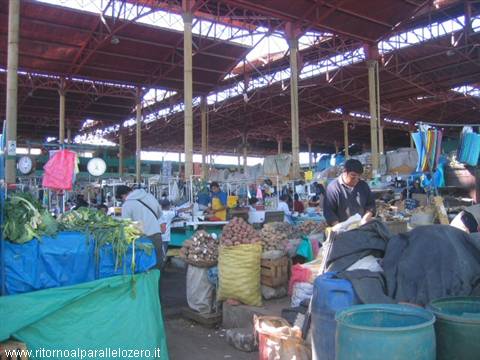
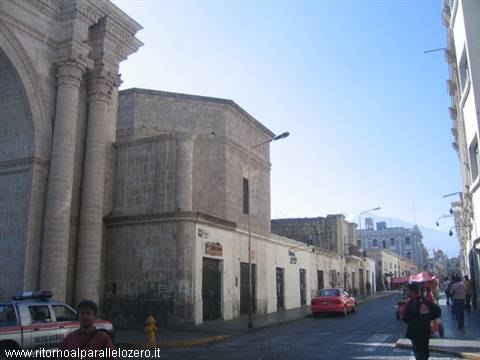
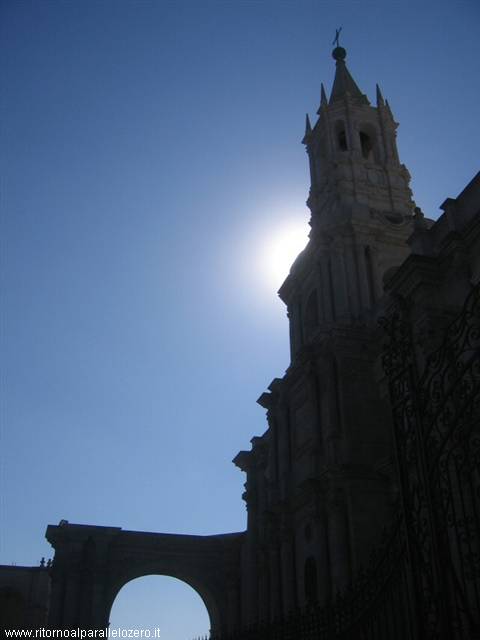
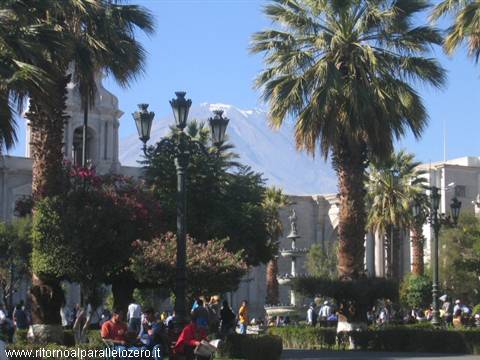
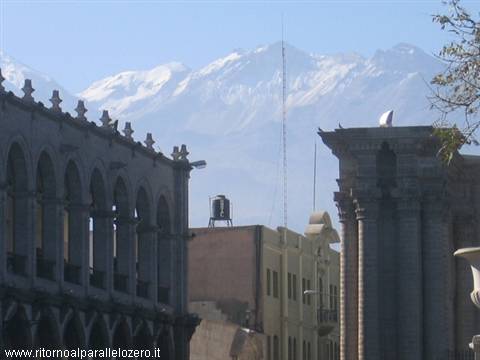
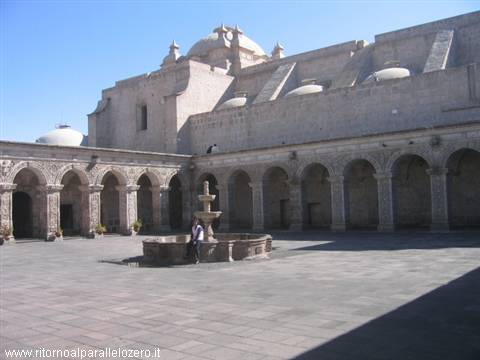
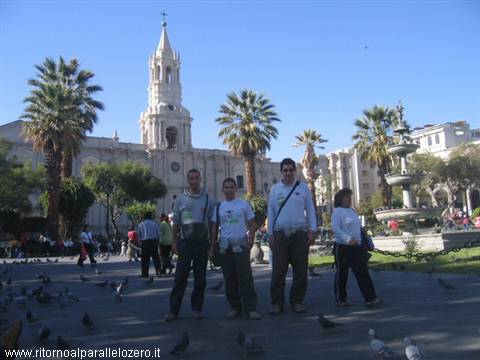
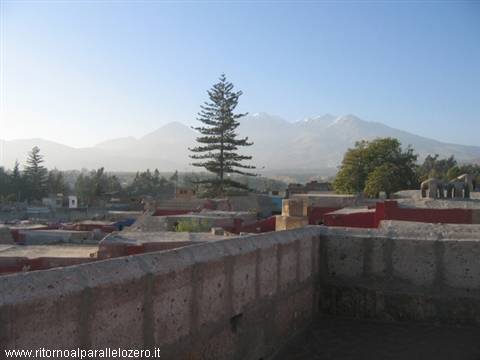
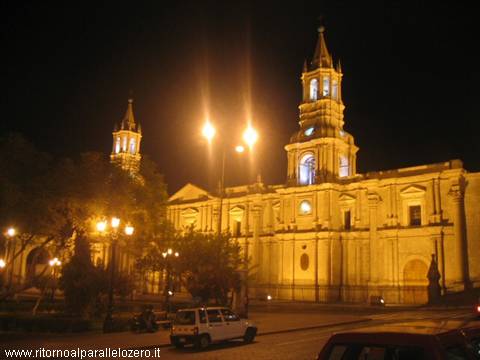
Despite this misadventure we arrived safe and sound (a bit chilled) at our destination. Welcomed at the station, we were transported to the hotel where we sorted out our bags and then headed toward the city centre to have breakfast. The hotel was beyond all expectations, with first-rate service, at least compared to what we were used to. The city of Arequipa also proved very pleasant, with a historic centre built entirely of a typical white stone, quarried from the surrounding deposits. After a short tour of the main square we returned to enjoy the unexpected luxury of our lodging, where there was even cable TV! Seized by enthusiasm we even forgot about dinner but on the other hand we treated ourselves to a very long and endless hot shower to warm up from the climate that especially at night became particularly rigid.
For the following day we had thought of recovering the strength spent during the long journey and so, having woken up not too early, we headed to the lower floor of our hotel to have a hearty breakfast. We were really beginning to think that this time we had truly spent our money well, buying a top-notch tour. After breakfast we again headed toward Plaza de Armas (the main square), but without taking ourselves too seriously, wandering aimlessly through the streets of the centre, aware that we were living a day of absolute relaxation. Having gone to dine in a little place in the city centre we returned home early since for the following day we had planned a two-day excursion to the Colca canyon.
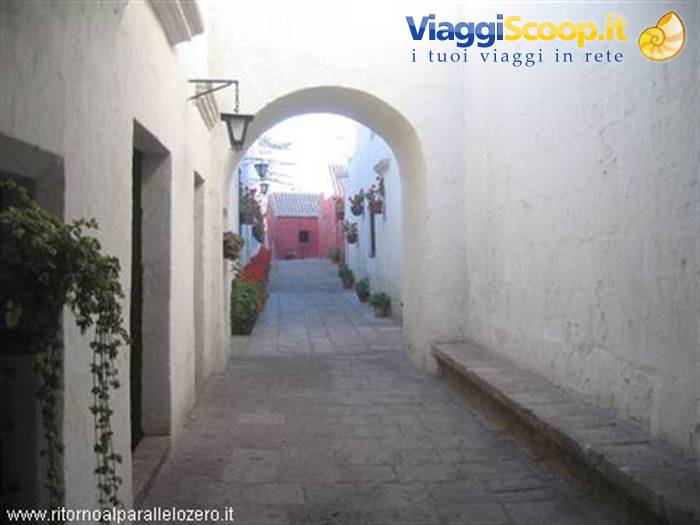
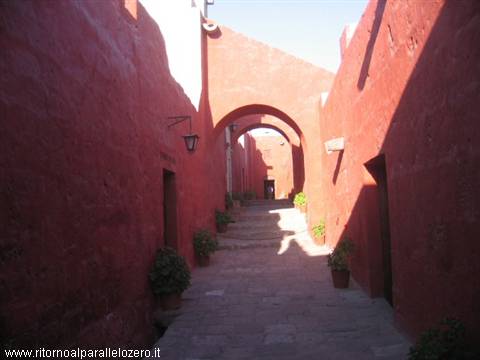
Inner corridors
Day 25 Jun 2005
Santa Catalina Monastery
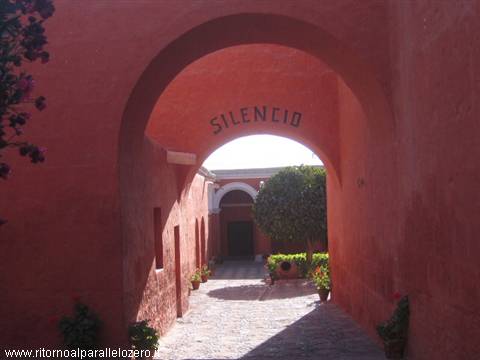
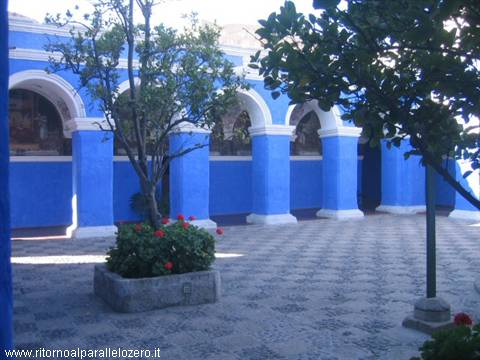
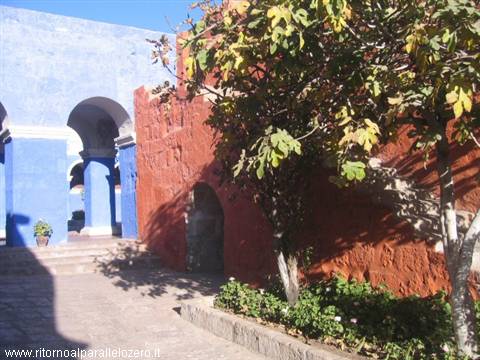
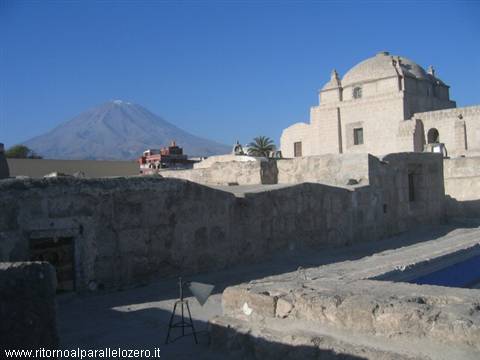
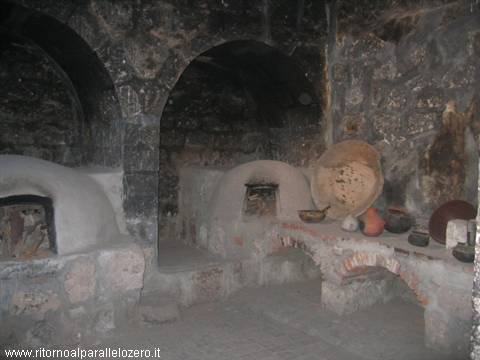
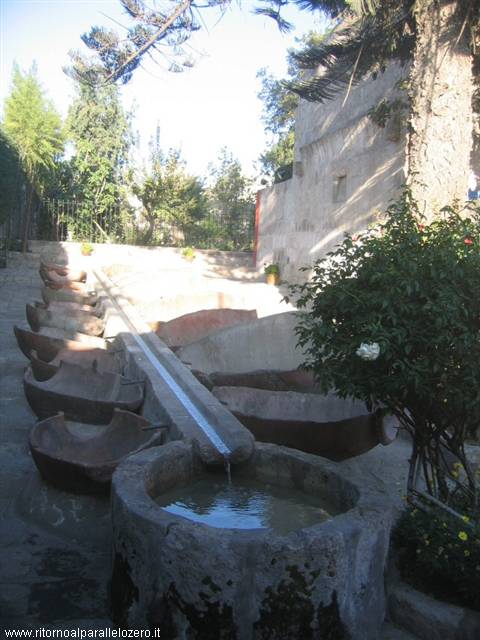
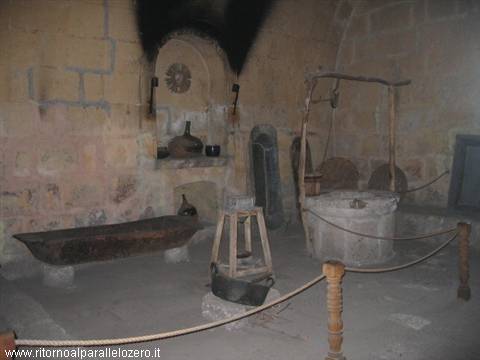
The following day we woke up unhurried, rested and ready for the last objective remaining for us in the city: the Monastery of Santa Catalina. More than a monastery, it is a small autonomous town, built even before the city of Arequipa itself to house cloistered nuns. As already mentioned, the monastery is truly immense and the visit turned out to be very interesting. It was possible to admire the ancient cells in which the nuns spent their lives, the ancient baths and the ancient kitchens. But the truly surprising thing about the monastery is its colors: they are very vivid pastel colors ranging from colonial yellow to clear azure, giving the austerity of the place a touch of life. We came out of the monastery as darkness was already falling and with it also ended our stay in Arequipa.
After the usual boiling hot shower and an excellent little dinner we returned to the hotel to pack our backpacks: the next day we would leave at ten in the morning, bound for Cuzco.
Al pack
Day 36 Jun 2005
Colca Canyon
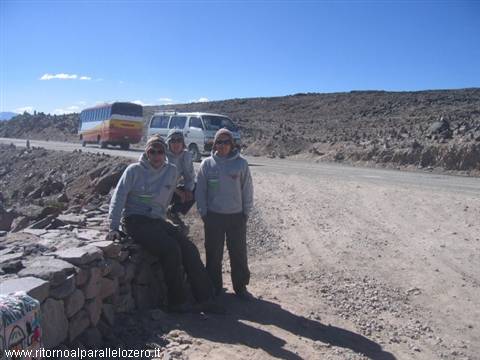
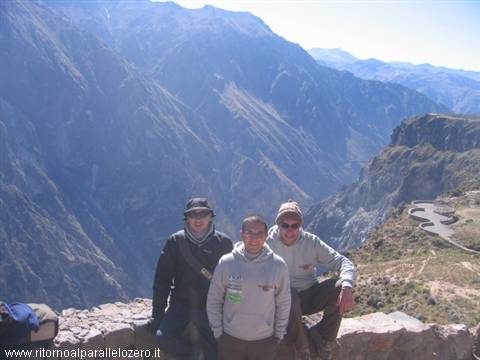
The next morning bright and early we boarded a minivan that, together with other people, including a couple of Italians, would take us to visit the highest canyon in the world. We began to move away from the city of Arequipa through winding little roads that climbed up the deserted Andean Cordillera. To reach the fertile Colca Valley we had four hours of travel ahead of us and above all a not insignificant natural obstacle: a mountain pass that soared to a height of 4,910 meters above sea level. Thanks to the suggestions of our guide Bernarda we had equipped ourselves to fight altitude sickness: lemon candies containing large amounts of sugar and the famous "coca leaves," which are a natural remedy for regulating blood pressure.
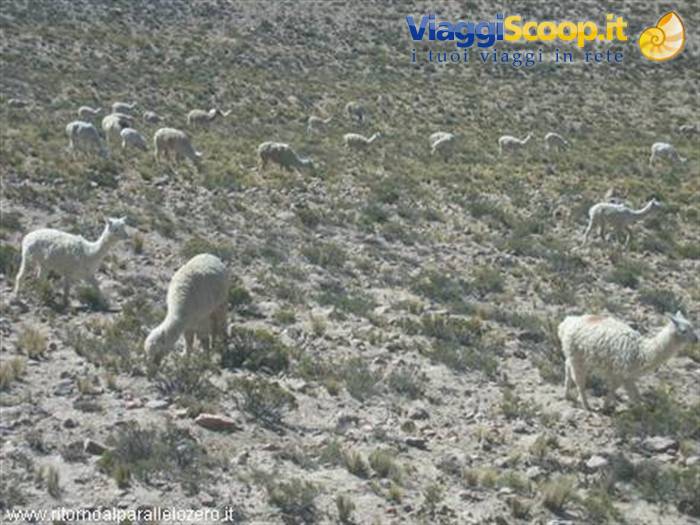
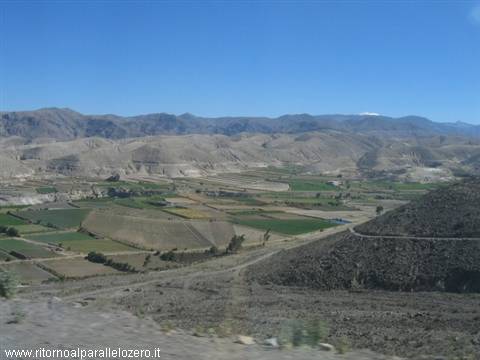
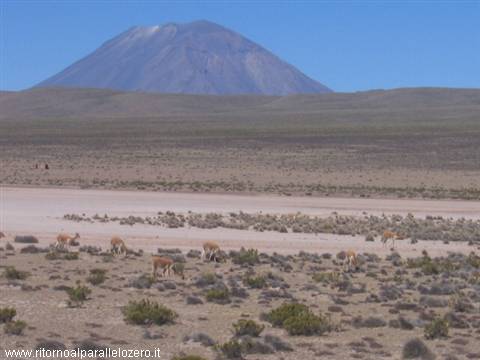
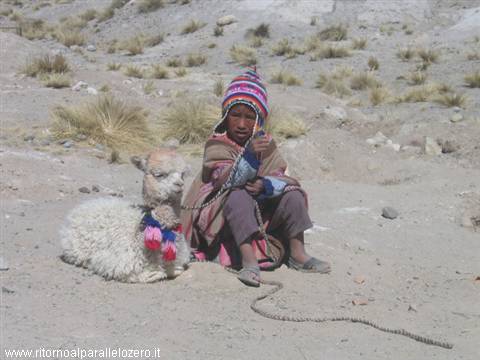
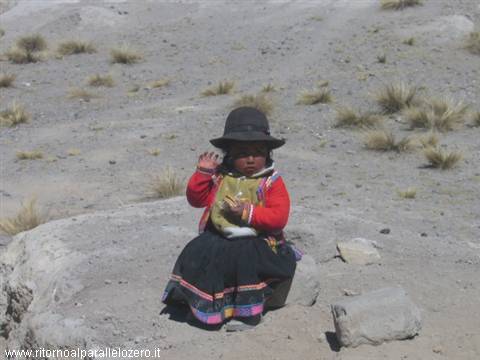
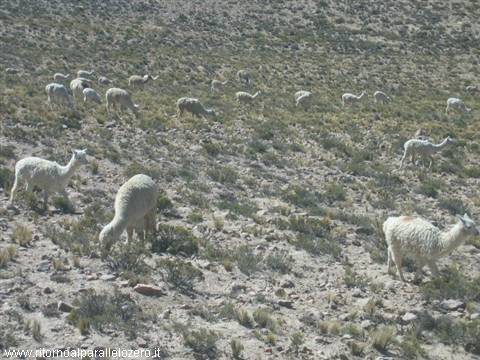
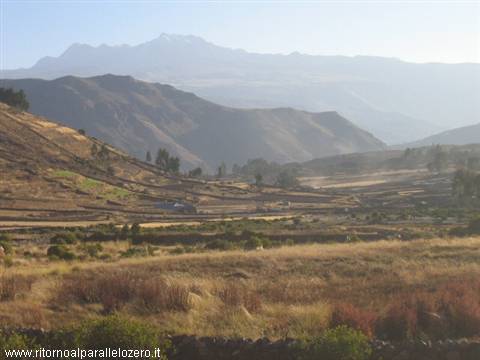
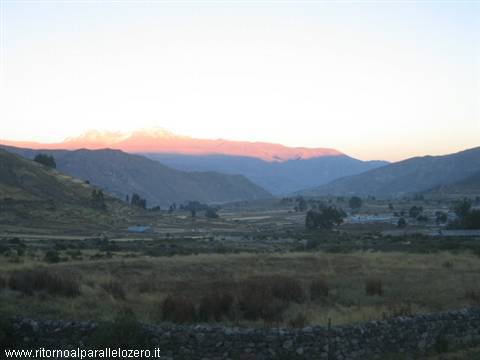
After a first stretch of the route that ran along paved road, once we had crossed the pass, at 4,910 meters of altitude, the road turned into a kind of dirt track full of potholes, bumps and other rough patches. We allowed ourselves a stop at the most critical moment of our ascent to enjoy a hot tea, strictly made from coca leaves, which gave us the strength to climb back into the minivan and continue toward our destination. Along the entire route we were accompanied by the presence of a series of animals typical of these areas: especially llamas and alpacas but also vicuñas and the extremely rare and almost extinct guanaco... quite a spectacle! Finally, after four hours of travel, we began to glimpse the green Colca Valley and in an instant we were already in Chivay, the little town that our guide had chosen for us to spend the night.
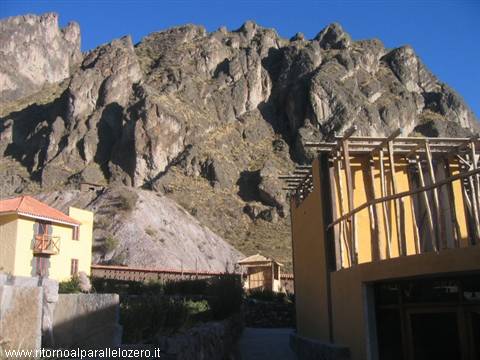
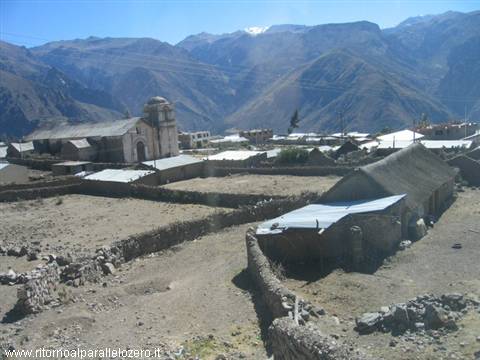
In particular, we headed to a hotel just outside the center, located at the foot of a mountain and built entirely of "adobe" bricks. Adobe, for those who don't know, is a mixture of mud and straw characteristic of all Andean constructions, with the important virtue and characteristic of storing the sun's heat during the day and slowly releasing it during the night, to combat the harsh temperatures of this valley. In fact, our guide Bernarda had warned us that in this area nighttime temperatures could drop to -15° C: freezing! We had the rest of the afternoon available to get to know the rest of the town and to prepare ourselves psychologically for the cold night, considering that there was no kind of heating in our room. To warm our souls and above all our bodies, we treated ourselves to an hour at the hot thermal springs near the village.
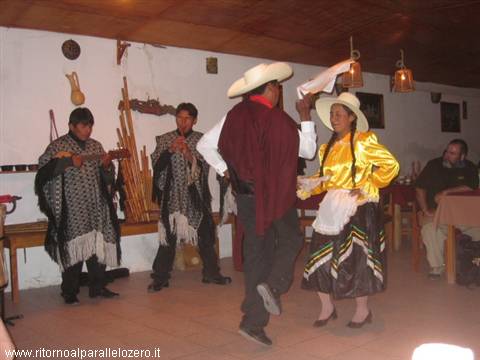
Just enough time to dry off and we went to have dinner in a characteristic little place, cheered by the presence of some young people performing traditional songs and dances: how beautiful! With full bellies we headed back to our freezing room, cheered by a surprise: the hotel staff had prepared a "bossa" of hot water for us to slip inside the bed. Once in the room we got into our sleeping bags and then also under the thick blankets: we closed our eyes hoping to be able to open them again.
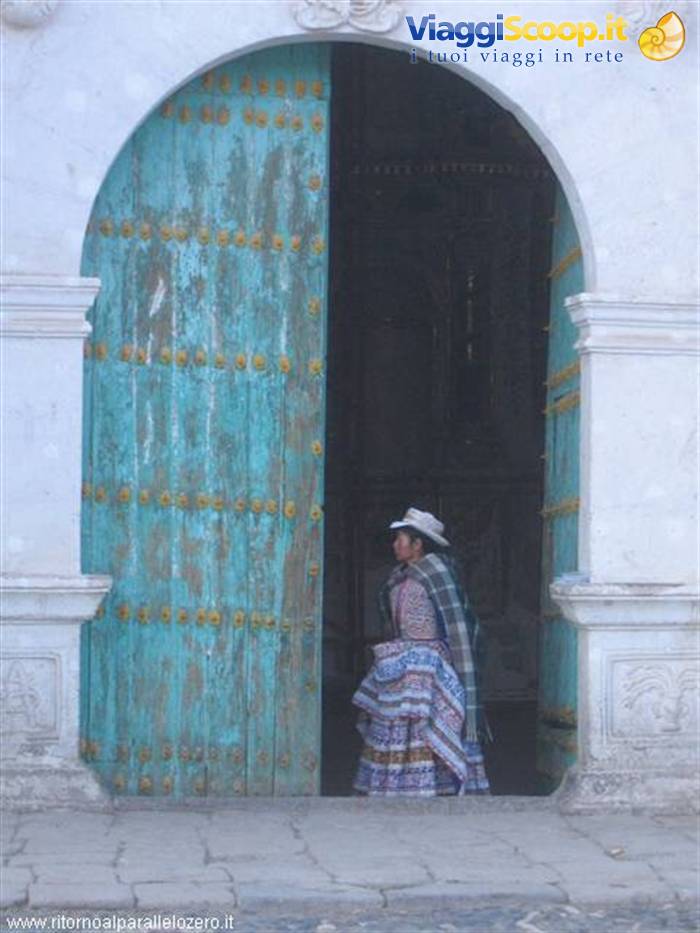
Peruvian little picture
Day 47 Jun 2005
Mirador del Condor
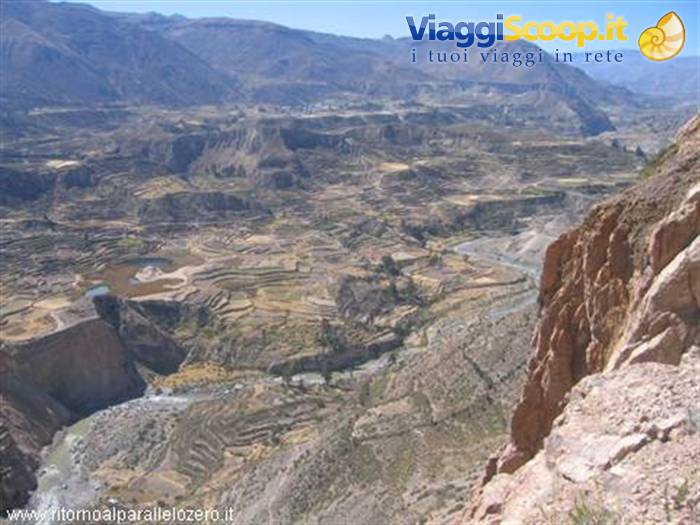
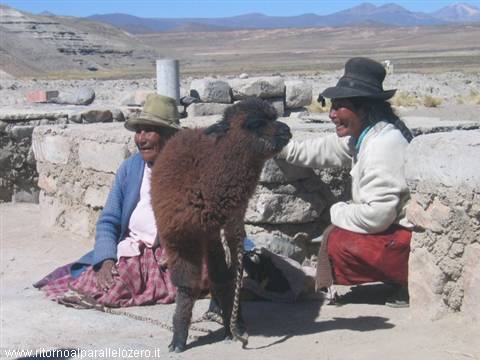
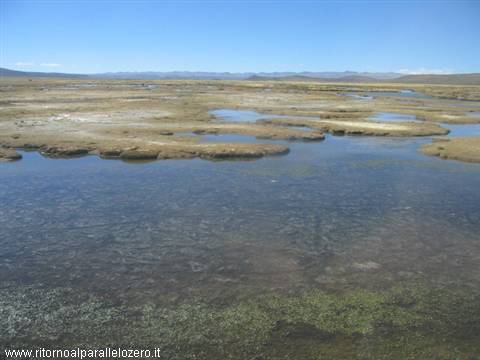
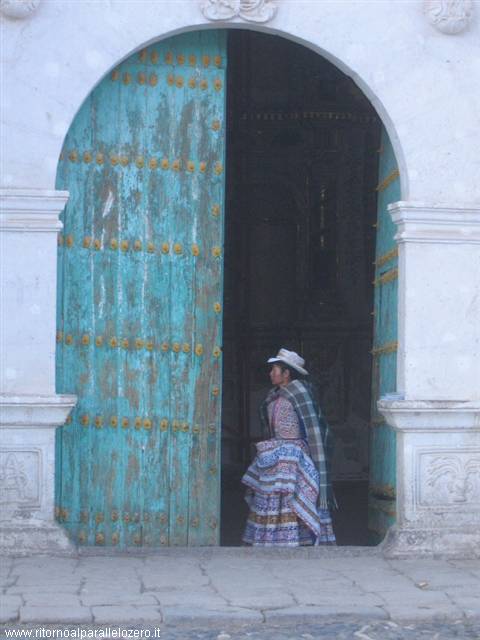
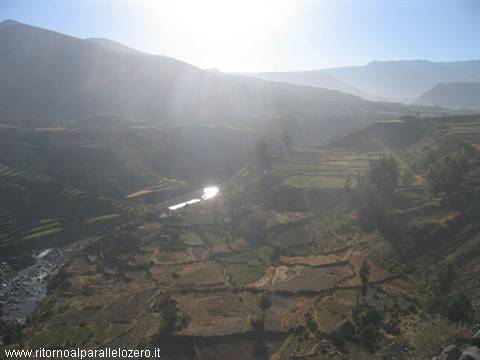
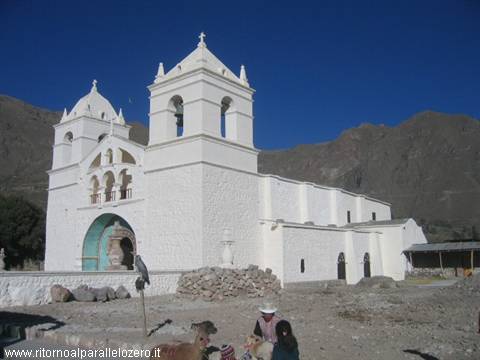
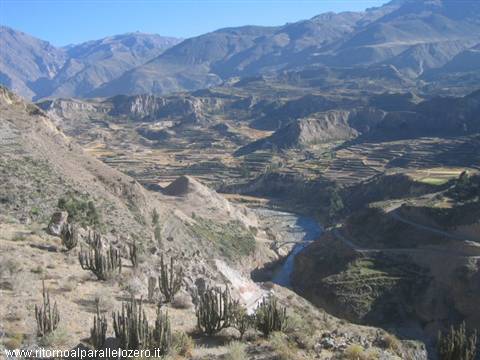
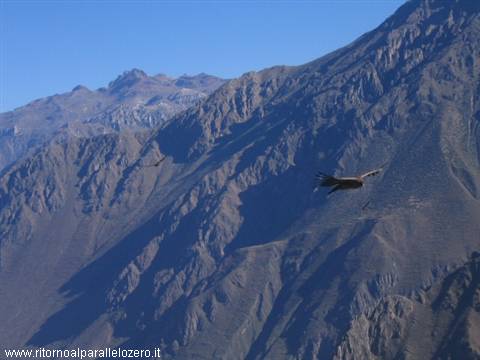
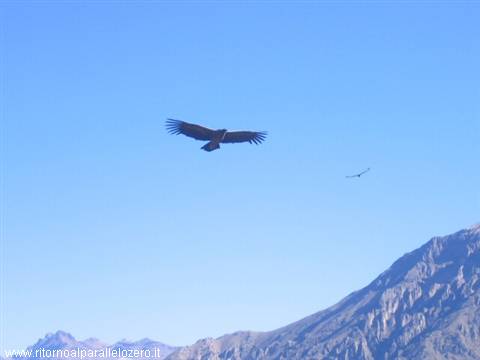
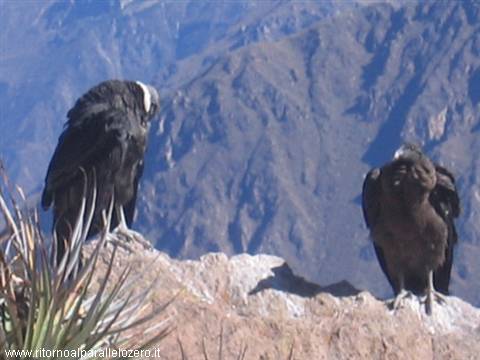
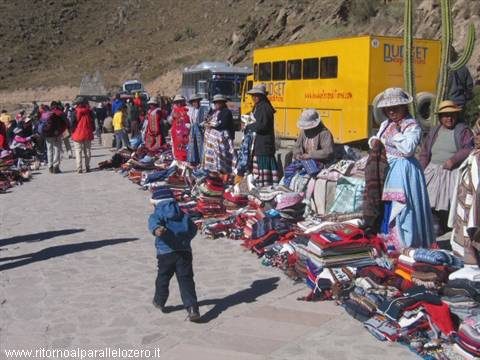
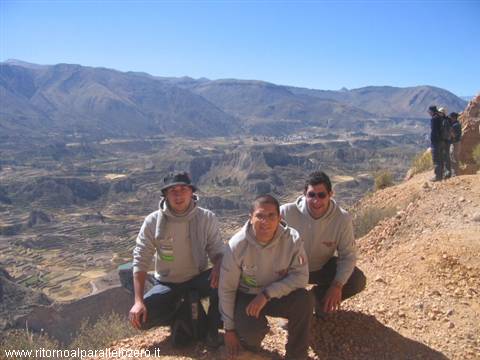
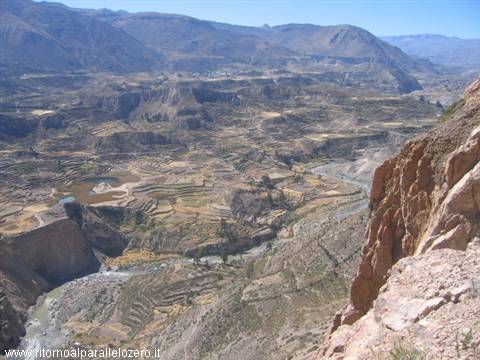
To tell the truth, our sleep lasted very little... at five we were already up and after a lukewarm breakfast we set off again following the course of the canyon until we reached a place called "Mirador del Condor." From here it was possible to get up close and personal with the largest bird in the world: the Andean condor, an endangered species that is particularly thriving in this area. We stopped at the mirador for a good hour and then headed back, making stops at some characteristic points from which the landscape could be admired. A breathtaking panorama made of meticulous terraces stretching as far as the eye can see, green pastures interspersed with the occasional turquoise lake and flocks of animals grazing freely under the watchful eye of the campesinas. Back in Chivay we quickly ate lunch and then began the return journey to Arequipa.
Another four hours that turned out to be even more interminable, uncomfortable and dusty than the trip there. Fortunately, once we reached Arequipa we were able to enjoy a boiling hot shower and an excellent little dinner that wiped away all our fatigue.






0 reader comments