No tour operators, we set off on our own, there are four of us: me, my son Patrick, and two friends, Serse and Amalia. The plan is to stay two months, until 27 September. We're guests in Salvador at the Pereira house, so the budget is small, limited to a share of the food expenses and a few gifts for the kind and all-too-patient hosts.
Day 129 Jul 2009
We set off under bad omens. A month before departure, on 06/01/09, the terrible Air France flight 447 air disaster occurred. Patrick is more and more terrified by the idea of the imminent plane trip, both the outbound one and even more so the return one, which will take place almost entirely at night, like the fateful flight 447.
From the website "Vida do turista": "It seems that Brazilian aviation will have no respite when it comes to air disasters: in less than 3 years there have already been 3 air catastrophes, starting on 09/29/06 with the GOL flight 1907 disaster (a GOL Boeing in the Amazon Forest left 154 dead), then the one on 07/17/07 with the TAM flight 3054 disaster (a TAM Airbus A320 killed all 187 occupants plus 12 more people who were on the ground, when the aircraft left the runway at Congonhas airport and crashed into a building) and now this one on 06/01/09 with the Air France flight 447 disaster. On May 23, 2009, moreover, a private King Air B350 plane crashed in the State of Bahia and the fourteen people on board died".
Comment on the latest air incident in a "pilot's" blog: "These things cannot happen! The planes of certain companies, for economic reasons, no longer even divert from extreme weather conditions, and this one went right into it, irresponsibly, and was destroyed. People must be respected!". In practice, this person claims that, just to avoid deviating from the pre-established route — which would entail delays and other economic consequences — these pilots go straight into terrible tropical storms, with the resulting consequences! There's truly reason to be afraid of traveling, if all this were true (and I fear it is)!
The arrival in Salvador, after a "calm" 8-hour-and-45-minute cruise flight from Lisbon (the first thing you notice is just the palm trees — a plant much loved for its perfect aesthetic shape — that surround the airport, the first clear sensation of Africa that Brazil gives us), takes place in an indescribable confusion of relatives of various generations, which the fatigue of the journey doesn't allow us to appreciate as it deserves. Of course, not all of them are there, otherwise the terminal would have to be expanded, given that this is a kind of army corps.
In all, considering also the relatives in Europe or scattered around the world, the Pereira De Jesus clan is made up of 12 generals (the brothers and sisters of donna Aurea, our kind host), an unspecified number of colonels — sons (including donna Aurea's two twins Berghi and Aurimar, who in all produced twelve of them) and a battalion of 22 "officer" grandchildren (numerous illegitimate unions, from which other little ones were born).
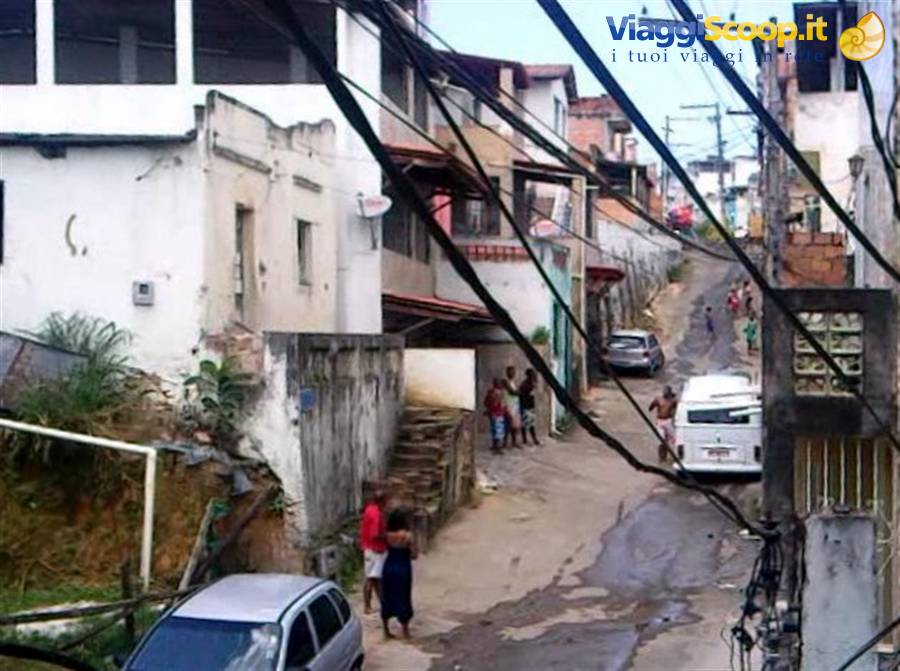
Shortly after, the family house, in the barrio Libertade, overlooking a cliff that slopes gently down toward the sea, populous and working-class, thus devoid of any display on the outside, exposed bricks with no trace of plaster — except the homes meant for sale — sheet-metal roofs (inside, on the other hand, almost by contrast, the houses all have the usual bourgeois features), on rua General Salvaget (yet another villainous general commemorated in a country that long suffered under the heel of a military regime — 1964-1985 — and that nonetheless pays, by tradition and mentality, too much attention to insignia and uniforms, as Jorge Amado notes and mocks in his "Uniforms, Tailcoats and Nightshirts", and as confirmed by the countless busts of highly decorated soldiers around the city's parks) fills to the point of improbability with people around a rich buffet-style spread based on fish.
The question is: how does this whole congeries of relatives and in-laws manage to remain so apparently supportive and united, without ever any friction, arguments, or quarrels? The only possible cement is mutual affection, which here seems to rise to a level — I'd say — ideological, and a strong idea of the family understood in the broad sense, as an organic, compact and harmonious whole, a kind of Macedonian phalanx, unassailable from the outside and from within: everyone sets aside resentments, in the name of a higher good, the unity of the clan. Otherwise, it would be a general cataclysm, given also the size of the family.
Naturally, the tendentially cheerful character of these people helps a lot, their almost permanent good humor (though the doubt is that — more than cheerful — we're just "malucchi", that is, out of our minds, the Pereira clan and all the Bahians, given the sun beating down 365 days a year, the industrial quantity of cerveza they gulp down, the deafening music that marks their days, the strong coffee that's never missing from the thermoses at home, and not least the consumption of crack, the drug of the poor, which seems to also play a part in making the street kids so petulant and aggressive, the ones who accost you everywhere lamenting the most varied misfortunes and needs, etc.: a real scourge, but also a danger because they attract even more attention to the tourist from the ill-intentioned).
These people have recently suffered serious bereavements: one of donna Aurea's brothers, Gonzalo, killed at sixty-five in his shop far from Salvador by a young robber, who was in turn killed in prison. He leaves three children by two different women, two (Kaka and Gonzalinho) by the first — Zelia — by now elderly, one by the second wife, very young, living in the far sertao in Cansacao (a well-established habit, in this context dominated by machismo, to kick out the wife — even if not at all elderly — to take a younger one. I know of a thirty-five-year-old guy who abandoned his twenty-five-year-old wife, a shop clerk on a street in Libertade, to take an eighteen-year-old wife: and it's certainly not an isolated case, quite the contrary).
Then in dramatic succession, two still-young daughters of donna Aurea, Aneaurea, the firstborn (49 years old), then Tucci (41 years old), the first from a stroke, the second from a heart attack. Could it be that these people's diet, too high in protein, beans, churrasco meat, etc., despite the quantity and variety of fruits and vegetables of every type and shape, had an impact on these premature deaths?
The arrival of Amalia (donna Aurea's sister) with her Italian "fiancé" (who accompany us on the trip) prompts the entire numerous clan of relatives to visit the house or at least make phone contact. In the latter case, the standard approach is usually as follows: "Hi, my hirmao, your absence was a great sadness in my heart!"
We were saying about the house — itself also an emblem of the contradictions of this land: on one side the magnificent view over the bay, on the other the unsightly overlook onto a kind of potholed favela alley. This irreducible dualism is the most evident hallmark of this city: the clash between extreme poverty and wealth, beauty and degradation above all (Brazil is seventh on the list of countries where wealth is worst distributed), which one tries to sublimate by lulling oneself in the illusion of living in paradise on earth, in the "pais do sol" eternal (in one of the rainiest cities in Brazil), the country of music and cheerfulness, as if all the serious problems of all of Brazil here miraculously vanished.
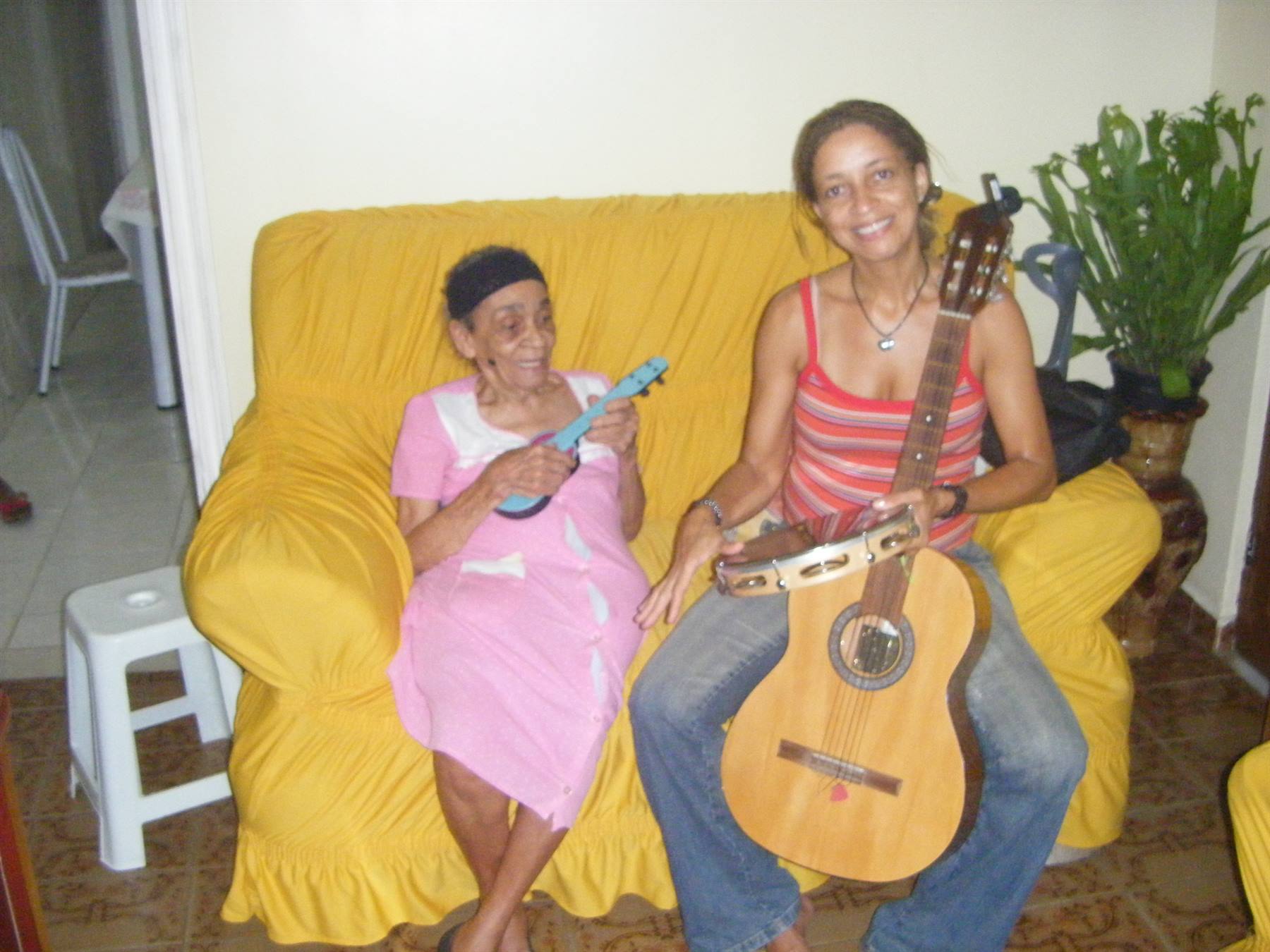
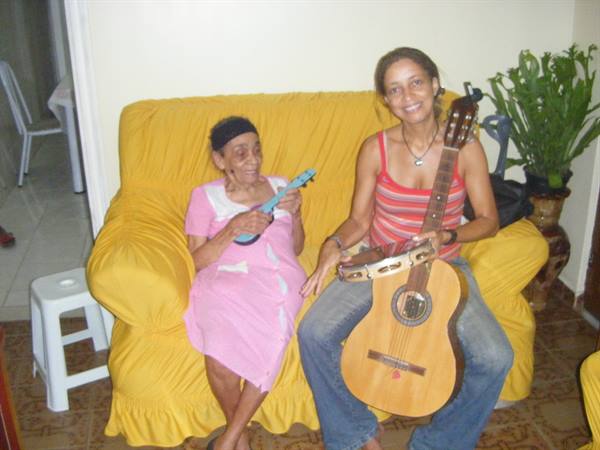
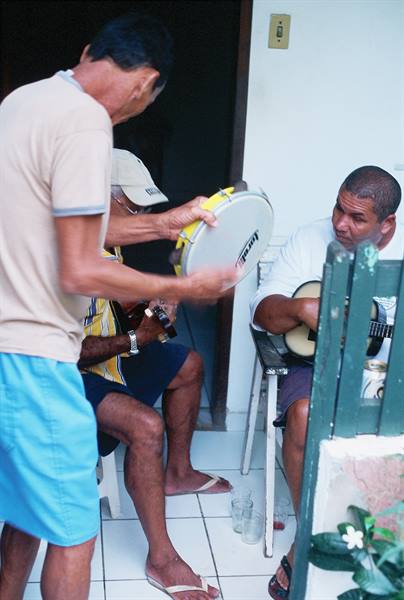
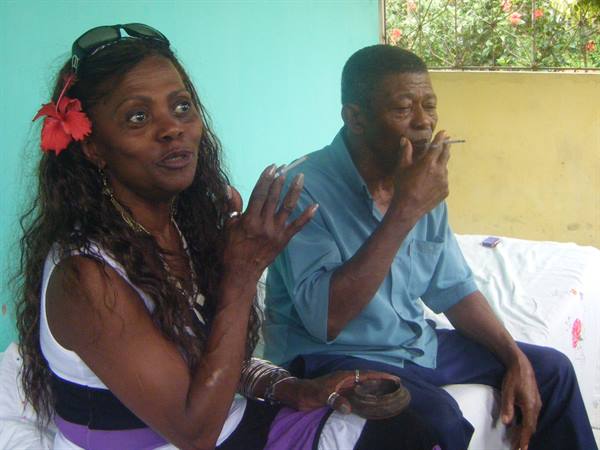
Centenarian Bahian woman on the mandolin
Day 230 Jul 2009
Thursday, July 30, 2009
A story of blood and unheard-of violence I read today in the newspaper "Tarde", which comes out in Salvador. Unheard-of for me because the protagonists are both police officers, one from the military police, the other from the civil police, because there's no apparent motive, because it shows the truly impressive ease with which here in Brazil one can take someone's life even among those who should be law-abiding: a PM lieutenant, prey to who knows what whims, who fires three shots from his service weapon at a civil police officer during an apparently routine check in a venue on a very central square in Salvador; the other — the victim — who falls like a crucified Christ murmuring: "Porque isso?"
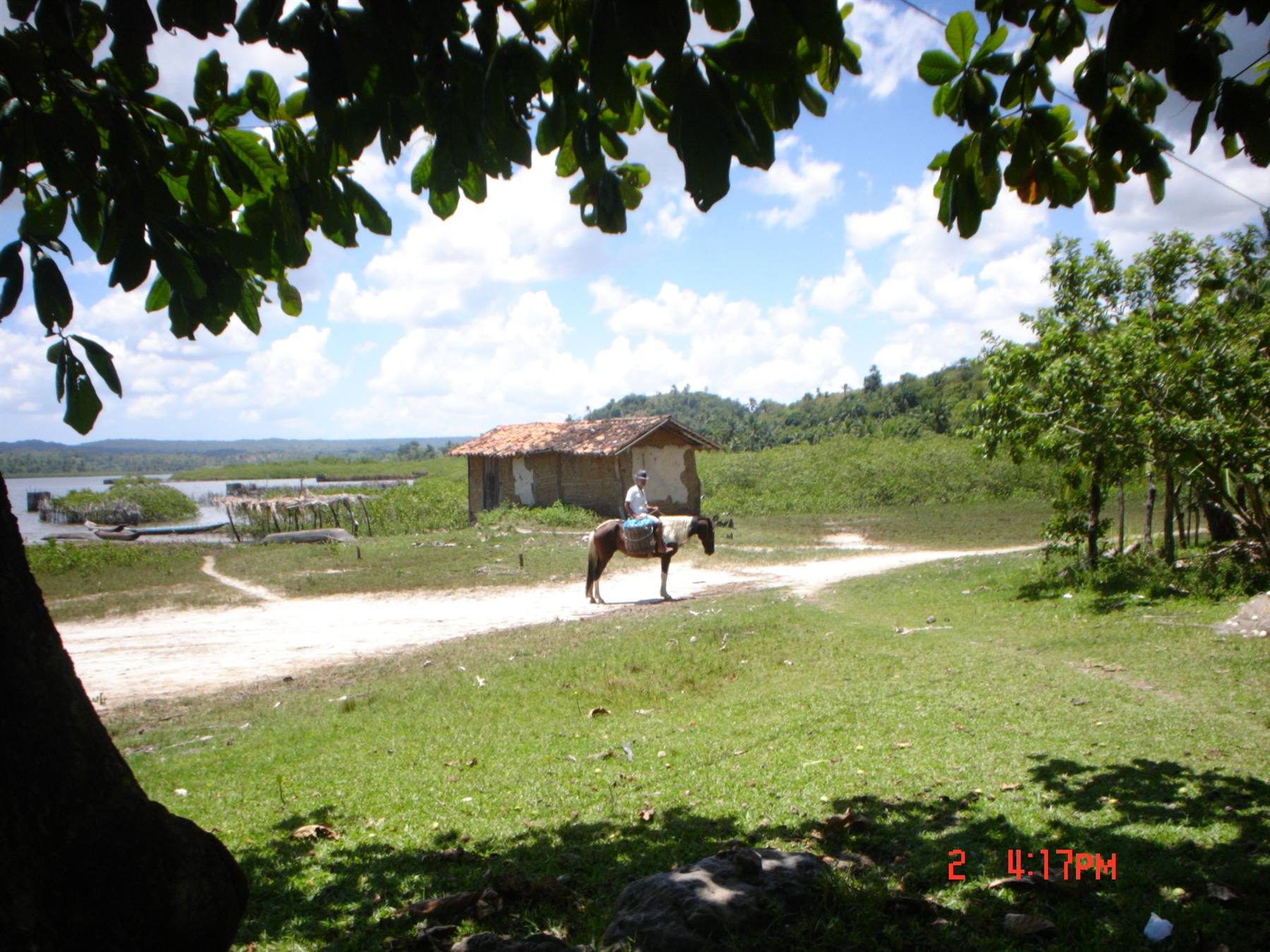
Around Maragogipe
Day 331 Jul 2009
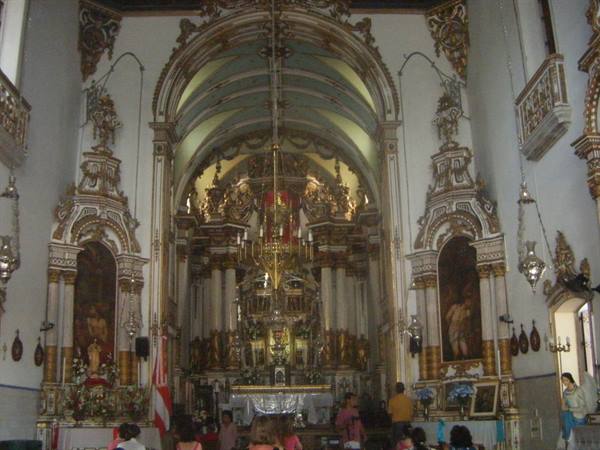
First visit to the Pelourinho. The golden church of San Francesco in the historic centre of Salvador (in the Terreiro de Jesus) is unrecognisable to me, as is this square and the whole historic centre, compared with the postcards I own, which conveyed an image comparable to that of old Cuba. It is the result of the renovation begun in the Nineties. History: in 1991, together with a massive state investment in security and funding for the installation of hotels, restaurants, escolas de dança e outras artes, a major restoration of the buildings of the Pelourinho got under way. In reality, some buildings were not restored internally, in order to privilege the facades, also because the internal state of certain houses prevented a faithful reconstruction.
With the restoration, national and foreign tourists increased, the obvious aim of the restoration, but at the same time the (poor) inhabitants of these houses were deported, without any respect for their needs, to other bairros of Salvador. Adailton (my guardian angel) indignantly reminds me of what happened back then, then takes me to Praca da Se' to comment on the story of the African Zumbo depicted here (we are in the middle of the 17th century) and of his rebellion against slavery and against his persecutors - Portuguese and Dutch, for once allied with each other - with effective guerrilla tactics, until the usual betrayal by one of his own men delivered him into the hands of the cruel colonisers. Down below, in the unsettling underground chambers of the Mercato Modelo, we visit the earthen pens surrounded by water where slaves were crammed as soon as they were disembarked.
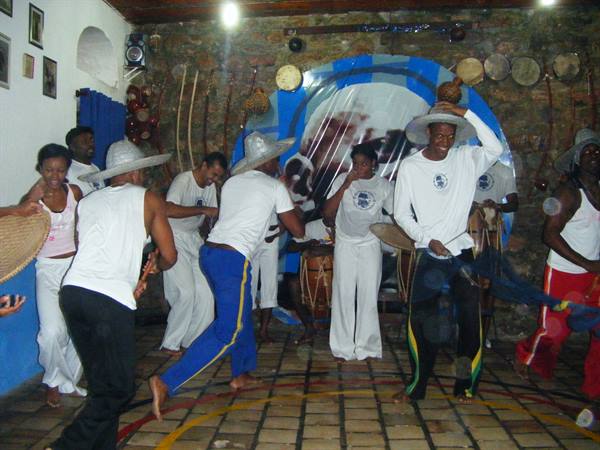
Their culture nonetheless managed to survive all of this, including the violent repression (which continued right up to our own days, particularly in the era of the military dictatorship) against candomble' and capoeira and other expressions of that culture. The story of all colonisers resembles what I see every day from the terrace of the Pereira house: on the sheet-metal roof facing the terrace, a woman throws millet first thing in the morning, strange little reddish-brown birds come flocking and calmly begin pecking at their food: but then along comes a bird bigger than the others, it could peacefully join the group and peck its share (there's enough for everyone). But no: that one, bossy and aggressive, begins to confront the other birds one by one, trying to chase them away.
In the same way the colonisers could have peacefully joined the indigenous peoples, fraternised with them, learned and shared knowledge useful to both peoples, but no, those people had to be exterminated, out of a craving for exclusive possession and also out of racism, since those indios who did not know the true religion, that of the colonisers, the Christian religion, were not to be considered human beings and could therefore be eliminated without any scruple.
Every "Terca de bencao" (that is, every "blessed Tuesday"), a music show is held in the Pelourinho. On 12 August we attend, in the largo Jumbaga' (overlooking the rua do Carmo, which leads to the Carmine convent, now a luxury hotel, on whose steep staircase leading to one of the 365 churches of Salvador (one for each day of the year) the filming was done - as a commemorative plaque recalls - of the film "Il pagatore di promesse", winner of the Palme d'Or at Cannes in 1962), the show by Geronimo, a kind of singer-activist who alternates music and political messages of moderate protest. Todo o mundo dances to his wild rhythms in the very narrow spaces of the staircase.
In the evening: an odyssey along the ladeira de Montanha, the very steep road that leads from the barrio Comercio (where the Mercato Modello and the maritime station are, from which one embarks for the various organised trips in the Bay, including the one on the escuna (schooner) Maria Mulata, which will set sail on the coming 12th of August) to the Pelourinho, as an alternative to the Elevador Lacerda: at every step siren voices raise their bewitching song: "Mi levi, mi levi, senhor". I walk straight on: Sandra's warnings come back to my mind, a family friend, her tales of mulhieres who drag passers-by into the hands of the ladrones ready to rob them and finally matarli.
Praia do Forte
Day 41 Aug 2009
Poetic parenthesis
Oh, Bahia de todos os Santos e de todos minha madrugadas, Orlada de ilhas com contornos ondulados como cabelos de garotas... Franco Visentini
The first thing I do every morning is not tied to any other, however urgent, task than that of opening the terrace door and admiring the bay that stretches out beneath my eyes, with the long island of Itaparica spread out in all its undulating surface to ideally mark the landward boundaries of this enormous virtual lake, whose real limits extend well beyond the reach of my gaze.
I remind Dico that people speak of "Bahia de todos os santos e de quase todos o peccados", to convey the centuries-old reputation for sensuality of these people. He replies jokingly that all sins are atoned for by a purifying bath in its waters, which thus rise to the status of sacred waters like those of the Ganges.
........................
Oi, perche' soy tam triste, oi, a belleza que esiste, a beleza que nem e' so minha, e tambiem passa soizinha.... (Tom Jobim: A garota de Ipanema)
There's nothing to be done: no Dante, Petrarch or Leopardi can hold a candle to the significance of these two lines in which I recognise myself completely:
Oi, perche' soy tam triste, oi, a belleza que esiste...
.........................
The awareness of the beauty of creation around us, and yet the inability of us poor mortals to appreciate it fully, because unlike birds we are unable to fly as high, to the level of that beauty, above all if we are prey to dark maladies of the soul....
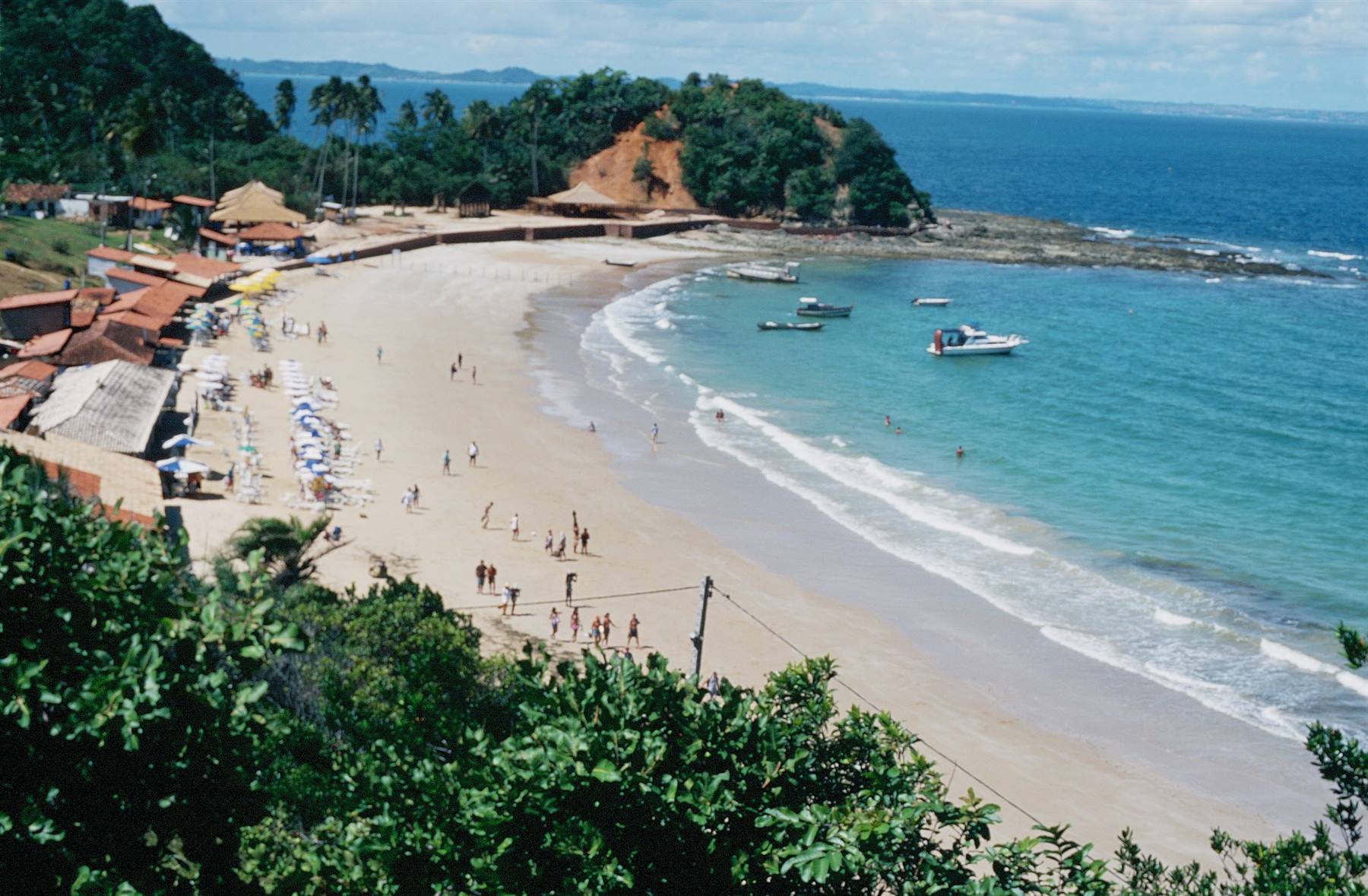
The Island of the Friars ( in the bay of Salvador)
Day 52 Aug 2009
It is one of the rainiest days since we've been here, usually it's pluvia ligera followed by a sun hotter than before: this is the winter of Bahia, at least in this month of August (I know that in other months of the year it rains almost uninterruptedly for days and the consequences are disastrous but largely foreseeable, given that the houses in these outlying neighbourhoods are built without any forward planning by municipal technicians, on the edges of cliffs where bulky household waste ends up, on land that is often landfill, in the complete absence of the normal urban infrastructure works: in June 12 dead and hundreds of families with their homes destroyed by collapsed roofs or by the subsidence of the land beneath them; further north, in Maranhão, Cearà, Parà, because of this year's unusual floods, millions of people are still wallowing in mud, hundreds of thousands of families slee
ping in makeshift accommodation and with a thousand difficulties: impassable roads, schools to be reached by boat, hospitals closed, while in the far south on the border with Argentina, in the state of Rio Grande do Sul, it hasn't rained for months and the drought forces water rationing and ruins the crops.). Under the autumnal drizzle we set off with two vehicles towards San Sebastiao do Passè, about 100 m from Salvador heading inland, to reach - after a very muddy trek - the farmhouse of Olinda and Eloisio, brother of donna Aurea, among animals of every kind, including an uribù circling menacingly above our heads waiting to sink its beak into a dead hen (it feeds only on carrion). All immersed in a dense vegetation of sugar cane, banana trees and avocados.
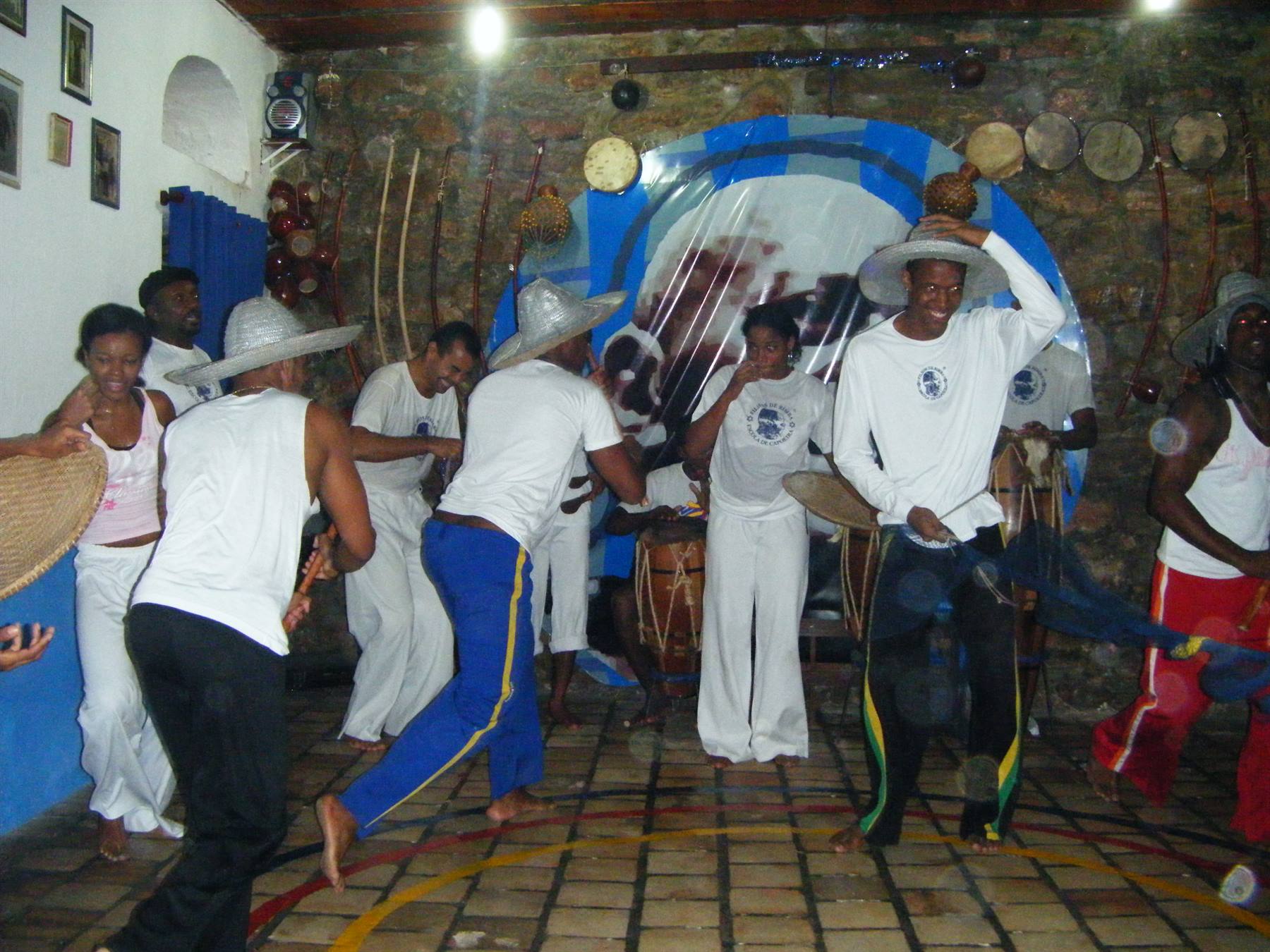
Capoeira
Day 63 Aug 2009
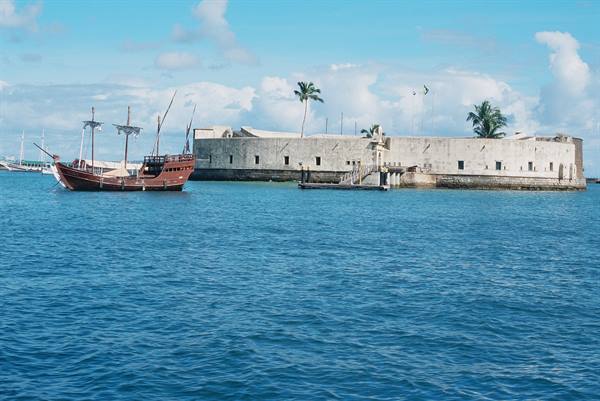
Visit to Barra, with its fort, the oldest on the entire continent, the boundary between bay and ocean, as well as the landing point of the first governor of Bahia, Tomè de Souza, an event immortalised in an azulejos at one end of the sandy beach bordered by the Barra fort. As we are about to leave, a neighbour arrives out of breath to report that on the nearby Strada della Libertade criminals are robbing the occupants of cars stopped at traffic lights. Beach incredibly crowded with street vendors of every age and sex, some of whom pass themselves off as "professional sellers" and boast of acquaintances all over the globe, preferably in the country of origin of their occasional interlocutor and potential customer, to whom they try to flog their propitiatory necklaces.
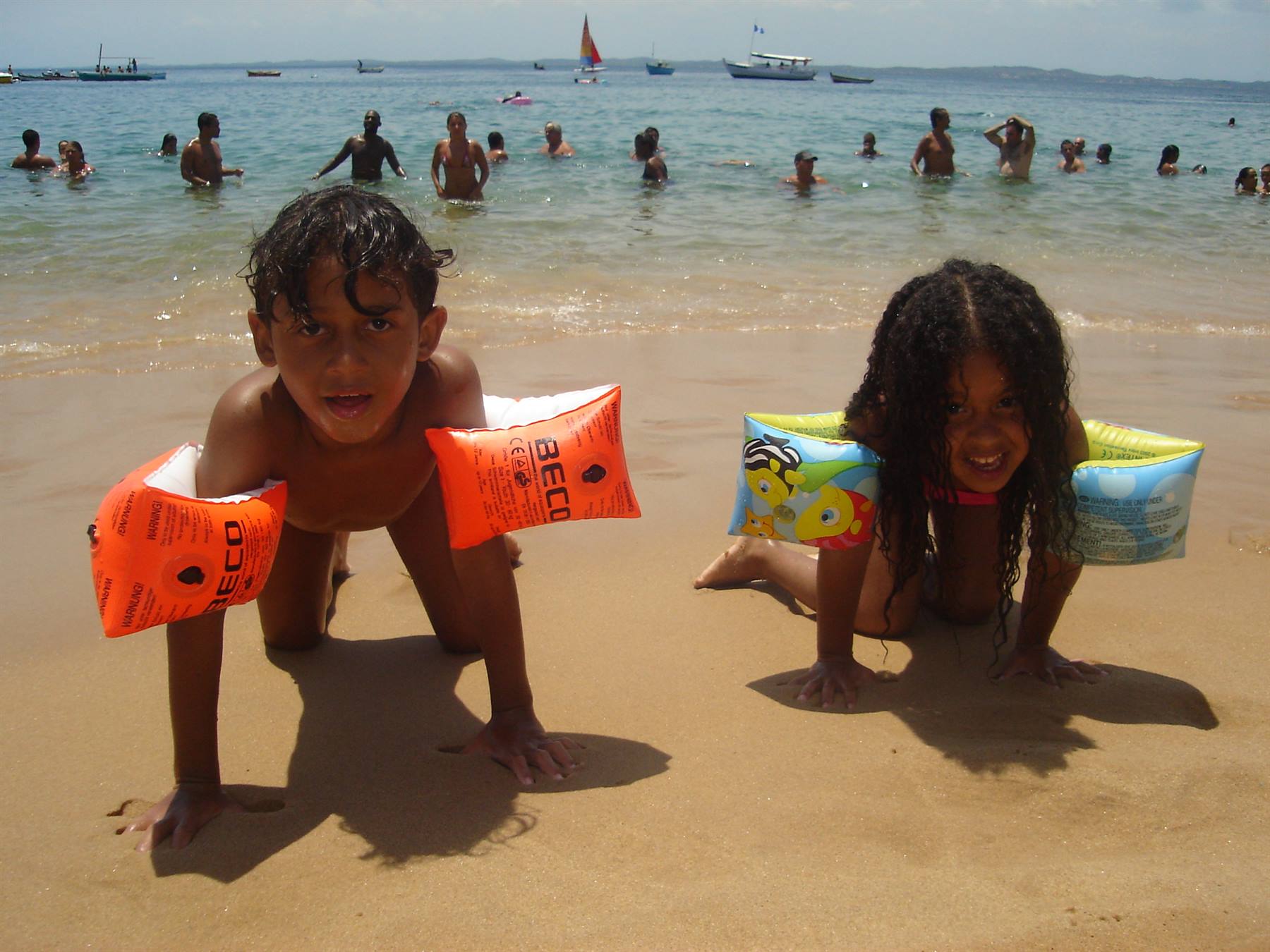
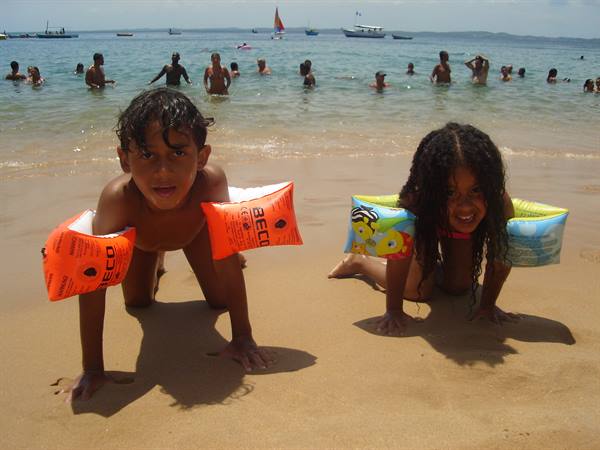
Grandchildren of donna Aurea Pereira ( our landlady)
Day 75 Aug 2009
5 - 9 August
Five intense days inside the condominium (in reality a region of fully 6 million square metres) Aquas de Sauipe (about 86 km north of Salvador) from Thursday 5 to Sunday 8 August.
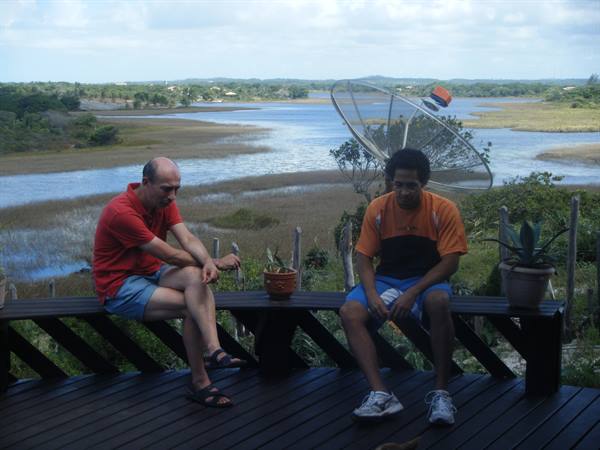
The villa of our hosts Marion Thieme and Domingos (brother of Aurea, with an important musical past in Germany and all over the world, Australia included, an unrivalled player of every percussion instrument, including the ever-present berimbao, a kind of bow-shaped instrument that is however struck with a stick), a cosmopolitan German-Brazilian couple who have lived here for 4 years, overlooks, with a magnificent panoramic view, with its large external wooden semicircle, the Laguna dei sucuri', that is, of the anacondas.
This gives me a bit of a shiver, but it certainly doesn't break the enchantment of the place: the enveloping sequence of the small bays of the lagoon, the jetty where Domingos's boat is moored (one thinks of Giacomo Puccini roaming by boat on Lake Massaciucoli at Torre del Lago near Lucca hunting ducks), the horse stable on the hill facing the towering villa with its magnificent 360-degree panorama, the numerous more or less domestic animals wandering about (dogs in industrial quantities, with creative names like Priscila, Dottore etc., cats, big lizards, and the small, extremely curious, waddling cichiti, which however keep their distance for fear of the dogs), the sunrise with its reflections on the water, the unpaved dirt roads between the various isolated villas, along which Domingos's bughi races at its usual casual pace, which at every step risks sending the occupants of the back se
ats flying to the ground, the sound of the nearby ocean, particularly striking at night, everything contributes to the charm of the place. And yet the sensed and threatening presence of the sucuri', ready to seize their prey, is unsettling (the ecological Marion however tells of her calm swims alongside the sucuri', harmless as fish when they dart about far from the aquatic plants: they even let themselves be stroked).
In the evening around the fire, impressive tales unfold of fishermen who set out to fish the lagoon and never returned, perhaps crushed in the coils of anacondas, animals of impressive size that stalk their prey at length before attacking after coiling their long tail around the submerged roots of the aquatic plants, or of attacks by sucuri' on animals of considerable size, such as the long-horned oxen of the sertao. The uneasy Marion complains that technology (the Internet, first and foremost), takes so long to reach up here. Et pour cause! Nearby is the ecological Reserve "Aquas de Sauipe", um dos últimos refúgios ecológicos da Mata Atlântica a Bahia, which we visit with Marion, discovering that it contains, in addition to the Atlantic forest (mata), the only natural history museum in the state of Bahia.
At the nearby port of Sauipe one can at last swim safely in the Rio which here flows into the perilous Ocean (miles and miles of water in which one can practically only wet one's feet or surf on the waves). But around these parts it seems we are the only tourists, or almost: the beachgoers are the carpenteiros or petreros who fill the numerous small pousades of the locality, busy with the finishing works on the enormous, luxurious residential-hotel complex of Costa di Sauipe, three kilometres from here, a place for millionaire VIPs (houses at an average of one million reais).
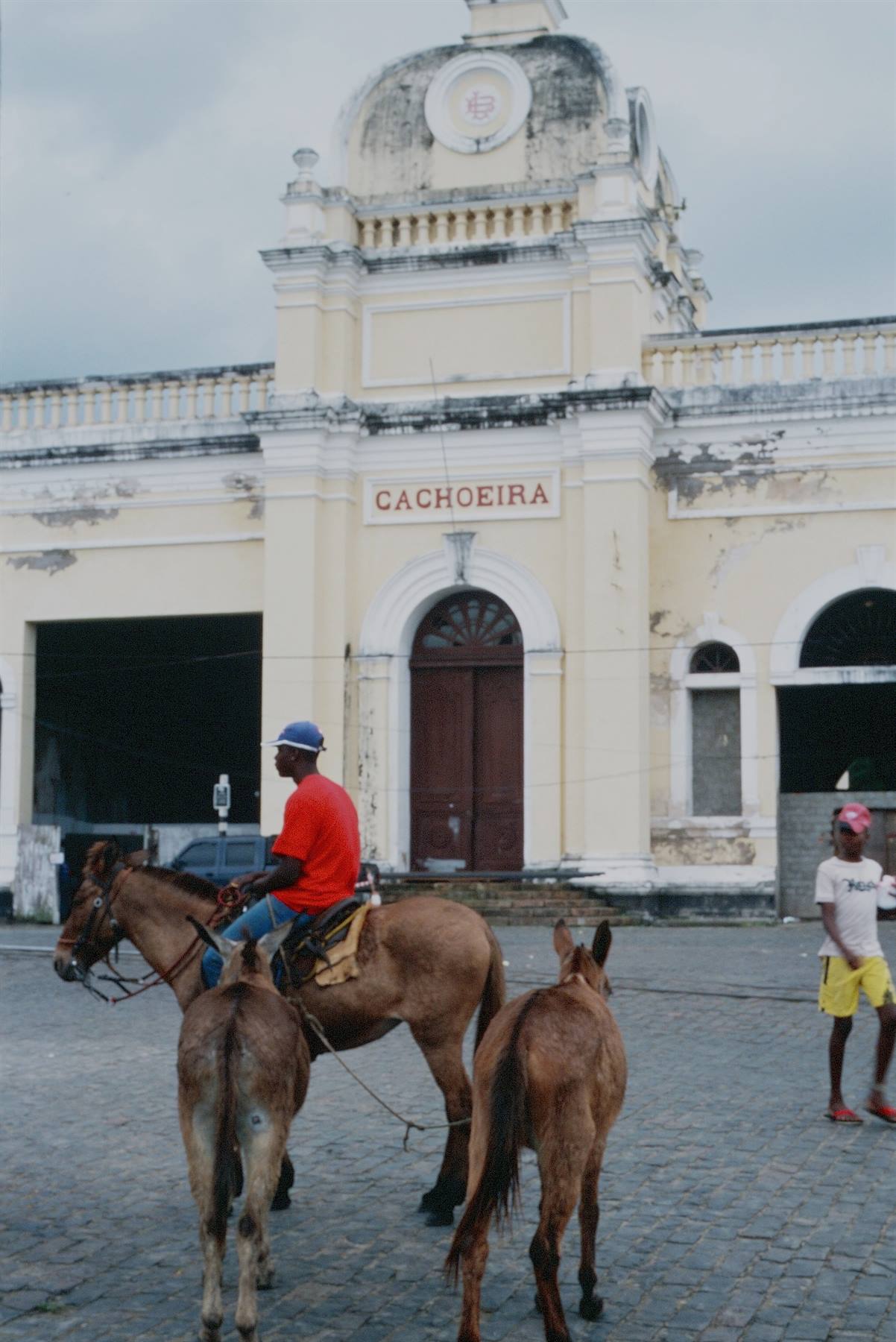
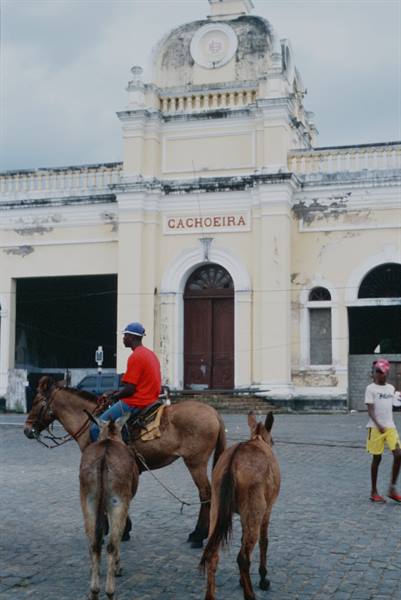
Cachoeira Station ( from where sugar cane once departed for Salvador)
Day 810 Aug 2009
After the Sauipe interlude we return to Salvador. The morning passes almost entirely in front of the computer downloading the songs of Tom Jobim, a deity of Brazilian music, but not of Bahian music, where his bossa nova seems not to have taken much root. On the other hand, old Italian songs often echo here, rearranged, from Modugno to Peppino di Capri.
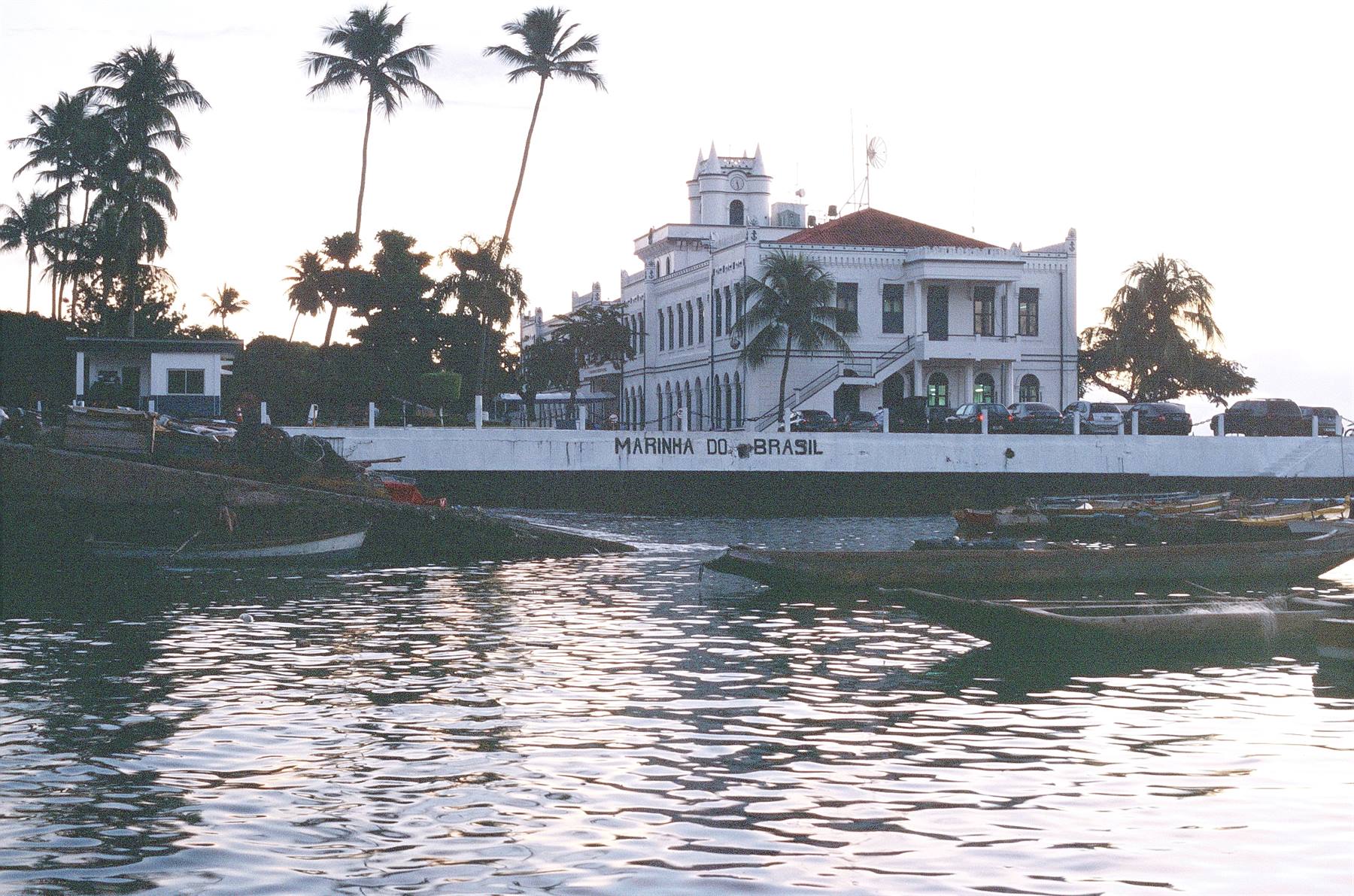
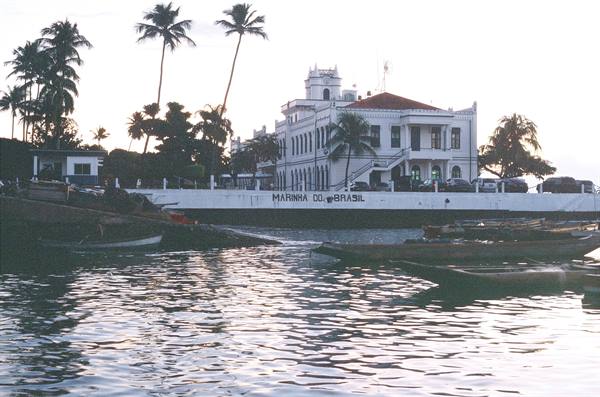
Marina of Brazil
Day 912 Aug 2009
Tour of the bay islands (the Island of the Friars and Itaparica in particular with the schooner, that is the brig "Maria Mulata", amid splashes of water and headwinds and above all relentless music from start to finish courtesy of the usual group, while a beautiful young man with very dark skin films the whole thing to sell back to the participants for 50 reais (as if the 70 already forked out weren't enough, plus the expenses for drinks on board and those on land). Having disembarked at Itaparica, we are confined to an open-air self-service restaurant facing the beach from which in practice one can only get away by bus to visit the centre of the main town. These are precautionary measures - I discover later - because even this island, which used to be the tranquil buen retiro of Salvadorans with second homes, is now infested by growing crime, just for a change.
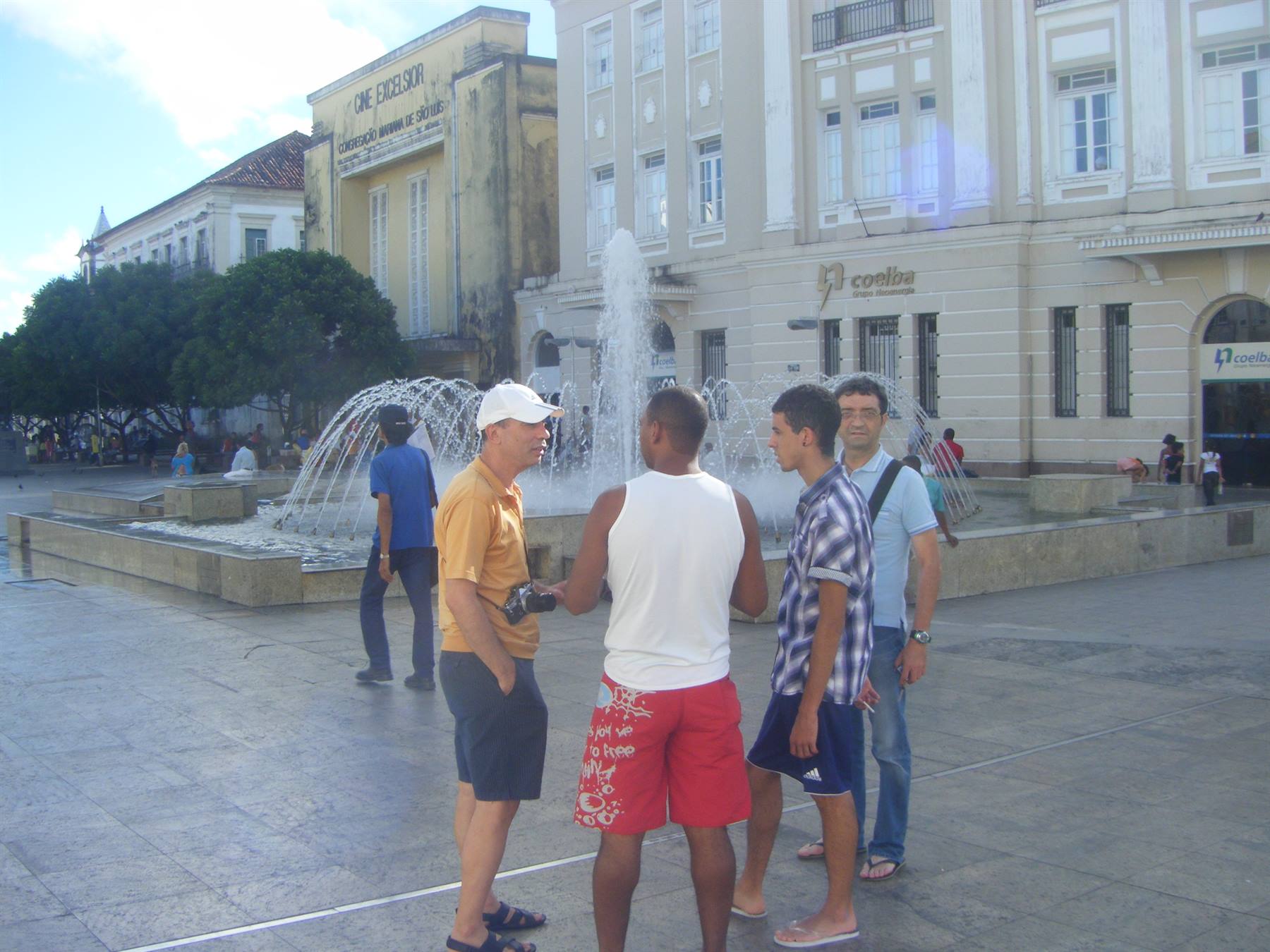
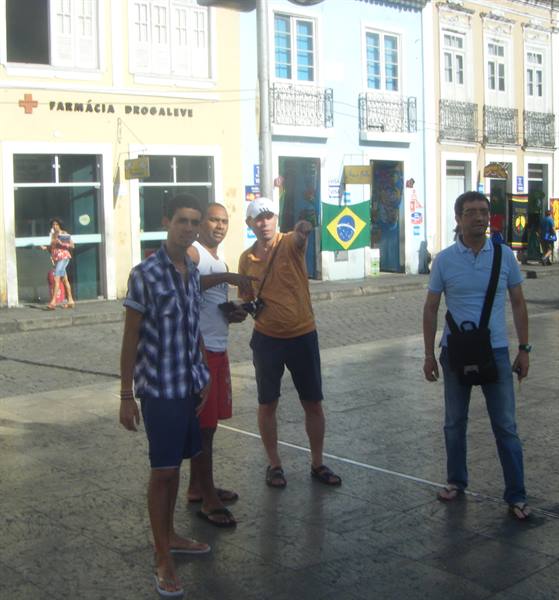
Our group in Praca da Se' with Gonzalinho ( from behind) acting as our guide
Day 1013 Aug 2009
A varied evening with the daughter of a brother of Donna Aurea, Gonzalo, the one recently murdered, who leads us - after a long wander around the parts near the Ocean - to the "Bambara Choperia" on avenida Octavio Mangabeira, with live music and ageing singles in search of partners with whom to abandon themselves to the pleasure of dancing. Once again one can admire the dynamic abilities of these people ("the Brazilian tends to bring everything back to dance, whether it be play or work", Gilberto Freyre).
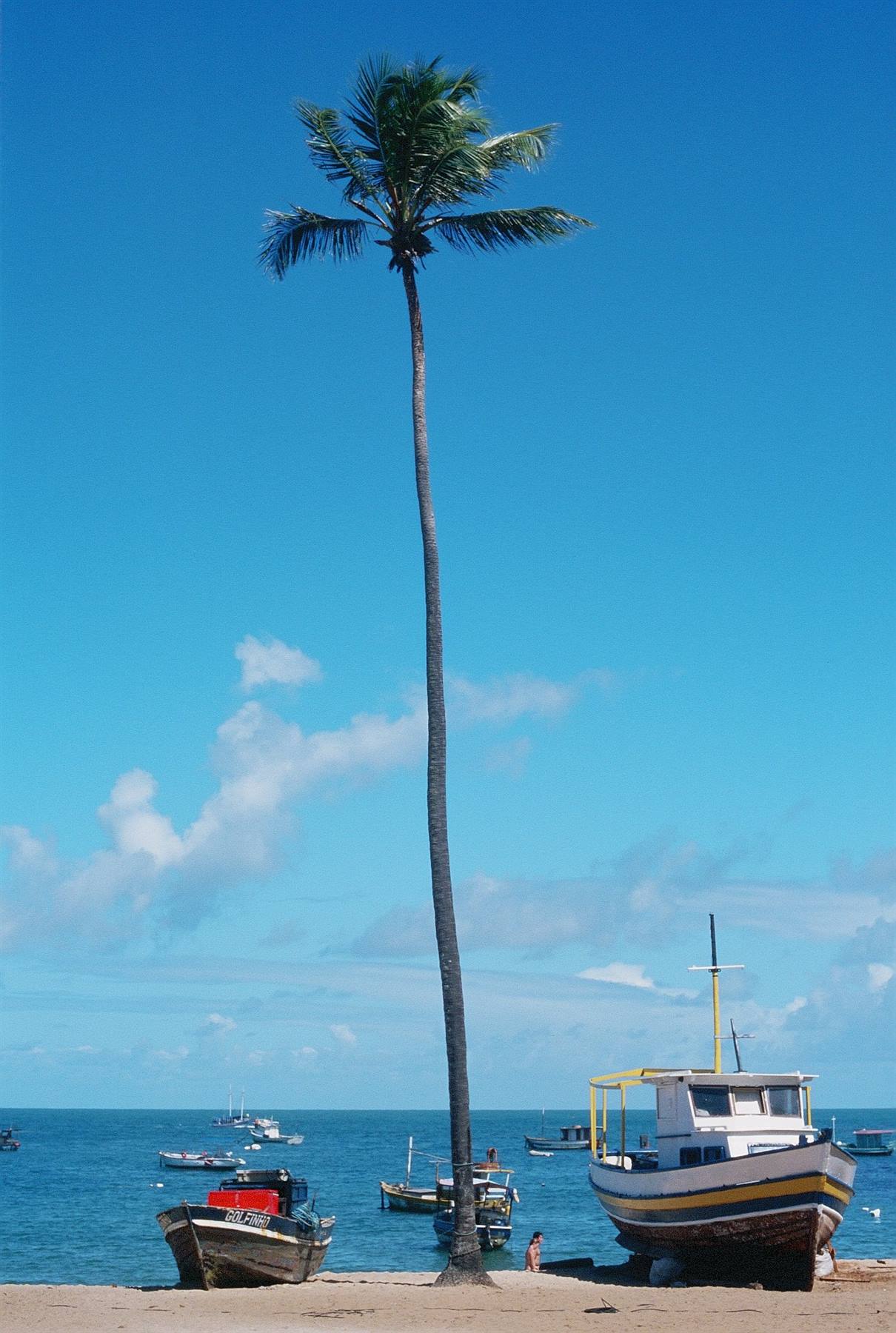
One of the many barracas de praia on the 'orla' ( the coastal road of Salvador)
Day 1115 Aug 2009
By taxi to Cachoeira, a municipality of 31,966 inhabitants in the state of Bahia on the edge of the Rio Paraguaçu, about 120 km from Salvador - therefore very close if judged by the yardstick of the abysmal distances of this continent (a historic place because this is where the first anti-Portuguese revolt of 1823 broke out) for the procession of Nostra Signora della Buona Morte, which seems to be better known abroad, especially among Afro-Americans who flock there en masse, than among the Bahians, many of whom don't even know of it (it is incredible how little the Bahians know of their own state and, vice versa, how little the inhabitants of the Bahian interior, as large as France, know of their capital (Adailton recounts that when he and friends from Salvador landed, after almost four hours of travel, at Cansaicao, north-west of Salvador, in the heart of the sertao, they were welcomed b
y the locals almost like Christopher Columbus on his first landing on American soil: an inhabitant of the distant capital Salvador is, for those people, a rare commodity, to be observed with curiosity like an endangered animal).
THE RITE: Like many other Marian devotions, the cult of Nossa Senhora da Boa Morte arrived in Brazil with the Portuguese. One encounters it, em primeiro lugar, na cidade de São Salvador da Bahia. A imagem de Nossa Senhora da Boa Morte pode ser venerada na igreja da Glória e Saúde. Ainda hoje, na véspera da festa da Assunção, a imagem é depositada num esquife e exposta à visita dos fiéis. Everything indicates that, from Salvador, the devotion moved to the city of Cachoeira, in the Recôncavo baiano. In this city, annually, the Irmandade da Boa Morte pays homage to its patroness. A Irmandade de Nossa Senhora da Boa Morte é a única no Brasil e talvez no mundo com as suas características. Solo mulheres com mais de 40 anos são admitidas na confraria que existe há mais de dois séculos.
O culto a Nossa Senhora da Boa Morte é uma tradição da Igreja Católica e que na Bahia incorporou elementos da cultura afro-brasileira. A cada ano, os rituais promovidos pela irmandade atraem mais turistas e pesquisadores de vários países, principalmente dos Estados Unidos. A Festa de Nossa Senhora da Boa Morte tem início com a processione dei membri da irmandade que tem o nome da santa. Nesta procissão, as irmãs, vestidas de bata redonda e saia branca comprida, iniciam os rituais que duram três dias, conduzindo a imagem de Nossa Senhora no esquife pelas principais ruas do centro histórico. Após o percurso, elas levam a imagem até a sede da irmandade, onde rezam pela memória das irmãs falecidas. Encerrando o culto religioso, participam da ceia branca, quando são servidos pratos à base de frutos do mar, acompanhados de pão e vinho.
No segundo dia da programação, as integrantes da irmandade retornam às ruas de Cachoeira, para o ritual da procissão do sepultamento. Vestidas com suas becas pretas, elas carregam a imagem de Nossa Senhora, em silêncio, seguidas pelos músicos da filarmônica, que tocam marchas fúnebres. De volta à capela, com a imagem, participam da celebração que simboliza uma celebração de exéquias.
No domingo, quando os festejos atingem o auge da programação, as irmãs comemoram a Assunção de Nossa Senhora da Glória. Neste dia, saem em procissão, em clima de muita alegria. Nas mãos, carregam flores e enfeitam suas becas com colares de contas coloridas e dourados. Ao final da procissão, retornam para a sede da irmandade e trocam as becas por saias batas coloridas. Vestidas assim, recebem todos os convidados para o tradicional banquete da Irmandade de Nossa Senhora da Boa Morte, dando início a três dias de samba-de-roda.
The rite is interesting and very well attended, especially by Afro-Americans, but there is an all too massive and invasive presence, even in church, of photographers with their annoying flashes, which ruins the charm of the ceremony. It's really true: there is no religion any more, no respect even for what should first and foremost be a sacred rite, and not that social event to which it has been reduced. How sad!
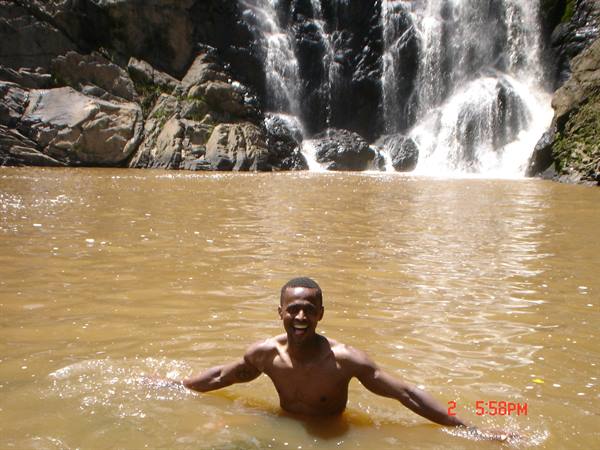
Waterfall near Maragogipe
Day 1216 Aug 2009
On the Internet I read this announcement: Hi, my name is..., I am a tour guide, I live in Salvador de Bahia - Brazil. If you are interested in spending a different holiday, tailor-made, customised to your style and needs, do contact me, it will be a real pleasure for me to help you spend a pleasant period IN SALVADOR BAHIA BRAZIL.. 1. Because for less than € 90,000.00 euros, you can buy a villa of over 100 m2 less than a km from the centre of SALVADOR. 2. Because on the coast of the North-East of Brazil you can enjoy an incomparable climate 12 months a year, with a radiant sun and delightful sea breezes. The whole coast of the North-East is a tropical paradise, bathed in the golden light of a sun like few places in the world, whose temperature is mitigated by constant sea breezes. Extremely hot temperatures are rarely recorded.
The rains, mostly passing showers, alternate with periods of sunshine. There is no need to pick the best season of the year to make the most of the beach and the sun, which is always there. So please stop asking us which is the best month, all 365 days of the year are good for coming to visit us. 3. Because the coast is full of paradise beaches of the finest, whitest sand, surrounded by coconut palms, with warm waters that frequently form natural pools. 4. Because you can enjoy tasty meats, fish and shellfish in excellent restaurants for less than R$30 (yes, just a little over 10 euros) 5. Because within a stone's throw you can encounter not only dream beaches, but also impressive rivers, incredible sand dunes, precious lakes, hills with abundant vegetation and, ultimately, a nature so varied as to be spectacular, hard to describe in a few words. 6.
Because you can take advantage of all the benefits offered by its cosmopolitan cities as well as the tranquillity of dozens of fishing villages that you will encounter along the whole coast of the North-East. 7. Because, even though Brazil is considered the country of samba, football and beautiful women, as diversions the north-east coast offers many other options, both for lovers of extreme sports and/or ecotourism and for those who like to enjoy the night until dawn and beyond. 8. Because the North-East region, unlike cities like Rio De Janeiro, Sao Paulo, is peaceful and enjoys a high level of security (violence and organised crime are concentrated in the «favelas» of these large cities), terrorism and armed conflicts being totally unknown in Brazil 9.
Because the quality of healthcare (private healthcare), with a rich and well-equipped network of hospitals and medical centres, is comparable, if not superior, to that of European countries. 10. Because dentists provide high-level services. Many of them have foreign diplomas. Americans frequently come to Brazil for dental treatments (Implants) at much lower prices than in the United States. Europeans so far have not yet taken advantage of this situation. Dentists and opticians mainly use imported materials. There are few manufacturers of implants and lenses in the world. So why pay three times more for the same Zeiss or Essilor lenses? If you want to buy a new pair of glasses with the latest frame models, buy them here and save half the price of your plane ticket. The other half could be paid for by the savings on a dentist's treatment. Think about it. 11.
Because, unlike what happened with other areas that fell victim to mass tourism, the character of the people is open, cheerful and lovable, and the smiles they give to foreign tourists are natural and spontaneous. 12. Because the current exchange rate with the Brazilian currency (1 euro = approx. 3 reais) allows the purchase of all goods and services at truly convenient costs. 13. Because investment in real estate is legally secure and with great expectations of appreciation, both in the short and long term, in a country in enormous expansion, with incontestable resources, and which, from an economic point of view, is greatly exceeding all expectations
Having reiterated that personally, in my long, probably reckless wanderings especially on foot and by bus all over the city, from Magalhaes airport to the promontory of Ribeira, I have never witnessed nor indeed suffered acts of violence (except for the one I am about to recount, in which the true culprit of what happened is me and only me, since I was able to sense the impending danger or trap, but I deliberately closed my eyes to abandon myself to the pleasure of an encounter with the opposite sex), not even brawls (except once in passing), which contradicts the claim that Salvador enjoys a high level of security, here is a summary of recent news items involving tourists, to say nothing of the rest.
On Monday 17 August it is my turn to experience directly the dangerousness of the so-called "pirigueri", femme fatales who roam the historic centre in search of tourists to rob. The bitter comment is that it was too easy a prey, for the mission da roubo of this mulher da rua. The Honorary Vice Consul Dr. Giovanni Pisanu, an elderly and composed gentleman, at the office on Avenida Sete de Setembro, 1238, displays great scepticism about the possibility that the woman will be identified and punished. He advises me to leave for Italy at once, since I no longer have any money. The civil police, at DELTUR, the Cruzeiro Sao Francisco station in the Pelourinho expressly intended "for the protection of tourists", show me a series of photos of women on file, all clearly looking like women of the night. None resembles the woman in question even remotely.
Unlike the consul, they display great confidence in the possibility of identifying her. We'll see!
From the CORREJO of 21.08.2009 - 07h27: Assaltantes roubam hotel de luxo no Santo Antônio Além do Carmo: Quatro homens e uma mulher, armados com pistolas e metralhadoras, assaltaram na quarta-feira (19) a Pousada des Arts, aberta há seis meses nella piazza Santo Antônio Além do Carmo, nel Centro Histórico, vicino al Pelourinho. The following day, on the Correjo, the owner of the Pousada in question accuses the Military Police of omission in connection with the robbery he suffered.
Curious, these military police officers who stand motionless like statues, usually in pairs, at various points in the centre, protecting above all the tourists: they seem to be feared by the locals more than criminals, especially when they set up their road blocks, a kind of nightmare for all motorists in Salvador: if someone gets distracted and goes through the block, they fire bursts without a second thought, usually killing everything that moves nearby. And if something happens around them, or someone goes to report a crime to them, they usually display apathy. Meanwhile, everywhere huge billboards assure that the government of Bahia is doing all it can to improve the lives of Bahians, starting with their security: in particular, by increasing the contingent of the military police and its equipment.
More accurately, one can read elsewhere (the site "Globo.com") this appraisal of Salvador: "É uma capital violenta, recheada de desigualdades sociais e favelas".
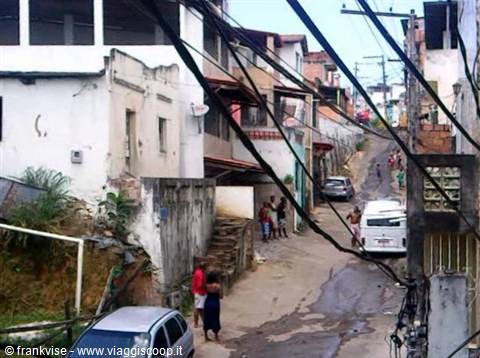
Rua General Salvaget in Barrio Liberdade
Day 1317 Aug 2009
So, the facts, as described in the police morning report: At around 18:00, in Terreiro De Jesus, in the historic centre, I was approached by a tall girl, morena, with wavy hair, of sturdy build, aged about thirty, who suggested going to the nearby Cantina Da Lua, where we settled at an outside table. I moved away for a moment to relieve myself, on my return I drank the beverage I had ordered, we chatted about this and that when the girl suggested going to her house, promising sparks. At that point I was already more out than in (probably the effect of a date-rape drug slipped by the slut into the drink) and I obeyed in a daze, carrying out like an automaton the garota's orders, including that of making a withdrawal at the nearby Banco do Brasil. After that I remember nothing more.
I later learned that I had been picked up in pitiful condition by a taxi driver I knew, taken home, then to the police station, and immediately afterwards to hospital for a drip. Brought home at dawn, I woke up in the late morning with no memory of what had happened. Besides risking my life, on that occasion I lost the cash, the Postamat card and my mother-in-law's mobile phone. After the incident, my solitary outings around the city became drastically fewer.
Through the streets of Port Sauipe
Day 1429 Aug 2009
Adailton picks up a cartload of garote, mostly very young, and drags me late into the night on an endless tour of the venues along the Orla, all incredibly crowded, especially since it's Saturday.
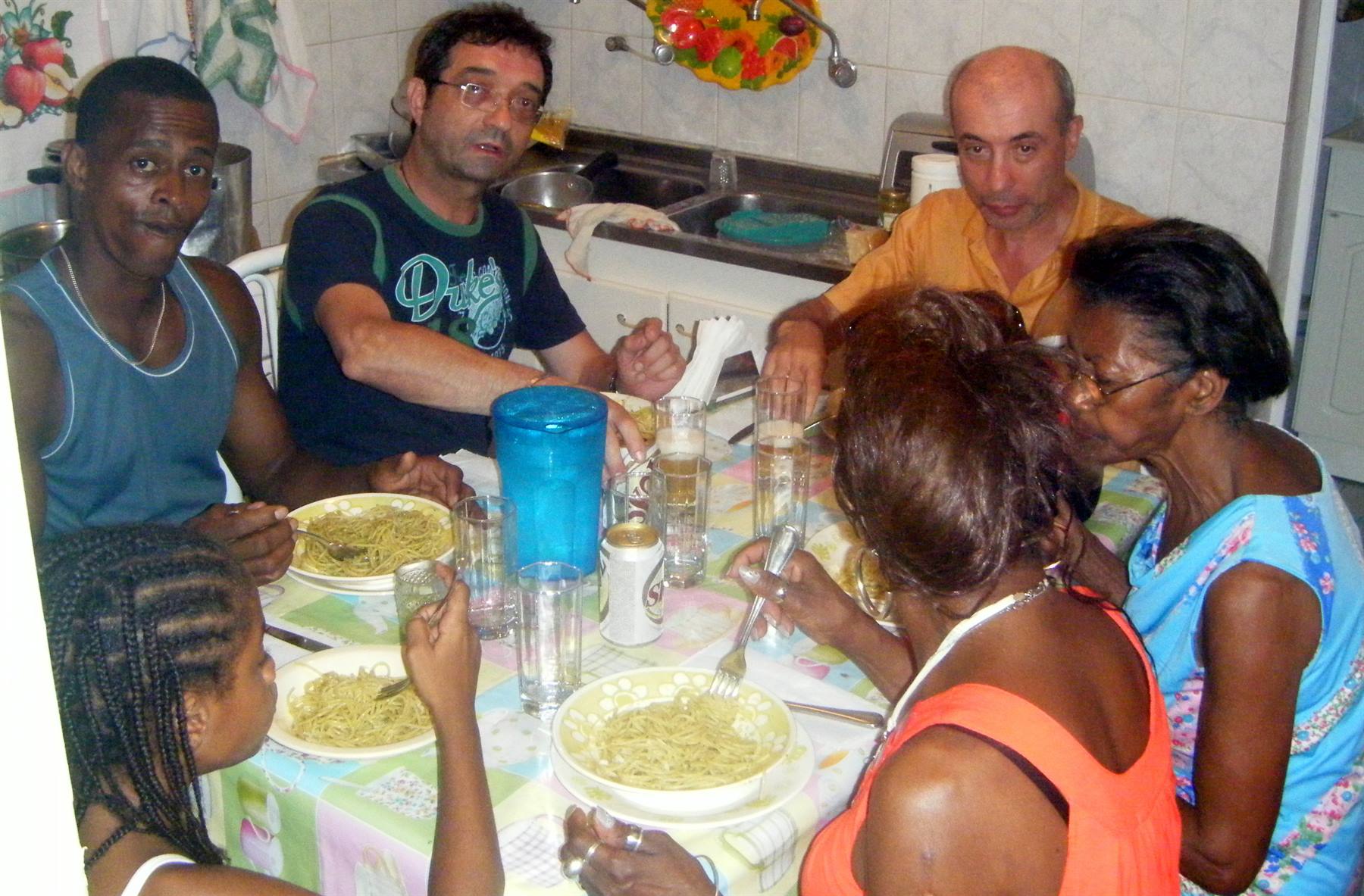
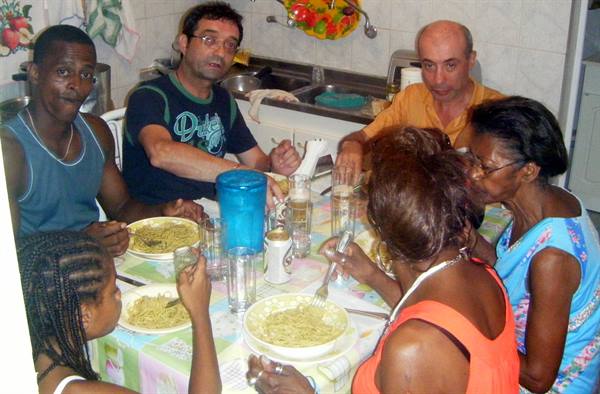
Friends and family eating spaghetti at kitchen table with colorful tablecloth
Day 1530 Aug 2009
On the afternoon return from the Orla I stop in Largo do Pelourinho for a concert in which all the city's most popular groups perform, including the "Bimbe di Dida", an ensemble of girls only who manage with incredible coordination to dance and at the same time beat their enormous African drums with decision and rhythm, while Dida - a big woman wider than she is tall - appropriately intones the showpiece of her repertoire, "Mama Africa". Unfortunately even this time I ignore the pressing appeals of my relatives to keep my eyes open, and I let my wallet be slipped from my pockets by someone who takes advantage of the wild dancing under the stage to bump into me and commit the deed. And so, besides a little cash, all my documents take off, except the passport, and the credit card, which once again I have to rush to block to avoid improper withdrawals, as already done for the postamat card.
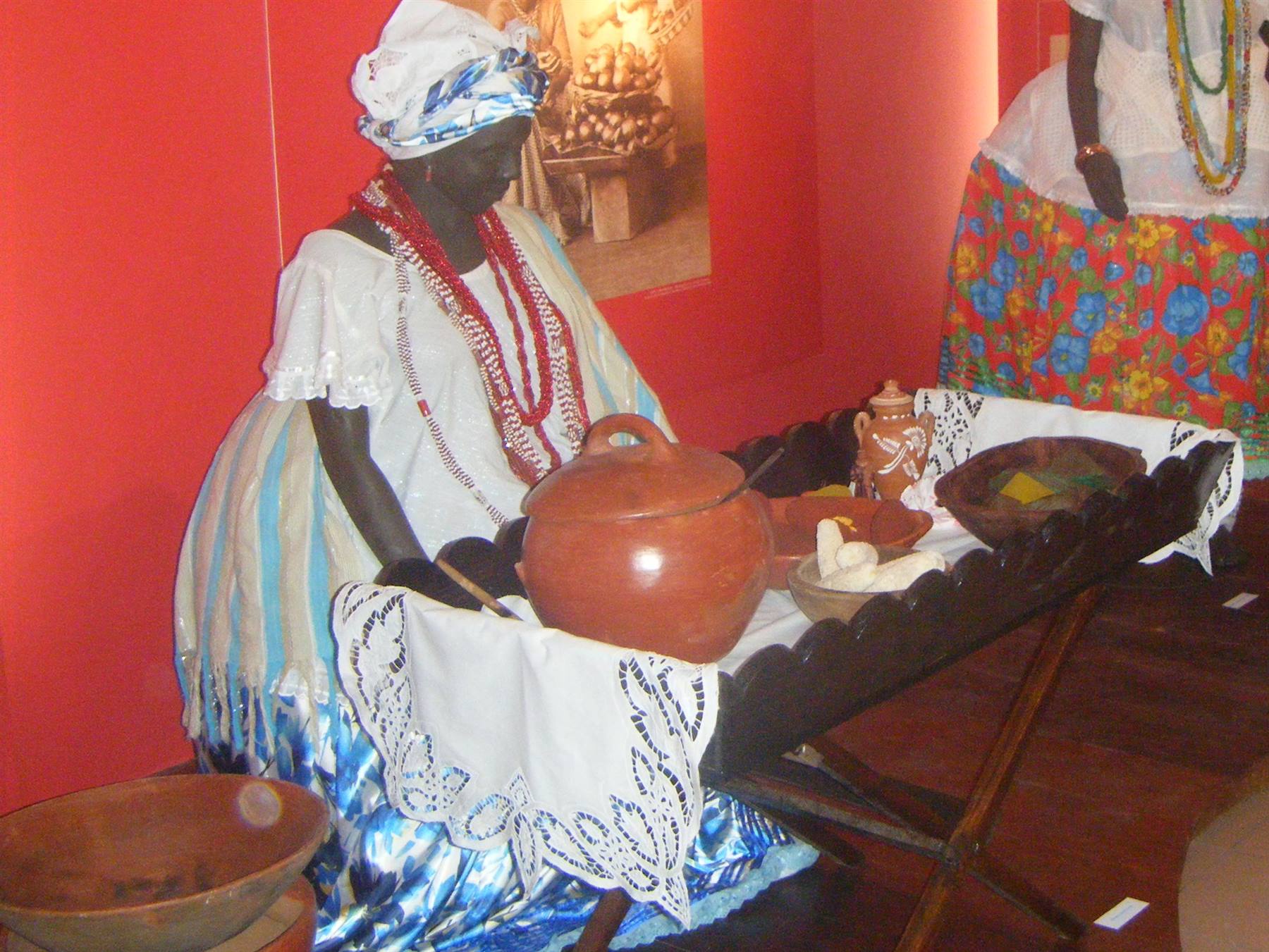
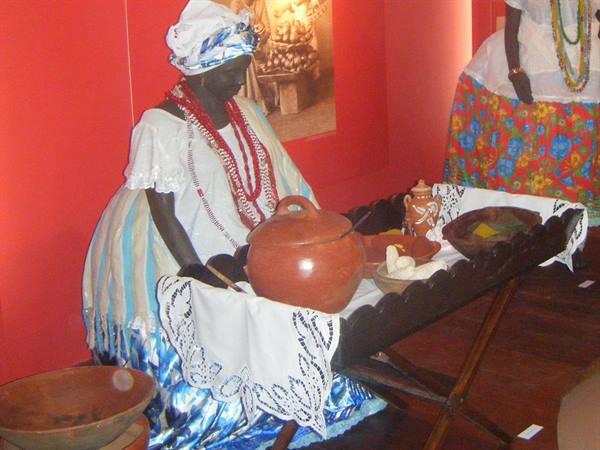
Baiana woman statue in white and blue dress with clay pottery
Day 162 Sep 2009
Visit to the Parque Zoobotânico Getúlio Vargas in Salvador: the urubu rei, the first animal one admires and perhaps the most peculiar, a distant relative of the vultures, seen up close is truly strange, with those wide-open pupils that hypnotise you ringed in red and above all that beak from which hangs something that vaguely resembles a nose but is more than anything a very strange bright red excrescence.
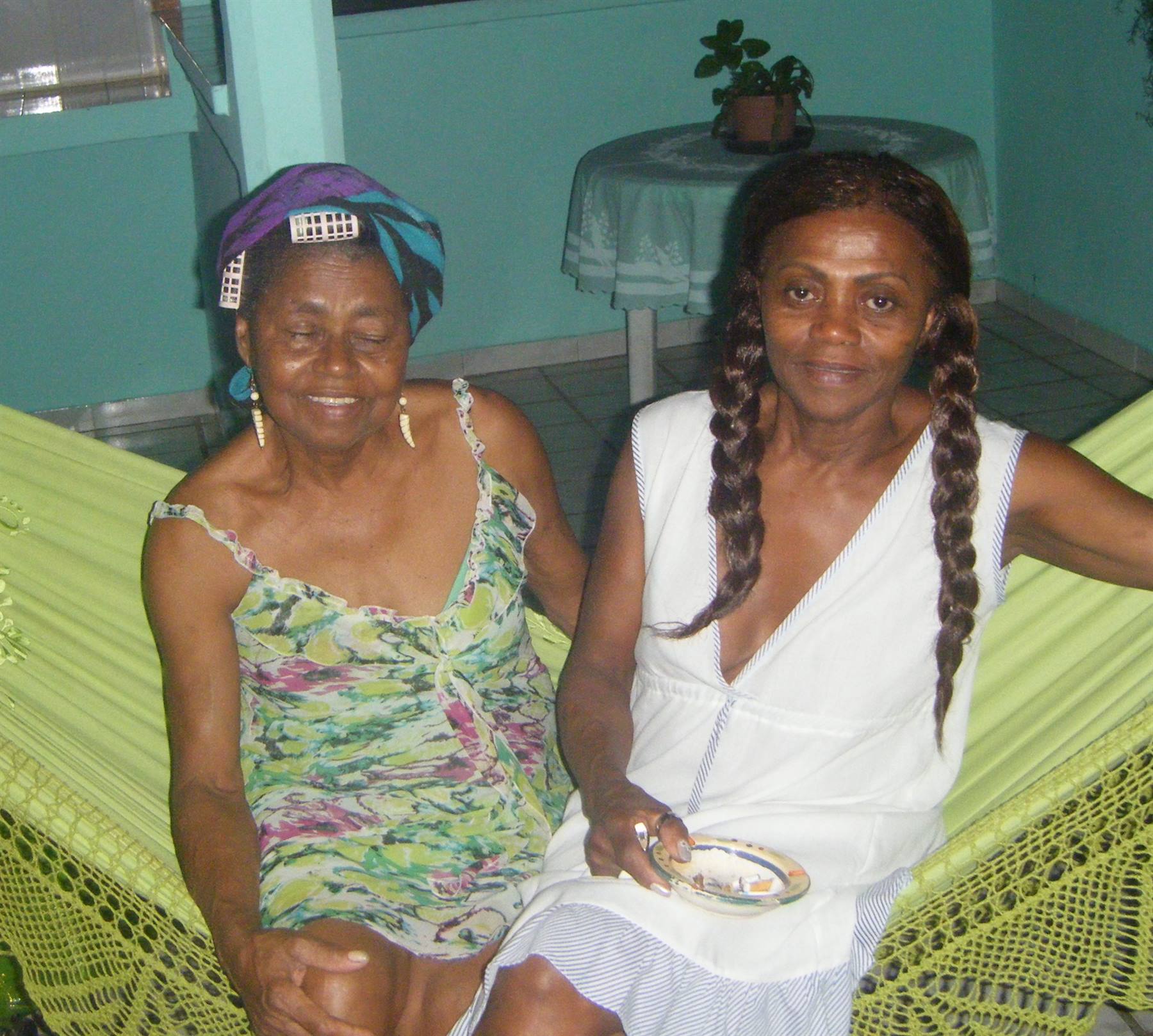
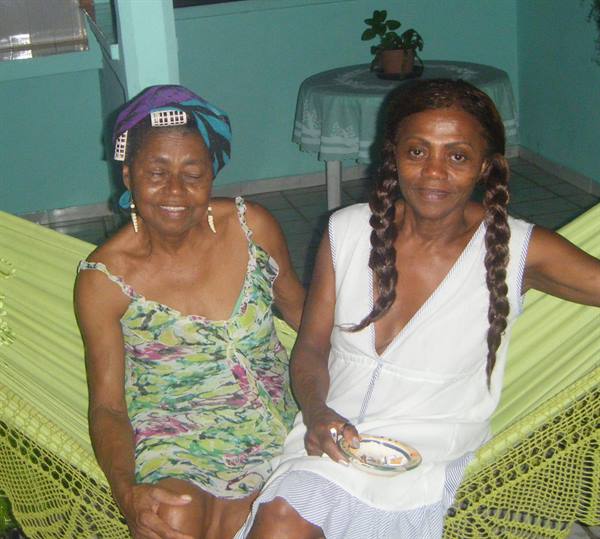
Two smiling women in braid and headwrap on a green hammock, tiled veranda
Day 173 Sep 2009
I had planned to stay here until 27 September, perhaps leaving my kind hosts' house ("a guest is like a fish: after a while it stinks", says the proverb, although I understand that in this house some particularly freeloading and unscrupulous Italian guest - but for these people it's almost "normal"! - even stayed a whole year! - like the separated ex-husband of the late Tucci) for a hotel, but distressed and afflicted, more than by personal mishaps, by the constant warnings, exacerbated by the above cases, about the endemic violence down here from my hosts, I suddenly decide to leave.
The taxi driver who takes me to the airport adds further pieces to the already sufficiently grim picture, but according to him governor Wagner is making great efforts to patch things up, hiring men at full speed (six thousand more police officers), probably also with a view to the 2014 football World Cup of which Salvador will be one of the host cities. Otherwise, who would ever come?
A few days after I'm home, with some regrets (for example, not having managed to see the modern art museum or a candomblè ceremony), I learn from members of the Pereira family living in Parma that on via della Libertade, the street I walked daily, truly sensational events have occurred, buses burned, people killed in tiroteios (shoot-outs) between bandits and police and so on..... It seems that all this is due to a reprisal by the bandits for the transfer to a secure prison in Mato Grosso of a local boss: truly the arrogance and dangerousness of the criminals knows no bounds (just imagine what happens in Rio or Sao Paulo where, I'm told, the violence is decidedly higher than that recorded in Salvador!). I hope that one day all this can cease, as my taxi driver promised with some excess of optimism, but for now the situation down there is truly bad.
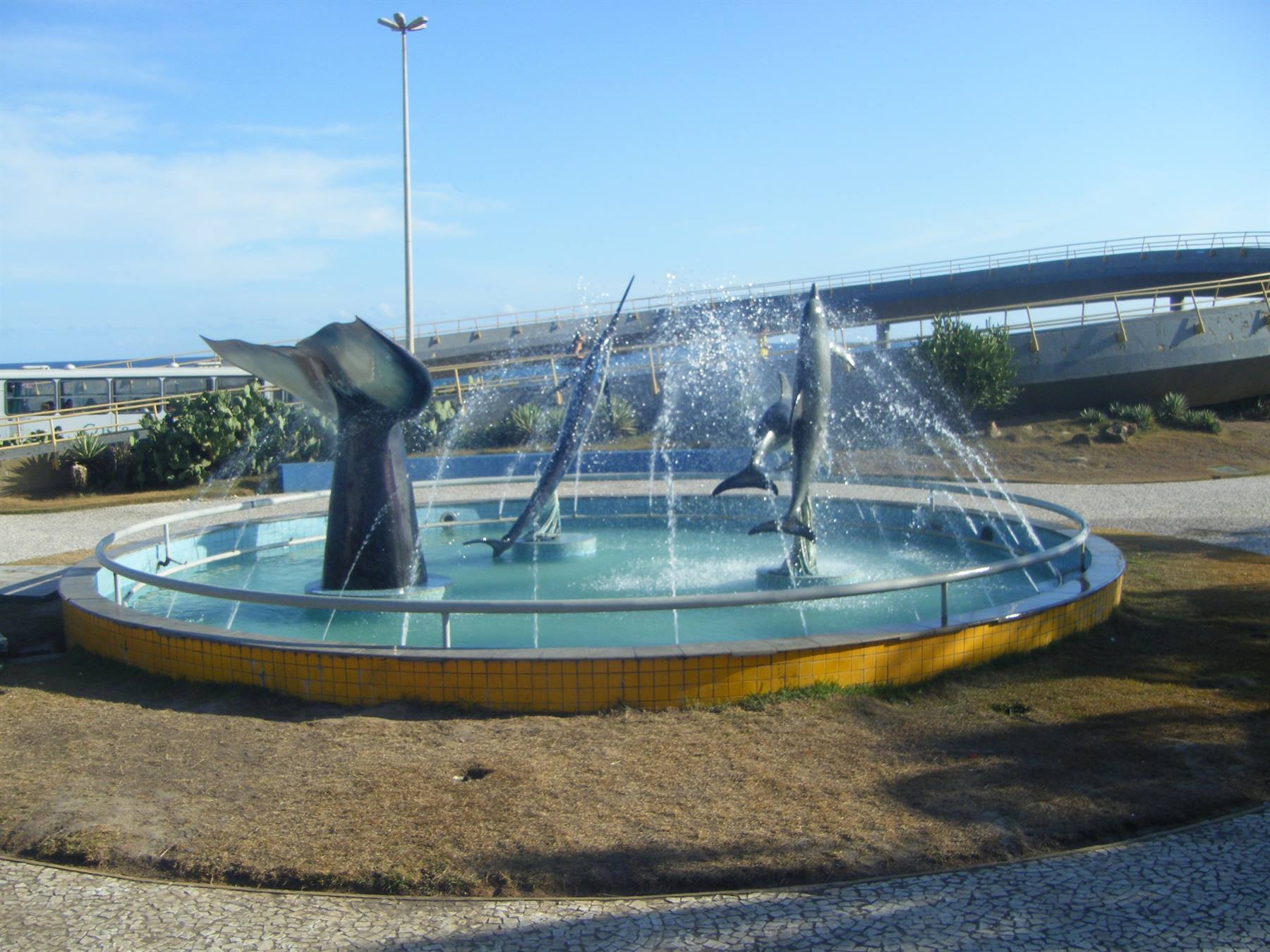
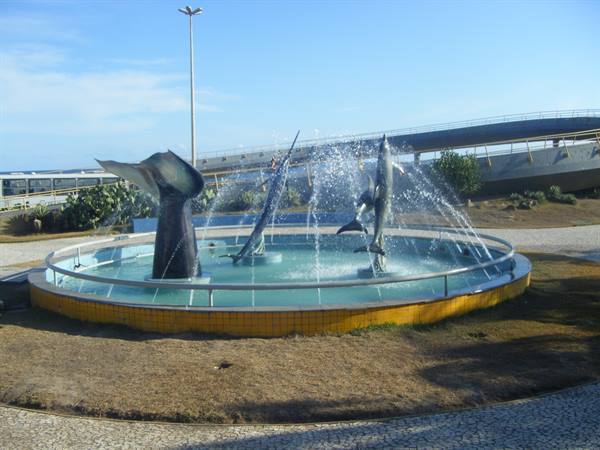
Round fountain with swordfish statues spraying water, yellow tiles














0 reader comments