Tradition, voodoo rites and mystery
While planning a trip to Brazil I asked myself several times whether to include Salvador Bahia in the itinerary. The time available of two days at most involved a certain tour de force that I didn't relish. A two-hour flight to Rio, three hours waiting for the connection, another two hours of flight, transfer, new accommodation, luggage, another flight after two days...all to devote a single day to visiting a city... But Salvador isn't just "a city", it's something more. Visiting it means understanding the whole of Brazil, the strength of its spirit, the traditions of its people, the meaning of the term "tropical" or "Afro-Brazilian". And now that I've visited it, I thank the day I decided to stop there. You can't end up in Salvador by chance. Its visit must be planned and studied down to the smallest detail. You can't arrive there without knowing the terms "Candomblé" or "Capoeira".
You can't claim to understand it without learning its history. Knowing the origins of its people, the development of religion, the history of the buildings and squares, the abuses, the sufferings and the blood shed by the many Africans torn from their lands to be imported here as slaves. Otherwise you might at most appreciate the beauty of its bay, its endless views, its suggestive corners; but you'd leave without any enrichment for not having understood the true reality of the place. Observing a Capoeira fight, a children's party, a religious procession without understanding its meaning would be a limitation. And all these things, with a bit of luck, in Salvador can be seen even in a single day. There are numerous celebrations, and when it's not a feast day it's as if it were.
In Bahia 70% of the population practises Candomblé, a religion imported by populations from Africa during the period of slavery and preserved over the centuries at the cost of great human sacrifices against persecutions. A religion based on the forces of nature, which aim to maintain and develop the axé through songs, dances, rites and traditions: a sacred force that allows one to be in harmony with the world. A daily rite in the life of Bahia, an intriguing and mysterious aspect for the visitor. Another cult maintained from the era of slavery is Capoeira, a fusion of dance, song and martial art and which aims to represent a symbol of freedom. The fighters move within a circle of people who accompany the movements by singing and clapping. The setting and the arduous moves, the fruit of agility and hard training, make the whole thing very evocative.
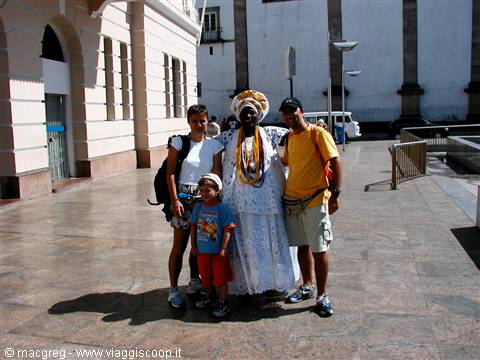
Every corner of the city is a discovery of tradition: from the stalls of acarajé (a fritter filled with shrimp), a Bahian culinary speciality, to the classic "mami", who walk around the city wearing period clothing, defying the heat in search of a few reais in exchange for a souvenir photo. An alternation of tourist fiction and moments of authentic life, like a children's capoeira school performing in the middle of a square. Unforgettable.
But one thing that cannot go unnoticed is the poverty, decidedly greater than in other Brazilian cities such as Rio. The city is invaded by "ninos de rua", who insistently try to get themselves an evening meal or a few coins to take home, one hopes. I say one hopes because often what is scraped together is used to buy some low-cost drug, which usually are the most harmful. Therefore, rather than handing out money, it would be better to buy a meal in one of the many local pay-by-weight restaurants, an action that wouldn't cost more than two or three euros.
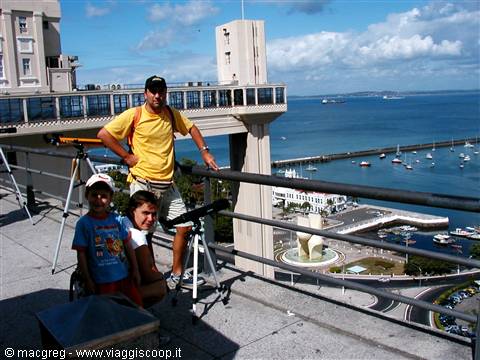
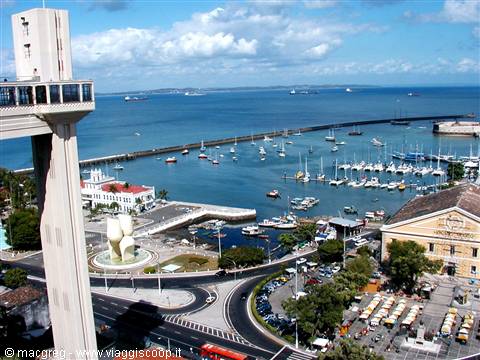
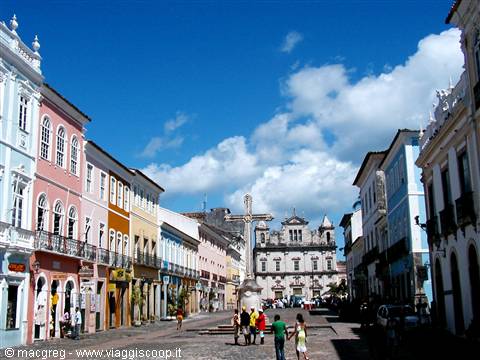
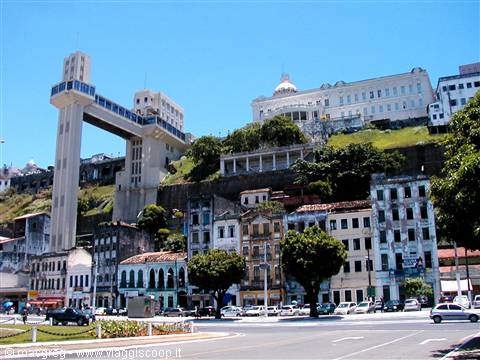
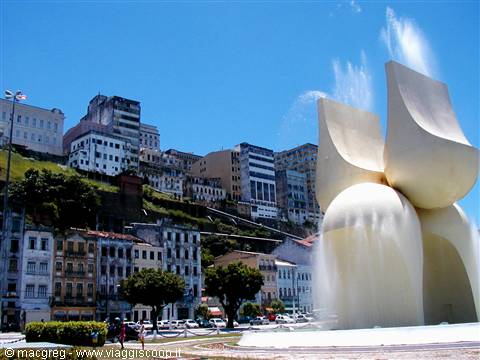
Salvador is divided into the upper and lower city, joined together by the Elevator Lacerda, a spectacular lift that in a few seconds allows you to move from one part to the other (2 euro cents...). The historic centre, the famous Pelourinho, is a UNESCO World Heritage Site and is located in the upper part. A 3-hour walk allows you to visit all its characteristic streets and squares. But there are so many distractions that the three hours turn into the whole day. At the exit of the lift opens the Praça Thomè de Souza, but above all a fantastic view over the Baia de Todo Santos below. Having passed Terreiro de Jesus, one of the most suggestive squares of the old city, surrounded by ancient buildings, and adorned in places by trees and royal palms, you continue towards Praca da Se, another vast square where among other things the Cathedral is located.
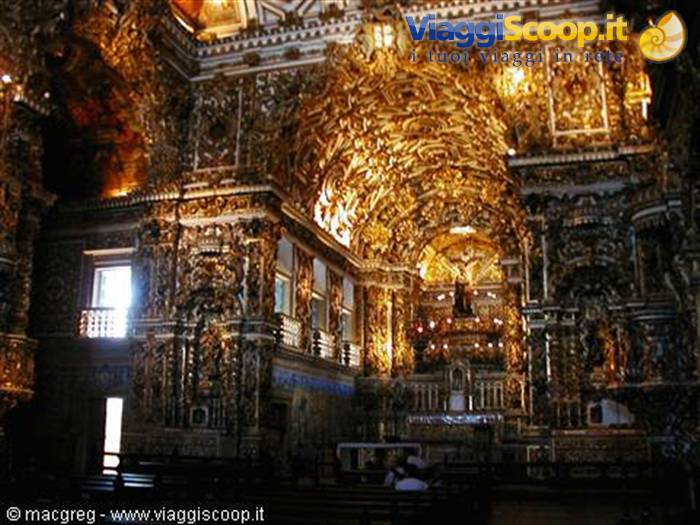
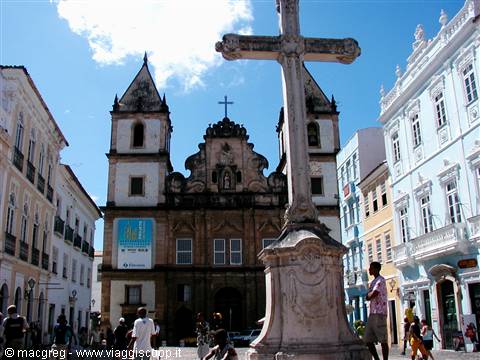
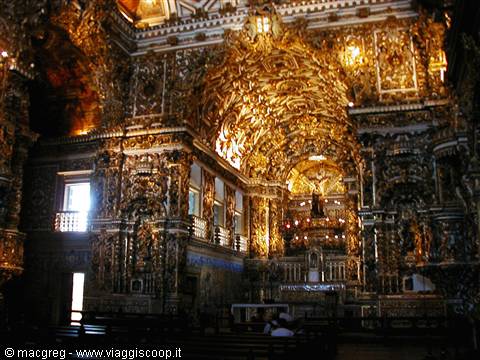
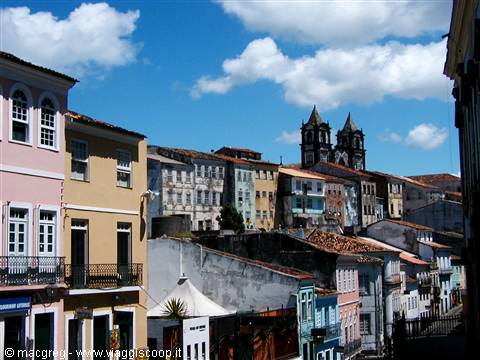
It's here that I met the only rude character in Brazil, a representative of a Capoeira group who asked for a generous donation solely because I happened to turn my gaze in his direction. The Capoeira groups scattered around the city are many, some worthwhile others less so, but with a common characteristic: pocketing reais at the tourist's expense. But to see authentic Capoeira I'll suggest a tip later on. From here begin the most enchanting corners of the Pelourinho, with Piazza Sao Francisco, a fabulous corner with houses lined up in pastel colours and the Convento São Francisco, the most suggestive of the city's 360 churches, a triumph of the baroque with finely decorated interiors and walls that seem wallpapered in gold.
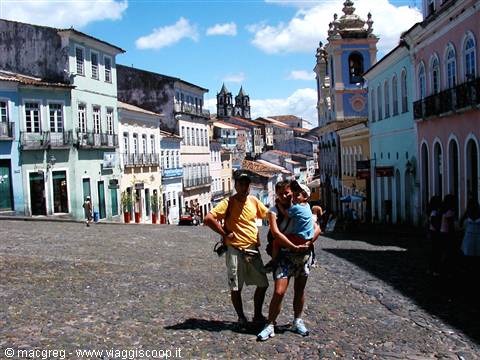
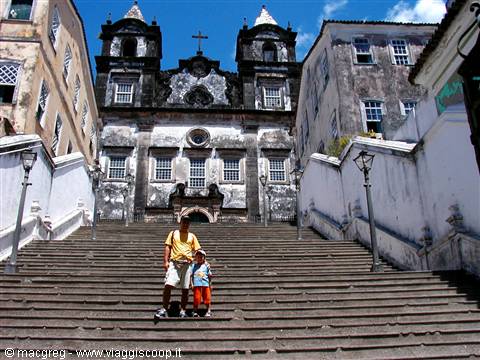
A little further on and here's the most enchanting place in Salvador, Largo Pelourinho, a long downhill street entirely paved that offers a fantastic view, with the bell towers of the churches towering over the colonial houses restored to their ancient splendour. This is the square where slaves were sold and rebels punished with lashes. The beauty of the place is in stark contrast with its memories, made of abuses, tortures and injustices. At the end of the descent, the Pelourinho continues with a new steep climb that culminates in the Igreja da Ordem Terceira do Carmo with the sculpture of the dead Christ, carved in cedar wood with the drops of Christ's blood made of about 2000 rubies.
If Bahia has a limit, it's represented by the fact that it's not possible to do a circular route, so, apart from a few short alternatives, you have to retrace the route to return to the starting point. Here you take the Lacerda lift again to reach the Citade Baixa, where besides visiting the Modelo market, an enormous tourist craft market, you observe the splendid view of the upper part.


0 reader comments