Saturday, January 21, 2006.
I think back on these days made of unforgettable, conflicting emotions...strong emotions.
Everything in Rio strikes you indelibly. And it does so without beating around the bush. Because what you see imposes itself on you.
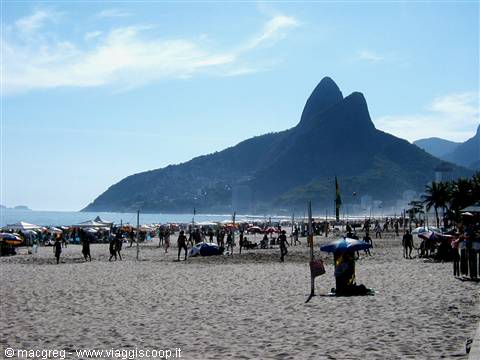
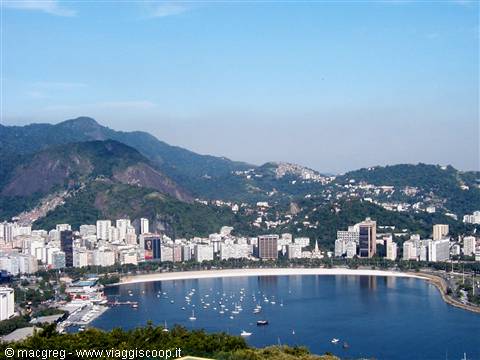
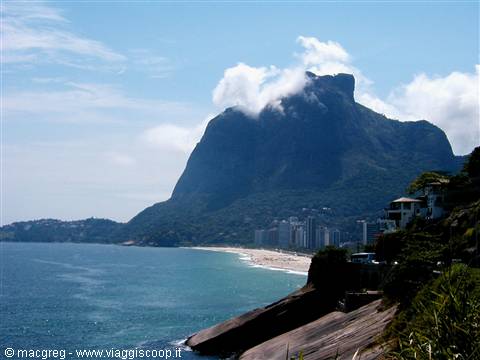
Emotions of amazement while admiring the inimitable scenic beauties of Rio from its panoramic viewpoints; landscapes made of rugged mountains, granite hills covered in tropical vegetation (the morros) that spring up everywhere across the territory, surrounded by a perfect bay, by skyscrapers that seem to steal space from the forest.
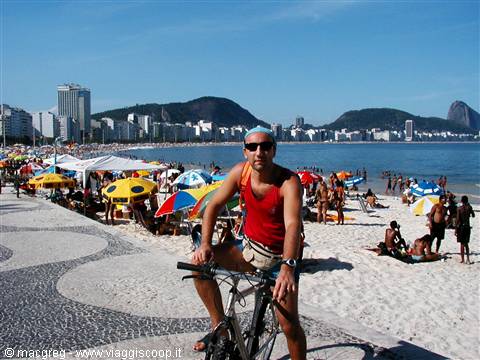
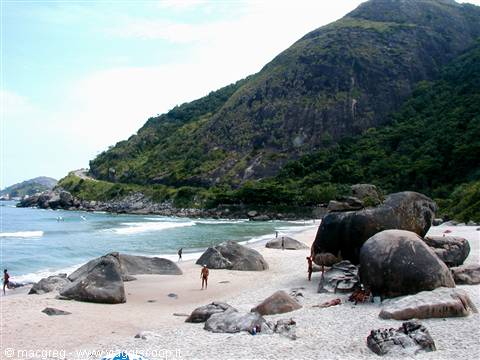
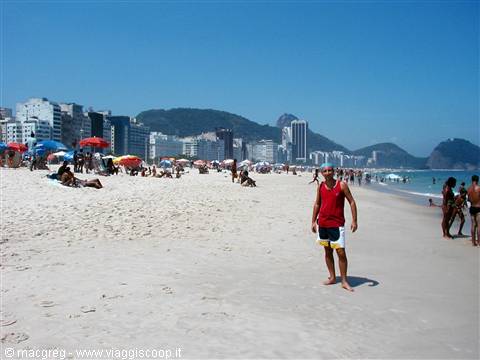
Or for its endless white beaches, for the cheerful hustle and bustle of its people, whose skin color makes everything more exotic, more sensual. And also for the different way of interpreting life, with joy, optimism, even when the reality of things would push you to do the opposite.
The colors, the sounds, the scents, the rhythms of its streets and its markets. Here all it takes is a tin can to create rhythm, a guitar and a drum to attract people who sing and dance on every street corner or outside a bar, between a cerveza, a caipirinha or a refreshing agua de coco.
Finally, emotions of sadness for the reality of the favelas, shacks that often begin right next to the most luxurious homes, entire neighborhoods lacking comforts and infrastructure, where street children have to survive making their way through crime. The favelas are everywhere, scattered throughout the city. Whether you're on the terrace of your 4-star hotel, or at the top of Corcovado, wherever you look, there's always a favela next to the wonders of the city. You look at them with curiosity, as if it were a tourist attraction. You take a photo. For us the favela is this, for many it represents the only chance of survival.
But this is Rio, and it must be taken as it is, in its beauties and its sad realities. Perhaps the secret that so fascinates and bewitches the visitor lies precisely in the meeting point between these two aspects.
And the days pass, and you realize they slip away too quickly. Because in Rio you can stay a day, and you'll regret not having seen anything. You can stay a week, and you'll realize that to understand it you need much more time. You can stay a year, and perhaps your life will never be the same again.
Here they talk about saudade, nostalgia, a concept that only those who have tasted its essence, even for just a few moments, can manage to understand.
Because Rio must be lived, not just visited, and it will be precisely the curiosities and everyday anecdotes that will make a visit to Rio an unforgettable memory.
Before moving on to the practical guide, I'll report a typical carioca phrase, which signifies the pride of its inhabitants toward their city: "Deus criou o mundo em sete dias, mas destes setes sò o Rio consumiu dois" (God created the world in seven days, but two of those were dedicated to Rio)
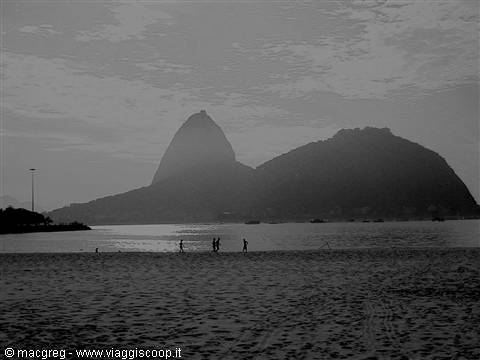
Rio offers an endless number of places to visit, but two are the best known and rightly unmissable: Corcovado and Sugarloaf Mountain.
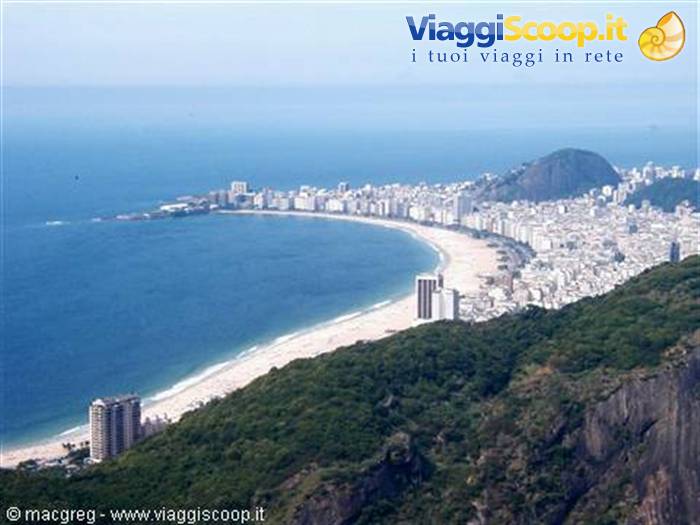
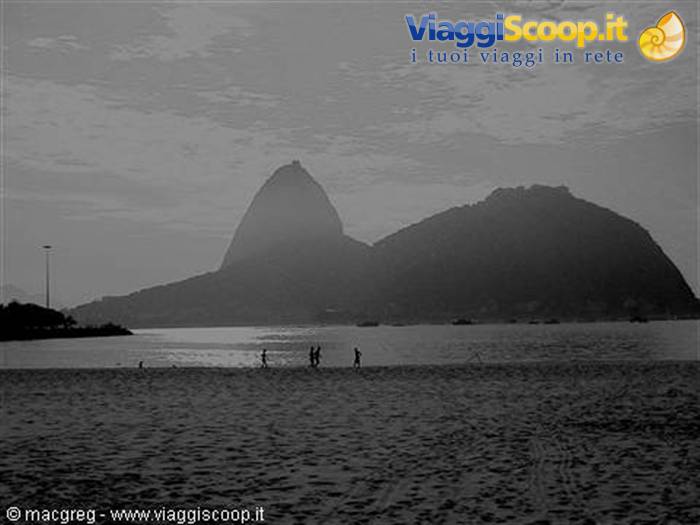
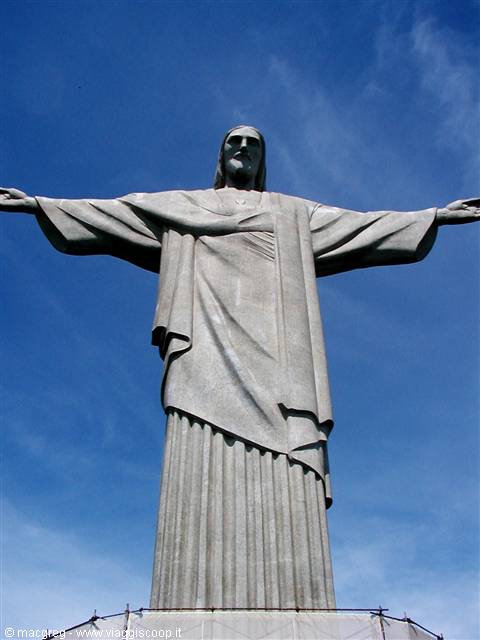
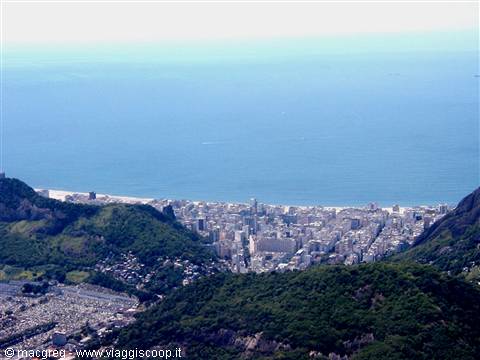
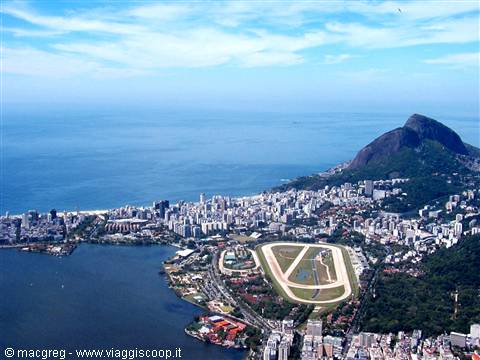
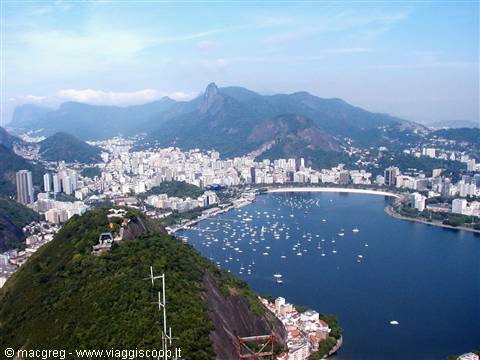
CORCOVADO: from the top of this height at over 700 meters, the view of Rio is unparalleled: in the foreground the unmistakable and bizarre silhouette of Sugarloaf Mountain and the perfection of Botafogo beach. Below us you observe the whole city whose neighborhoods are divided by the morros, surrounded by the very white beaches, among which Copacabana and Ipanema stand out. Framing this view is the splendid bay that separates Rio from neighboring Niterói. The whole thing is dominated by the immense statue of the famous Christ the Redeemer, which seems to embrace the entire city. Corcovado is located in the center of Tijuca National Park, an immense forest that begins right at the edge of the city center and makes everything even more fascinating. To reach Corcovado you take a characteristic rack railway train, which climbs through the forest up to the top (real 36, € 14).
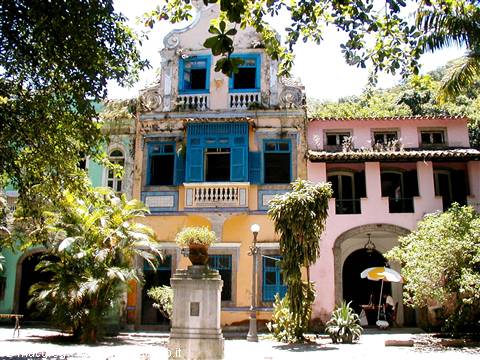
From Copacabana, to the train station take bus no. 584 (real 1.8 - € 0.60). Near the station, you can visit Largo Boticario, a slice of 19th-century colonial Rio.
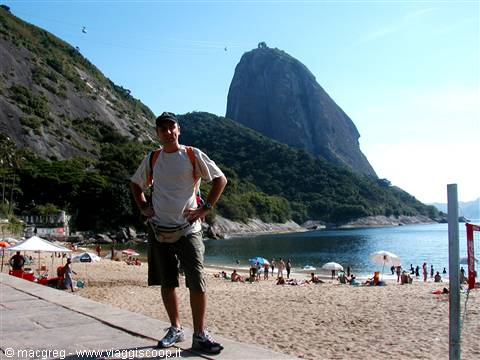
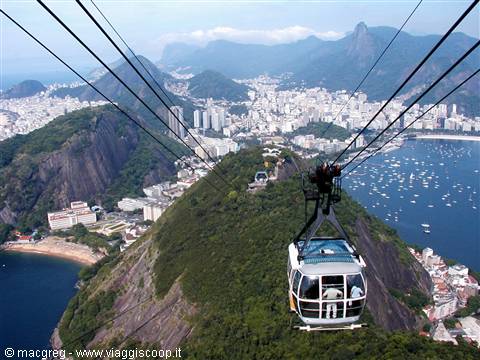
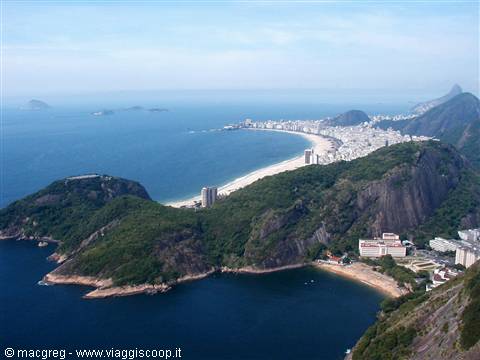
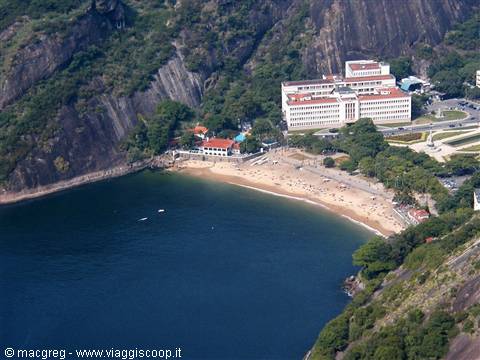
SUGARLOAF MOUNTAIN: another unmissable symbol of Rio, with an equally spectacular view, and perhaps, at least in my opinion, even better. The morro in fact rises right in the center of the city, and offers a close-up view of the neighborhoods and above all of the beaches below. The view of Copacabana and the small Vermelha beach is fantastic. You reach the top (almost 400m) via two cable car sections that seem suspended in the void (real 35, € 13). Near the cable car station you reach the tranquil Praia Vermelha, small but charming. From here a magnificent path carved right at the foot of Sugarloaf Mountain and overlooking the sea begins. Taxi from Copacabana (real 10, € 4), or bus 512.
TIJUCA FOREST: already from Corcovado you can admire part of the forest, but venturing into the heart of Tijuca is a particular experience. Rio and Singapore are the only two cities in the world to boast a forest at the edge of the city center. A unique heritage, very green vegetation, panoramic points and small waterfalls. Bus no. 221-223 from Copacabana.
BOTANICAL GARDEN: The most spectacular area is the entrance, with two long rows of very tall 30m palms. It continues with a pleasant walk among sensitive plants that close their leaves if touched, incredible varieties of orchids and gigantic water lilies. As always, from above Corcovado with Christ the Redeemer dominates (admission real 4, € 1.50).
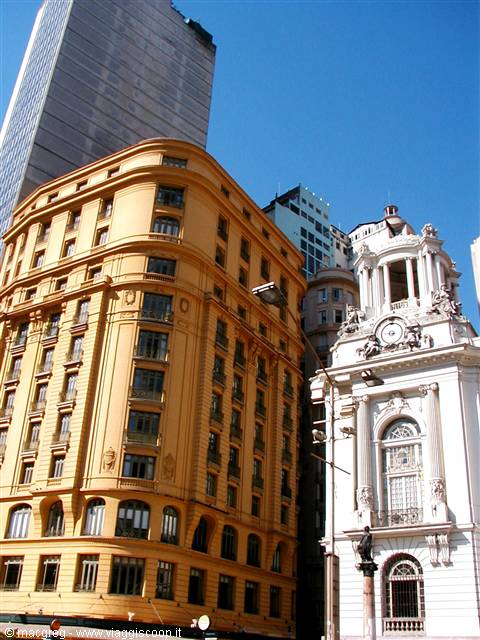
CENTER: strangely the least visited area, especially by groups that dedicate too little time to Rio. The center is a mix of elegant colonial buildings and modern skyscrapers, museums and baroque churches with very lively pedestrian streets and squares.
From Copacabana, using the metro (real 2.10 - € 0.80) you reach Largo Carioca, a meeting place for artisans and artists that represents the meeting point between colonial Rio and the metropolis. A pleasant walk leads to Placa Floriano in the Cinelandia neighborhood allowing you to admire the Municipal Theater, built on the model of the Paris Opera, which houses a famous café. Then you get on the Bondino (real 0.40 - € 0.15), a characteristic open tram that climbs up narrow streets passing among other things the Arcos de Lapa, the ancient aqueduct in natural stone with a series of arches. Thus you reach the typical neighborhood of Santa Teresa, which dates back to colonial times and is characterized by old houses, narrow alleys, small squares.
You go back down to the center, to visit the Metropolitan Cathedral, a modern and imposing construction with 4 immense polychrome stained-glass windows. You continue toward the lively Saara neighborhood, an open-air market. Pi









1 reader comments
Troppo bello!!! Siamo stati negli stessi ristoranti!!!! Il Carrettao ad Ipanema col semaforino rosso e verde epr il cameriere...o il Marius che ti sembra di stare all'inetrno di una nave antica....che figata di posto che è RIO!!!! Io ci sono già stato 2 volte....ma come dice il proverbio...non c'è 2 senza 3!!! E Voi ci tornerete? Bel racconto! Ciao Max