Foz do Iguaçu
We had left Curitiba at night, aware that a twelve-hour journey awaited us to reach our next destination. We arrived at the Foz do Iguaçu station at around six in the morning, thrown off by an unexpected cold that forced us to shut ourselves in a bar to gulp down two big mugs of boiling café au lait in an attempt to warm up. Having mustered our courage, we went out to look for some information about accommodation and, having found a hostel that suited us, we took a bus that brought us near the aforementioned hostel. Once at our destination we had to wait for some beds in the dormitory to free up and in the meantime we scrounged breakfast while organizing our stay in the town.
Having settled our bags and taking advantage of the beautiful sunny day, we decided not to waste a second and to set off immediately to discover the largest waterfalls in the world (take that, Niagara), the true and only reason that had driven us all the way here. Having gathered the information from the hostel reception, we headed off to catch a bus that in about forty-five minutes would take us to the entrance of the Foz do Iguaçu national park. In the grip of a serious financial crisis and, like good Italians, we tried to bribe the park management to get free admission by saying we were established journalists working for an Italian television network. Having almost "tricked" the management, we then opted to pay for the tickets since to get in free we would have had to wait more than two hours.
The park was immense and offered many and very expensive side activities, from rafting to very long walks through the forest, from bungee jumping to the boat excursion under the waterfalls. Since we couldn't afford any of them, we opted to head immediately toward the main attraction, which by the way is free. At the park entrance we boarded a tourist bus, one of those without a roof, to go straight down to the last stop: the Iguaçu Falls. This immense and spectacular attraction is located on the border between Brazil, Argentina and Paraguay and it's incredible how, by taking a simple little boat, you can find yourself within a few minutes in three different countries.
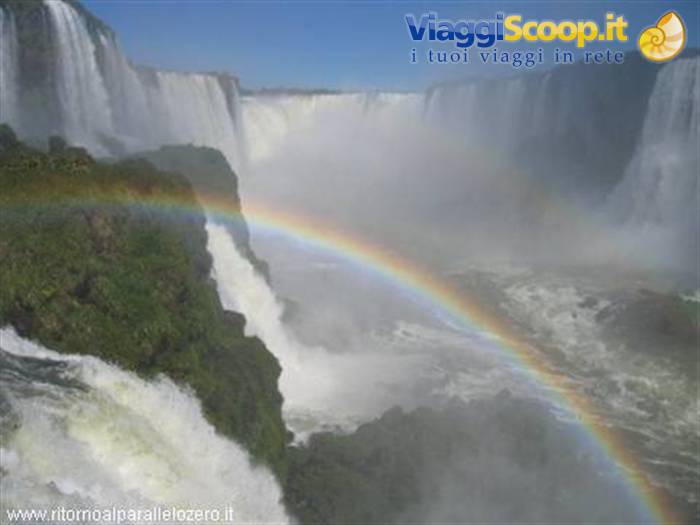
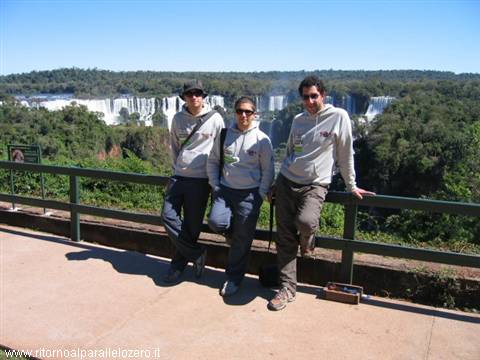
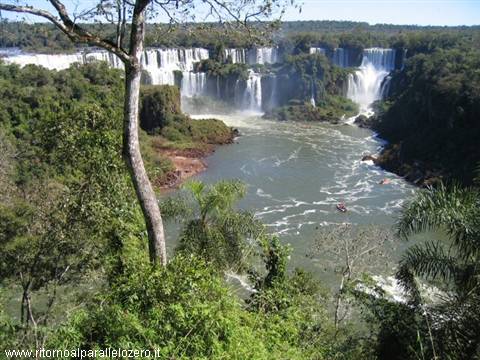
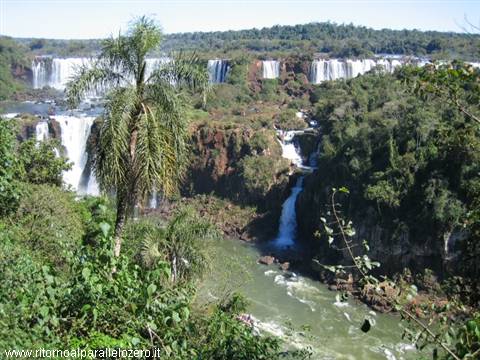
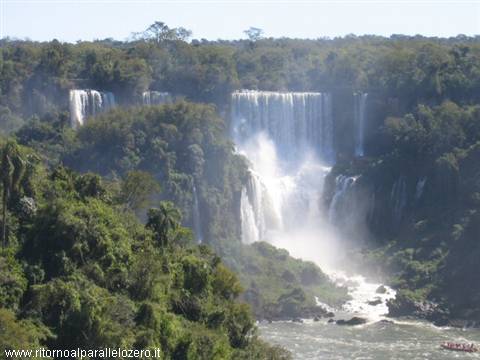
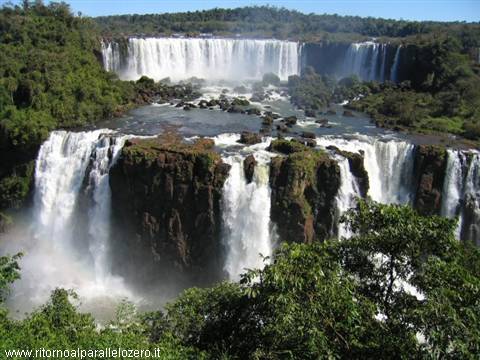
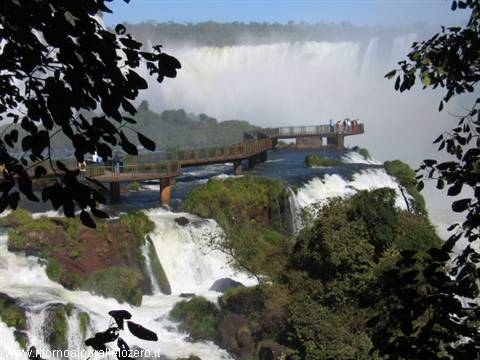
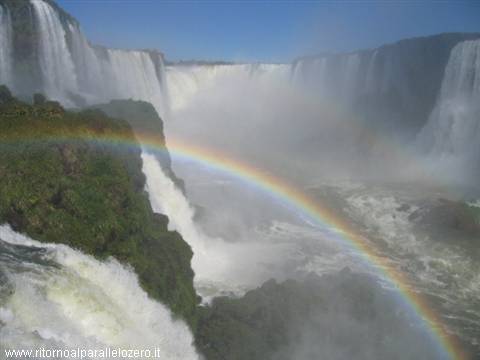
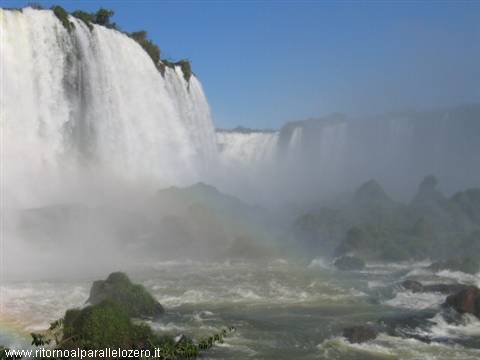
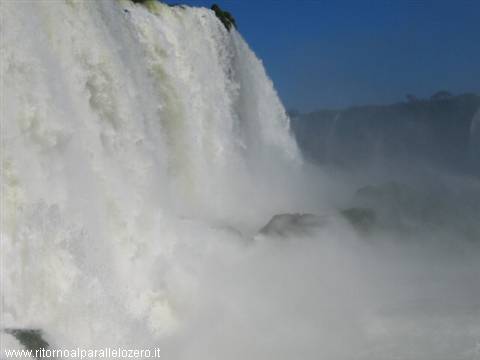
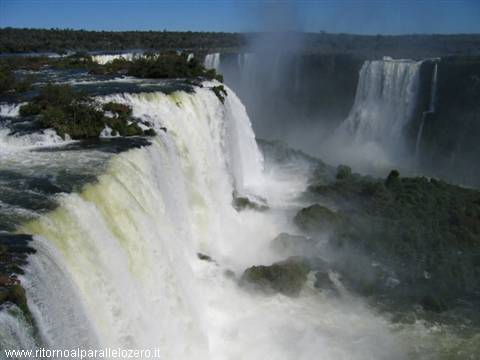
It's possible to visit the falls from both the Argentine and Brazilian sides: we, for no particular reason, stayed on the Brazilian side, a choice that in our opinion turned out to be fortunately spot-on because it was the ideal position to grasp the majesty of this flow of water. It's useless to waste too many words describing such a spectacle of nature; we can only refer you to the photos, aware that even they are not enough to capture so much beauty. We walked a long way along the tourist paths that run alongside the falls to reach a walkway that stretched out like an arm into the heart of them. Surrounded by a deafening noise and almost soaked with humidity, we pushed to the end of the walkway just long enough to snap two photos and hurriedly return to solid ground.
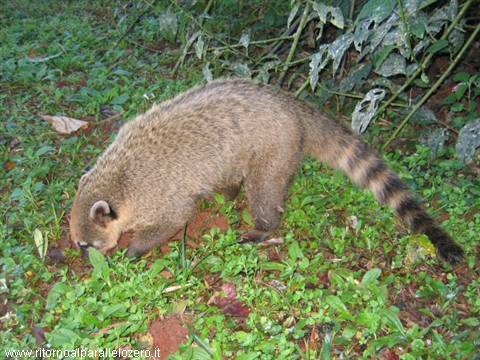
At the end of the path a futuristic elevator carved out of the living rocks of the mountain awaited us, which took us back up to the top, where we made the acquaintance of some cute little animals that crowded the park. It was a sort of dwarf anteater, particularly daring and accustomed to snatching any kind of thing from unsuspecting tourists. Having caught the bus again, we reached the park exit, from where we took another one heading to the hostel: we were dead tired, hungry and dirty. Shower, dinner and straight to bed!



0 reader comments