The story
31 May: We set off from Puno at 7.30 with a Tour Peru bus, bound for La Paz (30 soles each). After crossing the Bolivian border at Yunguyo, we reach Copacabana around 12.30 (local time, 1 h more than Peru). In Copacabana we have time for lunch before transferring onto the Bolivian bus. From Copacabana the road climbs steeply up the mountains with remarkable panoramic views over Lake Titicaca and the Cordillera Real. We descend again to the lake to take the ferry and set off towards La Paz, where we'll arrive around 5 p.m. From El Alto, at 4,000 metres, La Paz appears to us in the valley below at its 3,600 metres of altitude. The bus stops in the central area of La Paz right beside the much-praised Hotel Rosario. Although via the Internet they had told us the hotel was full, we try anyway to ask and luckily manage to find 2 rooms still free.
It was worth it! The Hotel Rosario is really very welcoming and relatively inexpensive (45 USD for a double including breakfast), with free Internet access, a top-quality restaurant and a very rich and varied buffet breakfast. We take advantage of the last light of the day to organise the trip to Uyuni, and so buy the tickets for the bus to Oruro and the train from Oruro to Uyuni. Still ~time to wander the craft area in the alleys around the Hotel Rosario and then dinner at the hotel. A llama fillet accompanied by an excellent Bolivian Cabernet, produced in the southern region near the Argentine border.
1 June: The bus for Oruro leaves at 10 from the La Paz land terminal, we reach Oruro around 1 p.m. We have just enough time for lunch at the restaurant Nayama (about 300 metres from the Oruro railway station), before taking the legendary Expreso del Sur, the train that will take us to Uyuni. At 15.30 the train leaves perfectly on time, like all the public transport we've taken so far. The first hour of the journey is highly spectacular, the train runs literally over the waters of Lake Oruro, among flamingos and numerous water birds. The landscape leaves us breathless until the last light of the day with a spectacular sunset. We reach Uyuni around 22.20, the cold begins to be felt, we're already several degrees below zero!! We stay at the Hotel Kutimuy, run by the Colque Tour agency, which turns out to be basic and without hot water.
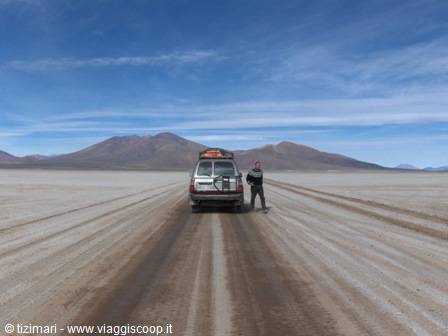
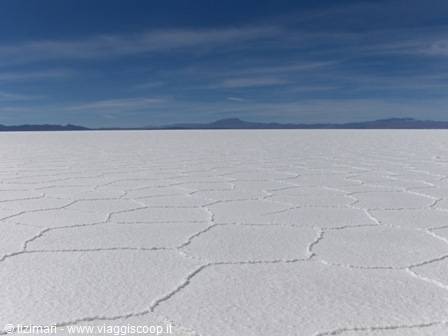
2 June: we organise the 3-day tour of the salt flat and the lagoons with the Colque Tour agency, which provides us with a driver and a Land Cruiser. After buying the essentials for the next three days, around 11 we venture into the Salar, first stop at the salt pans of Colchani where the salt consumed in Bolivia is still extracted, and second stop at the Hotel de Sal. Heading towards Isla do Pescado the landscape becomes indescribable. We're in the most luminous region in the world with its white expanse of salt of 12,000 sq km and the sharp sun of 4,000 metres. Every year, with the rains that carry the minerals from the surrounding mountains into the lake, a new crust of salt about 3 or 4 cm forms. In some places the accumulated salt exceeds a metre and a half.
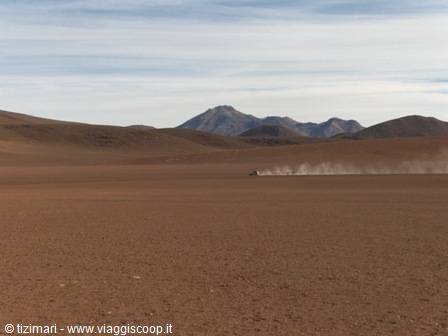
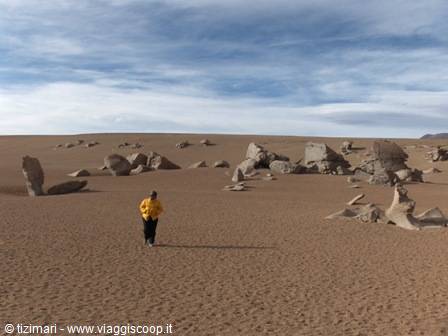
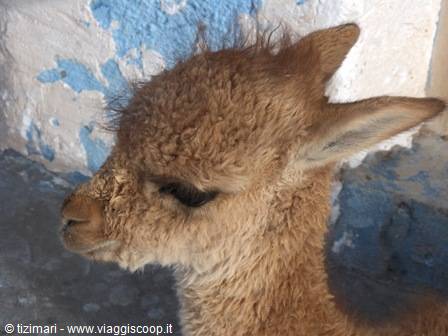
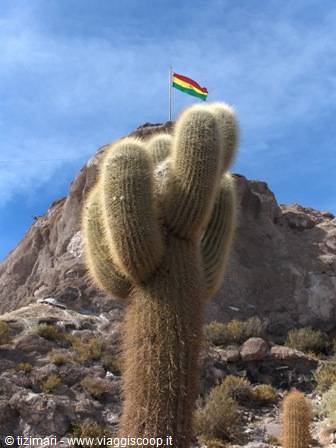
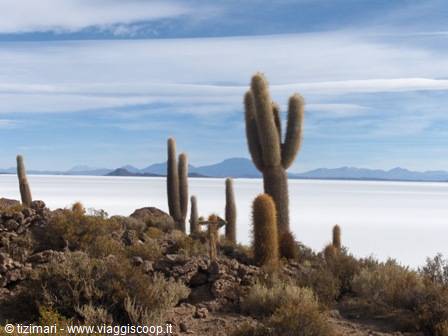
On the Isla del Pescado we have our first picnic, before visiting the small nature reserve, a forest of centenarian cacti rising in the enormous expanse of salt. We then continue through the salt flat to reach the small village of Chuvica where we'll spend the night in the Colque Tour hostal which is decidedly better than the hotel in Uyuni. No hot shower tonight either! 3 June: departure at 8.00, we leave the Salar and venture into the mountainous and indescribable landscapes of southern Bolivia, the temperature stays largely below zero. We climb between valleys and volcanoes and reach 4,600 metres before reaching the first series of lagoons (Canapa, Hedionda and Colorada). Along the way, close encounters with vicuñas, flamingos and foxes. We cross the Siloli desert in a lunar landscape before arriving at the famous stone tree.
A series of rocks eroded by the wind that have taken on particularly curious shapes. For the night we stop at an extremely basic refuge near the Ende camp on the Laguna Colorada. As soon as the sun goes down the temperature plummets and during the night we reach around minus 20. The down sleeping bag proves extremely useful!
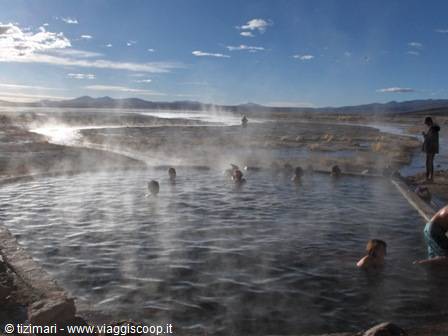
4 June: We wake at 5.30 and set off at 6 still in complete darkness, the temperature is extremely low, in just over 30 minutes we reach, at 5,200 metres, the Geysers of the Sol de la Mañana, which, on contact with the low morning temperatures, shroud the whole area in sulphurous steam. The geysers are a series of cauldrons in which boiling mud bubbles and releases sulphur vapours, an extremely dangerous area because the cauldrons communicate with each other through underground passages and the surface vaults often give way. So be careful where you put your feet. The sunrise in this infernal landscape is an exceptional spectacle and the light indescribable. We continue towards the hot springs at 5,000 metres. The pools of hot water seem surreal, especially if you look at the ice all around.
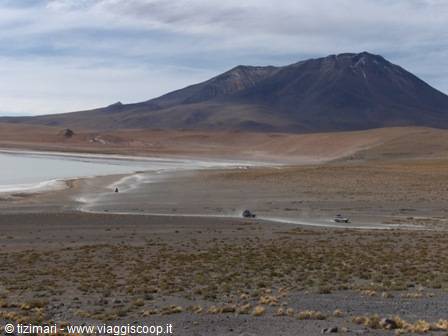
We continue in an atmosphere of extraordinary light and landscapes until we reach Laguna Verde at the foot of the Licancabur volcano that marks the border with Chile. From here those continuing to S. Pedro de Atacama in Chile change vehicle. We retrace our steps to reach Laguna Colorada again, which now appears to us with a pinkish colouring of the waters. Exceptional. We then begin the descent towards Vila Mar and, after a short stop for the meal, we continue to Uyuni. The Colque Tour driver drops us at the terminal of Todo Turismo which organises night trips back to La Paz. We set off at 20.00, the bus is brand new and the service impeccable, dinner and snacks included. The first 6 hours of track are extremely severe, the new bus seems extremely out of place. Once on the asphalt we continue more calmly and reach La Paz at 6 in the morning.
The bus staff entrust the passengers to the "official" taxi drivers and we reach the Hotel Rosario again. 5 June: we treat ourselves to a day in La Paz, a bit of shopping. Bolivia is much cheaper than Peru! Great desire to do a bike descent on the road of death. A descent that in just over 40 km covers a gradient of 3,500 metres to reach Coroico. But it will be for next time.
6 June Wednesday: Return to Peru via Desaguadero, departure from La Paz at 8.00 and arrival in Puno at 13.00. Hotel Posada Don Giorgio. Lunch at the "Casona" with its collection of charcoal irons and dinner at the Hosteria (not bad) both located on avenida Lima, the pedestrian island of Puno.
The journey's photographs
14 photographs · click to open them full screen





2 reader comments
semplicemente meraviglioso!! E complimenti per le foto! Vedendole uno non può fare altro che comprare un biglietto aereo e partire
Splendido viaggio e splendide foto. Non nascondo un po' d'invidia per tutti i tuoi viaggi, ma quantomeno ci fai partecipare virtualmente...