· Buenos Aires, Patagonia, Misiones, Santa Fe, Entre Rios, Corrientes.
When
10 Nov 2004 – 4 Dec 2004 25 days · trip of 2004
Who
Gianni Govoni · @gianni · Vallecrosia (IM)
How
Travel diary
The story · 3 days
Discovering Patagonia, the Pampas and Iguazu Falls.
The description of these first three days gives an idea of what the trip was like... Together with my wife Tina we decided to "translate" it into an account, with the aim of involving all those who are interested in discovering the natural wonders that portion of the other side of the world offers us. A book was born from it, whose synopsis describes its contents: "The intention of this work is not to be a guide in the proper sense, but simply the account of an experience lived within the context of a completely particular world, in another hemisphere, embraced by scenes of infinite and marvellous spaces, where nature still rages. It is not the testimony of great adventures lived at the extreme of the peaks of one of the planet's most fascinating mountain ranges, or of thousands of kilometres covered at the limit of one's possibilities or endurance.
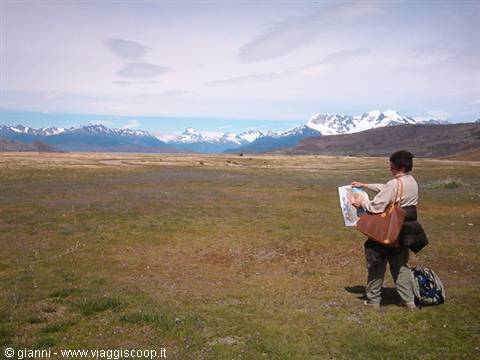
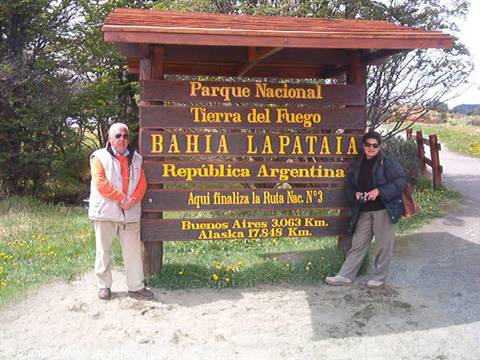
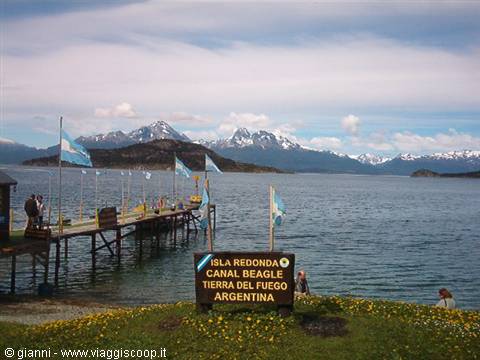
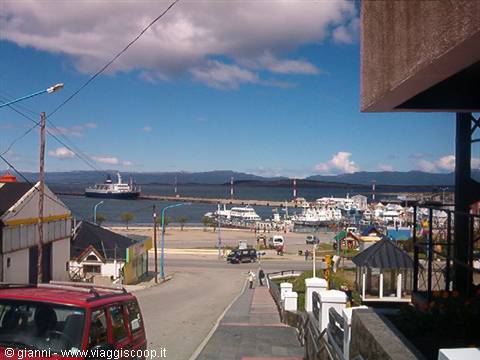
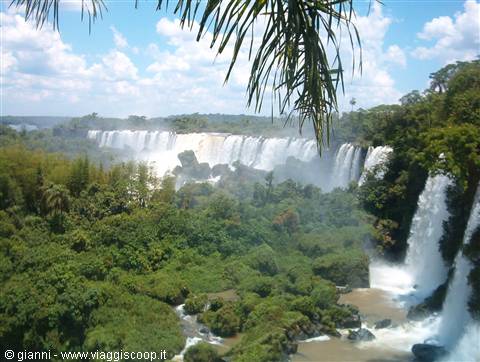
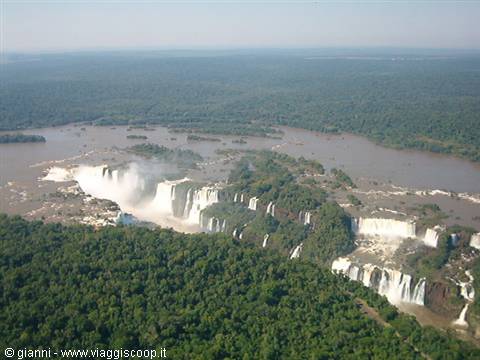
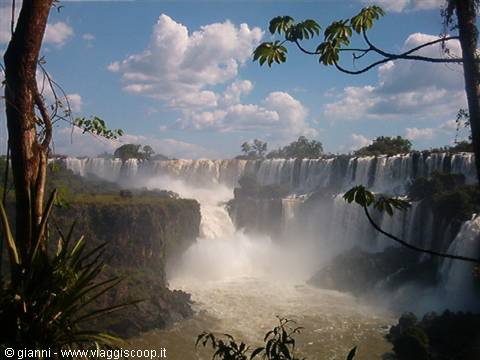
It only wishes to present a route completed by two older travellers who planned what you might call a tailor-made excursion, while wanting to keep a spirit of vitality. The choice of places fell on those that are part of the tourist circuit: Buenos Aires, the Valdes Peninsula and its surroundings, El Calafate and the glaciers, Ushuaia in Tierra del Fuego and, for completeness, Iguazu Falls and the north of the country.
The trip was completed by a tour of the Provinces of Santa Fe, Entre Rios and Corrientes, with an excursion on the Parana River, a very short stay on an estancia and a visit to the lagoon near the town of Victoria." The highly qualified Dr Cinzia Frigo, former Italian Consul in Montevideo, with decades of experience in the Southern Cone of South America, honoured us by writing the presentation, from which we take a few significant lines: "Patagonia has fantastic, breathtaking places. Its blue sky, which through an optical effect seems so close you could touch it, is a constant that leaves the visitor impressed. In the 1980s it was still untouched by tourism.
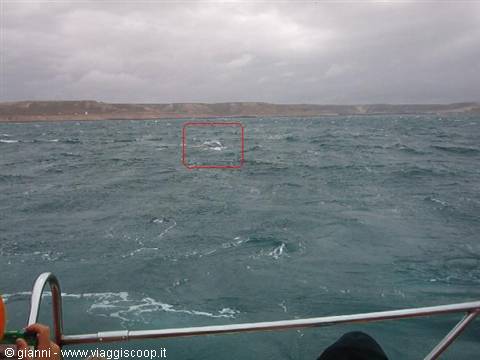
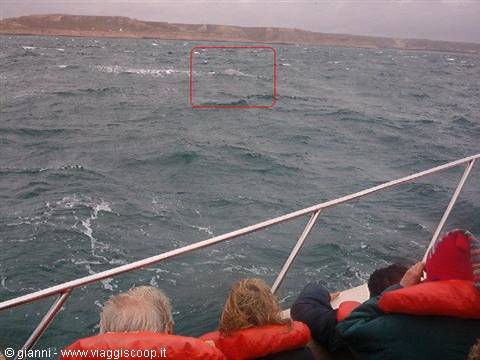
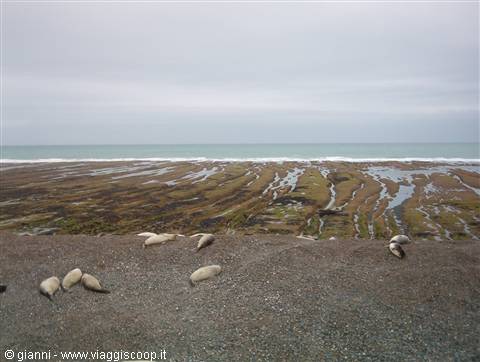
The ridiculous war with Thatcher's England had just ended and the spirit of adventure drove me to cover kilometres and kilometres across the Valdes Peninsula, Puerto Madryn, Punta Tombo (the famous beach covered by thousands upon thousands of penguins). I amused myself chasing whales with a group of divers from the military base of Puerto Belgrano. Still vivid is the memory of a majestic whale emerging from the sea waters of Puerto Piramides Bay, so close to me that I could photograph it less than a metre from the dinghy I was on board. I experienced the wonderful sensation of being before a sea god who grants himself to human curiosity with generous benevolence. And the colonies of seals with their pups, the elephant seals. In short, for those who love nature, a true paradise...".
The work consists of 255 pages on glossy paper with 108 colour photographs taken by the authors and an eight-page glossary. Friends of VIAGGISCOOP receive a 35% discount on the cover price, by ordering directly from gtgovoni@libero.it.
Day 110 Nov 2004
1st day. We set off. After months of pleasant planning.
Argentina has always stayed in my head, ever since, as a child, I used to walk with my mother along Corso Buenos Aires in Genoa. Perhaps it was because of the name itself: different but comprehensible. Corso "Bonesaire", as my grandmother used to say. There at the far end, in all its grandeur, the equestrian monument to General Manuel Belgrano, whose horse, all black, which, seen through my childhood eyes, seemed to me immense, almost frightening.
In summer they took me to the countryside inland. In certain little villages, on seeing abandoned and crumbling houses, they told me they belonged to people who had emigrated to South America, many, many years earlier. Most of them had been forgotten.
Summer playmates told me they had distant cousins down there, without however being able to say precisely where. At school, the elementary teacher explained to us that in the pampa there was grass so tall it could hide a man on horseback.
I waited fifty years, but in the end I made it!
Where to begin? With my wife we spoke to a friend who had been there the year before. She gave us enough pointers to get an idea of how to plan the holiday. Above all regarding the time of year to go.
At first we had doubts about getting around internally: everything by plane. Many years have passed since, together with friends from Genoa, we went to the North Cape in three Fiat 500s. At the moment, or almost, when Armstrong was stepping onto the moon, we were eating fisk filet at a stall in the Tivoli gardens in Copenhagen. I'm no longer twenty-three, and my health has slipped a bit too. Then, during the planning, we included a parenthesis by car. We wanted to be a little more in contact with the country, while visiting three Provinces northwest of Buenos Aires.
Having a lot of time available, I contacted, by e-mail, about thirty travel agencies in Buenos Aires.
One of the first to reply was the one where a young man works who is my daughter's age and has an Italian surname. He speaks and writes our language admirably. I sent him a rough program and he immediately understood what we wanted. For everything he sent me a choice of three options: hotels, excursions, tango shows, etc.
To my great astonishment and, consequently, disappointment at my Genoese thriftiness, I immediately noticed that Argentine tourism has different prices, applied by geographical area: Argentina, rest of South America, North America, Europe. Naturally, for us, the prices are the highest ones. This distinction also applies to the entrance tickets of the National Parks.
As we planned the holiday, we expanded the itinerary. In the end, in addition to the classic plane tour of Patagonia, Iguazù Falls and stops in Buenos Aires, we extended, by car, into the Provinces of Santa Fe, Corrientes and Entre Rios, to visit hunting and fishing reserves. Another nice little trip.
It was not easy to make the flight times, the hotel bookings, the excursions, the car rental and everything else coincide. On my part there was the determination to succeed in the endeavour, on the part of my "agent in Baires" the willingness to complete a job.
Let's leave. The package includes the flight Milan, Barcelona, Madrid, Buenos Aires. For us the Nice-Madrid flight would have been more convenient, since the Côte d'Azur airport is only a 35-minute drive away. My daughter and our future son-in-law accompany us: as they say goodbye they give us the recommendations you give to schoolchildren, along with the snack, before entering the classroom.
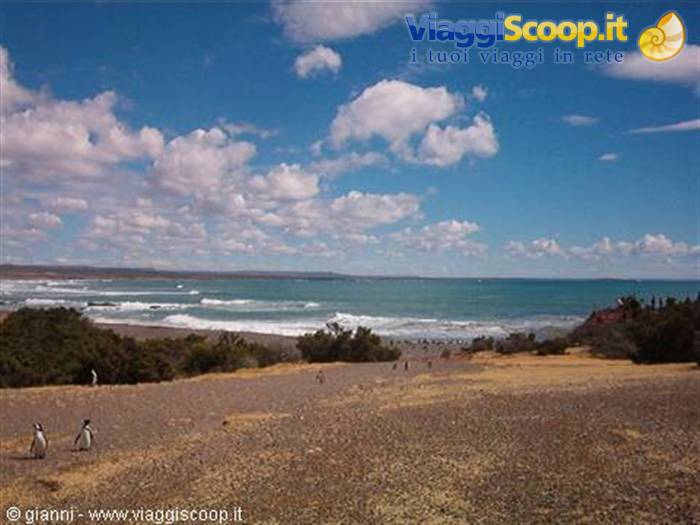
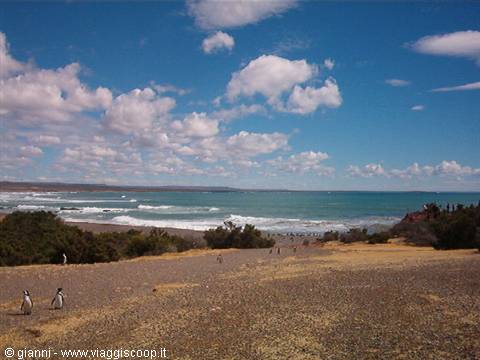
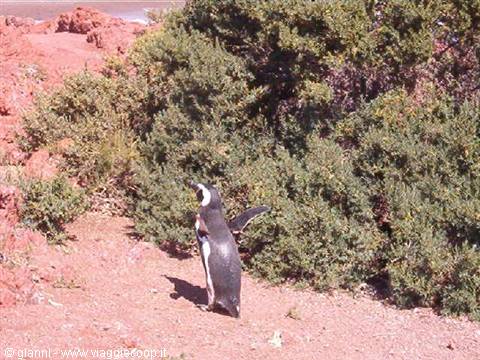
Penguin colony at Punta Tombo
Day 211 Nov 2004
2nd day. Arrival in Buenos Aires. First look at downtown. Dinner with a tango show.
The plane was full. The eleven and a half hours of the leap across the Atlantic were very long. We slept very little. The onboard service of the Spanish flag carrier's crew was impeccable.
We arrive at 7:30. From inside the airport we see that the sky is leaden: perhaps it has rained. We notice that the luggage trolleys also accept euros. How quickly they've modernised!
Ezeiza international airport, on first impact, leaves us favourably impressed. While I wait for the luggage, Tina, my wife, goes to see if there is anyone waiting for us. She comes back with a tired smile: she has seen our names in the forest of people with signs in hand waiting for passengers.
As we go out, a gentleman in plain clothes, with jacket and tie, without any identifying badge, seems to me to be asking whether we have anything to declare. I keep walking straight ahead, I have nothing to declare.
The driver who has come to pick us up is young and likeable. As soon as we get in the car, he informs his company, with a laptop, that he has welcomed us and that we are on our way to Baires. We get onto the motorway and the first thing that stands out is that the car fleet is ancient. So is that of the trucks.
In the hour of travel that separates us from Avenida Corrientes, where we have our hotel, we talk about the current Argentine economic situation and the alarming news that was heard a couple of years ago about malnutrition in certain Provinces.
We leave the motorway while we are, by now, in the city. Puerto Madero is on our right. To the driver I leave a one-dollar tip, as I had, like a good Genoese, worked out before leaving.
The question of tips I had studied well. A one-euro coin doesn't, at the moment, give the right impression. Five euros, for normal tips, seemed too much to me. I bought a new packet of one hundred dollars in one-dollar bills: it turned out to be the perfect solution. My Genoese thriftiness is proud of it!
We get off at the NH Jousten. The facade of the hotel, in Art Nouveau style, is as we had seen it on the website: we like it. At reception the staff are all young and friendly. The room, on the fifth floor, is completely to our liking. I had been told that in South America, in the classification of hotels, they are a bit more generous than us, so that, in general, the stars awarded are almost always one more. In our case I think it has earned all four of its stars.
We call Marcelo, our travel agent, to tell him we have arrived, that everything is going well and we confirm the appointment at our hotel at dinner time.
After having given new vitality and efficiency to our weakened and tired bodies, we threw ourselves into the city.
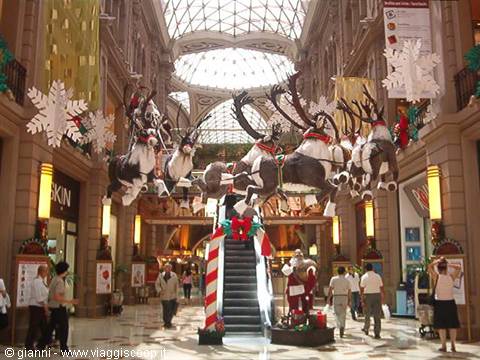
After a few hundred metres we found ourselves on Florida, one of the two pedestrian and shopping streets of the centre. We hear shouting and sounds, like muffled trumpets. In our direction come some demonstrators with placards. There are about a hundred of them, men and women. They stop in front of the branch of a bank, which seems to have been closed for some time.
They throw bottles, eggs and other things against the doors. On the ground, in front of the entrance with the shutter pulled down, they place newspapers which they then set on fire. Behind the demonstrators there are three policemen: two in blue overalls with berets on their heads and on their shoulders a device with which, back home, we spray copper sulphate on the vineyard. They throw jets of water on the burning newspapers and put them out. The third, in normal uniform, about 55 years old, seems to be the equivalent of our Marshal.
The demonstrators set fire to other newspapers, the policemen put them out with a serene manner, without needing to receive orders from the Marshal. We move away quickly, we don't know what might happen. There are no other policemen. We remark that back home there would have been at least fifty policemen and carabinieri for such a public order duty.
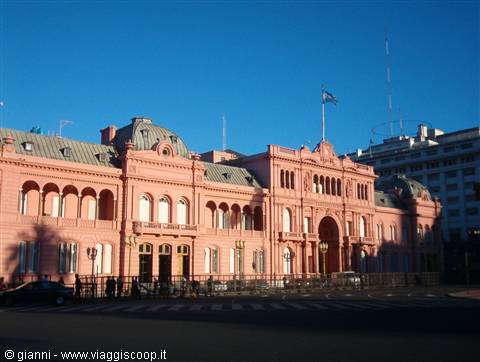
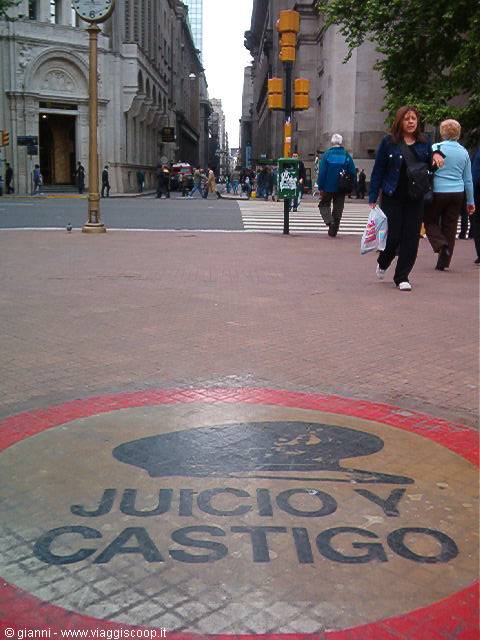
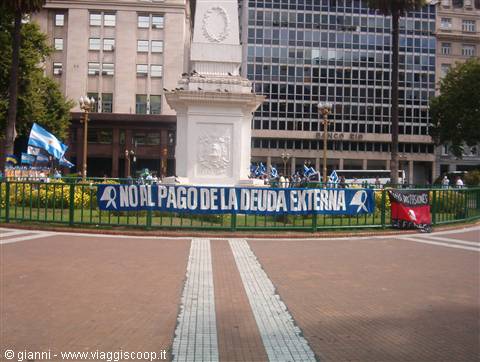
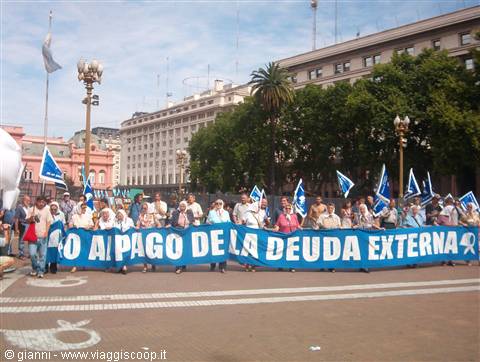
Suddenly we arrive at a square and notice on our left the Casa Rosada. So we are on the famous Plaza de Mayo, where the mothers of the disappeared go to demonstrate, since the time of the military dictatorship.
It's lunchtime and we enter a restaurant nearby, large and apparently very clean. The style has something of the thirties. The patrons, all in ties, seem to be employees on their lunch break. Tina, who is always lucky in ordering menus she doesn't know, asks, blindly, for a "bife de lomo con papas fritas". She guesses right. It's a big grilled steak with fried potatoes, cut lengthwise and very crispy. The quality of the meat is excellent, she tells me. The prices are very affordable. I leave an adequate tip which cheers up the waiter who has served us with great friendliness.
The long, indeed very long journey, makes itself felt. Our seemingly regenerated vitality fades. The time zone change starts to wear us down. We return to the hotel for a dip in the sack where we stay until late afternoon. We get up just in time for the appointment with Marcelo, in the lobby.
We go down and he is already there waiting for us, alone. After introducing ourselves, his wife arrives. She comes straight from work: she too works in a travel agency.
We tell each other a bit about ourselves, about Italy, about Argentina, about their Italian grandparents. His from the province of Potenza and hers from the province of Brescia. We realise that time is flying and that unfortunately the car that was supposed to come and pick us up doesn't arrive. A few phone calls to find out that the car won't be coming: there has been a mix-up. We go out into the street and take a taxi, one of the hundreds that constantly plough the avenues, wide as seas.
I notice that taxis are very cheap: I spend seven pesos for the ride, tip included. A little more than three thousand five hundred of our old lire.
The dinner with tango show I had chosen at the venue "Esquina de Carlos Gardel", (on the suggestion of Marcelo whom I wanted to invite, together with his wife, for all the courtesy and above all patience he had used towards me over all these months. The venue is in the barrio Abasto, a neighbourhood that doesn't exactly seem respectable.
It has the look of a theatre and our table is in a good position. This shows that Marcelo cared about making a good impression. The service staff, besides being extremely cordial, display marked professionalism. All of them, men and women, dress impeccably.
Argentina's Italianness I discover by scanning the menu. Dishes with Italian names are by far the majority. And so it will be for the rest of the holiday. I wouldn't have believed it.
I ordered, among other things, a vitel tonnè. The sauce leaves in the mouth a slight aftertaste of salted anchovy, just like my grandmother used to make it. The wine, included in the menu and unlimited, doesn't excel, but it is a good one, above average. My attention is drawn to the Mediterranean "ensalada de los Tanos": little pieces of mozzarella, black olives, olive oil and basil. Marcelo explains to me that the word "Tanos" derives from "neapoletanos" and is extended, generically, besides to all Argentines of Italian origin, to Italians themselves too. Stereotypes remain. Anyway, it is said in an affectionate sense. As Italians, we are greatly appreciated.
We are still finishing dinner when the show begins. Two hours of dances masterfully interpreted by the artists. An overview of the history of tango and milonga. The scenes are filled by rich costumes. Even though specifically I don't feel up to judging, overall I enjoyed the evening. A lot. Impressive is the orchestra that rises from the stage and remains suspended for the entire duration of the show.
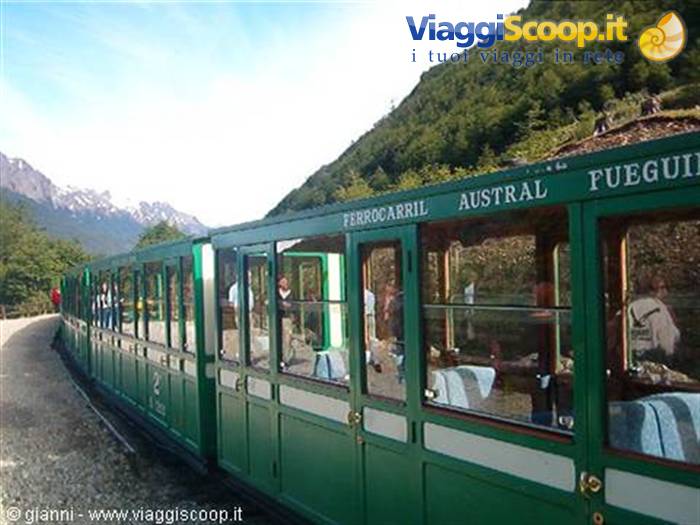
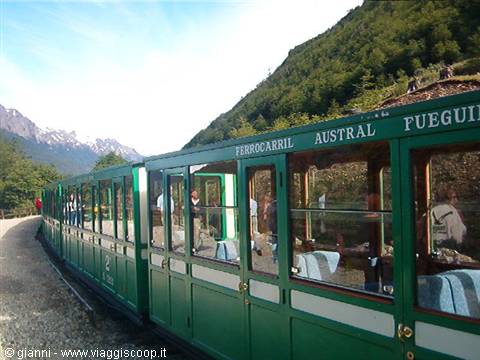
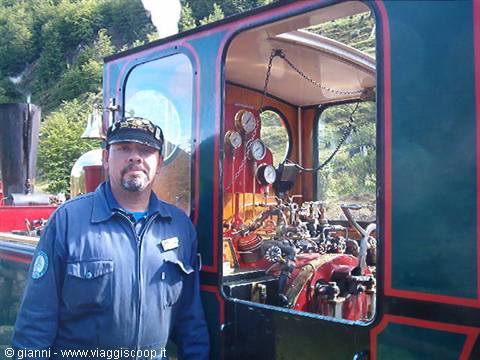
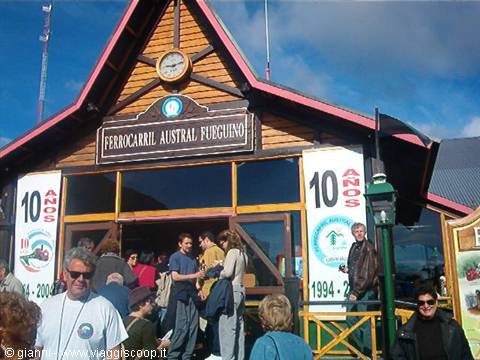
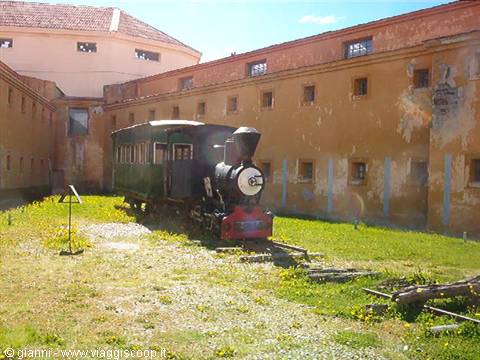
The train of the end of the world.
Day 312 Nov 2004
3rd day. City tour. Departure for Trelew. Arrival in Puerto Madryn.
At 09:00 we are already in front of the hotel waiting for the coach that takes us on the city tour. We had chosen the Spanish-language option. We notice that there are also some English people on board.
The guide, a young man of about 25, tries his hardest to speak in both languages: Castilian and English. One notices that there is a great drive to try to do well and to give a good impression of the country, emphasising the positive things and omitting the negative ones.
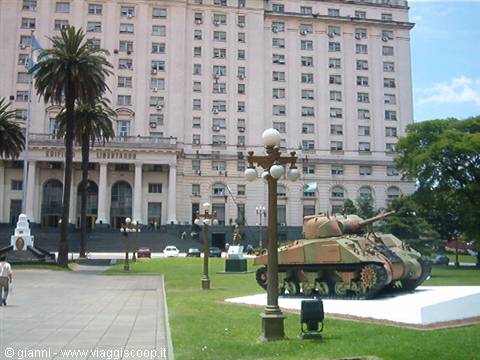
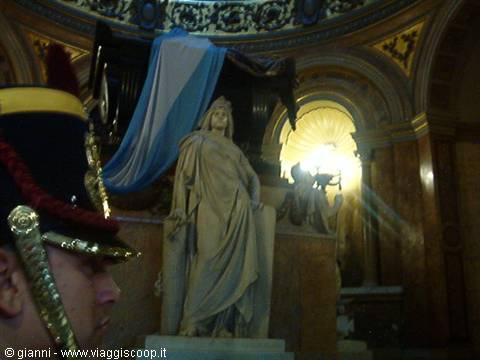
The first stop is at the Cathedral in Plaza de Mayo. The facade has twelve columns, one for each apostle. Inside there is the tomb of General Josè de San Martin, "el Libertador", and that of the Argentine Unknown Soldier. Mounting guard, in full dress uniform, are two soldiers of the "Regimiento de Granaderos a caballo General San Martin". Who, if you like, are a bit like our Carabinieri Guards of the President of the Republic, known as "Corazzieri".
In fact they carry out honour and representation duties. We find them in front of the Casa Rosada, seat of the Presidency of the Republic, a building also located on the Plaza de Mayo. A jarring note is the iron barriers placed in front of the building. Granted, they serve as protection, but, apart from the aesthetic disfigurement of the square, they give the impression of a siege of the building itself. The policemen on guard outside are cordial. Many have Indian somatic features imprinted on their faces.
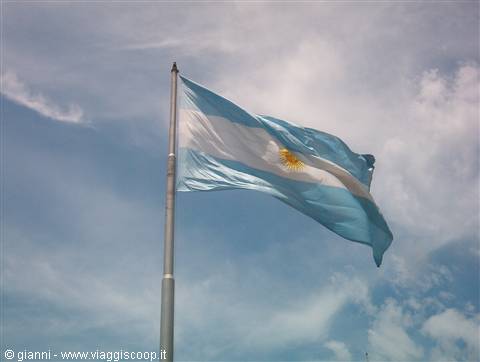
To the side of the building there is a huge flag that I want to photograph from below. I have to approach an armoured sentry box, placed beyond the barriers. I say aloud that I am an Italian tourist. A sergeant of powerful build comes out and tells me that his father-in-law is a "Tano" too. He lets me take the photos of the flag and then, briefly, we let ourselves go with jokes about politicians, both Argentine and Italian. Present and past. It seems as though we've known each other forever. A pity, I didn't even ask his name, let alone tell him mine.
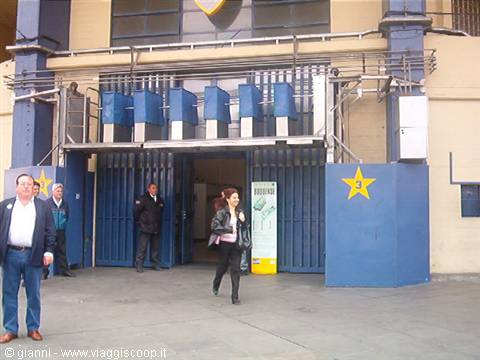
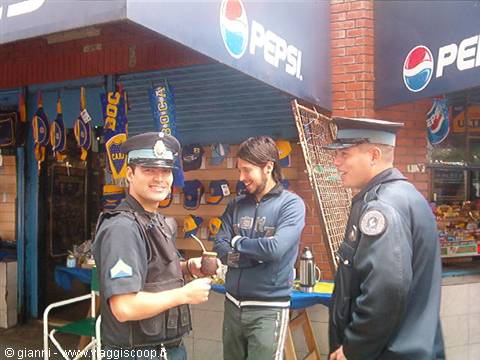
We continue the tour in the direction of the barrio de La Boca.
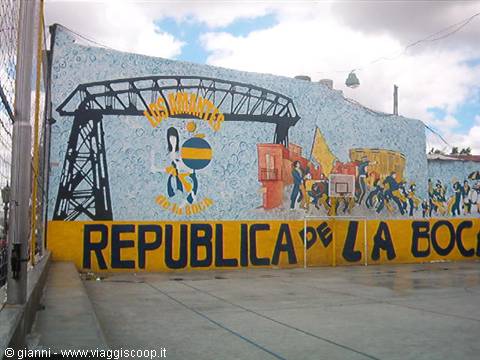
The "Republica de la Boca", as the inhabitants of the neighbourhood call it. To be precise, the current one is the third edition of the Republic of the Boca. In the second half of the nineteenth century the barrio remained detached from the city, placed at the mouth of the Riachuelo river, from which it takes its name. There were about twenty thousand Italians living there, with a prevalent majority of Genoese. They lived in dense houses with corrugated iron walls and roofs, which have remained as such. A neighbourhood of poor people, which has remained as such.
It is said that the first "edition" of the Republica de la Boca was born around the middle of the 19th century, when, following strong workers' protests, the Genoese flag had been hoisted - red cross on a white field - and a request had been made for annexation to the then Kingdom of Sardinia. The subsequent and timely intervention of President Roca put an end to the protest and the inhabitants even dedicated a street to him. There are unanimous opinions in considering that this has, over time, become a legend, since the fact, it seems, is not supported by certain data.
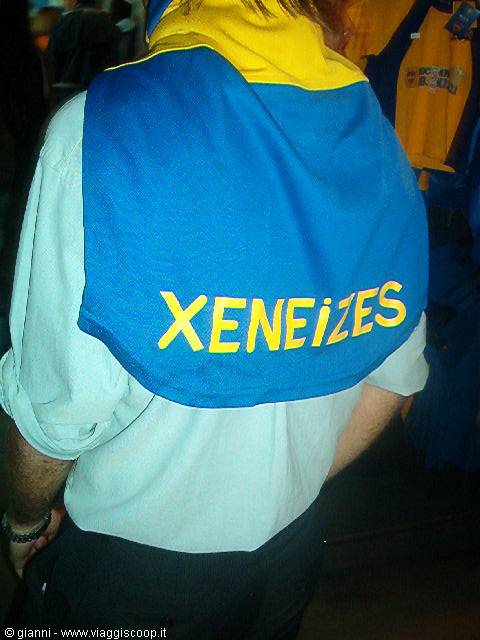
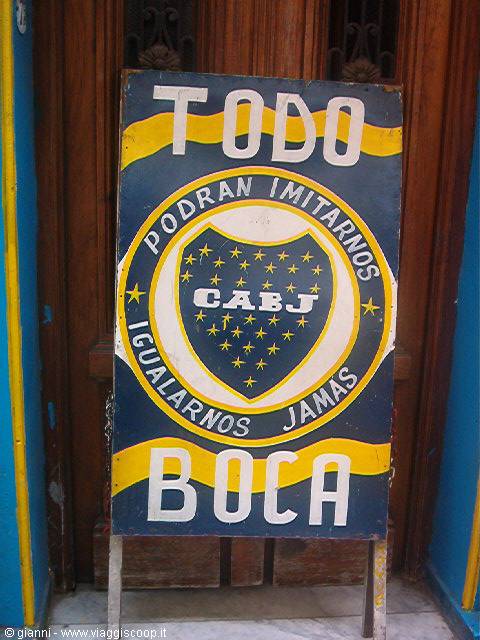
The neighbourhood's stadium is called "La bombonera" by the fans of "Boca Junior" who, they are keen to say, make up 40 percent of the entire Argentine football fanbase. They are called the "Xeneizes" in memory of the Genoese character of the barrio, even though the word has taken on its full Argentine identity since, in Genoa, we write it: "Zeneixi".
We return to the hotel to get ready: in the afternoon we leave for Trelew, Province of Chubut, the first city south of the Rio Colorado, considered the border with Patagonia.
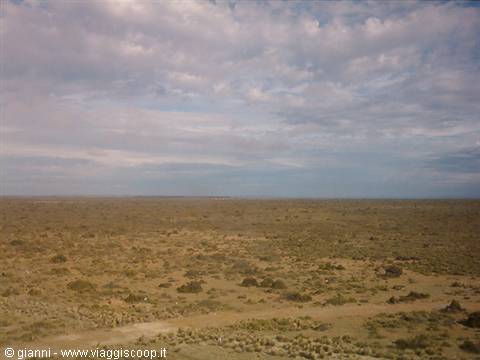
During the landing phase one sees the vast Patagonian steppe, brown in colour which, at first sight, gives the impression of a desert wasteland. The airport is in the middle of the plain. The exit formalities are slowed down by two ladies in white coats who make everyone place their luggage on counters and ask us whether we have any food with us, in order to inspect it. Fortunately we don't, so we move away quickly in search of our driver who is to take us to Puerto Madryn.
gtgovoni@libero.it with a 35% discount for Viaggiscoop readers
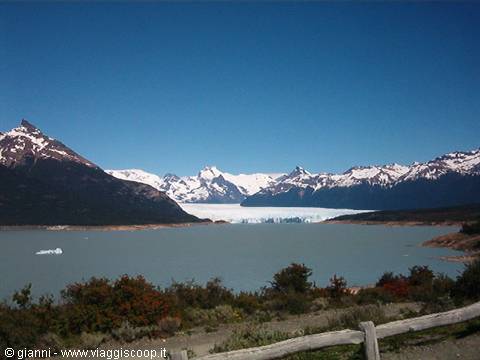
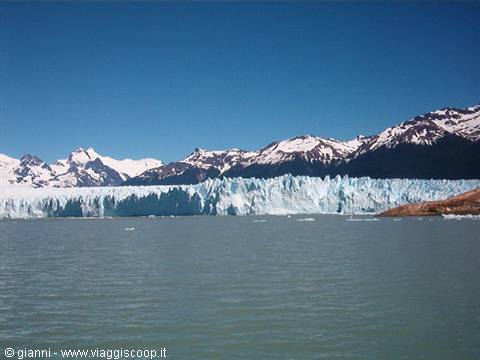
davvero affascinante, il Perito Moreno è incredibile, ma anche Iguassu non scherza
iaiacaputo · 07/09/2005
Gianni, le tue foto della Patagonia mi hanno fatto sognare... credo proprio che sarà una delle prossime mete di viaggio! Credo che ti "disturberò" presto per qualche consiglio in merito! Complimenti!













2 reader comments
davvero affascinante, il Perito Moreno è incredibile, ma anche Iguassu non scherza
Gianni, le tue foto della Patagonia mi hanno fatto sognare... credo proprio che sarà una delle prossime mete di viaggio! Credo che ti "disturberò" presto per qualche consiglio in merito! Complimenti!