--------------------------------------------------------------------------------
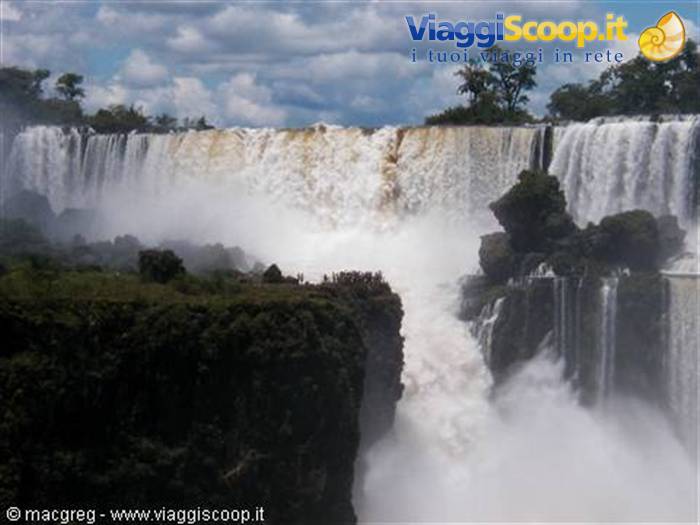
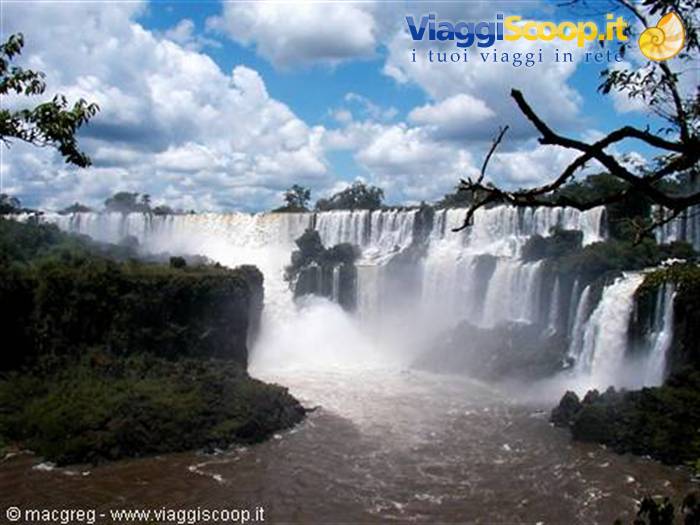
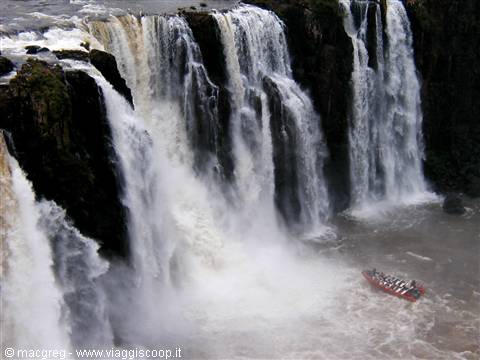
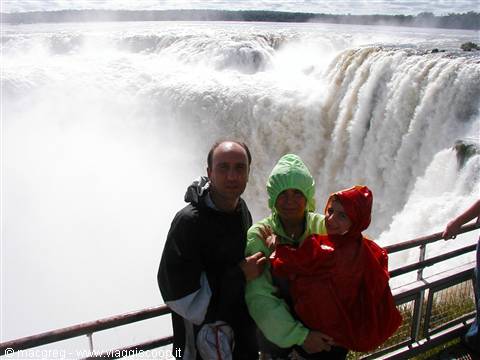
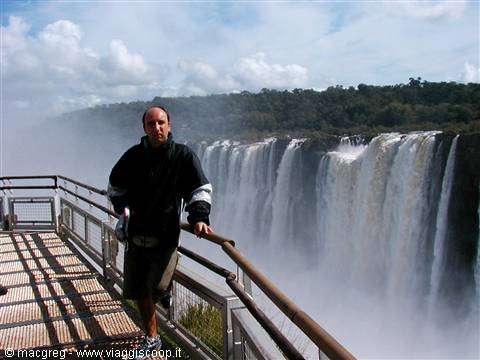
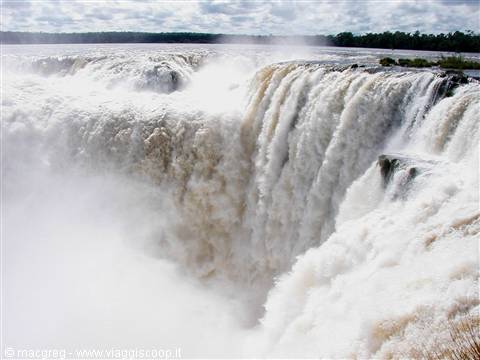
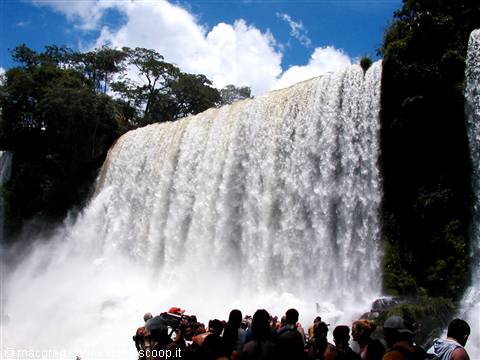
I don't mince words. For those like me who, in their travels, are constantly searching for places where nature exalts itself, arriving at Iguazu gives you the feeling of having reached the end of the line. Impossible to imagine a more imposing, intact, wild nature. The sensations while admiring this wonder are indescribable, no word can pay it proper homage, no photo either. There is no term to describe the roaring thunder of the water, or the gentle sounds of the untouched rainforest, the emotion of walking in an environment that is still pristine. To understand, you need to walk the 10 km of trails that Brazil and Argentina share, offering breathtaking and ever-changing views. Or get soaked at the Garganta del Diablo, the most powerful point of the falls, suspended on the edge where the water reaches its maximum force before plunging into an 80-meter abyss.
And also stroll calmly in the heart of the forest, among toucans and coatis, little animals similar to beavers that have become the mascot of the park.
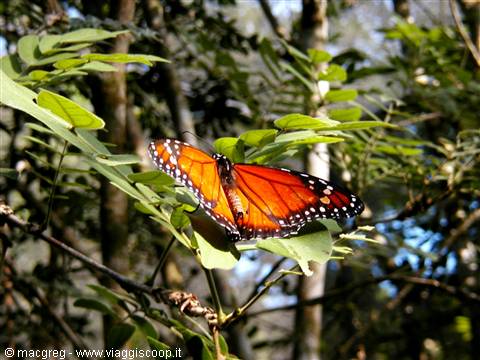
Here Mother Nature has given everything: constant rain to make the environment lush green, a clear sky that enhances the colors as in a painting, an ever-overflowing watercourse that pours all its strength into 80-meter drops, a forest that represents one of the most delicate balances on the planet, a heritage of about 80 species of mammals, 2,000 species of plants, 450 specimens of birds, reptiles and butterflies.
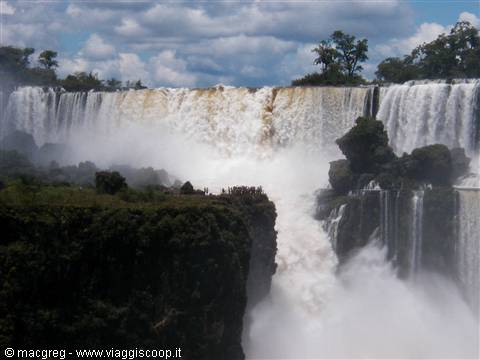
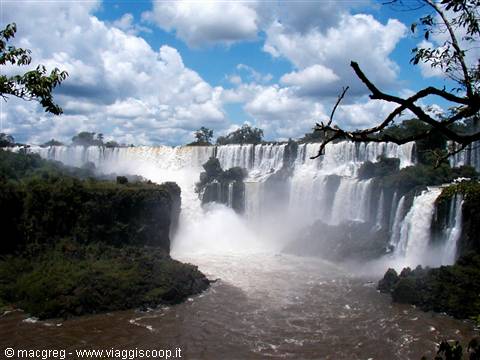
What decrees Iguazu's supremacy over the other waterfalls in the world are the numbers: the Iguazu River flows into the Paraná River forming 275 waterfalls that stretch for 4 km, pouring 1,500 cubic meters of water per second, set within a national park of over 200,000 hectares. To put it briefly, Niagara pales in comparison. And as if that weren't enough, framing the place is one of the most enchanting landscapes imaginable: even arriving by plane you understand the virginity of the place: for half an hour you fly over nothing but forests and rushing watercourses.
For once even man has done his part, respecting this heritage. A national park has been created to safeguard the environment; the nearest city, in fact, Foz do Iguaçu (anonymous), stands at a proper distance (over 20 km). Cars and tourist buses must stop at the edges of the park, little trains and shuttles allow you to reach the falls, the walkways and trails are harmoniously inserted into the landscape without causing disturbance. The resorts, built outside the park, blend perfectly into the environment. The only resort inside the Brazilian park, the inaccessible Tropical due to its costs, is a masterpiece of colonial-style architecture.
Walking the trails is relaxing and exciting at the same time, a continuous succession of breathtaking views from every imaginable perspective: first from afar, then from a few meters away, from above to dominate one of the most majestic landscapes, or from below to get completely soaked in the spray and better appreciate the exhilarating power of the water.
A visit to Iguazu allows you to understand how fantastic nature is, and how much we must all commit, both at the government level and personally, to preserving it.
Given the vastness of the place, a complete visit requires two days, one for the Brazilian side and one for the Argentine side.
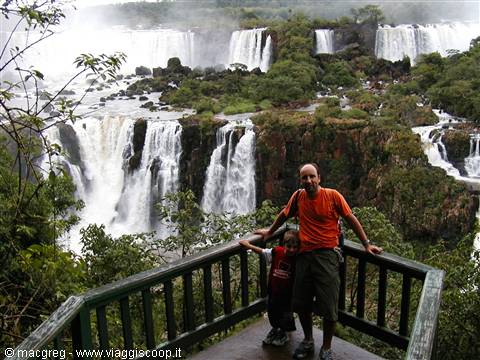
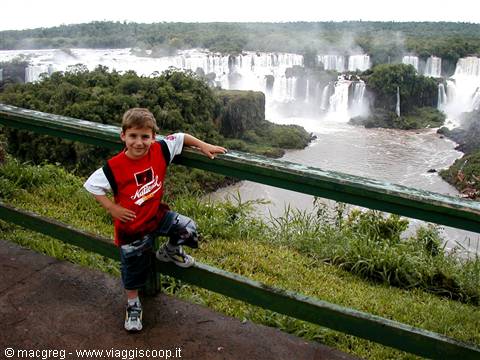
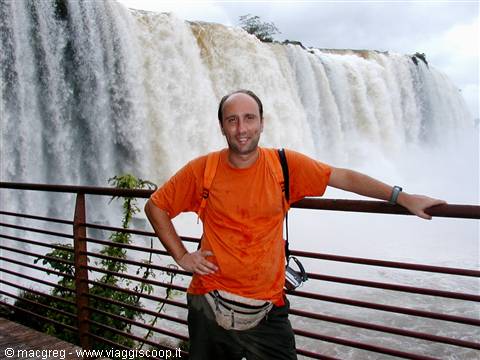
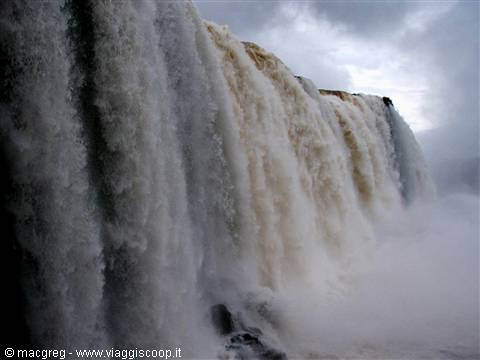
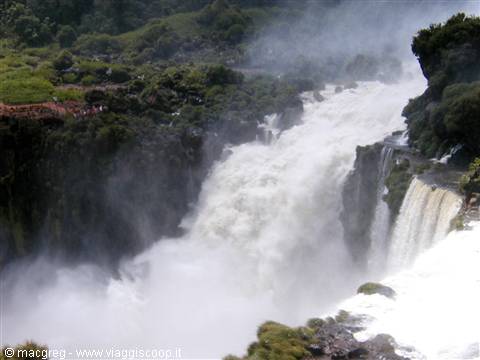
BRAZILIAN SIDE From the park entrance (20 reais - €7.50), a double-decker open shuttle bus covers the 11 km of forest to reach the first part of the falls. Getting off at the Cataratas stop, you tackle a kilometer and a half of trail, almost entirely downhill, that crosses the forest right in front of the outer edge of the falls. At first the viewpoints offer an overall view of a good part of the falls; as you continue, you get closer and closer until you reach the most spectacular point of the Brazilian side, right at the foot of the Floriano fall, a true triumph of water. Putting on raincoats, you walk along a walkway that reaches the heart of the falls, where you find yourself immersed in the spray created by the power of the water.
From here you go back up by means of an elevator carved into the mountain, reaching a stunning panoramic platform that offers an unforgettable view from above of everything you saw before up close. You take the shuttle back to the entrance. Visiting the Brazilian side takes about 3 hours.









2 reader comments
Bello!! Complimenti...sempre gran bei viaggi!!! Iguazu mi manca.....alla fine ci si svacca a rio e finisce li....ma dopo aver visto le tue fotomi sa che l'anno prossimo attacco le cascate al soggiorno ad ipanema! Bella anche tutta la tua famigliola!! Ciao Max
Ciao Alberto! sono spettacolari queste cascate!!!