The story
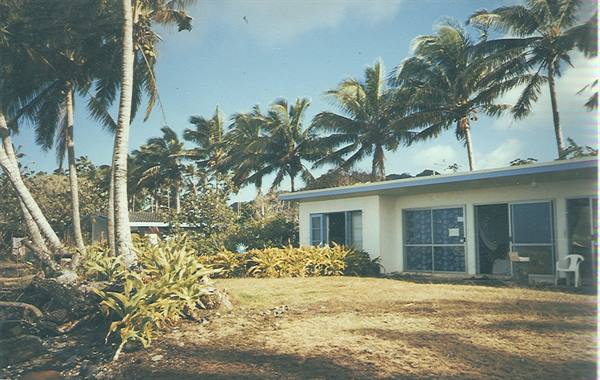
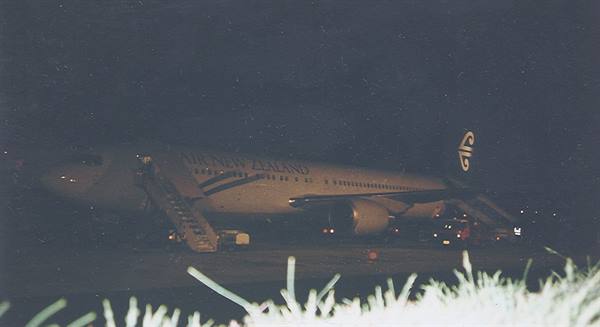
The Cook Islands That landing in the dead of night was really rough; evidently the pilot of the Air New Zealand Boeing 767 hadn't slept well and was a bit tired, and yet visibility is excellent; here in the Pacific there's no fog. In my life, with more than 600 flights to my name, I've been afraid three times because of turbulence, and the worst landings I remember, this is the only one; surely they had the landing gear checked afterwards. Nicola and I have ourselves driven by a pickup to the far side of the island of Rarotonga, to a little house at the edge of the sea, with a drop of three metres from the sea, which shouldn't ever be rough thanks to the coral reef, but a few days later we discover that's not the case. The owner is a gentleman in his sixties who, by profession, climbs barefoot up the palms to make the coconuts fall. Piri Puruto is his name and also the name of the place.
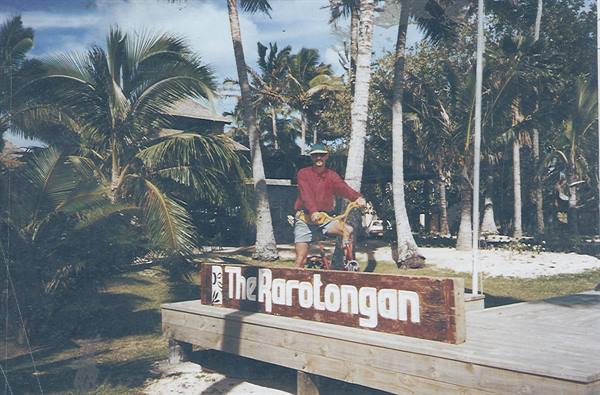
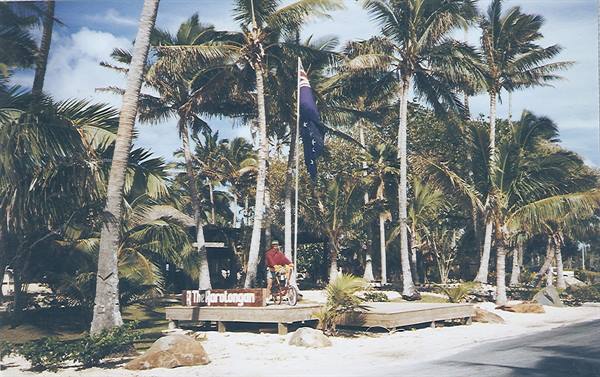
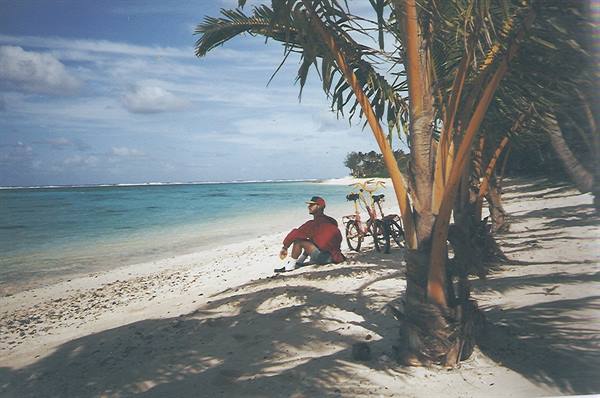
We sleep in the big room where the living room and kitchen are; we're separated from this room by a simple curtain, where our two single beds are. The place is quiet; only four other rooms make up that hostel. Nicola and I assemble our two Graziella bicycles and solve the problem of how to get around the island. On top of that, they come in handy for going to Avarua, the capital, about ten km away. Every time we pass an apartment complex built in the greenery; the works were stopped years ago and you can see it from the vegetation that has invaded the buildings. A pity they didn't finish it, we say to each other, it would have become a nice resort. We ask and they tell us they halted the works when they found out it was the Italian mafia building it. Yes, even here on the other side of the universe we have to make ourselves known. What a shame.
In all the trips I've made, we're recognised by strange names, like Maradona, Spaghetti, Pizza, and the name Mafia is never missing. On the first day we pay a visit to Avarua to see how to organise our week; I send the postcard to Gilberto of the driving school in Casalmaggiore, and Nicola has a film roll developed, which after an hour is ready. Many of the Cook men wear skirts like the women, a custom we find on some islands around here; they do the same in Samoa too. We immediately discover that this is another world: no crime, no thefts, no rapes, no vandalism; nothing of the kind ever happens here. People greet us when we pass on our bicycles; they're very Catholic and all go to church on Sunday.
I stopped too and went into church, and everyone in the packed church noticed me; at the moment of share a sign of peace, four or five came over to me, standing near the exit, to shake my hand. Here there's a local radio station and a local newspaper; joking, Nicola and I said that, given the shortage of news, they'll have written an article about us too, Italians land on the island and pedal around it, or they said it on the radio. Just think, they were debating whether to impound the car of a local citizen because he hadn't paid the road tax, and then how does he get to work without a car, he has a family to support, and without a car it's too far, he'd lose his job, and he has little money to pay the tax and a large family etc etc. Well, these, to give an example, are the things that happen in this tranquil archipelago of the Cook Islands, with a strong influence from New Zealand.
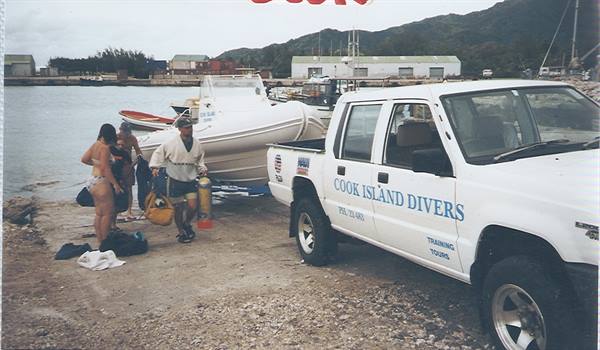
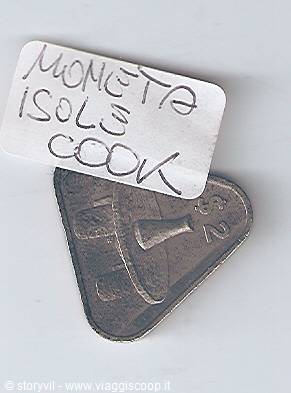
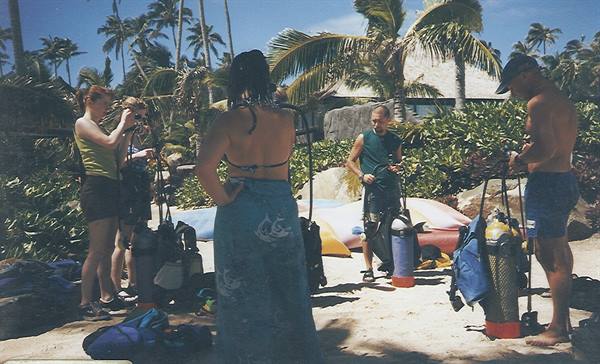
Here the New Zealand dollar is worth the same as the Cook Islands dollar, and at the supermarket you pay with both currencies. The Cook Islands dollar in iron, though, is snapped up by collectors, because it's triangular and not round. Number plates are collected too; I bought one at the registration office, as if I had a car, to take home to Vanni, who sticks them on the back of his Ducato van. Here they run diving courses in a week, and I invite Nicola to take advantage of the chance, and he accepts. So every day we go by bike to the dive centre, not far from Piri Puruto, to do the theory on the blackboard outdoors under a canopy that shelters from the sun. Since I'm already certified, I give Nicola a hand, especially to translate the English the teacher speaks. In the afternoon, a couple of hours of practice with the tanks in the pool of a four-star hotel in the area.
And day after day the time comes to dive in the sea. I stay on the dinghy and film Nicola as he goes down and grows more and more confident with the equipment and the water. One day we decide to cycle all the way around the island of Rarotonga, and we see that it's inhabited with little houses here and there around the whole circumference. Here the beat-up cars that no longer run are kept rotting in the garden at home; they say they're still useful for spare parts, and also because on the island there's no scrapyard or breaker's. The course ends and Nicola passes; now he has a licence that lasts a lifetime. So we decide to fly to the atoll of Aitutaki, where we stay two days, on a 15-seat Dornier twin-prop of Air Rarotonga. Here too we sleep in a very humble little house, and the owner immediately puts a necklace of fresh flowers around our necks as a welcome.
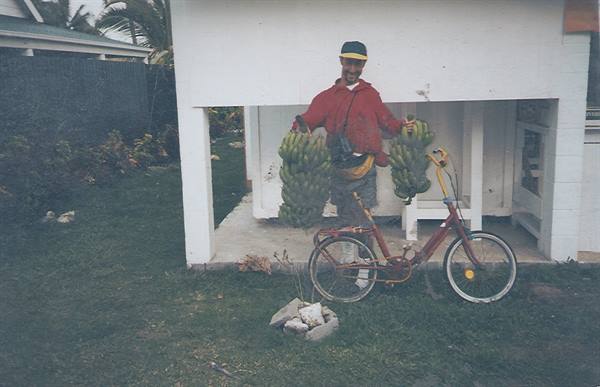
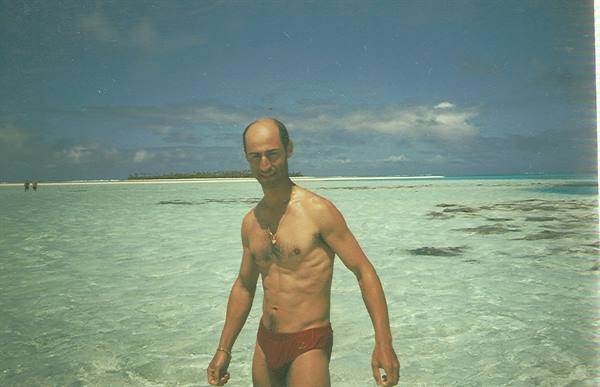
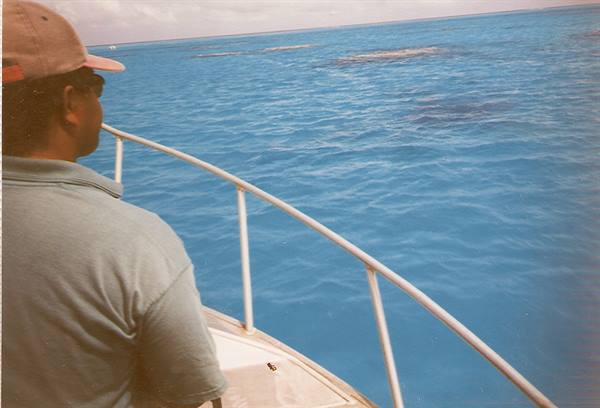
The island has only one policeman and one road. But here's a story to tell: at the little hut shop of the greengrocer, not having change to give me, the owner made me pay, in the middle of the Pacific Ocean, for a banana with a credit card, and it worked too. Just to make a sale, look what they'll do. The next day a speedboat takes us on a tour of the lagoon, snorkelling in a paradise of warm water full of corals and aquarium fish, then to a little island for lunch made by the locals, naturally based on fruit and fish. Then out to sea again, with a splendid sun. And there who do I find? Two hostesses and two stewards of Alitalia on holiday. In the evening we return from this memorable day by speedboat, and then by bus to the airport for the flight back to Avarua, where our bikes were waiting for us at the airport.
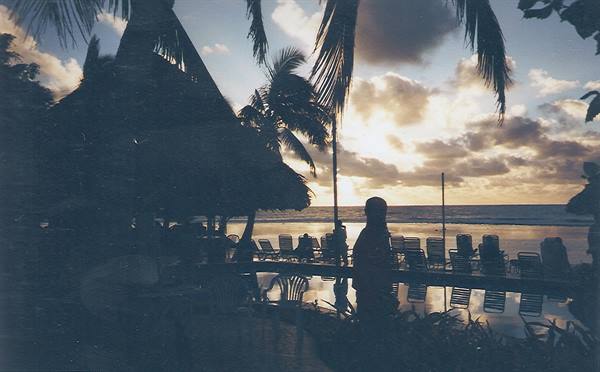
That evening the sea is stormy and with the high tide the waves reach right under our house at Piri Puruto; Nicola and I go to sleep uneasy that night, a mini tsunami, on the very last evening. We take off with the Boeing 767 that evening; thank goodness take-off is always gentle. Bye bye
The journey's photographs
17 photographs · click to open them full screen





0 reader comments