The story
On the uniqueness of Sydney I had thought when I happened to read in a newspaper that two whales had made their way into the city's bay, even reaching the Harbour Bridge. In what other metropolis in the world can you witness such an unusual spectacle? Here's one of the many examples of why Sydney can proudly boast of being a metropolis unique of its kind. That might be enough, but it isn't, because the Australian mecca is today a trendy, lifestyle city, ever more cosmopolitan. The Sydneysiders, the citizens of Sydney, know how to enjoy life and you have to ask yourself: "How could you not, with sunshine all year round, amid golden beaches and beauties in bikinis?" Tourists have understood the festive air that hovers over this unequalled capital and every year more and more of them come here from every part of the world.
We admired it from the 305 metres of the Sydney Tower, from sea level riding the waves of the bay on which it rests, but above all by walking through its neighbourhoods: Darling Harbour, The Rocks, Circular Quay and Kings Cross. Only by seeing it like this, from different vantage points, can you form an idea of Australia's most famous city, not by chance the host of the 2000 Australian Olympics. Already from the plane window I identify the two icons of the capital of New South Wales, the "Opera House" and the "Harbour Bridge", but what strikes me most is the city's bay. The sea pushes inland for kilometres and the water seeps in everywhere, so that from the plane Sydney looks like a flooded city.
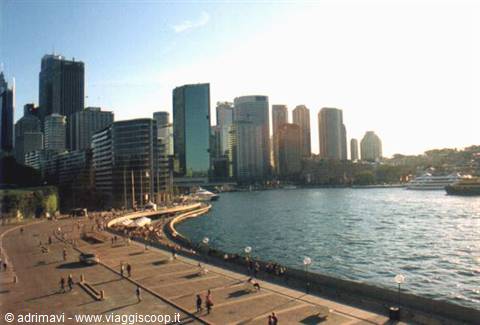
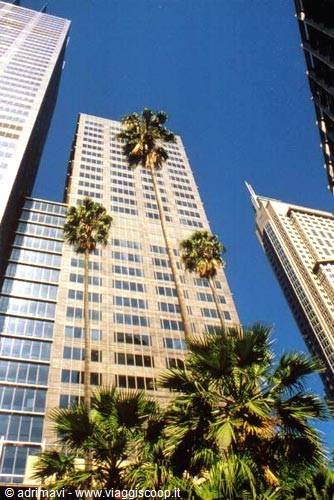
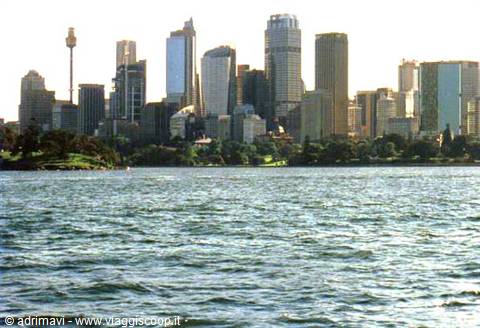
We start discovering Sydney from Hyde Park, where the majestic Anglican church of St Mary's stands, of interest not only for its size but also for the strong architectural contrast with the futuristic structures nearby. Crossing the park's gardens we follow Macquarie Street until we reach Town Hall, that is, the town hall. From here we continue to the business district, where we walk with our heads up, fascinated by the modern skyscrapers. Turning around with our gaze towards the sky, turn after turn, we reach Circular Quay. From one of the piers of Circular Quay we board the ferry for the suburb of South Heads for a tour of the bay. We sail always heading east on what can be described as Sydney's underground, where instead of trains and tracks there are ferries and the sea.
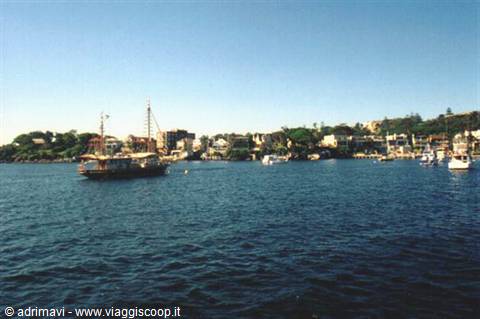
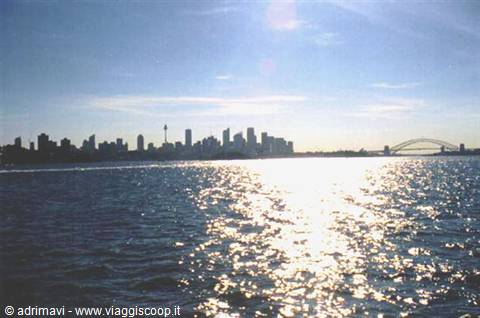
The ferries go up and down continuously, stopping at various stations that aren't gloomy underground tunnels but quiet sandy coves where people sunbathe or come for a picnic by the sea and where hundreds of sailboats moor, ready to head out to the open sea. The sea water is clear and if only we had swimsuits and towels we could stop at any of the bays for a swim. Of Sydney's more than 30 beaches, Bondi is certainly the trendiest, but even the smaller, lesser-known ones inside the bay don't disappoint. Populated with fashionable restaurants, dream villas and the yachts of wealthy gentlemen, they look like little holiday towns but are in fact the suburbs of Sydney. Here, far from the centre, the horizon of the bay is drawn by the profiles of the Skyline, the Harbour Bridge and the Opera House, which looks like a great ship with white sails unfurled to the wind.
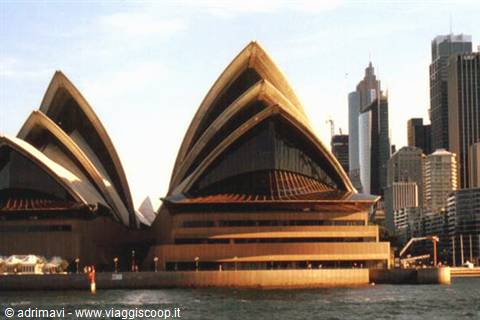
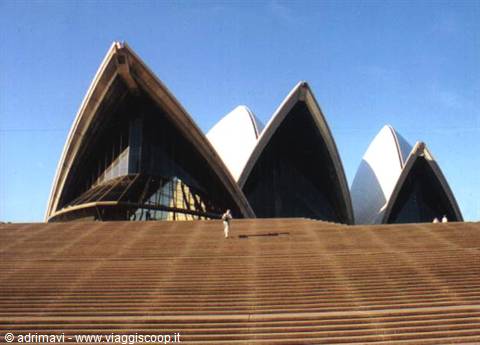
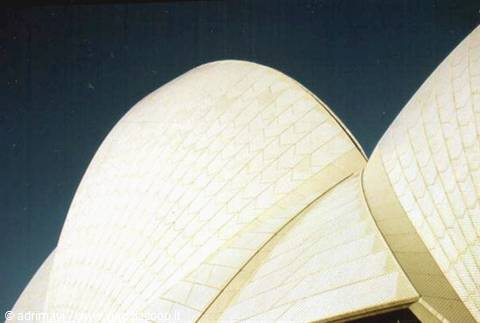
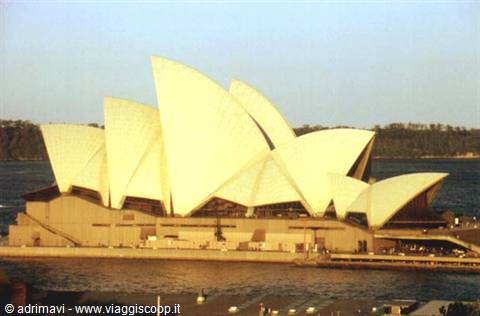
Now that we're beneath the Opera House, Sydney's pride, it's possible to make out the millions of white ceramic tiles it's covered with. More than 230 architects took part in the design, but in the end the Dane Jorn Utzon won. Finished only 32 years ago, it cost thirteen times the original budget, but it was worth it, since today the building is, together with Ayers Rock, the symbol of all Australia. Standing 67 metres tall, it contains 2,697 seats and has the peculiarity of having the orchestra placed at the lowest point of the theatre, several metres below sea level. From the Opera we head towards the famous bridge through the Rocks district, originally a squalid den of convicts, sailors and prostitutes, today a tourist village made up of narrow cobbled streets, colonial buildings, souvenir shops and good restaurants.
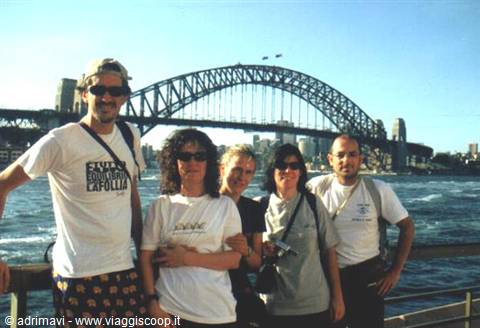
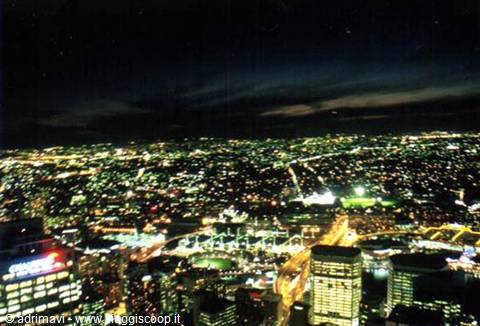
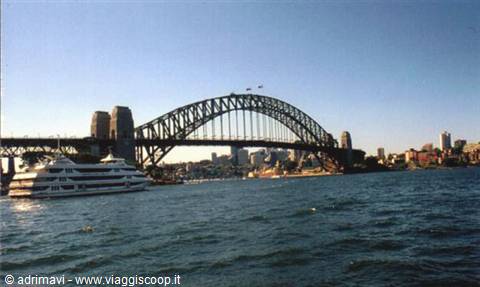
The Harbour Bridge, the grand bridge connecting the shores of the bay, is affectionately called "coathanger" by the citizens because it resembles, indeed, a huge coat hanger. At sunset we walk onto the bridge, reaching the south-eastern pavilion. This is the pedestrian side and many people go along it, ordinary pedestrians and plenty of sportspeople, who having taken off their office clothes leave work in tracksuits to go home and keep fit. In fact, the bridge connects the business district with the centre. Once at the sturdy pylon we stop for the ritual photos of the Opera House and the Skyline. We cross the big highways, busy with cars at this hour, but traffic is nonetheless orderly and you rarely hear horns sounding. At dusk we go up the Sydney Tower. With a fast lift we find ourselves as if by magic in the centre of an incredible panoramic sunset open to 360°.
From its 305 metres the slender skyscraper is the tallest building in the whole continent. From the terrace you can clearly make out, once again, the city's main attractions. The garish lights of Darling Harbour, the Harbour Bridge sharply defined by the lights it's decorated with and the brightly lit green glow of the Opera House. To the west, if night hadn't already fallen, you'd see the profiles of the Blue Mountains. By the time we come down it's evening; meanwhile the streets have emptied, a light cold wind has risen. We follow the characteristic monorail that leads us to Darling, arriving at Pyrmont Bridge. Since everything is closed, despite the hour not yet being late, we head back towards the hotel. We end up finding ourselves in the only place where there seems to be a bit of life and having something.
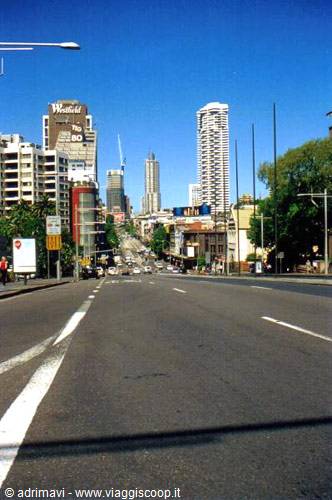
On Darlinghurst Road we dine in a place run by a Polish gentleman with whom we strike up a conversation about our beloved Europe. Following his precious directions we reach Oxford Street, climbing up Darlinghurst Road. On these streets the city's dissolute nightlife takes place. Strip clubs and nightclubs sit alongside refined restaurants and fashion shops; the people who frequent them all have a single aim: the pursuit of fun. We walk down first one side and then the other of Oxford Street, coming across, here and there, venues reserved for homosexuals, pubs where local bands play and trendy cafés. The watchword is to wander from one place to another. To be honest many places are closed, since it's Monday evening; even so there's enough movement to realise the unbridled character that snakes through.
We meet eccentrically dressed types, hippies, businessmen, a concentration of representatives of the whole human race. Finally, well past midnight, tired, after having walked far and wide all day, we find along the pavements of William Street prostitutes and transvestites waiting for their clients.
Sydney has turned out to be a metropolis unique of its kind. Where else do you find futuristic skyscrapers and immaculate sandy beaches side by side? But more than anything, in no other city in the world have I found so much light-heartedness and joy of living. In Sydney, Australia's most electrifying city, people are fatalists, optimists and happier.
The journey's photographs
14 photographs · click to open them full screen

0 reader comments