Day 118 Sep 2003
Departure!! Flight Bologna, Frankfurt, Singapore, Perth We left on Thursday at 7:00 PM from Bologna and arrived in Perth on Saturday at 00:15 - In total about 18 and a half hours of actual flight.
Wonderful trip!! A detailed description would take a very long time. I will therefore limit myself to giving the itinerary and a few notes, and I remain available to give further information to anyone interested. All the prices mentioned are for two people + the car
Departure!! Flight Bologna, Frankfurt, Singapore, Perth We left on Thursday at 7:00 PM from Bologna and arrived in Perth on Saturday at 00:15 - In total about 18 and a half hours of actual flight.
In flight
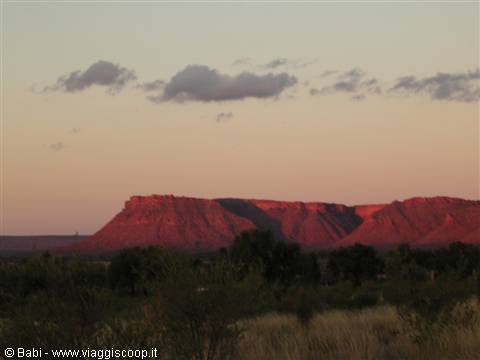
As soon as we arrived at the airport we picked up the car we had booked from Italy via the internet and headed to the Ascot Inn, a hotel located a short distance from the Airport (also booked via the internet). After a good rest, considering the journey we had behind us, we headed north. Along the way we visited the Pinnacles Desert AU$ 9 (see photo 1). From Cervantes heading north there is a newly built road (not yet marked on many guides) that follows a route parallel to Hwy 1, but closer to the coast. Overnight stay at a campsite on the shores of the ocean (AU$ 18) and dinner at a restaurant not far away (AU$ 37.30). We had brought the igloo tent from Italy.
We continue further north to reach the legendary Shark Bay. Many stops along the way until we arrive at Hamelin Pool and Denham. We arrive in a crazy storm and it's impossible to sleep in a tent. We opt for a bungalow equipped with a kitchen (AU$ 60).
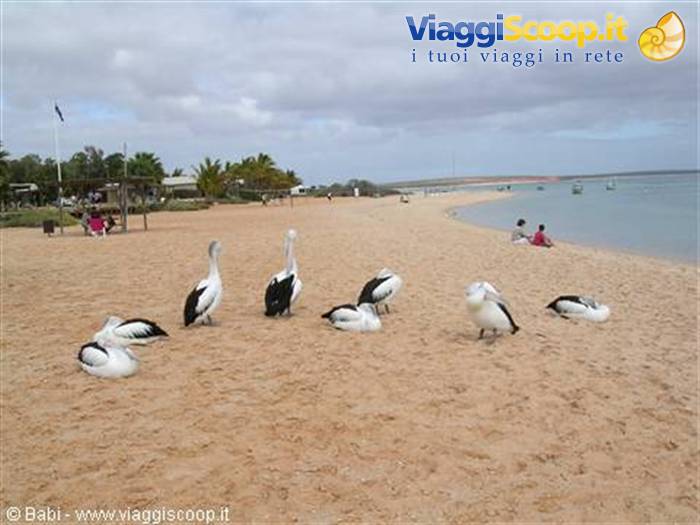
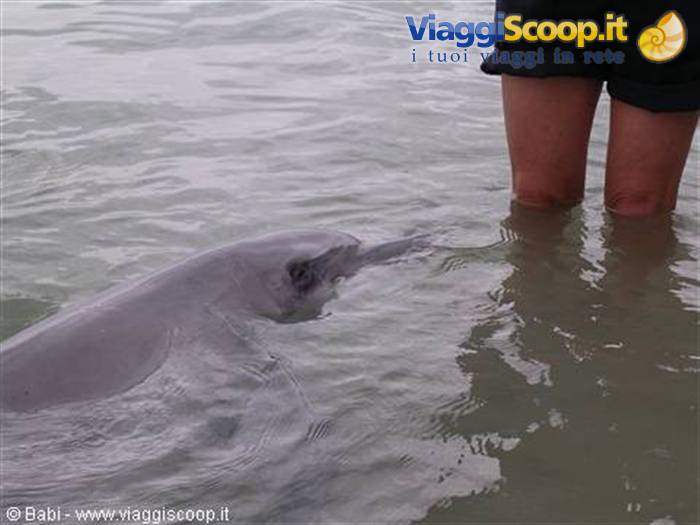
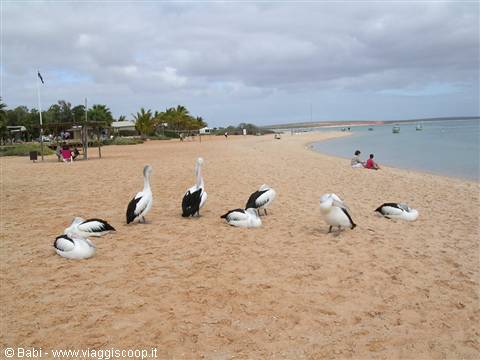
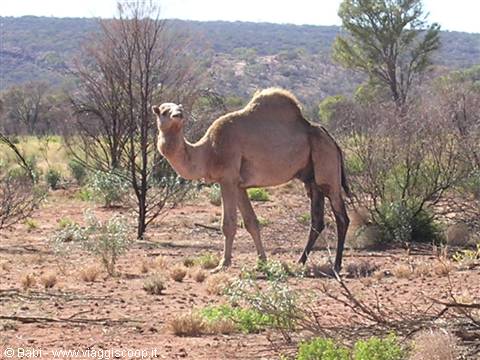
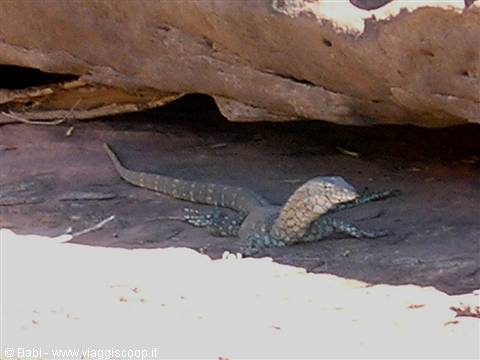
From Denham to Monkey Mia it's only 26 km. Once there we paid the entrance fee (AU$ 12) and left the car. There's a beautiful beach (see photo 2), a visitor centre, a campsite and a restaurant. Several times during the day the dolphins come to shore (see photo 3). It's an incredible experience. You go into the water up to your knees and there are a couple of rangers giving explanations. You must absolutely not touch them because humans can transmit diseases. In the afternoon we treated ourselves to a catamaran excursion (AU$ 108) in search of dugongs. At sunset we took a walk along the beach and on the dunes behind it, which are fire-red. Dinner at the campsite restaurant (AU$ 63.70) and overnight stay (AU$ 17.50).
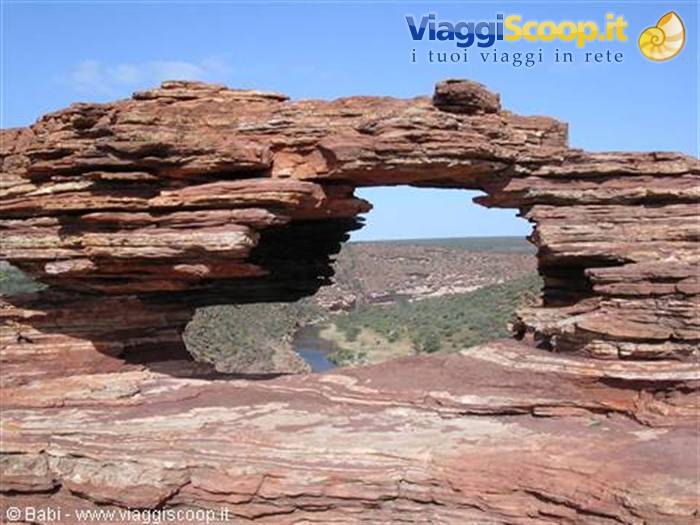
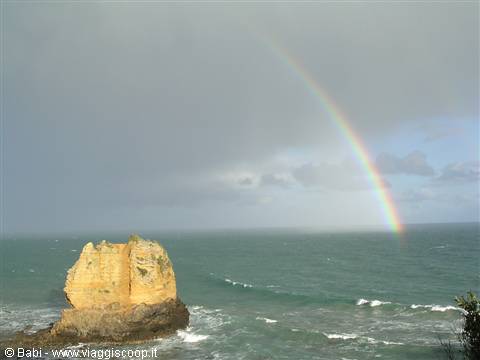
We visited the Shark Bay area: Little Lagoon, the very white Shell Beach made up of small shells, the Eagle Bluff lookout which offers extraordinary views but is always battered by the wind (I had to hold on to the fence because I felt I was being blown away). We head back south along Hwy 1 and arrive at Kalbarri where we visit Kalbarri National Park (AU$ 9). The place is very beautiful, there are gorges, canyons and beautiful views (see photo 4), you have to take short walks to reach the lookouts, but it's worth it. The only downside is the flies: there are billions of them, they try to get into your nose, mouth, ears, and they land everywhere. We armed ourselves with a leafy twig to try to shoo them away somehow and put a handkerchief on our faces, leaving only our eyes uncovered. Dinner (AU$ 37.85) in the lovely little town of Kalbarri and overnight stay at the campsite (AU$ 17).
This morning we visit the rugged and jagged coastline south of Kalbarri. Along the road there are signs indicating the scenic spots. We stop at all of them and decide to attempt a walk following the trail signs. It was rather demanding because the path was rough, so much so that at a certain point I thought about turning back. However, we decided to continue, and when we returned to the asphalt road, in the parking lot where we had left the car, our hearts skipped a beat. The car was gone!! Fortunately that wasn't the case. As we walked, we had reached the next scenic viewpoint where there was another parking lot exactly the same as ours. We walked back along the highway until we retrieved our car. In the afternoon we head back toward Perth, where we arrive after dark. We have dinner and stay overnight at the Ascot Inn (AU$ 80).
This morning we have a 07:45 flight to Darwin. The kilometers covered in Western Australia were 1991. After landing in Darwin we stock up on materials at the very well-stocked and efficient Tourism office and set off to pick up the car. As soon as the airport doors open we are left breathless. The heat is astonishing, but it's above all the humidity that cuts your legs out from under you. We will later realize, during our travels, that we'll often have to reckon with these differences in temperature and climate. Completely rebuilt after Cyclone Tracy in 1974, Darwin is a very pretty and pleasant little town overlooking a lovely bay. In the afternoon we try to take a walk, but the heat is unbearable and gives no respite. So we go back to the hotel and take the car. We head to East Point Reserve where we see wallabies and brightly colored parrots.
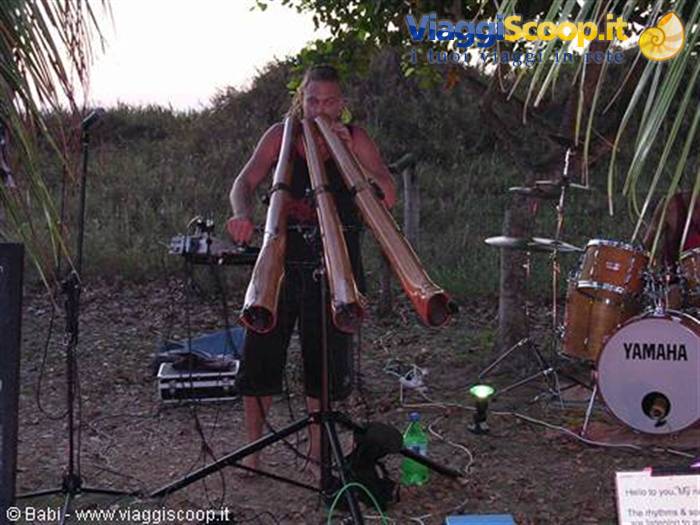
Today is Thursday and we know that at Mindil Beach there will be the Sunset Market. We arrive at sunset time and witness a wonderful spectacle with the sun setting in the bay, coloring the sky in every shade of red. There are so many people: families with picnic tables having dinner and enjoying the cool of the evening, stalls displaying snakes with the chance to have your photo taken with reptiles around your neck, fortune tellers, sellers of Australian hats, kangaroo skins, crocodile products, etc. But above all there are food vendors of every ethnicity: Japanese, Chinese, Thai, Greek, Korean, Indonesian, it's a mix of steam, smells and colors. The atmosphere is beautiful and relaxed, there are also street performers like didgeridoo players (see photo 5) and a flutist who enchants me. We stay overnight at the Value Inn (AU$ 69), an economical, central and functional option.
At the entrance there's a computer where you can book directly at any hour of the day or night without having to wait for the receptionist. We decide to go ahead and book the room for our last night in Darwin before the next transfer flight.
This morning we leave for Kakadu National Park. The road is excellent and smooth and we decide to take part in the 9 o'clock "croc jumping" excursion (AU$ 50). To reach the jetty we drive about 3 km on an unpaved road. Once there we take the opportunity to have breakfast even though I'm not very calm and I look around cautiously. In a display case there are snakes that the staff take out for the ritual photos and the water is populated by the dreaded "saltie croc". I don't like, in fact I detest, all reptiles and I don't feel very at ease. We set sail. The place is beautiful: the river, a yellow/reddish colour, flows calmly, the vegetation is thick and lush, there are lots of birds singing. Here come the crocodiles....from the edge of the boat our guide dangles a line with a piece of meat attached that is dragged along the surface of the water.
When the "peaceful" crocodiles approach to take the meat, the line is raised and the crocodile is forced to stretch and come out of the water to grab the meat. There are also many fishing eagles that snatch in flight, with their talons, the pieces of meat thrown to them. Driving back along the dirt road we stop at the Window on the Wetlands, an interesting visitor centre that offers material in Italian and a beautiful landscape over the surrounding area. We arrive at Kakadu National Park (entrance AU$ 32.50). The distances inside the park are long. From the point where the Arnhem Highway (one of the main roads of Kakadu) branches off from the Stuart Highway (the road that goes from Darwin southward) to the Park entrance there are 120 km, and from the entrance to Jabiru, where there are petrol, a supermarket, the post office, the Bank, etc, there are another 100 km.
Once inside the Park our first stop is Mamukala where thousands (and I'm not exaggerating) of ducks squawk and drink; we watch them from a covered and camouflaged observation point, they are so numerous that the noise is deafening and you can barely see the water. Next stop Ubirr which is reached with a 40 km detour from the Arnhem Highway. We walk a trail of about 1.5 km to see the extraordinary examples of rock art, the most famous of which depicts the rainbow serpent. We are truly exhausted and overheated, the humidity is very high as is the heat and on top of that the usual flies give us no respite. We get back in the car and retracing the same road we reach the Kakadu Caravan Park (AU$ 25). We set up our little tent, have a nice shower, relax a bit and we're ready for dinner (AU$ 48).
After dinner the campsite has organised a nice slide show on the flora and fauna of the park with the rangers explaining the characteristics of the various animals and answering the questions of those present.
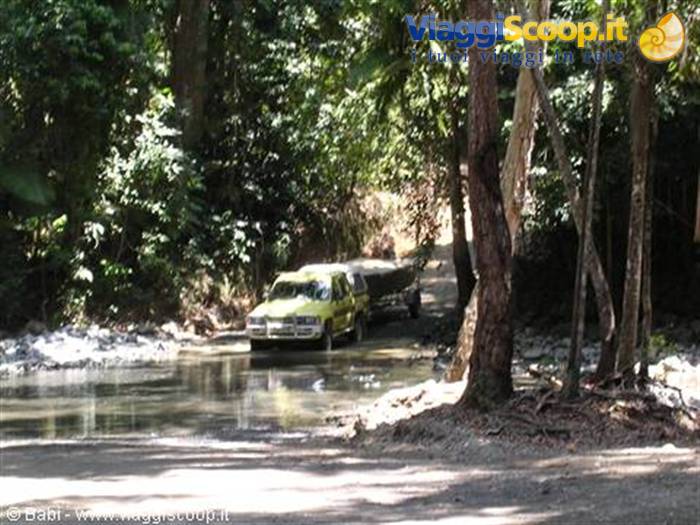
This morning we visit the Bowali Visitor Centre, where we also have breakfast. Next stop, Nourlangie Rock where, walking a trail of about 2 km, you can admire rock paintings, the famous sandstone cliff, caves, natural galleries and panoramic points. We then stop at Anbangbang where we take a walk of about 2 km around a billabong. I'm always a bit uneasy, there's no one around and I'm always afraid of coming face to face with some crocodile or snake. I'd like to point out that these aren't my paranoias, the thing is very possible and the fact of being just the two of us in the middle of nowhere makes me feel very vulnerable. The stops follow one after another until we reach the Gagadju campsite (AU$ 15). After setting up the tent we reach the bar where an important rugby play-off match is showing on the mega-screen.
The beer flows freely and the cheering is very heated, every try by one team or the other translates into yells and taunts. We then decide to take a dip in the pool, after all it's a holiday and we have to have some moments of relaxation too!! It feels really good and we can't believe we can counter the incredible heat. We have dinner at the campsite bistro (AU$ 26) and go to bed very early. While we reach the tent with our torch, (there certainly aren't any tree-lined and lit paths!) we see a dingo wandering along the edges of the fence.
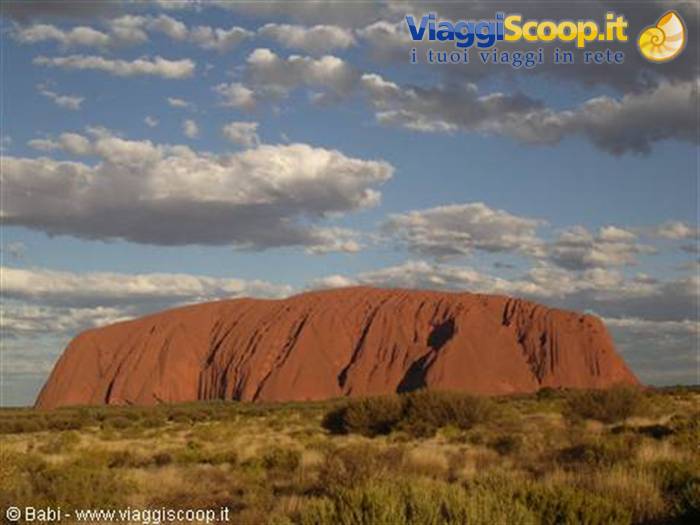
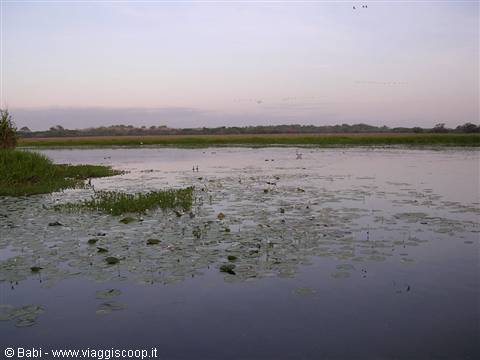
We wake up before 6. It's starting to get light. This morning the Yellow River excursion is scheduled (AU$ 80) booked the day before at the Bowali Visitor Centre. A minibus takes us from the campsite to the jetty which is just a few minutes away and at 06.45 we set sail. The landscape is extraordinary (see photo 6): a very light haze veils the sun and the colours are incredible. We see many birds including the kingfisher which I thought was big and instead is tiny, a snake coiled around a tree branch, crocodiles, cranes, etc. The rangers are really good, they manage to spot everything and promptly point it out. On our return we take down the tent and set off south until we reach the Stuart Highway again at Pine Creek, about 250 km south of Darwin. We were very undecided about visiting Katherine Gorge National Park, but in the end we opted for Litchfield Nat.Park.
We take a look at the little town of Pine Creek where there are a couple of old locomotives and set off again. Next stop the Litchfield Tourist & Van Park (AU$ 12) the last campsite before the park entrance (only 4 km away). It's not great, in fact, but we decide to stop anyway and set up our little tent. We spend the rest of the afternoon in the pool which we can use as we please because there's no one else. We have dinner at the campsite (AU$ 18)
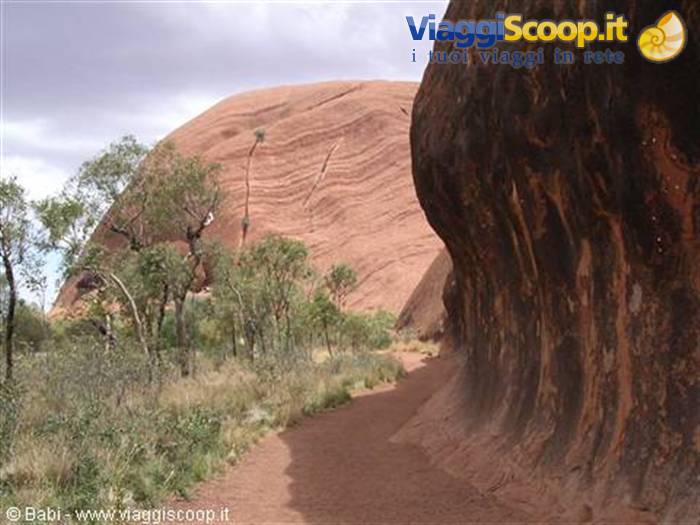
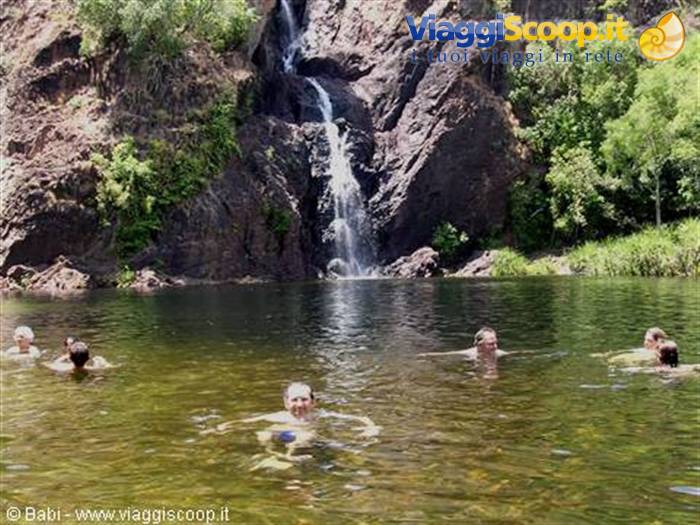
The first stop inside the Park is at the Florence Falls. There's a viewpoint not far from the car park, but we decide to go down along the trail and we reach the stunning natural pool that is fed by the waterfalls. There are some families with children swimming and, aided by the usual very hot day, we decide to do it too. Reluctantly we climb back up the trail and return to the car to stop at the next waterfall, the Tolmer Falls. Our next stop is the Wangi Falls. This place is the most crowded also because the waterfalls are really close to the car park. We dive in here too and wouldn't want to get out of the water anymore (see photo 7). During the rainy season swimming is forbidden because of the crocodiles, but in this period it is allowed, even though there's still no absolute certainty that there aren't any.
In fact even during the dry season the rangers check the area and, upon any sighting, categorically forbid swimming. We treat ourselves to a snack at the kiosk by the waterfalls and set off again. There are two possibilities for returning to Darwin: the first is to retrace the road taken inside the park until reaching the Stuart Highway, the second, shorter, is to continue north inside the park so as to reach the Stuart Highway near Darwin. We opt for the second option even though with many doubts since we know we'll have to drive on a dirt road and we don't know its conditions. The road isn't the best, in fact, the surface is gravelly and little travelled, but with caution we arrive safe and sound at the end. We'd like to stop at the Territory Wildlife Park which seems worth a visit, but it's starting to get a bit late and you'd need to spend at least a few hours inside.
We then decide to stop at the Berry Springs Nature Park where we find natural pools fed by springs, palms and a nice walk through the rainforest. It's really time to return to Darwin. We go back to the Value Inn and have dinner in a nice restaurant in the centre (AU$ 58.30) - The total km travelled in the Northern Territory are 1046
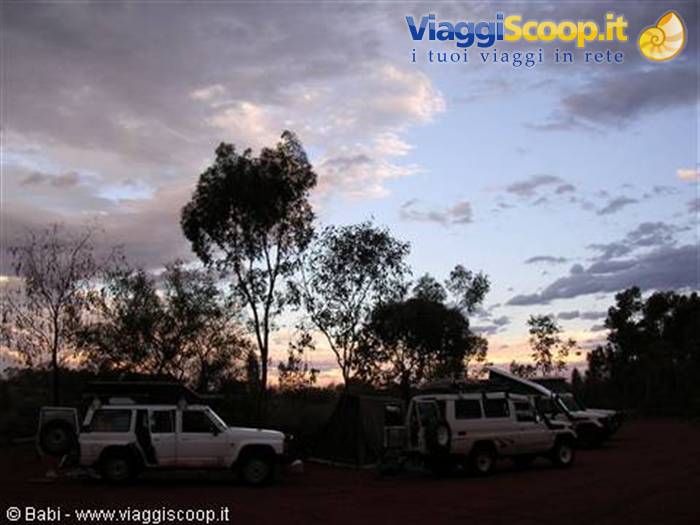
This morning an early rise to catch the 06.00 flight to Cairns. Once we arrive at our destination we take a taxi (AU$ 17) that takes us to the jetty. We've decided to treat ourselves to a luxury and spend a night on Green Island (booked via the internet from Italy), a very small coral island located 27 km off Cairns. We board the Great Adventures catamaran and in about half an hour we arrive at our destination. The island is very small, the entire perimeter can be walked around on foot in no time at all. Once we've taken possession of our wonderful room we immediately treat ourselves to a swim. The water isn't very warm, at least for my tastes, and so I decide on a walk along the beach.
In the afternoon we take advantage of a guided walk that explains the island's vegetation, the various types of trees and how the fruits and leaves were once used, and we visit a fixed station anchored near the coral reef to admire, through the portholes, the numerous species of colourful fish that inhabit these seas. Around 16.00 the island empties of the many tourists who reach it from Cairns just for a day and thus becomes much more fascinating. From the beach we enjoy a breathtaking sunset admiring a sky of a thousand colours. We have dinner based on very fresh fish at the resort's restaurant and after dinner we take a walk along the beach together with a guide to look for ghost crabs, little transparent crabs that only come out at night.
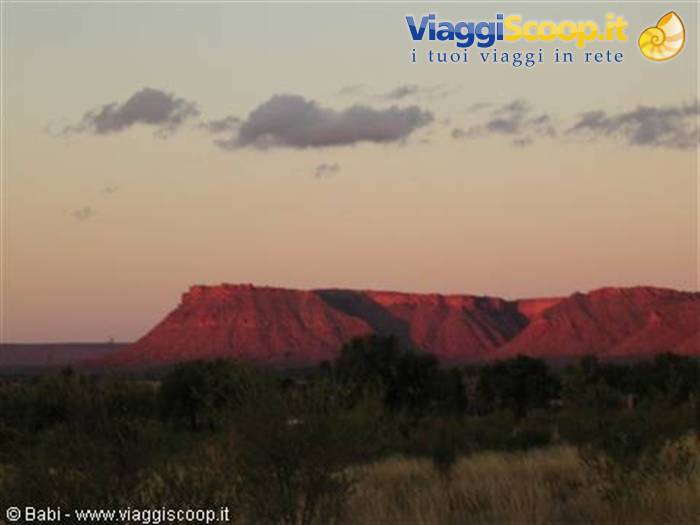
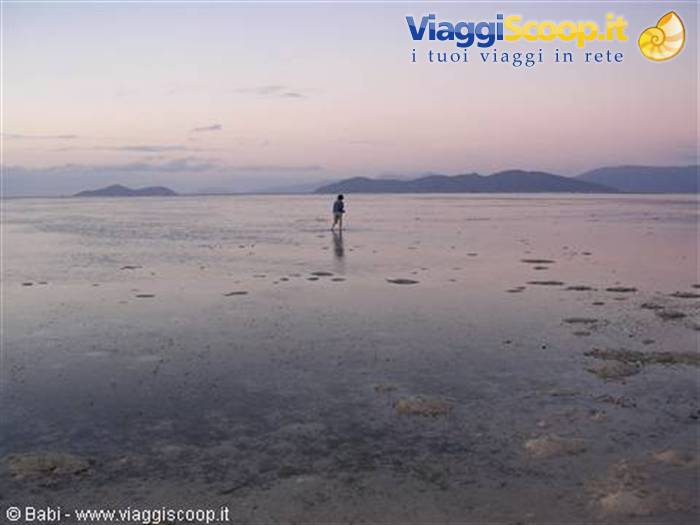
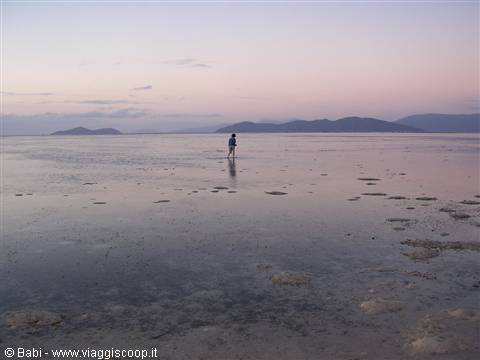
We set the alarm very early to enjoy the sunrise. We head east immediately, there's already a lot of light and we fear it's late. The horizon is covered by clouds that have a golden outline, the sun is down there but we can't see the moment when it rises from the sea. In any case the sky is stunning, they look like brushstrokes of colour and the tide is low so we decide on a walk very far out (see photo 8). I see starfish, anemones, sea snakes, little fish, a whole world we are absolutely not used to. We are the first to have breakfast, naturally abundant as usual in all Anglo-Saxon countries. We then take the glass-bottomed boat to see the underwater world off the island. Unfortunately the day passes quickly and at 16.30 we take the last catamaran to return to Cairns.
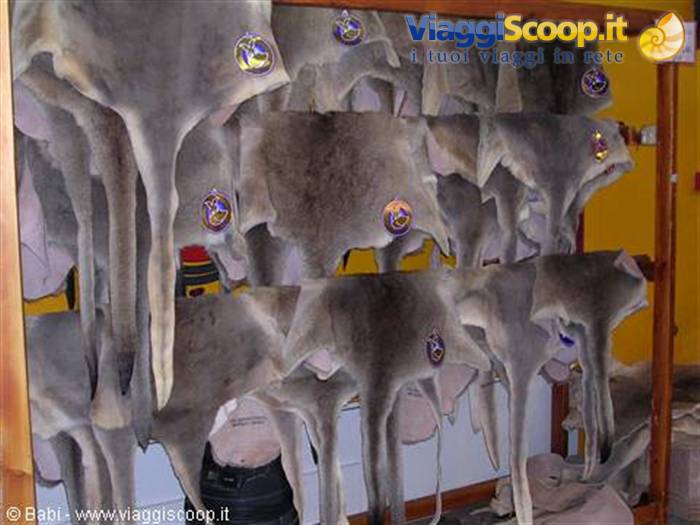
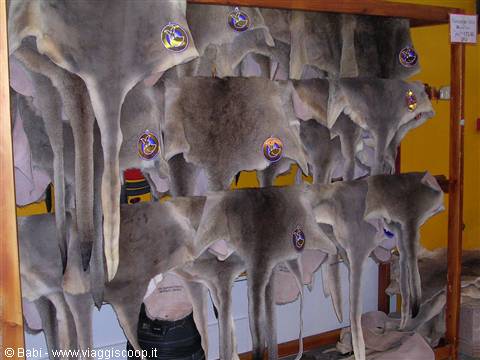
We start looking for a Hotel and decide on the Lake Central Lodge (AU$ 88) very close to the car rental, the restaurants and the seafront promenade. We visit a gallery with typical little shops that sell Aboriginal art, kangaroo skins (see photo 9) and didgeridoos, take a nice walk along the seafront, have dinner in a characteristic Greek restaurant (AU$ 60) and return to the hotel for a well-deserved rest.
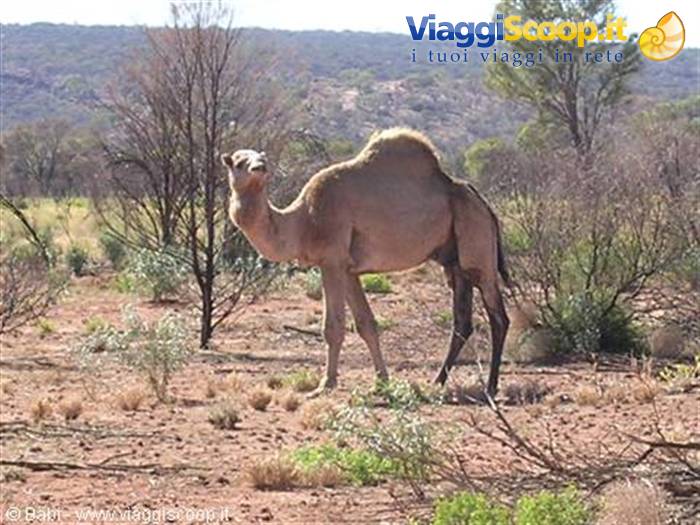
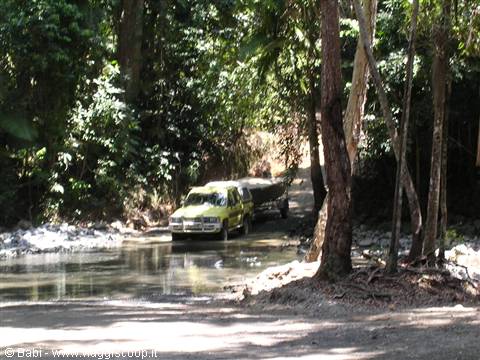
Right next to the Hotel there's the Avis car rental. We want to take a 4x4 but they only rent enormous 7-seater monsters. Having no alternative the choice is forced but it feels strange to find myself so high above the road and to have so much space available. We head north and the first stop is at Kuranda, a pretty town in the middle of the rainforest. We take a long walk among large ferns and a very strong smell of undergrowth and visit the town's little market. Back in the car we head north. We decide to take what is called the inland road. Up to Lakeland the road is paved, after which you enter the "almost nothing" with most of the roads impassable during the rainy season. In fact we come across several road signs indicating whether the roads are closed or open.
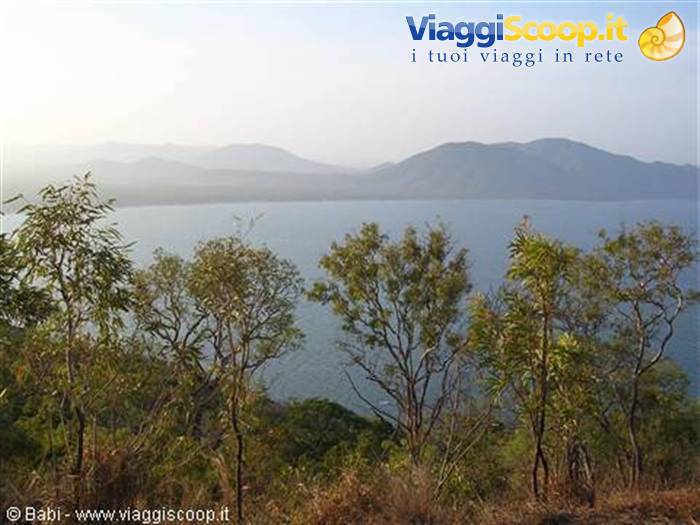
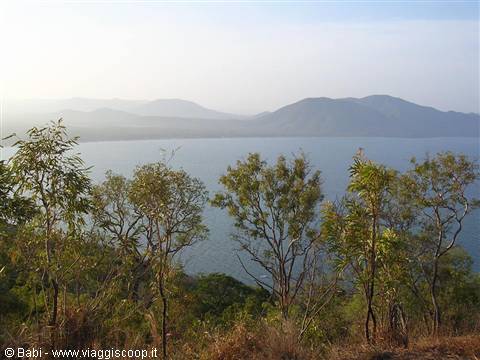
Work is being done to pave the last stretch too (about 100 km) from Lakeland to Cooktown, but at the moment this causes a lot of inconvenience. In fact not only is the road white and the lane narrowed to allow the works, but the surface is even more uneven due to the continuous passage of heavy vehicles. So it happens that you come across other cars or even worse very long trucks and you don't know exactly where to put yourself and what to do. At a certain point a large log blocks the way; luckily one of the bulldozer workers promptly removes it. Before arriving at Cooktown we admire, from the main road, the Black Mountain. We thus arrive at Cooktown, we climb to the top of Grassy Hill and from the viewpoint (see photo 10), where there are a lighthouse and a plaque commemorating Captain Cook's landing in 1770, we enjoy a 360° view of the surrounding sea.
Cooktown is truly a frontier place, few houses, three pubs, a post office, a couple of restaurants and little else. We set up the tent at the Cooktown Orchid Travellers Park (AU$ 19) and have dinner near the Campsite for AU$ 27.50
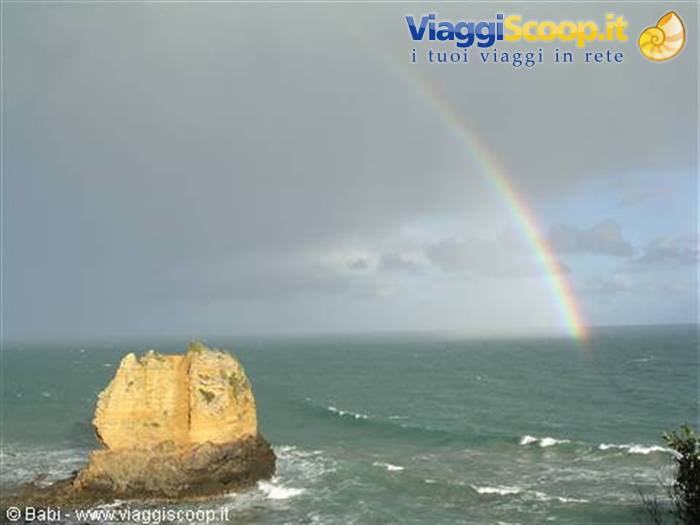
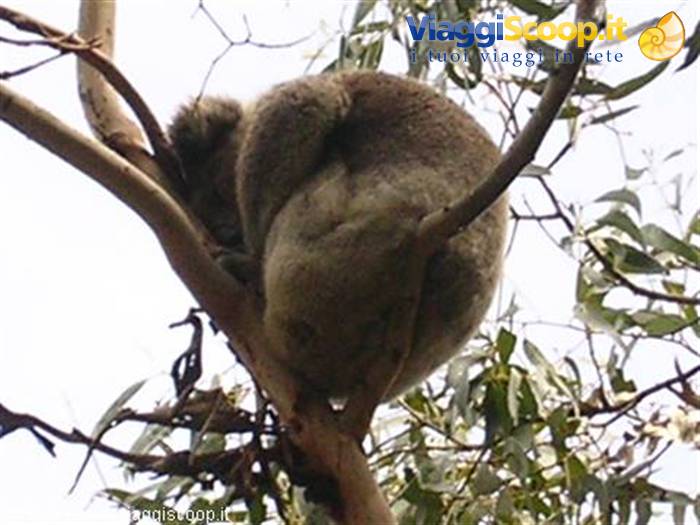
36 photographs · click to open them full screen








1 reader comments
mi è venuta una gran voglia di visitare questo paese. soprattutto per gli animali che sono la mia passione. che tristezza vedere tutte quelle pelli appese. complimenti per le bellissime foto