The story
I first reached Pennsylvania from New Jersey during the transfer from New York City to Niagara Falls as a stop on a long tour in the U.S.A. with three travel companions and a hire car. The Pennsylvania stretch of this long transfer is rather monotonous; the wide interstate motorway is very easy, with several lanes and little traffic, and very orderly. Everyone in the U.S.A. respects the imposed speed limits, so we set the pace of our fully equipped car and head north to then re-enter New York State. The next day, returning from Niagara Falls, we re-enter Pennsylvania and after a long transfer we arrive at Lancaster as evening falls. We find accommodation in a motel and dine in a diner run by an Italian-American whose parents came from the Naples area.
In this country of franchise chains it is rare to find someone with the courage to open a business without the backing of a big name like Starbucks, Subway, Dunkin', McDonald's, Denny's, etc. After the night at the motel, in the morning we go to the nearby Dutch Country — the name would mean Dutch county, but in fact this is the region inhabited by the Amish, who are of German origin. The Amish came to America in the 1700s because they were persecuted in Europe, since their faith prevented them from using anything that could allow the earthly improvement of their existence. For this reason even today they live as in the 1700s, rejecting every form of modernity; their only help is the horses with which they plough the fields with a rudimentary plough and that pull their little black carriages. No cars, no television and no telephone.
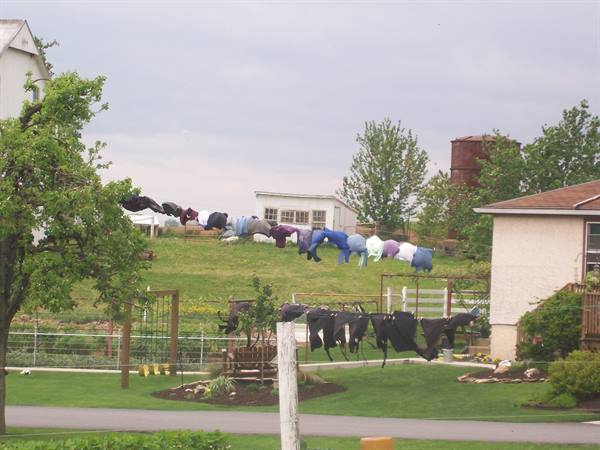
These people live in wooden houses along the secondary roads of small villages; their homes are recognisable by the hand pump for water and by the long lines of clothes hanging out, all identical. The men wear a straw hat on their head, a shirt, braces and often have long beards, while the women dress in long skirts with a little cap on their heads. Our first contact with the Amish country is at Strasbourg, where we visit a big shop displaying their craftwork such as wood carvings, fabrics and embroidery. Strasbourg is also home to an old, well-kept railway station where antique steam trains stand, departing every day for a short journey. The railway system in the United States is not very widespread, but these old trains recall the American epic and the beginnings of this country. In Strasbourg there are also shops specialising in model electric trains, which we enter by mistake.
Looking for the Amish we discover the Pennsylvania countryside, wandering among neat little villages like Paradise and Bird in Hand. The fields are well tended, the wooden houses have small gardens constantly mown and without fences, and the front door opens onto porticoed little terraces, the ones you see in films where old ladies relax in rocking chairs. It is the classic image of the American countryside, and now we are living it first-hand, crossing these secondary roads that are not a destination for everyone but only for those who want to savour, of the States, also this rural atmosphere worthy of "Grandma Duck" and "Chip 'n Dale". And then there are the Amish with their little carriages and their rejection of modernity, which remind me of the images of the film "Witness" with Harrison Ford, shot right here.
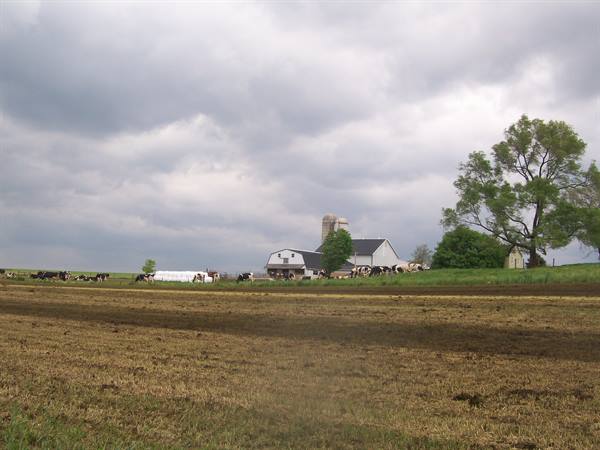
Passing through Intercourse we find an old-style shopping centre with characteristic craft, clothing and food shops; some Amish children are playing with a wooden tricycle; we try to photograph them but they run away. We leave Pennsylvania satisfied — its cultivated fields, the little houses with silos — and enter Maryland to then reach the District of Columbia and Washington.
The journey's photographs
3 photographs · click to open them full screen

0 reader comments