"O voice of him who first knows the trembling of the sea!" Gabriele d'Annunzio, Shepherds of Abruzzo.
The emotion felt by the shepherds of Abruzzo when, during the transhumance, they led their herds to the plain and to their eyes appeared the sea, can be compared to that of our group at the sight of the coast and the blue, dazzling reflection of the seawater, after several days spent on the Anatolian plateau, fascinating but bare, dusty and sun-scorched. But perhaps it's better to start from the beginning: from our arrival in Istanbul in the afternoon of the 8th of August. Istanbul, 12,000,000 inhabitants, straddling the Bosphorus, is the meeting point between East and West. Europe or Asia? Certainly, with its two bold bridges crossing the strait, it is not only the link between two continents but also between two cultures: the Eastern and the Western one.
Day 18 Aug 2003
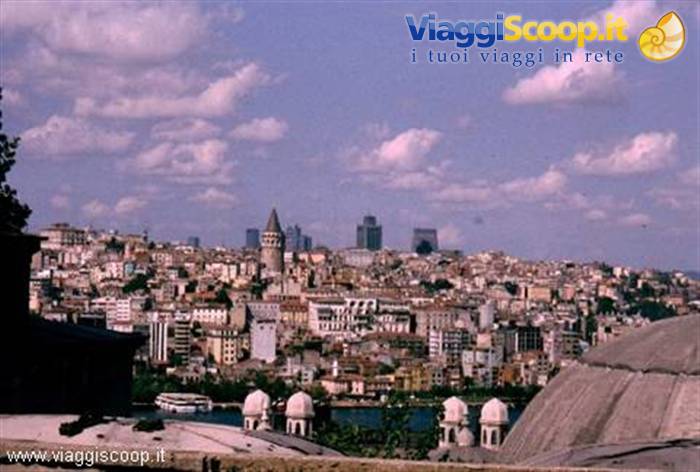
There are numerous testimonies of the various cultures that succeeded one another over the centuries. Hagia Sophia and the many other lesser churches take us back to the Byzantine period, heir to Greek and Roman civilization. The old dwellings of the Beyoglu district, dominated by the Galata Tower, remind us of the Middle Ages, while the great palaces along the shores of the Bosphorus are built according to Western architectural styles. The dozens of mosques that, with their minarets, are visible from every point of the city have the charm of the East. And the Topkapi Palace and the many markets also have the flavor of the East, first and foremost the Grand Bazaar with its bustle and its scents. Our visit to Istanbul begins at the basilica of Hagia Sophia, one of the most imposing buildings of the old city.
The basilica, the city's greatest monument and symbol of its architecture, was commissioned by the emperor Justinian and completed in 537. It remained the largest in the Christian world until 1453, when Mehmet turned it into a mosque, and it remained so until 1935, when Ataturk had it turned into a museum. The dome, built without supports, was almost a challenge to the impossible, and indeed it lasted only until 559, when an earthquake made it collapse. It was rebuilt in the following centuries with the addition of buttresses. The most interesting part of the basilica is certainly its gleaming mosaics in the gallery on the upper floor. The dome is also covered with mosaics: too bad that for a decade they have been hidden by scaffolding.
In my opinion the visit does not justify the high cost of the entrance ticket (about 10 euros); far more interesting is the Blue Mosque, with free admission, which is our second stop. The official name of the most fascinating mosque on the Bosphorus is Sultan Ahme Camii, but it is universally known as the Blue Mosque. Turquoise is indeed the dominant color in the temple. Walls, columns and arches are covered with Iznik tiles, decorated in tones ranging from blue to green; the light filtering through 260 small windows gives the great prayer hall an atmosphere as evocative as it is surreal. The Blue Mosque, which dates back to the 17th century, is also the only one that can boast as many as six minarets. Our visit to Istanbul continues with the exploration of the Basilica Cistern (Yerebatan Sarayi), perhaps the most curious part of the city.
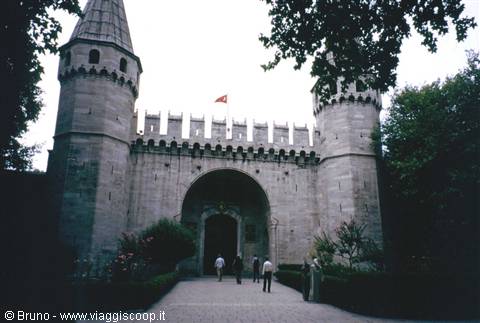
Created in the Byzantine period to make up for the lack of water in case of siege, this enormous reservoir is 140 meters long and 70 wide and is covered by a ceiling supported by 336 columns. Our first day in Istanbul continues with a visit to the Grand Bazaar (Kapali Carsi) of the old city. This labyrinth of streets and passages houses more than 4000 shops. The only negative note is the nagging siege of the sellers on all passersby. In the late afternoon we go up the Galata Tower (Galata Kulesi) to admire the sunset over the city from its top. The tower is a Genoese construction from 1348 and rises 62 meters from the ground, on the shore of the Golden Horn. From the top you enjoy an extraordinary panorama over the Golden Horn and the Bosphorus. The second and last day of our stay in the city begins with a visit to the Topkapi Palace.
A labyrinth of buildings and the center of power of the Ottoman Empire between the 15th and 19th centuries, in this rich palace the sultans and their court lived and governed. In 1924 it was turned into a museum and opened to the public; now it represents the main tourist attraction of Istanbul. It was commissioned by Sultan Mehmet the Conqueror in 1453 in a position from which the Sea of Marmara, the Bosphorus and the Golden Horn are visible. After him it was inhabited by a long series of sultans until the 19th century, when Mahmut II lived there for the last time before his successors chose to live in sumptuous palaces built on the shores of the Bosphorus. Our stay in Istanbul cannot end without the traditional and unforgettable excursion on the Bosphorus, that sinuous strait that separates Europe from Asia.
Its shores offer a mixture of past and present, of grandiose splendor and natural beauty.
Istanbul - Goreme district
Day 211 Aug 2003
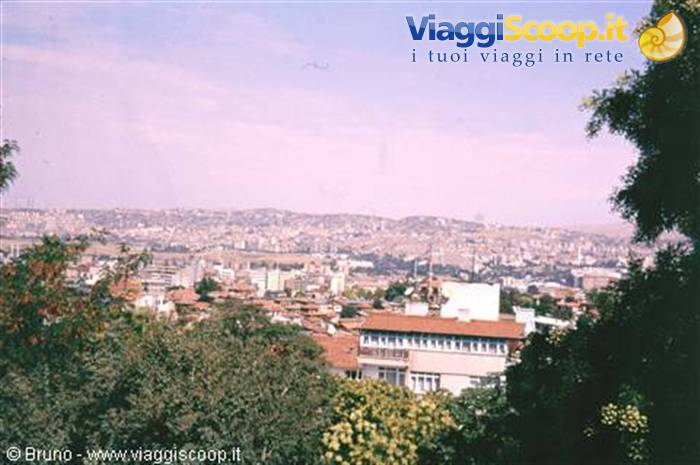
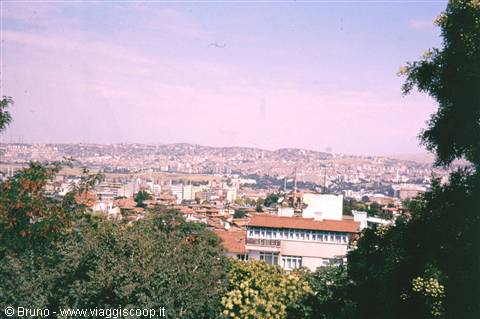
With a 10-hour overnight train journey, spent comfortably in a sleeping car, we arrive at 8:10 on August 11 in Ankara, the capital of Turkey. A quick visit to the Museum of Anatolian Civilizations, located by the gate of the citadel, which houses priceless collections of Paleolithic, Neolithic, Hittite, Phrygian, and Roman works, and then we set off again for the archaeological site of Hattusa, the ancient capital of the Hittite empire, and for the nearby Yazilikaya, a Hittite sanctuary with beautiful rock carvings. Hattusa is one of the most important archaeological areas in Turkey; the remains of a great city survive, only partly excavated. One of the best-preserved works of the site is certainly the Lion Gate, which probably dates back to the 14th-13th century BC. On the front side of the gate appear two gigantic lions that had the function of keeping evil spirits away from the city.
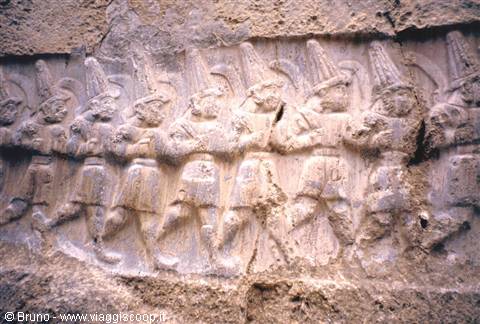
Another gate, which opens on the eastern side, is the King's Gate, built with large stone blocks and adorned with the relief of a figure with a royal appearance, representing the Hittite god of war who protects the city with his axe. Unfortunately, the one on site is only a copy, while the original is kept in the museum of Ankara. The name of the site of Yazilikaya, which is located about 3 km from Hattusa, means "Rock with inscriptions" and that is exactly what is found there. This is the main Hittite place of worship and its visit is of particular interest due to the numerous reliefs carved into the rock by a people who lived 3000 years ago.
Rock houses in the Ihlara Valley
Day 312 Aug 2003
After leaving the site of Hattusa, the journey continues toward Cappadocia and we reach the town of Avanos, where we stay for three nights. Avanos is famous for its ceramics, shaped with the red clay of the river that runs through it. Among the places of Cappadocia, few are as fascinating and mysterious as the "Underground Cities". The oldest date back to the Hittite era, that is, between 3000 and 4000 years ago. While in peacetime the inhabitants of the region lived on the surface, when they were threatened by invaders they took refuge in their underground dwellings, a series of tunnels and interconnected rooms on several levels, where they could remain safely even for six months. These underground cities carved into the tuff, on several floors, with narrow galleries, dwellings, and ventilation shafts seem like real labyrinths.
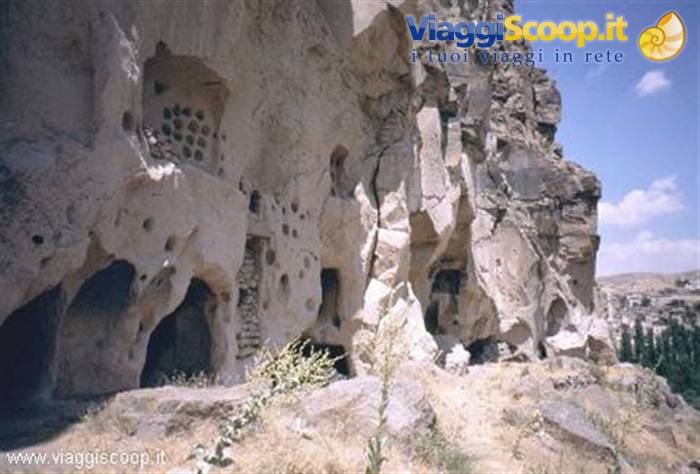
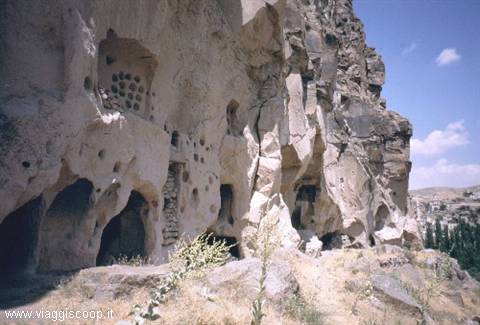
And it is precisely to the visit of the underground city of "Kaymakli" that, after our arrival, we dedicate the first part of the morning. Kaymakli is a maze of galleries and spaces carved into the rock on eight different levels, of which only five are open to the public. Our first day in Cappadocia continues with a short trek in the Ihlara valley ("Ihlara Vadisi"), a remote valley that in the past was one of the retreat places of Byzantine monks. From that era, several rock churches decorated with paintings can be admired in the valley. The route follows the course of the stream that winds through the narrow and deep valley, until reaching the village of the same name. Besides the Byzantine churches, in the valley one can admire the numerous and characteristic dwellings carved into the mountainside; it is estimated that there were about 5000 of them.
The valley, being difficult to reach, did not suffer excessive damage from Arab assaults. The second day of our stay in Cappadocia begins with a visit to the Goreme open-air museum. Located almost in the center of Cappadocia, Goreme is characterized by cones and rock walls riddled with interconnected openings and is one of those rare places in the world where human work is skillfully integrated into the surrounding landscape. The first dwellings were carved into these rocks starting from 4000 BC. In Byzantine times, other chapels and monasteries were carved into the rock, frescoed with ochre tones that reflect the colors of the landscape surrounding them. Still today one can see dwellings carved into the rock cones and villages of volcanic tuff emerging harmoniously. The symbol of Cappadocia is certainly the "Fairy Chimneys", strange tuff spires covered by more solid layers or by rocks.
They were formed over the millennia both by the corrosion produced by wind and rain, and by watercourses that, during their path, transported hard basalt rocks that, being more resistant than the lower part, resisted corrosion and remained on top of the spires like hats in a precarious state of balance. In the wonderful "Devrent Valley", which we are about to visit, are found the best-formed and the densest groups of these strange volcanic cones, red in color, which also characterize many other valleys of Cappadocia. Our visit to Cappadocia continues with the "Zelve Valley", located at the end of a road that goes deep among spectacular rock formations. At Zelve there are three valleys created by erosion, surrounded by very high rock walls with caves and galleries. Here too, over the centuries, man, by carving the tuff, created dwellings, churches, and monasteries.
After leaving Zelve we reach the town of Uchisar, dominated by its castle, a fortress-tower that hosted the first Christians of the area in its rooms carved into the rock. The village is located on the highest plateau of the region, from which one observes a wonderful landscape. In the rock of the castle, many small windows and entrances open up that, in the past, could be closed with boulders fitted to the openings: in this way the rocks took on a completely natural appearance and the human presence was not visible. The purpose of the fortress was to protect the inhabitants in case of danger.
Covered market of Konya
Day 414 Aug 2003
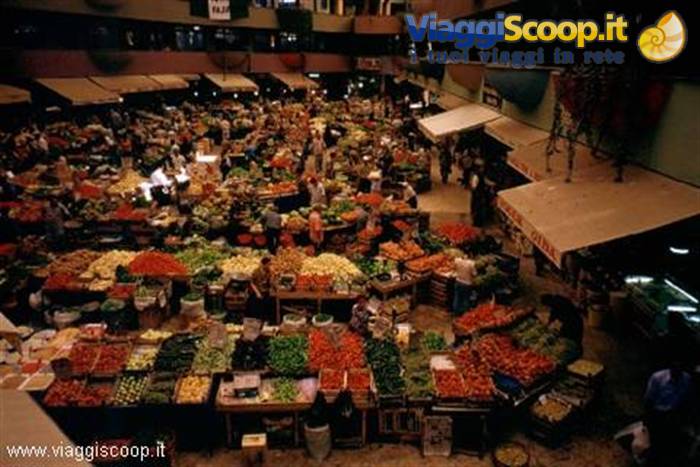
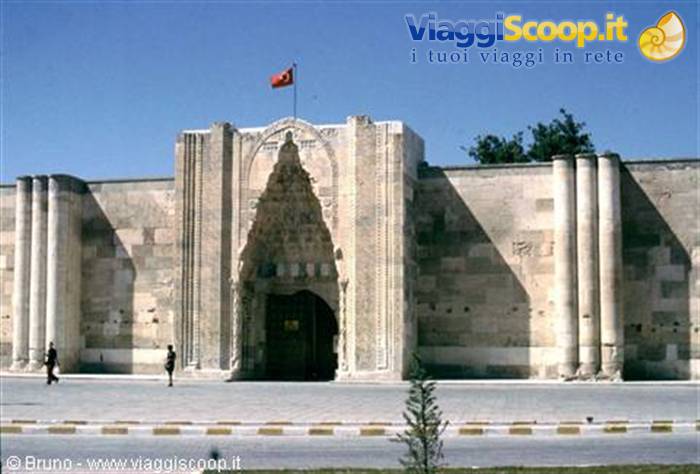
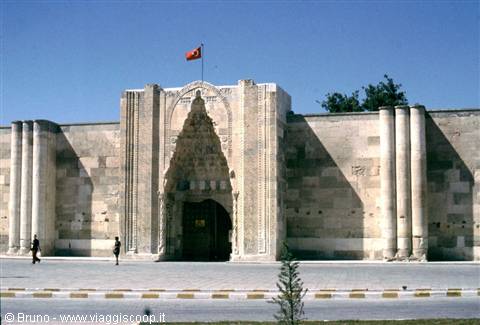
Today, August 14, we leave Cappadocia and head toward the city of Konia; tomorrow we will continue to reach the Mediterranean coast. On the transfer to Konia, a stop in the town of Sultanhani is a must for the visit to its caravanserai. Built in 1229 and restored in 1278 following a fire, it is currently the largest caravanserai in Turkey. Konia (680,000 inhabitants), located in an isolated position in the vast steppe of Anatolia, has the appearance of a traditional stopping place of caravans. Most of the city has been built in the last twenty years, but the center is very old and the charm of Konia lies precisely in this contrast between new and ancient.
In the narrow quarters of the market area one can admire several ancient buildings, while immediately to the east extends the modern area, with elegantly dressed students; in this part of the city one rarely sees women with their heads covered.
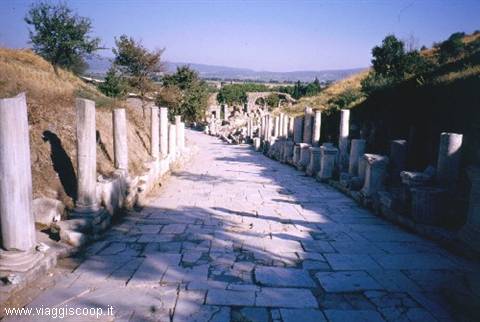
Site of Ephesus - The Curetes Street
Day 516 Aug 2003
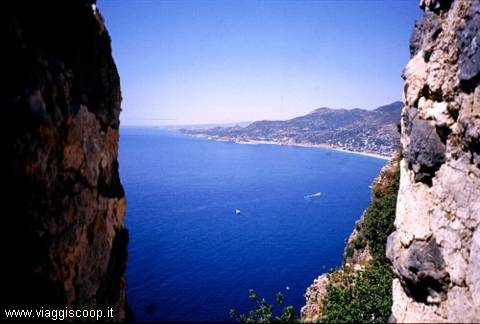
Today we continue towards the Mediterranean coast; the first town you reach is Alanya, situated on a rocky promontory surrounded by jagged coastlines and topped by a fortress from which you can admire the beautiful view over the sea. Alanya has become one of Turkey's most important seaside resorts. The original fortress that dominated the rocky peak was for a long time a pirates' den, until it fell into the hands of the Romans who, in 67 BC, destroyed it. Known in Byzantine times, it was then conquered by Sultan Keykubat, who made it his winter residence, building a new fortress there. A quick visit to the castle area and we continue on to Side, a town characterized by its imposing ruins from the Roman era.
Before visiting the archaeological site, we treat ourselves to a refreshing swim in the sea next to the hotel's private beach, a beach that leaves much to be desired: nearby there are much nicer public beaches which, unfortunately, we discover too late. The archaeological site also gives an impression of abandonment, with vegetation growing among the historical artefacts; the theatre, with its 15,000 seats, is one of the largest in Turkey but is disfigured by restoration work which, started some years ago, continues sporadically, with the permanent presence of a crane that degrades the view. After a transfer stop in Antalya, with a first stop to visit the great theatre of Aspendos and a second to treat ourselves to another swim in the sea, this time on a beautiful beach, we reach the town of Ucagiz. A detour inland to visit the sites of Termessos and the Chimera.
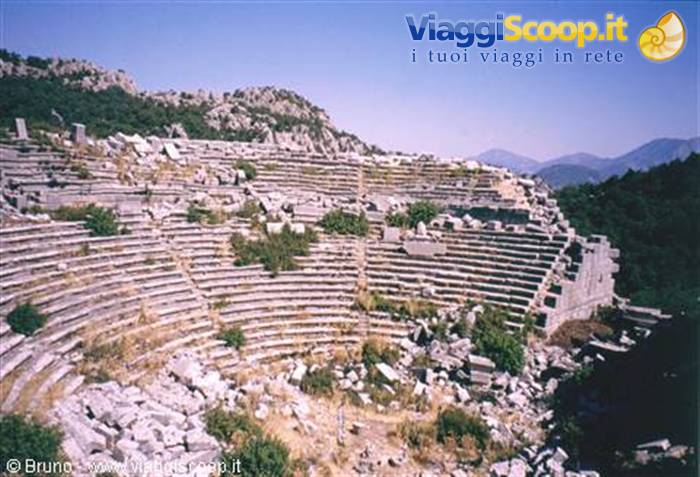
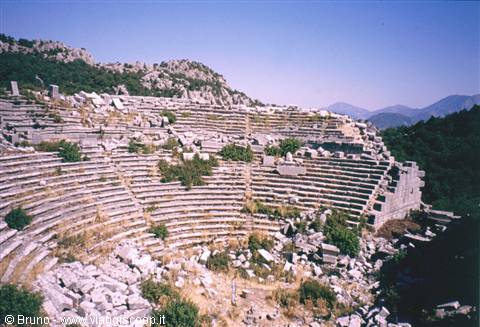
Termessos, one of the most extraordinary places in Turkey, reachable with a half-hour walk, leaves you impressed by the spectacle of an ancient city lost among the mountains. Its warlike inhabitants, a people of Pisidia, lived in their impregnable city defending their own independence. In 333 BC they repelled Alexander the Great and in 70 BC they allied with the Romans. Termessos is surely the site in Turkey located in the most spectacular position: the panorama of the mountains, which forms the backdrop to the amphitheatre, is unforgettable. Unfortunately the lush vegetation of the place also invades the monuments. The Chimera, literally "Burning Rock", is an eruption of perpetual spontaneous flames that rise from the cracks on the slopes of Mount Olympos.
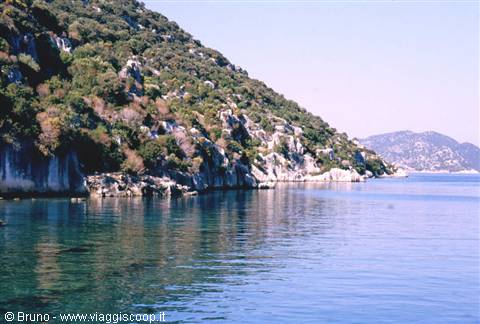
In antiquity it was believed they were the breath of a monster; in reality they are produced by a gas that filters from the earth and ignites on contact with the air. In the past there were many more of them; today about thirty remain, perfectly visible at sunset while in daylight they can only be noticed from close up. In Ucagiz we treat ourselves to a whole day of relaxation by the sea. The fact that Ucagiz, which literally means "Three Mouths", is not on the main road, but is reached via a 19 km detour, along with the regulation that forbids building development there, has allowed it to remain a typical Turkish village of fishermen and farmers, relatively untouched, situated in a bay among islands and peninsulas, with several ruins of ancient Lycian tombs.
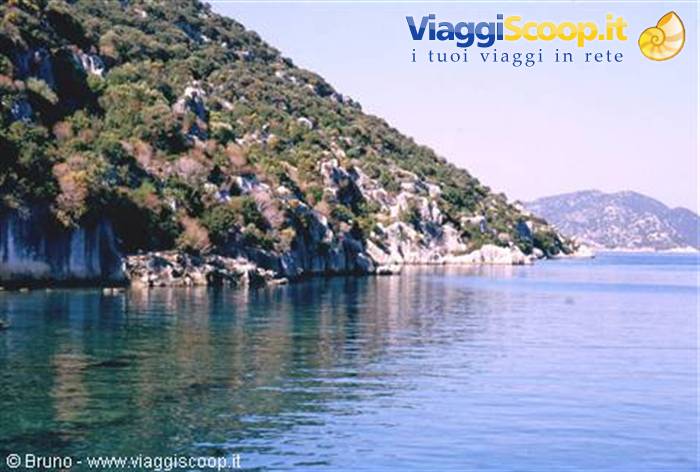
You cannot go to Ucagiz without treating yourself to the thrill of sailing among the many islands of its bay, in particular the island of Kekova, which we reach on board a boat, with several stops to savour the joy of a dip in the clear waters of the bay. Along the coast of the island there are Byzantine ruins, partly submerged by the water.
Ankara
Day 619 Aug 2003
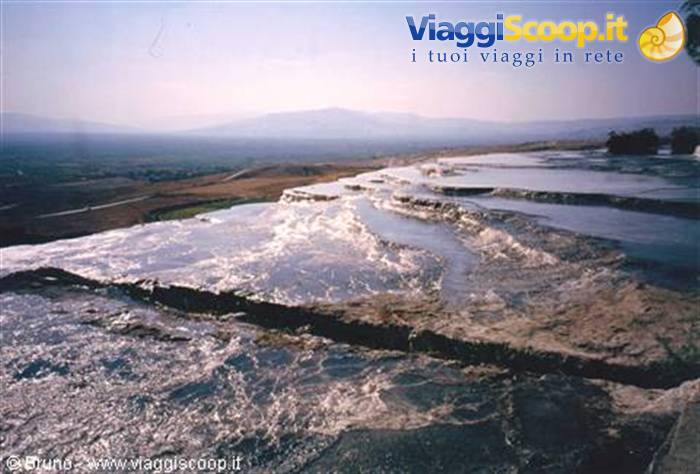
We leave the sea, perhaps with a bit of regret, to move on to Pamukkale with its white and shining limestone formations and the nearby archaeological site of Hierapolis. The limestone formations of Pamukkale extend for about one square kilometre and are made up solely of calcium bicarbonate; the watercourse that feeds the pools of Pamukkale runs for about three kilometres and, along this descent, carries the calcium minerals to solidify on the rocks below. In this way pools are created of bright white colour with circular edges, within which warm and beneficial water collects, with a temperature of about 33 degrees, used for therapeutic purposes. In the numerous puddles of this water it is possible to immerse yourself and cover yourself with the equally health-giving mud that settles in large quantities on the bottom.
Pamukkale in Turkish means "Cotton Castle" and, observed from a distance, it gives this impression. The site of Hierapolis, which we visit together with Pamukkale, is an enormous complex of remains dating back to the 2nd century BC. This marvellous area, being located next to the waters of Pamukkale, was born as a spa centre; already known in antiquity, it was a destination for many tourists of the time, who could make use of "modern" facilities to immerse themselves in the warm and balmy waters. Initially the spa town of Hierapolis was the property of the man who had built it: Eumenes II of Pergamon. In 133 BC Hierapolis passed under Roman control, when Attalus II left the kingdom of Pergamon as an inheritance to Rome.
In the Roman period the city reached its greatest splendour, but in the 1st century AD three devastating earthquakes struck it and after the one in the 14th century it was abandoned.
The Mediterranean near Ucagiz
Day 720 Aug 2003
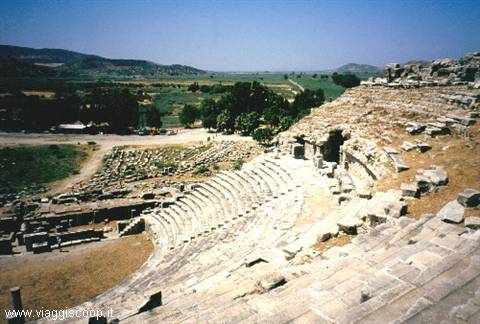
It is 20 August and we return towards the coast, specifically to Selcuk, with a detour to visit the site of Miletus. The first thing you notice on arriving at Miletus is its great amphitheatre, the most important monument bearing witness to the past greatness of this city, a notable commercial and administrative centre from 700 BC to 700 AD. Afterwards, following the silting up of the port, its activities suffered serious losses. The theatre, with 15,000 seats, was built in the Hellenistic era and then renovated by the Romans during the 1st century AD.
Amphitheatre of Termessos
Day 821 Aug 2003
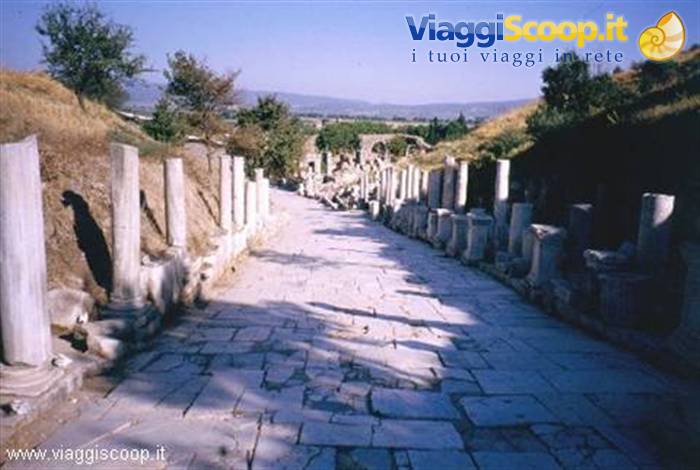
Today is the last day of our trip; tomorrow we head back to Italy. Before reaching Izmir, the former Smyrna, our final destination before departure, we devote the day to visiting another archaeological site, that of Ephesus, certainly the most beautiful and interesting of all those we have seen. Ephesus is an ancient city of Lydia, founded on the Mediterranean coast, at the mouth of the river Cayster in a place already frequented in Mycenaean times. It must be counted among the richest and most populous cities of the ancient world; it was the homeland of very great philosophers. It developed above all in the Hellenistic and Roman periods, when it became the capital of the province of Asia; it was also the seat of the very active Christian community linked to the preaching of St. Paul and St. John the Evangelist, who tradition holds is buried here.
Legends tell that the city was founded around the 1st millennium BC by Ionian peoples, who were abandoning their land because of the advance of the Dorians. Ephesus became the most important among the cities of the Province of Asia, and here the most violent revolts against the power of Rome took place. A rich city, it did not deny itself the symbols of its own opulence, adorning itself with monuments and works that were celebrated in tales throughout all of antiquity. It was an important centre for the Christians of Asia: the apostle Paul stayed there. Ephesus was also the seat of the Ecumenical Council of 431 AD. Despite the attempt by Tiberius and Hadrian to halt the silting up of the natural harbour, the city was condemned to a slow decline.
Caravanserai
Day 922 Aug 2003
Unfortunately our trip is over; our group also splits in two: some leave for Milan and others for Rome, but not before the unanimous promise to meet up all together, as soon as possible, to exchange photographs and share thoughts on a trip that immediately turned out to be very interesting: above all for the thrill of getting to know the places where, over the past millennia, peoples and civilisations have followed one another. The return home, however, is not sad: the excitement awaits me of seeing the photos I took, of writing these notes and, above all, of thinking about a new destination.
Travel companions (in alphabetical order) · Bruno - Germagnano (TO) · Claudio - Florence · Franco - San Mauro Pascoli (FC) · Gianni - Florence · Giovanni - Rome · Maria - Padua · Maria Luisa - Varese · Maria Teresa - Nembro (BG) · Mauro - Lucca · Riccardo - San Giorgio (NA) · Rosario - Caravate (VA) · Santina - Rozzano (MI) · Simona - Florence · Sergio - San Mauro Pascoli (FC) · Stefania - Varese · Stefano - San Mauro Pascoli (FC)





0 reader comments