Adana, Diyarbakir, Van, Mardin, Sanliurfa · Kurdistan
When
13 Jul 2011 – 24 Jul 2011 12 days · trip of 2011
Who
davide · @gattosilvestro · Modena
How
Travel diary
The story · 9 days
Airline Pegasus (Bergamo-Istanbul-Adana, and back) 300 euros each. "do-it-yourself" travellers no significant hiccups Adana, hotel Mercan, 25 euros a night, single with breakfast. Diyarbakir, hotel.... 20 euros a night single with breakfast. Van, Hotel.... 10 euros a night. Mardin, hotel ERDOBA EDLERI, 40 euros a night with breakfast. Saliurfa, hotel Ipek Palas, 15 euros a night, single with breakfast. Total spend ALL INCLUSIVE 900 euros each places to recommend: Diyarbakir, Van, Mardin, mountain valleys above Van.
Day 113 Jul 2011
The warm Kurdistan
Kurdistan - July 2011 A holiday outside European standards, not too far from Italy and where mass tourism hasn't arrived yet? If that's what you're looking for, Kurdistan might be just the place for you! 13 July 2011 The airline "Pegasus" will take Davide (me), Carla and Alessandro to the beginning of Kurdistan. Flight Bergamo-Istanbul, Istanbul-Adana. 300 € well spent. The "adventure" begins at the airport in Istanbul. As we walk towards the gate to catch the flight to Adana, Alessandro loses his plane ticket! We're saved by good fortune in the form of a Turkish citizen who promptly calls us and gives the ticket back. And this is only the beginning of the help and friendliness we'll encounter later on. We leave Adana airport at 10.00 pm, and strange but true, no public transport leaves from the airport to get to the city centre, where we had booked the first two nights.
So we set off on foot and encounter the first difficulty, which will accompany us throughout the trip, namely making ourselves understood in a place where hardly anyone speaks English. We ask where the bus stop is, and several people (when you ask for something they really go out of their way to help you) tell us it will stop right where we are, that is, along a curve! We, as good Italians, don't believe it, the true Italian always sees a trap, and yet that's exactly how it is! Scheduled buses are practically nonexistent, and public transport is entrusted to a flood of Dolmuc (minibuses), presumably private, that constantly cross the city and stop immediately when someone asks to get on, wherever they are. Humid heat, we resist the temptation of succulent "shaved" ices from big blocks of gelatinous ice.
We opt instead for bottles of sealed water, which we'll always find everywhere without difficulty. Hotel Mercan in the city centre, single room for 25€ per night with breakfast (we'll later notice that prices are two to three times lower than in Italy), the hotel certainly isn't beautiful but it has one fundamental thing: air conditioning (independent unit) in the room! An indispensable travel constant given the season.
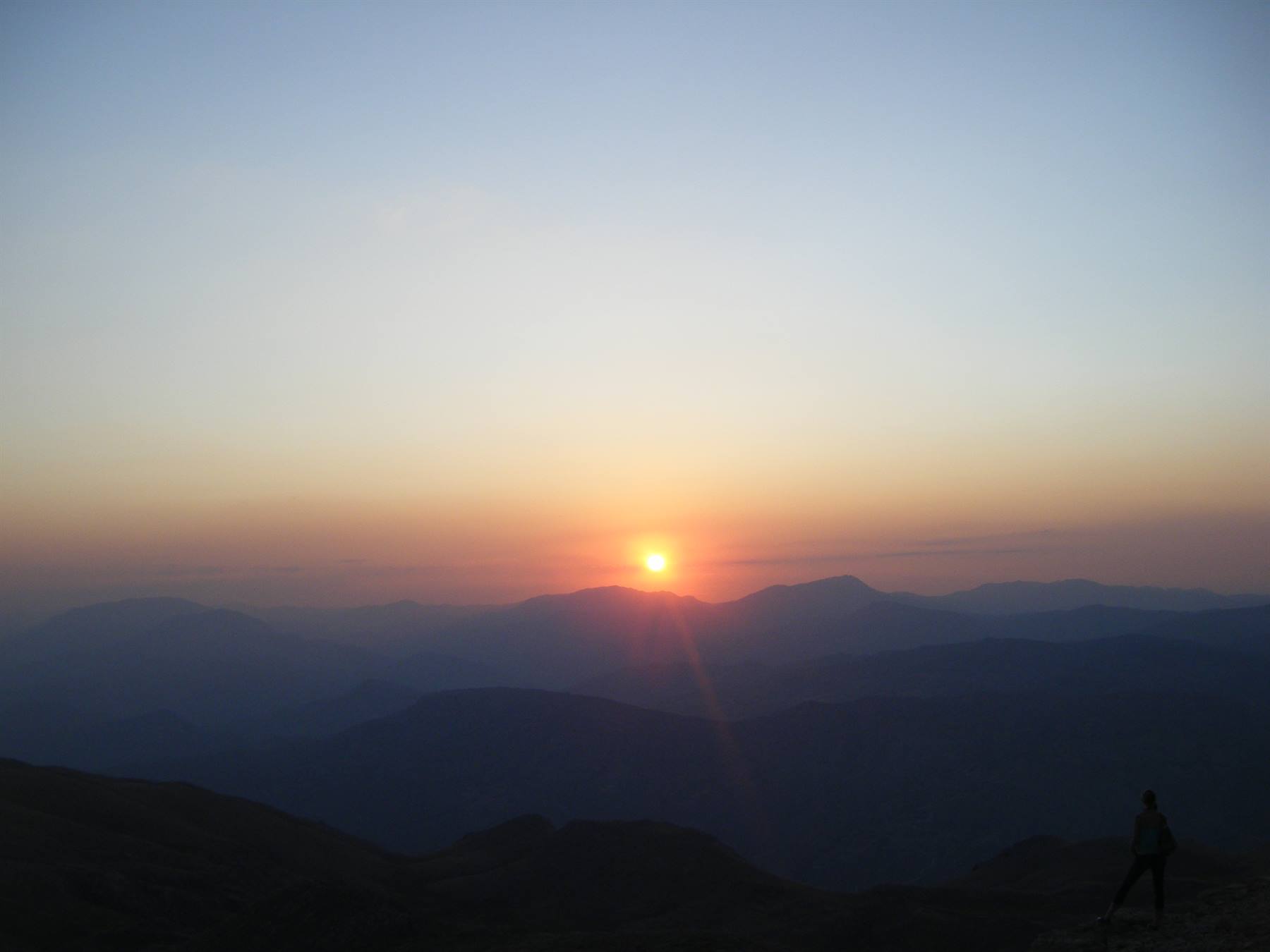
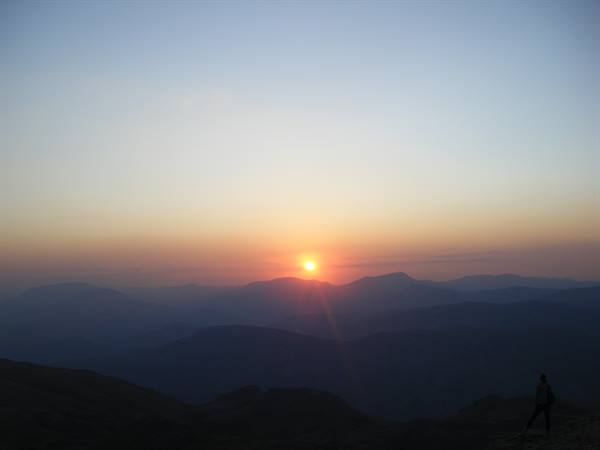
sunset at Nemrut Dagi
Day 214 Jul 2011
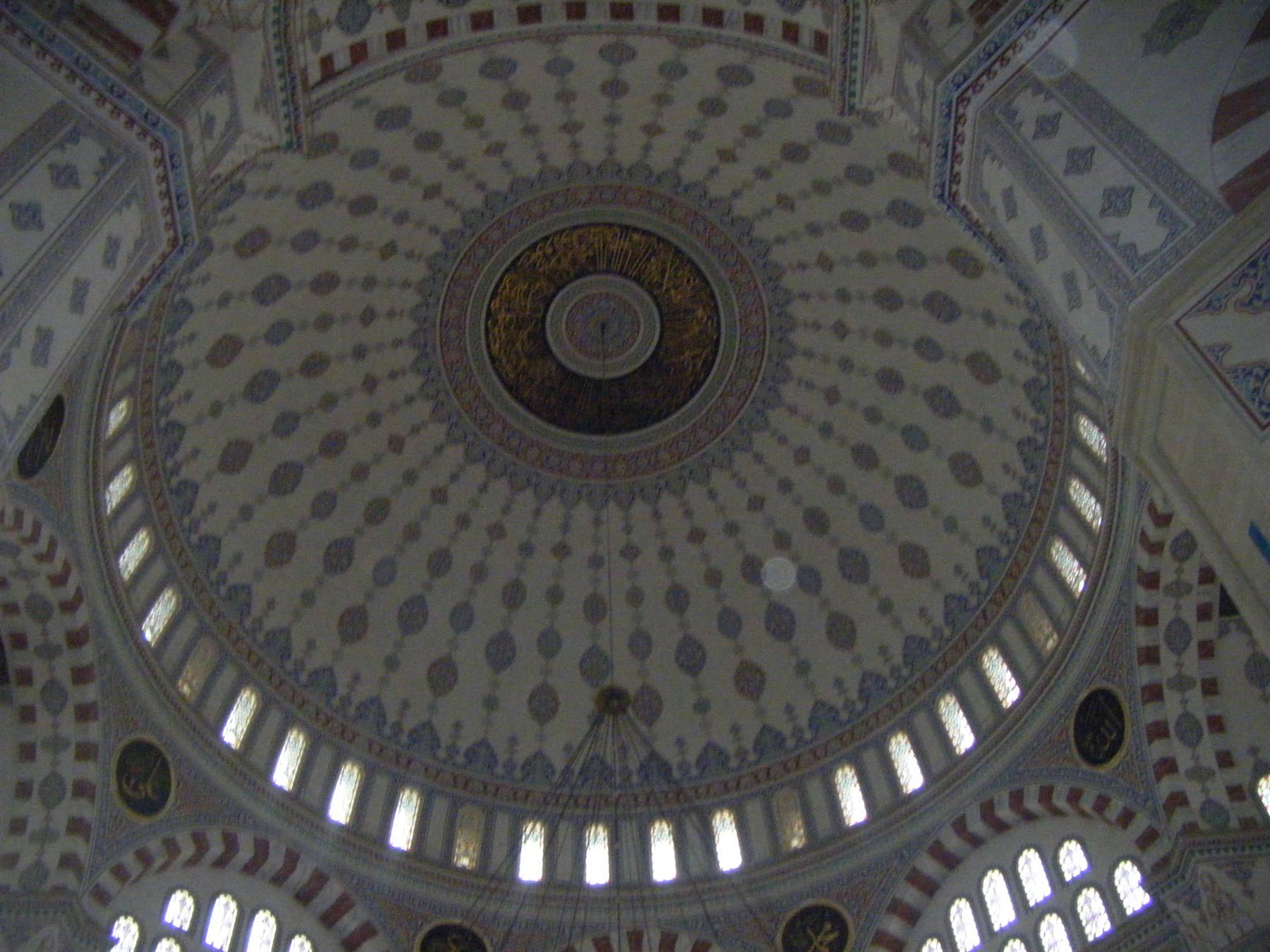
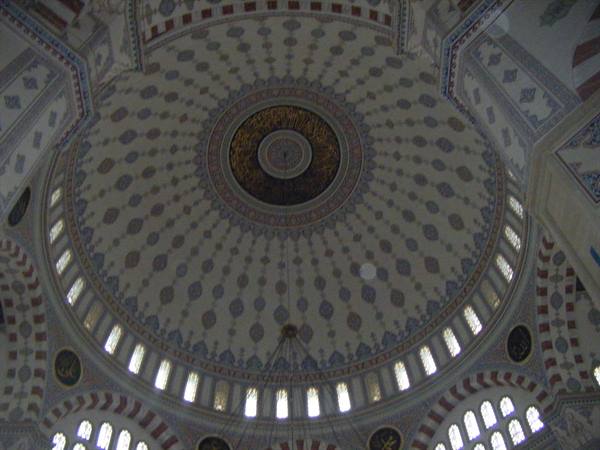
14 Jul This large city with more than 1,000,000 inhabitants isn't particularly interesting, but the beautiful new mosque is worth a visit, the largest in Turkey, with very tall minarets and covered in precious white and grey-blue marbles. The interior is also tastefully done, all the very high ceilings are decorated in the typical oriental style, which we appreciate enormously also because the temperature is pleasant while outside it's 36 degrees. For lunch, given the proximity, we go into a huge shopping centre, and we don't regret it since we eat a big, very tasty chicken for a few euros, to be honest the best I've ever eaten. And we also find the only bar that will give us an Italian-style coffee. We spend the afternoon wandering around the bazaar/market, an infinite number of stalls and shops where, divided by zones, you can find everything.
Even the mechanic repairing a scooter in the middle of the street. The very low price and the apparently good quality make us buy a few leather goods. In the evening, we rely on the suggestion of our very useful Lonely Planet, namely a restaurant in the new part of the city.
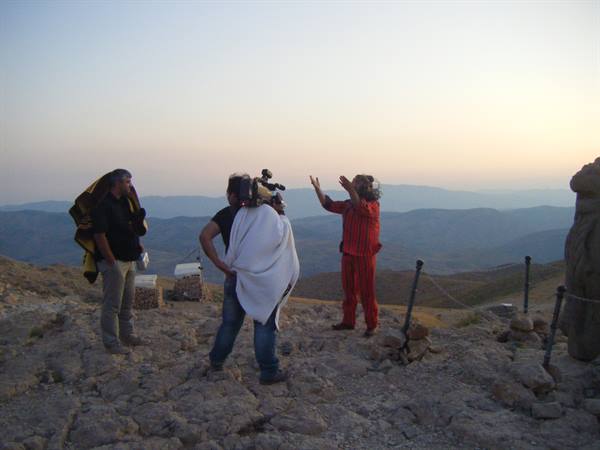
suggestive lights of dawn
Day 315 Jul 2011
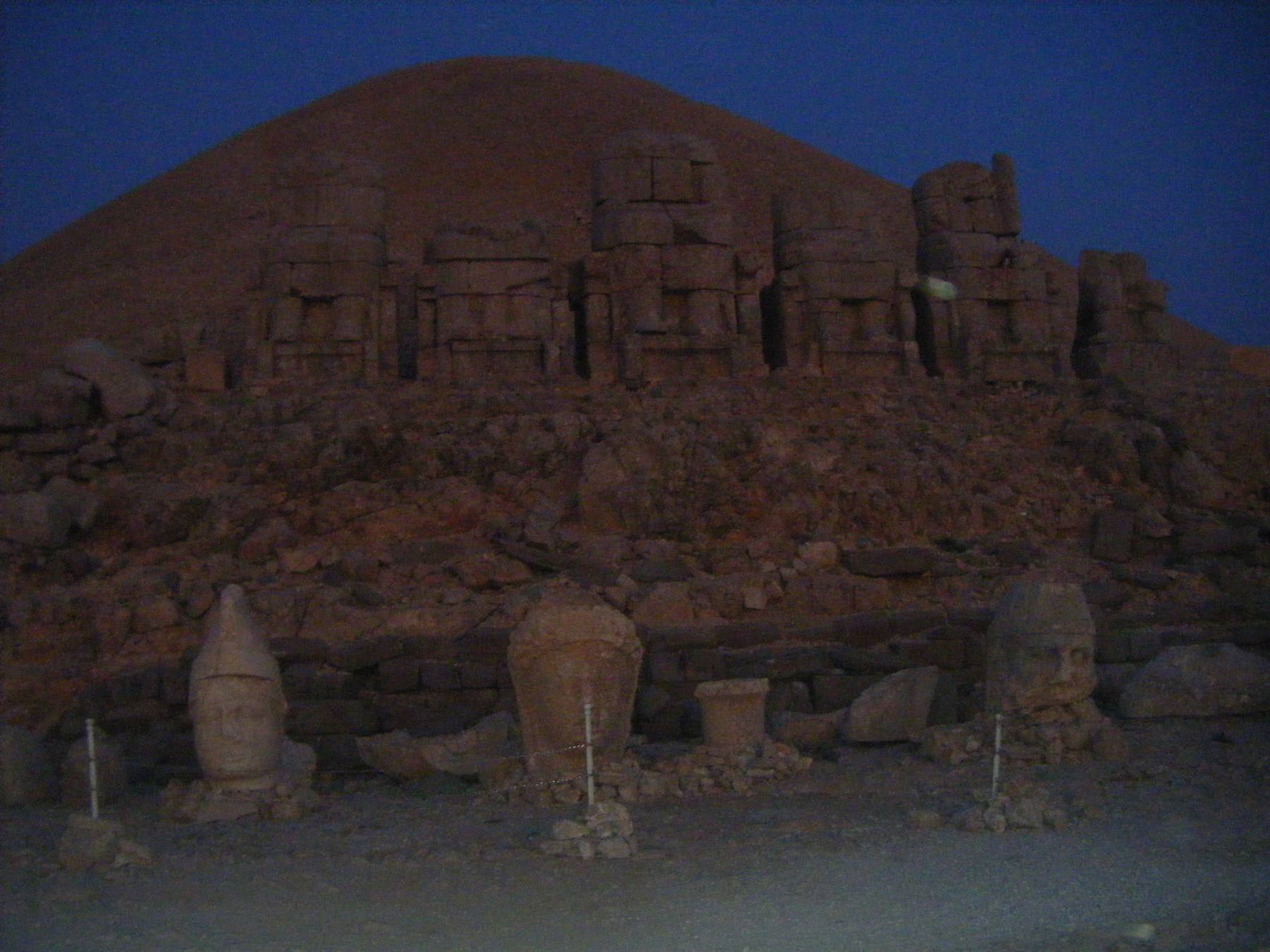
8.30 am departure for Nemrut Dagi, a mountain 2150 m high where in 1953 they discovered the famous stone heads and the presumed tomb of King Antiochus, who died in 36 BC. The arrival will be in the stiflingly hot Kahta, 6 hours by comfortable coach for almost 400 km (three stops), and here we truly enter Kurdistan. The Otogar (bus station) of Kahta consists of a low row of somewhat run-down little office-houses, with many different private transport agencies. An oppressive heat, confusion, lots of people looking at us like Martians and still great difficulty making ourselves understood. We look for a ride to Nemrut Dagi, and since tourist information offices don't exist, we have to throw ourselves at the first agency we manage to contact, hoping it isn't too crooked (we'll learn that scams in Kurdistan are much less common than in other places, for example Italy).
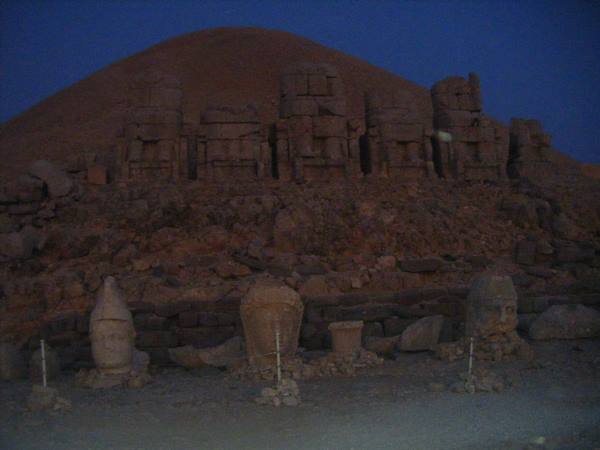
After some haggling, for 500 Turkish lira (about €200) we get a ride to Nemrut and other archaeological sites, one night's accommodation in a mountain guesthouse and the return to Kahta the next day. The arrival at Nemrut is at sunset and it's a shame not to have professional cameras. The top of the mountain is an artificial hill of stones about 50 m high, and not even the most advanced technology has been able to verify whether or not the remains of this king are there. And digging isn't possible because everything would collapse. Afterwards our friendly driver takes us to the guesthouse, 10 km further down, from where we'll set off again in the morning before dawn to see Nemrut again but above all to manage to catch the coach to Diyarbakir.
In the evening, first encounter with two tourists (by the end of the trip there will be 9 in all!), two Italian girls touring Kurdistan with a rental car. Congratulations! One note, the short night was also sleepless, due to a very strong and constant wind that seemed about to tear the house from its foundations. They said that sometimes it happens.
At the border with Iran
Day 416 Jul 2011
After the freezing and evocative dawn at Nemrut, we reach Diyarbakir, a mandatory stop as it is one of the most characteristic cities and a symbol of Kurdistan. Note that Kurdistan until a few years ago was considered "non-existent" by the Turkish government. It was even forbidden to mention the word. After decades of repression, in these last three years the government has been oriented toward a climate of détente. If it's true, we'll see in the future. 600,000 inhabitants, flanked by the Tigris, the old part is completely encircled by imposing black basalt walls, and they are the second longest intact ancient wall in the world, after the Chinese one. This lively city is inhabited for over ¾ by Kurds. Distinguishable by their dark skin, a thick black beard even if shaved, and also very thick and very black hair.
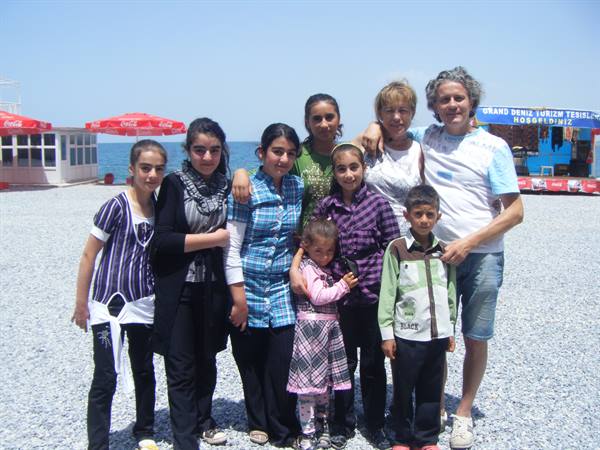
Trying to reach the city walls, we cross the poorest part of the outskirts, and continuously groups of children run toward us. "hello! What's your name? Where you from?" are the only words they can say in English, and when we say our names they answer proudly and happily with theirs. Only once did one venture to say "Money", and he was immediately scolded by some adults. Kurds have a dignity that doesn't make them inclined to begging. Another peculiarity, also present in Italy many years ago, is that children are truly obedient toward adults. If they're family, it's customary for them to help their parents, in work or in simple daily requests. And you won't see any child huffing or worse still answering arrogantly. In short, even these encounters were pleasant, although I suggest not wandering these areas alone in the evening.
A place not to be missed is an ancient caravanserai, a characteristic building with an inner courtyard and an also internal balcony. The balcony is full of places where breakfasts (only Kurdish menu) or snacks are served, while the ground floor is full of small shops selling jewellery, clothes, knick-knacks. Outside, meanwhile, the usual very rich bazaar, huge and intricate. Everyone looks at us, often smiles at us and so we're not surprised when a Kurd comes up to us and strikes up a conversation. We become friends and together with a friend of his (Turkish) they invite us to spend the evening, since it's Saturday, in a park where people drink and listen to live music. We take the risk (they are anyway two strangers) and accept.
Without ever regretting it, since both speak English, the evening is different from usual, and the typical Kurdish dances they "force" us to join are doable even for those like us who can't dance. The women while dancing are cheerful and smiling and the contact, even if only by hand, is pleasant. To conclude they take us to see an ancient Roman bridge over the Tigris, artfully illuminated, and after accompanying us to the hotel, we exchange email addresses and say goodbye warmly.
in a school in Savur
Day 517 Jul 2011
At 10 we leave the hotel, which for €20 each with breakfast was truly good value, and head toward the legendary Lake Van. Seven hours by coach (only one half-hour stop) and almost 400 km of road, initially endless wheat fields, later mountains, including a pass at over 2000 m. To be honest the road, even if it isn't exactly smooth, is wide and the curves aren't that annoying. Descending toward the lake we travel through a beautiful valley with a nice stream, but completely ruined by rubbish left everywhere. Van, a large city of over 300,000 inhabitants, is located almost on the shores of the lake of the same name, one of the largest in the world without outlets (it doesn't send water to the sea). For this reason its water is salty and strongly alkaline.
Another curiosity of the area is the presence of the famous Van cat, with differently coloured eyes and the ability to swim and hunt the lake's fish. But don't think you'll easily meet it on the street. It's even endangered. We find a cheap hotel, since the best quality-price combinations are already taken, and we throw ourselves into the river of people walking along the main avenue. Here too almost all men. In the evening, asking a Kurd for directions, we end up making friends and he takes us to a restaurant where we eat excellent meat that isn't too spicy. The next day we rent a car and go to catch the boat that will take us to a beautiful little island, to see an Armenian/Byzantine church from the 10th century. While waiting for the boat, there's also a group of kids with whom we obviously make friends.
On the return to Van we climb up what remains of the old castle, from which you enjoy a beautiful view over the city and mountains. Recommended at sunset. In the evening dinner at a restaurant, recommended by our friend from the previous evening whom we meet again, where we eat fish-based dishes. Everything delicious and spending very little, even leaving a generous tip.
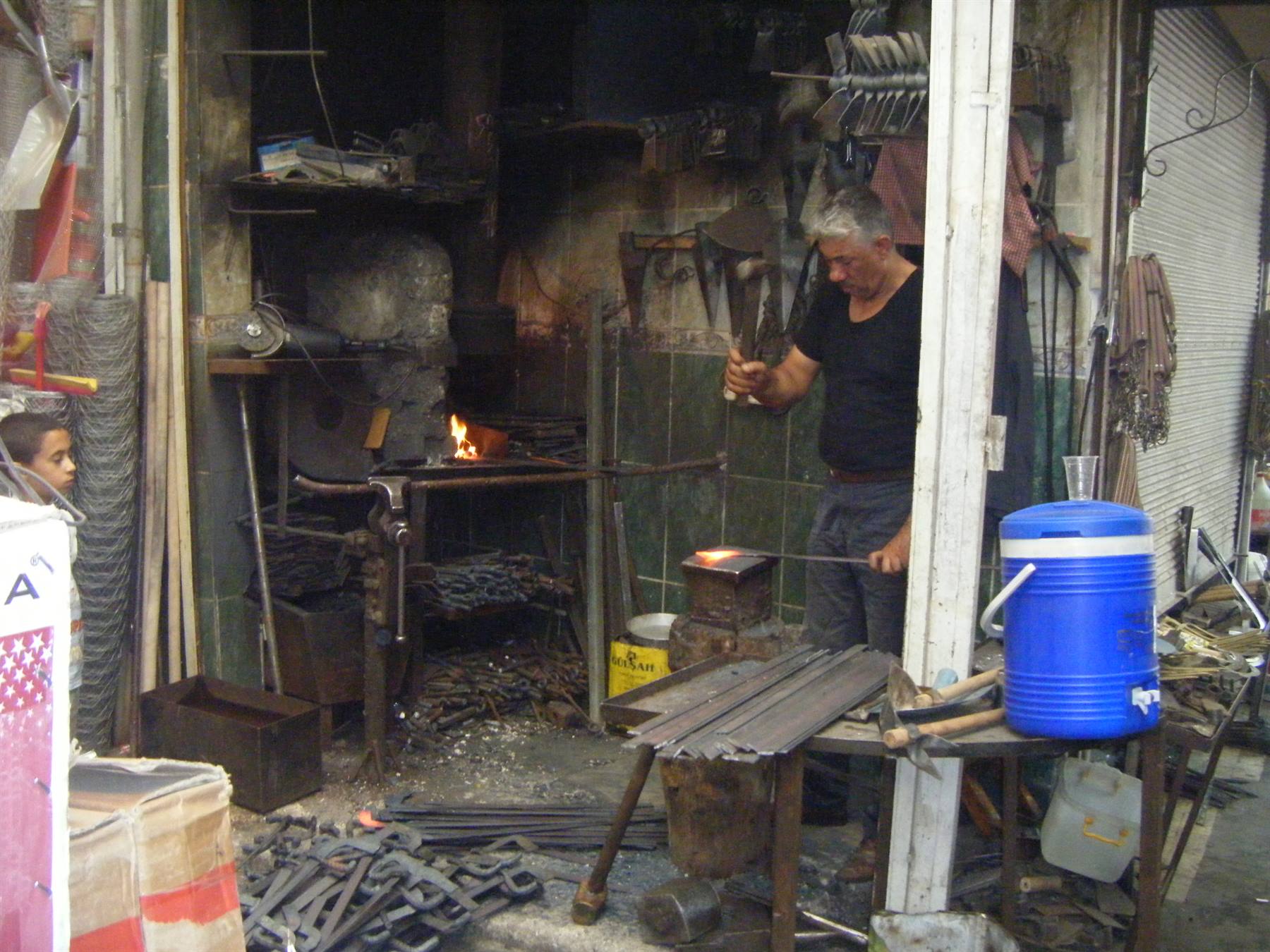
blacksmith at work... in the middle of the bazaar
Day 618 Jul 2011
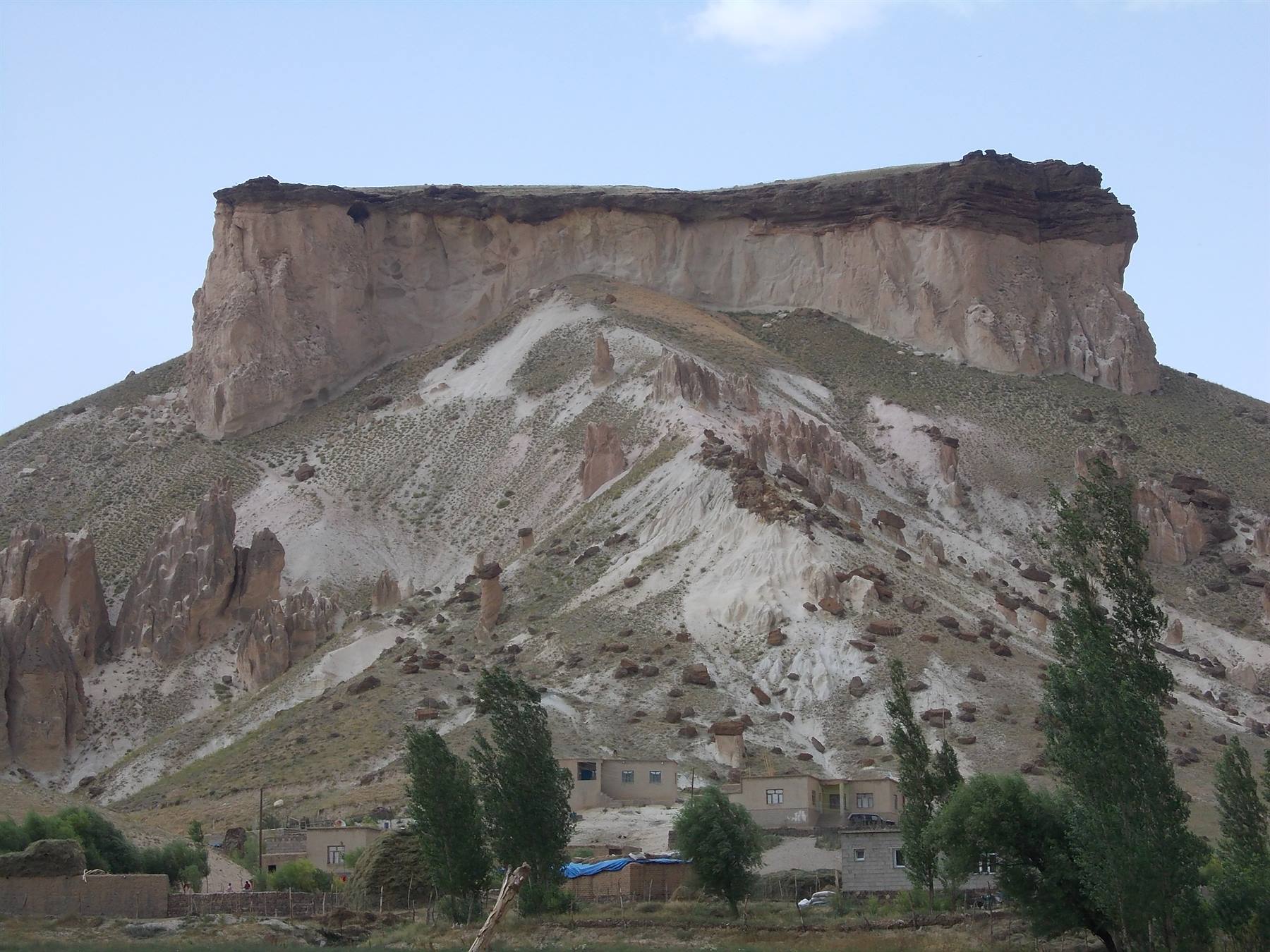
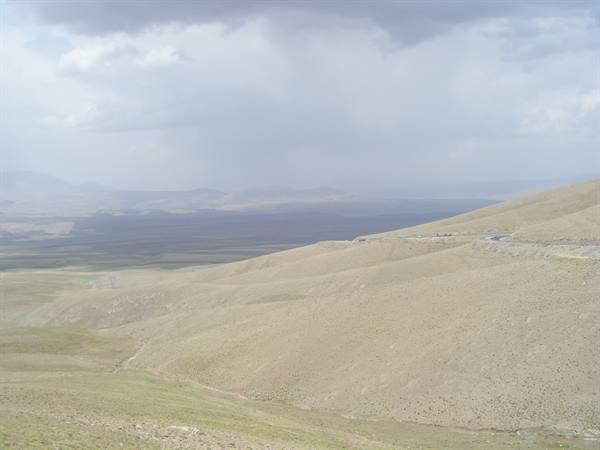
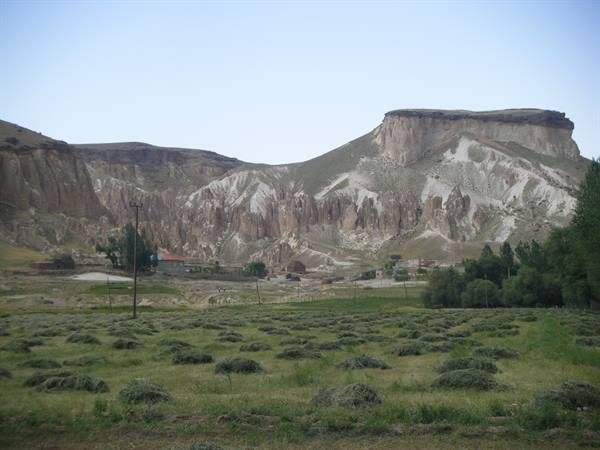
With the car we go back up a valley in the direction of Hakkari, we reach a pass at 2700 m and after a couple of military checkpoints we turn left toward another valley in the direction of Albayrak. Stunning landscape, the valley is very green around the river, surrounded by beautiful arid mountains furrowed by deep erosion. There are several mountain villages and an overnight stay could have been a good idea (obviously with private individuals, there are no inns). Here Kurdistan is extremely authentic, and for those who like trekking it's also an opportunity to hike on truly unusual mountains. It can be an alternative to the more "famous" Bahcesaray (another mountain village 200 km further west). We return to Van where our Kurdish friend is waiting for us and introduces us to a shop where they deal in carpets.
The price is good and the quality (for us laymen) too, so we plunge into buying a carpet each. They'll ship them home but beware, we'll learn when they arrive that there are customs fees on us, about 40% of the value of the goods! With the deal concluded, we have dinner and take the coach, a night journey toward Hasankeyf with a coach change at Batman.
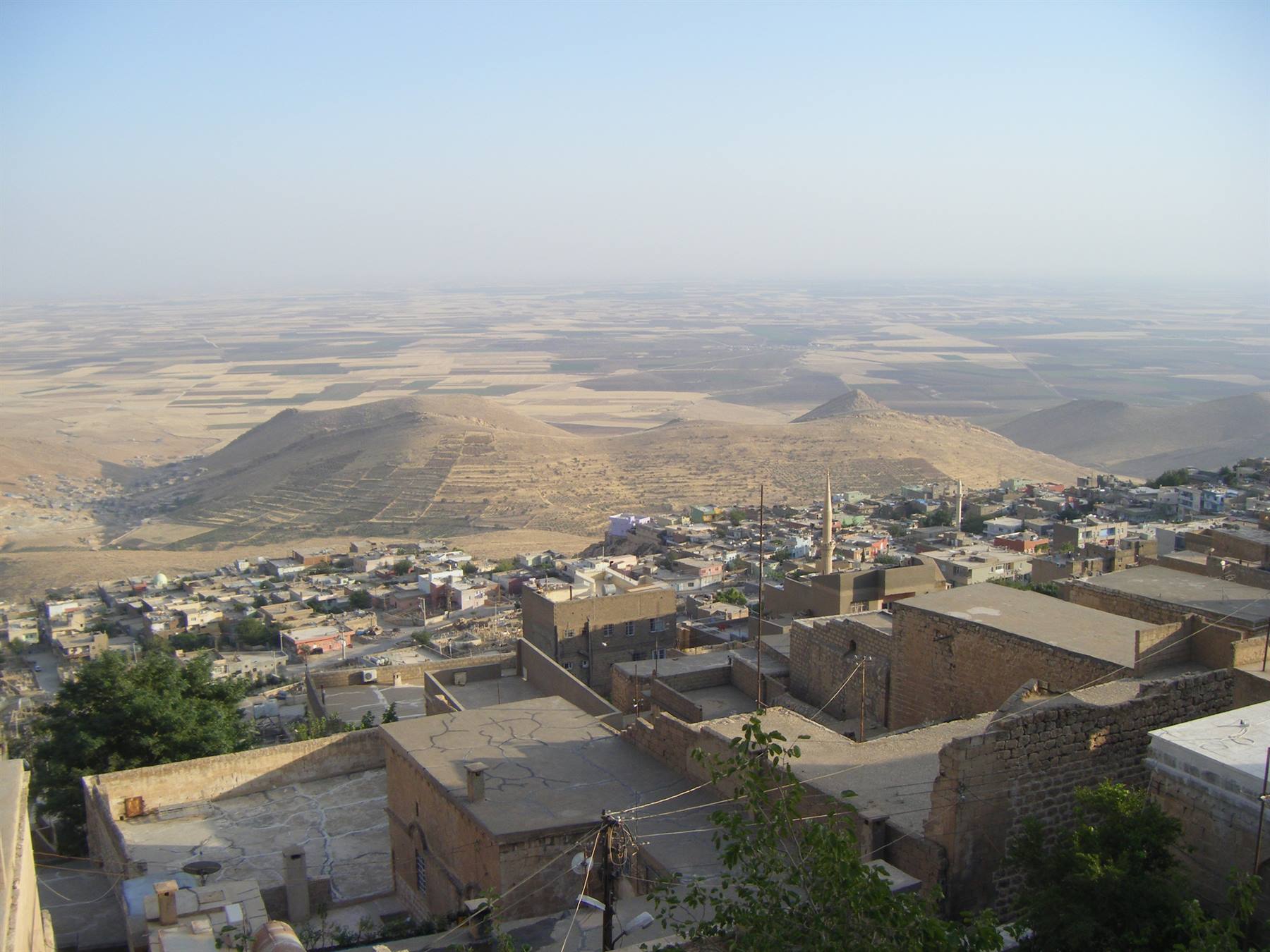
Mardin, the view stretches over Mesopotamia
Day 719 Jul 2011
At 4.30 the coach stops at a crossroads and they make us understand that we've arrived. Indeed it's Batman, but where's the station? With the help of another unfortunate Turk we walk for 5 km and reach the station which isn't the main one where the coach was going, but a secondary one where minibuses to Hasankeyf are taken. My friend's violent rage toward the agency, the coach driver and more or less all of Turkey. They didn't tell us we'd have to make it on foot. Anyway finally at 8 we can get on the minibus and after a couple of hours arrive in this small town on the Tigris, famous for having the remains of one of the first human settlements in history, apparently 12,000 years old.
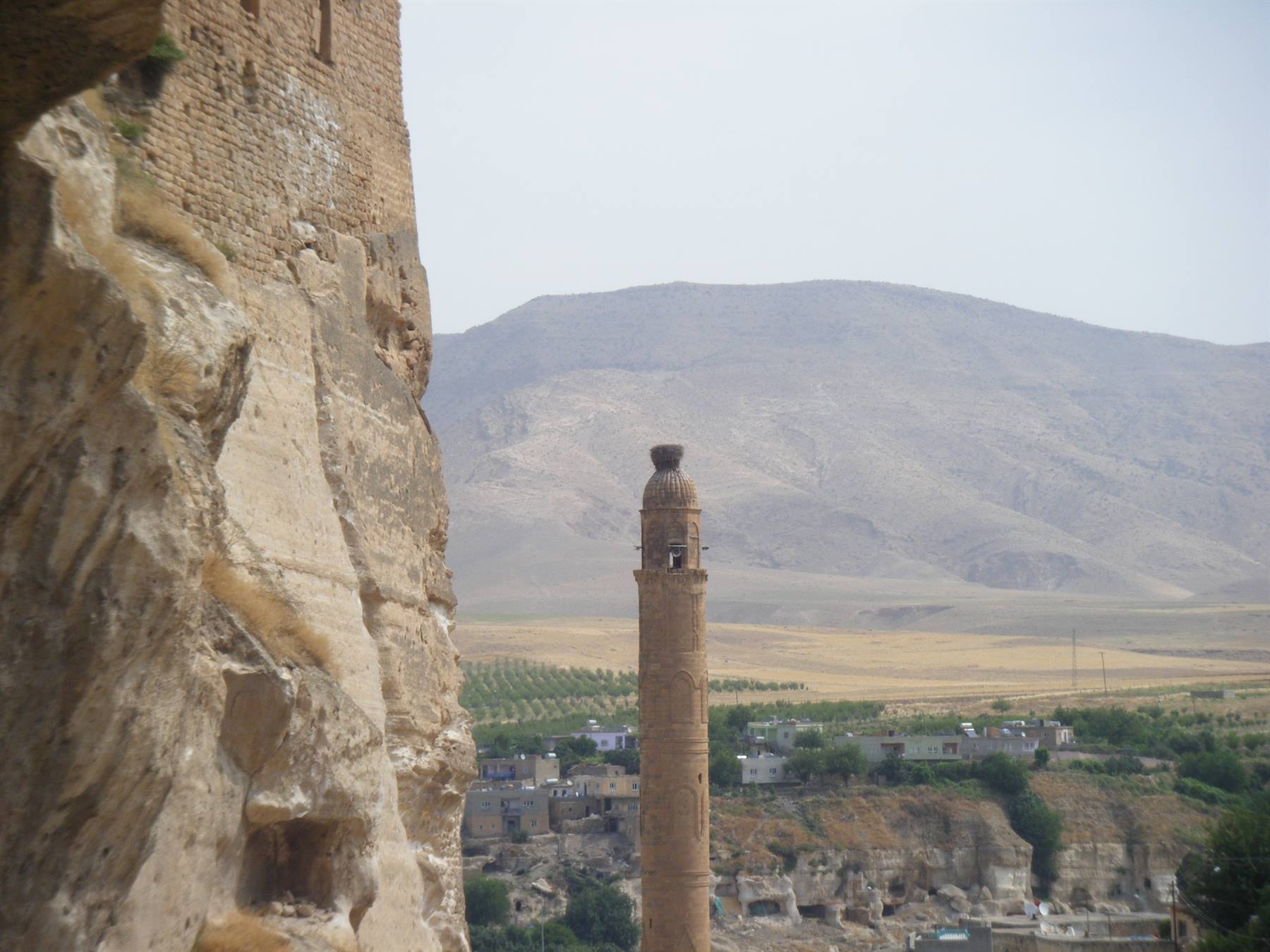
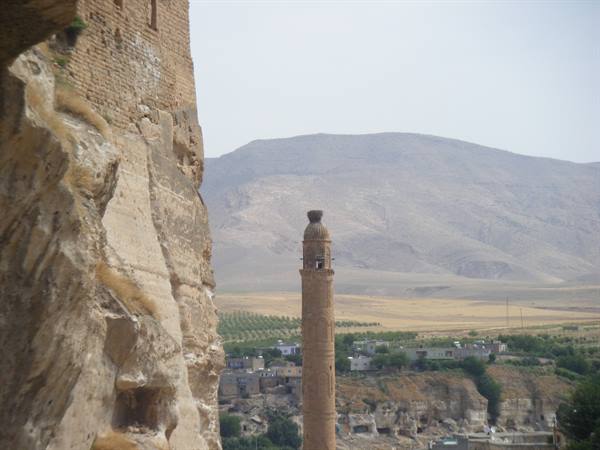
We visit the remains of the village, partly they're practically caves and partly Roman/Byzantine constructions, and all with the prospect of being partially submerged by the lake created by a dam that the Turkish government will build if supported by funding from Turkish and foreign banks. Against this project, in 2009 Mauro Colombo created and directed a documentary film: "Hasankeyf waiting life". In the afternoon we take the first minibus that arrives, destination Midyat, where we won't stop but will take the first bus to Mardin, a city absolutely not to be missed. From this city perched at 1000 m altitude, you enjoy a splendid panorama over the Mesopotamian plain of Syria, about 20 km away. The guidebook indicates a hotel that might suit us, ERDOBA EDLERI.
Indeed it's very nice, an old building completely renovated and with good taste, almost luxurious even by European standards (a single room costs about €40, with breakfast), and at the reception the beautiful girl of typical Turkish beauty, oval face, very black eyes and hair, speaks good English. The location is also enviable, the roof is a completely open terrace, from which you can see part of the city and the upper walls, and part of the lower city and the Mesopotamian plain. Beautiful view, especially with the cool evening breeze. We have dinner in one of the only two restaurants (these too luxurious), where you can drink wine or beer, and where they play live music. Obviously some Kurds invite us to dance and we can't refuse.
Adana, inside the mosque
Day 820 Jul 2011
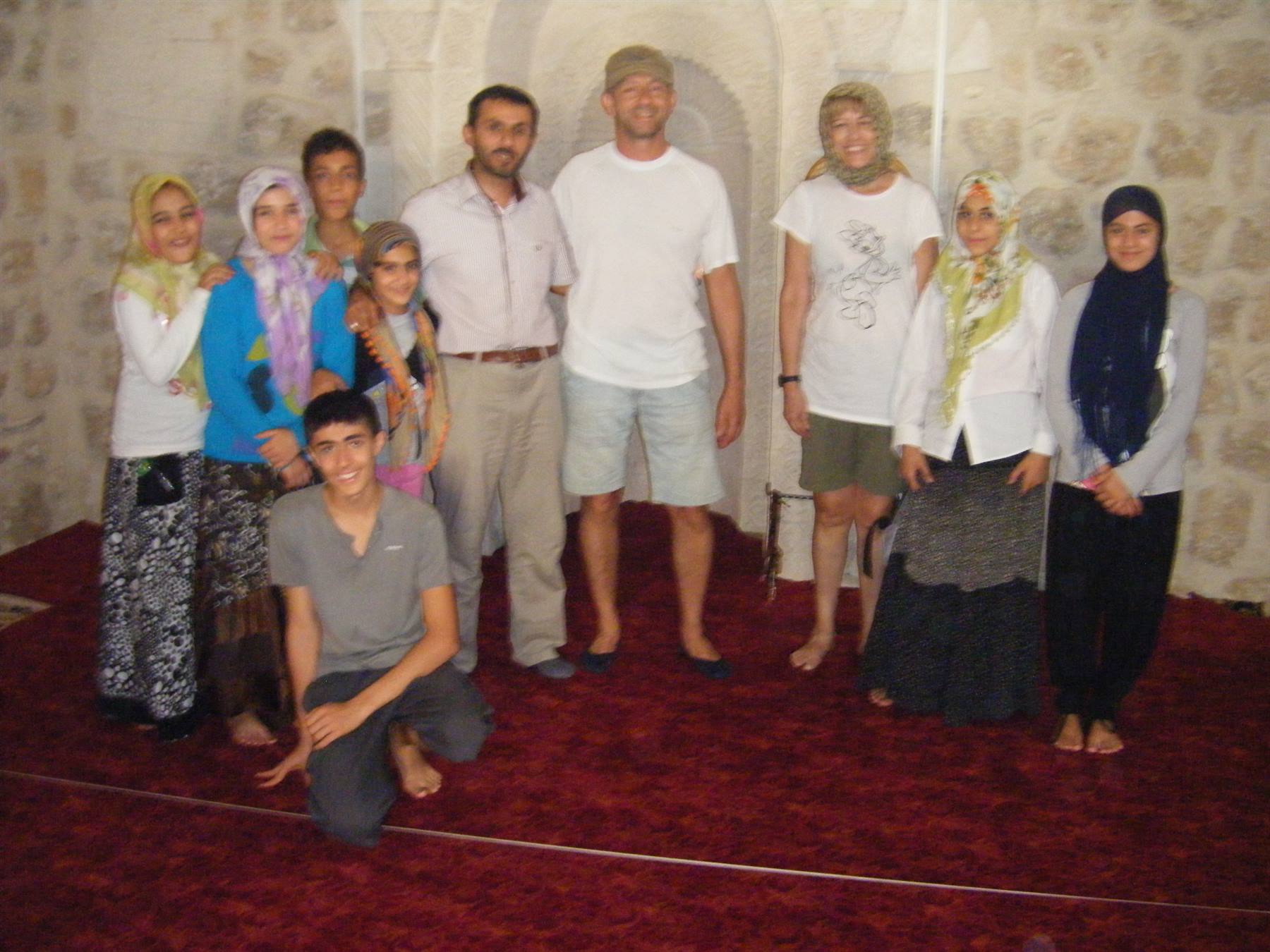
After a truly abundant breakfast, we go down to the Otogar and take the first minibus to SAVUR. 45 minutes of fast and bumpy driving but all in all the town is worth seeing. While strolling we glance inside a courtyard enclosed by walls, where there's a room in which a man is holding a lesson for some kids. The place is a MADRASA, and the teacher as soon as he sees us invites us in. We take off our shoes since this room is also used for praying, the teacher tries to explain himself with the very little English he knows and has a little girl read the Koran, which they were studying at that moment. You sense something strange that I don't immediately grasp, then I understand. The kids, almost all girls, are all smiling, and you notice that the relationship with the teacher, who is also very kind to them, is one of deep respect and obedience.
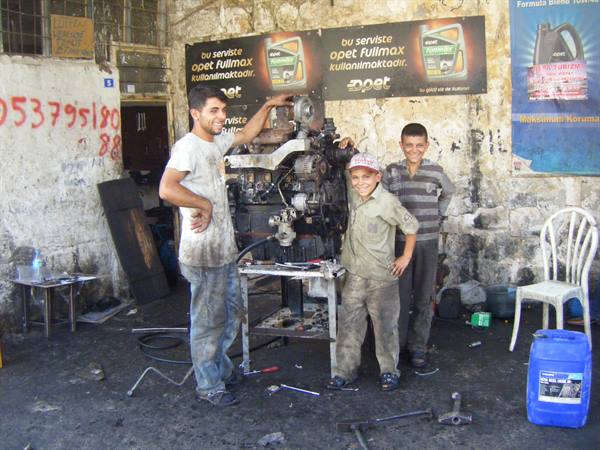
It vaguely recalls school as it must have been in our countryside towns a few decades ago. While waiting for the minibus back to Mardin, we notice a garage where some mechanics, the youngest are 10 years old, are trying to repair the engine of a tractor. The photo is very eloquent, and the optimism and determination of these mechanics despite the very scant means is striking. Return to Mardin and a tour of the bazaar, this one too of infinite length. The famous soap produced in this area still in an artisanal way is very popular, made with olive oil with the addition of a very precious wild pistachio oil. In fact the colour is almost always an irregular emerald green. The minimum amount of caustic soda also makes it a gentle detergent, without taking anything away from its antibacterial properties. The purchase is also so convenient that we buy more than one.
In the evening, dinner at the second restaurant where they serve wine or beer. Slightly lower quality than the first, but a beautiful venue with an excellent location, tables on a terrace with a view.
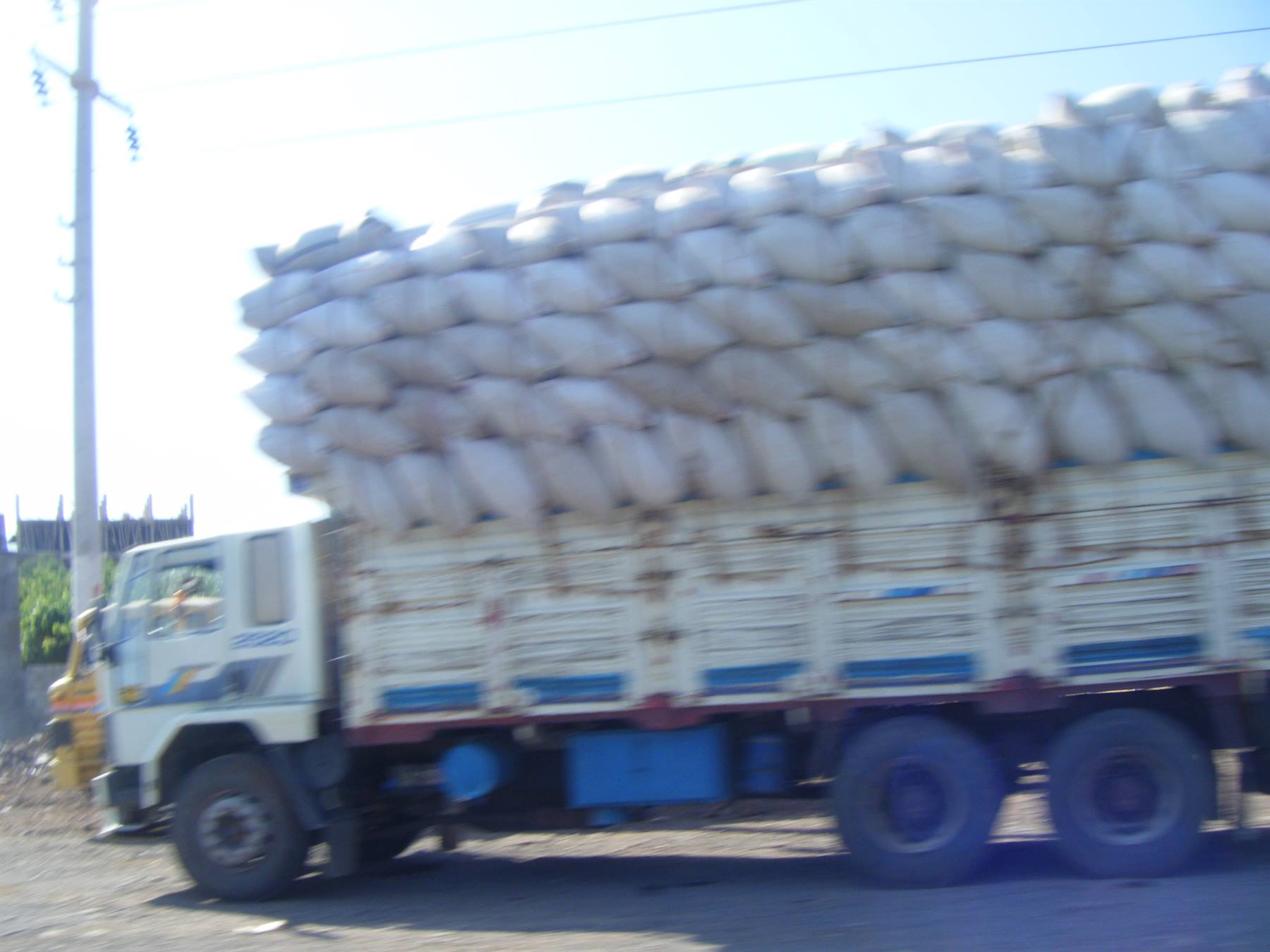
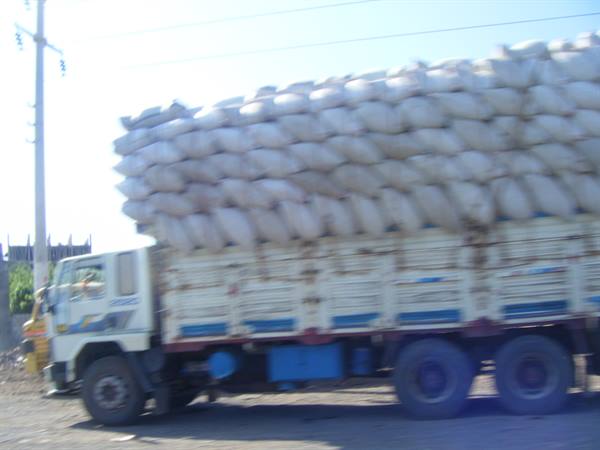
load... safely?
Day 921 Jul 2011
We go down to the station where we have the coach tickets for Sanliurfa, a city of 400,000 inhabitants near Syria. Note that the day before we had bought tickets at an agency, from which we then returned saying we wouldn't use them since the time wasn't convenient, and at another agency we had found a better departure. We expected they would simply tear up the tickets, instead they even refunded all the money we'd spent! This chaotic city is made up of Kurds, Turks and Arabs, and is much frequented by pilgrims of various religions. The heart of the city is Hizir Ibrahim Halilullah, a green area where there are mosques and the famous canals packed full of large carp considered sacred. We climb to the top of the castle ruins where we're surprised by a violent storm with hail, the first of this hot trip.
Then around the bazaar, where it strikes us to see inside it some blacksmiths at work with anvil and hammer, complete with a forge for heating the iron. Next to haberdasheries and perfumeries! We spend the night at the Ipek Palas hotel. It's certainly not luxurious but neither is the price, 35 TRY (€15) for a single, with bathroom and air conditioning. Here more than in any other city, women are very covered, often with a long light-coloured trench coat, very fashionable in its own way. You almost never see women without a veil, or out on their own. At the same time, however, it's curious how sometimes they cast brazen looks straight into the eyes at me and my friend, sometimes with smiles or even beginnings of conversation: "where are you from?" – "Italy!" - "ah-ha…" the umpteenth pleasant confirmation of appreciation toward the Italian people!







0 reader comments