We were supposed to take a cruise to the North Cape and we ended up doing a thorough tour of Syria... The cheap cabins on the cruise had all been booked since November, and since by chance I had received the news that Syria does not allow Israeli visas in your passport and sooner or later we would like to go to the Holy Land, together with the name of a Syrian agency with which to plan a tour...here we are catapulted into the Middle East or, as they recognise themselves, the Near East! I booked the flights on my own, and the cheapest prices, together with the choice of a decent arrival and departure time (it seems, in fact, that Damascus airport works mainly at night!), determined the length of the tour, barely 10 days. We paid 407 € each and the airlines were Alitalia to Cairo and Egypt Air to Damascus.
There was nothing at a lower price that arrived and departed during the day, despite the many tips read in travel accounts: Austrian, Chetzch, Turkish and various other airlines that made the strangest stopovers! During the past months I and the manager of the Sherazade Travel agency, Mr. Moheddin, exchanged many emails with which we put together one of the most classic tours. We were to have a female guide for ourselves, Diala, an archaeologist who did her research doctorate in Rome, and the driver, Dareh, at our disposal for 9 days on board a very comfortable air-conditioned van. Before starting the long travel account, I just want to say that this country left a mark on our soul and that almost everything we saw, whether for its context or for its intrinsic characteristics, was literally MAGNIFICENT!
Day 123 Jun 2010
Arrival
We arrived at Damascus airport from Cairo at around 16.15. The difference compared to Egypt is immediately obvious: cleanliness, order, queues respected and, once outside the airport, orderly and disciplined traffic and most of the cars new...almost all Korean, Japanese and...Chinese! At the airport Dareh is waiting for us, the man who will be our driver for almost the whole tour: rugged, sturdy, with fair colouring and an open and sincere smile, as well as highly contagious. He leaves us at our first hotel, the Al Zaetona Hotel, in the Christian quarter inside the old city of Damascus.
Before leaving I had read a beautiful novel by Rafik Schami, a Syrian writer who has lived in Germany for many years, and it was with great pleasure that I discovered that we really were in the part of the city that had played such a large part in the novel! The hotel is a Damascene house: very beautiful even if not luxurious, a choice we made for the whole tour, thus giving up the possibility of having pools in which to cool off now and then at the end of the day. In the end we missed this possibility, but the hotels were all very characteristic and often with authentic and refined furniture.
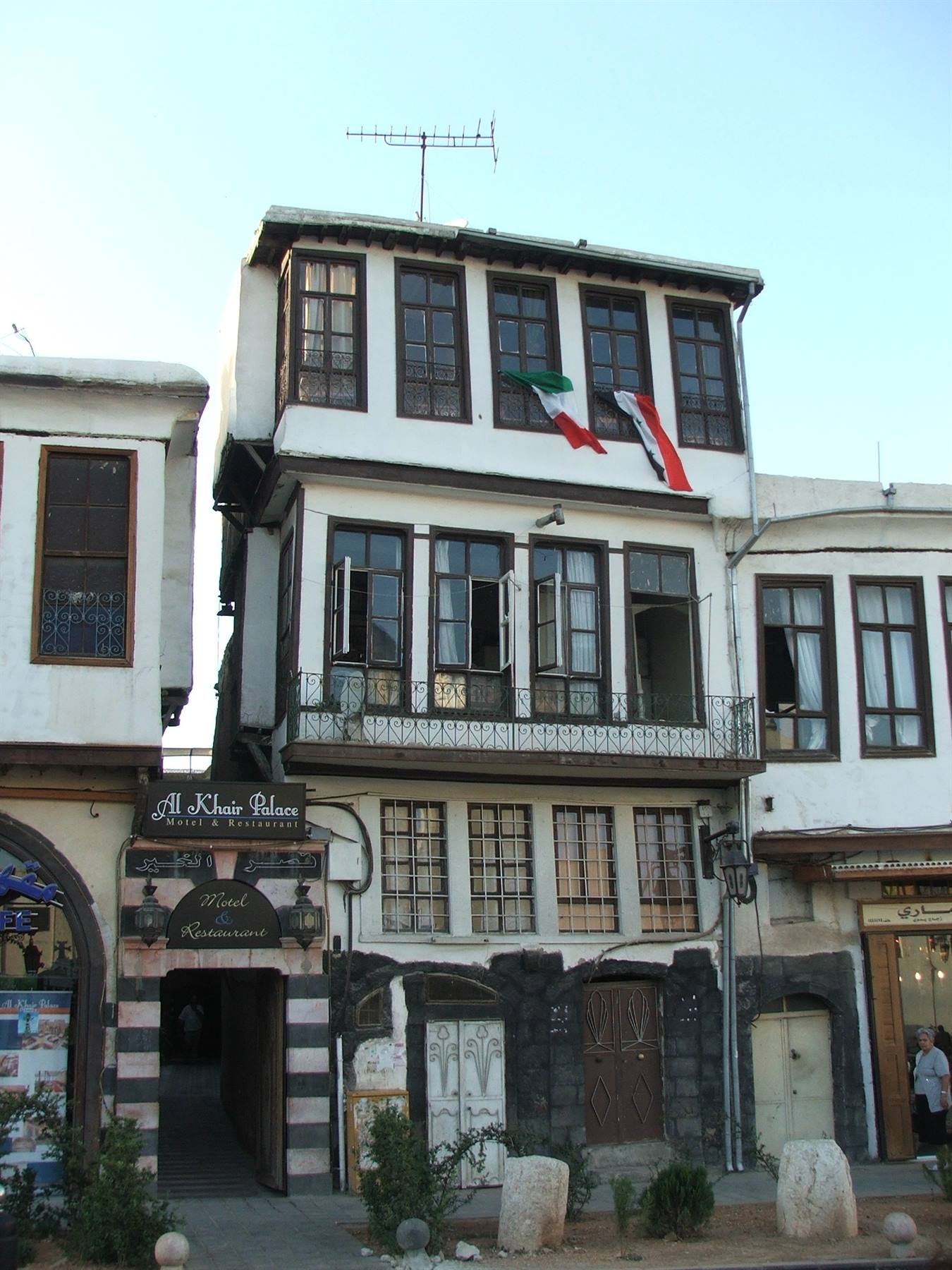
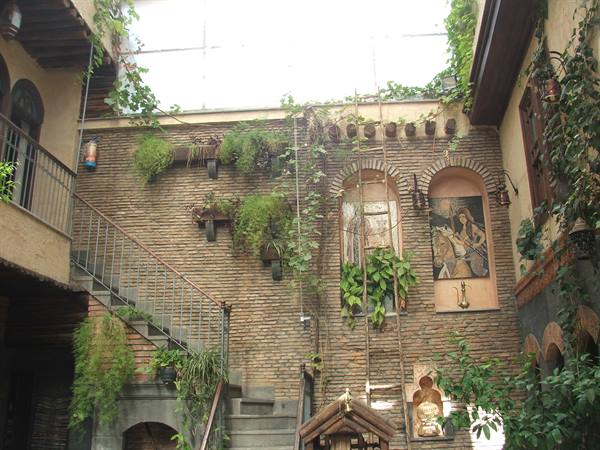
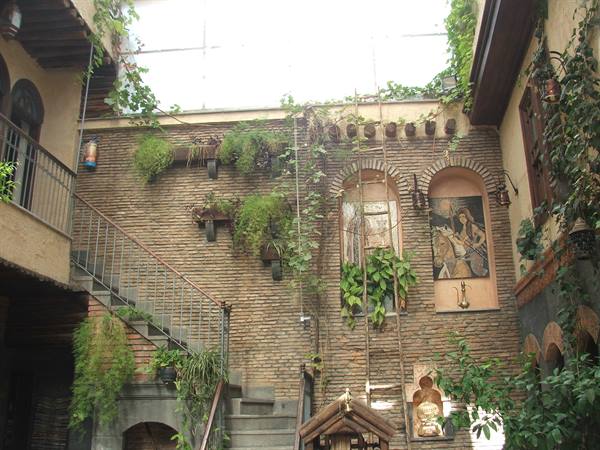
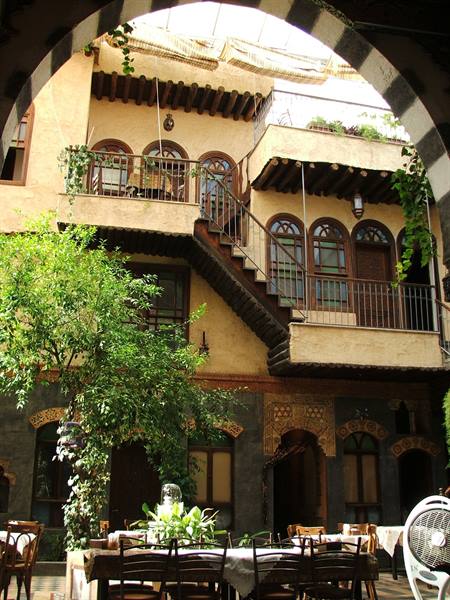
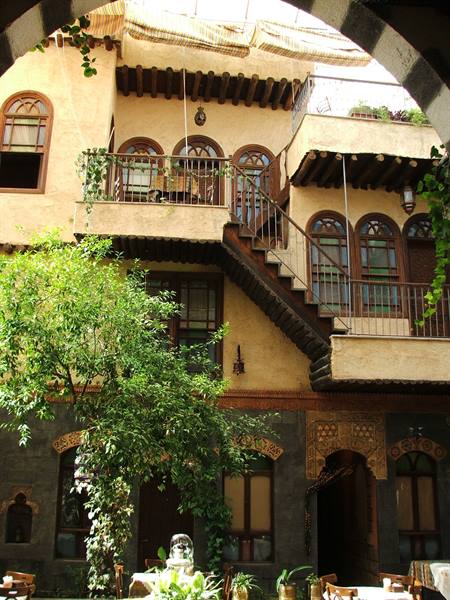
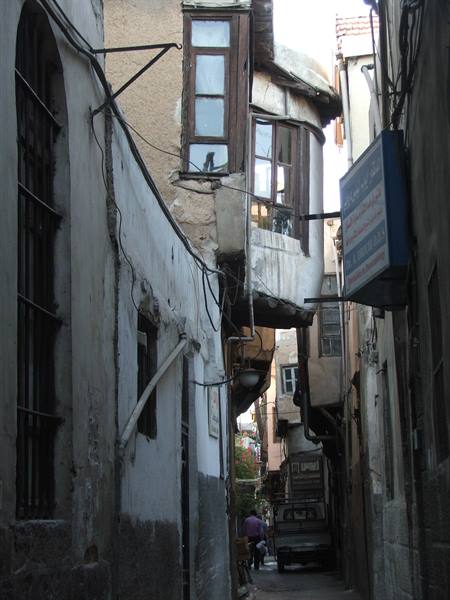
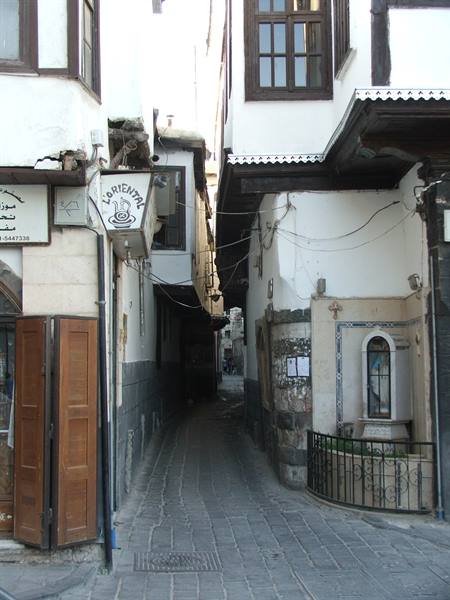
The Damascene house consists practically of a crooked little door that opens onto a narrow, dark corridor, at the end of which it seems there is a wall, because the real little door is on the right or left and opens onto a courtyard, generally with a fountain in the centre, lots of plants (even small trees!), at least one cage of little birds, lots of doors and internal windows at various heights and a system of cloths that can be opened over the courtyard.
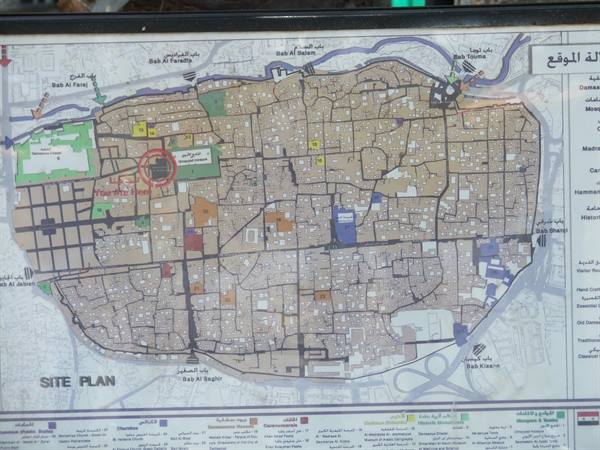
All this, to guarantee the maximum of privacy and not to give the impression of luxury, which instead inside there often is! I read somewhere that Damascus is a city that does everything to hide its beauty, precisely because it knows it has it...and at the end of the trip I can only agree! Many hotels and restaurants are derived from Damascene houses and this then throughout Syria; moreover, these houses, which are found in the historic centre, being UNESCO heritage, cannot be modified, especially on the outside.
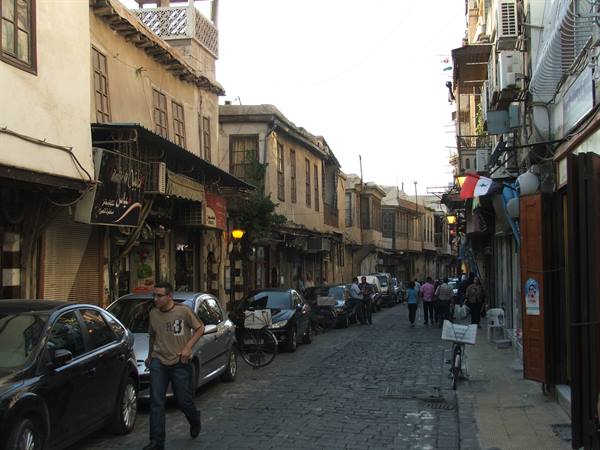
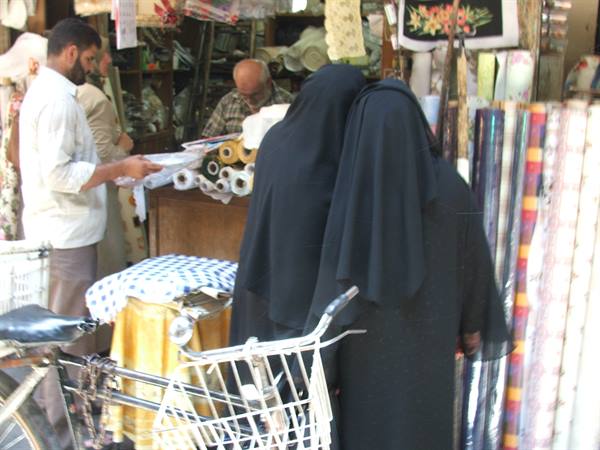
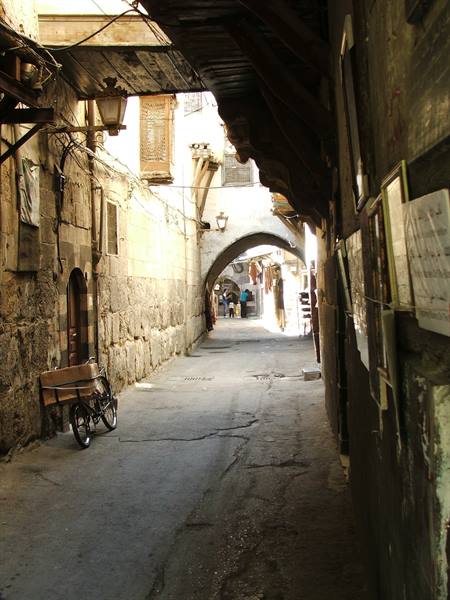
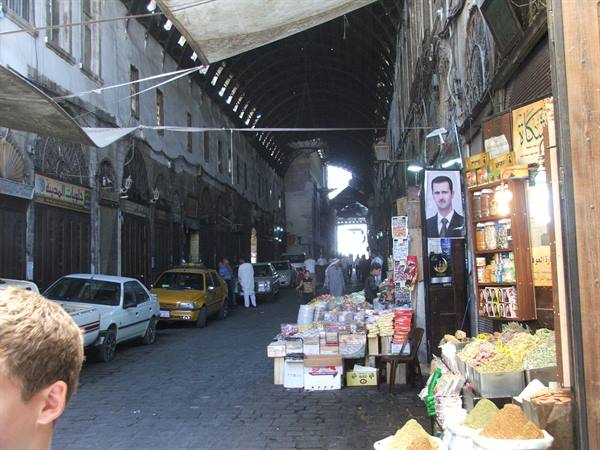
We settled into the rooms, where I noticed 2 pairs of little wooden clogs...at first I thought someone had forgotten them, but when at the end of the tour we return for 4 days to this hotel, but in different rooms, and I find others...I discover that they are put there on purpose, because they are one of the symbols of this fascinating city! The kids are not well and are sleepy, so, since we are in the centre and it feels like being in a big village...we go out to do the first scouting on our own! The alleys are very crowded and clean, despite people throwing everything on the ground, because there are street cleaners constantly cleaning. There are lots of shops and, although they shouldn't, there are many cars that are sometimes lifted bodily by passers-by to get past a narrower point, when it is impossible to solve.."the passage" simply with normal manoeuvres.
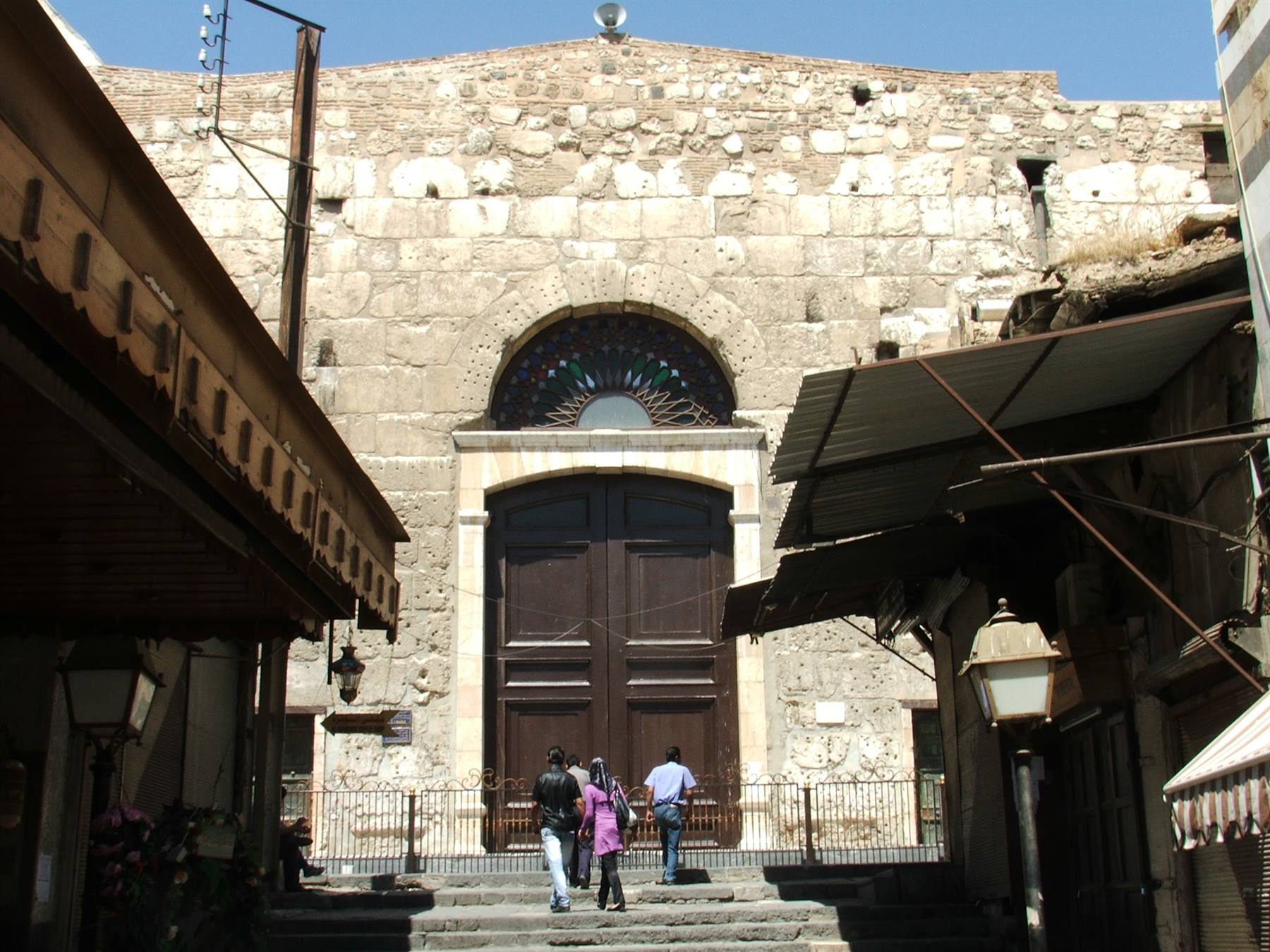
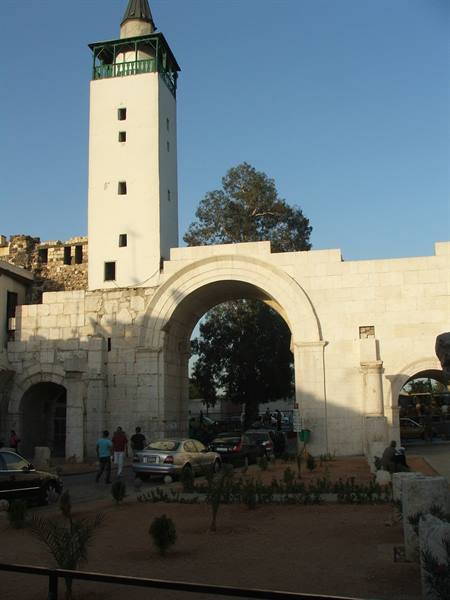
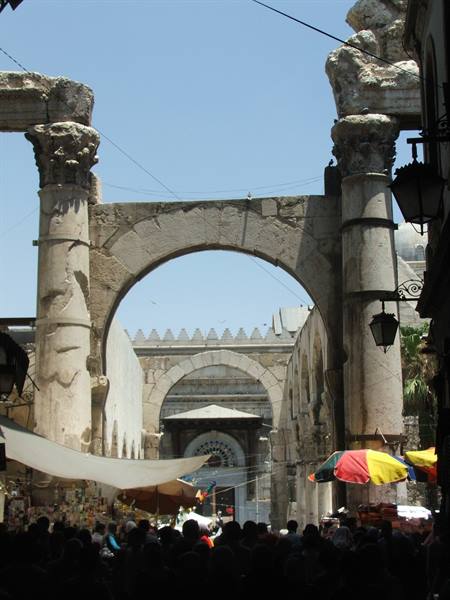
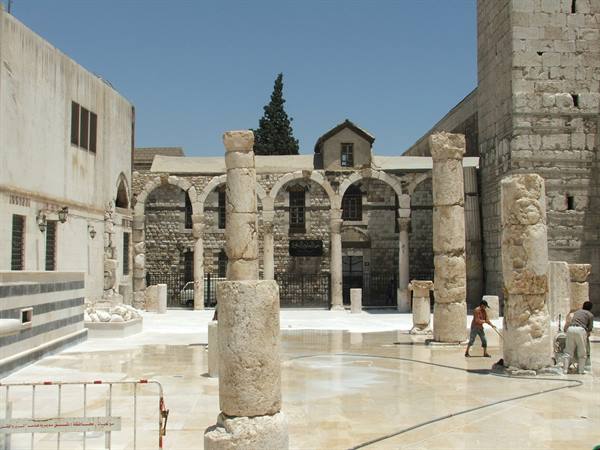
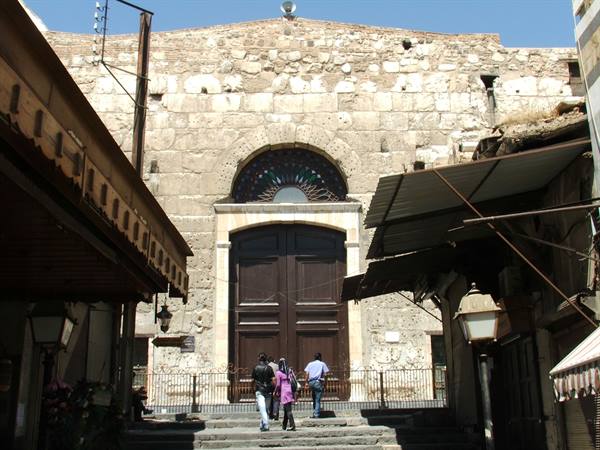
Often you can't walk, but it's pleasant. We reach the Mosque, Simone manages to slip inside, but I, despite an improvised veil and a skirt down to my ankles, am immediately intercepted as a tourist and cannot enter because by now the ticket office is closed. You can glimpse a marvellous courtyard...We go back to the hotel, where we find the kids still exhausted and without appetite, so we manage to eat and go to the Elissar restaurant, which I will later discover from Diala is the typical one for foreigners, also in terms of prices: in reality it will be one of the cheapest we come across in the whole trip. On average, we spent between 15 and 25 € for 4 people.
The cuisine is more Mediterranean than Arab: there are many starters based on salads and creams to be eaten with Arab bread (which they always bring cut into "wedges" folded in a transparent plastic bag), the meat is very good, there are lots and lots of vegetables, chickpeas are used a lot instead of broad beans and cous cous does not exist. The prices of the food sometimes seem disproportionate to us: for example tea, to which they are very attached at the end of a meal, costs as much as a salad! I would understand it for an imported drink, but tea...! We go back to the hotel after a pleasant walk amid a commotion that seems greater than the day before's!
Hama
Day 224 Jun 2010
Departure...Maaloula,Krak des Chevaliers,Hama
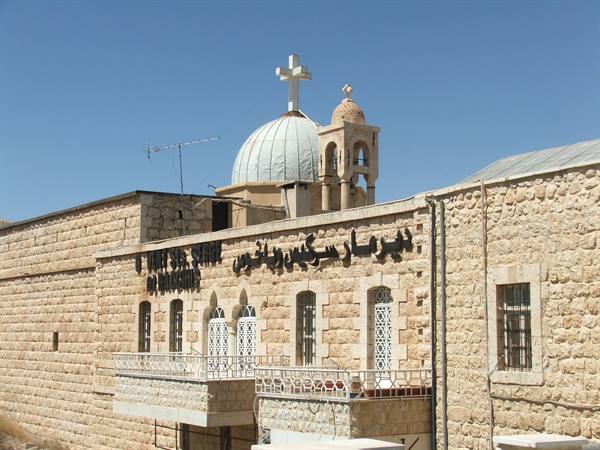
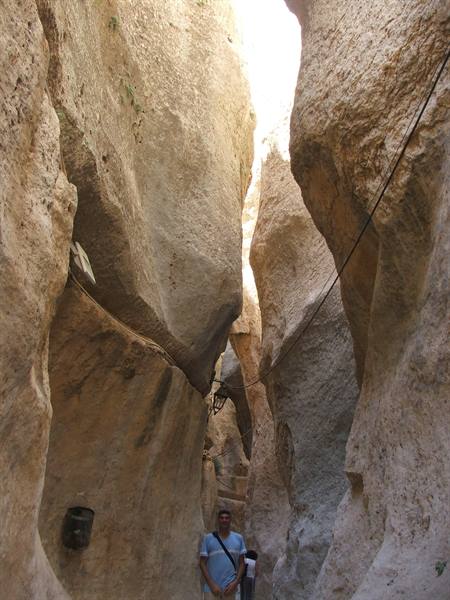
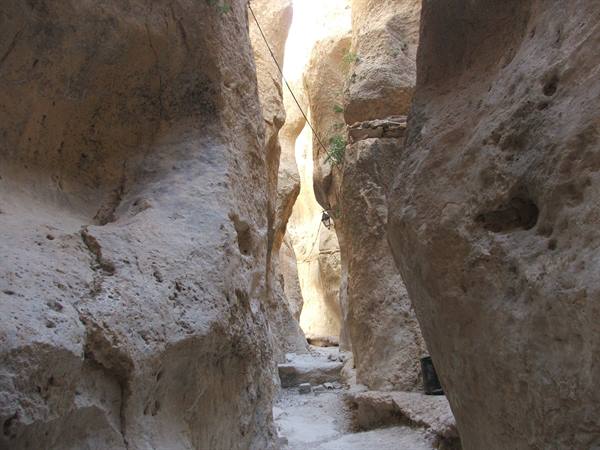
In the morning at 9, after an excellent and abundant breakfast (yoghurt, olives and soft cheeses, which we will always find, little biscuits, fruit, tea, juices and sesame in all forms..), we meet Diala, our guide, and immediately set off for the first stop, Maaloula. A mutual liking is immediately established between us that will grow day by day and turn into a strong empathy. At Maaloula we stop to visit 2 Christian convents: that of Saint Sergius and that of Saint Thecla, also visited by very many Muslims. In reality it is the only part of the trip that says nothing to us, neither from a secular point of view...nor a sacred one! The only interesting thing is one of the roads to reach Saint Thecla, a narrow and winding passage carved by an ancient river into the rock, which recalls a little the vie cave carved by the Etruscans in our Tuscan Maremma.
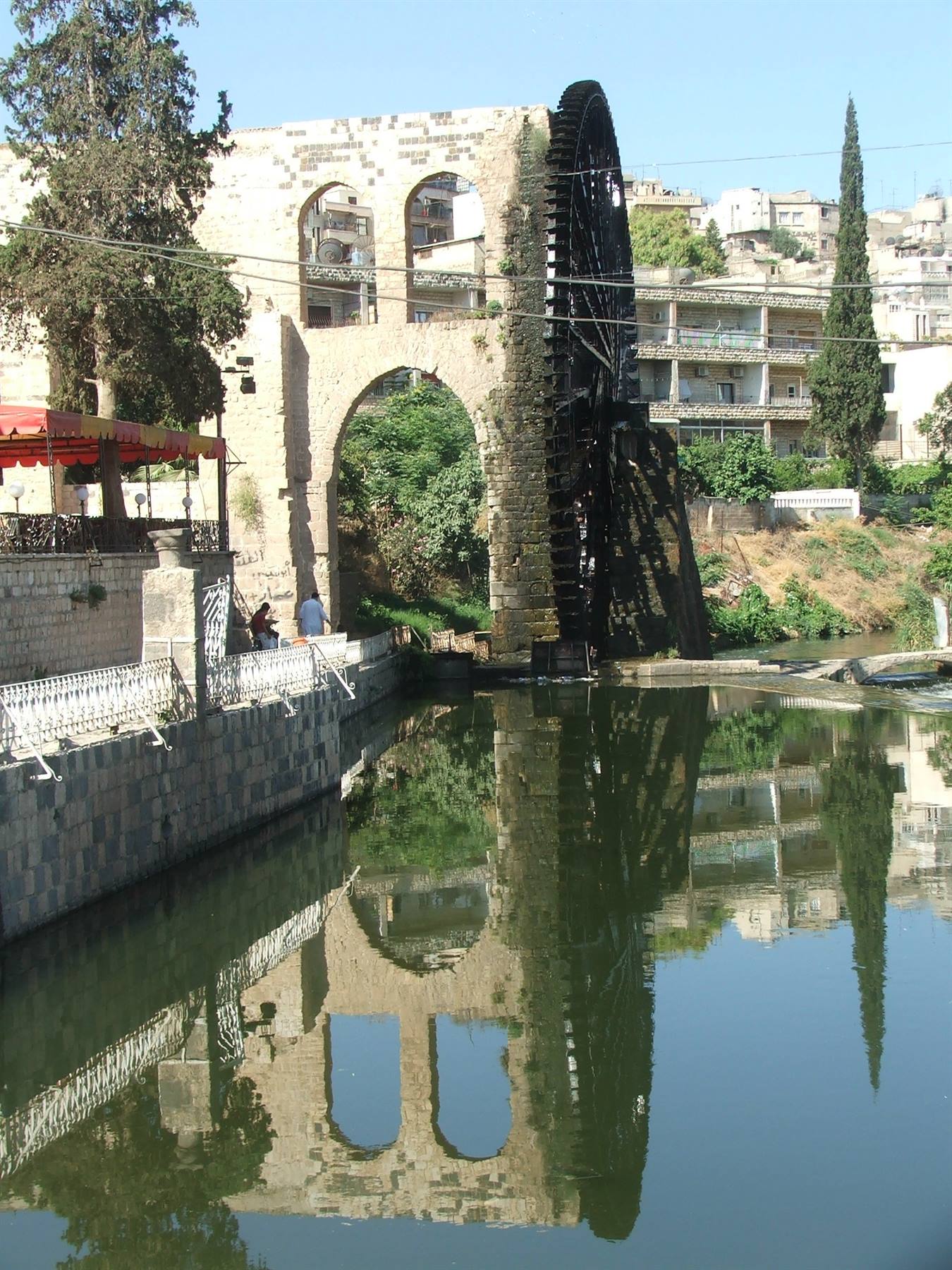
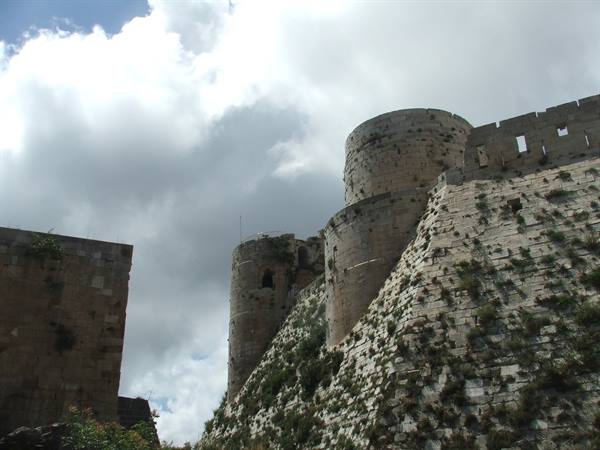
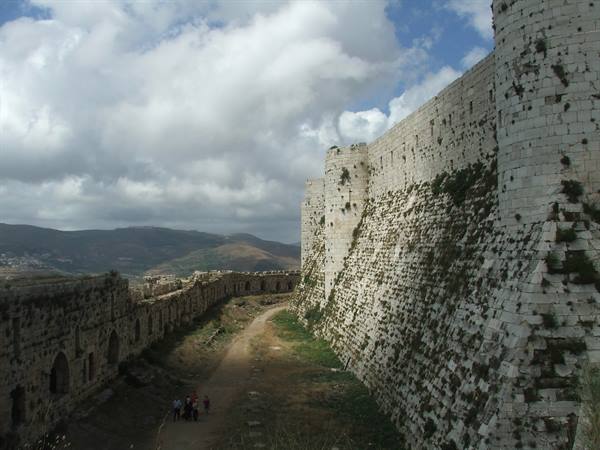
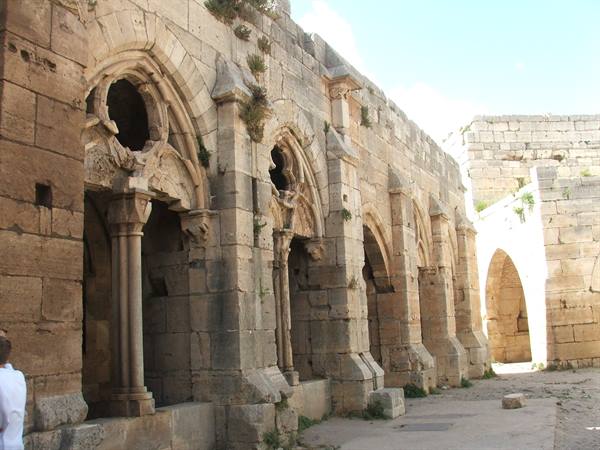
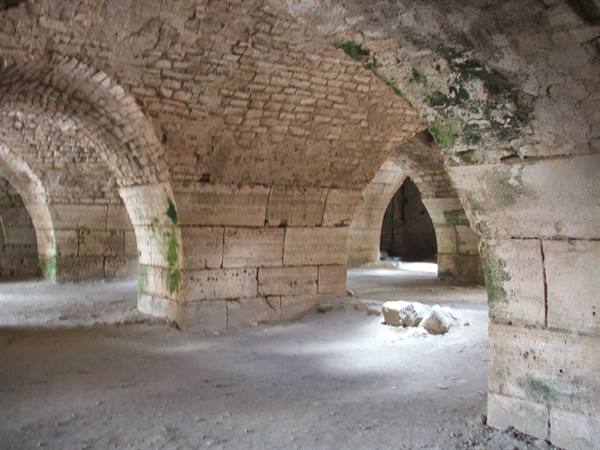
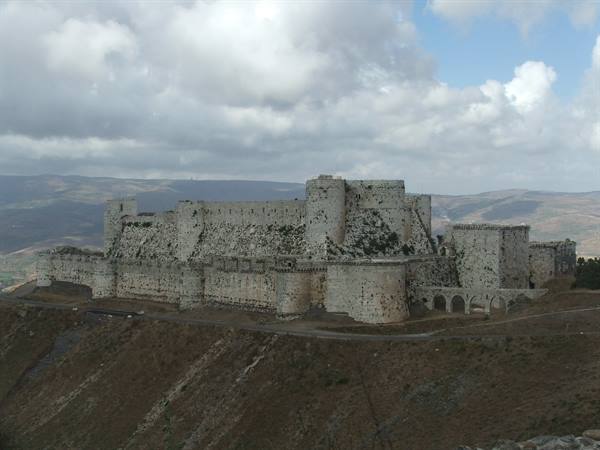
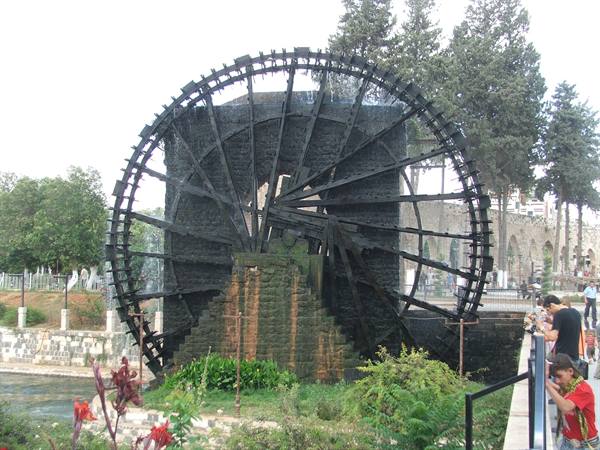
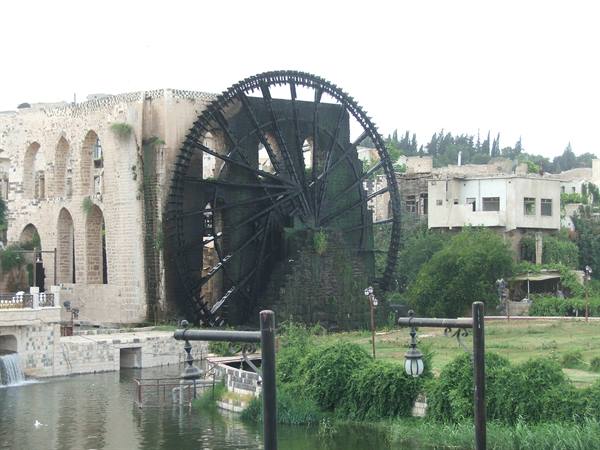
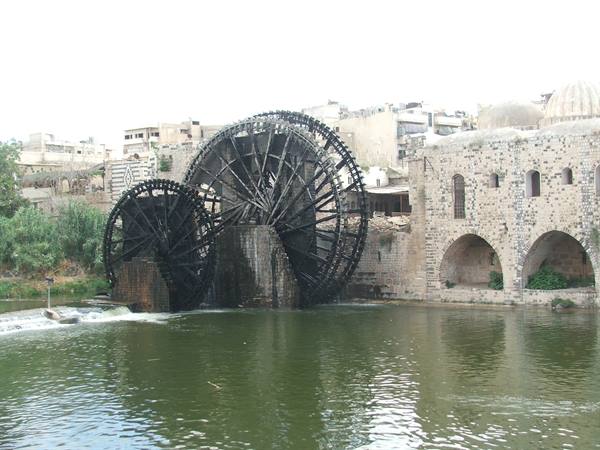
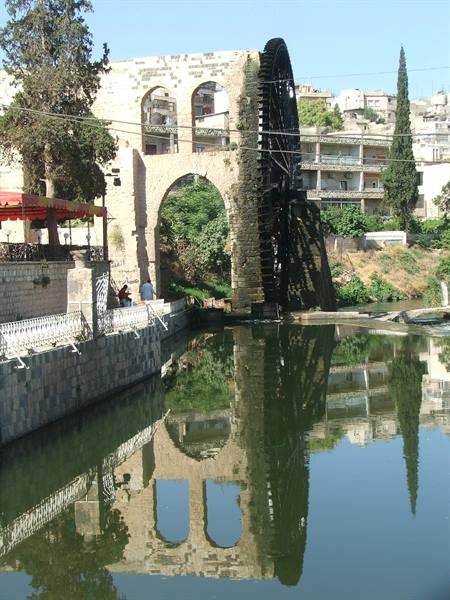
We set off for the Krak des Chevaliers, a mighty castle built by the crusaders and inhabited for at least 2 centuries by the Knights of the Order of Saint John, that is the Knights of Malta, before being besieged by the Arabs. Well, I must admit that, both for its position and its size, I have never seen a more magnificent fortress castle in my life! The last stop of the day is Hama, the city of the Norias, where we will spend the night. The city, predominantly Muslim, is banal and modern; its only characteristic is these Norias, gigantic wooden wheels, which have served for centuries to channel the water, of which the city is strangely rich, onto a masonry aqueduct that also reaches the fertile surrounding countryside. These wheels are fascinating also because of the strange and fitful sound they emit as they turn, halfway between a creak and a squeak.
The historic centre of Hama no longer exists, because in 1982 the president at the time, father of the current one, convinced that there was a nest of rebels in the city who wanted to stage a coup, bombed it heavily. No one will ever know how many died: the official figure is 10,000, but people speak of 25,000...it seems, however, that the inhabitants of Hama have not forgiven. Our friends leave us at the Orient House Hotel, another beautiful former Damascene house, at around 17.00. It's early, we're not tired, but outside there is nothing to do: everything is closed because it's Friday and in any case the city isn't beautiful, the river, where it would be nice to stroll, is far away. So, resigned, we stay in the hotel, where at least we can also have dinner at an excellent price and eat excellent food.
Saint Simeon: the column
Day 325 Jun 2010
Apamea,Serjilla,Ebla,Aleppo.
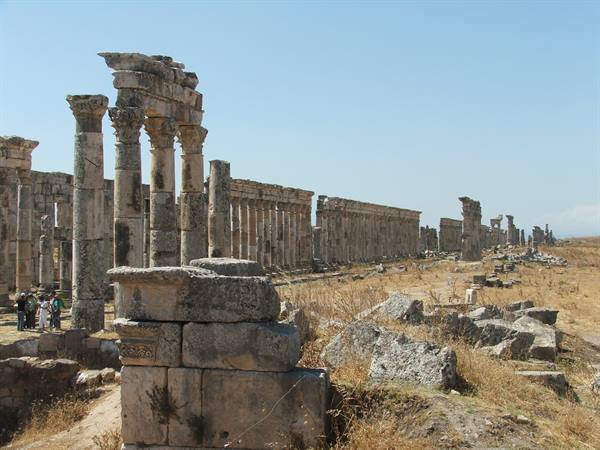
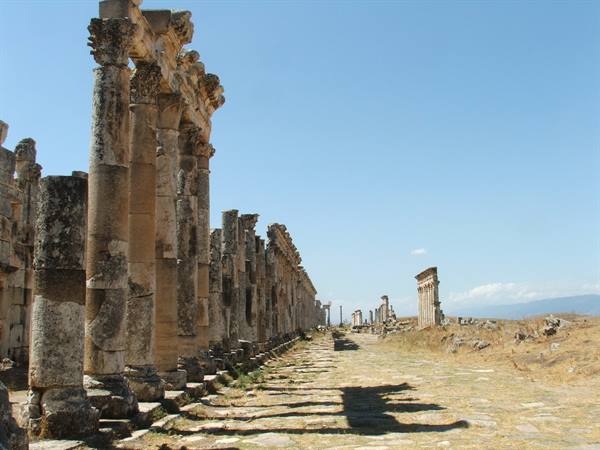
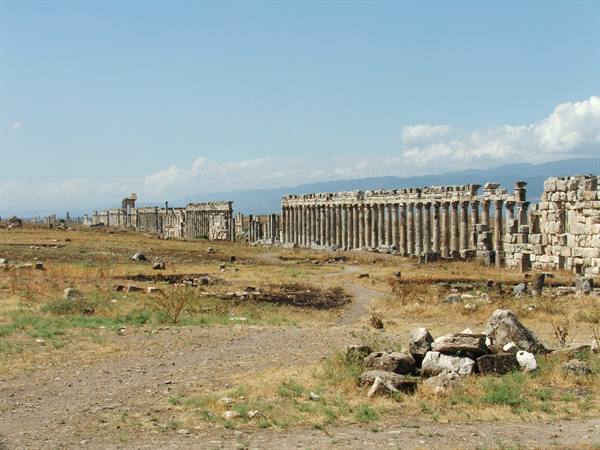
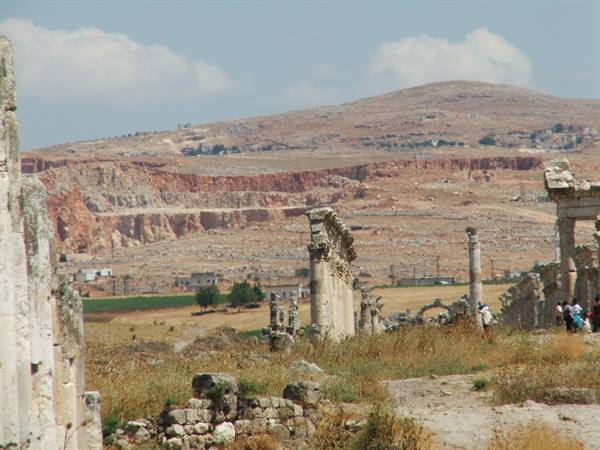
On Saturday morning we set off for Apamea, a city built by one of Alexander the Macedonian's generals. There's almost only us there, as at almost all the archaeological sites we'll visit, because here the tourist season is mainly concentrated in spring. We could only make this trip in this period, but our trust in the dry climate has been rewarded, because we'll never find excessive heat... in fact, sometimes it's even pleasant, and we get to enjoy the monuments as masters of the place. What can I say about Apamea? It's the second Syrian archaeological site by number of visitors, and indeed the 2 km of colonnaded street will remain unforgettable! Then we go down into the town to visit an Ottoman Khan that houses ancient mosaics brought from a nearby church, vast, beautiful, but covered in dust and badly lit.
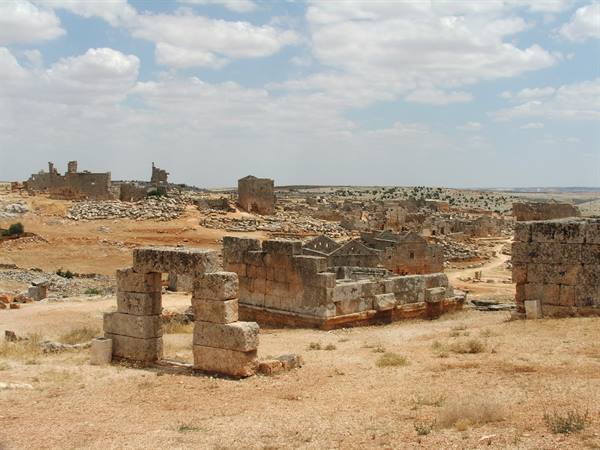
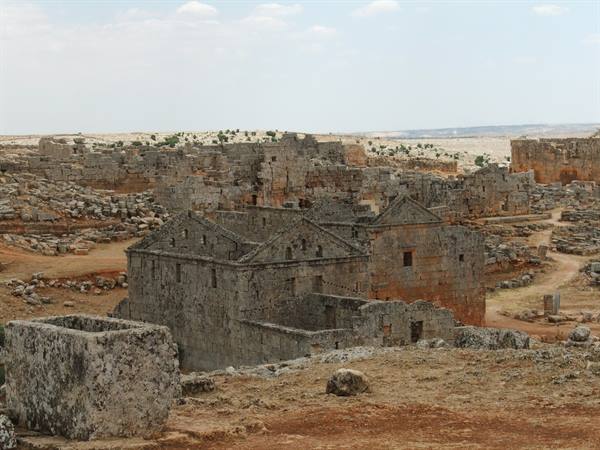
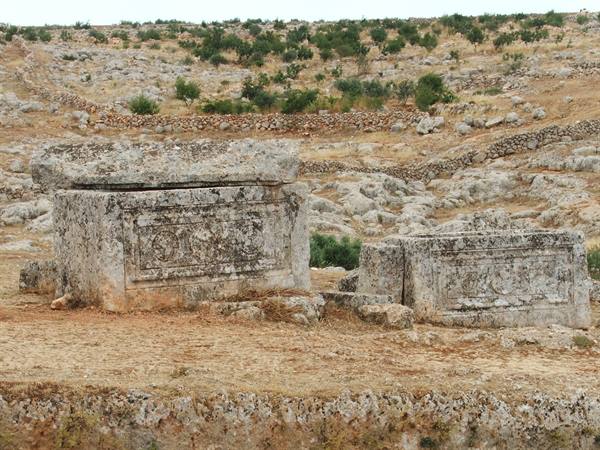
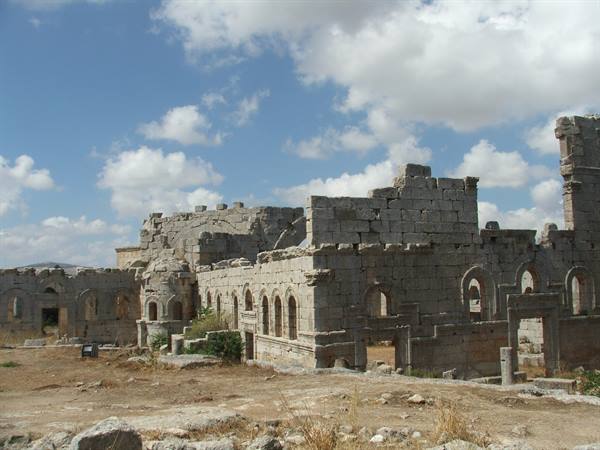
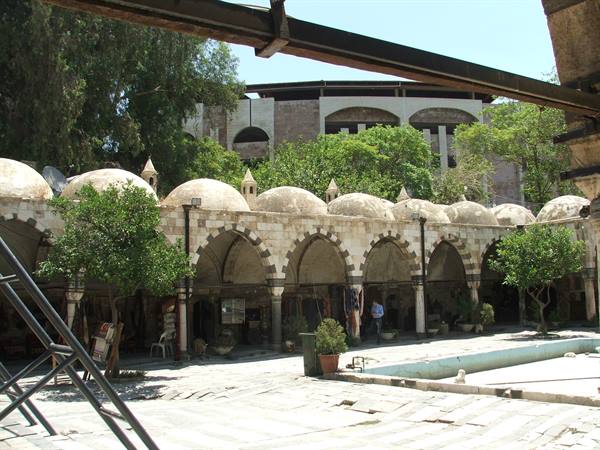
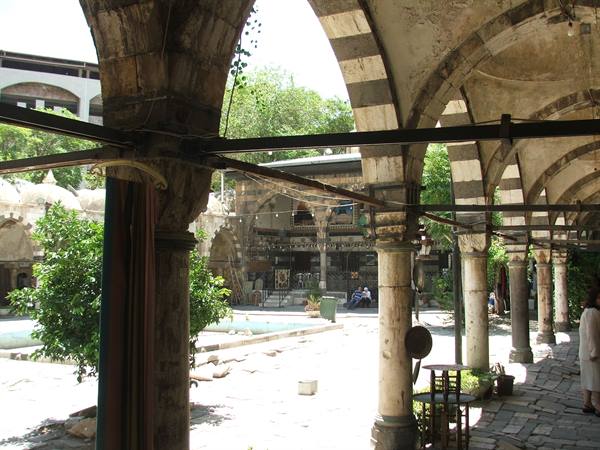
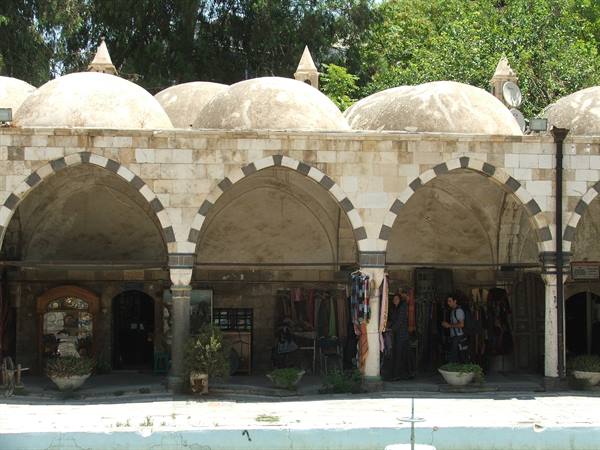
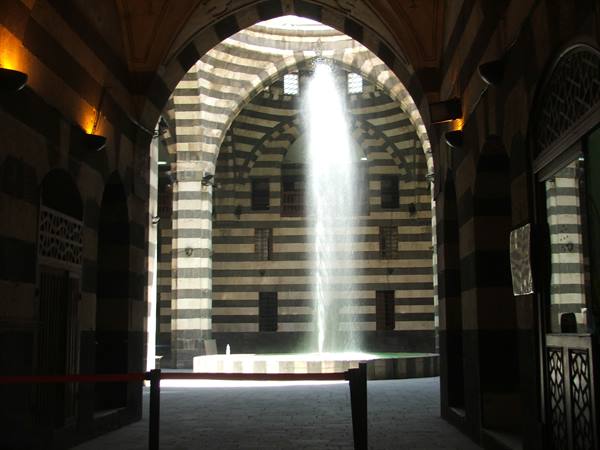
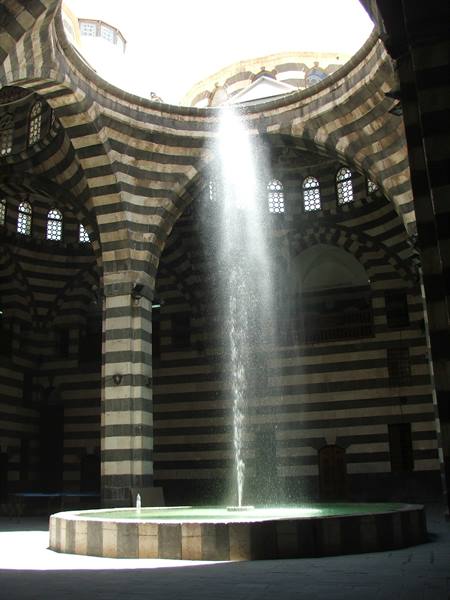
The concept of a Khan is a structure with a central courtyard of various sizes and shapes, intended to accommodate passing merchants and their goods for display or storage. In the various suks, there are many different khans, usually with a name that distinguishes them, either from the goods they offer or from whoever had them built. From here, we move on towards SerJilla, the best-preserved of one of the roughly 600 dead cities. Another evocative and grand scenario, both for the buildings (churches, baths, palaces, houses and markets) and for the setting in which it lies. It was built in 473, during the Christian period, and abandoned after about 3 centuries, when the Arabs conquered the region and the trade routes between Antioch and Apamea were suspended. All these cities were abandoned completely and seemingly suddenly.
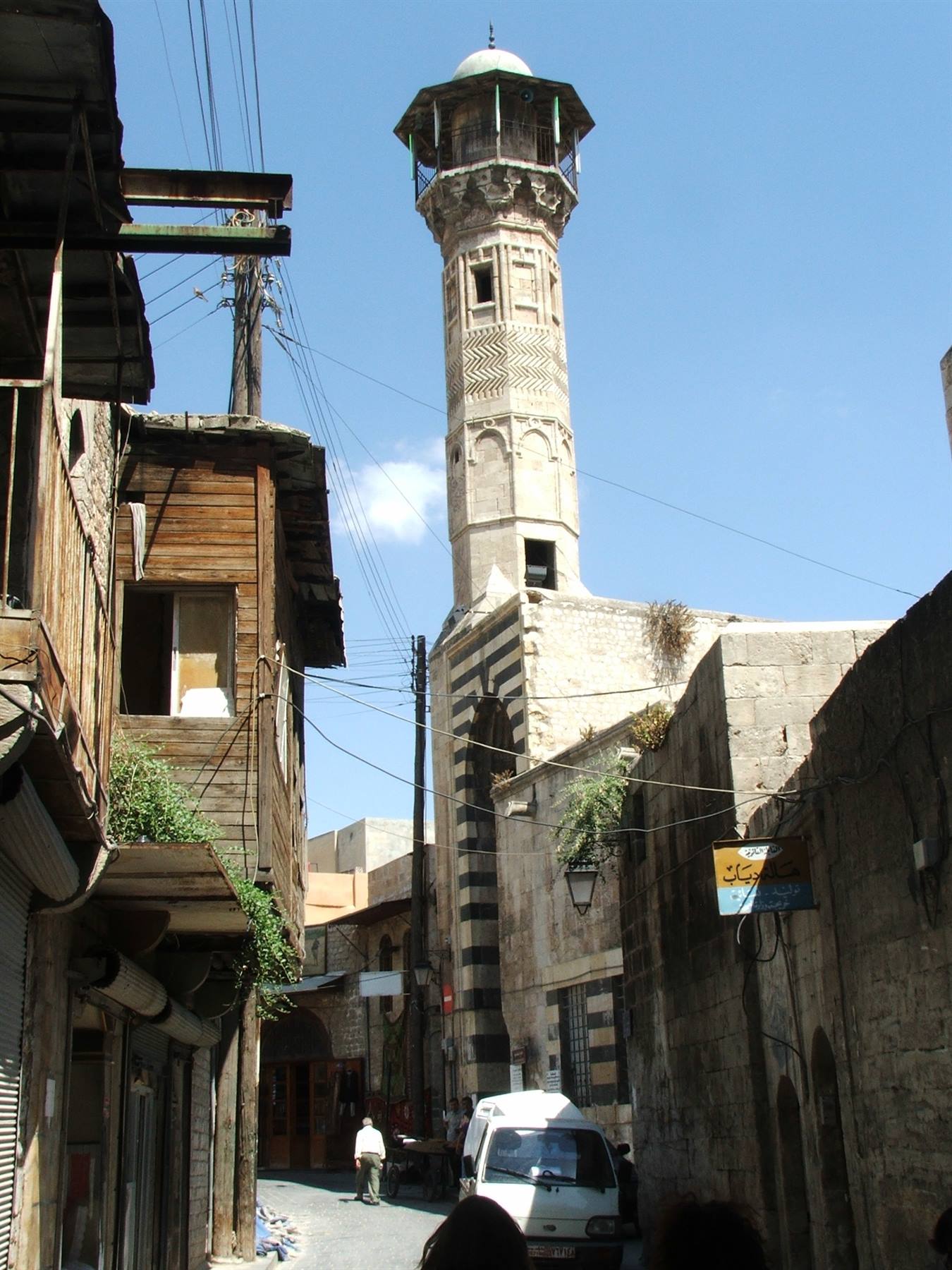
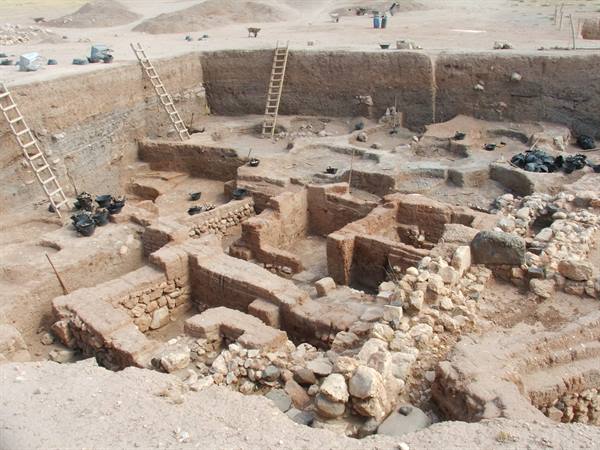
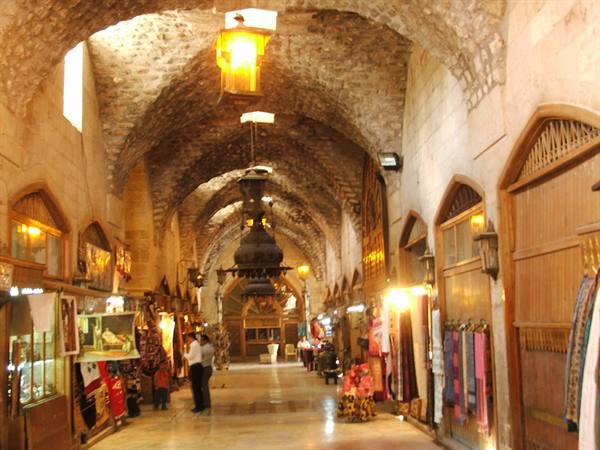
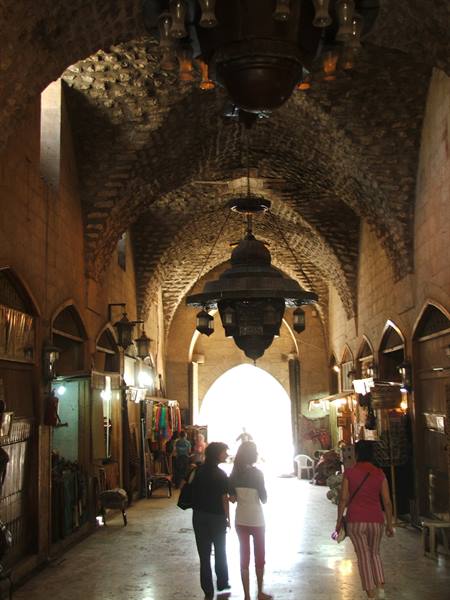
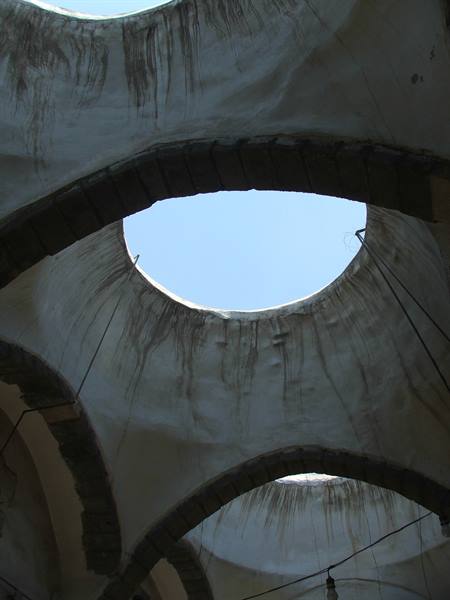
Among the other theories that would explain why are the progressive lack of water or an epidemic... but not even bodies have been found... On the road to Aleppo, we stop at Ebla, a powerful city-state already in 3000 BC: it's practically just a set of excavations, interesting though, because you really understand the stratigraphy and because you understand how archaeologists work. We finally converge towards Aleppo at the Mandaloun Hotel, another Damascene house in the Armenian quarter, but far from the suk. It's 5 pm again today and we're not tired, so after a slog on foot, without a single person capable of understanding English, we somehow reach the suk and the historic centre. I'd read that it should be visited even when the shops are closed, to get a clearer idea of the structure of these Khans that open onto 2 long corridors and have very beautiful roofs.
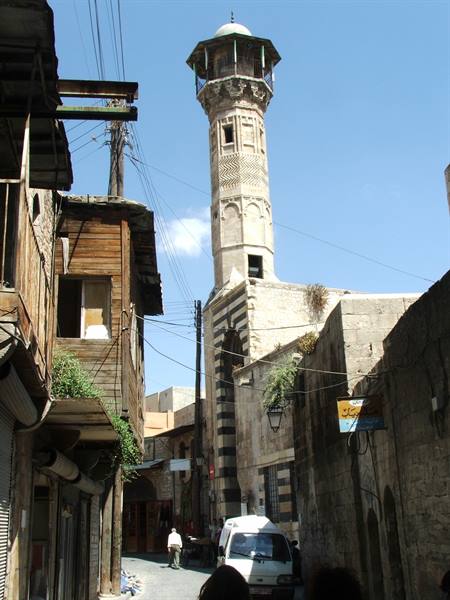
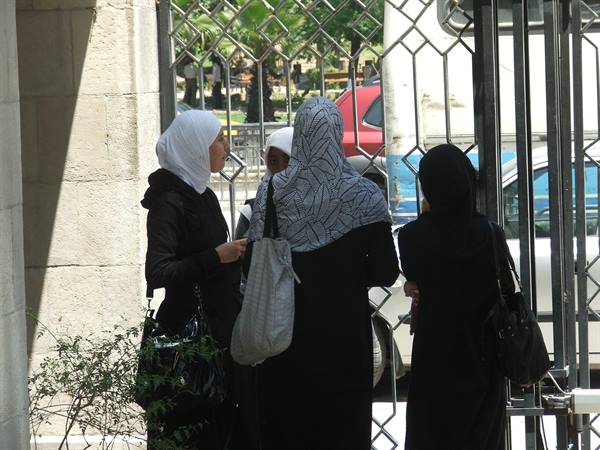
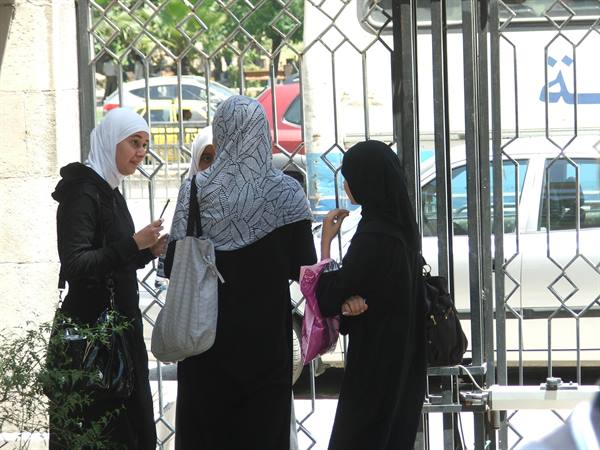
It is indeed unusual, but the reigning filth, both here and in the alleys and in the area in front of the mighty citadel, makes us decidedly prefer Damascus to Aleppo. Moreover, apart from this very limited area and the small Armenian quarter that has some characteristic alleys, it's just a big chaotic city that also seemed inhospitable to us: on the way back to the hotel, we can't find a taxi driver willing to take us (!!!!) and here, more than ever, I feel how racist Muslims are. Very many look at us badly and with disapproval.. and yet we have always dressed carefully and respectfully, I wear very little makeup and I don't look people in the eye... what can I say? This holiday, from that point of view, disturbed me enormously. Do we make them feel the same way when they're in our home?I imagine so, but I tried to respect THEIR customs in their home and it was no use.
Aleppo
Day 426 Jun 2010
Saint Simeon and Aleppo
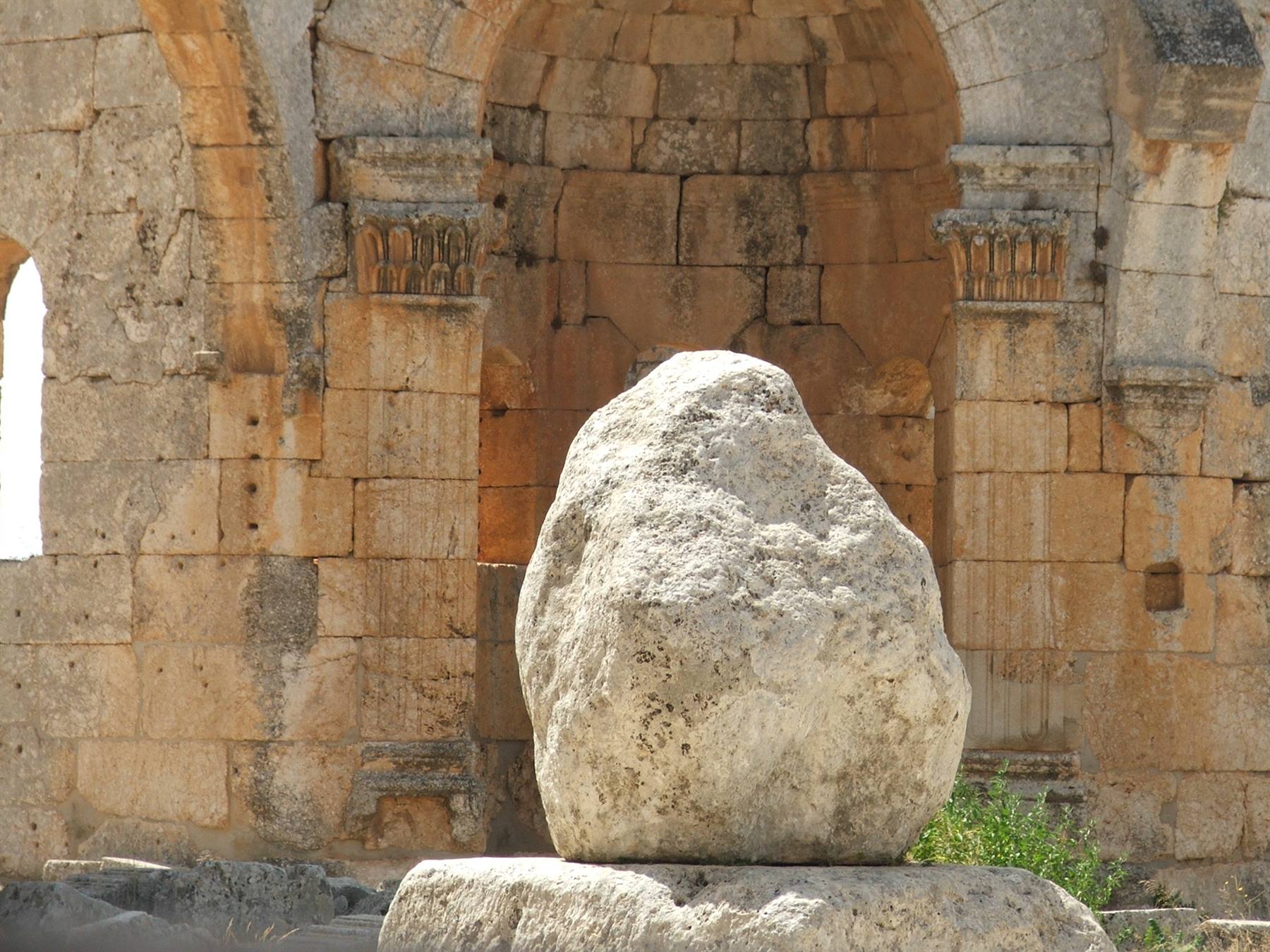
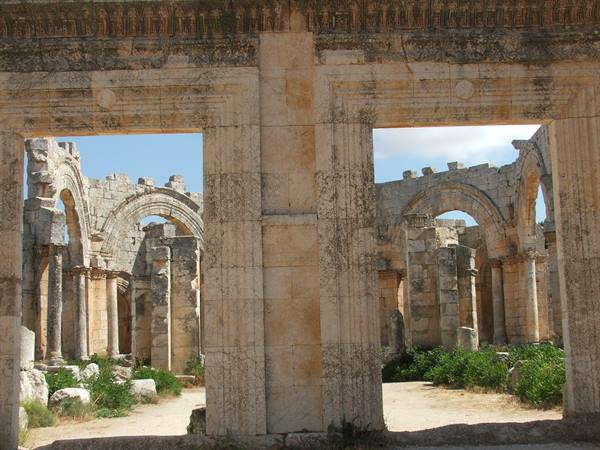
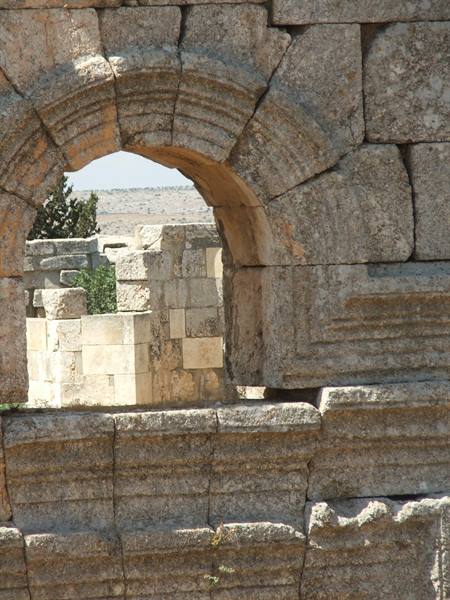
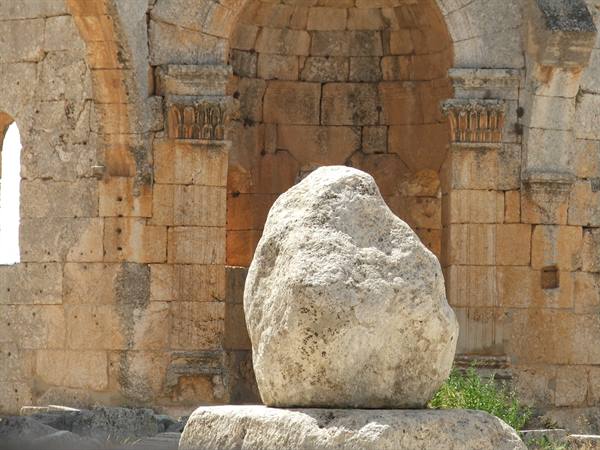
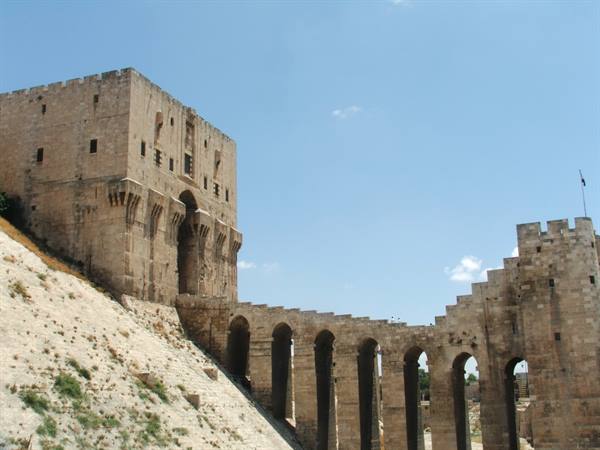
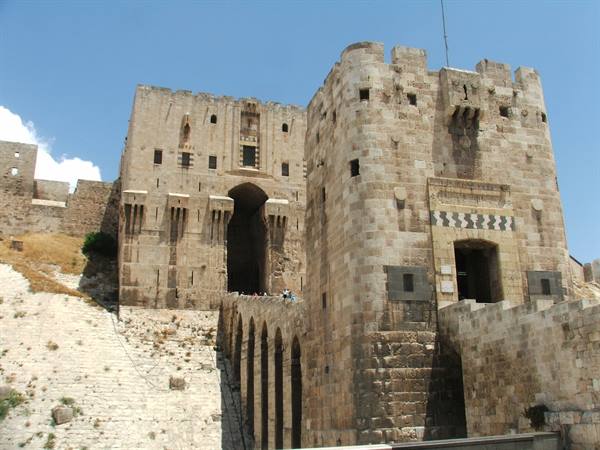
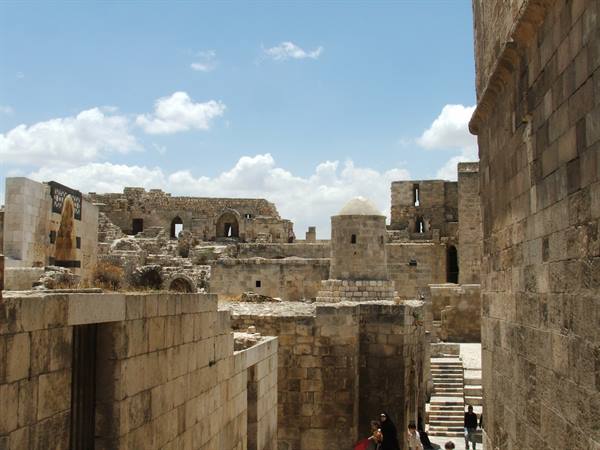
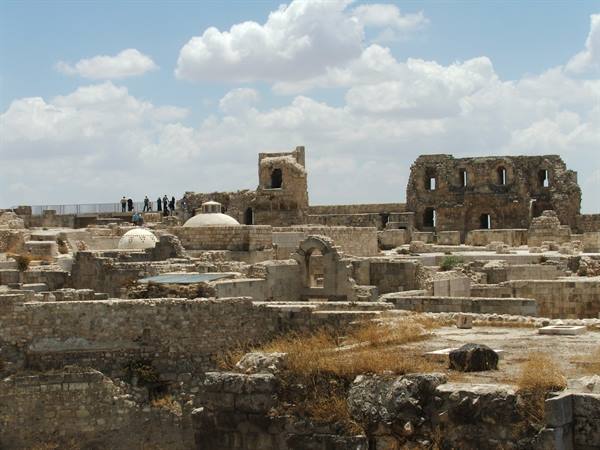
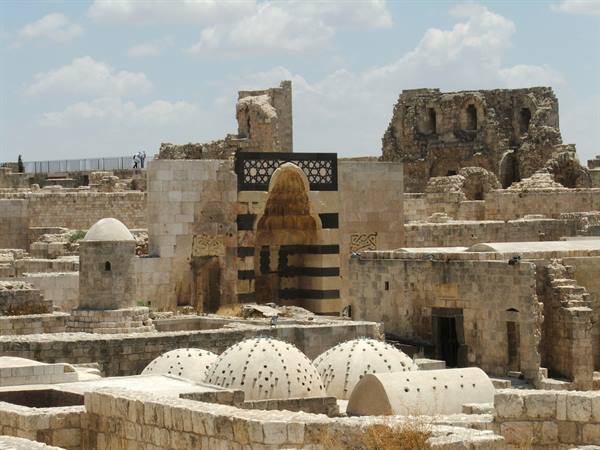
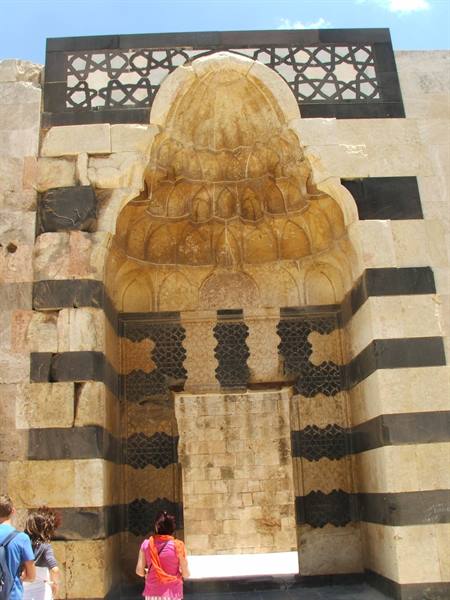
In the morning we leave Aleppo to go and visit the cathedral of Saint Simeon, ruined and grand, in a landscape of rocky hills, silent but, strangely, not desolate! Saint Simeon wanted to live in solitude and since they wouldn't leave him in peace, he lived on a column for 19 years performing his miracles. Little remains of this column, because a piece at a time it was crumbled and carried off as a relic. Beyond believing in these things and considering worthy of esteem a man who chooses to live isolated from the world and become a saint for it, the site is evocative and induces introspection and recollection. We return to Aleppo. Here with Diala we visit the grandiose citadel and the suk with its shops open. Today the heat is noticeable, perhaps also because of the heavy traffic and the asphalt. We say goodbye a little earlier than usual.
We freshen up quickly at the hotel (as in Hama, today a pool at the hotel would have been welcome) and then go to a bar in the main little square of the Armenian quarter to have a typical Syrian drink, good and ever so refreshing: mint lemonade... but real, very finely chopped mint, not syrup! We also have dinner in the Armenian quarter, decent and expensive!
Palmyra, the tombs
Day 527 Jun 2010
Lake Assad, Sergiopolis,Palmyra
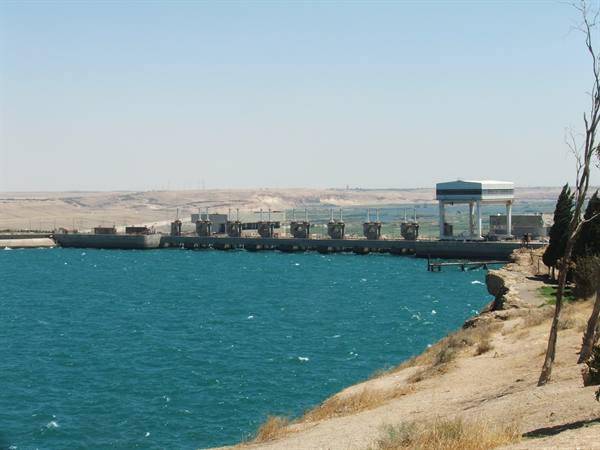
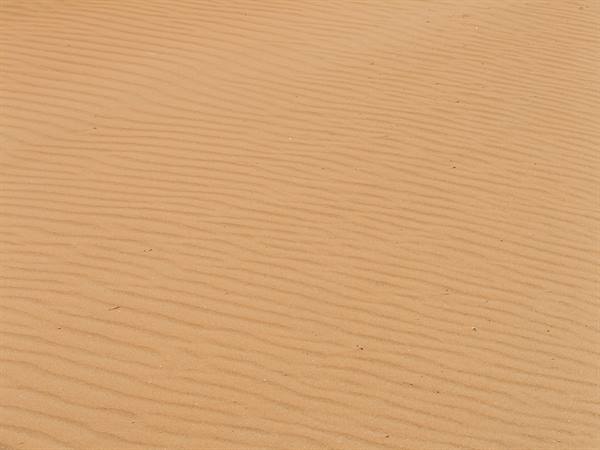
We leave Aleppo and head east, towards the Euphrates and towards the desert. In the late morning we reach Lake Assad, a large artificial basin on the Euphrates created to supply water to Syria: it's something they speak of with great pride. Nearby, nothing, except an ugly little town built expressly to house those who built the dam and those who have to keep it under control. We drive along the great river southwards, practically without managing to see it, and we venture further into the desert. This consists mostly of rock, sometimes flat, other times mountainous, but every now and then there is also a little sand carried by the wind; every now and then you glimpse a sand whirlwind in the distance, but our friends tell us that when the real storm comes, you can't see anything and the asphalt road disappears in an instant and it becomes easy to get lost.
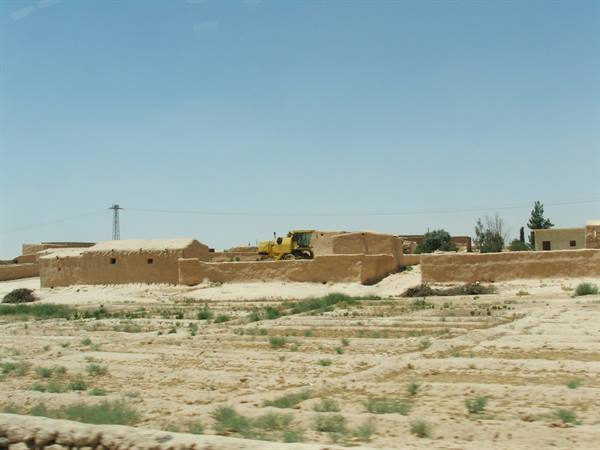
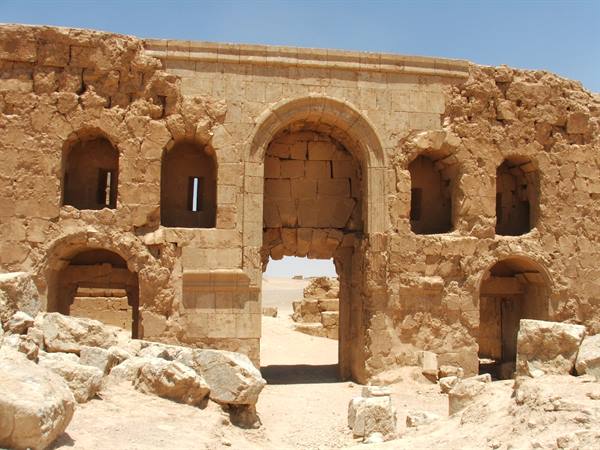
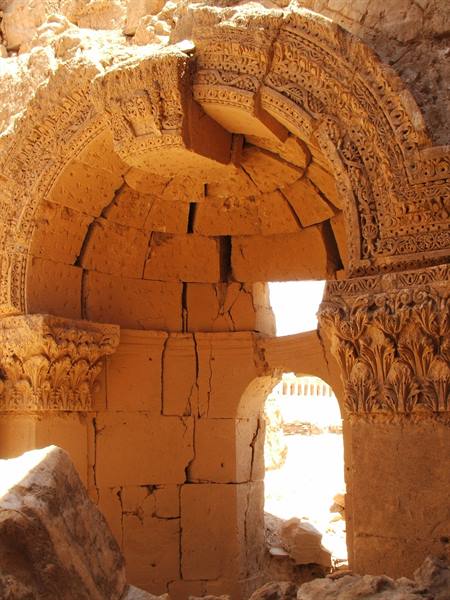
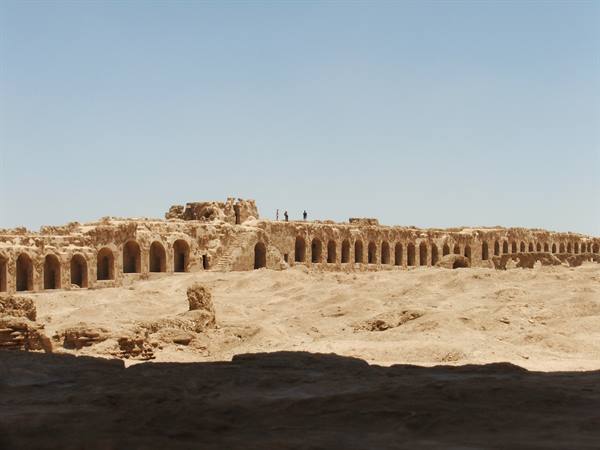
Even the rare rains immediately destroy the road, and in an instant they can turn the sand into a dangerous and swirling mud: today it seems unimaginable! Every now and then there are cisterns, which the government controls precisely, so that they are always full for the Bedouins passing through. We encounter villages with clay houses and a few nomadic camps: in Syria, new teachers must by law spend at least a year accompanying nomadic clans, in order to guarantee at least an elementary education for everyone! But, in practice, they have to stay until a replacement is found...! We reach Sergiopolis, at Rassafa, a little pearl in the desert. It's something I wasn't expecting and it strikes me enormously: it's the last Roman outpost before the great Persia.
But what an outpost: a perfectly squared and fortified city, with houses, colonnaded streets and incredible water cisterns, of yellow stone, tending towards red. Here you feel the heat. I feel like I'm in one of the many documentaries about the Roman Empire and I think back to our fantastic civilisation of the past and I say to myself: these people made it all the way here and look at the wonders they built in the middle of nowhere, allowing as always the local cultures to keep their cults and their traditions. We set off again, but these colours and these stones that spoke to me just won't leave my head. Around 16:00 we arrive in Palmyra. We are hot and covered in dust, near the hotel I see the sign of a pool and I delude myself that it might be something usable..
we go up to the room and I notice that the pool is right below us and, as usual, there are only men, and moreover many are even in their underwear: how could I have deluded myself? But here can women really not enjoy any luxury in life? I feel truly mortified, for myself and for them, and I feel awful, especially because I realise that I still haven't understood anything. Luckily, our men, perhaps out of solidarity, tell us that they'll stay in the room with us and that they're not interested in going to the pool. It's selfish, I know, but it comforts me a little.
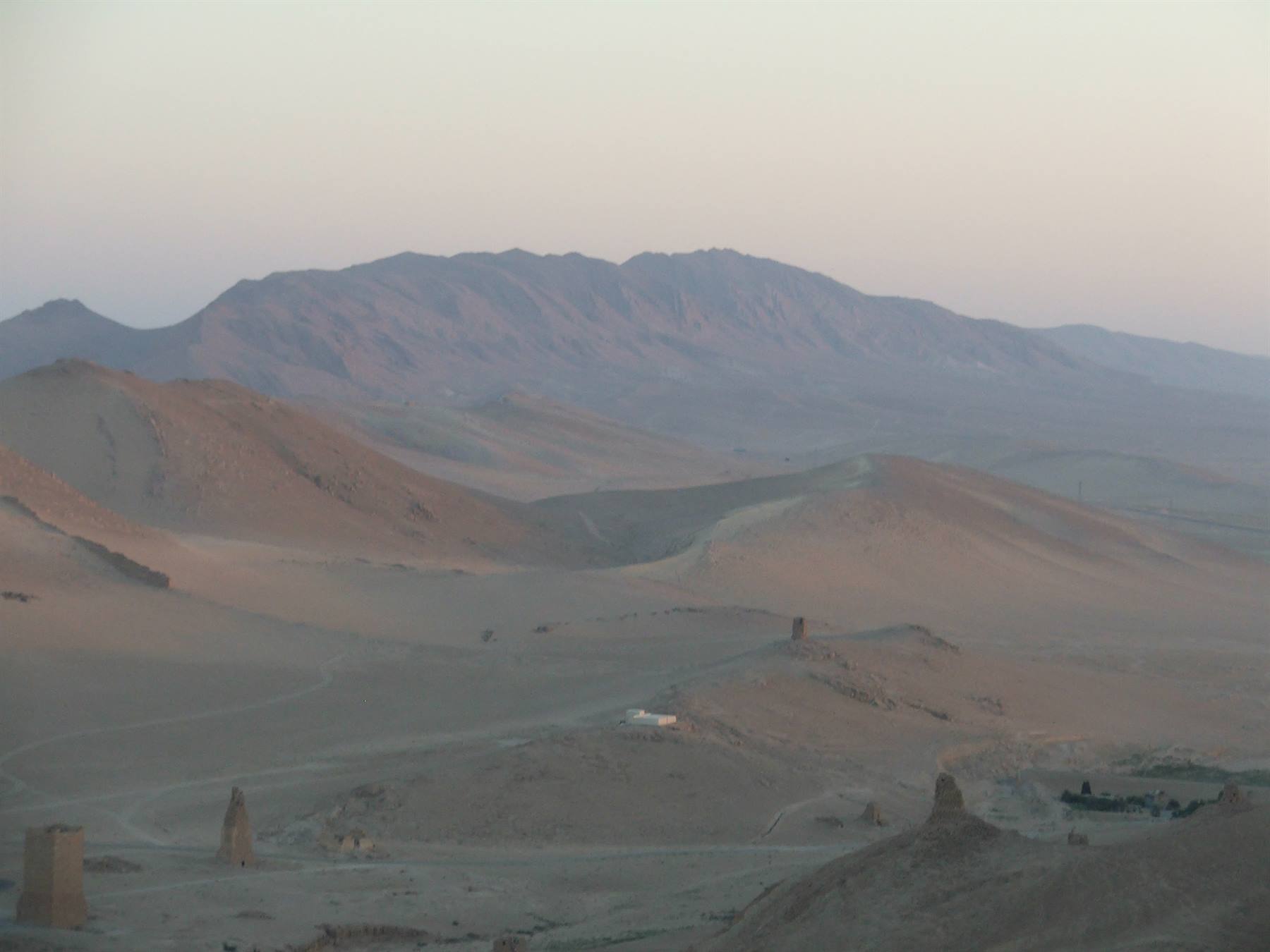
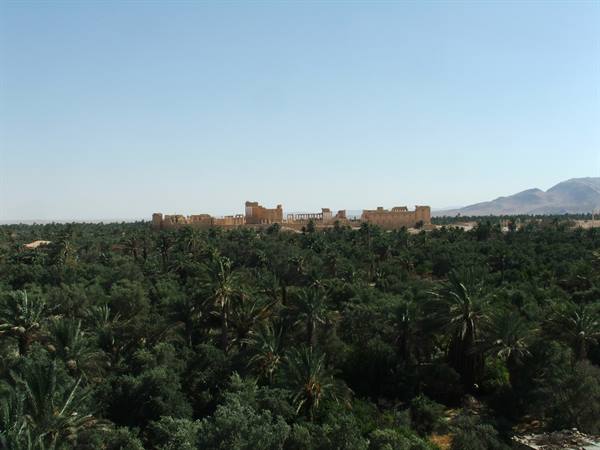
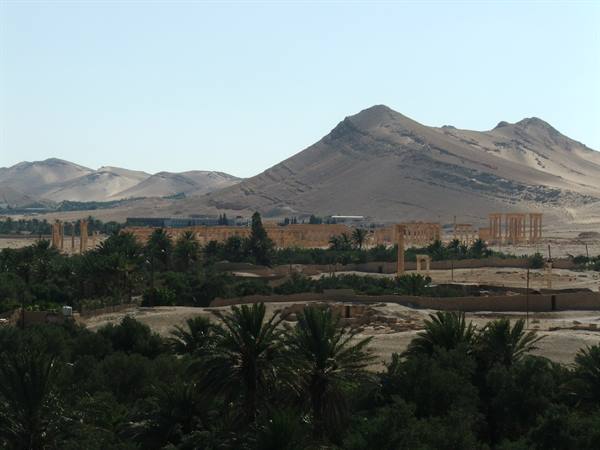
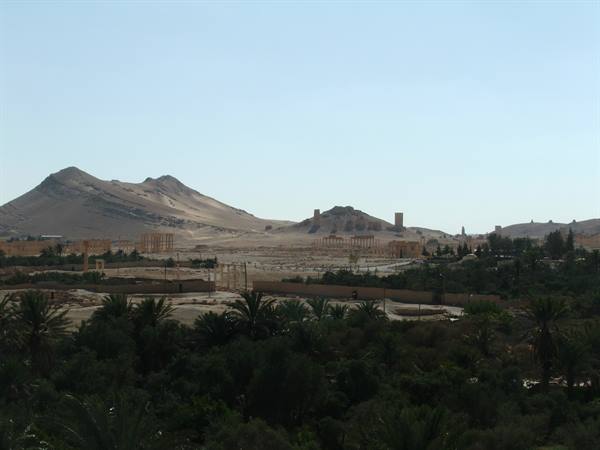
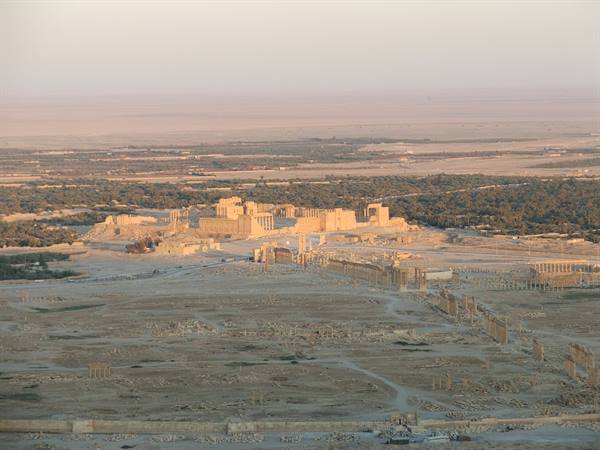
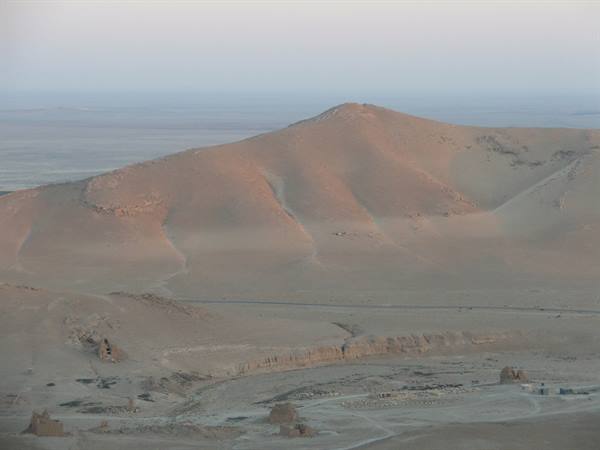
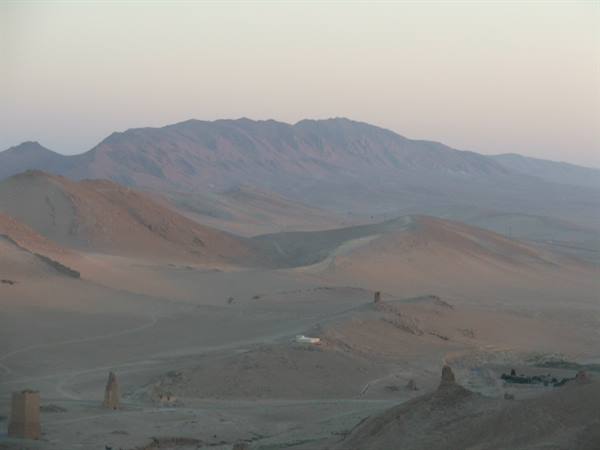
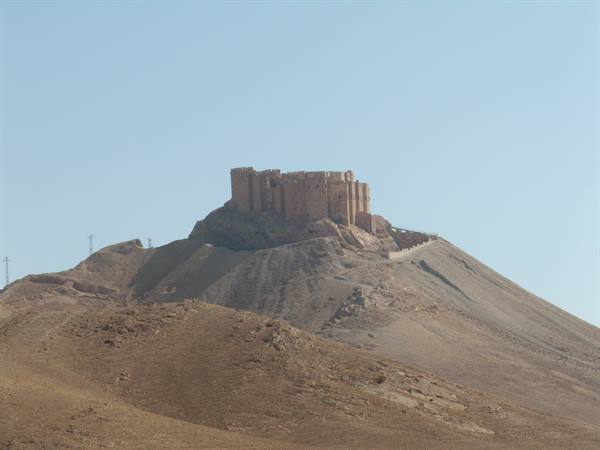
At least, from the same window we have a postcard-perfect image, completely unexpected: the mythical Palmyra immersed in the oasis! In the evening we met up again with our friends to go and visit the citadel of Fakhr Al Din, a fortified construction, from which you enjoy a fabulous panorama, over the desert mountains, over Palmyra and over the incredible Tower Tombs. Sites that we will visit calmly the next day.
Palmyra,Temple of Bel
Day 628 Jun 2010
Palmyra
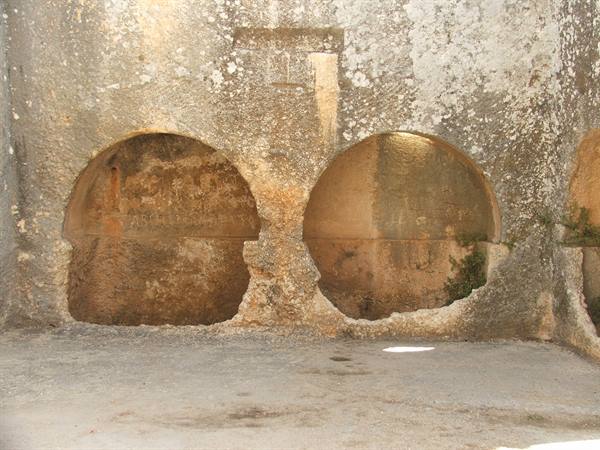
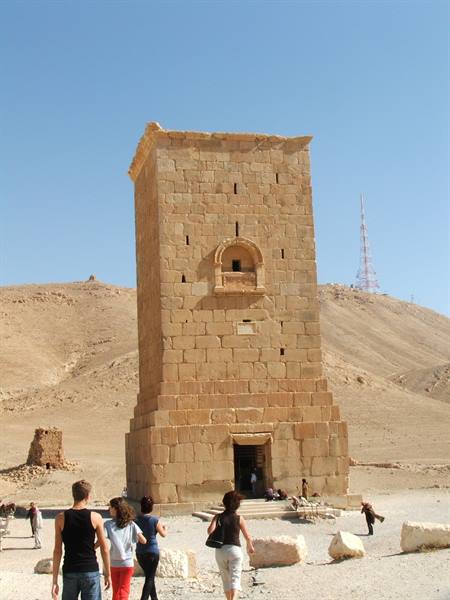
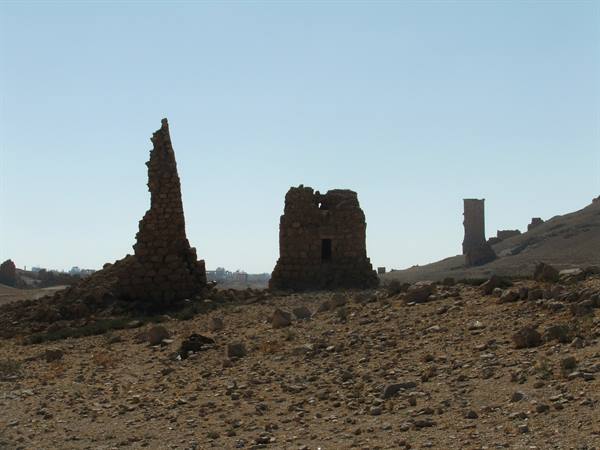
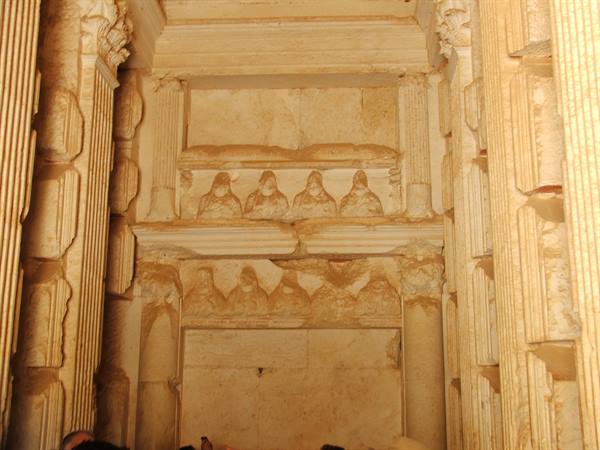
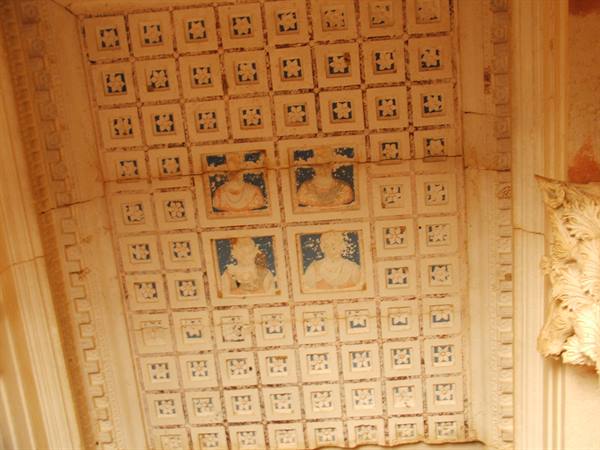
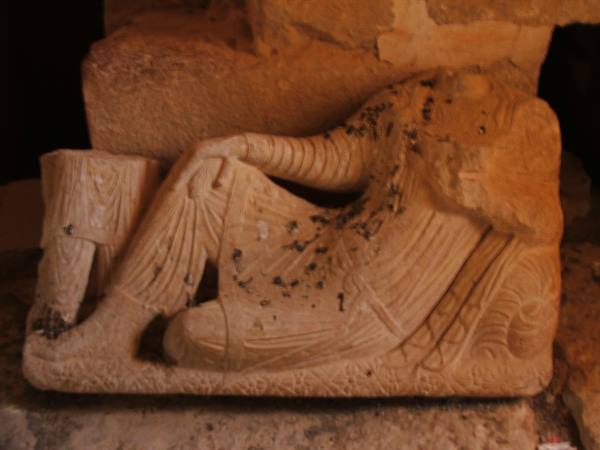
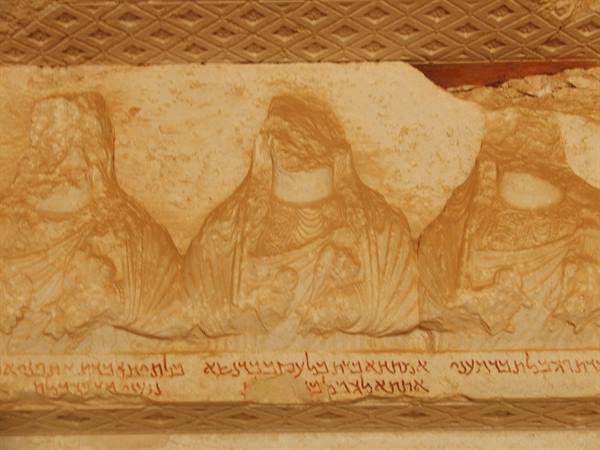
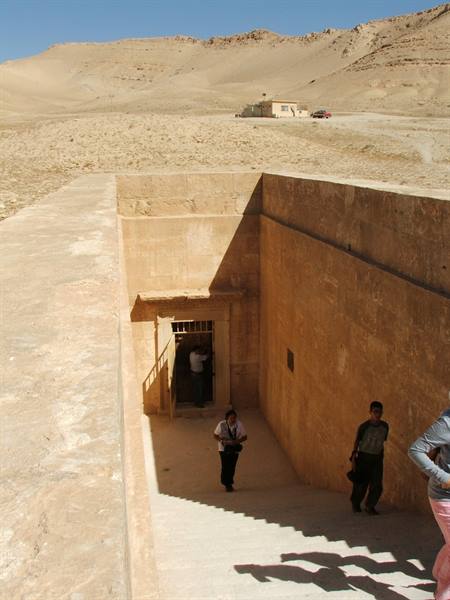
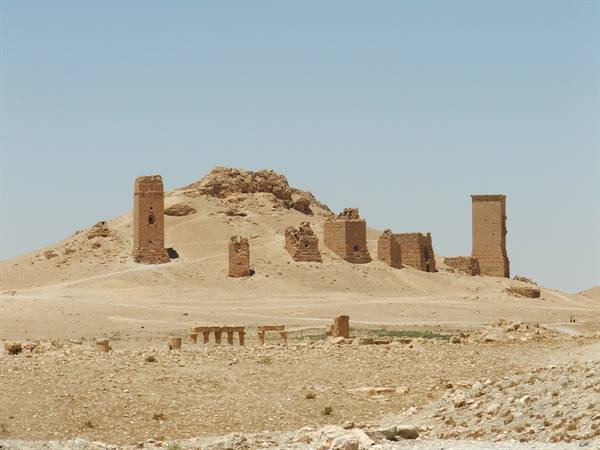
We begin with the "Valley of the Tombs" located to the west of the city and characterised by Tower Tombs, very particular, and house-like or underground Tombs. The Tower tombs, with a square base, can reach up to 4 storeys in height and are mostly family tombs: as you go up, the importance of the deceased decreases and consequently the room becomes poorer and less decorated. A tower could house up to about 300 bodies, arranged in sarcophagi and stacked in columns; in front of each niche there was a plaque bearing some detail of the deceased's life and a bust representing them. We visited the tower tomb of Elhabel, dating back to 100 AD, and the underground chamber of the "Three Brothers", beautiful but less characteristic. In both types of tombs many funerary statues "in bed" have been found, generally, unfortunately, without the head and of clear Persian style.
The Tower Tombs are incredible, like many gigantic monoliths spaced apart from each other, fixed in the desert valley. Then, we went to Palmyra, a UNESCO World Heritage Site and the most visited archaeological site in the country. Its monumental remains testify to the greatness of the city known since the second millennium BC and a transit point of the Silk Road from the far east, thus always rich thanks to the duties it imposed. The Semitic name of the city was Tadmor (city of dates), but in the 1st century AD the Romans arrived, gave it the name of Palmyra (city of palms) and left it considerable independence. Hadrian visited it in 130 AD and declared it "independent", Caracalla, in 212, made it a colony and rebuilt it leaving the Roman imprint.
After repelling an attack by the Parthians, Odaenathus of Palmyra received from the Romans the title of "dux orientalis", but upon his death, perhaps murdered, his wife Zenobia assumed power in the name of her still young son, and declared her independence from Rome having coins minted with her own face and naming her son Augustus. Faced with this challenge the emperor Aurelian intervened in 271 besieging the city and led Zenobia prisoner to Rome. Following another revolt, in 273 Aurelian destroyed the city massacring its inhabitants. Afterwards, Palmyra remained a simple Roman outpost and was fortified by Diocletian and Justinian. In 634 it was taken by the Muslims, in 1089 it was devastated by an earthquake and ended up covered by sand. It was rediscovered by two English merchants in 1678, but excavations began only in 1924.
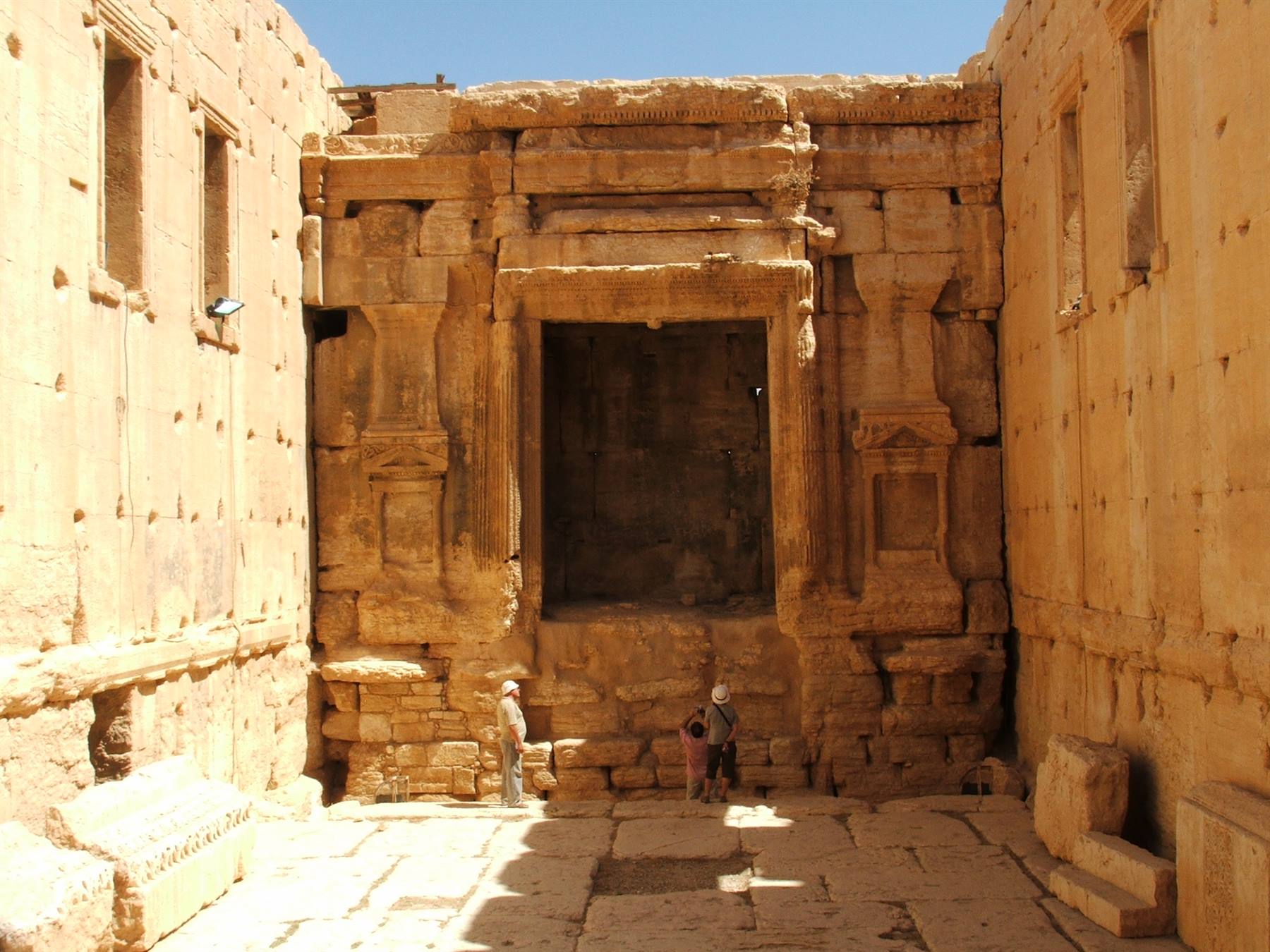
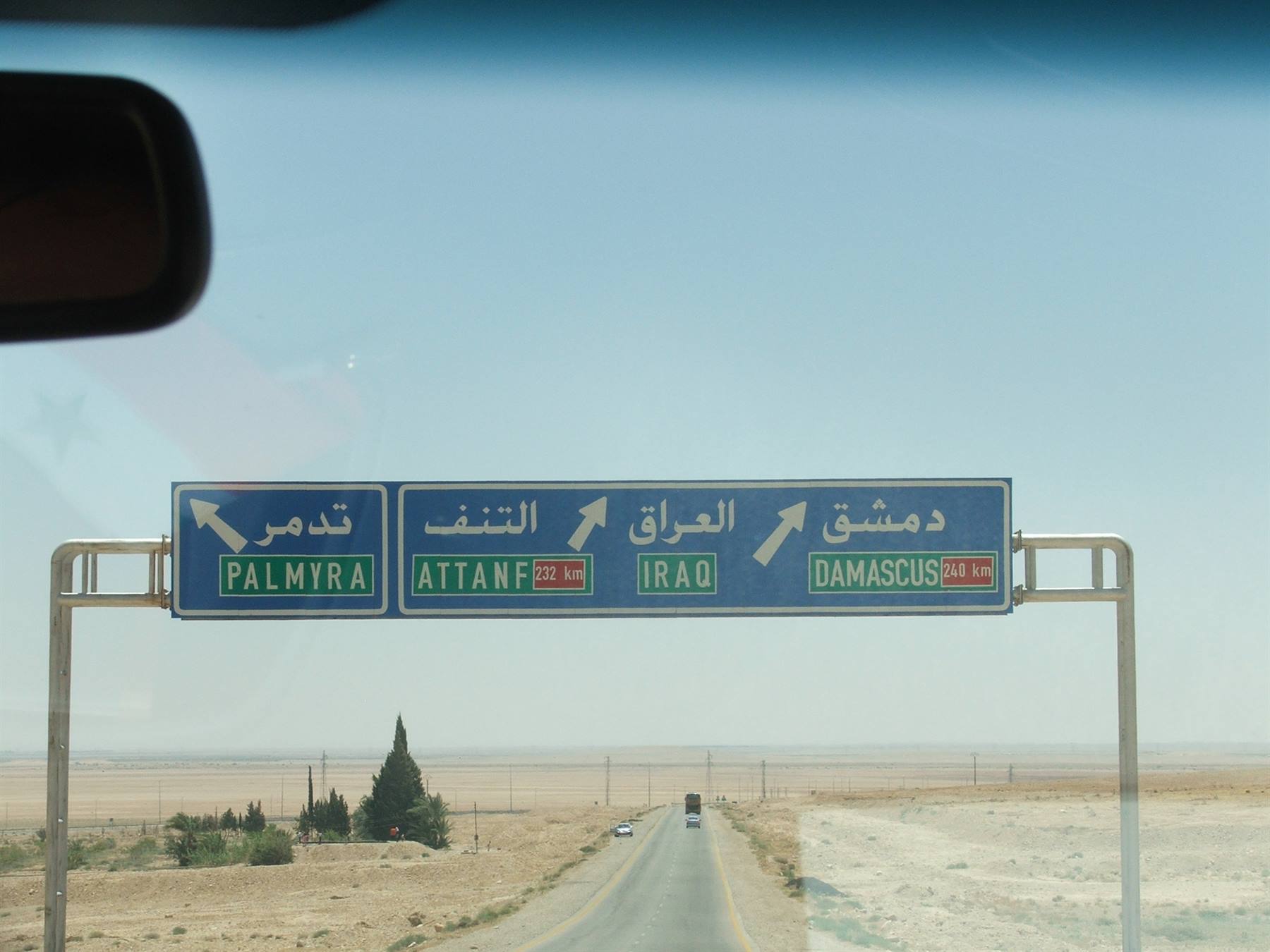
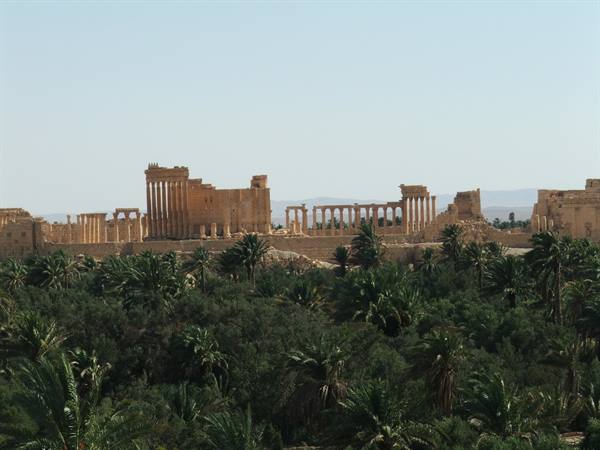
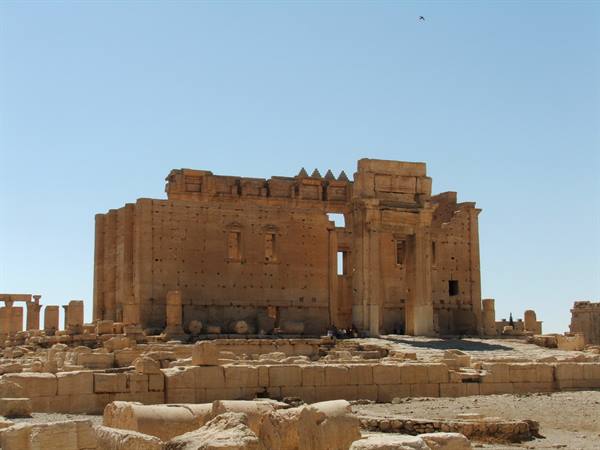
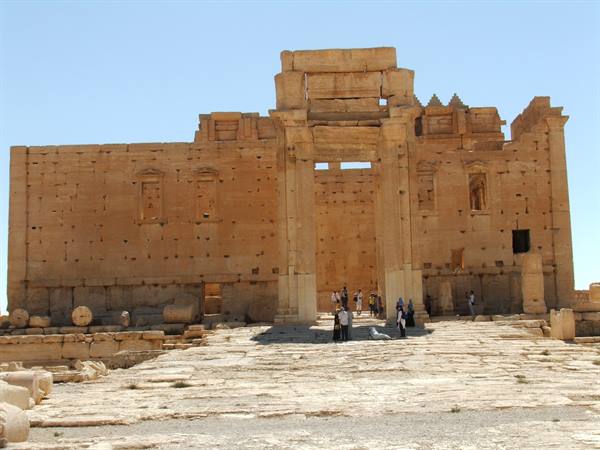
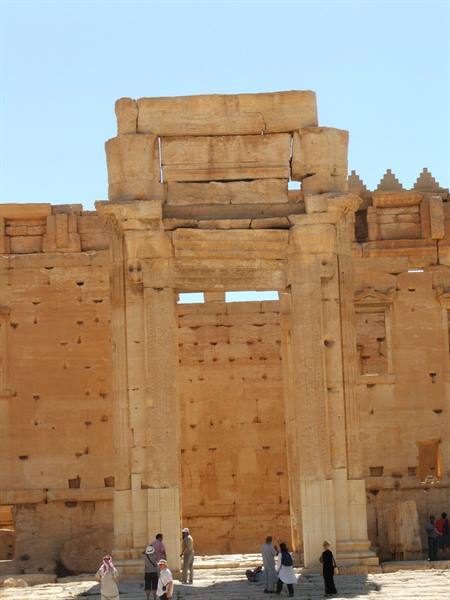
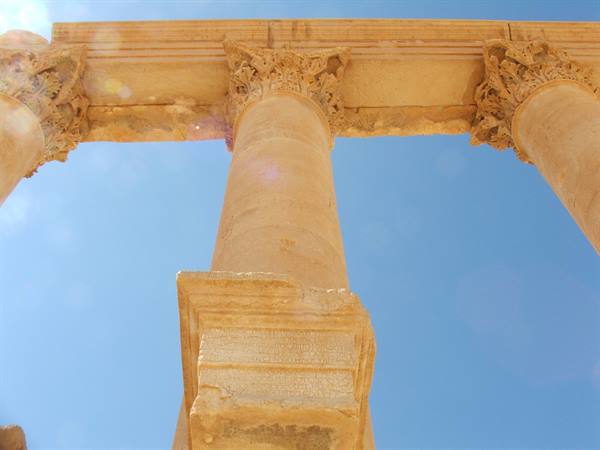
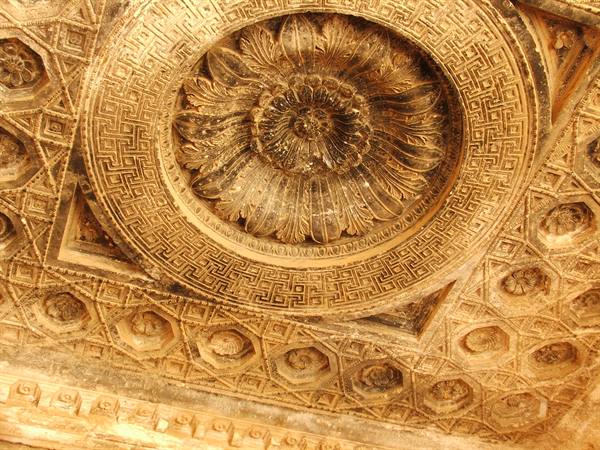
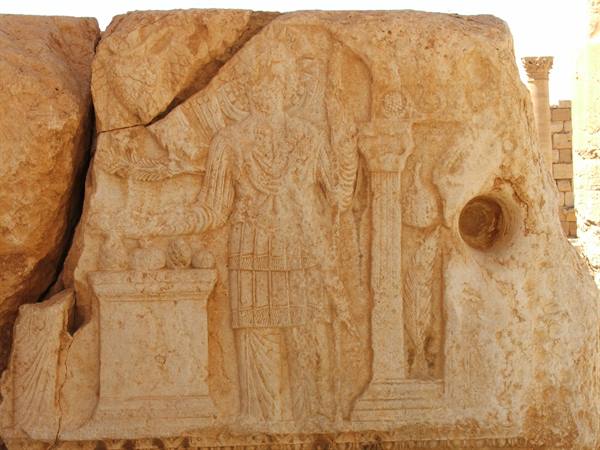
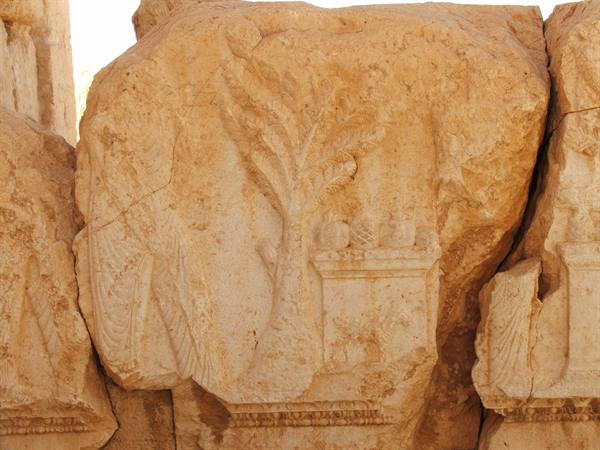
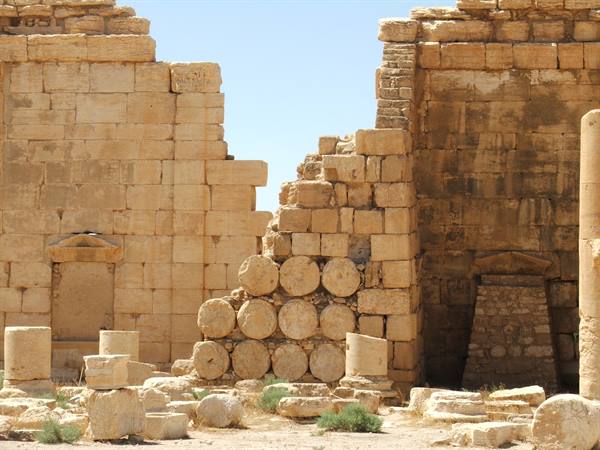
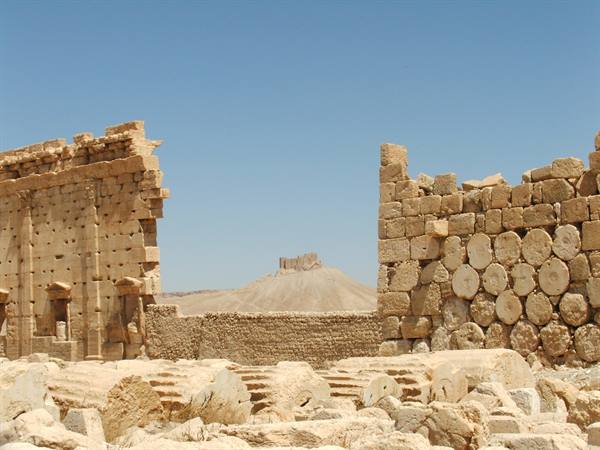
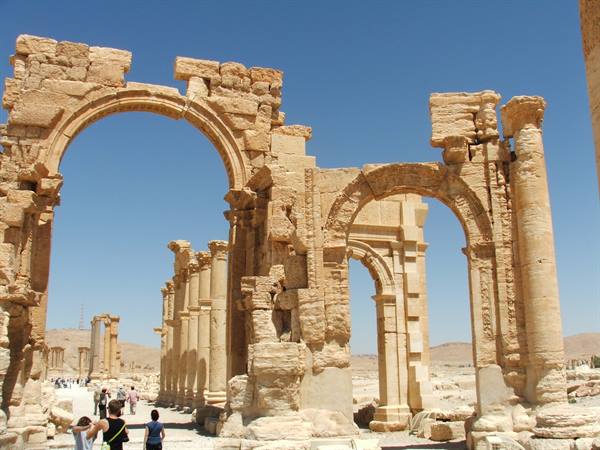
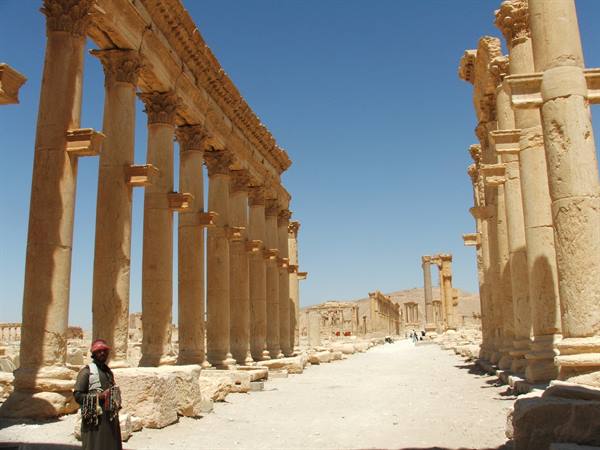
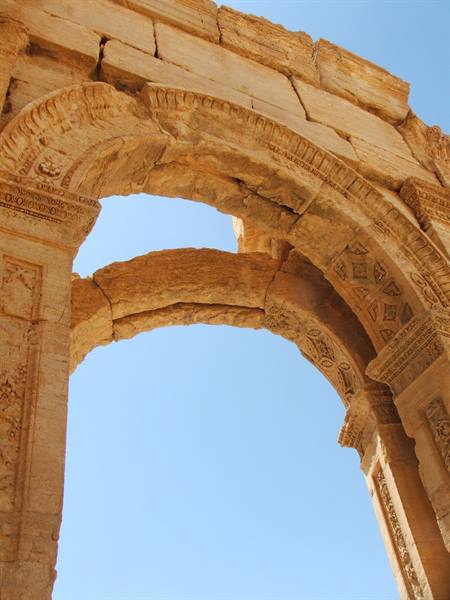
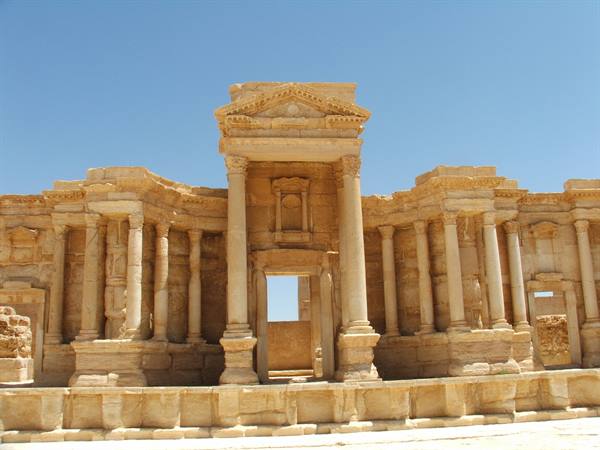
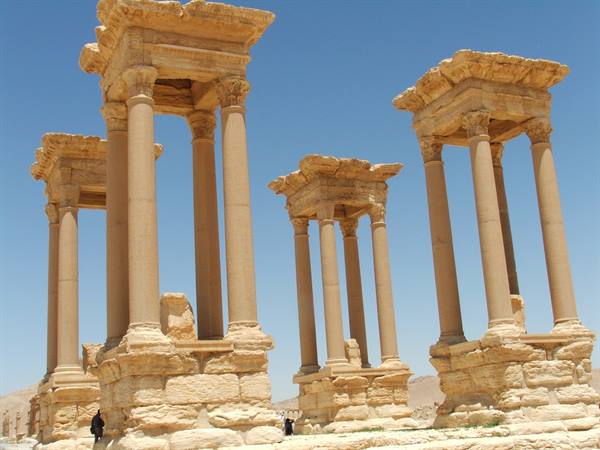
This is its history: the monuments to see and that leave you open-mouthed are many: the most magnificent is the Temple of Bel, but there are colonnaded streets, a splendid theatre, arches, palaces, fora and a gigantic tetrapylon. In short, the usual things, you'll say! Well, not at all: the usual things, megalithic, in the middle of an oasis in the desert and with fantastic colours. Palmyra, on its own, is truly worth this trip! We head towards the conclusion of the visit to the site and take the minibus again which in less than 3 h will leave us once more at the Al Zaetona Hotel in Damascus.
road signs
Day 729 Jun 2010
Damascus,Deir Mar Musa
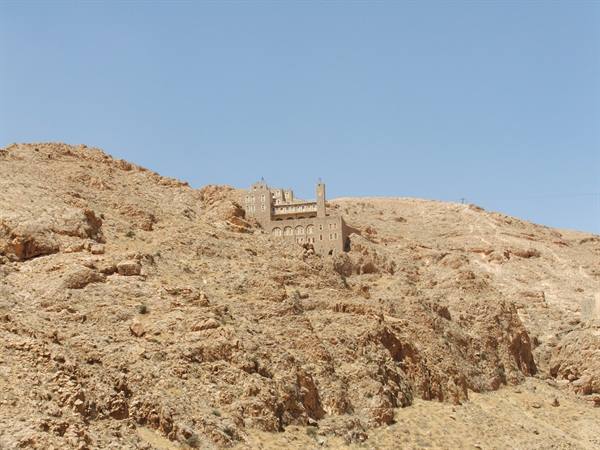
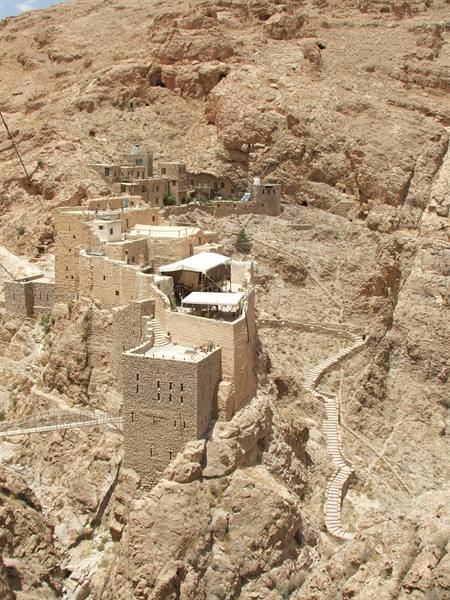
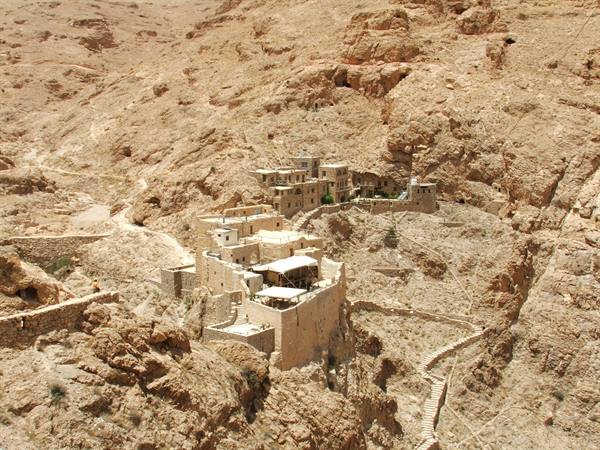
In Damascus we stop for another 4 days, but this will be the base for trips even outside the city. Today, for example, we're going to Deir Mar Musa, that is to the Monastery of Saint Moses the Abyssinian where a monastic community lives coordinated by the Italian Jesuit Father Paolo and which is trying to foster dialogue between Christianity and Islam. The monastery is built on (and into) the rock of a mountain, it is reached by more than 300 steps and it's a fantastic place, which truly leads you to introspection. When you reach the terrace overlooking the valley, you can freely take some foods put at your disposal, olives, fresh ricotta, bread and cheeses and before leaving, you leave an offering as you wish. By asking beforehand, you can stay to sleep, but it's all very very spartan and everyone must cooperate.
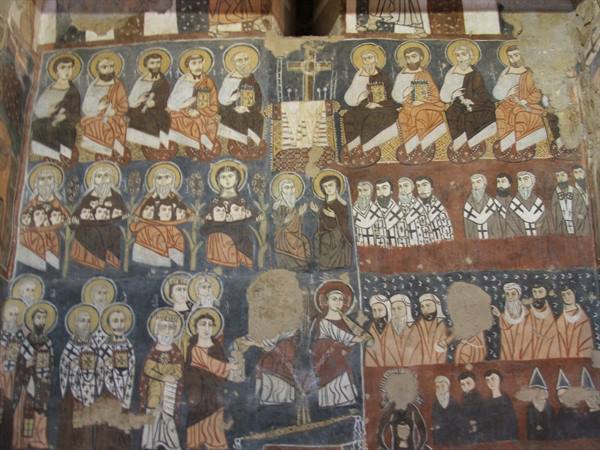
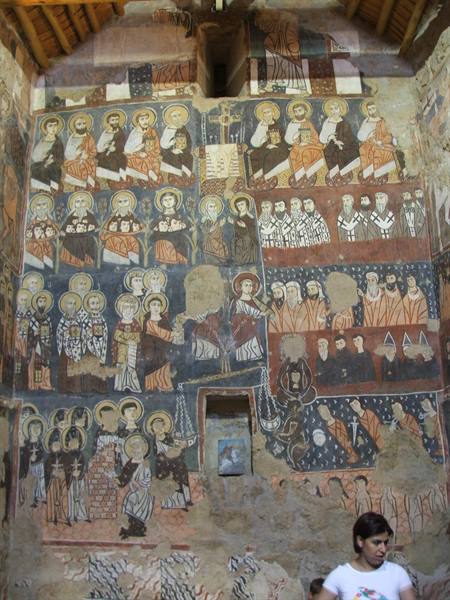
The actual little church, a true jewel, with beautiful frescoes dating back to the 11th and 12th century embodies, in my opinion, the best of the 2 religions: you must enter barefoot, everyone can enter, but you can sprawl in meditation on the floor, as if in your own home. Fantastic! When we feel refreshed, we return to so-called civilisation, that is into the city, to Damascus. Being in the centre, we can go out to wander as we please and today we decide to try another Damascene tradition: we arrive at the al-Hamidiyya souk and we get the typical ice cream with semolina powder topped with crushed pistachios at the famous Bekdach café: a bit sweet, but very good. At 19:30 we have an appointment with our friends at Bab Touma, the square of the Christian quarter, because they will take us to a panoramic area over the city from which to see the sunset.
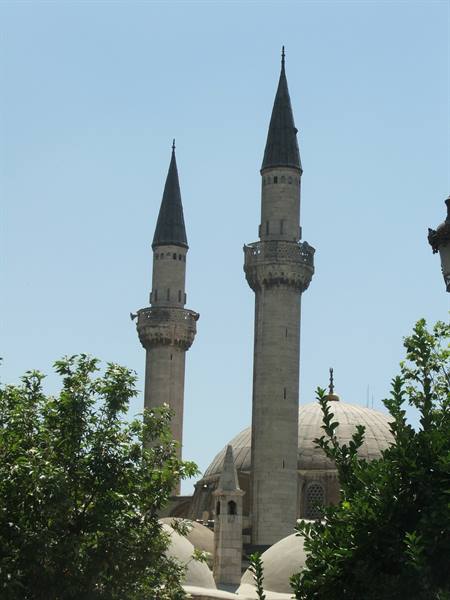
In the dark, among the many lights, the prevailing ones will be the green ones, on the minarets of the mosques.
Damascus
Day 830 Jun 2010
Damascus
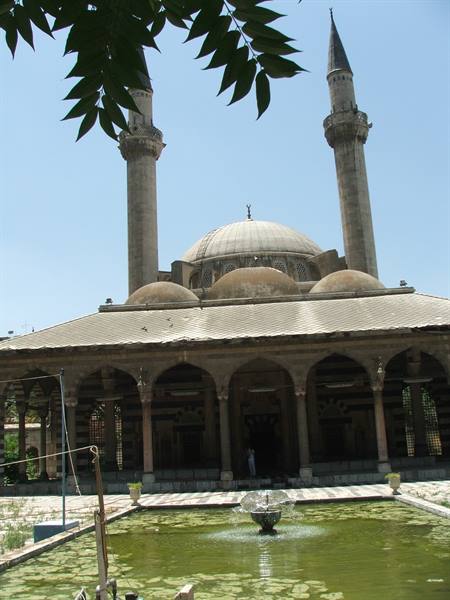
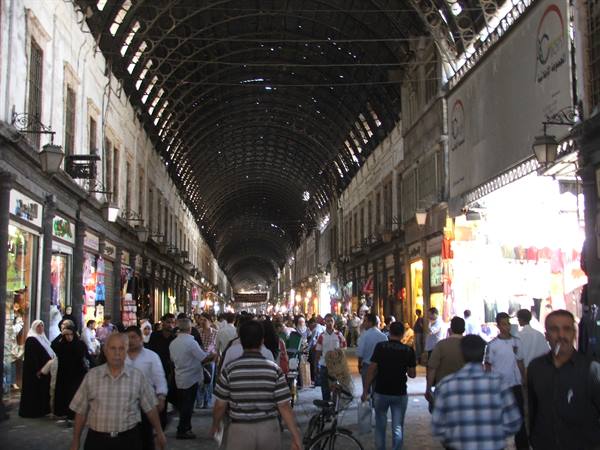
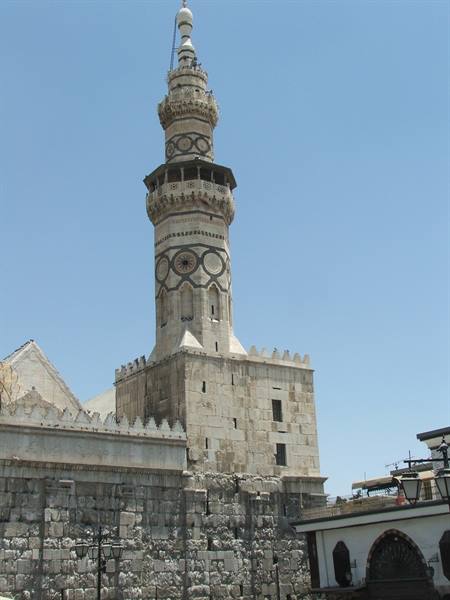
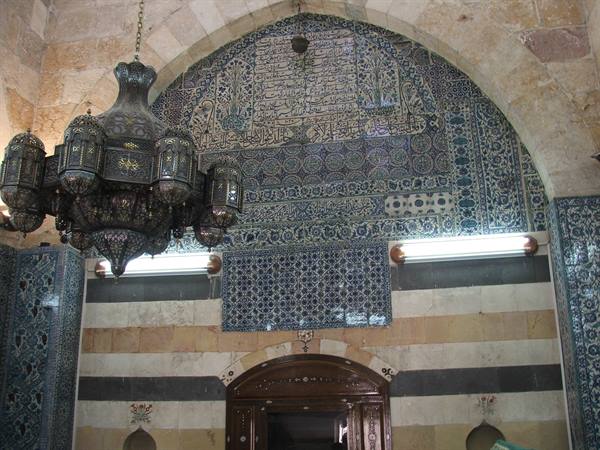
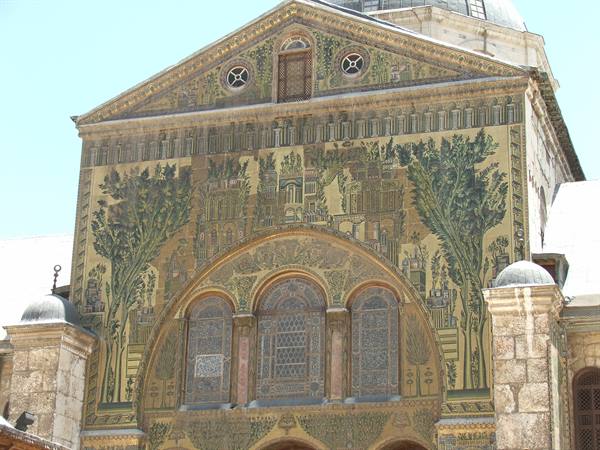
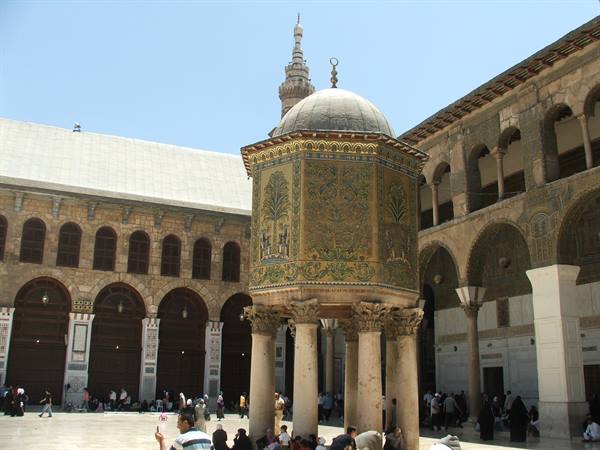
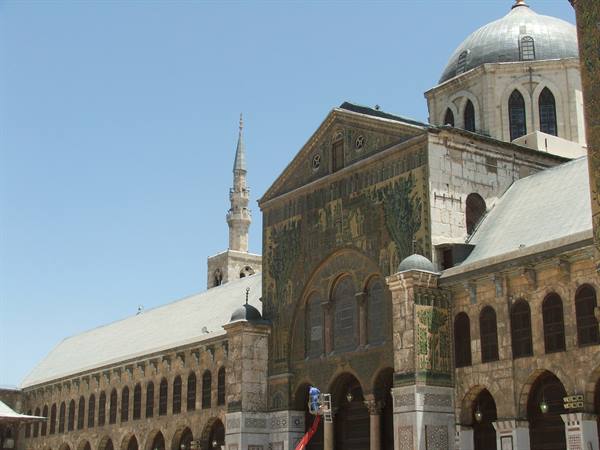
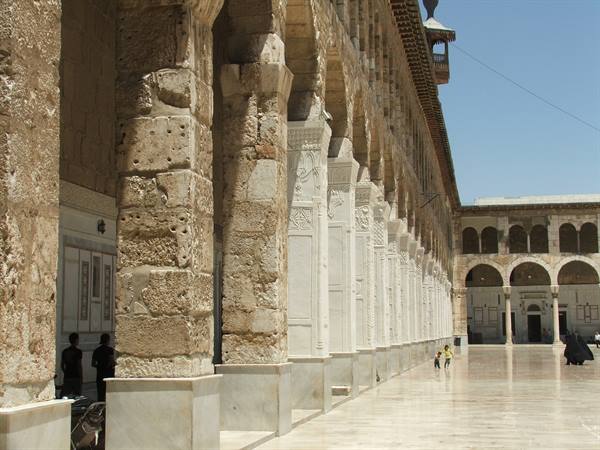
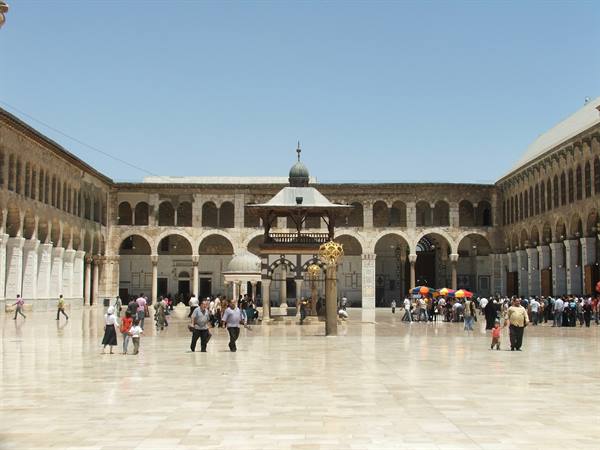
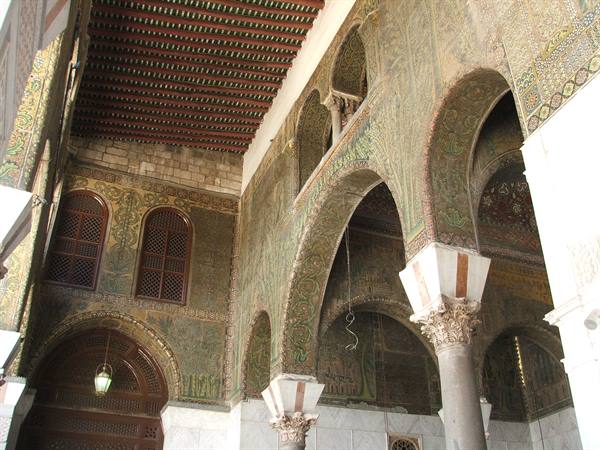
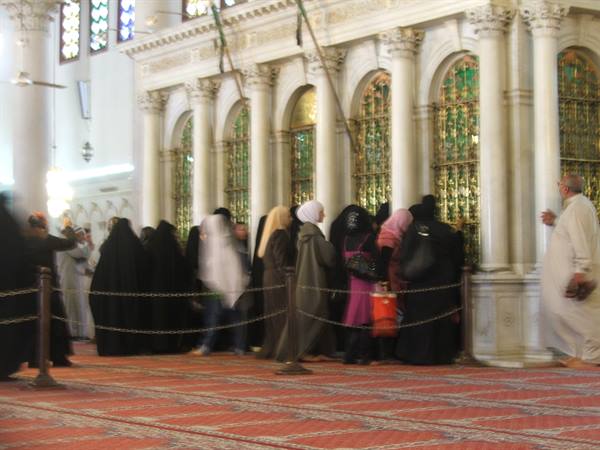
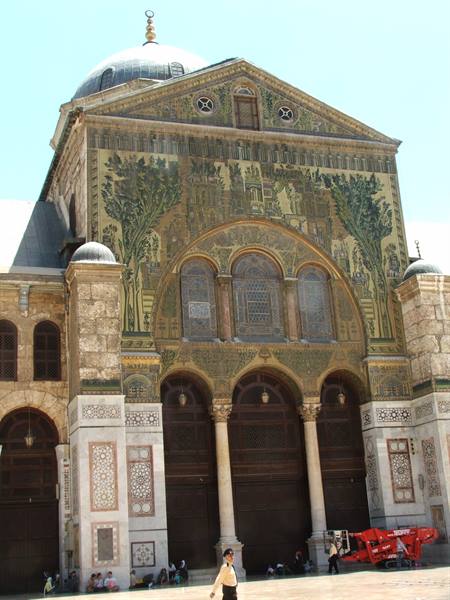
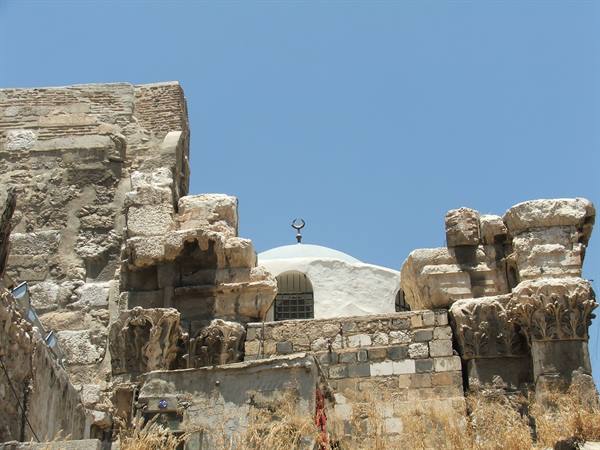
Today we visit the archaeological museum, where, among the many things, some small terracotta tablets with cuneiform writing strike me... writing was born in the fertile crescent millennia ago and for what reason? To escort goods: in short, bona fide delivery notes. We see the Mosque of Suleiman only from the outside, because there are restoration works, and the khan of the artisans, adjacent to it. We approach the centre and having travelled the main corridor of the souq we arrive at the Umayyad Mosque, a true jewel of Islamic architecture. I had been waiting for this moment my whole trip. The mosque is immense, in beauty it competes with the Dome of the Rock in Jerusalem and in sacredness it is second only to the mosques of Mecca and Medina.
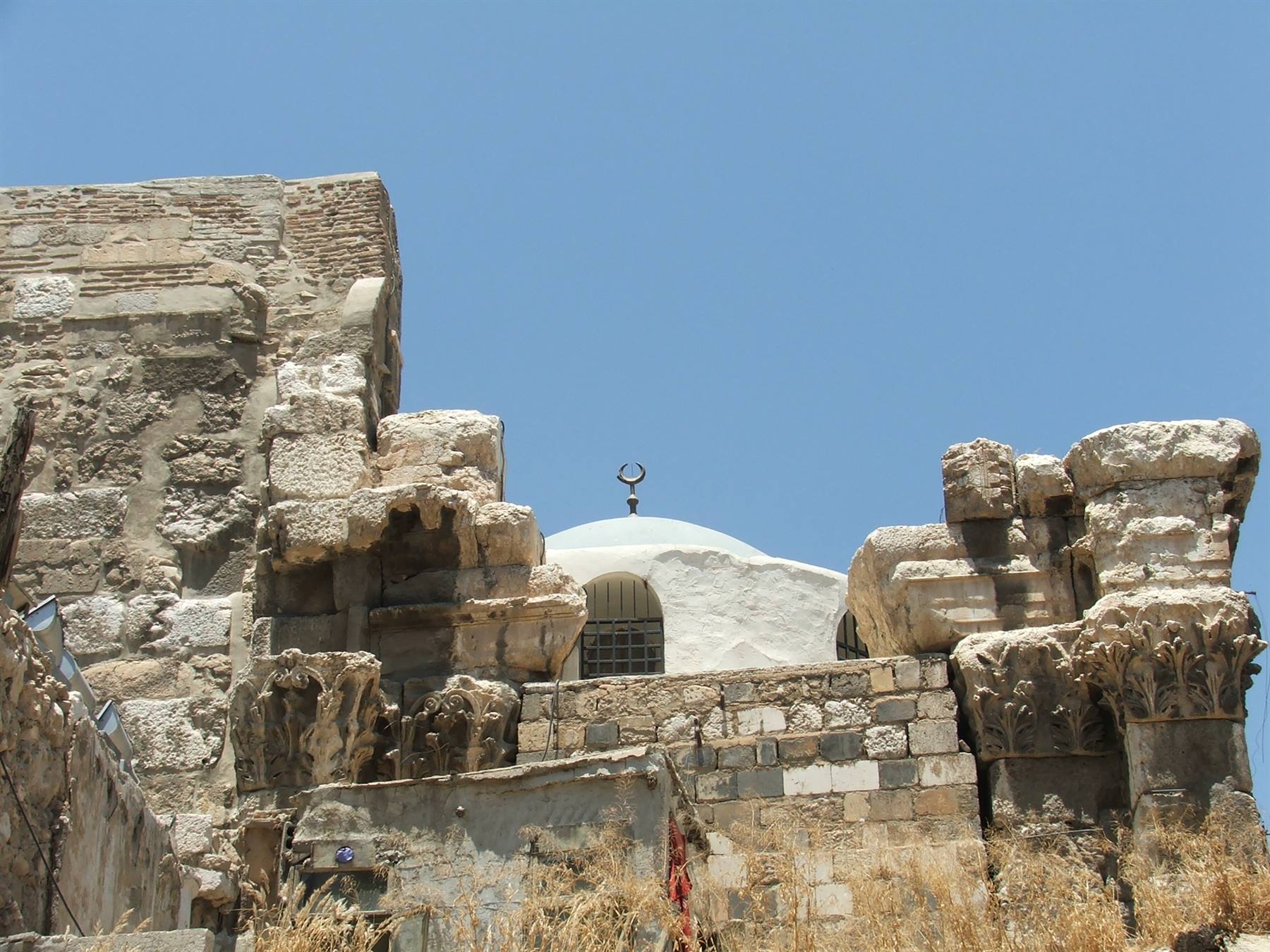
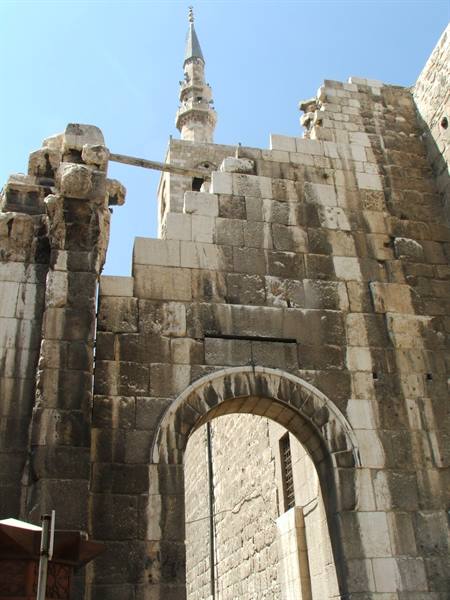
Furthermore, it boasts a thousand-year history: in the 9th century BC there was an Aramean temple to the god Hadad, similar to that of Bel in Palmyra; the Romans transformed it into a Temple to Jupiter; in 313 it became a Christian church and after 600 it was transformed into a mosque, under the Umayyad caliph Khaled ibn al-Walid. Every wall was covered with rich mosaics, there were golden chandeliers and precious stones in the prayer niches: despite the earthquakes, the fires and the devastation wrought by the Mongols, a good part of the ancient splendour remains, which cost the Damascenes a good 7 years of taxes. Perhaps even this Mosque, on its own, is worth the trip. I am also struck by the spirit of the Muslims: it's a place of gathering, of relaxation, of rest and not austere as I would have imagined, except where one prays, naturally.
In short, like the village square for us, the little park under the house or the forum and agora for our ancestors. A beautiful spirit, but also in this case I feel cut off... also because of these ugly tabards they make us wear and which mark us like a scarlet letter.... Deir Mar Musa was truly for everyone, but evidently, even that is an exception. We eat falafel made with chickpea flour and shawarma on the street and then continue the walk through Straight Street or the ancient Via Recta, then the Christian quarter and, to conclude, the House of Ananias, in whose cellar, according to tradition, he had hidden Saint Paul in the days of the great conversion. We say goodbye to Diala with tiredness and sadness, because the next day, after the trip to Baalbek, in Lebanon we know we will have to say goodbye. Dareh we already said goodbye to this morning.
Damascus
Day 91 Jul 2010
Baalbek,Lebanon
At the end of the trip in Lebanon, we say goodbye to our friend with sincere emotion.
Damascus
Day 102 Jul 2010
Damascus
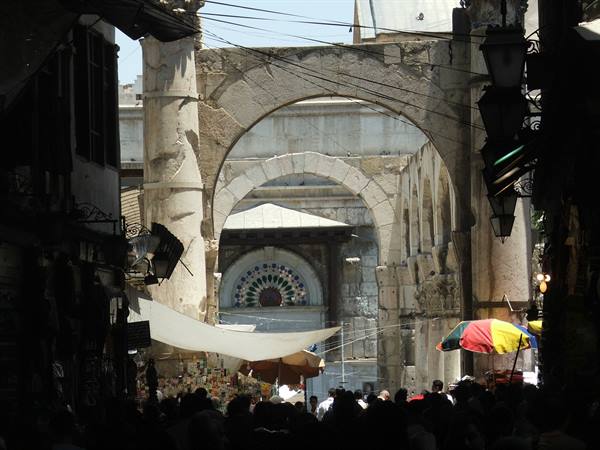
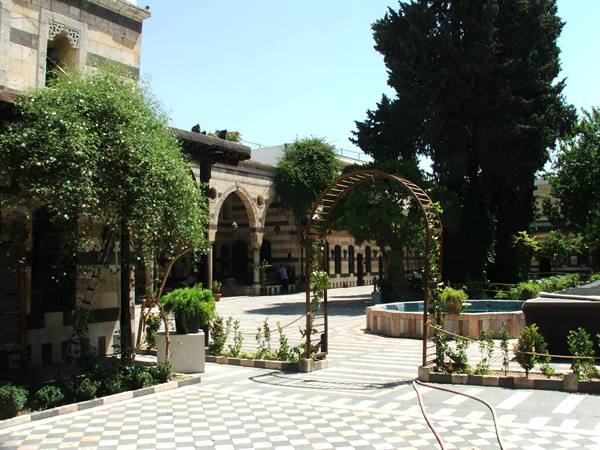
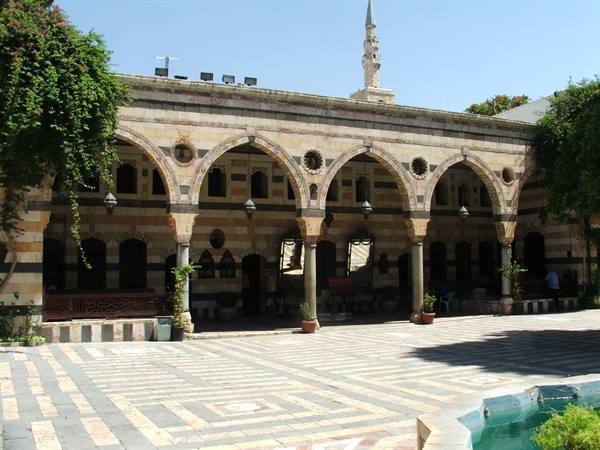
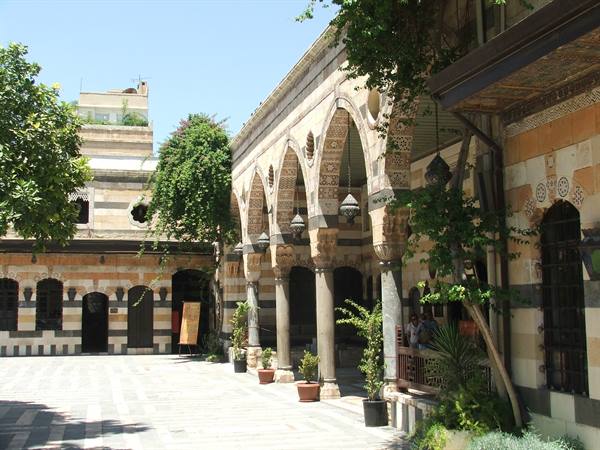
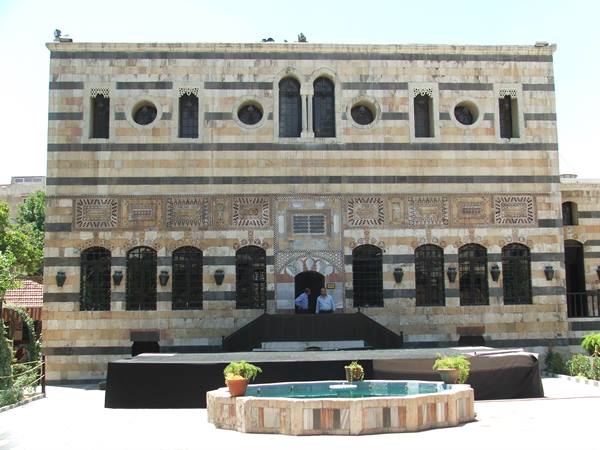
The appointment for the airport is at 14:00, so we finally sleep in, have a hearty breakfast, leave our luggage outside the rooms and go to spend the last hours in Damascus. It's Friday and almost everything is closed, but we manage to visit the El Azem palace, a Damascene house of great luxury and impact, which also houses a sort of folklore museum, and the Khan As'ad Pasha, practically a cathedral in the middle of the souq! The little stall where we ate shawarma with Diala is also open, we stock up and go to the hotel, from where a new driver will take us to the airport well in advance. I reflect that one regret I leave with is not having managed to do the Hammam: they were under renovation or were only for men... and, perhaps also for this reason, I will leave already with an infinite and heart-wrenching nostalgia inside my heart.





















1 reader comments
per favore sai darmi qualche indicazione in più sulla Sherazadtravell? Hai la sua mail? grazie