I arrived in Iran on an organised tour with an agency from Tehran. I was with three fellow travellers, two of them women, a mother and daughter. We left Bologna on a Pegaso flight bound for a secondary airport located on the Asian side of Istanbul, where we had a stopover before boarding the onward flight to Tehran. For the return too we travelled the same air routes in reverse.
Day 16 May 1995
Qom and Nain
We arrive at night at Tehran International Airport, which is located several kilometres south of the capital. We've decided not to go to Tehran, which is a modern city that hardly reflects the reality of the rest of the country. Waiting for us at the airport are the driver and the minibus with which we'll do the tour. The driver isn't a guide but speaks a little Italian, so we'll be able to chat. Besides, the tour operator we turned to in Iran is an Italian woman who has lived here for years. We immediately transfer to the Holy City of Qom, where we settle into a hotel for a short sleep, since dawn will soon break. The following morning, that is, a few hours later, we begin our visit to the holiest city in all of Iran and obviously also the most fundamentalist. On the large marble square stands one of the two most important mosques for Shiites, where Khomeini's rise began.
What predominates is the intense blue colour of the architecture and the pishtaq shapes of the façades, from which the minarets rise. From time to time, imposing silver coverings break through, reflecting the sun's rays on this clear day. Most people are here to pray, so we visit the place with respect. Our female companions are given a chador free of charge, but despite this their visit will be limited to part of the premises. My friend and I, on the other hand, are allowed to enter the mosque, but strictly barefoot. Silently we visit the interior rooms with the tombs of illustrious religious figures, over which the faithful pass their hands. Rejoined with the rest of the group, we observe the many pilgrims; this is the only place in Iran where we've seen many women with their faces covered and the black veil. We stop at a souvenir shop, then continue the tour heading to Nain.
To get there we cross a desert territory over which rugged reliefs rise, completely devoid of vegetation. It's not the classic sandy desert but the stony, ridged kind. The inhabited centres rise near the few water springs, as in Nain, where we stop to visit one of the oldest mosques in this region and its underground areas. If in Qom blue was the dominant colour, here it's ochre, the same colour as the surrounding landscape and the nearby urban settlement. In this village, which apparently seems uninhabited, but isn't, we see the first wind towers, an ingenious system for cooling the clay dwellings. The construction techniques here don't seem to have changed much since the time of the Kingdom of Darius. We resume our journey, crossing desert again as far as the city of Yazd, where we stay in a small but beautiful hotel complete with an inner courtyard onto which our rooms face.
This structure too seems the heir of a glorious past. It's well kept in any case and has a nice restaurant where we have a decent dinner. We take a short walk around and retire to sleep.
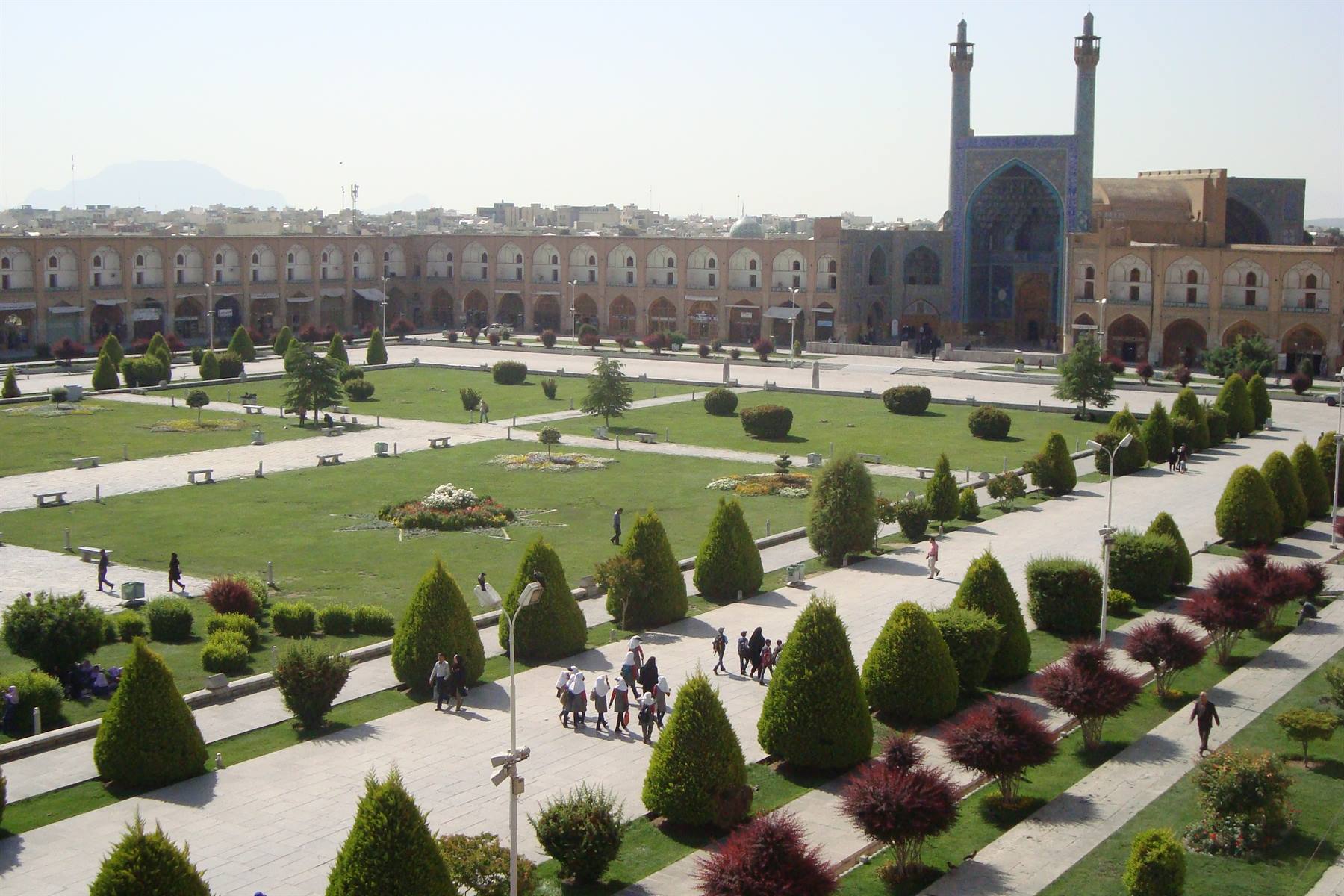
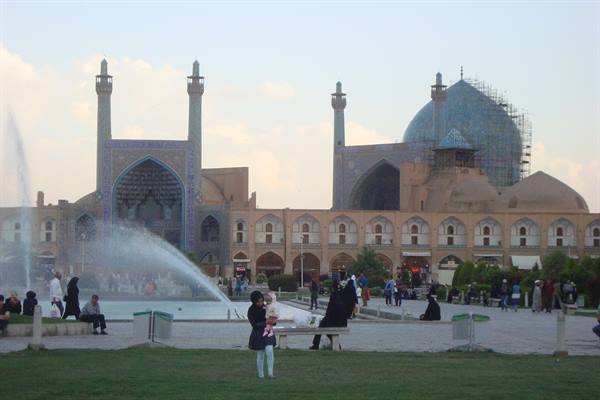
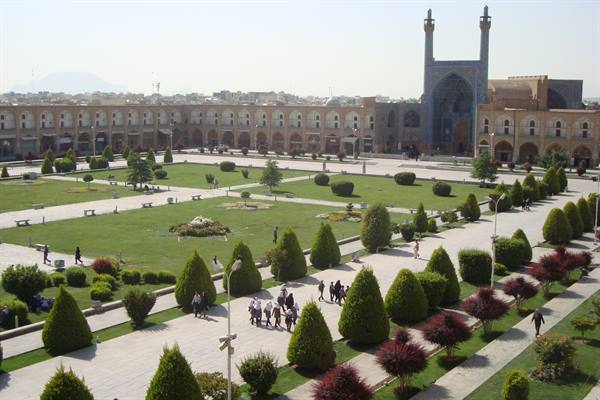
Isfahan Imam Square
Day 27 May 1995
From Yazd to Shiraz
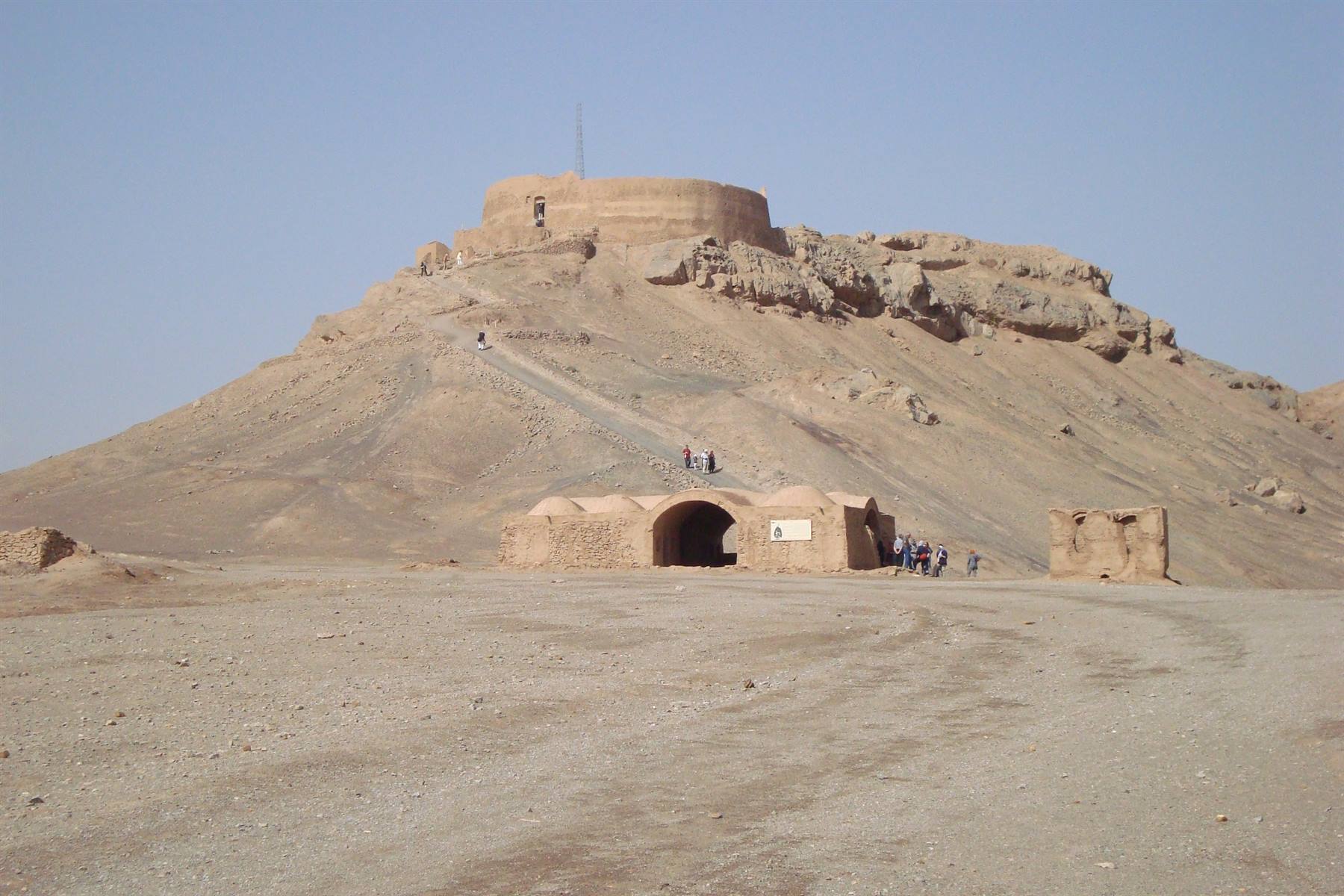
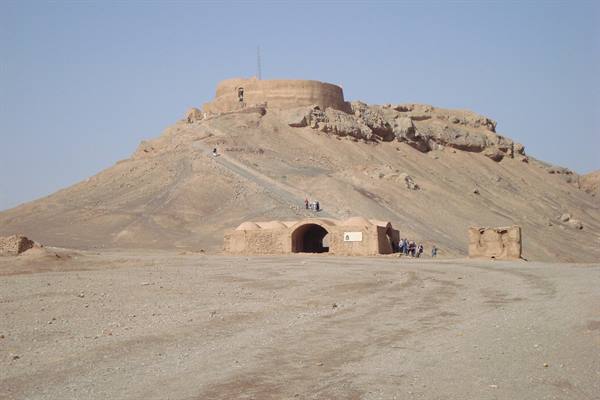
After breakfast at the hotel and a short stop in the centre where we briefly see the square that houses a large mosque, we reach with our vehicle the outskirts of the city, where the remains of the Towers of Silence are located. These structures, rather squat to be called towers, but imposing, were designated for the deposit of corpses, which were then devoured by vultures. A Zoroastrian practice carried out until not long ago. This region of the world is in fact the place where Zoroastrianism, probably the oldest religion in the world, was born. Few followers of Zoroaster (known in Europe as Zarathustra) remain, but in this city there's an important community of them. We climb to the top of the towers, which are surrounded by an arid landscape, then get back on the minibus, heading towards Shiraz.
We bid farewell to Yazd, a city that, besides the Towers of Silence, also has numerous Wind Towers. The route is quite long and winds through a mainly desert landscape with harsh ochre mountains absolutely devoid of vegetation. For this reason we take advantage of the presence of a very rare tree in a dusty village to make a stop. A tree here is so precious that it's visited like an attraction. We set off again along the road, partly flat and partly with hairpin bends, making a further stop at Pasargadae to see the bare Tomb of Cyrus, one of the main rulers in Persian history. The tomb appears isolated in the stony desert, but in reality it's enough to move a few hundred metres to observe the scanty remains of the ancient capital of the Persian Empire.
The remains are too few and too summary, and you have to work with a lot of imagination to picture this city at the time of its greatest splendour. Having set off again, we arrive in Shiraz in the evening. As we approach the city, the desert gives way to a lush oasis. Having taken accommodation in a modern hotel in the centre, we take a walk near the main attractions we'll visit tomorrow. On foot we can reach both the historic centre and the very busy wide avenue beyond which, crossing pedestrian bridges, there's a long pavement lined with numerous commercial businesses. It's a public holiday and the area is teeming with families intent on shopping. Iran seen from Shiraz, but we could say the same about other cities too, presents itself as a nation projected into the future, in which the scarf worn by women appears more a formality than a true form of religious fundamentalism.
I'd rule out cultural backwardness a priori, because here I've seen very emancipated and cultured women. Iran's social fabric is very young and the young people here are steeped in Western culture just like ours. The Iran we've seen on this trip is very different from the one the mass media have depicted in the West for years. Among Islamic countries it's surely the closest to our standards, and fundamentalism is imperceptible. In any case, even the two women accompanying us on this tour wear a scarf. For dinner we choose a nice ethnic restaurant in the historic centre, strongly recommended by the guidebooks, where during the meal we're entertained by folk music. With a short walk we return to the hotel. We stop a while to talk in the lobby, then retire for the night.
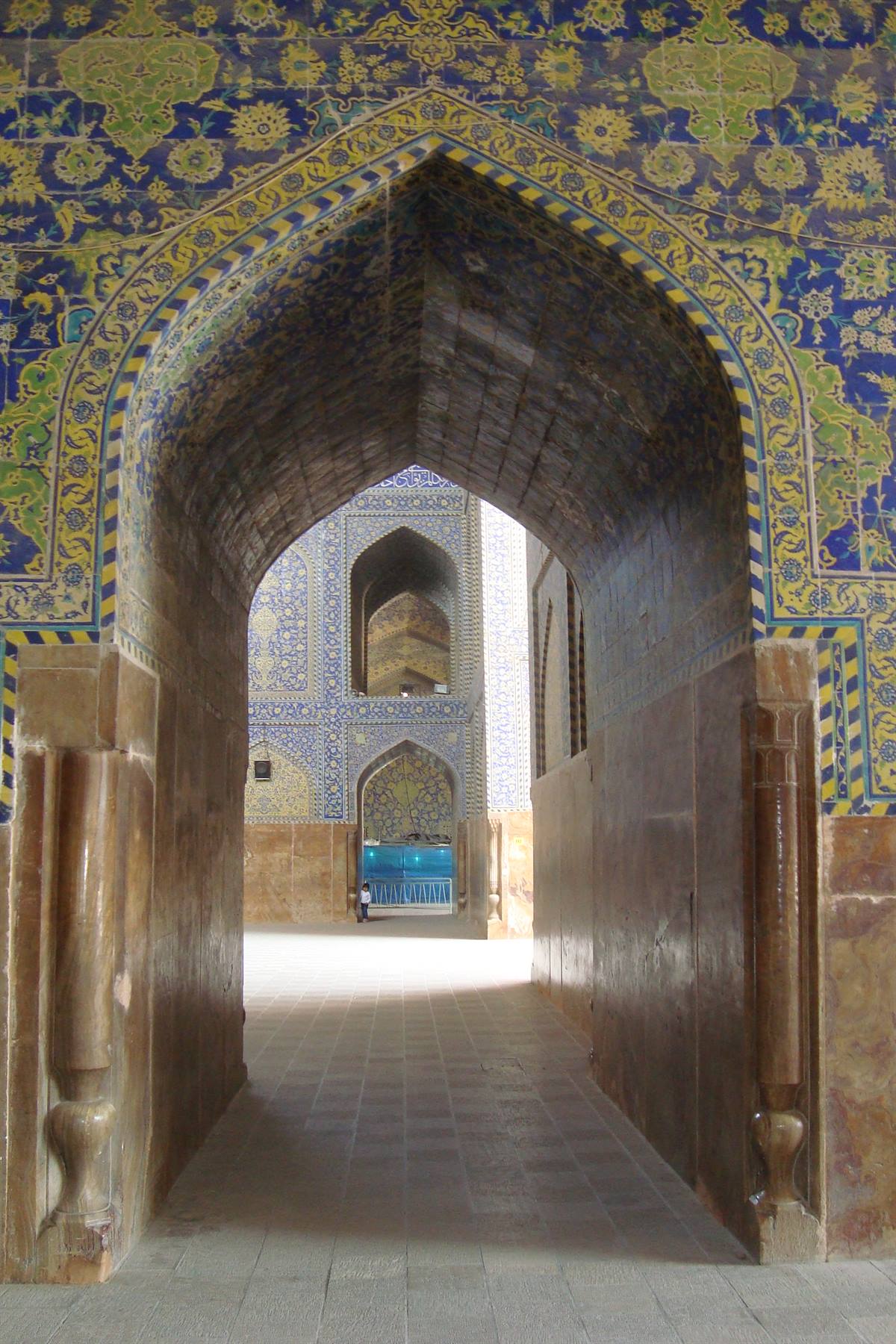
Isfahan Imam Square detail of the portals
Day 38 May 1995
Shiraz
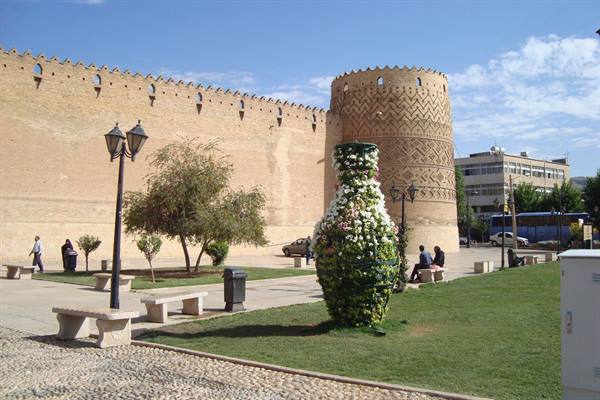
A beautiful sunny day. After breakfast at the Hotel we go with our driver to the historic centre, near the Restaurant where we had dinner last night. Almost all the things to see and in any case the ones most interesting to me are near the Suk. The most eye-catching monument, which we had already seen last night, is the square Citadel with four low, stubby towers at the corners, one of which leans noticeably. The fortification is surrounded by an elegant and spacious square. We go inside, where it is possible to visit the courtyard and the rooms that overlook it, which are, to tell the truth, a bit bare. Worth noting are some polychrome stained-glass windows that, lit by the sun, create strange coloured reflections, and the reconstruction with mannequins of the sovereign and his court. For the rest, vaulted ceilings, arches and columns and empty rooms.
You just have to cross the street to enter the small garden that houses the Persia Museum inside a not-large octagonal building. Only I visit the Museum, where a few but interesting works of applied art are displayed. Having caught up with my travel companions, we head to the large Suk, which unfolds inside a wide vaulted corridor where numerous merchants have their places. Like all Suks it is full of goods displayed in an overflowing way, but here everything is much more orderly and less chaotic than in the Arab countries. A few steps from the Bazar, the Vakil Mosque presents a jungle of finely decorated columns supporting a vaulted ceiling and a large courtyard onto which pishtaq portals covered in mosaic open. Here too we notice the considerable difference between what we expect of Iran based on the accounts in our own media and what Islam in this Country is really like.
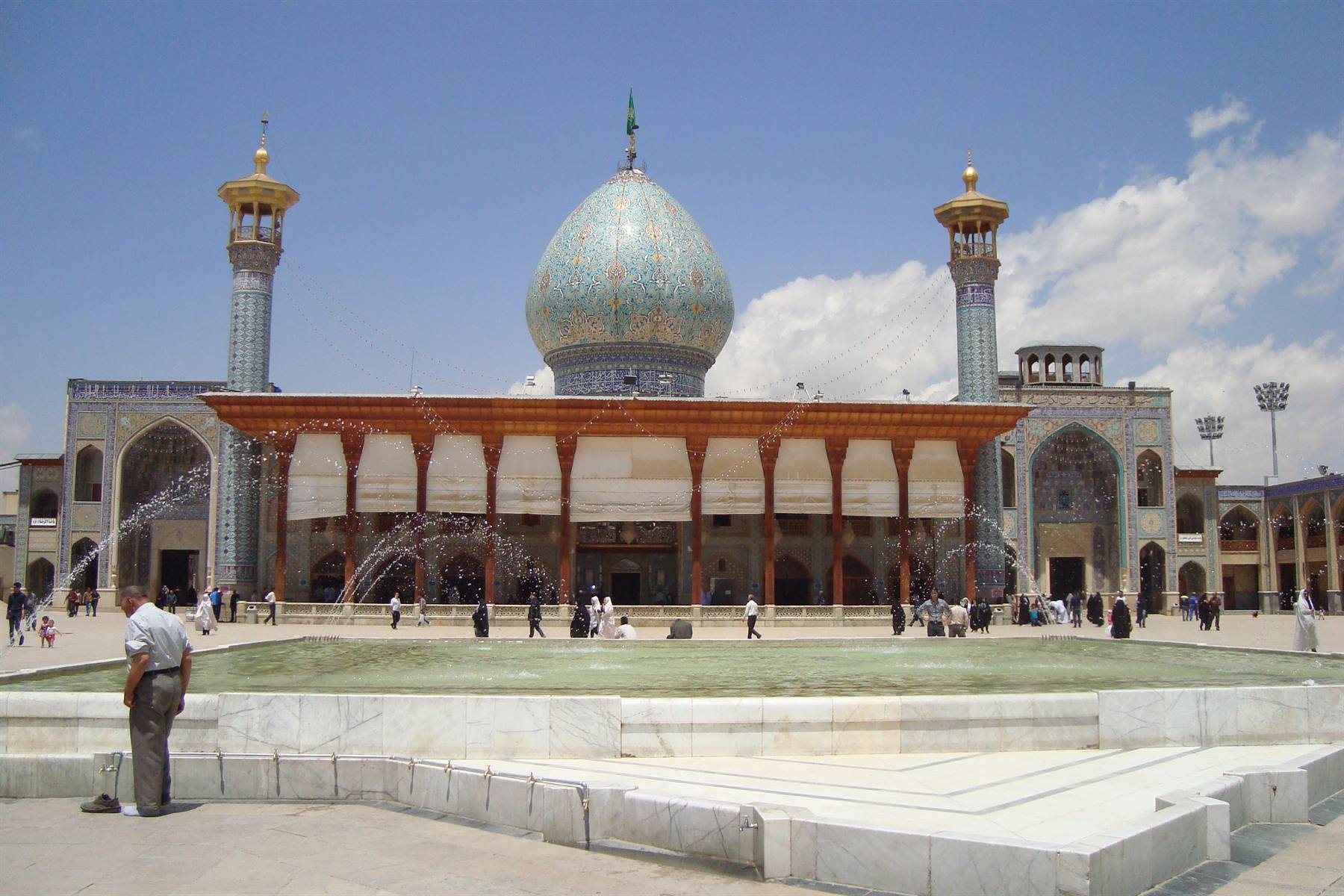
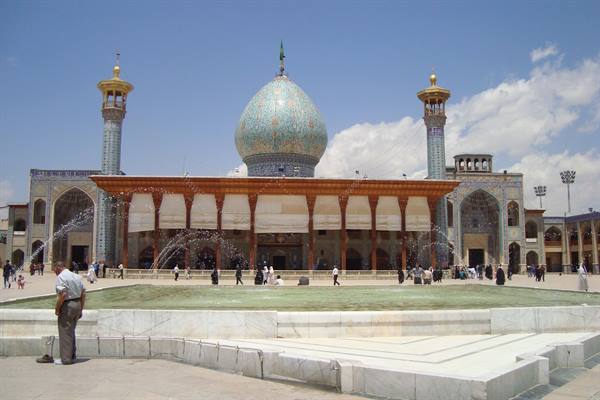
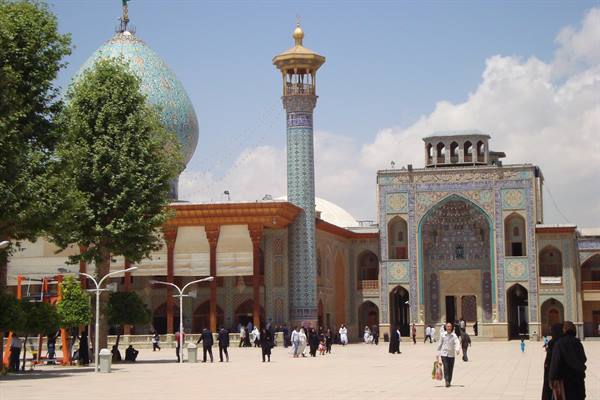
There is a very cheerful group of schoolgirls who, although wearing the black head covering, are quite happy to socialize with us. They are smiling and carefree, certainly not suggestive of an oppressive religion. Next to the Mosque is the hamman, that is, the public baths, which we could call the Spa of times past. We know how widespread they are in the Middle East, but here, with the use of wax statues, they have reconstructed the life that took place in these places. The rooms, however, are original, with vaulted ceilings supported by twisted columns. A short stroll leads us first to another Mosque, then to the fantastic Shah Cheragh, probably the most beautiful Mosque I have seen over the course of my numerous travels. Exceptional both outside and inside. The square, the fountain, the bulbous dome and the two minarets are the best postcard of Iran.
The interior is an explosion of mirrors and reflections, simply marvellous. Happy with this tour of the city, we return to the Hotel to rest. In the afternoon, with our vehicle, we go to see the Tombs of the two principal Persian poets. First we visit that of Hafez, set beneath a graceful edicule surrounded by a beautifully kept garden. Here too, throngs of students in uniform, carefree and smiling, have come to pay homage to the supreme poet. A short distance away, in another park, is the simpler Tomb of Sa'di. We return to the Hotel after a truly intense day.
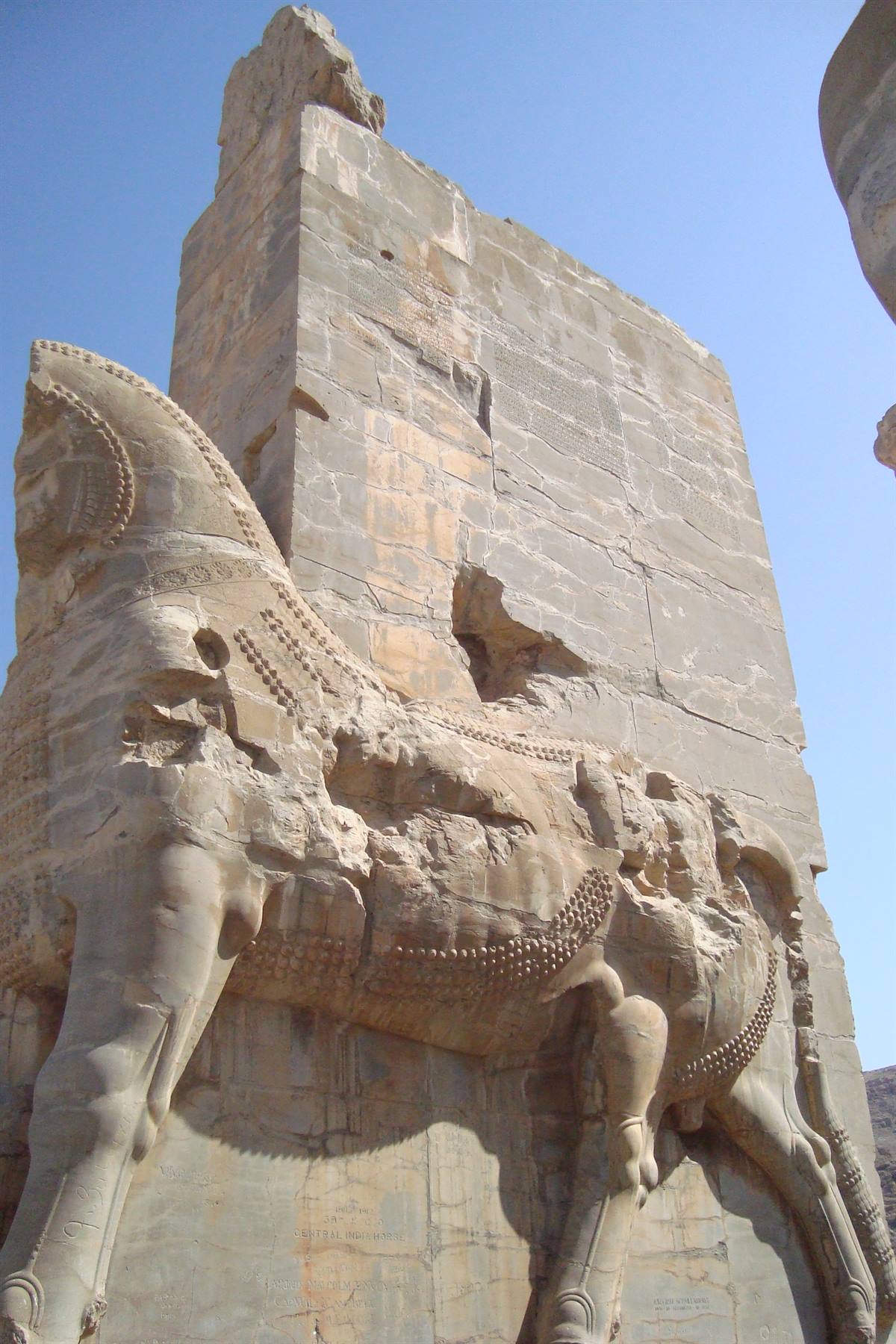
Persepolis
Day 49 May 1995
Persepolis and Esfahan
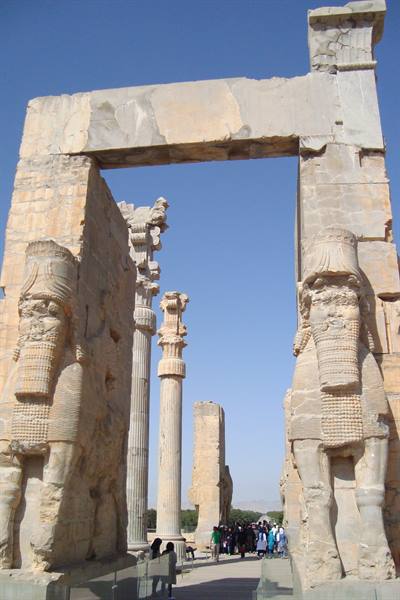
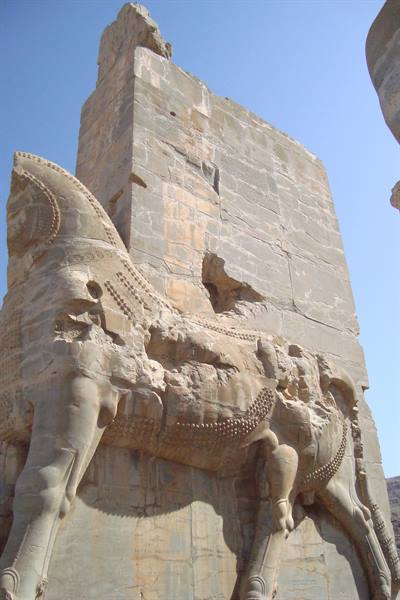
This morning we move to the archaeological area of Persepolis, the sacred city of the ancient Persians. Sovereigns of various nations came here to pay homage to the emperor, as described by the meticulous bas-relief of one of the Temples. The vast remains are scattered over a wide plain close to arid mountains on which royal rock-cut tombs open. A stairway that must once have been sumptuous leads to the majestic entrance portal. Obviously it is necessary to work a lot of imagination to understand how this city must have looked in its period of greatest splendour. Wandering among the ruins is tiring, because part of them continue up a hill from which you also enjoy an overall panoramic view. It is tiring above all because it is hot and we are surrounded by desert on every side. There is also a small and well-kept museum display.
Among the tombs present on the site there are not those of the most famous sovereigns: that of Cyrus we saw two days earlier; to see that of Darius we go with our vehicle to a nearby archaeological area. In the afternoon we head to Esfahan, where we arrive in the evening. Even as we approach, the desert gives way to vegetation, because this city is located in an oasis rich in greenery. Wide tree-lined avenues lead to the hotel where we will stay, from which the historic centre can be reached on foot. Like all the accommodations in Iran, this one too is decidedly beautiful. We arrive in time to take a look at Imam Square, the largest in the World after Tiananmen in Beijing. The sun has already set and the Mosques of the Square are skilfully illuminated, showing their splendid colours.
We dine in a restaurant near the Square in an unusual way, seated on a large bed where Persian dishes are served to us. A final stroll in Imam Square, a visit to a pastry shop that sells the typical pistachio nougat and a small souvenir shop, then to the Hotel for the night.
Shiraz Mosque
Day 510 May 1995
Esfahan
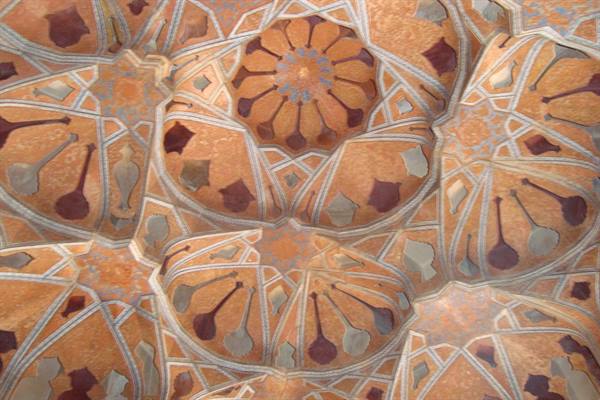
A day entirely devoted to visiting Esfahan, considered the most beautiful city in Persia. We return to Imam Square and visit the palace where the Shahs lived in the 1600s. The interior open to visitors is bare, but there are frescoes on the walls. One room is entirely pierced with the shapes of musical instruments and is said to have perfect acoustics. The terrace on the second floor is full of wooden columns and overlooks the great square. Once outside, we enter the Imam Mosque and the smaller Sheikh Mosque. The features that distinguish the square are the tall pishtaq portals covered in mosaics, the arcades beneath which are dozens of small shops, the horse-drawn carriages carrying tourists, and the gardens in the centre with pools and choreographed fountains.
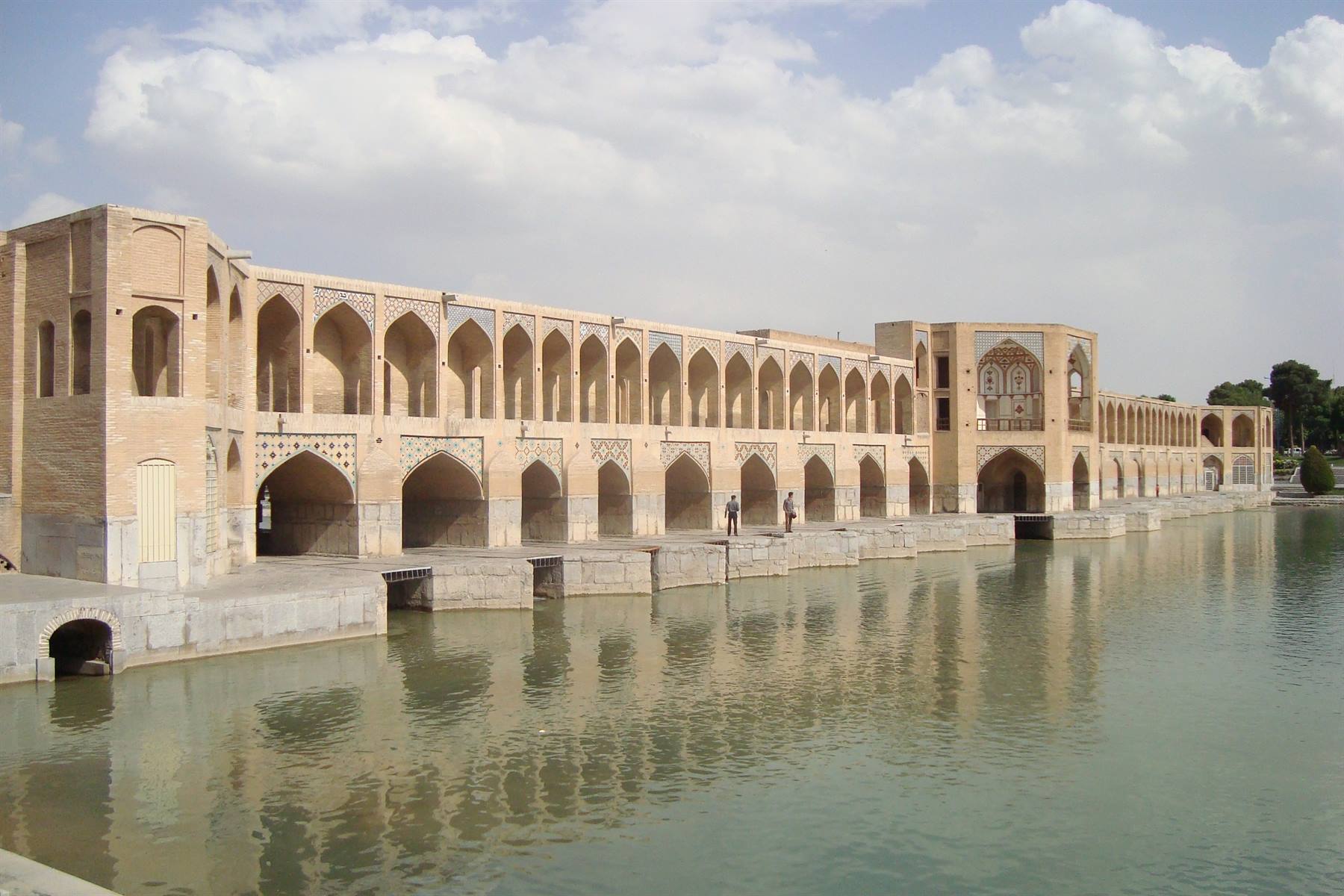
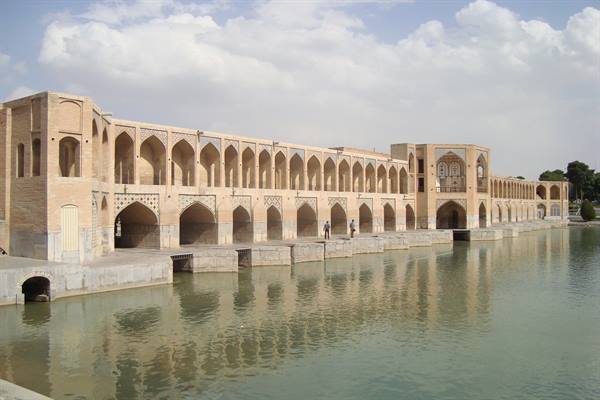
The north side of the square is closed off by the mighty pishtaq gateway leading into the intricate maze of streets of the immense bazaar. After returning to the hotel to rest, in the afternoon our driver takes us to see the bridges over the river; the Khaju and the Si-o-se-pol both have an elegant arcaded structure. During the visit we stroll along a modern shopping street. Iran is the country you don't expect; it has nothing to do with what you imagined before arriving, a country projected towards the future. Esfahan, for its part, is a young, vibrant city, where girls pair blue jeans with scarves from major fashion brands. In the evening we make another visit to Imam Square, then return to the hotel for the night.
Yazd Towers of Silence
Day 611 May 1995
Isfahan, Kashan and Abianeh
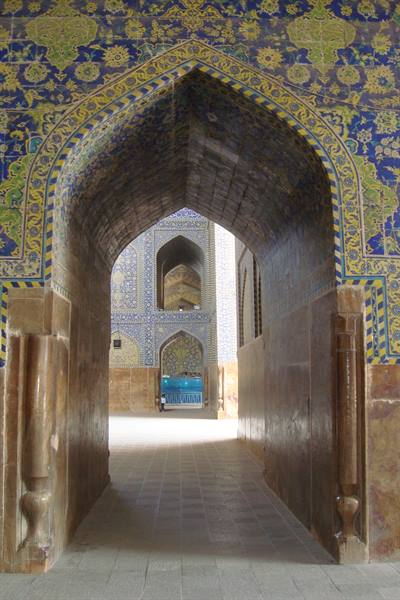
In the morning we visit the great Friday Mosque. Clearly the Shahs had a mania for grandeur, because the courtyard of the mosque is immense, almost as large as Imam Square, bordered by double-arched porticoes and flanked by tall pishtaq portals. So much magnificence contrasts both with the sober interiors, whose walls are nonetheless finely decorated with bas-reliefs, and with the bare central courtyard. The most interesting thing is, once beneath the pishtaq, to look up and see the fine embossed craftsmanship of the inner arch. We set off from here heading for Abyaneh, an isolated village in the stony desert that you come across just after leaving Isfahan. Located in a heavily militarised area, this village consists of low cubic houses of mud mixed with straw. They look as if they might collapse at any moment; they have reddish-ochre walls and white trim.
Narrow streets run through the village following the course of a stream. After leaving Abyaneh we continue to Kashan. In this city, which occupies a lush oasis, sumptuous residences have been built. We visit two: the first is preceded by a garden with pools, the second by a large courtyard. In both, the exteriors are majestic, while in the empty interiors you can appreciate only the rich bas-reliefs on the walls. In a semi-basement are the Turkish baths (though Turkish they are not), lined with polychrome tiles. Kashan is famous for the production of rose water. After leaving Kashan we reach Tehran International Airport, which is south of the capital. To get there we pass again through deserts and bare mountains, glimpsing a salt lake in the distance. Near the airport we stop at a café to refresh ourselves.
Once at the airport we say goodbye to our kind driver and take off on our flight back to Italy via Istanbul. The plane stops over, as on the way out, at a secondary Istanbul airport located on the Asian side of the city.
0 reader comments