A kingdom of castles, of splendid and luxurious palaces inhabited for centuries by kings, queens and dukes, of immaculately kept and orderly towns, of breathtaking coastal views, of green landscapes, endless pastures and wind-swept moors.
From the densely populated suburbs of London to the endless, desolate expanses of Exmoor.
From the warmth of the people of Cornwall and the countryside, to the cold inhabitants of the City.
A surprising England, with so many, many places to visit that in a week they can only be skimmed. A thousand-year history, from 3000 BC to the present day, a country in constant evolution, where tradition is skilfully combined with progress.
One flaw: its roads. The motorways are congested, and the country roads are narrow, winding and busy. Fortunately, you only have to get out of the car to relax immediately and forget the stress of traffic: in the quiet towns, on the vast moors or walking along the endless coastal paths, where the trails separate landscapes ranging from high mountains to white beaches of almost Caribbean beauty.
Right from the first impact we understand what awaits us for 7 days on English roads: extremely busy, from motorways to the narrow lanes of Cornwall.
And so, having left Luton, we joined the long queue of cars travelling along the M1 southbound, proceeding in fits and starts. Nothing compared to what awaited us at the exit for WINDSOR: an hour to cover 300 metres because of an accident.
The traffic stress is immediately forgotten as soon as we arrive: in fact, in the town of Windsor, despite being very popular with tourists, there's a certain peace and tranquillity as you walk along the characteristic streets overlooking the Thames, where it feels like you've gone back to the Middle Ages.
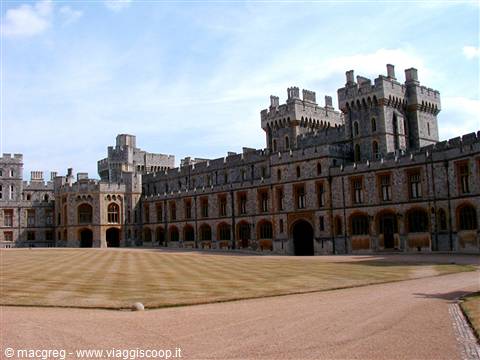
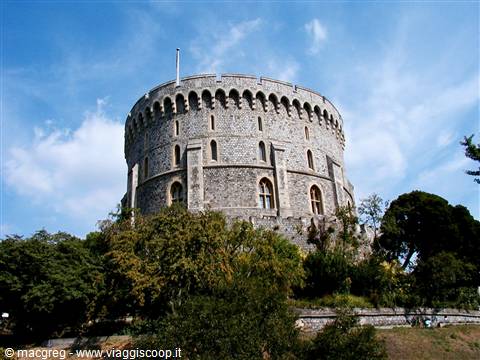
We immediately head towards the unmissable and imposing Windsor Castle, the largest and oldest fortress still inhabited in the world, where the royal family still spends much of their holidays.
The entrance fee is eye-watering (£13.50); fortunately it will be the only place we visit that isn't included in our GB Heritage Pass (7 days €58), which gives access to almost all the palaces, castles and archaeological sites in Great Britain, saving quite a bit.
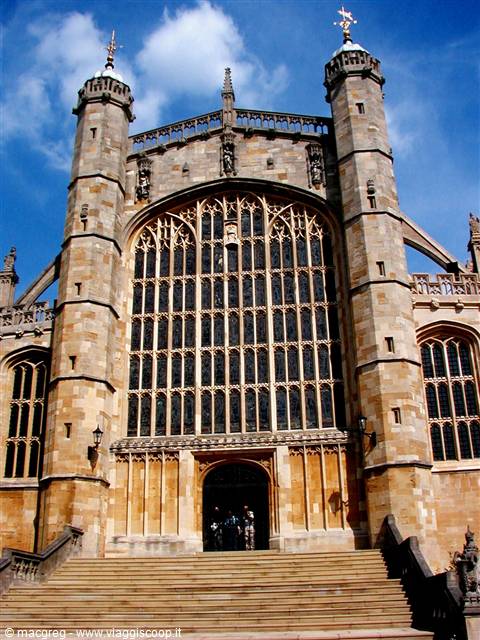
Having bought the ticket (short queue) and gone through the metal detectors, we head towards St George's Chapel, an imposing Gothic church used as a Royal Mausoleum, where among others the tomb of the Queen Mother is located. The interior is truly striking, with its long nave and the Royal Vault, where some tombs are located. Before leaving, you pass through the Albert Memorial Chapel, an opulent chapel decorated down to the smallest detail.
We then head towards the Royal Apartments; to visit them, there are two queues at the entrance: one, with no line, gives access exclusively to the apartments, while the other involves a 40-minute wait and gives access first to Queen Mary's Dolls' House, the dolls' house. We say hello to the dolls from outside and opt for just visiting the Apartments. Visiting them, you sense the great power and wealth of the British Monarchy over the centuries, perhaps unequalled.
You pass from George's Hall, used for official receptions, to the most intimate rooms of the royals, always walking with great astonishment and admiration for the elegant halls you pass through.
On leaving the Apartments you find yourself in front of the Castle facade with a wonderful overall view of the entire residence and its endless gardens, crossed by the Long Walk, a 3-mile promenade.
From the centre of Windsor, crossing the pedestrian bridge over the Thames, you reach the neighbouring town of Eton, famous for its college.
We return to the car and cross the Wiltshire region; the roads tend to become narrower, but traffic is always heavy, even though the queues have disappeared. We arrive in the late afternoon at
SALISBURY
Here we have our first experience of English B&Bs: all characterised by a great sense of warmth combined with discretion, despite the small size of the establishments and the sharing of some rooms.
When we arrive, once shown to our room, the owners seat us in the garden and offer us tea and biscuits, which by the way can be prepared at any time since all the rooms have facilities for making tea, coffee and hot chocolate.
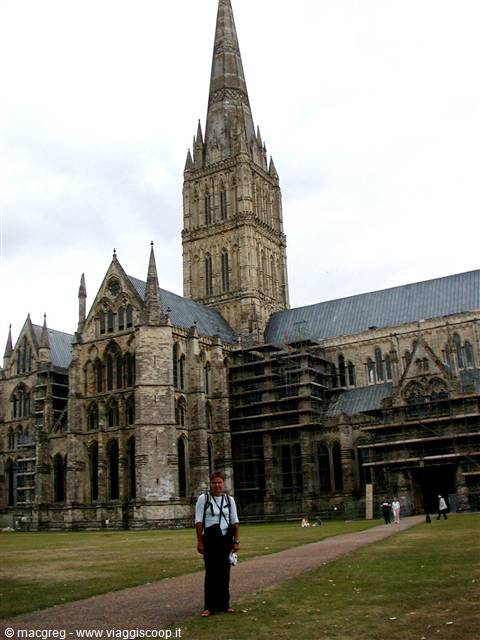
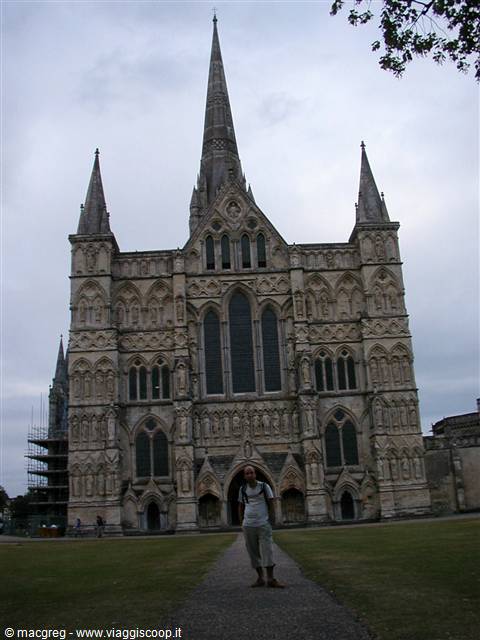
Before dinner we take a walk around Salisbury, a delightful town with a typically English atmosphere, combined with truly remarkable monuments and buildings. The main attraction is the fabulous Cathedral, one of the most beautiful and interesting in the United Kingdom. Outside, what strikes you is the magnificent spire, the tallest in England at 123 metres. The interior is sumptuous and solemn, with a central nave 70 metres long. From here you enter the beautiful cloister and the Chapter House, which houses the best-preserved original copy of the Magna Carta. Also inside you can see the oldest working clock in the world (1386), even though it looks like anything but a clock. The part of British churches that strikes me most is, in my opinion, the choir, characterised by the little lights that are always on.
The Cathedral is linked by a lovely park to the Close, the enclosed grounds around the Cathedral. Salisbury's Close is considered the most beautiful in England, with medieval buildings arranged in a row. The centre is characterised by lovely pedestrian streets where the market is held on Saturdays and which take their names from the products sold there in ancient times, such as Fish Row or Silver Street, and which lead to the beautiful Market Square.
The next morning begins with the classic English breakfast, truly sumptuous: the "Full English Breakfast" consists of a large plate usually made up of eggs, sausage, bacon, grilled tomatoes, mushrooms, combined with fruit juices, toast, often homemade jams, tea, coffee, fresh and tinned fruit. An excellent way to start the day on the right foot and to save money, since lunch becomes superfluous.
Today the longest transfer awaits us: 350 km to reach Cornwall. A few km from Salisbury, first stop at:
Stonehenge
Day 26 Aug 2006
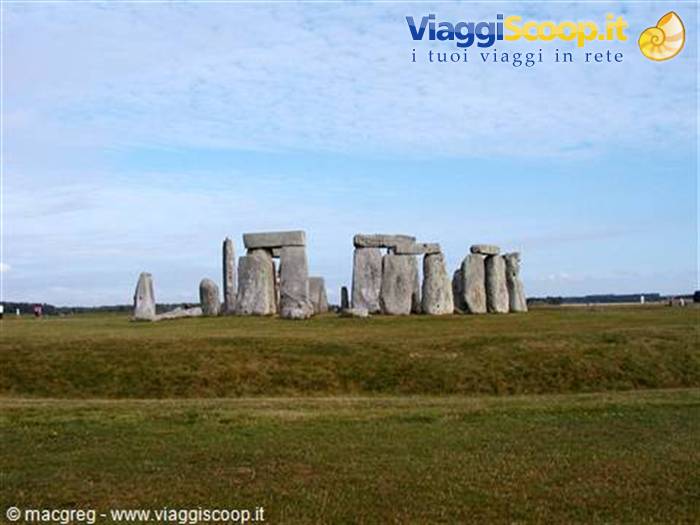
STONEHENGE, perhaps the most famous prehistoric site in Europe, a must-see stop on tours of England, and that's precisely why the visit should be planned either at opening time (9 o'clock), or even better at sunset, when the sunlight creates an almost magical effect with the enormous stones.
The site dates back 5,000 years; it consists of several circles made up of enormous vertical monoliths that in the past probably had the purpose of representing an astronomical calendar. In fact, the inner horseshoes are aligned with the axis of the sunrise at the summer solstice and the sunset at the winter solstice.
It has been calculated that the monoliths, weighing four tonnes, were transported about 30 km by 600 people: a horizontal stone was placed on two aligned vertical stones, until several horseshoe-shaped circles were formed. Visiting the site is truly fascinating, a genuinely mystical place. We continue and stop at:
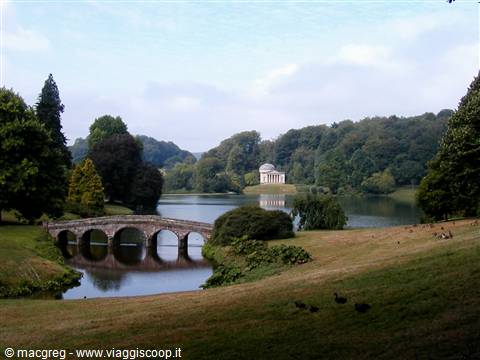
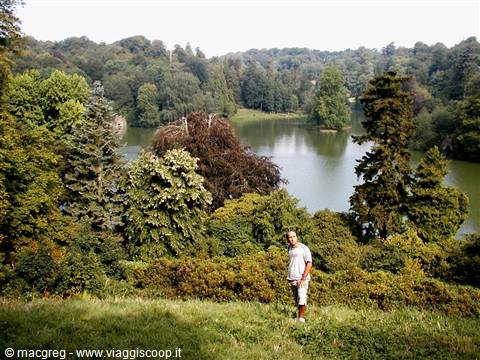
STOURHEAD GARDEN, magnificent gardens that can be visited by following a 3 km route that winds around a lake, in a valley characterised by beautiful landscapes, rare plants and small decorated temples. A truly pleasant and relaxing walk in this immense park, perhaps among the most beautiful in the world. At the end you can also visit the Palladian-style residence.
We continue towards the south-west of England along the A30, a road with two lanes in each direction that often becomes a single lane, creating no small number of traffic jams for those heading towards the busiest part: Saturday morning southbound, Sunday afternoon northbound. Fortunately we travel it on Sunday southbound, and we just watch the long queues on the opposite side!!!
Halfway along we make a diversion to drive a stretch of Dartmoor NP, a long expanse of hills with green and relaxing landscapes. We drive along some absurd roads, where if I hadn't had the GPS I would have thought I was lost who knows where. And instead we pop out right in front of our destination: CASTLE DROGO. We stop for a pleasant picnic lunch lying in the meadows of the hills surrounding the castle. The exterior, all in stone, isn't particularly striking; the interiors are much better, perfectly furnished with period furniture. The surrounding landscape is also truly pleasant, endless green expanses with no boundaries, only small lost villages.
We then rejoin the A30 until we reach Penzance, one of the best-known places in Cornwall, the main destination of our trip.
Lizard Peninsula - Kynance Cove
Day 37 Aug 2006
Cornwall
A land of legends, mysteries and traditions. Of pirates, artists and poets. Of unspoilt landscapes, white beaches, imposing cliffs. Of small and pretty villages, endless pastures, expanses of meadows covered in flowers.
In the past its westernmost point was given the name Land's End, the end of the land. And looking down from the cliffs at the endless ocean that has wrecked so many ships, it isn't so hard to imagine that this really is the point where the land ends.
The county of Cornwall has always considered itself a nation apart: and perhaps it really is, arriving in this area feels like entering another England; because of the landscapes, the style of the houses, the cuisine, the ancient language spoken, the clear sky when the days are free of clouds.
A paradise for trekking enthusiasts who can walk the South West Coast Path for 600 km of trails sheer above the sea, for surfers, attracted by the constant winds and powerful waves, for painters and writers enchanted by the breathtaking landscapes, for nature lovers who can immerse themselves in the endless natural beauties the region offers, for beach lovers, with small coves and wide sandy bays that rival the most beautiful beaches of the Mediterranean. And also small but elegant towns, castles sheer above the sea, friendly and smiling people.
Cornwall offers so many attractions that on its own it would require a stay of at least two weeks. But time is, as always, a tyrant, and unfortunately an annoying selection among the most famous places is necessary, aware that it's often the lesser-known and smaller places that give the most exciting sensations.
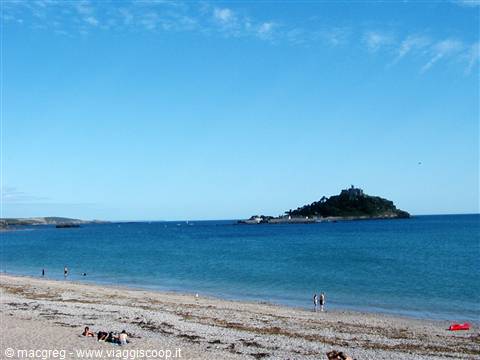
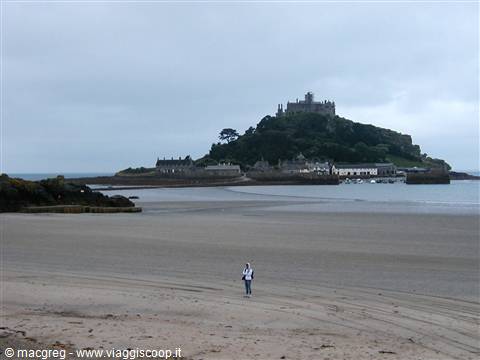
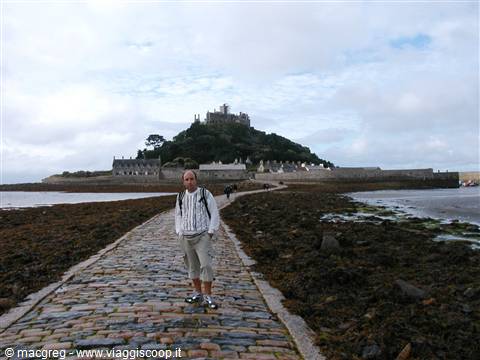
Unmissable is without doubt St Michael's Mount, practically a carbon copy of the more renowned Mont Saint-Michel in Brittany. A rocky islet that at high tide is separated from the coast, while at low tide an immense beach forms where you can walk, and from the waters a cobbled path appears as if by magic, emerging among the seaweed, leading to the castle at the top of the cliffs on the island. The phenomenon occurs twice a day, roughly every 12 hours. The 12th-century castle includes a lovely garden, elegant interiors, and at its foot a series of dwellings built entirely of stone. In the case of high tide, the castle can be reached by boats that lie stranded in the harbour when instead it's low tide.
S. Michael's is a few km from Penzance, the main town, which can be a good starting point for exploring the area, offering excellent accommodation options, mainly in small B&Bs, many of which are in beautiful Georgian-style residences.
Here there's a lovely pedestrian seafront promenade, where you can find many small restaurants to enjoy fresh fish and shellfish, a seawater pool "carved" out of the sea, and many craft shops alongside art galleries.
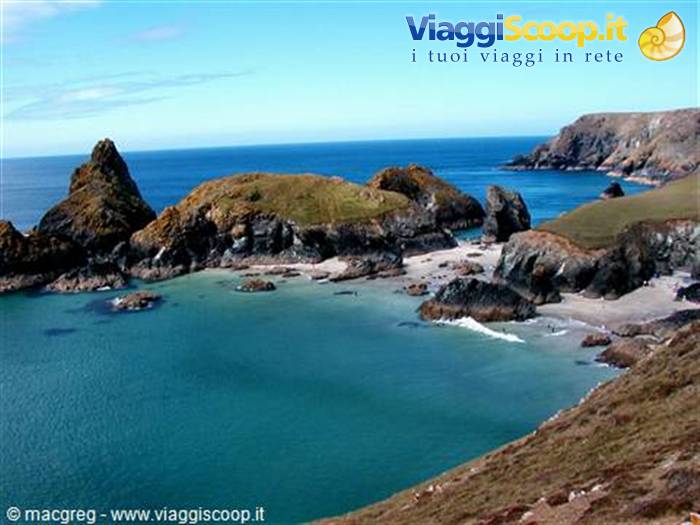
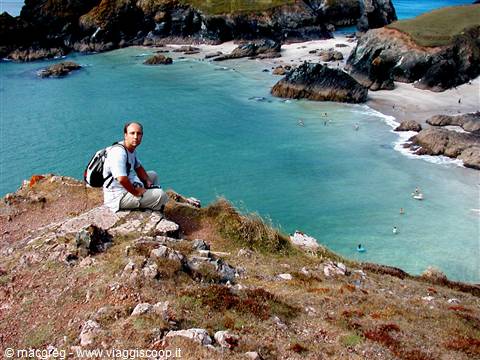
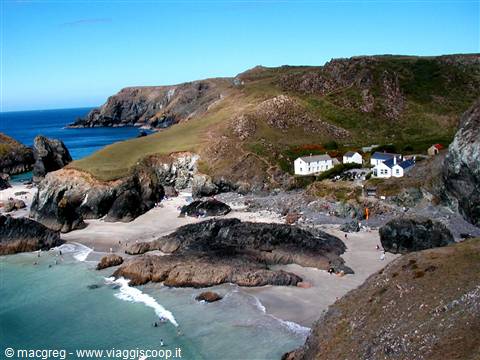
Perhaps the most spectacular point in the area is the Lizard Peninsula, which stretches into the ocean to the extreme point where the lighthouse stands. From here fabulous trails lead to the various bays. Not to be missed is the one that leads to Kynance Cove (40 min. from Lizard Point, a few minutes from the car park), a fantastic bay reachable via a breathtaking route where it feels like being in high mountains, among pastures and meadows full of flowers that suddenly give way to a very white beach, imposing sea stacks and turquoise, crystal-clear waters. It feels like you've arrived at a refuge at 2,000 metres, but instead you're at the beach!!
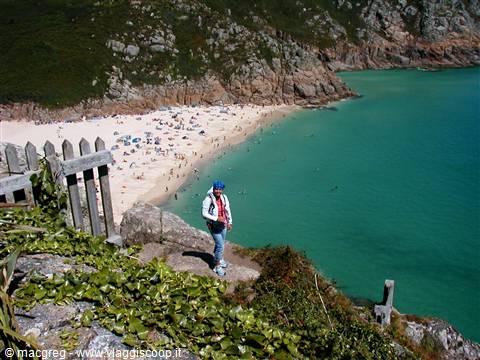
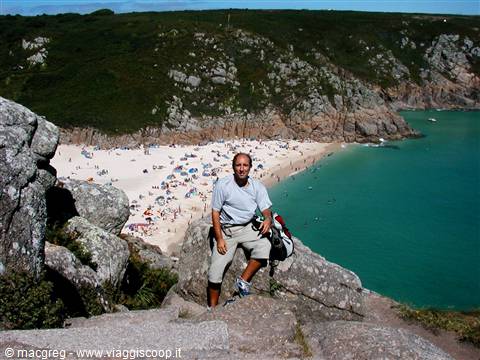
Beyond Penzance, however, you enter the westernmost peninsula of England; a circular road allows you to explore the area, called Land's End, stopping at various viewpoints. First stop the Minack Theatre, according to some the most spectacular open-air theatre in the world. Entirely in stone and set into the cliffs, it offers a breathtaking view of the stunning Porthcurno beach, with its very white sand and sea of indescribable colours, and of the whole peninsula whose rocks seem to take on a reddish colour. A steep path leads to the beach, considered among the ten most beautiful in the world. In the evening, theatrical performances are still held here, although in summer you have to book well in advance because it's always sold out.
If you happen to attend a performance in the evening, bring a ski suit, because up here a freezing wind often blows...
We continue along the peninsula, where you first come across the village of Land's End, then Sennen Cove bay. My advice is to head directly for the latter, leave the car and proceed on foot along the path connecting the two places (about 1 hour and a half round trip).
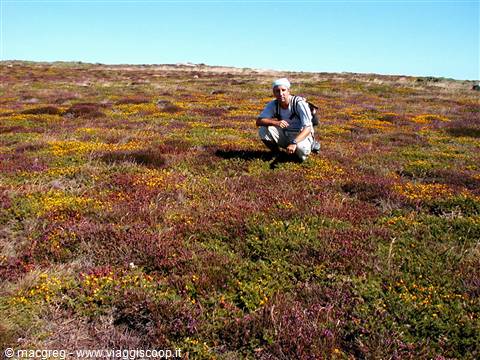
Sennen Cove is a small village with a stunning white beach at least 4 km long. Walking the path that leads to Land's End is something fantastic; always sheer above the sea, immersed in meadows covered in ferns, heather and flowers, almost always driven by a very strong wind: that's why when you arrive at your destination you can say you've reached the "End of the World". To symbolise the place, a sign indicating that you've arrived at the westernmost point of the United Kingdom, and the distance from New York, about 5,000 miles I think. But centuries ago there was no sign, and everyone thought that beyond this point, the land really ended. I don't find it hard to believe!
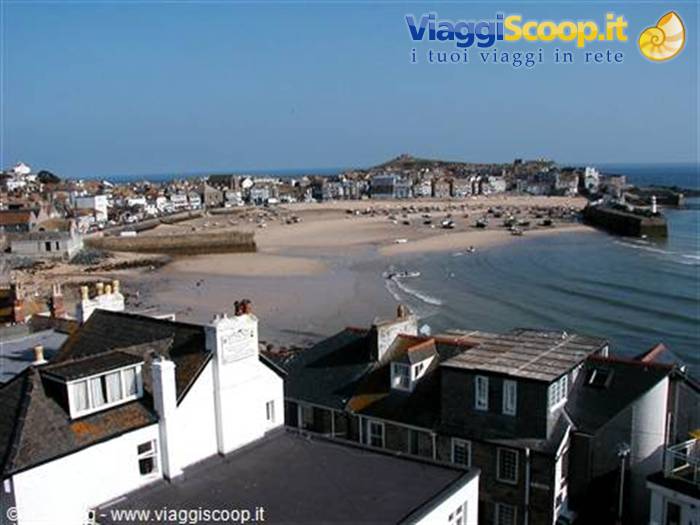
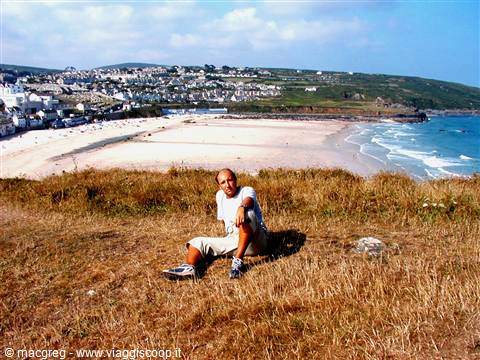
Continuing by car around the peninsula, the next place you come across is St Just, a village whose houses are entirely built of granite. A few more km and you reach the most attractive town on this stretch of coast: St Ives. Famous for its art galleries, there are over a hundred, it develops with narrow and steep cobbled alleys that climb from the harbour up the hill, offering extraordinary views of the bay and its three splendid white-sand beaches, which at low tide appear endless: Porthminter is perhaps the most beautiful, with the Victorian houses behind it on the hill dominating the beach. But Porthmeor too, seen from the top of the promontory "The Island", is truly evocative and immense; just think that from the start of the beach to reach the sea you have to walk at least five minutes through the sand...
The town is completed by old pubs, little churches, elegant houses with facades full of flowers. Enchanting.
St Ives
Day 48 Aug 2006
Changing area completely, we move to the north of Cornwall, where some of the most enchanting places are located.
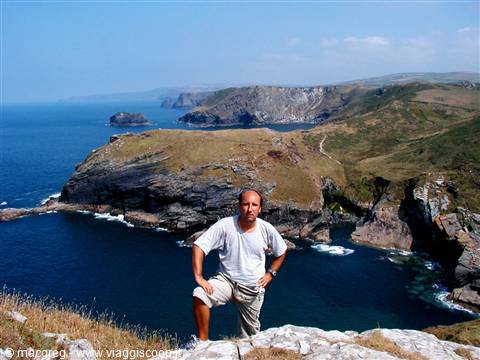
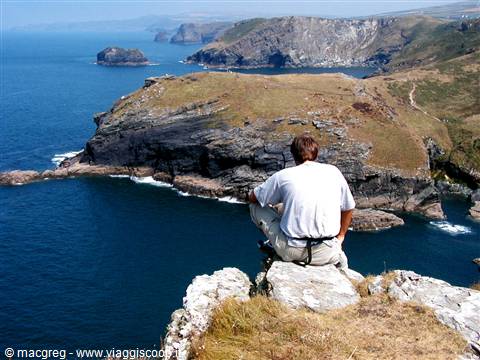
The very famous Tintagel doesn't disappoint at all, stormed by tourists, but with such an extent that you can find yourself walking alone on the trails sheer above the cliffs, even in August.
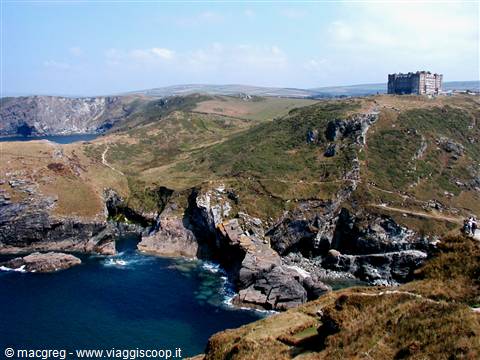
The centre is truly lovely even if a bit crowded: but the main attraction is the ruins of Tintagel Castle, positioned at the top of a promontory, reachable by walking a steep path and vertical stairways carved into the rock. Legend has it that on this spot stood an ancient fortress where King Arthur was born. The ruins are reduced to a few boulders, but the location is nothing short of incredible. Lying in the meadow sheer above the sea, from the top of the cliffs, even a stale ham sandwich seemed like an unforgettable meal.
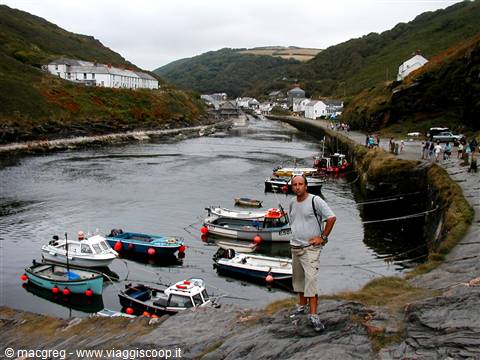
A few km further on, the small village of Boscastle is worth a stop, sadly made famous by having been completely destroyed by a flood in August 2004. Now the houses have been rebuilt and the atmosphere is back to what it once was: a fjord penetrates the coast as far as the first houses and the mouth of a stream, surrounded by green hills, cottages and pastures.
A typically Irish landscape here on the edge of England.
A little further on you can glimpse the cliffs of Hartland Point, which marks the northern border between the splendid Cornwall and another pleasant surprise: the Somerset region with Exmoor NP.
If you're planning to set off for Cornwall, start warming up your leg muscles and abandon the car as much as possible: visiting these places without tackling pleasant walks is like reaching a mountain refuge by cable car!
Lynmouth
Day 59 Aug 2006
Exmoor NP
Can it be that one of the most beautiful places in England is one of the least known? And yet it's only about a hundred kilometres from Tintagel, one of the most tourist-filled places. Naturally this applies to foreign tourists, because the English know it very well; I'm almost starting to believe they deliberately don't publicise it to keep the secret intact. Arriving from the "chaos" of Cornwall, it feels like you've arrived in an isolated place, where even the roads aren't congested.
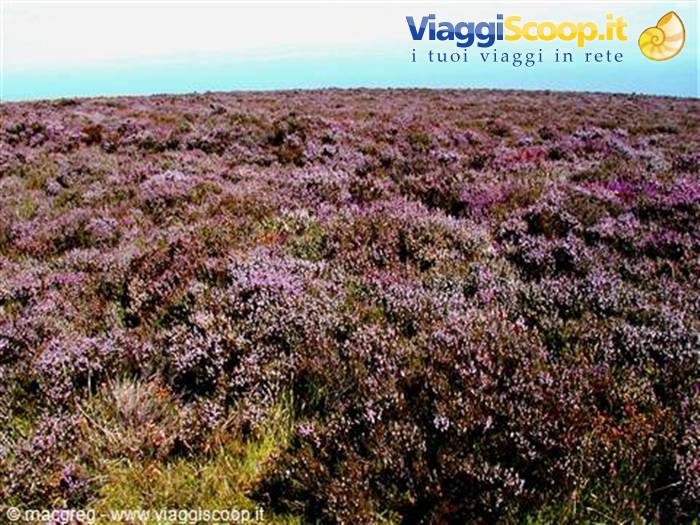
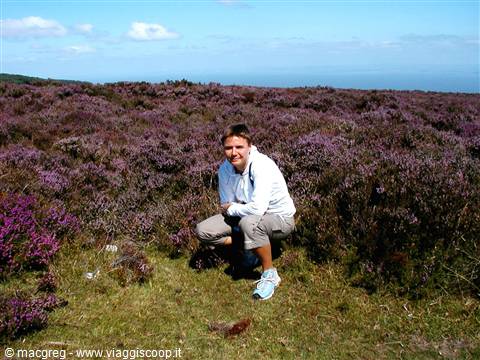
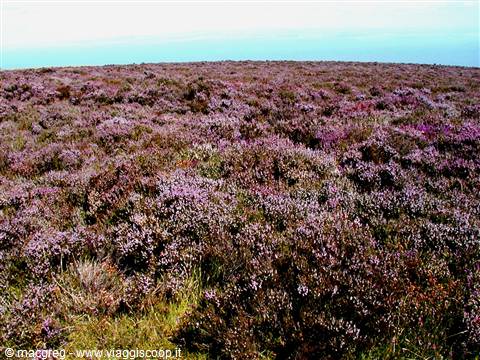
Exmoor gives the visitor an intense day, made up of breathtaking views, splendid walks, small but enchanting villages, moors entirely covered in heather, and a sense of peace and tranquillity you can breathe in every corner.
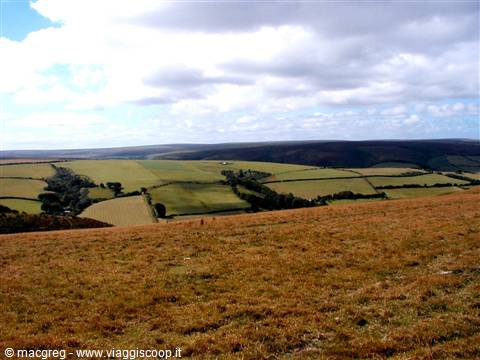
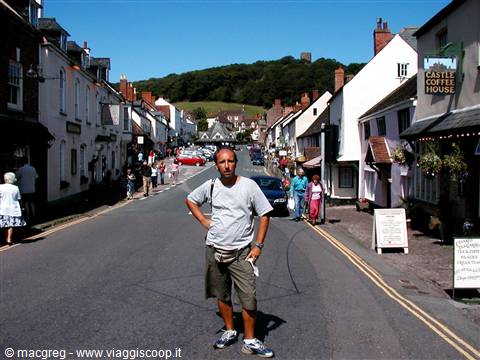
In just a few kilometres you go from steep and imposing cliffs to valleys populated by sheep, deer and ponies, free to graze undisturbed in the area. The roads, always narrow, are incredibly spectacular, with ups and downs of almost alarming steepness (in many stretches over 20%). They first cross endless moors, then climb sheer above the sea and finally cross gentle rolling hills, continually interspersed with villages and towns where it feels like reliving different historical eras, from medieval Dunster to Victorian Lynton, passing through the wild and primitive Selworthy.
Another striking feature is the intense green of the vegetation, even in a summer with strangely very little rainfall, and the immense patch of wildflowers that entirely covers the hills.
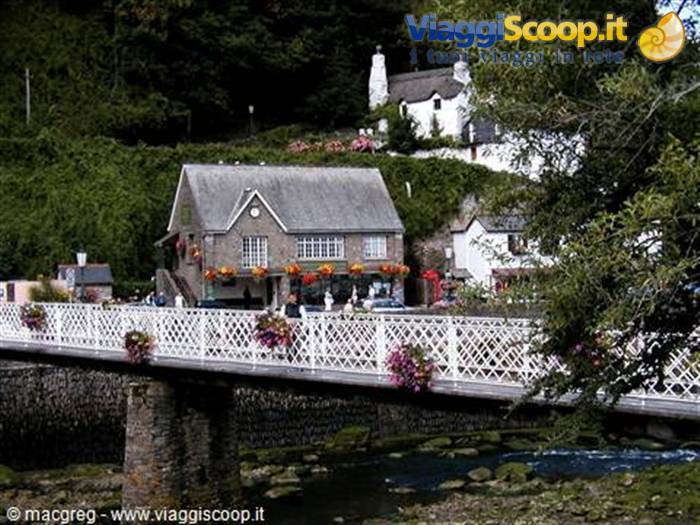
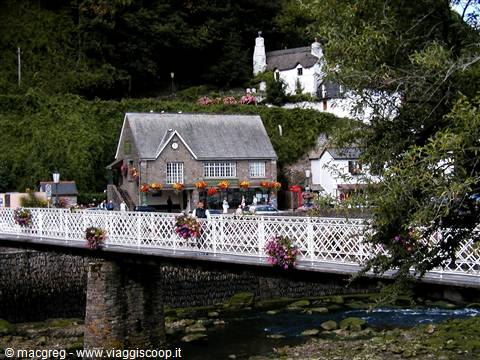
Arriving from the south, the first places you come across are the "twins" Lynmouth and Lynton. They're very close, but the first is located on the sea, the second practically in the mountains. The impressive difference in altitude is bridged by the Cliff Railway, which allows you to move between the two places. It's a funicular that has become a masterpiece of Victorian engineering, as the two cars use only water pressure to go up and down the rails of breathtaking steepness. A walk in Lynmouth is truly pleasant, situated in an enchanting position in a valley crossed by a stream, between the sea and very green hills, with alleys full of shops and an intense scent of caramel, a local speciality. Behind it, sheer above the sea, is Lynton: the main street is characterised by splendid Victorian houses and continual views of the sea and cliffs.
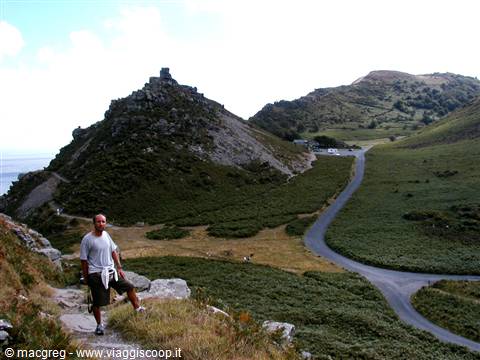
From here beautiful walks start: the most characteristic is the one leading to the "Valley of the Rocks", where bizarre rocks rise sheer above the ocean. Following short trails you can reach some peaks, walking among sheep, ferns and heather. The view from the top is nothing short of stupendous and dominates the entire valley crossed by characteristic little roads, with the sea as a backdrop to hills of intense green. Continuing along the park's roads eastwards, with continual ups and downs, you first come across Porlock, a small village famous for its thatched-roof cottages, then with a short diversion onto a very narrow road you reach Selworthy, which has also been used as a film set given its distinctive houses.
From here, the road enters the wildest part of the park, endless wind-swept moors, where it's worth abandoning the car for a few minutes and wandering without a destination, even briefly, along the wonderful trails that cross meadows completely covered in flowers, with flocks of sheep and horses grazing freely. Unfortunately we don't manage to spot the famous Exmoor ponies, which live only in this park. The last place you come across is medieval Dunster. The main street is characterised by ancient buildings and beautiful cottages and climbs up to the castle, which dominates the whole town. The visit starts from the gardens, then passes through the imposing walls and enters the interior, where you can visit the beautiful halls with majestic fireplaces and elegant furnishings.
A few more kilometres and the magic of Exmoor suddenly disappears, returning to the busy English roads: thus ends a day that was supposed to be just a transfer, and instead turned out to be truly splendid and quite unexpected. If you go to England to visit Cornwall, on your way back make a diversion and don't miss this little gem.














0 reader comments