Tenerife, La Palma, La Gomera, El Hierro · Canarie
When
14 Aug 2010 – 29 Aug 2010 16 days · trip of 2010
Who
Roberta · @zanaboby · Milano
How
Travel diary
The story · 16 days
The Canary Islands are an archipelago of islands that enjoy a wonderful climate: with a temperature ranging between 20°C and 30°C throughout the year, they are the ideal destination for anyone who wants to enjoy a seaside holiday at any time.
The best-known islands are Tenerife, Gran Canaria, Lanzarote and Fuerteventura, but we decide to see the wilder and less touristy ones: La Palma, La Gomera and El Hierro, which are also the westernmost of all.
Some practical information...
INFORMATION: as always we armed ourselves with the faithful Lonely Planet, but we had also thoroughly browsed the Tourist Board website ( for further information on each island.
LANGUAGE: knowing Spanish doesn't hurt, even though by now many people in the Canaries know English. In some places, where the concentration of German tourists is particularly high, German is also widespread... Italian is less known, but among Latins we understand each other!
CAR RENTAL: We turned to CiCar ( which is present on all the islands (with offices at the airport and at the ferry docking port) and is also cheaper than the better-known Europcar or Hertz. Remember to always ask whether transfer to other islands is allowed (some companies do not permit it).
FUEL: in Spanish it is called "gasolina" and in the Canaries it costs much less than in (continental) Europe because the government has granted a special statute with reduced taxation.
MAPS AND CHARTS: CiCar does not have GPS systems for rent, but each office can provide maps of each island free of charge. The only precaution, since they do not include enlargements for individual towns, is to print a detail or the road directions on how to reach the hotel. For the rest, combining them with a good guide (such as Lonely Planet) is enough to get around.
FERRY: We relied on Fred Olsen ( which has an excellent fleet and numerous crossings. It is advisable to book tickets online (especially if you have a car) and then collect the ticket at the port. During the online purchase phase the car details are requested; if you don't have them (because you rent), then just write [xxxxxxx] in the "ID number" field [rent a car] in the "type/model" field: when you show up at the port for the ticket, you will provide the actual details,
ACCOMMODATION: For the first time we benefited from the excellent standard of the Paradores chain ( which offers solutions set in characteristic and luxurious properties, such as castles or buildings in panoramic positions. For those who want to save money or use more typical solutions, I recommend looking in the ads for "Casas Rurales". If you don't mind hotel complexes with 500 or more rooms you can also book an all-inclusive solution (there are many good offers) and then get around as you please.
WHALE AND DOLPHIN WATCHING: Tenerife offers many "mass" solutions, mainly departing from Los Cristianos or Los Gigantes (southern tip); similar solutions can be booked departing from La Gomera. These are generally medium-large boats that organise sightings + barbecues/lunches + snorkelling and involve a rather high number of participants. If, like us, you are looking for a more "intimate" solution, I recommend turning to Oceano Gomera ( a smaller agency that offers 3-4 hour excursions aboard a former fishing boat renovated for the occasion, with a maximum of 10 participants plus the guide plus the captain.
Day 114 Aug 2010
1 - Da Milano a Icod de Los Vinos
And finally here we are: today we set off for Tenerife!!!
To make the most of the day we have a flight that forces us to set the alarm before dawn. Unlike the last few times, at Linate there is also a queue at check-in, but the passage through the metal detector is very quick and almost painless (for the first time one of our backpacks is selected for a random check for traces of explosives). And then they inform us that, due to congestion, we will depart with a bit (how much?) of delay. We shouldn't have connection problems anyway, since we will have almost 3 hours to spend in Madrid (travel note: if there is any, buy saffron, since the Spanish one is excellent).
We depart (and arrive) an hour late and take a tour of the airport (enormous), even though the little shops always offer the same things that you can find in Madrid as in Milan or elsewhere (1 gram of saffron €6.60). We can't resist, however, a tapa (sandwich with Iberian ham and cheese) at Tap Tap Tapas (jewelry-store prices) and we return to the gate in time to discover that this flight too will depart about an hour late....
In the end they explain to us that due to works, they have only one takeoff runway...the fact is that we depart an hour and a half late!!!!
But our wait is not over: having arrived in Tenerife, while we wait for the luggage, we do the paperwork to pick up the CiCar car (And we discover that it is not yet available: about twenty minutes and it should arrive!!!
Our blue Opel Astra arrives, well maintained, and we set off in search of the hotel (Apartamentos Estrella del Norte, Icod de los Vinos, booked through we get lost almost immediately also because of some roadworks, but we still manage to find it.....by pure luck, after taking a very steep climb!!!
The apartment is nice and clean, very spacious and, if it weren't for the cloudy weather, it would have a beautiful view of the sea.
But hunger makes itself felt and it's almost 6 pm: on the first reconnaissance round we find an IperDino where we do our micro shopping: a big bottle of water (around town the half-liter natural ones cost about 2 euros), milk and cornflakes for breakfast, lots of fruit (obviously including the delicious Canary bananas).
We then decide to make a quick "in life" trip to Puerto de la Cruz, but it seems to us a quiet little village for retirees and children.
We decide to have tapas in a place suggested by Lonely Planet (Tapas Arcon, plaza Concejil 2) and with less than €30 we taste the famous patata arrugadas (exquisite) with mojo verde (you have to like garlic) and rojo (more delicate), sardines, octopus in red wine and tuna "gomera" style (with parsley).
With full bellies, all that's left is to return to the apartment and give in to sleep!!!
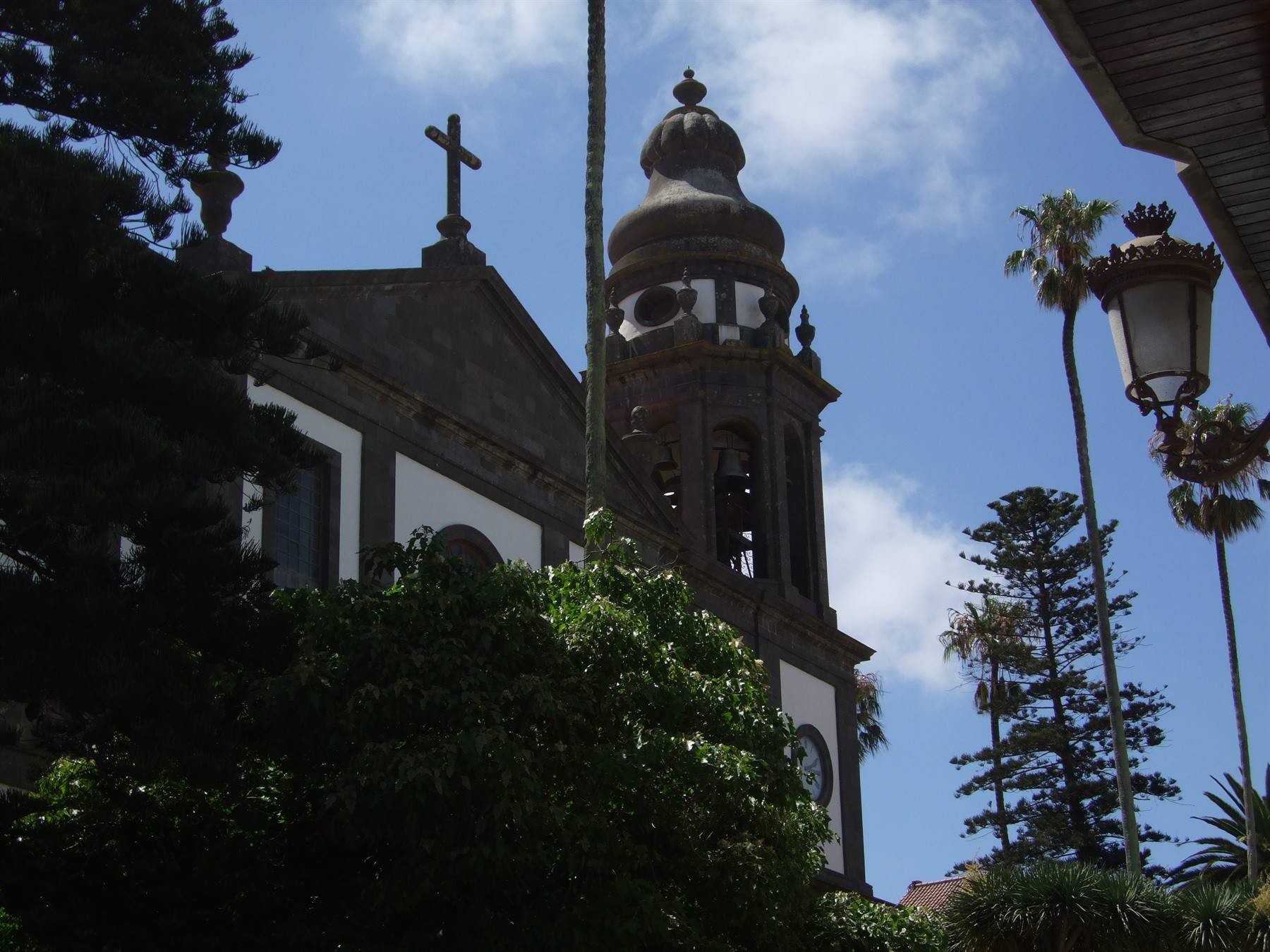
San Cristobal de La Laguna
Day 215 Aug 2010
2 - Tenerife nord
Ferragosto. In the Canaries it is a deeply felt holiday: on balconies and in the streets there are Spanish flags and icons of the Virgin of Candelaria (the Mass and procession held today, every year, in Candelaria, in the northeast of Tenerife, are famous).
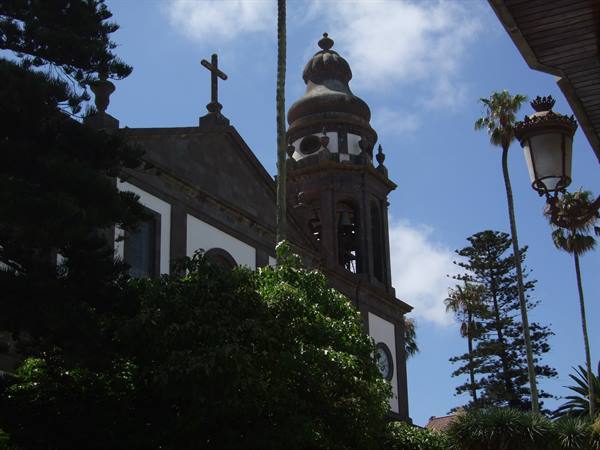
After a glimpse of sun, the clouds return to dominate the sky. We give up the Lago Martianez (Puerto de la Cruz) and head north. We are rewarded, because San Sebastian de la Laguna presents itself under a beautiful blue sky. The town is rather sad: big concrete barracks, some very poorly kept, no ornament. Only the few little streets of the historic center present typical Canarian houses adorned with wooden balconies and windows, colored walls and tree-lined little squares. We visit the Iglesia de Nuestra Señora de la Conception (quickly, because a service is in progress) and climb the adjoining bell tower (€1) to get a beautiful overall view of the town and the green region that surrounds it. We return to the car and take the Autopista del Norte in the direction of Santa Cruz.
We arrive right in front of the famous auditorium (a work by Santiago Calatrava, which is supposed to recall the better-known Sydney Opera House.
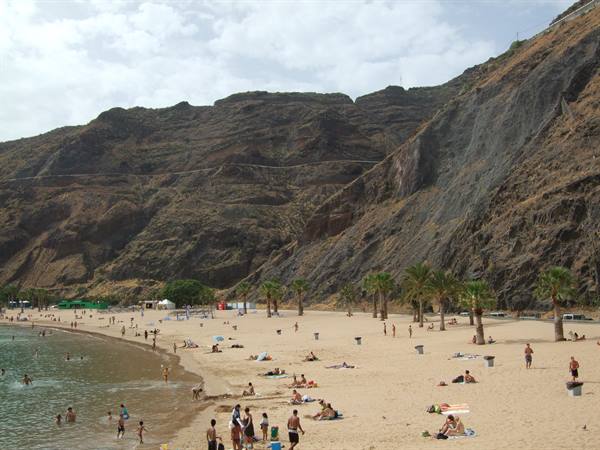
Given the nice weather, we are tempted to give in to the temptation to go to the adjacent Piscine Martianez, but they seem to us too much of a water park for tourists. And so we go to Playa de Las Teresitas (locality San Andres), famous for its golden sand, brought specially from the Sahara. We finally manage to get a bit of sun and even take a quick (and chilly) swim in the ocean!!!
When hunger makes itself felt, we "roll" into the nearby Bar Restaurante Cofradia de Pescadores: we enjoy a nice salad and a rich mixed grill of fresh fish. It is a less economical choice than one might think, but it is Ferragosto and a good fish dish by the sea is a good way to celebrate.
To burn off lunch, since the sky has partially clouded over, we take a nice walk along the entire shoreline of the beach (now more crowded, but still livable) and catch the sun's rays that at times manage to pass through the clouds.
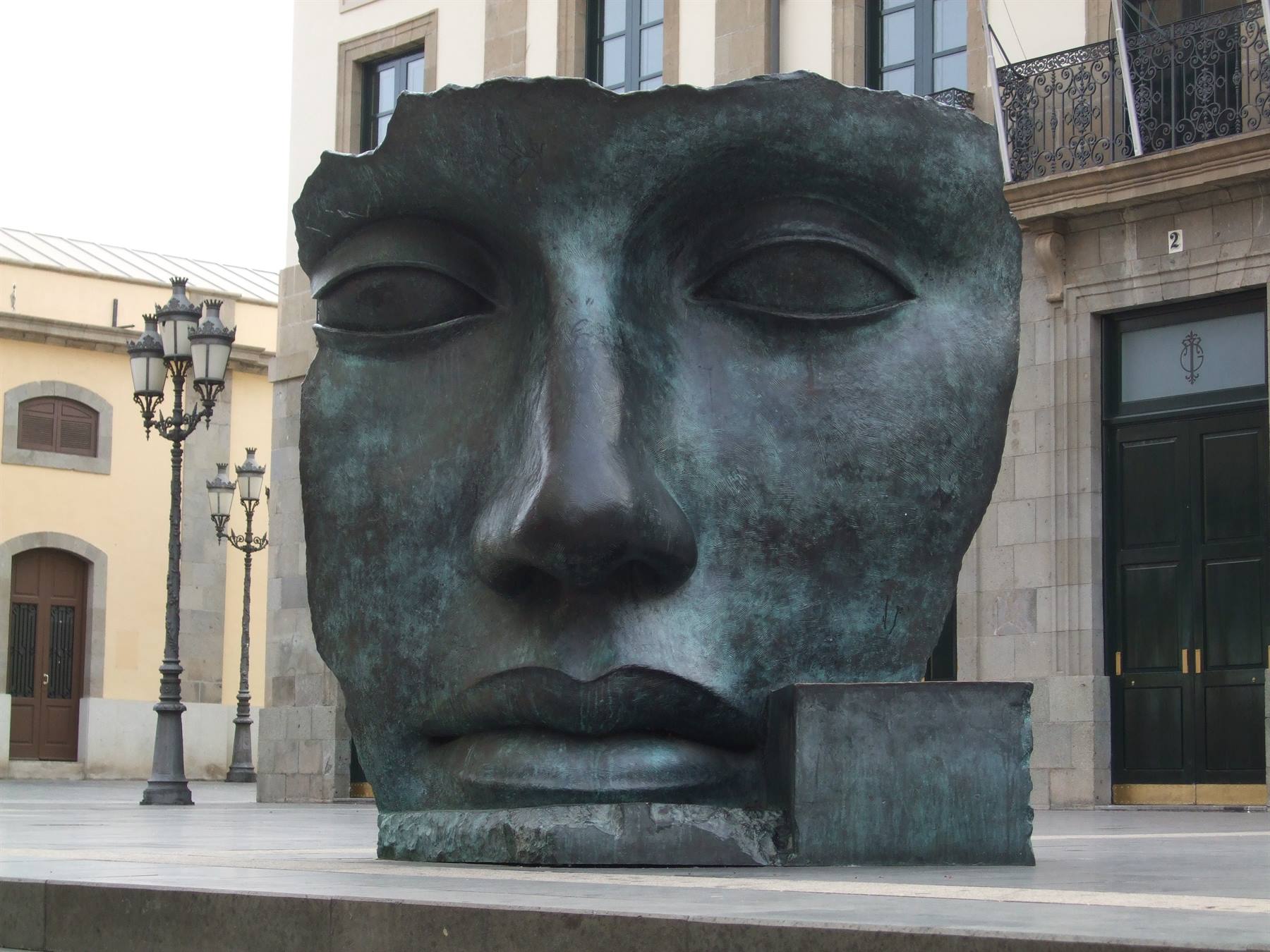
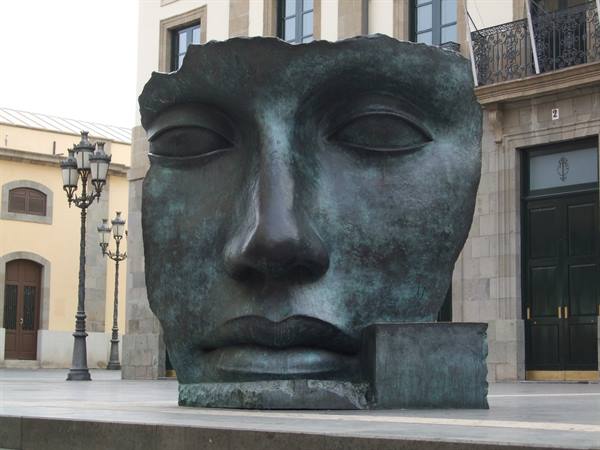
We take the car again to visit Santa Cruz and maybe find a place to eat something quick. Unfortunately Santa Cruz is also disappointing: desolate, empty, at times decadent... And anyway it's Sunday and Ferragosto: many shops are closed, many shutters down... Here too the most characteristic church (and also the oldest, although rebuilt) is the Iglesia de Nuestra Señora de la Conception. We then go to Plaza de la Espana with its large fountain and to the big mask in front of the Teatro Guimera. We would like to wait for dark to see the auditorium at night, but there is too much time (in this season sunset is around 9 pm) and the city has already disappointed us.
Back in the car, we decide to head closer to home and visit Garachico, which immediately appears cheerful and lively: cheerful garlands are preparing it to celebrate San Roque (La Romeria, every 16th of August). It seems a lively town, with a pleasant seafront appreciated by many people; we glimpse natural pools, fed directly by the ocean waves; we read of a little square where the elderly and the young gather. We eat something at the fair stalls and note that our nougat is better than theirs.
Decidedly a pleasant place to spend the evening of Ferragosto.
We return to our apartment and the sky of Tenerife grants a few drops of rain to the very dense banana plantations that surround Icod de los Vinos.
Santa Cruz de Tenerife
Day 316 Aug 2010
3 - Tenerife Ovest
We wake up to rain!!! We didn't think it possible, but perhaps it is the price we have to pay for all the good weather we found in London, two months ago...
After having breakfast and preparing the changes for the day (just to be ready both for rain and for sun), we set off in the direction of Punta de Teno.
It takes us a while to cross Garachico because the procession of San Roque is in progress. We continue to Buenavista del Norte, which turns out to be a cluster of poorly kept houses and brand-new apartments for tourists, large banana plantations and bumpy roads: with the rain and fog it is hard to appreciate!!
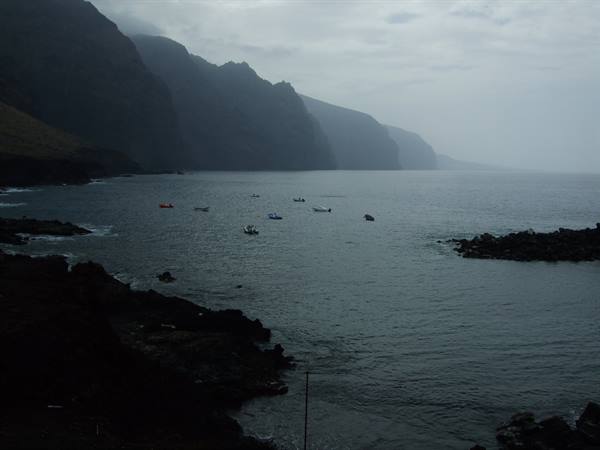
The road (in excellent condition) that leads to Punta Teno and the lighthouse begins with a series of multilingual signs that advise against continuing, especially in case of rain or strong wind (the rock seems to be very prone to landslides). However, we see that no one lets themselves be intimidated and we continue. On days of good weather it must be a breathtaking landscape, but even with the rain it makes an impression: steep ravines and waves crashing against the black rock, succulents... In the sheltered cove, near the lighthouse, there are even people swimming. Luckily we didn't give up, because the panorama is truly beautiful!!!
Back in Buenavista, we take the road that leads to Masca, which is said to have been a pirates' den.
The road is very scenic (over the inland valleys), steep and full of curves, but also with "miradores" where you can stop for a photo. Now that we reach the top of the Parco Rural Teno, a warm (almost torrid) sun has come out, which also brings out the giant lizards, typical of this area.
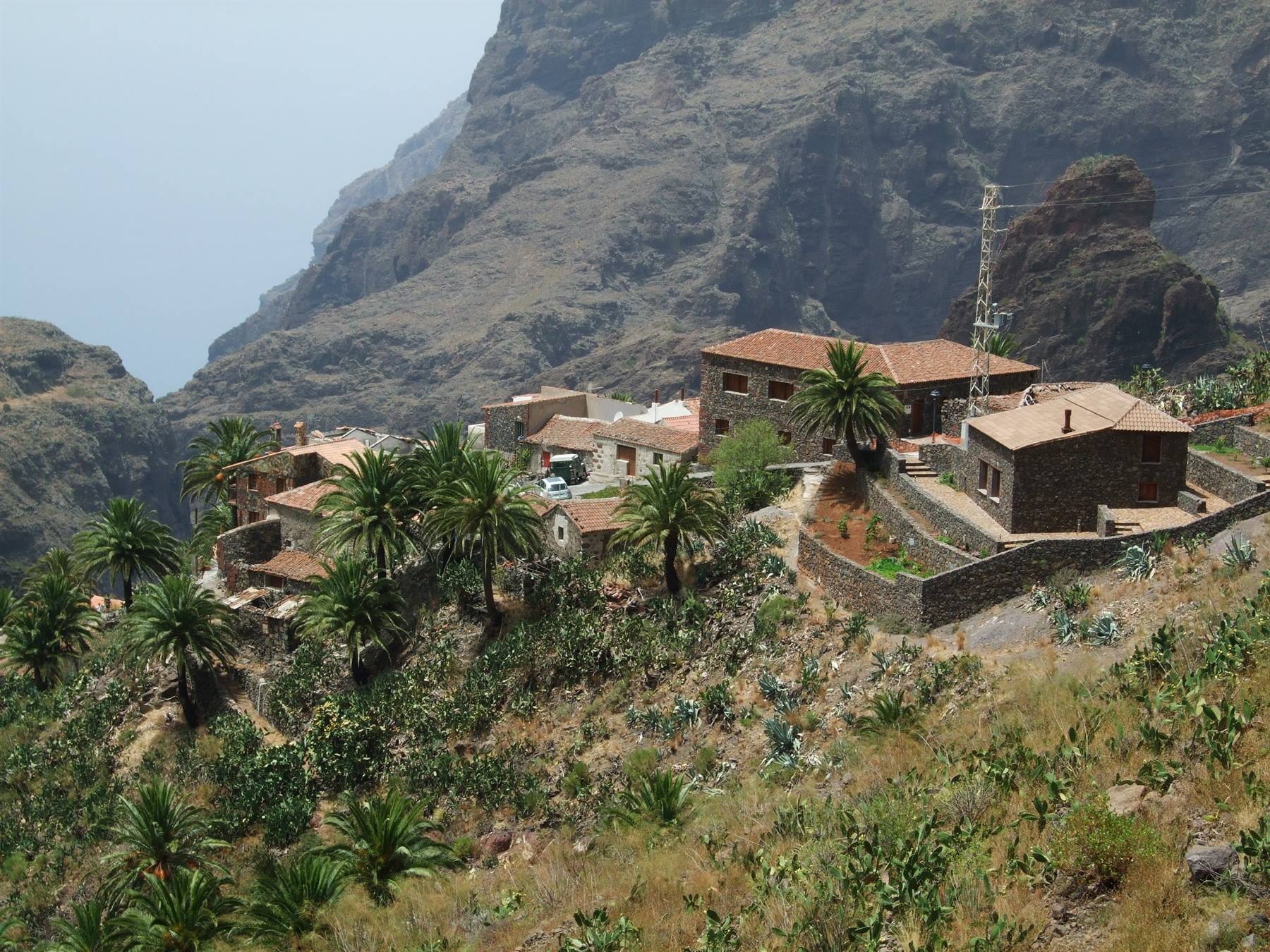
We continue to Masca, a small village perched on the rock, in a position as isolated as it is panoramic. There are a couple of restaurants arranged very strategically to attract tourists (and indeed they are full), but we continue towards Santiago del Teide.
The road becomes rougher and, if possible, narrower and steeper (practically to be done in first gear) and maintains an excellent viewpoint: a shame that "miradores" are scarce, because every curve would deserve a shot.
After crossing the pass, we begin the descent towards Santiago del Teide, where we stop just long enough to take some photos and notice other restaurants (these say "cocina canaria"), but we continue towards Los Gigantes, since the heat is beginning to demand a swim and a beach.
The cluster is a collection of houses and barracks for vacationers, mainly English, with a small harbor for pleasure boats and organized excursions (for those who want, dolphin and whale excursions depart from here). The number of houses under construction suggests that the area is very popular, even though we don't understand where people can go to the beach: there are some coves of sand and black stones, but we don't see large expanses (like Las Teresitas) capable of accommodating so many people.
After a tour of the tourist area, we stop to eat something at the Bamboo Bar: it is so frequented by English people that the waitress speaks English, the radio and newspapers are in English and on the menu.... there are fish & chips and the typical meat pies!!!
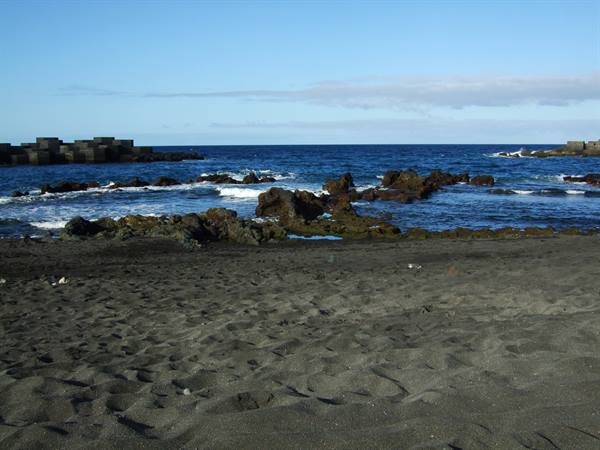
With full bellies we reach Playa de La Arena, where we treat ourselves to 2 sunbeds (€3 each) to shelter from the heat of the sand...fine and crystalline as sugar, black as coal!!! The water in the cove is not that cold and the current creates waves and swells to the delight of young and old!!!
Entering the water with black sand makes a strange impression... The waves breaking on the shoreline look like lava or very dark mud... Once inside, it feels like being in oil, if not for the (in)consistency of the water and its transparency, which clearly shows the "Milan-white" feet touching the bottom... Coming out, the very fine sand sticks to the skin, like a very snug shoe...
Between a swim and a sunbathing session, we stay on the beach until practically the spectacular sunset. Then we take the road home, but without passing through Masca. Shortly after crossing the pass, a new surprise awaits us: the low clouds, held back on this side of the rocky walls, now form a thick blanket of fog, which forces us to keep a very cautious pace. As good Po Valley people, obviously we don't give up, but instead act as pace-setters for the cars lining up behind us.
The fog accompanies us almost to Icod, but the coast is rather calm and we decide to spend the evening at the Romeria of Garachico. A crowd of people in traditional dress, curious onlookers, visitors and the whole population seem to have converged on the little square that surrounds the small church of San Roque (open today), a few meters from the sea. The orchestra entertains and gets everyone dancing with Spanish and Canarian music.
With the music still in our ears and in our heads we return to base and cross our fingers that tomorrow will be a beautiful day: we still haven't visited the imposing Teide (3718 meters), the volcano that dominates the entire island, as well as the highest mountain in all of Spain...
Masca (Tenerife)
Day 417 Aug 2010
4 - Orotava e Parco Nazionale del Teide
No use: the bad weather grants no truce to Icod: today too the low clouds give us an autumnal and sad panorama. But we begin to think that it is precisely this area that is particularly tormented by disturbances: watching the news and forecasts, it seems that other areas of Tenerife are already kissed by the sun.
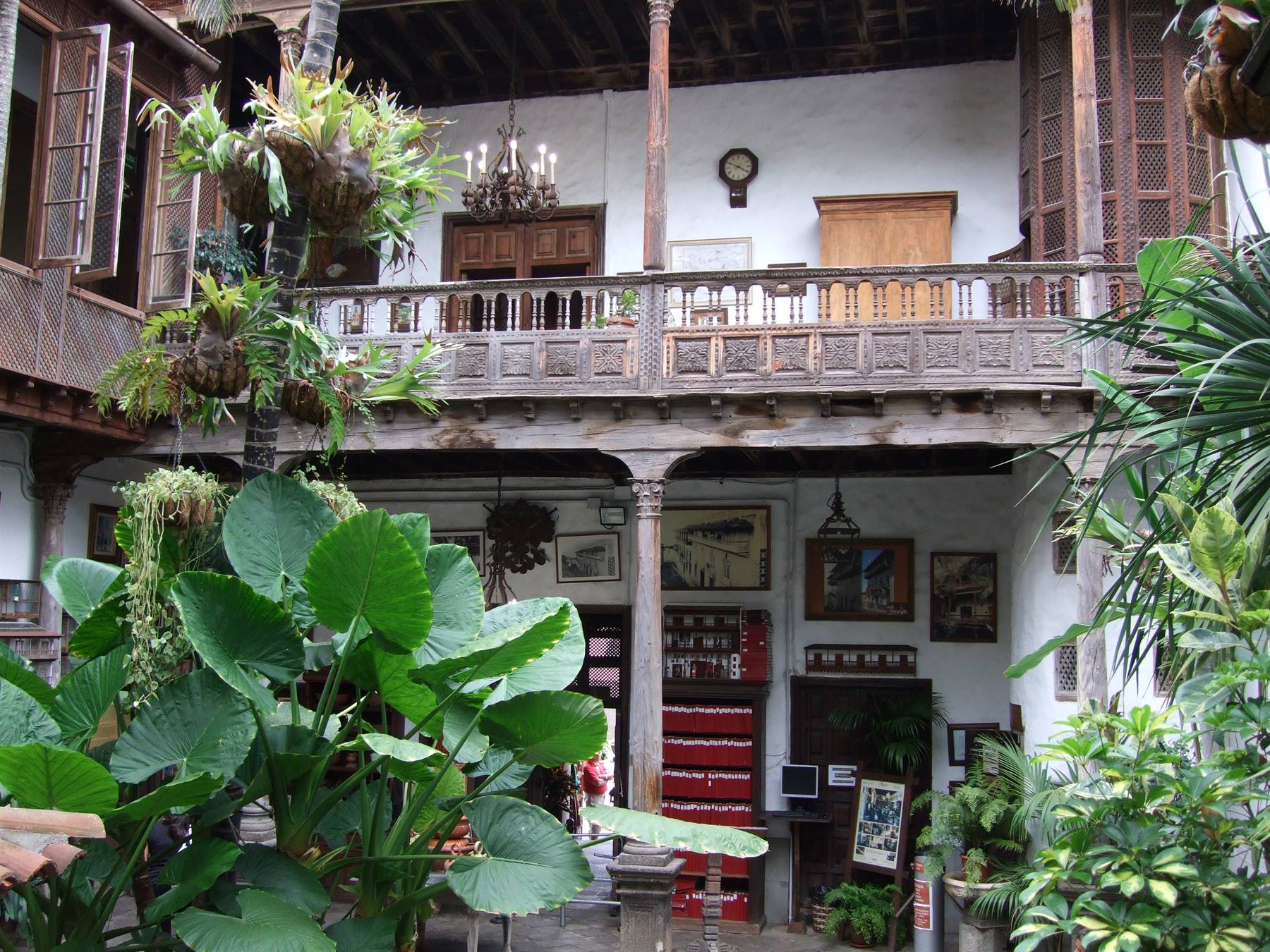
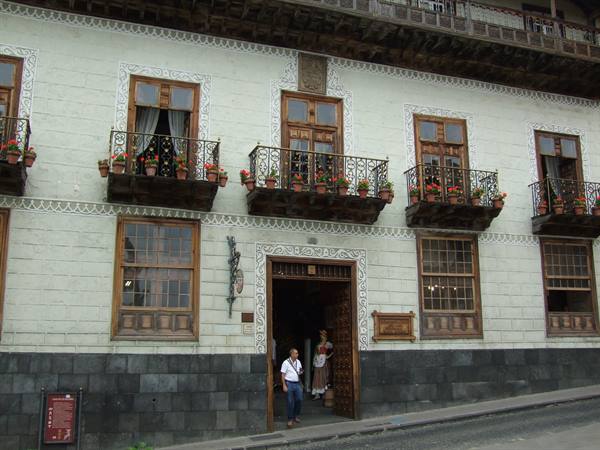
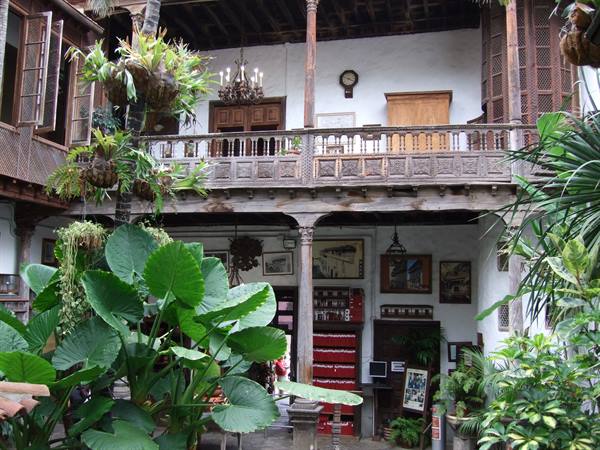
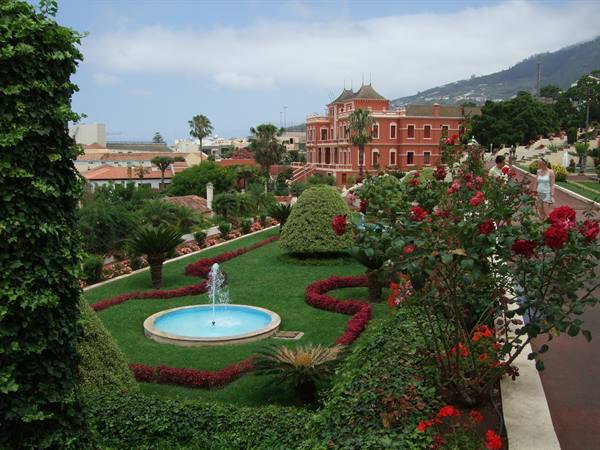
We get ready and set off again: destination Orotava. Even before getting out of the car, as soon as we enter the historic center, we are pleasantly struck: small tidy alleys, ornamental flowers and elegant balconies. Starting from Plaza Costitucion and the Iglesia de San Agustin, we admire the Liceo de Taoro ( and its rich gardens, the baroque Iglesia de la Conception and then... the elegant Calle San Francisco, with the most famous balconies of Orotava. In the Casa de Los Balcones ( and (opposite) in the Casa del Turista you can admire the inner courtyards and numerous objects of local craftsmanship (and of course the souvenir buying begins).
Since we like the town so much, we decide to stop for lunch too and opt for the Restaurante Sabor Canario, which allows us to taste some typical meat-based dishes, as well as the queso asado (roasted cheese): to be recommended, both as an environment (quiet courtyard in a typical Canarian house) and for the food and service (menu also available in Italian).
We would have liked to have our base here: it seems a fun town even for an evening stroll or a cerveza before going to bed...
We bid a fond farewell to Orotava (it would be nice to have time to return) and head towards the Parque Nacional del Teide ( hoping to be in time for the cable car: last ascent at 4 pm, very early for a country that has lunch at 3 pm and in a season when the sun sets at 9 pm!!
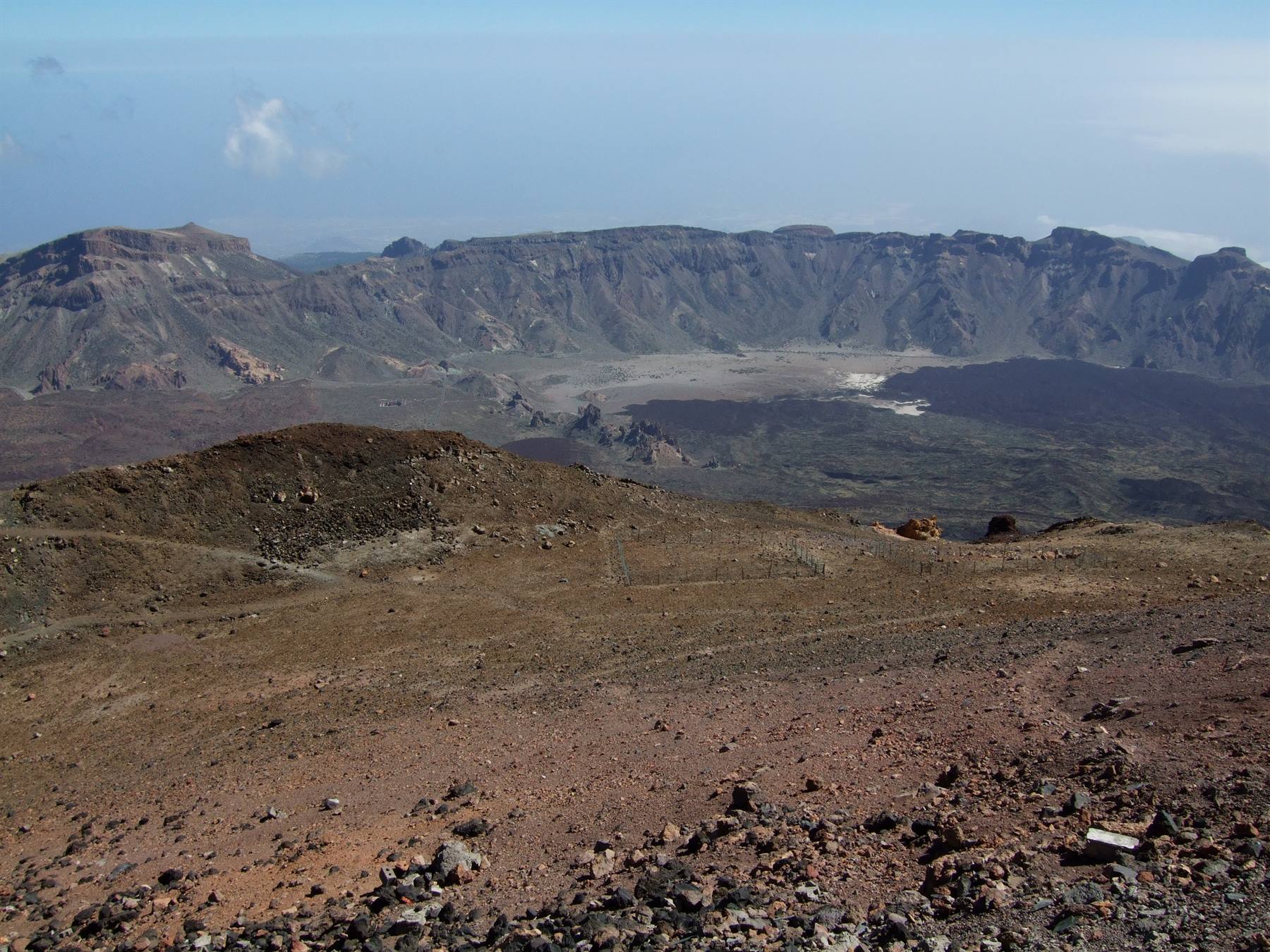
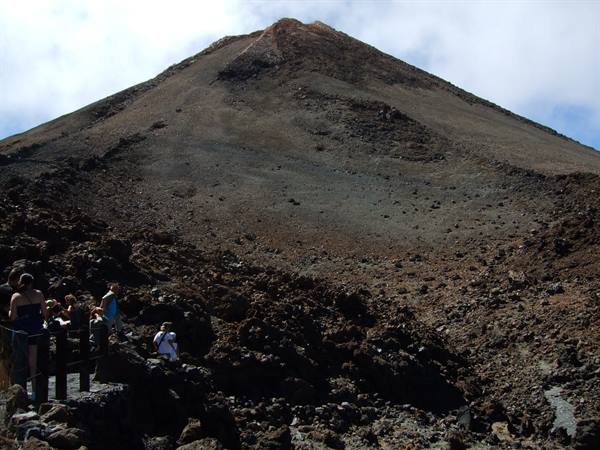
We postpone every photo to the miradores and arrive in time to climb almost to the summit of the Teide (for the last stretch, pedestrian only, you must request a special permit in advance).
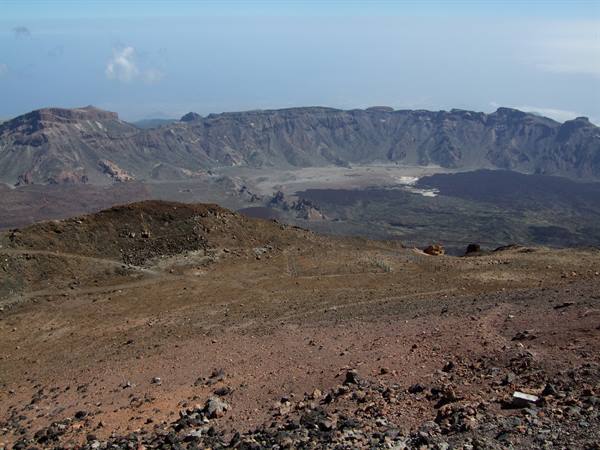
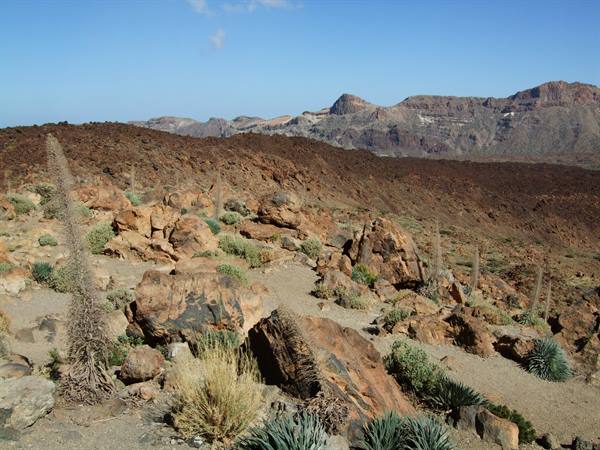
The price to go up is not low (€25 for adults), but one is fully rewarded by the lunar landscape and the panorama over the valleys: some arid and desert-like, some green and lush, up to the blue of the sea that today can only be glimpsed. We take a few steps along one of the marked trails to verify that indeed at almost 3800 meters of altitude you get tired more easily and quickly become out of breath.
We go back down to the base and take the road we took to get there, but allowing ourselves some stops: one for a gelato in the sun and then at almost all the miradores, until we discover that a chain of low clouds (around 500 meters) still prevents the sun from reaching some points of the island, including Icod!!!
Back at the apartment to change, we decide to spend the last evening in Puerto Cruz. Unfortunately the place from the other evening is about to close, so we sit in one of the others for a platter of Spanish hams and cheeses.
Tomorrow morning we will leave the apartment to head south: in the late afternoon the ferry to La Palma awaits us (not to be confused with the city of Las Palmas de Gran Canaria).
Casa de Los Balcones (Orotava - Tenerife)
Day 518 Aug 2010
5 - Da Tenerife a La Palma
Last day in Tenerife (but we will be back) and of course the sun is shining...even in Icod!!!
We leave without seeing the famous thousand-year-old dragon tree (the oldest dracaena on the island, which however should be "only" 3-400 years old).
Climbing up the road that we drove the other evening in the fog, we cross Santiago del Teide, continue to Guia de Isora and come out on the sea in the municipalidad de Adeide.
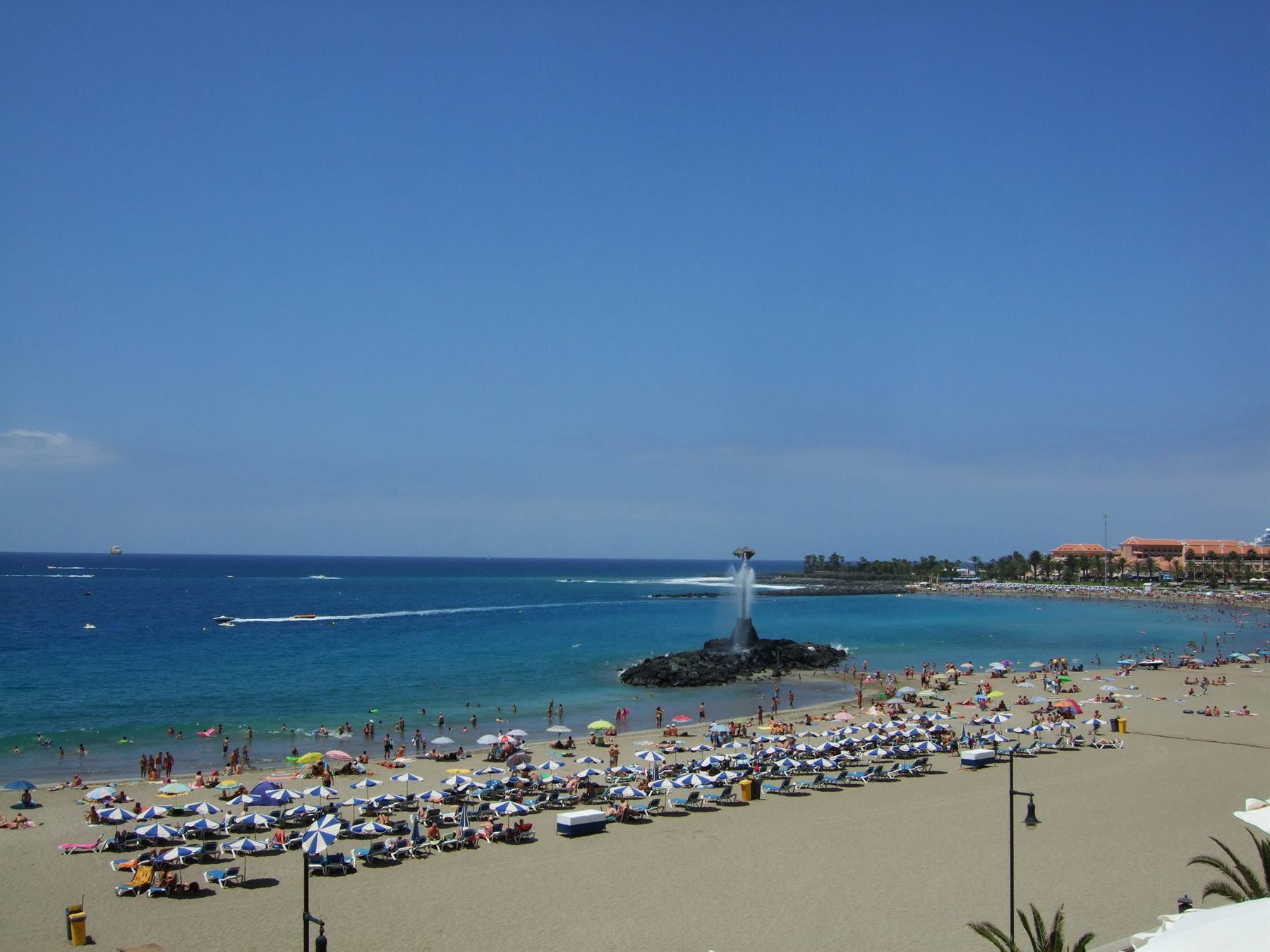
We head for Los Cristianos to locate the pier from which this evening we will leave Tenerife bound for La Palma. The long golden beach not far from the port is a temptation more than enough to make us decide to park.
We stop in one of the many restaurants that face the beach and enjoy grilled sardines and squid, accompanied by the omnipresent papas arrugadas (here though they are bigger potatoes and, I think, commercial ones).
And then we roll onto the beach and straight into the ocean, which at this point is a very pleasant temperature.
Unfortunately we can't stay as long as we would like because we have to pick up the ferry tickets (directly on the pier, in the building of the Estacione Maritima) and place the car in the designated lanes.
While waiting for departure, we take a walk along the pier (also because the raised walkway is breezier than the square).
At 6.30 pm the boarding of the Benchijigua Express begins, a huge beast with a capacity of almost 1300 people and 340 cars!! And at 7.00 pm, right on time, we set sail.
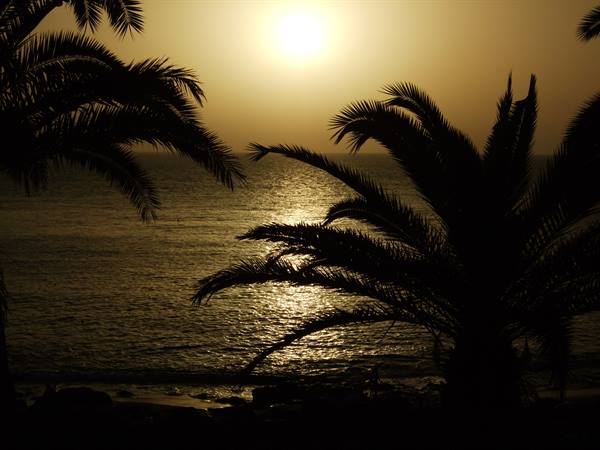
The crossing (two and a half hours) is calm and grants us a serene sunset, unfortunately not complete because we are coming from the east: the sun doesn't dive into the ocean, but runs to hide behind La Palma.
We dock at Santa Cruz when it is already dark: fortunately our hotel (an excellent Parador, a four-star) is not far away. We reach it just in time to find the restaurant open and not skip dinner.
At the top of the Teide (Tenerife)
Day 619 Aug 2010
6 - La Palma
The first morning in La Palma welcomes us with a dazzling sun that puts us in a great mood and allows us to admire the beauty of our hotel, with its gardens, pool and surroundings.
We decide to give our skin a rest from the sun (I even got a nice cold sore) and focus on the interior of the island.
We go to the Estacion Maritima to ask the local CiCar for a map of the island (but the office is closed) and to Fred Olsen for the tickets to La Gomera (we will need them Saturday), then we set off (with only the Lonely Planet map) in search of the road to the visitor center of the Caldera del Taburiente park (south part, but we discover that on the island the road signs are not as clear and detailed as in Tenerife and it seems that the road numbers do not correspond to those reported on the Lonely Planet.
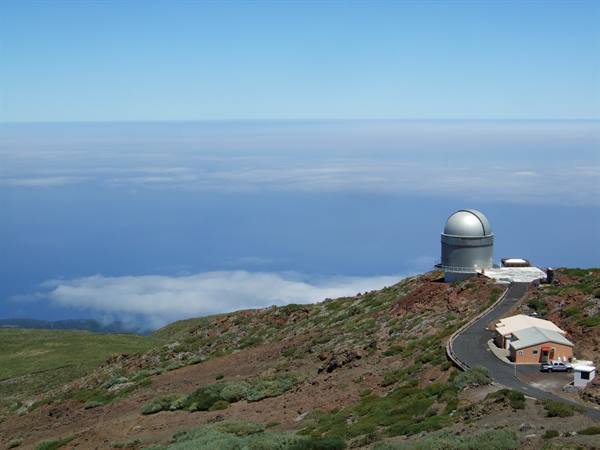
We fall back on the better-signposted LP4 which takes us to Roche de los Muchachos and the largest astronomical observatory in the world.
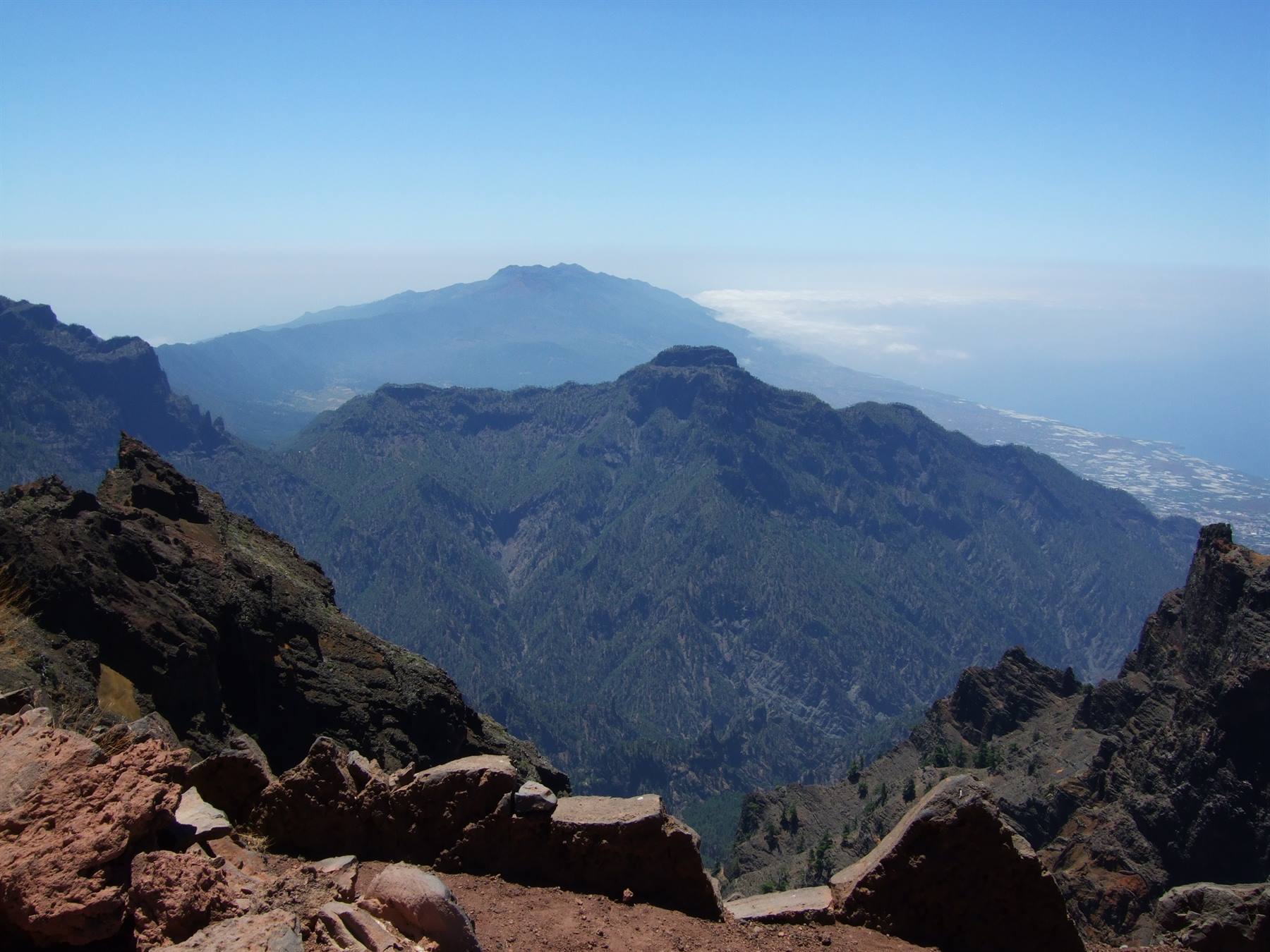
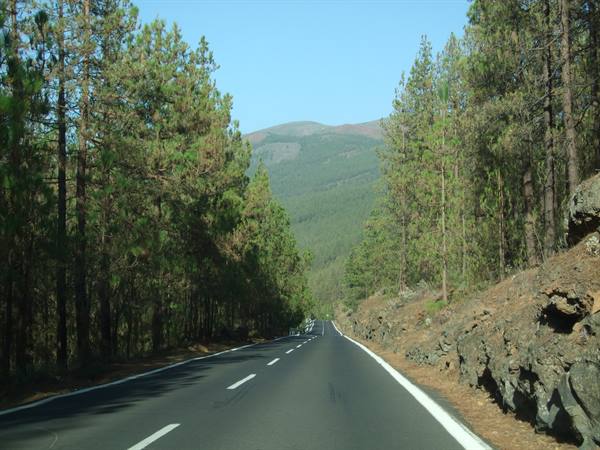
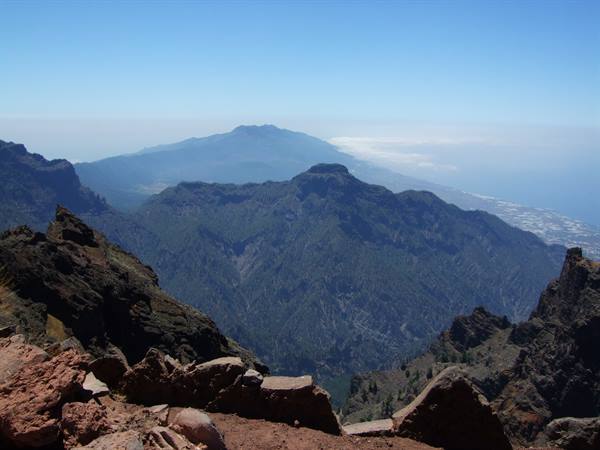
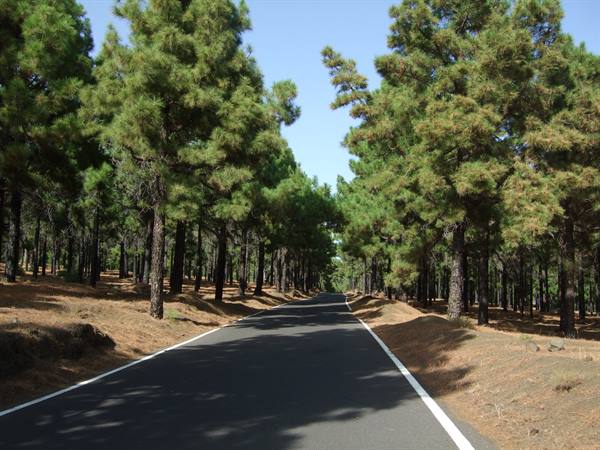
The road climbs for about 40 km with curves and hairpin bends, surrounded by initially lush, messy and multicolored vegetation, followed then by an orderly but not too dense pine forest. When the altitude becomes too much even for the pines, the low and sparse world of shrubs takes over. And on the horizon, beyond the sea and the clouds that as always surround it, the Teide stands tall!!!
We arrive at the summit to discover that the mirador is closed for works, but even from the parking lot and the path leading to the mirador, the panorama is breathtaking: the green and lush caldera, the blue sea in the distance, the red and orange stones of the peak... And the domes of the observatories that make everything even more... lunar!
We descend on the other side towards Santo Domingo: on this side too the road is steep and full of curves, while the landscape is wilder and more arid, burned by the sun.
We arrive by chance in Garafia in search of a place to have lunch and are welcomed by the town in celebration: music, dances, the decorated square and big tables where it seems the whole town has found a place!!! We enter what seems the only place open on this holiday and, at the end of the meal based on meat, we treat ourselves to a Principe Alberto, a typical Canarian dessert (a little too sweet for my taste, but good).
We set off again, heading south, skirting the west side of La Palma. We discover that the area up to Puntagorda is probably the least touristy and least populated, because then larger towns begin with restaurants, bars and shops, some beaches and other activities.
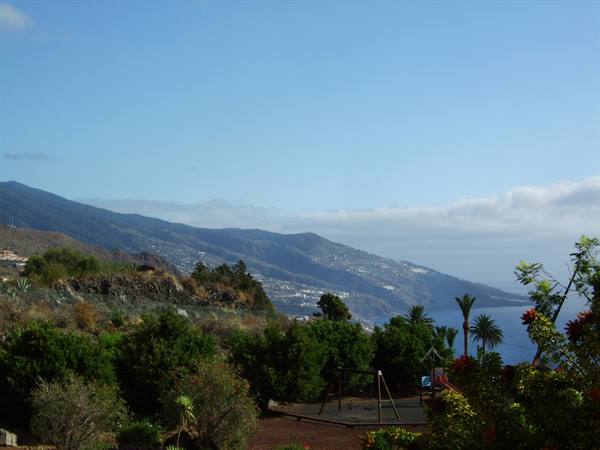
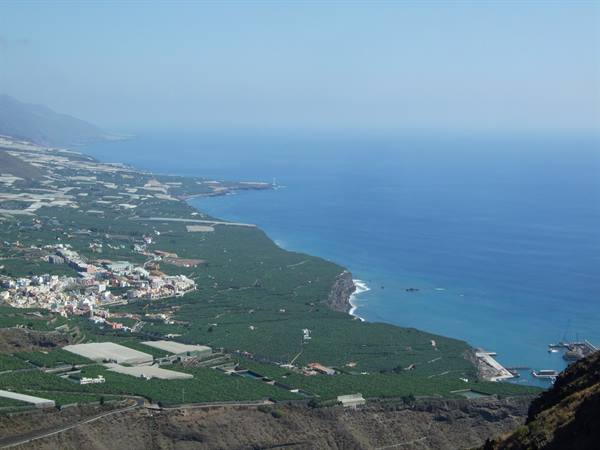
We stop for a walk on the seafront of Puerto Naos, a quiet seaside resort with a (black) beach well looked after and several hotel complexes, all surrounded by banana plantations. It is truly peaceful, to the point that it is automatic to speak in a whisper, so as not to disturb the surrounding quiet.
While we're at it, we do a bit of shopping (water and fruit) at the local supermarket.
And we notice that the banana plantations are only the beginning: kilometers and kilometers of road lined with orderly plantations loaded with more or less ripe heads (bananas are still the main source of La Palma's economy).
From banana plantation to banana plantation (and despite the many roadworks) we arrive at Fuencaliente and its lighthouse, on the southernmost tip of the island, just in time for dusk and sunset.
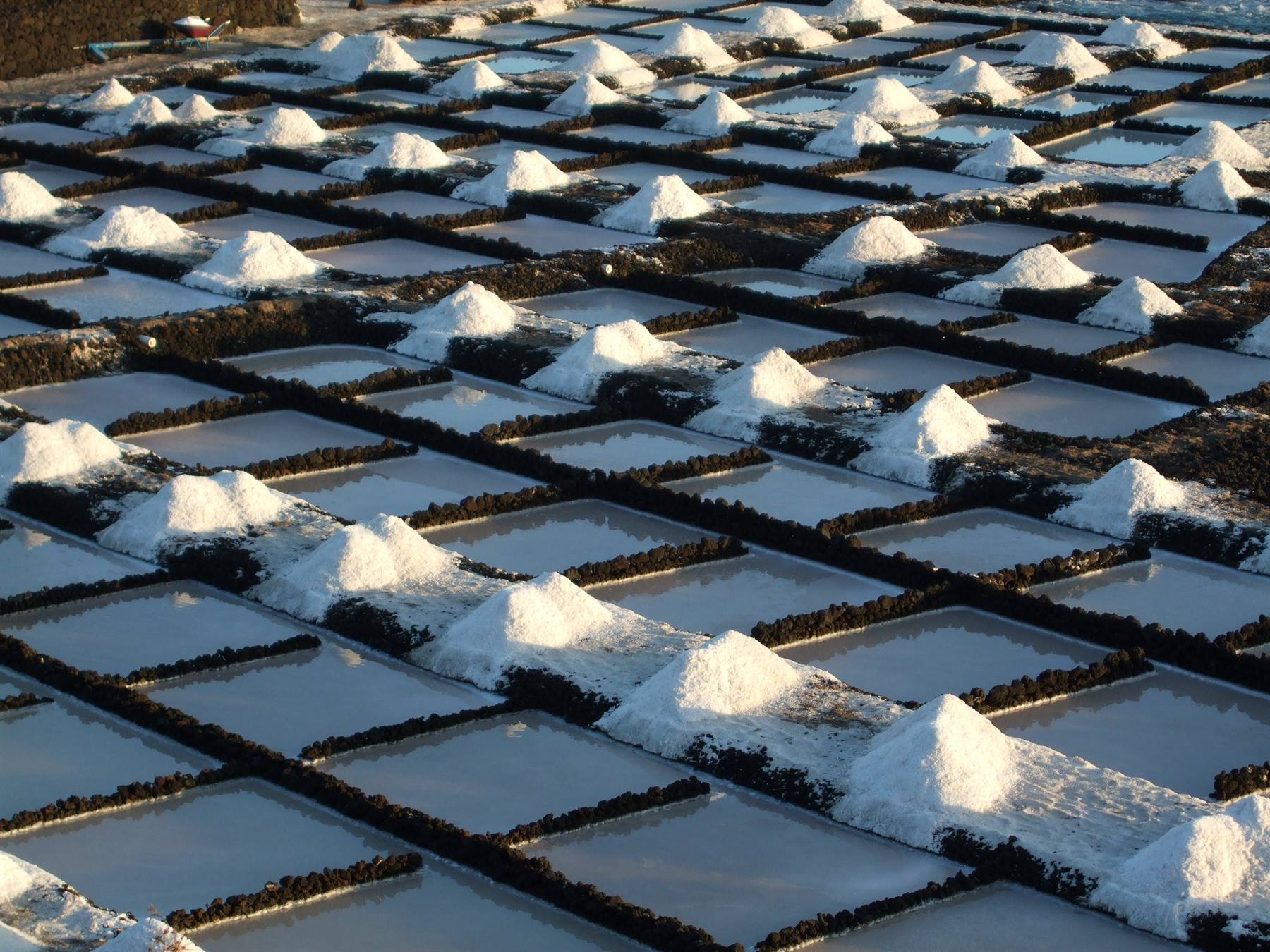
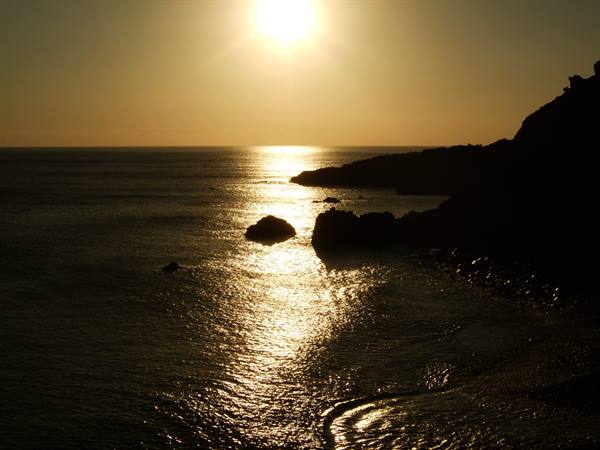
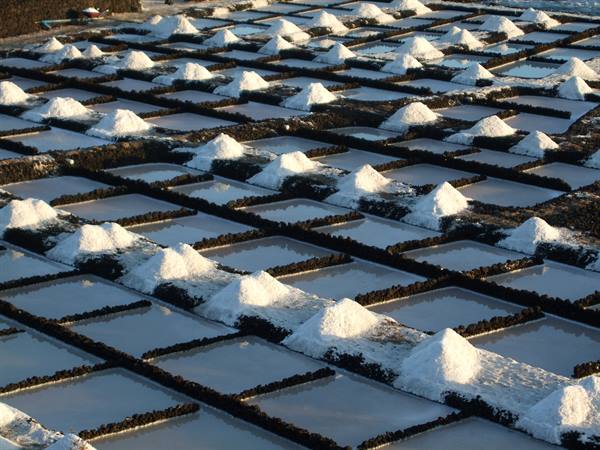
The spectacle is complete: the sea flooded with light clashing on one side with the black of the volcanic rock (there is also a small beach with some fishing boats) and on the other with the white of the salt flats (so important that they are part of UNESCO protection programs).
It's time to return. We complete the circle, going to dinner in a place in Santa Cruz (Papa Hortensia) and then to bed in our Parador.
Only one question remains: is it possible that in the whole day we haven't seen a single sign indicating the National Park? Without a detailed map of the island, tourists can only reach the observatory or wander at random, hoping to find the south entrance... The trails and trekking routes, on the other hand, seemed to us to be well signposted.
Playa de Las Vistas (Los Cristianos - Tenerife)
Day 720 Aug 2010
7 - Santa Cruz de La Palma e Los Cancajos
The sky today is overcast, but perhaps for visiting the city it is better: without the heat of the sun beating down we can better enjoy a sleepy stroll along the crowded little streets of the center of Santa Cruz.
We follow the itinerary suggested by Lonely Planet and walk along Calle O'Daly (I even make a purchase, since it's sale season) and Anselmo Perez de Brito (prettier) up to Plaza Almeda, where we treat ourselves to a good cafè y leche (a "sloppy" version of our cappuccino; if you don't trust yourself to take black coffee, I recommend the so-called cafè contado, which resembles a caffè macchiato).
The streets and shops are enriched by reproductions of the famous dwarfs, typical of the procession for the Nuestra Señora de las Nieves ( the tidy houses are decorated with flowered balconies and cheerful multicolored facades. At the end of the walk, we find a reproduction of Columbus's Santa Maria (it houses a maritime museum which, however, we do not visit).
In the meantime the sun has come out...
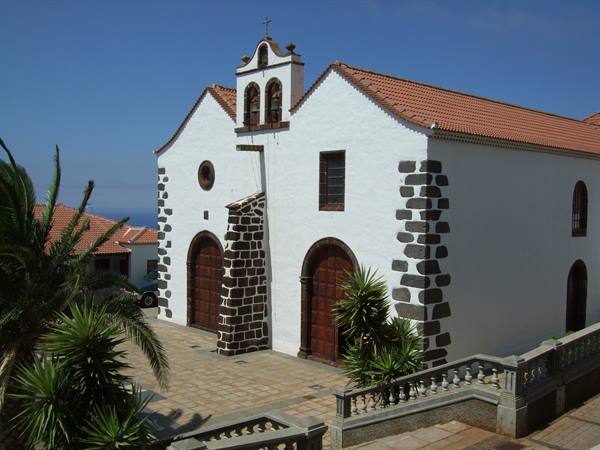
We return towards the car, walking along the seafront, dampened by the waves that crash directly against the balustrade, occasionally frightening unaware tourists. We stop to buy some typical souvenirs (cigars and embroideries, but also sweets and aloe vera products) and take the car again to go to the Sanctuary of Nuestra Señora de las Nieves (there would also be a pedestrian route, but we fear it is demanding, considering the elevation gain). The simplicity of the exterior contrasts sharply with the elegance and richness of the interior and overall it is an interesting and spiritual building.
Once the morning's program is over, we take the car again with destination Los Cancajos, a nice cluster of houses and hotels with a pleasant black sand beach. Right on the beach we find the El Pulpo restaurant kiosk, which delights us with good fried fish and a light beer.
Natural continuation: a nice nap on the sand, which in the absence of sun (the clouds have returned), offers the warmth of a warm bed, with the sound of the ocean waves in the background.
And so we spend the afternoon: full relaxation and rest, after so many kilometers traveled and before tomorrow's early wake-up and the transfer to La Gomera.
We stop here for dinner too, but we decidedly change genre: continuing to speak Spanish, we let ourselves be tempted by a Mexican restaurant with cactus-shaped chairs: a choice not very happy in terms of quality-price, but at least nice and fun.
We say goodbye to Los Cancajos with a little concert on the terrace: a choir of musicians in traditional dress livens up the seafront at sunset and for the evening.
Parque Nacional de la Caldera de Taburiente (La Palma)
Day 821 Aug 2010
8 - La Gomera: l'emozione di avvistare balene e delfini
Wake up before dawn (4 am) to board the Fred Olsen that will take us to La Gomera. In the distance you can hear disco music and Santa Cruz bids us farewell with its yellow-orange streetlights, made softer so as not to obscure the firmament scanned by the researchers of the astronomical observatory...
We are not the only ones boarding, but after an hour and a half of calm sailing (sleeping on the little armchairs, despite the loud music) we are the only ones to disembark (the others continue to Tenerife, together with those boarding here). But our life at sea for today is not over: in the afternoon we have the excursion from Valle Gran Rey, in search of whales and dolphins!
In San Sebastian de La Gomera life is calmly waking up in the port area and we stop in one of the few bars already open to have breakfast.
It is still a bit early, but we try anyway to go to the Parador de La Gomera ( if it's not possible to have the room, at least we could leave our luggage and doze by the pool... And instead they have a room free and ready, which is immediately assigned to us.
The structure is in typical Canarian style, nestled on top of the hill that dominates the port and is very quiet, with a small inner garden onto which the spacious rooms face (only flaw: the old-style parquet that creaks with every step)... The sea can be seen in the distance, but in the peace of the morning, we hear the waves crashing on the rocks below...
The sky is clear, but since we are on the coast opposite Valle, we call to confirm that the boat trip is not cancelled (the captains decide in the morning, based on the weather and sea conditions) and... all we have to do is take the car and cross the island. But only after having a nap.
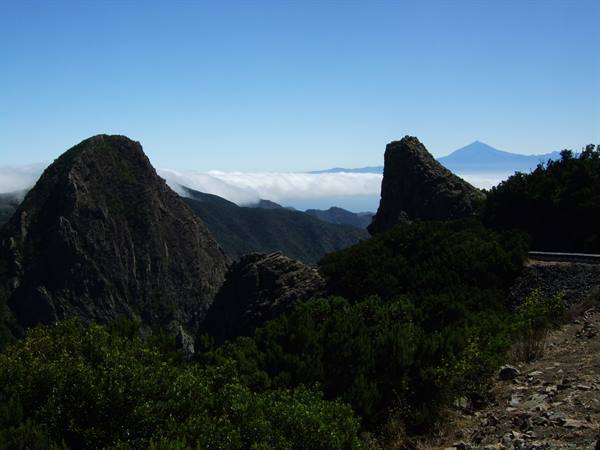
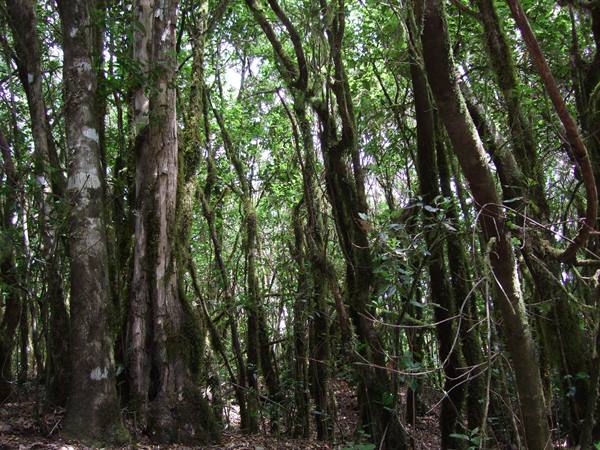
Between one coast and the other there are about 50 kilometers of scenic road and obviously full of curves and miradores! The initial stretch is arid and dry, without vegetation. Looking east, the Teide... cut in half by the usual layer of low clouds! Then, suddenly, behind a curve the trees begin and they get denser and denser: we are in the Garajonay National Park ( One of the main attractions of the island, it is spectacular even just driving through it, but the best thing would be to tackle one of the many well-signposted trails!
For today we go straight on, towards the Valle de Gran Rey, more desert-like, dotted with palms, cacti and the omnipresent aloe (reminder: buy some local creams).
We stop at Vueltas, in the southern part of Gran Rey, for a quick snack and a swim at the beach near the port from which our excursion will depart. The sand is very black and very fine
Salt flats in Fuencaliente (La Palma)
Day 922 Aug 2010
9 - La Gomera nord
We wake up again to sunshine and a bit of wind. We're still feeling a kind of jet lag from yesterday's early start, but we stick to the plan: today the north of the island awaits us!!!
We set off towards Vallehermoso and land in Hermigua, a sleepy little place that doesn't invite you to stop (according to Lonely Planet, the Gofio Museum and the lucha canaria arena are worth a visit). Beyond the clouds we think we can make out El Teide, but in this part of the island the sky today is anything but clear.
We continue on to Agulo, where we treat ourselves to a stroll through the cobbled alleys, among the colourful houses. The little village is definitely picturesque, but it seems empty and sunk in sleep, perhaps only because it's Sunday morning.
In Vallehermoso (decidedly livelier) we stop for a coffee in the little square, a quick trip to the ATM and some shopping at the supermarket (we're becoming die-hard fans of Canary bananas). We also visit the elegant Iglesia de San Juan Baptista, recently restored to celebrate its first centenary.
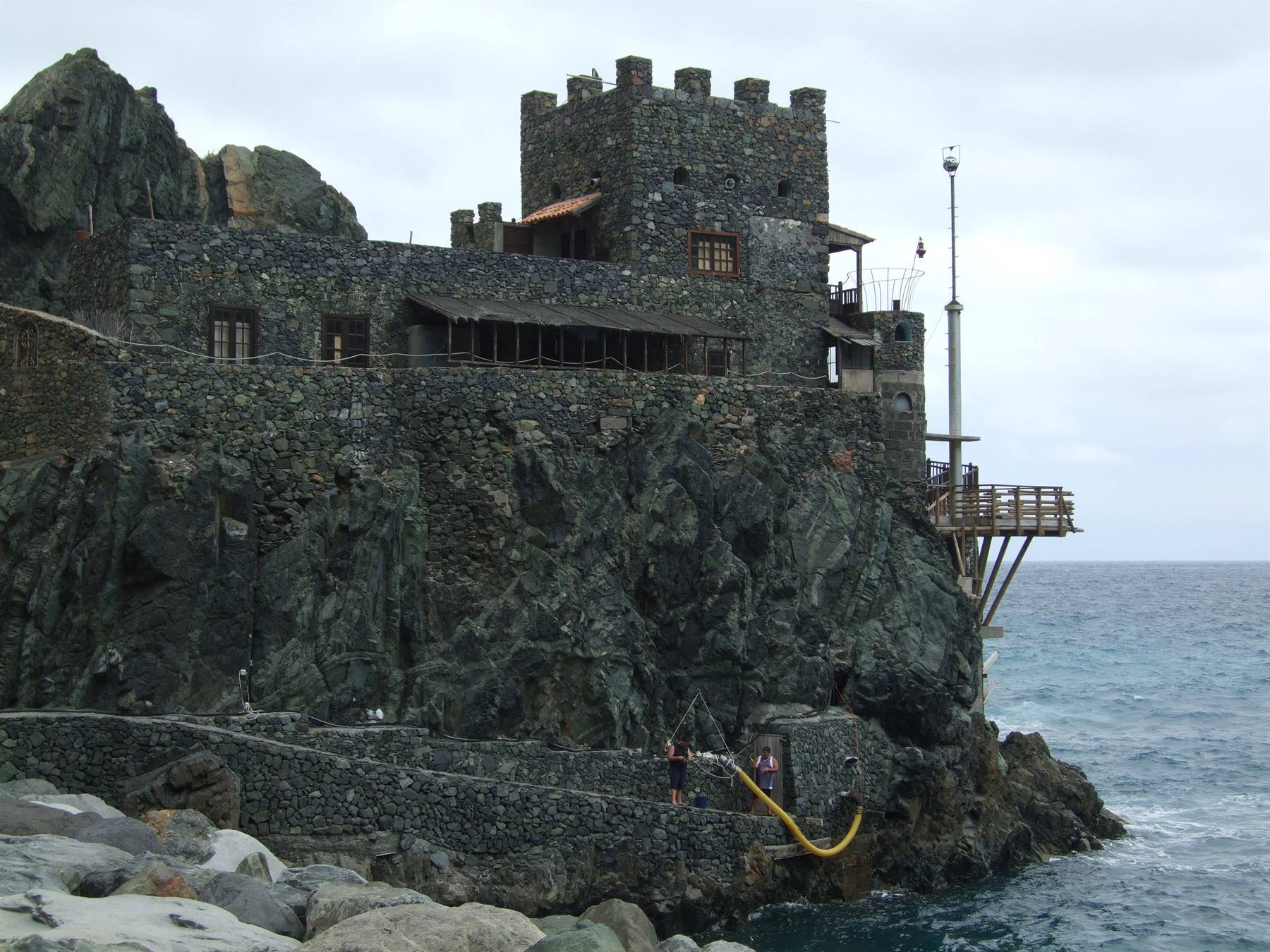
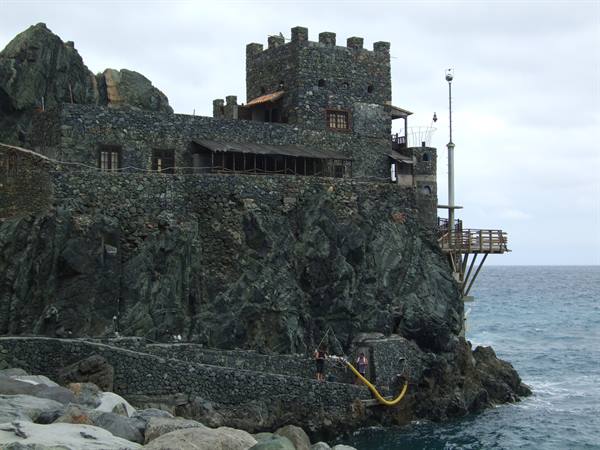
We go down to the beach and to the Castillo del Mar, which could have been a pirate hideout and now lies sadly abandoned. It's a real shame, because the guidebook says it had been turned into a cultural centre and it would in fact have been picturesque and full of character, inviting enough to capture the little ones' imagination too… And instead the reception desk seems to be falling apart, the doors are padlocked, the notice board is faded and some parts are damaged by fallen stones and decay…
In this part of the island the wind has carried in a few too many clouds. So we decide to set off again to reach Alojera and its beach, praised as the prettiest on the island.
We climb back up towards the centre of the island and then descend again towards the north-west. Suddenly the air changes: the sky turns blue again and the wind becomes hot and muggy, like a hairdryer pointed right at us. No wonder the landscape is so arid! In the distance, separated by a layer of low clouds, the outlines of La Palma and El Hierro stand out sharply: it's the first time on this holiday that we realise how close the four islands are, at least to the eye.
We go down along the scenic, winding road, which gets narrower and narrower (especially in the village, where the carriageway is squeezed by parked cars and houses) until it ends, just above the little cove of black sand and stones (they look like the smooth black ones from massage parlours).
The wind has turned cooler, but the sun is merciless. We take the opportunity to have lunch at Bar Restaurante Prisma, separated from the beach by a simple flight of steps. Fried calamari with salad and chips (2 portions) and grilled prawns (1 portion): a real delight for 31 euros (including water, coffee and bread with the omnipresent mojo in 3 versions, plus service)!
A few steps and we're on the beach: very fine black sand, with a few stones here and there, and crystal-clear water. The sun and wind complete the picture. While waiting to digest our lunch, we improvise a few throws with a frisbee, but the coolness of the water is a temptation we can't resist for long...
The afternoon passes calmly, between a dip in the water and a spell in the sun. Before getting back in the car, we treat ourselves to an ice cream and then… back on the road!!!
To avoid some of the bends, we rejoin the road we took yesterday, which is wider and gentler. Meanwhile a good wind has picked up, dragging a few harmless clouds out to sea and making the sky clearer, which, behind San Sebastian, lets us glimpse the reassuring outline of El Teide.
We arrive in San Sebastian in time to have dinner in a delightful little place (El Pejin), decorated like a fisherman's storehouse, which serves excellent, hearty starters: queso asado and jamon serrano are enough for us as a full dinner (we add a salad because it's good for our health and a Principe Alberto because it's good for the throat) and to finish they offer us a chupito of the excellent palm honey rum, typical of the Canaries.
Another beautiful Canary day and a great ending!
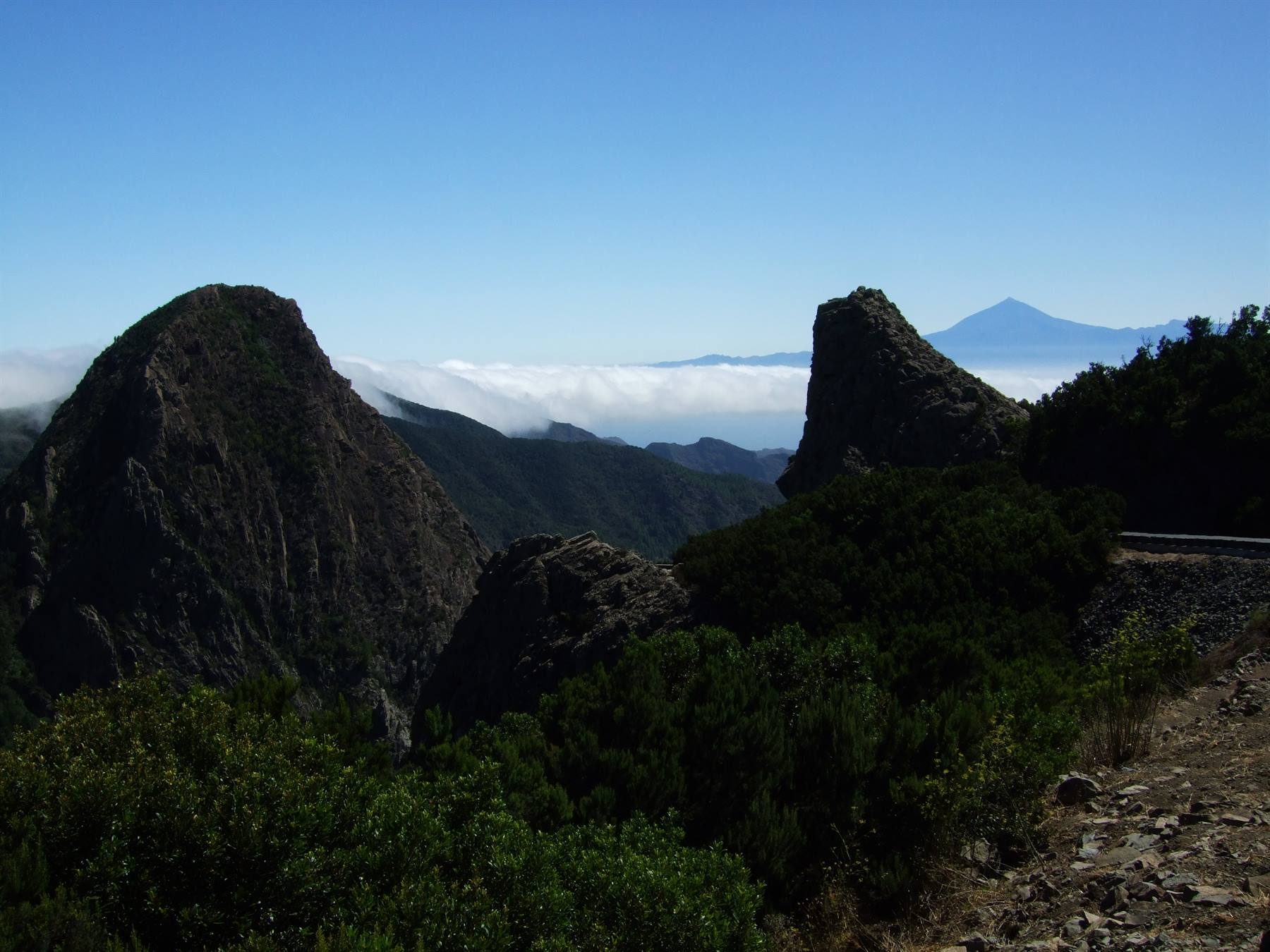
The Teide (Tenerife) from Garajonay Park (La Gomera)
Day 1023 Aug 2010
10 - Parco Garajonay
Today again sunshine, blue sky and a bit of wind.
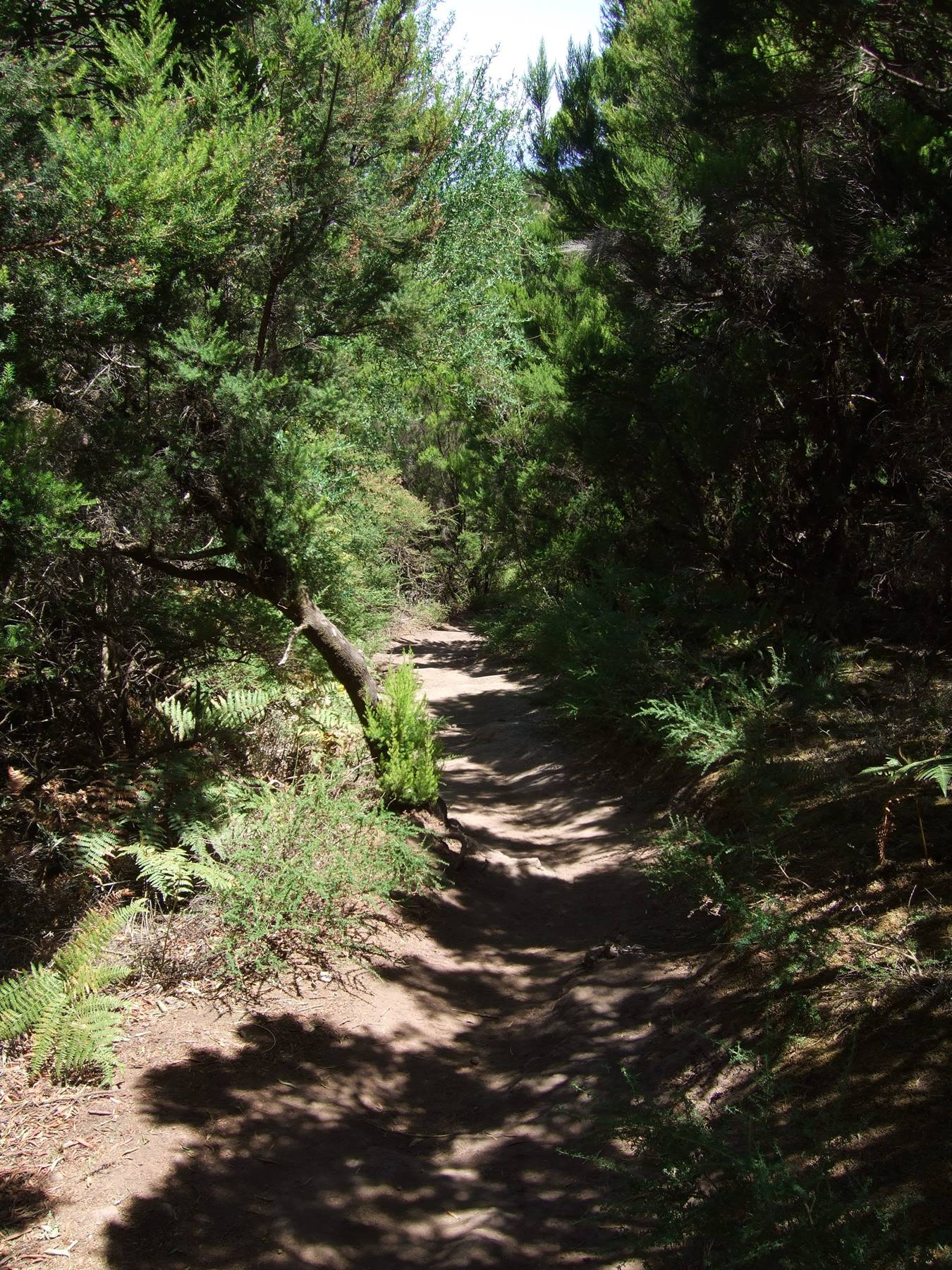
Since a visit to La Gomera isn't complete without a walk along one of the many trails of the Garajonay National Park ( we head to La Laguna Grande (there's now a refreshment centre there, but they say witches once gathered there) and take trail number 3, the demonstration one. It's a short, easy circuit, well marked with wooden fencing and with some explanations (in Spanish and English) about the park, its flora and its fauna.
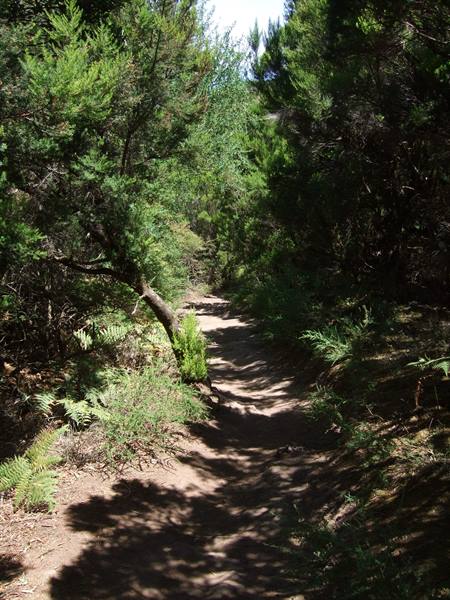
We then decide to tackle a longer route: we move to the Pajarito car park and take the longer (and gentler) track towards Alto de Garajonay. It's a track you could drive in an off-road vehicle (if it were allowed): wide and well-trodden, though very exposed to the sun, with the last stretch even paved with flagstones. We reach the top hot and bothered (despite the wind), but happy and rewarded by the beautiful view that takes in the whole park, the island (except the coasts, too far below beneath the cliffs), the ocean and… the other three islands of our trip: Tenerife, La Palma, El Hierro.
Right at the top of the island's highest point, a circle of stones has been recreated: an archaeological find that had been discovered a little lower down and that appears to have been dedicated to the worship of ancient deities. According to Lonely Planet, the great pine tree towering beside it is supposed to be living proof of the so-called "horizontal rain" phenomenon, but you probably have to come at wetter times to see it "in action", and unfortunately no indication is given as to which seasons or times are best for seeing this phenomenon (probably early in the morning, when the first warm sun releases moisture from the cool ground).
We go back down along another trail, equally well-trodden and sun-exposed, but more pastoral and steep: going down takes no time at all, but if we'd done it uphill, it would have been more demanding.
On the way back to San Sebastian we decide to make a detour towards El Cedro: to our surprise the road is actually a wide paved path (two-way traffic!) that cuts into a lush gorge (perhaps a bit extreme for our Opel Astra, but beautiful); the large flagstones that form it shift as the cars pass over them, creating a sort of xylophone effect!
The road ends at the picturesque Bar Restaurante La Vista, which looks like a mountain lodge. Despite our good intentions to stay light, we can't resist the atmosphere and order 2 plates of goat meat, obviously with the usual potatoes (total, including beer, coke and coffee, € 17). Definitely recommendable, if you fancy tackling the road to taste some Canarian food in a friendly setting.
We retrace the path (the return always seems quicker!!!) and finish the afternoon in San Sebastian… lounging on the volcanic sand!
As we're close to our Parador, we go back to the hotel for a shower and a change. Then we go down into town to get something to eat, preferably at the same place as yesterday. Unfortunately it seems to be closing, so we have to fall back on a Tasca not far away: the ham and cheese are excellent, but the service is mediocre and the prices above average. We go back to the hotel, this time for a sound sleep!
Vallehermoso - Castillo Del Mar (La Gomera)
Day 1124 Aug 2010
11 - Da La Gomera a El Hierro
Last morning in La Gomera: in the afternoon we move on to El Hierro, the smallest and least touristy island of the archipelago.
We leave the hotel and park in the centre: we take advantage of these hours for a tour of San Sebastian, in the footsteps of Christopher Columbus, even though we know the little town doesn't offer any works of particular interest.
First stop: breakfast in the square, at the outdoor tables of Dulceria Oscar. Actually we wanted to try a Zumeria recommended by Lonely Planet, but it was closed for holidays (even in the Canaries, as in the rest of Spain, many people take their holidays in August), so we let ourselves be guided by instinct (which doesn't let us down).
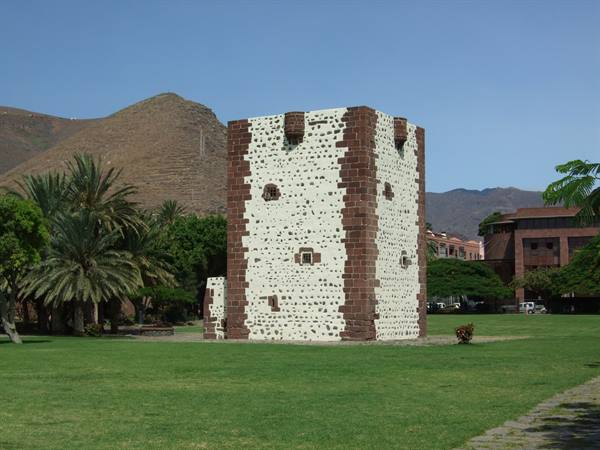
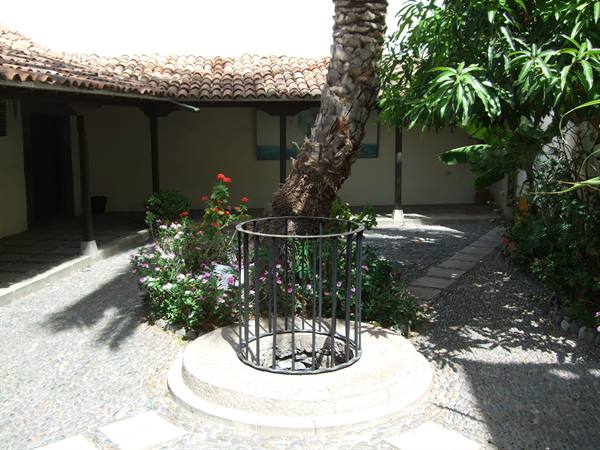
Straight after, we make our way along Calle Real, for some souvenirs (they all seem to come from Las Casas de Los Balcones in Orotava, Tenerife anyway) and some buildings that recall the adventures of Christopher Columbus: his supposed house and the well from which he is said to have drawn water to bless American soil. We don't skip the Torre del Conde (with the lovely garden that surrounds it), while we find the Church closed (it seems to open only in the late afternoon, for Mass).
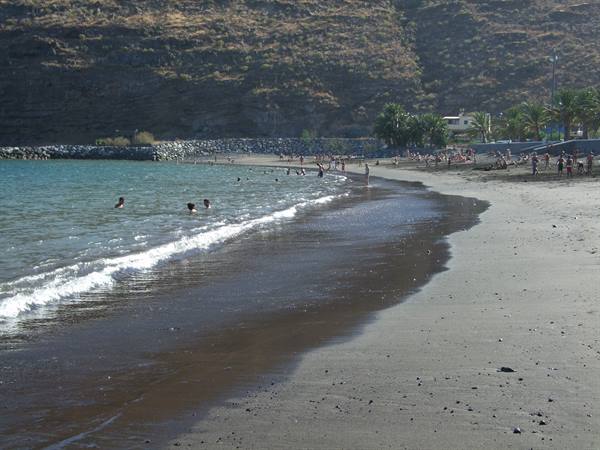
And to finish, we settle down at the Fred Olsen pier, waiting for the ferry that will take us to El Hierro. As we hadn't seen it before, we take a walk along the seafront of Playa La Cueva, a gentle little inlet with volcanic sand (and a few stones) and clean, calm water, on the whole prettier than Playa San Sebastian, but it could get more crowded. In the distance you can see El Teide, as always, while the Parador complex dominates from the top of the cliff.
The Bonanza Express arrives a little late and, with the loading and unloading operations, we finally set off half an hour behind schedule (which we obviously spend in port, sunbathing). Arrival is expected after an hour and a half of sailing, though in the end we dock two hours later.
During the crossing we meet a couple of Italians who have even bought a house in Tenerife (not far from Los Cristianos). Being close to retirement (and self-employed) they come here for a few months a year and obviously let their daughters, sons-in-law and grandchildren benefit too! Not a bad idea, for anyone (like me) who dreams of 25°C all year round!
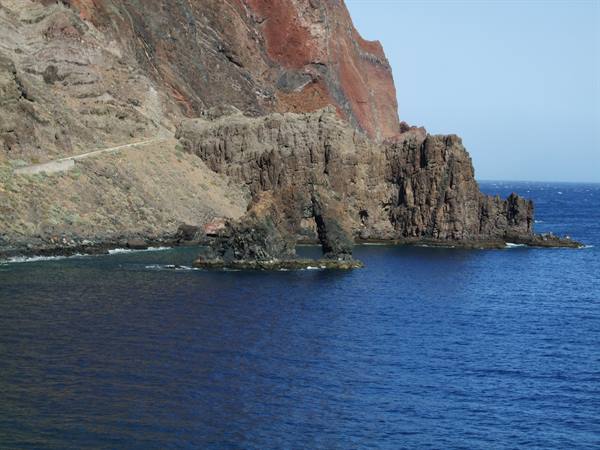
Once we arrive, while everyone turns right towards Valverde, we turn left towards our third and last Parador ( To get there we pass what is perhaps the island's only traffic light, which however doesn't control a junction, but the alternating one-way traffic through the long single-lane tunnel! Once through the tunnel, the view opens up onto the deep blue sea and the rocks plunging into the water, while the road ends just past the Parador. We ask for (and get) a room with an ocean view: as it faces east, some areas are already in shadow, but the view and the sound of the waves crashing on the rocks leave us open-mouthed.
We treat ourselves to a pause to enjoy the beauty in front of us, then take the car again to go to Valverde in search of a supermarket, and we note that on this island mobile phones seem to struggle more to find a signal.
Meanwhile the wind has brought in some low clouds and a bit of a chill. We head towards El Mocanal to look for a little place to eat, but since it's early we make a quick stop at the Mirador de La Peña, to book a (view) table at the restaurant designed by César Manrique for tomorrow at midday, trusting there'll be no clouds so we can fully enjoy the view (already beautiful today, even with a bit of haze).
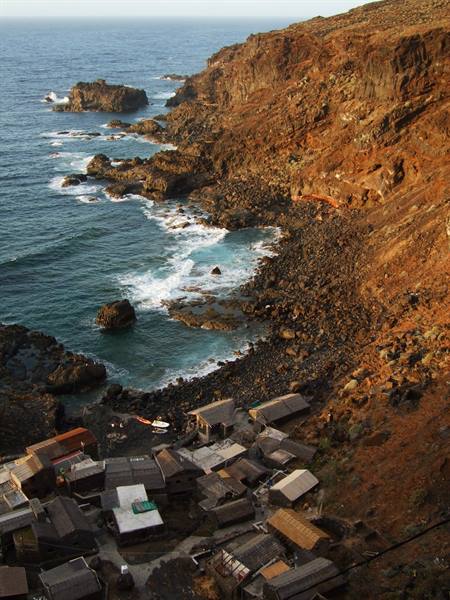
We go down to Pozo de las Calcosas to admire the rocky landscape with the village of pajeros (little houses with thatched roofs) and the natural pools. And behind the small Ermita, we find Restaurante Casa Carlos, a small bar-restaurant with a panoramic view and home cooking. The place is small. One room with about fifteen covers, long tables with white and green checked tablecloths, and the kitchen separated by a low wall that can serve as a table for "tapa y cerveza". And it's lovely anyway to dine to the sound of the sea and of the dishes being moved by Señora Sofia, who prepares the fish specialities on the spot. And at last we taste an excellent vieja (parrotfish), not exactly cheap (€16 a kilo), but very tasty and very Canarian! Definitely a recommendable option.
We go back to the hotel with a splendid full moon watching us from above and casting its silver rays on the ocean waves.
Parque Nacional de Garajonay (La Gomera)
Day 1225 Aug 2010
12 - El Hierro: un pranzo di lusso e un po' di mare
We wake up to sunshine flooding the room as soon as we open the windows… Maybe one of these mornings we could get up early to see the sunrise, with the sun rising right out of the water in front of the hotel…
After a quick reconnaissance tour of the hotel (the pool with an ocean view is marvellous), we take the car heading north. Having booked at the restaurant for two o'clock, we decide to make a detour to Charco Manso, but when we get there the sky is unfortunately cloudy. We still admire this large natural pool, complete with a lounge area carved into the rock. The surrounding landscape is rocky, with sparse vegetation, mostly low and scrubby, with aloe and large succulents.
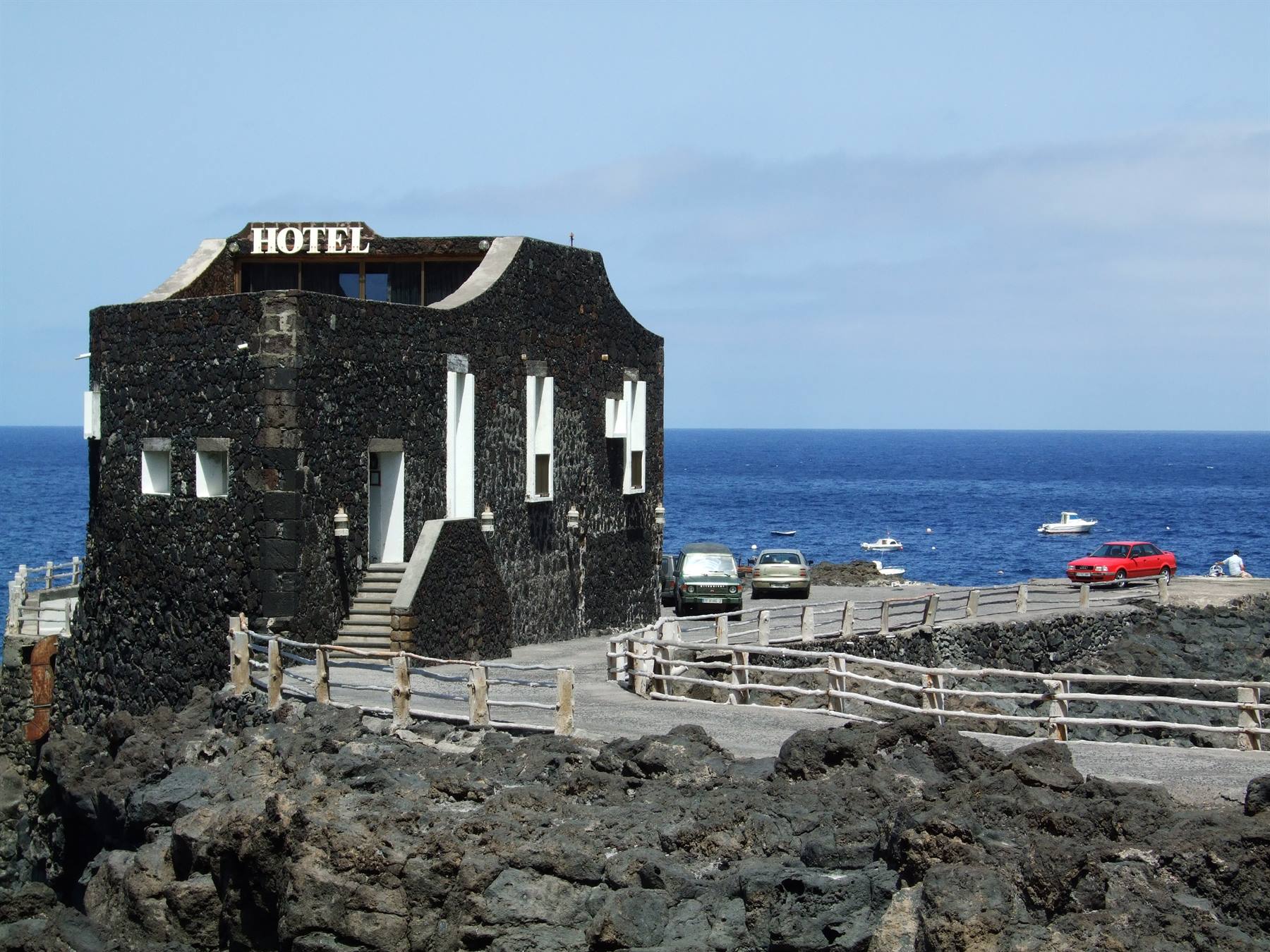
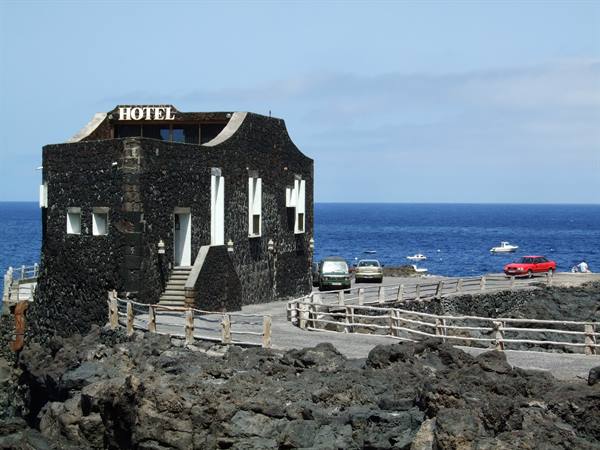
We set off again in the car heading north-west (a decidedly greener area, with some low vineyards) and, after driving through the long tunnel, we stop at Las Puntas, where we admire the Hotel Punta Grande, famous for having once entered the Guinness Book of Records as the smallest hotel in the world.
We don't have much time left before we have to head to the restaurant. So we take a sunny break on the rocks beside this unusual hotel.
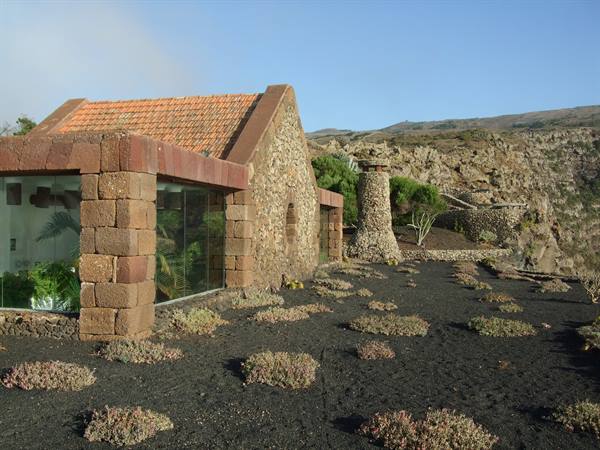
And then we go up to the Mirador de La Peña, a work by Manrique. The structure blends perfectly into the mountain, respecting its shape and colours (let's hope the conference centre they're building next to it does the same!); the garden is a sort of botanical garden, complete with little labels giving the names of the different species; lizards scurry over the stones and along the little paths. The silence is total: you automatically find yourself speaking in a low voice. The view towards El Golfo is superb and the interior is disarmingly peaceful and elegant. The service is classy and punctual, the dishes excellent (may I mention the starter based on tropical fruit and prawns, with the best pineapple I've ever tasted!). Ladies, I recommend a quick trip to the bathroom: the glass wall behind the mirror offers a lovely view of the Gulf below.
As we'd booked, we had one of the two front-row tables reserved, right in front of the window, one of those where the King and Queen of Spain had dinner during their visit to El Hierro in 2006. The bill is obviously not among the lowest (2 starters, 2 fish main courses, 2 desserts, water, wine and coffee, almost €80), but the quality of this treat justifies it, and the quantity of food too. For anyone who'd like to try the restaurant at lower prices, there's also a set menu (3 courses) at € 12 per person, though the portions are probably smaller, the choice less extensive (2-3 choices per course) and drinks excluded (local wine is anything but cheap, at least here!). Or the café, for a short stop (we caught a glimpse of some excellent examples of pastries).
We pass through San Andres and Valverde and reach La Caleta, practically a small water park with little pools on the rocks (one seems to have a fountain, but it's switched off today), but also with the chance to swim in the ocean (there are even little ladders to climb in and out). It must also be a favourite spot for divers, because we see several people emerging with wetsuits and tanks. There's plenty of space for sunbathing too, but there's no sand and no beach. We stop for a couple of hours to sunbathe, but the wind in this area is too strong (and to think the airport is nearby too!) and after a while we leave.
We treat ourselves to an evening of rest at the Parador: we're starting to feel the tiredness of all those kilometres (we passed the thousand mark a while ago) and of all the driving around.
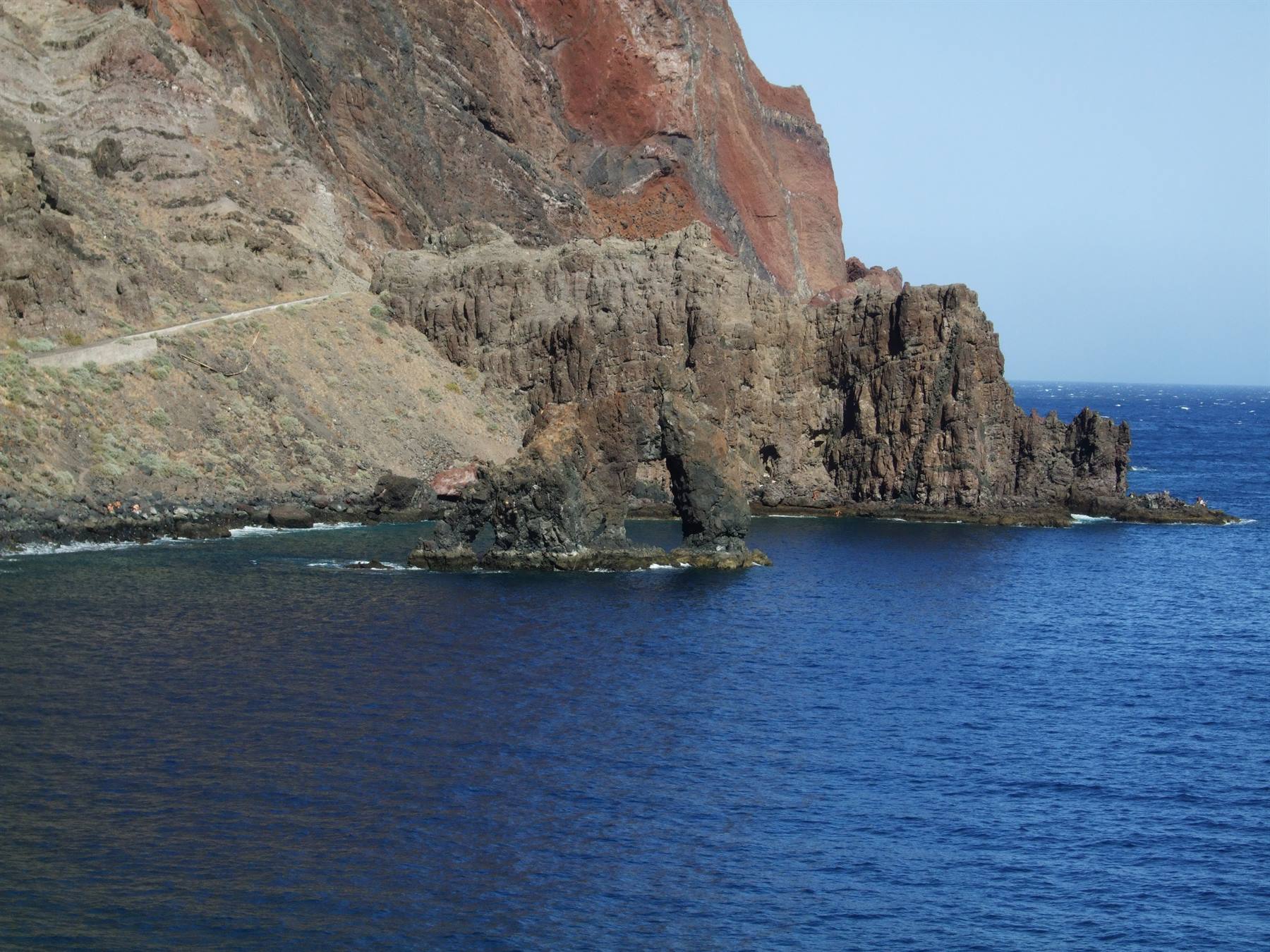
El Hierro - Roque de la Bonanza
Day 1326 Aug 2010
13 - Un giro completo di El Hierro
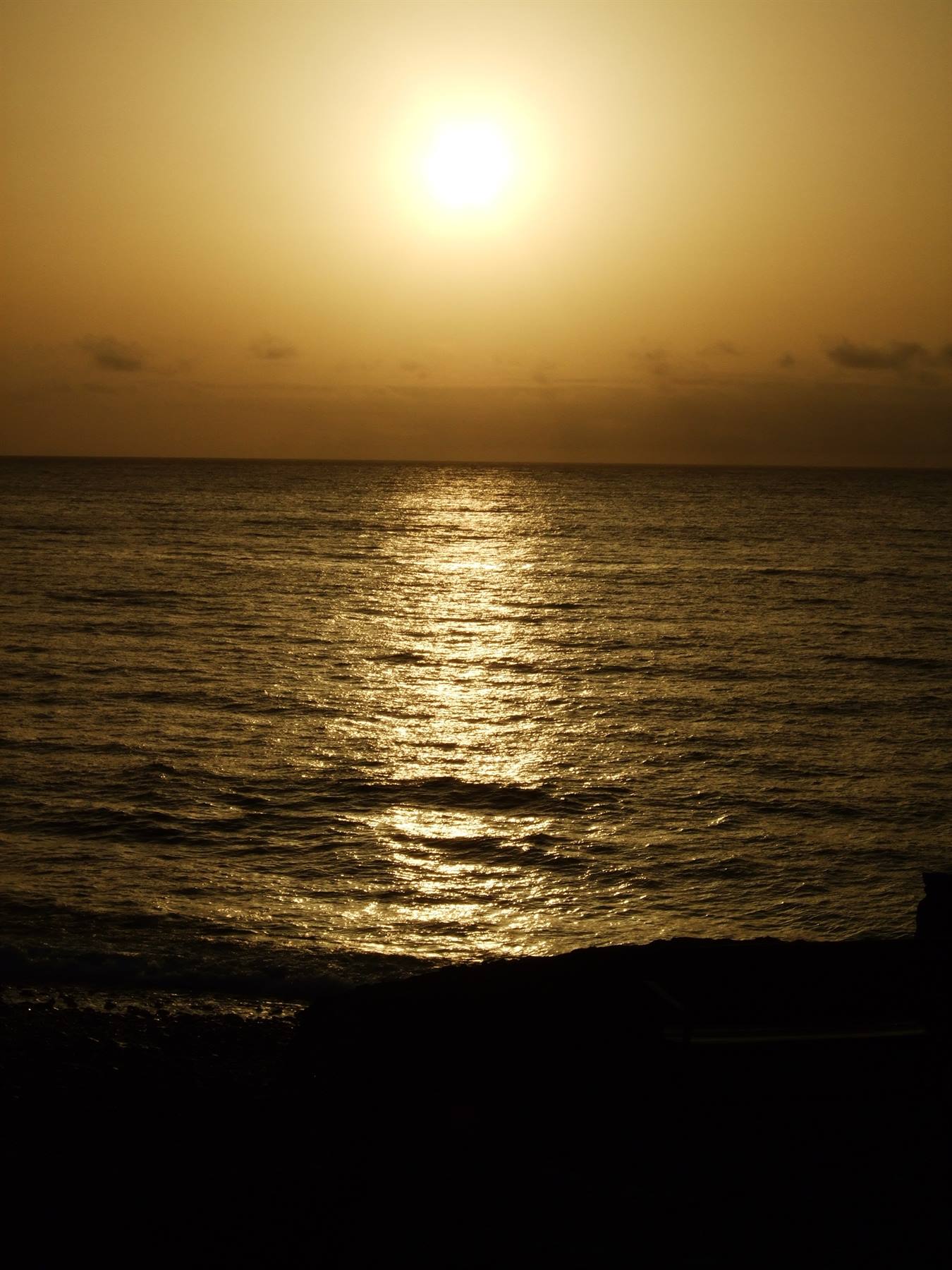
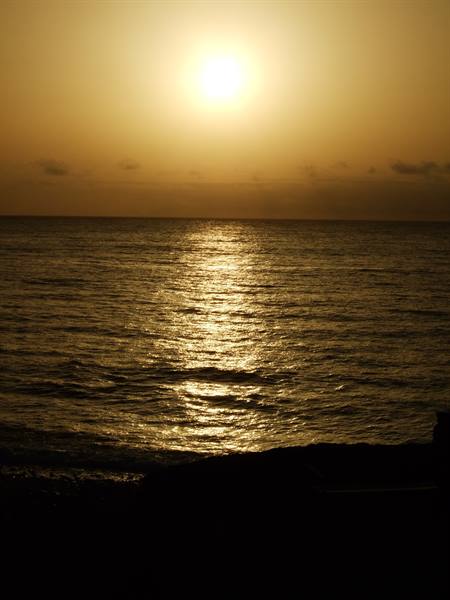
I couldn't resist the idea of enjoying the sunrise from the room's balcony, even though we "continentals" don't have a very clear idea about sunrise and sunset times at these latitudes! On my husband's suggestion (though he refused to get up), I set the alarm for 6.30, only to discover that outside it's still completely dark: only the silvery moon is missing, the one that lit up the landscape last night! Around 7.30 it starts to get light behind the promontory. At about 8.15 I manage to photograph a completely golden landscape, with the sun looking straight at me from the sea, just above the horizon!
I go back for a little nap, even though it isn't long until the alarm. In any case, last night we'd gone to bed early and this morning we'd already decided to stay at the hotel pool (we've discovered it has seawater): my husband because he loves swimming and me because… any excuse is a good one for sunbathing! We stay a couple of hours and meanwhile other hotel guests arrive… time to get moving!
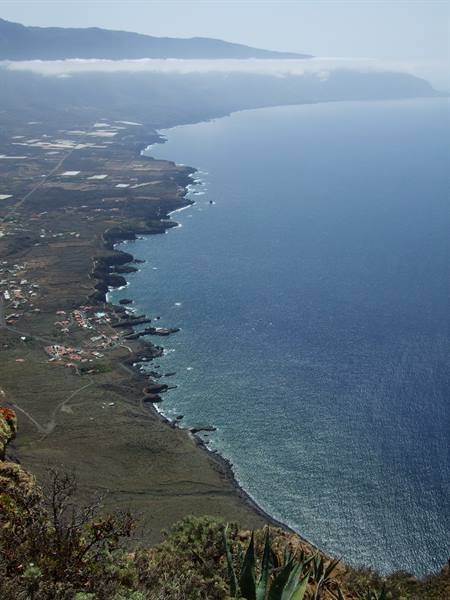
We go back to Valverde and head for La Frontera, taking the inland road (there's now a wider "coastal" road with fewer bends). We don't stop at the various miradores, because we'd have to walk the trails that connect them to the road, but once we get above El Golfo we're amazed by the view, even though there's a bit of haze.
Arriving in La Frontera (very lively and bustling), we stop at Don Din 2 for lunch (the chicken is excellent).
We set off again towards the far west and the wildest land on the island, made up of sheer drops to the sea, memories of lava flows, desert vegetation and scenic roads (excellent asphalt, but rather narrow in places: better to go nice and slowly and keep a good lookout for oncoming cars on the wider stretches.
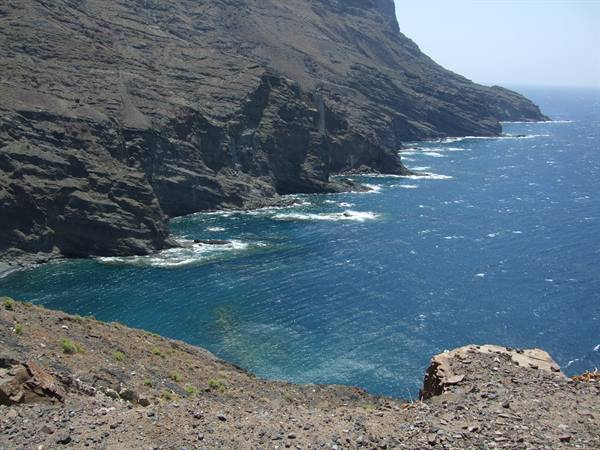
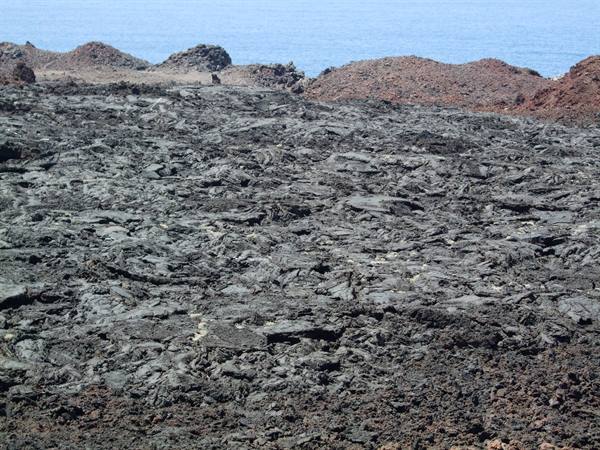
We pass Sabinosa and the Pozo de La Salud (there's supposed to be a therapeutic spring, but they've turned it into a beauty farm) and join the scenic road that heads west, leaving the vegetation behind and discovering volcanic rocks that shift from intense red to glossy black at every bend, forming lunar landscapes.
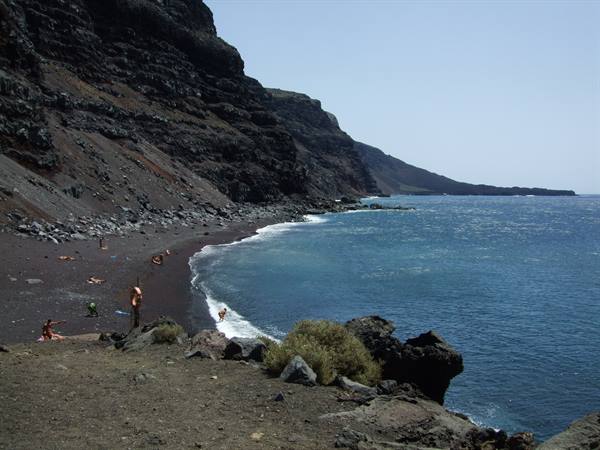
We take the turn-off (about 1 kilometre of unpaved road, but passable even by car) for the beach of Verodal to see the little cove of red sand and the bathers who, ignoring the danger signs (falling rocks), swim and sunbathe.
We go back onto the asphalt road towards Ermita Nuestra Señora de Los Reyes: ever narrower, with lots of bends and incredible views. You have to go slowly and very carefully, because it's two-way and in many points two cars would struggle to pass (luckily there isn't much traffic).
We reach the turn-off for the Faro de la Orchilla, which once marked the zero meridian (there should also be a commemorative monument), but the road to get there (5-6 kilometres downhill) is unpaved and we don't feel like risking it.
The Ermita Nuestra Señora de Los Reyes complex suddenly stands out, dazzling white, in the middle of a grove of low trees. Unfortunately we find it closed (a sign says it's open for a few hours on Saturday and Sunday afternoons). All we can do is walk around it and set off again. Besides, it's very hot in this part of the island (the car thermometer says 35°C) and it's muggy.
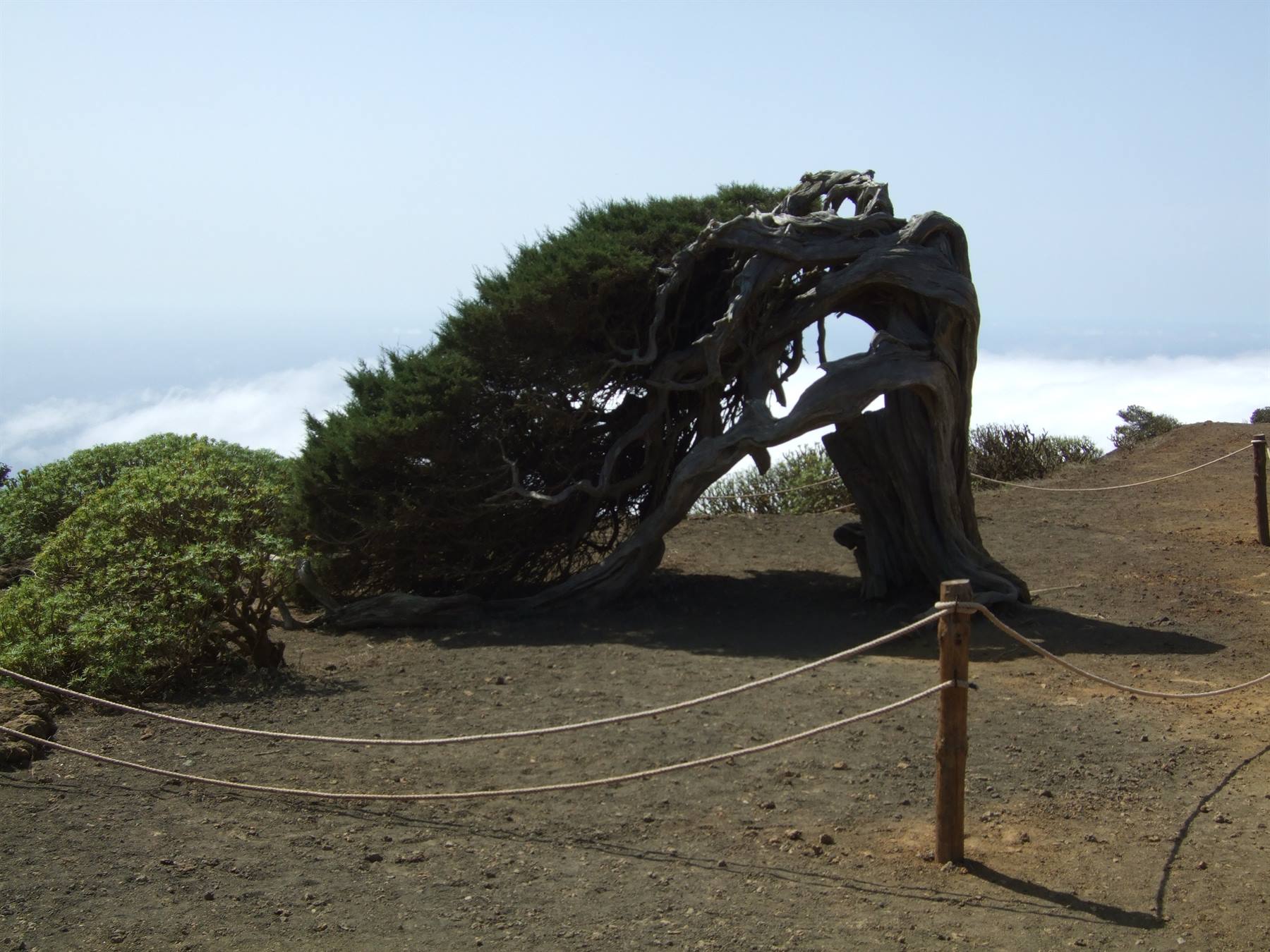
Right behind the church begin the two (unpaved) roads that in a few kilometres (about 3) lead to El Sabinar (the famous juniper bent by the wind) and to the panoramic Mirador de Bascos.
We decide to give it a try and we're glad we did: if driven slowly and carefully, the road is passable with a non-off-road car. At one point we come across a gate closed with a sign: "Go through and close it again. Thank you". Amused by this unusual practice, we follow the instructions and continue. The vegetation is still sparse and the heat intense, but we come across some cows, evidently left to graze on this poor land, hidden among the bushes.
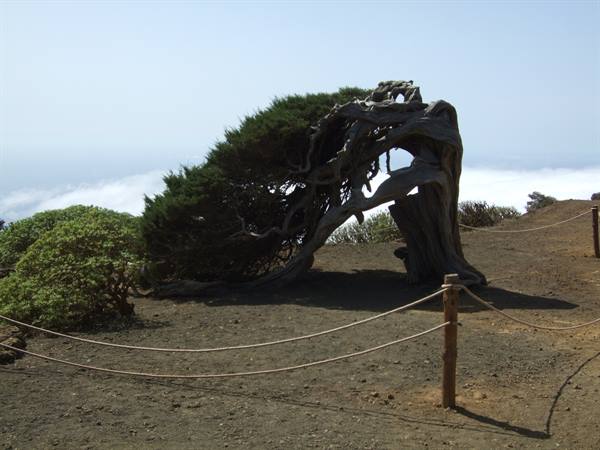
El Sabinal is a fascinating tree, surrounded by less showy lookalikes. Its curved trunk seems to bow towards the sea, touching the ground with its lush canopy. Indeed, an unusual specimen!
We give up on the Mirador because, as often happens (according to Lonely Planet too), we can see loads of clouds over that way.
Most of the cars that have made it this far turn back along the same road, while we decide to continue the loop, following the same road (well surfaced, but a bit narrow) as far as San Andres. This stretch is probably not suitable for anyone prone to vertigo, because the carriageway runs high along the cliffs facing the sea and doesn't even have a guardrail! Still, it's really pleasant and offers a fairy-tale image of this little-known island…
As we approach the El Julan area, the road is flanked by increasingly thick pine trees, and the ground seems to turn red — though not soil: it's a carpet of pine needles that have fallen over the years and been left to dry on the ground. A beautiful area.
To take a break and shelter from the sun, we stop at Hoya del Morcillo, which is supposed to be an area equipped for camping, sports (there's even a football pitch) and picnics (but apparently barbecues too). Unfortunately it all seems abandoned (were it not for the clean toilets and the attendant working at the information centre), and the only thing worth noting is the replica of the island made from cut pine trunks (original and really well made: a shame not to have a wide-angle lens or a raised viewpoint from which to capture the whole thing!).
We climb back up towards San Andres and then towards the Mirador de Jinama, which gives us a beautiful view over El Golfo (a shame about the sun right in front, which stops us taking photos). From here a very nice trail seems to lead down towards La Frontera, but we content ourselves with seeing its start (or its end).
It's almost sunset and for dinner we'd thought of a fish restaurant near Las Puntas. We go down a side road (it seems to cross farmsteads and livestock farms) towards the long coastal tunnel and here we are by the sea. We take a short stroll (just enough time to take some photos) along the new "promenade" linking Punta Grande to Maceta (we'd seen it on the news) and then we go into Restaurante La Maceta, only to discover that… it's turned into an Italian restaurant (so to speak)!!!! True to our philosophy of avoiding Italian food abroad (unless reliably recommended), we skip pasta, pizza and bruschette… and order a big salad! The food doesn't seem entirely bad (it's hard to get a salad wrong, while the pizzas and bruschette — other people's — seem too soft and pale), but the service is incredibly slow, even just to bring the bill!
All that's left is to drive the usual road back to the Parador, not without reflecting that it's a very nice hotel, but in an unlucky location.
El Hierro - Hotel Punta Grande
Day 1427 Aug 2010
14 - Da El Hierro a Tenerife
Last day in El Hierro: tonight the ferry takes us back to Tenerife and the day after tomorrow we go back to Milan… We say goodbye to our Parador with one last swim in the pool, then load the suitcases into the car and set off again.
First stop in Valverde, in search of the Quesadillas Factory Adrian Gutierrez and Hijas, said to be among the best on the island ( Coming into Valverde from the port there's a sign for the factory, but then you get there by luck. The building looks like an ordinary house; once through the front door, a young man welcomes us and takes the orders through a little hatch. If it weren't for the fact that we can see his face, it would feel like being back in Seville, when we bought biscuits from the cloistered nuns (all in silence, through the "wheel" in the wall). The quesadillas are…delicious!
We take the opportunity for a wander around the centre of Valverde and especially the central little square: dazzling white and very picturesque, it would make a fine stage for concerts and theatrical performances.
We get back in the car heading for Maceta: we need to think about our tan and the almost-natural pools we saw last night are very appealing.
The sun is high and scorching, many people are already in position, but the ocean is more mischievous than expected: being rough, many waves crash against the barriers and create jets of water that flood the pools and the nearest stretch of coast. The locals, evidently more used to it, swim and dive, defying the big waves… We get caught up in a game apparently meant for the little ones: sitting on the edge of the "pool", in a strategic position, and letting ourselves be soaked by the gushes from the waves. And we practically both get scalded! But…what fun!!!
Then the sun gets too hot and in any case it's almost time to leave. We have one last ice cream by the sea, say goodbye to El Golfo and then off to the port! We stop at the supermarket to get two bananas and some drinks for the ferry, then go and take our place in the boarding lanes.
As usual the Fred Olsen arrives late and, with only one ramp for loading and unloading, in the end we set off almost an hour behind schedule! As if that weren't enough, the crossing is longer than expected: almost three hours instead of two!!! We arrive in Los Cristianos exhausted and we still have a stretch of road ahead because we've booked in Güimar, roughly halfway to the northern airport.
This time we have a Hotel Rural ( practically a bed and breakfast created in a typical 16th-century Canarian house! The very kind lady comes to open the door for us with a smile despite the late hour and even spares us the check-in formalities: we're so exhausted that she lets us postpone everything until after a shower and a sound sleep. Unfortunately the solution turns out to be one of the unluckiest… Apart from the historic building and the period furnishings, the half-collapsed bed creaks at every movement, the room is boiling hot and one window won't open, the lady apologises and offers us a very noisy fan which we end up switching off, in the courtyard there's a really annoying little fountain that gurgles non-stop… Either we've become too sophisticated, or Canarian farm stays are of a low standard..
We try to get some sleep anyway!
Dawn from the Parador de El Hierro
Day 1528 Aug 2010
15 - Tenerife orientale
In the end we manage to sleep anyway, although the last full day in Tenerife begins with a certain underlying tiredness.
I get up for a quick shower and go down alone for breakfast (included in the price). The very kind Mari spoils me with coffee, milk, orange juice, toast, jams, yoghurt, fruit and a little plate of cold cuts. Obviously I can't eat it all, so, with a bit of nerve, I ask if I can take something up to the room for my husband, who hasn't woken up yet. Without any problem, they give me a tray and dishes and my husband wins breakfast in bed!
Meanwhile the lady who welcomed us yesterday says good morning and gives me a few tips for the day: the Güimar pyramids (about which I've read mixed opinions), a trip to the beach to escape the heat (they're surprised too by how harsh it is) and dinner here with them, since they have an excellent chef… It may be a biased opinion, but in fact some awards from the best tapas competition are proudly displayed on a shelf.
With daylight and a bit less tiredness, even the surroundings of our accommodation look better, though we really don't understand why the bed is so uncomfortable and creaky… Besides, the only pictures on the walls of the room are two depictions of… the Sistine Chapel: has it put us in this room precisely because there's a touch of Italy?
We go out heading straight for the pyramids and feel that the air promises a muggy day; even the sky is veiled by a blanket of humidity… Once at the entrance, we weigh up the price (€ 10 for adults) and the opinions we've heard so far (pyramids reconstructed almost artificially by modern man)… And we decide to go and visit Candelaria, famous for its basilica and the Virgin patron of the archipelago: on 15 August we missed the official celebrations, but perhaps it wasn't the right day to visit it calmly anyway (the news showed huge crowds and long processions).
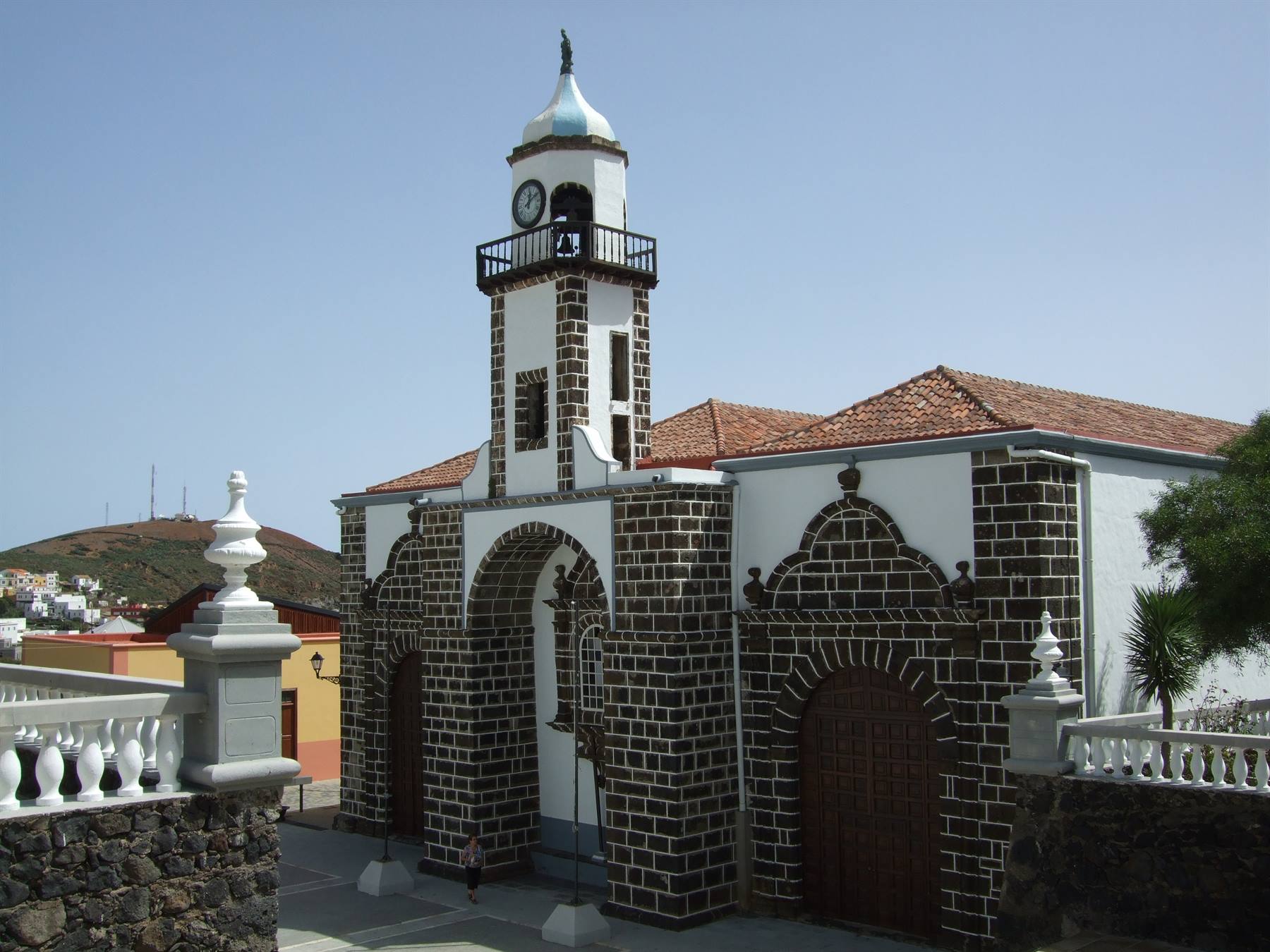
The town appears cheerful and festive, with the market square, the shopping streets and a women's march in progress (sponsored by Reebok). Unfortunately we only find parking at the top of a hill and we already feel bad about having to walk back up, but we set off anyway. The basilica is truly large, compared to the others we've seen so far, and majestic. The simple interior is impeccably kept and some paintings tell the legend of the statue.
We have a wander round the surrounding streets and note that Spanish towns aren't designed to have shade, and today we're hunting for coolness. As we imagined, the car has already turned into an oven, but moving gets the air circulating.
We decide to head south and take the incredibly boring TF82, the main road that winds, full of bends and narrow stretches, through an arid landscape (were it not for the prickly pears) and monotonous (even in the vineyard area), passing through insignificant clusters of houses, with no shade and apparently uninhabited.
We give up and go back to the southern motorway, crossing an immense area of wind turbines and solar parks.
A little further down, the strong wind is appreciated by surfers, who have made El Medano a well-known and popular destination. We stop for a few tapas at La Lata del Gofio (the fish croquettes and the goat's cheese with mojo are excellent) and for an ice cream at Picacho (good). And we treat ourselves to a walk along the ocean front, watching the windsurfers' exploits. The guidebook tells us this is the longest beach in Tenerife: the town end is certainly very crowded, while the stretch towards the newly built districts is almost deserted, but also very windy!
For the last Canarian swim, though, we go back to Los Cristianos, to Playa Las Vistas, which we'd really liked for its size, its light-coloured sand and its calm, warm sea. By the time we arrive it's already late and the sun is less merciless, but we don't skip a swim (the water is cooler today, but still clean and lovely) and a few hours of sunshine.
For dinner we decide to go back to the restaurant from last time (called, with great imagination… Restaurante Las Vistas) for pulpo a la gallega, sardines and grilled cuttlefish: our favourite seafood dishes!
And meanwhile the seafront fills up with tourists strolling and chatting. We join them too, but we prefer to take off our shoes and take a romantic walk on the now-cold sand…
Adios Canarias: tomorrow we go back to Milan, but you've given us some beautiful places and the desire to come back!
El Sabinar, a juniper symbol of the island (El Hierro)
Day 1629 Aug 2010
16 - Il rientro, purtroppo
Departure day, unfortunately. But intense holidays like this one also leave us with the pleasant feeling that they lasted longer…
The temperature is warm and the sun is shining. In the square in front of our hotel there seems to be a market: maybe we can take a look while loading the suitcases into the car.
We have breakfast, take a few photos of the hotel (which is in fact very nice and perfectly kept) and have a wander round the market, but then we have to face the facts: we have to leave.
One very last detour to El Portito, a district of Güimar near the sea, to notice once more how many apartment complexes and new houses are being built to meet the demand from tourists who evidently find it worthwhile to buy a flat around here. It's also true that, alongside the new buildings, we've seen lots of traditional houses abandoned and decaying (simple one- or two-storey cubes, in various colours, with some exposed stone, making them look like Emmental cheese), but also new constructions left half-finished and unfinished projects, perhaps because of the financial and property crisis of recent years. And despite all the "for sale" or "for rent" signs, last night we peeked at the listings for the Los Cristianos area (which specify only the number of rooms and the square metres of the balconies, but not the total) and we didn't find anything under €130k.
And then we're at the airport. We hand back the car after noting the roughly 1900 kilometres driven, and check in without problems.
On board, the last gem for a superstitious lady who refuses to sit in row 13 (strangely present on these planes) and the hostess who asks our neighbour (a young guy with dreadlocks) if he's willing to change seats: general laughter, but the lady is accommodated!!
The flight leaves half an hour late and doesn't manage to make it up en route. With about 30 minutes before the next boarding, we rush to buy a Subway sandwich (after breakfast in Güimar, our only meal of the day) and a book for me (I miscalculated and had already finished the only volume I'd brought).
But then we discover that the sky over Madrid is more congested than we thought (though maybe that's normal), so boarding and take-off are delayed too: another hour of delay that we don't make up in the air.
We arrive at Linate in the dark and with a lovely temperature, almost too cool, but ideal for a good sleep.










0 reader comments