Having finished visiting the Mezquita, we head toward Seville, drop off the car at the Santa Justa Station, and on foot we reach the nearby Occidental hotel, a modern 4-star that occupies a characteristic building. The hotel has all the comforts, including a large pool area that comes to our rescue to escape the hot Andalusian August afternoons. The city's historic center, including the Cathedral, is conveniently reachable in 10 minutes by bus.
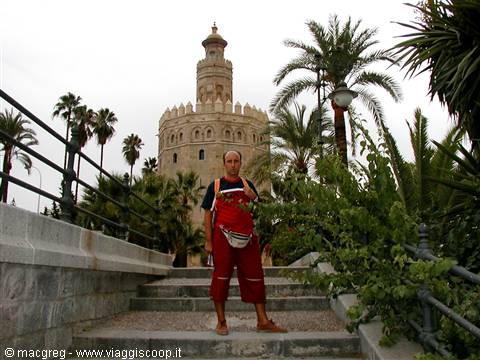
That same evening we reach the long avenue surrounded by tall palms that line the river, where the Moorish Tower of Gold dominates; from here the one-hour cruises along the Guadalquivir depart (14 euros), but the view isn't great, except for the typical dwellings of the Triana quarter that face the river.
For dinner we head to the city's most characteristic quarter: the Barrio de Santa Cruz, where the choice of establishments is endless, between tourist menus, refined restaurants and bars specializing in tapas.
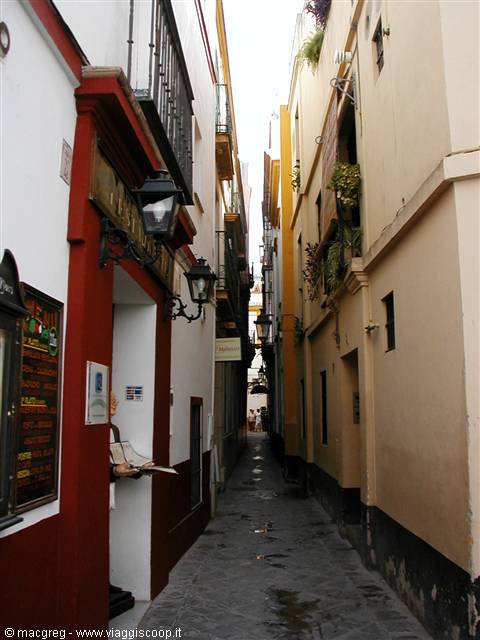
An unreal atmosphere in the Barrio, among small and lively squares, narrow streets where the houses almost touch each other leaving no room for the sky, flowered balconies and characteristic grilles on the windows.
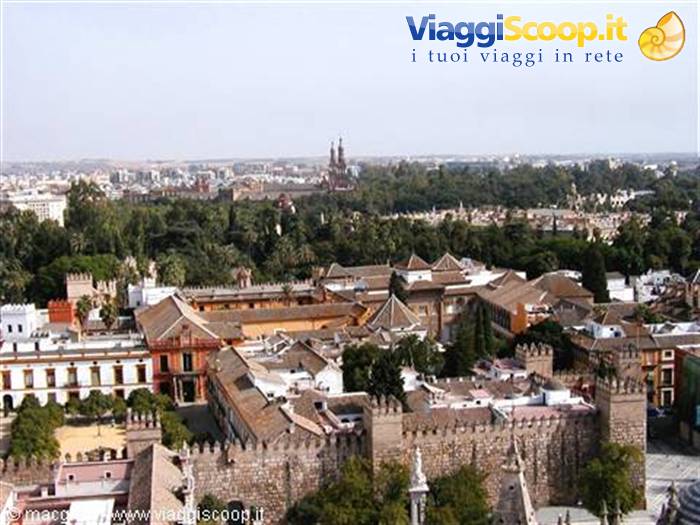
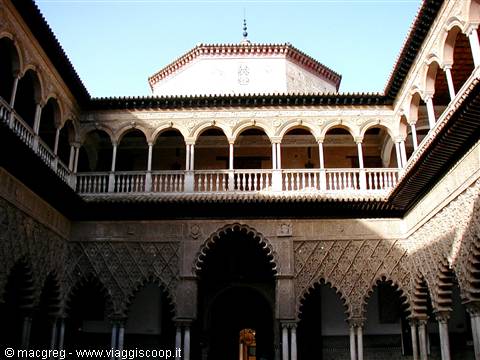
The following morning we're among the first at the entrance of the Reales Alcazares to visit the ancient fortress, later a royal residence, with more tranquility (admission 5 euros).
Inside (which vaguely recalls the Alhambra), the multiple architectural styles that have characterized its history and the dominations of Seville are visible, starting from the Arab one up to the Catholic monarchs. As usual, the most spectacular part is owed to the Arab period, in particular to the palace of Don Pedro, where stuccoes and azulejos finely decorate the halls that open onto delightful patios. Also enchanting are the gardens outside with fountains, palms and pavilions.
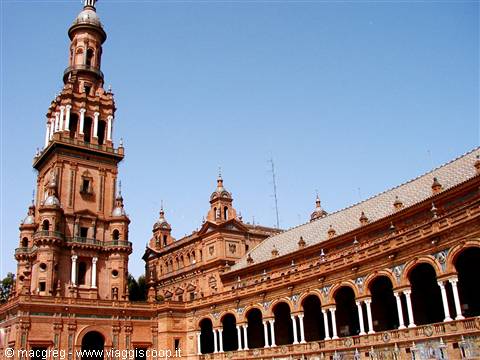
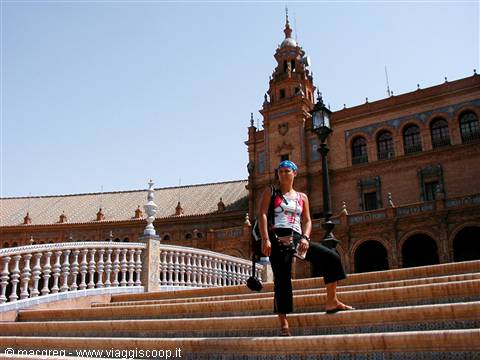
Having finished the visit, we take the bus to Plaza de Espana, one of the most characteristic squares I have ever seen, although it should be remembered that its construction is relatively recent. Two very tall towers delimit an enormous semicircular construction, at whose base the historical events of the Spanish provinces are depicted.
The whole thing is surrounded by artificial canals that should enhance its beauty, but unfortunately at the moment it's under restoration, and water remains a mirage.
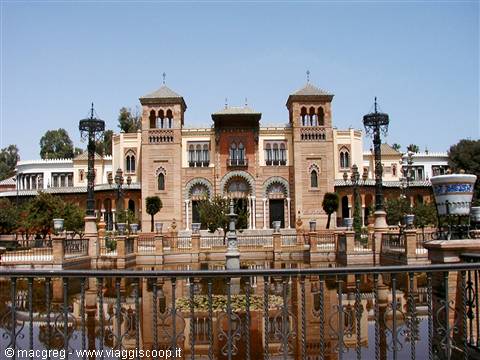
In front of the square stretches the tranquil and relaxing Maria Luisa park, where it's pleasant to take a walk among palms and small lakes, until reaching the typical building that houses the Museum of Fine Arts.
The evening is dedicated to a thrilling and unforgettable flamenco show at the Casa de la Memoria in the Barrio de Santa Cruz.
The following day we dedicate to the remaining part of the city, starting from the Basilica of the Macarena, famous for housing inside it the most venerated Madonna of Seville, who during the April fair is carried in procession through the various streets of the city.
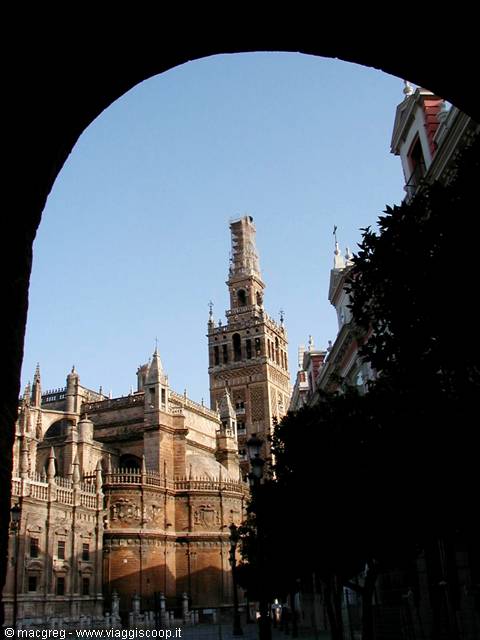
We continue among the central shopping streets, walking along the elegant Calle Sierpes, with a brief stop at the Capilla S. Josè, a triumph of the Baroque, and continuing to Plaza Salvador, the Ayuntamiento (the town hall) and Calle Hernando with its typical buildings, until reaching the most spectacular and important monument, the Cathedral with the Giralda, which we visit on Sunday afternoon (when admission is free, otherwise 8 euros).
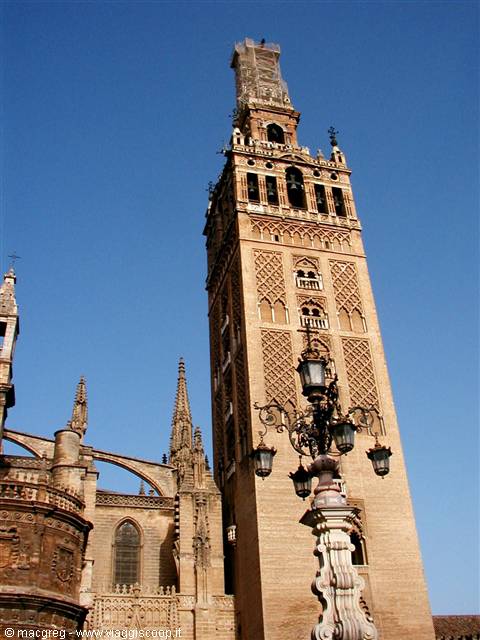
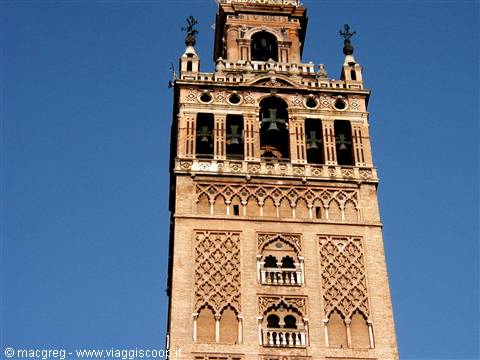
From the Plaza Virgen de los Reyes you get the best view of the complex: in the foreground dominates the Giralda, once a minaret, now a bell tower that is the symbol of Seville, topped by the Giraldillo, a revolving bronze that represents the Faith. Unfortunately for a while it won't turn because it's under restoration.
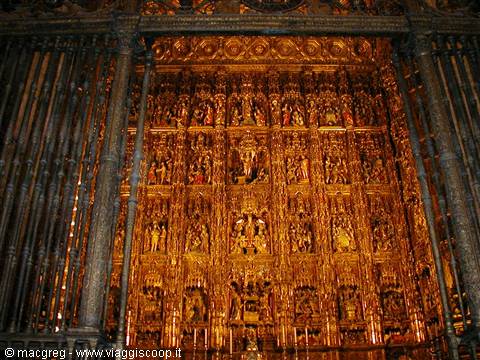
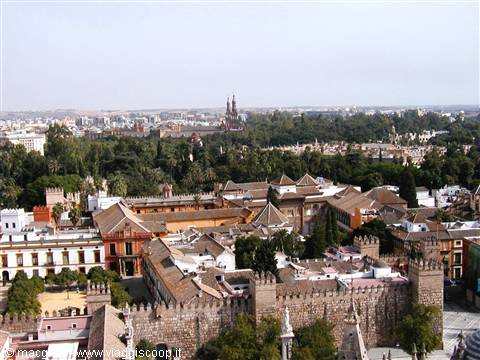
Stepping through the entrance door, you sense you've entered one of the largest cathedrals in Europe, among immense naves and numerous Gothic chapels, where it's impossible not to notice the Capilla Mayor with the Retablo, a cascade of gold with 44 panels depicting biblical scenes. Passing in front of Columbus's Tomb, you access the ramp that allows you to reach the top of the Giralda, where the view over the entire city is magnificent.
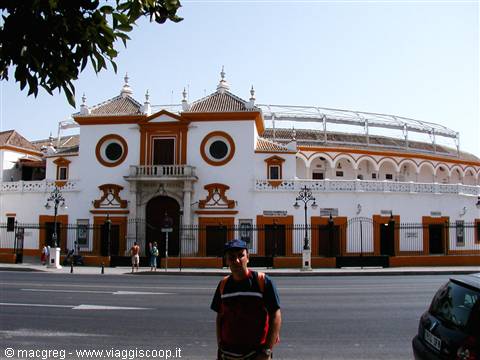
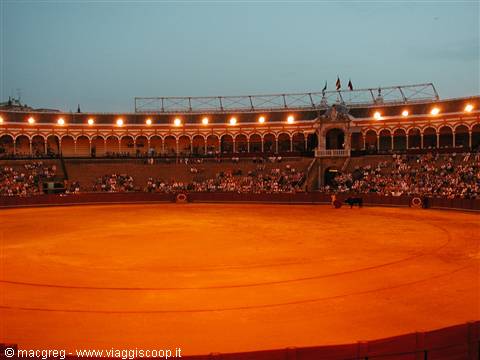
After dinner we move to the Real Maestranza, the glorious arena of Seville, one of the oldest in Spain. Beyond the bullfight (starting in early summer at 9 PM), it's worth visiting both externally for its typical Baroque facade, and internally for the impression it reserves for the visitor.
The bullfight then....is another story!
Useful tips
Six days in Andalusian luxury at the price of Rimini.
Often traveling can cost less than it might appear, and a splendid tour in some of the most characteristic areas of Europe can turn out cheaper than a week of idleness on opulent Italian beaches (I'm not talking about Sardinia, I'm talking about the Romagna riviera...), with the possibility of using, among other things, even more luxurious accommodations.
This is definitely the case with Andalusia. How to do it? I can tell you how I did it.
Ryanair is the only airline that allows you to reach Seville directly from Italy (from Milan-Bergamo Orio al Serio).
For a brief taste of Andalusia, that is visiting exclusively Seville, Granada and Cordoba, 6 days (5 nights) can be enough. We're obviously talking about a quick and superficial visit.
It's enough to book the flight 3-4 months in advance to secure convenient fares, at most 200 euros per couple round trip. You should also plan for basic insurance against the "limits and risks" of low-cost carriers (cancellation, delays, baggage, etc.). Insurance can always be taken out with Ryanair at the time of ticket purchase: price €28 x two people).
To reach the other cities, the most convenient means is to rent a car (alternatively there's an excellent bus service). Price for a 3-day car, with Avis, €133 (you can also save with local companies). Pickup at the airport, drop-off at the station in central Seville.
Free highways between Seville-Granada and Cordoba-Seville. Excellent highway (N432) that crosses the Andalusian countryside with the characteristic pueblos between Granada-Cordoba. Unleaded petrol at just under 1 euro per liter.
Accommodation: I planned one night in Granada, one in Cordoba and three in Seville.
Ryanair lands in Seville in the morning at 9:30, so the whole morning remains for the transfer to Granada and the whole afternoon/evening and following morning to visit the city and the Alhambra.
The following day is dedicated to visiting Cordoba, while the next two days are all for Seville.
Accommodation (tested and recommended): price for a double room including breakfast in a 4-star hotel
(you can save by staying in hostals, which are not hostels but small guesthouses):
Granada: hotel Carmen Sercotel, central, €75.00 (most convenient rate on bookings.net)
Cordoba: hotel Conquistador, very central, €77.00 (most convenient rate on bookings.net)
Seville: hotel Occidental, 1 km from the center, €64.00 (most convenient rate on hotels Ryanair)
For two people: €200 (flight), €28 (insurance), €133 (car), €344 (hotels)
Total calculated quickly: €705 (350 per person), naturally excluding extras. (tour operators for a slightly more complete program ask for about 1,000 euros per person!!!)
Dining out is decidedly cheap if you're content with little: many small restaurants offer decent tourist menus at 9-12 euros, including a varied choice of first courses (gazpacho, paella, various soups), second courses (meats, fish), desserts (ice cream, caramel or fruit), wine or water.
Alternatively you can plan a tasting of 5 tapas (about 10 euros), which in the end becomes a varied and complete meal. They say in Granada they're free; evidently you have to know the right places because I paid for them normally.
Tips:
Naturally July and August are the least suitable months, especially for those who suffer from the heat



0 reader comments