Having left Granada, we take the fast and lightly trafficked N432 highway toward Cordoba, which crosses the typical Andalusian countryside with its characteristic and very white pueblos, little villages that climb up the hills with houses completely coated in white lime.
We arrive in Cordoba in the mid-afternoon. The city is definitely more on a human scale compared to Granada, the center is relatively small and easy to reach and getting your bearings comes naturally.
We reach our hotel, the Conquistador, located right in front of the famous Mezquita. The hotel is an excellent 4-star, with very well-kept service and rooms surrounding a fabulous patio typical of the city.
In the afternoon, which is very hot (over 40 degrees, suffocating), we cross the Juderia, the typical Jewish quarter characterized by picturesque white houses whose beauty is enhanced in spring by flowering balconies. The place is deserted, maybe it's the heat, maybe it's that in August many of its inhabitants go on vacation; only small groups of tourists can be glimpsed. It's pleasant nonetheless to wander among the maze of little alleys and small squares and to peek now and then beyond the gates and railings that open onto fabulous patios, although the area doesn't compare to the Albaicin of Granada.
We visit the synagogue and some typical souvenir shops found in the area of the ancient Arab souk.
Having left the Juderia, we reach the center of modern Cordoba, up to Plaza Tendillas, a large and characteristic square with elegant buildings, pleasant fountains and numerous bars offering tourist menus alongside establishments specializing in tapas.
For dinner, be sure to try the city's most famous specialty, the coda de toro (oxtail), which is found practically on every restaurant menu, from fixed-price ones to the more intimate ones where you dine in luxurious and romantic patios.
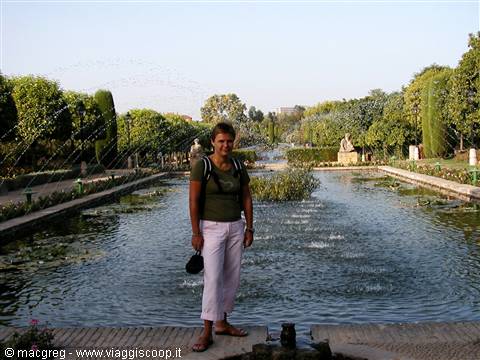
The following morning we head straight to the Alcazar to visit its fabulous and meticulously kept Versailles-style gardens, a small and delightful oasis in the city center. On Fridays admission is free (otherwise 4 euros). The gardens are surrounded by very long fountain-pools with whimsical water features, statues, flowers and green plants, with the imposing fortress construction with its towers as a backdrop.
By 9:30 we're already at the entrance of the Mezquita, and it's a stroke of luck because while mass is underway (until 10:00) entry is permitted and free. Furthermore, once the service is over, you can freely continue visiting the entire mosque-cathedral without having to pay the ticket (8 euros).
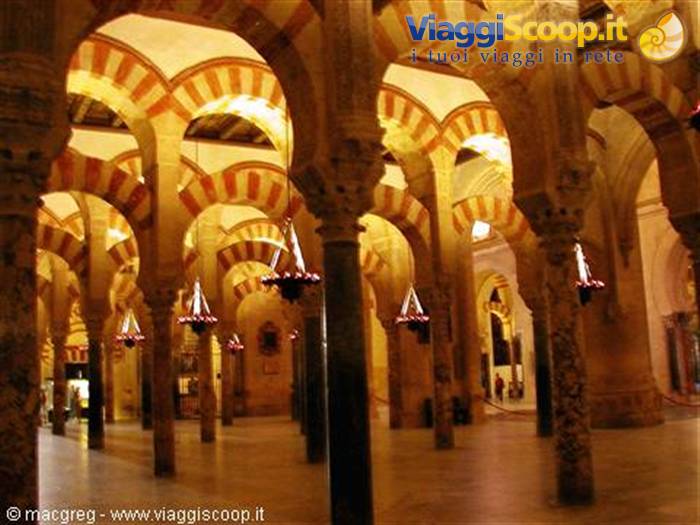
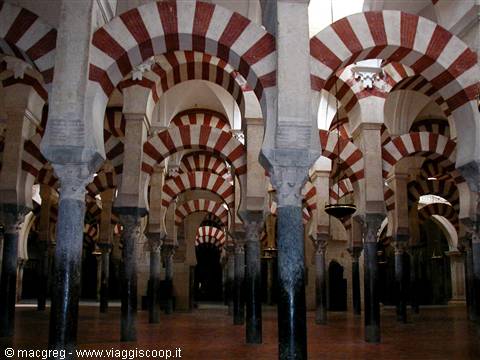
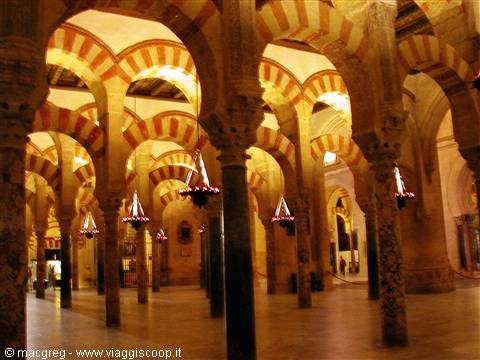
You enter after crossing the Patio de los Naranjos; as soon as you step past the entrance you're left breathless, surrounded by the incredible beauty of 850 granite columns that support two-toned arches creating a magnificent optical effect, which combined with soft light and period candelabras give a touch of absolute atmosphere. It's incredible to lose yourself in the endless labyrinth of the part of the original construction that has remained intact. In fact, the heart of the mosque was destroyed to build the Cathedral with the Capilla Mayor, sacrificing much of what had been built during the period of Moorish rule, including the famous columns that originally numbered 1,300.
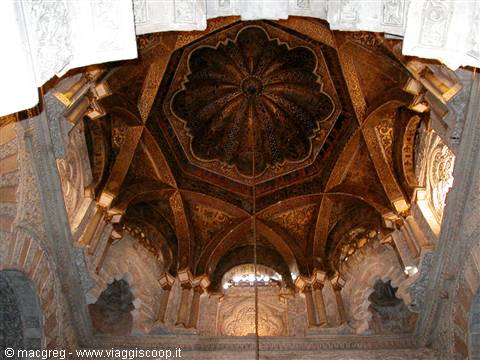
Personally I find the union between the two different styles decidedly fascinating, the Arab one of the mosque and the Christian one of the Cathedral, a union that has allowed the creation of an architecture unique in the world. Very striking is the Mirhab, the most important part of the mosque, a niche in which the Quran was read and prayer was led, with astonishing decorative richness.



0 reader comments