Staying in Madrid without planning a day in Toledo is truly a shame, because the city is absolutely stunning, very intimate and with an endless number of monuments to visit, as well as truly remarkable panoramic views.
The fastest and most convenient way to reach Toledo from the capital is the fast AVE train, which connects the two cities in exactly 30 minutes. A same-day return ticket costs about €14. It's worth booking it online (on Renfe) before departure, to avoid the long queues at the ticket office.
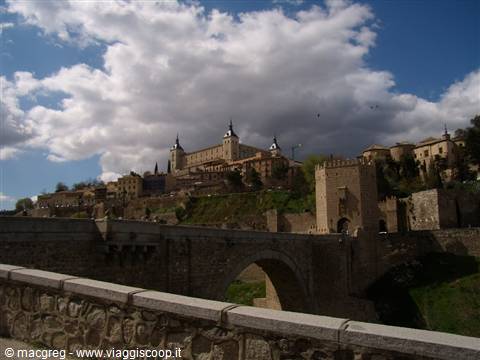
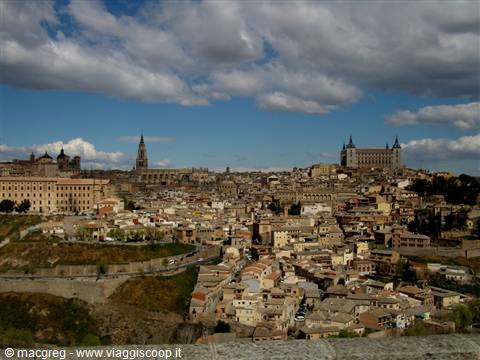
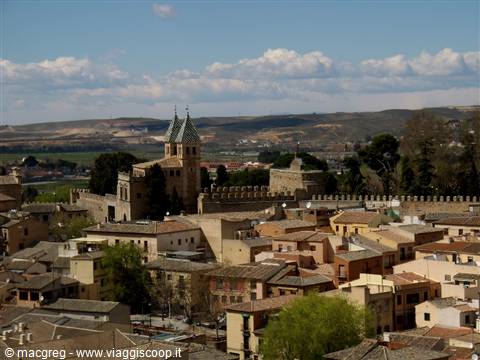
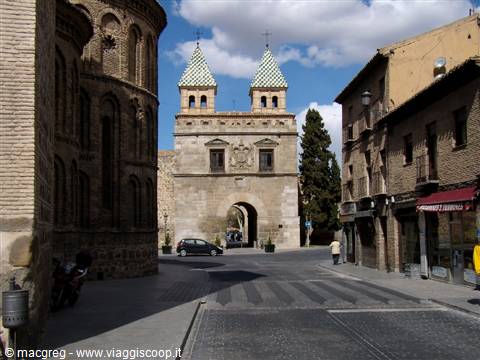
The train station is connected to the centre by a bus service that stops at the Puerta de la Bisagra and the main square Zocodover. Toledo is in a spectacular position on top of a hill surrounded by the Tagus river. Its streets are an up-and-down until the highest point where the Alcazar is located, which houses a museum. For centuries it was the capital of Spain and even today it is the most important religious centre of the region. For a long time different cultures have coexisted in harmony: Christian, Muslim and Jewish, whose quarters are well defined.
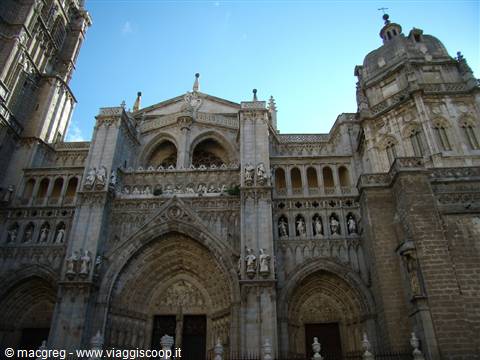
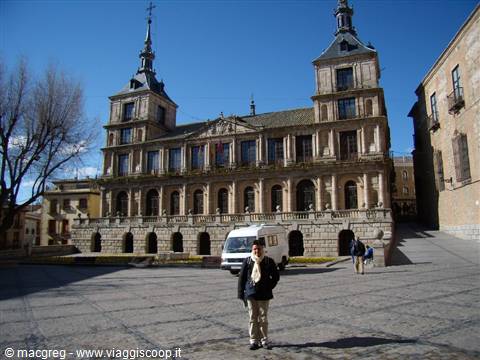
The spring of two days ago has given way to a freezing wind coming from the Arctic, but the warmth of the sun and of the place still manage to warm us. Starting from Plaza Zocodover, where the market was held in Moorish times, you walk along the characteristic and medieval Calle del Commercio, which suddenly opens into the square where the Town Hall and the imposing Cathedral are located.
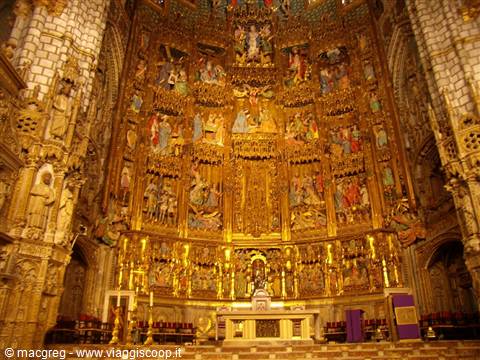
The interior (€6), truly sumptuous, is the spiritual centre of the Spanish church: most striking are the immense and highly decorated altarpiece with the Transparente, a baroque marble altarpiece, the chapter house, with a Mudejar-style ceiling, the choir with its wood inlays and the countless chapels, all valuable, among which the one housing the monstrance, 18 kg of gold and over a hundred of silver, which on the day of Corpus Christi is paraded through the streets of the city.
Continuing along the narrow Calle de la Trinidad and Santo Tome, where a stop is due at the Iglesias de Santo Tome, which houses a masterpiece by El Greco, you enter the Jewish ghetto, where the synagogues are located, among them Santa Maria la Blanca and del Transito and El Greco's house museum. A little further on the Mirador over the Tagus river opens up, and you notice for the first time the city's elevated position compared to the valley below.
We follow Calle Reyes Catolicos to another symbol of Toledo: the monastery of San Juan de los Reyes, unfortunately under restoration on the outside.
The most beautiful views of the city are those offered by the panoramic road beyond the Tagus river. Those who don't have a car can use the Zocotren (€3.50), a little tourist train that departs every hour from the square of the same name, crosses the whole centre to exit the walls at the height of the Puerta de la Bisagra, passes by the Alcantara and San Martin bridges offering breathtaking views of the whole city, from the Cathedral to the Alcazar. The beauty of Toledo also lies in having lunch in its characteristic restaurants: almost all offer various fixed-price menus consisting of two courses, dessert and drinks, starting from 10 euros for the more touristy menus up to 25 euros for the more refined and typical ones.
In the afternoon, from Plaza Zocoder we go down the steep Calle de las Armas (which is best walked on the way back downhill) passing by the Mirador to the Puerta de la Bisagra, where we catch the bus that takes us to the station.
In the evening we have dinner in Madrid at a decent buffet on Calle del Prado (metro Anton Martin), €10 drinks excluded with free access to the buffet (paella, meat and fish).
Escorial
Day 222 Mar 2007
Escorial, Avila
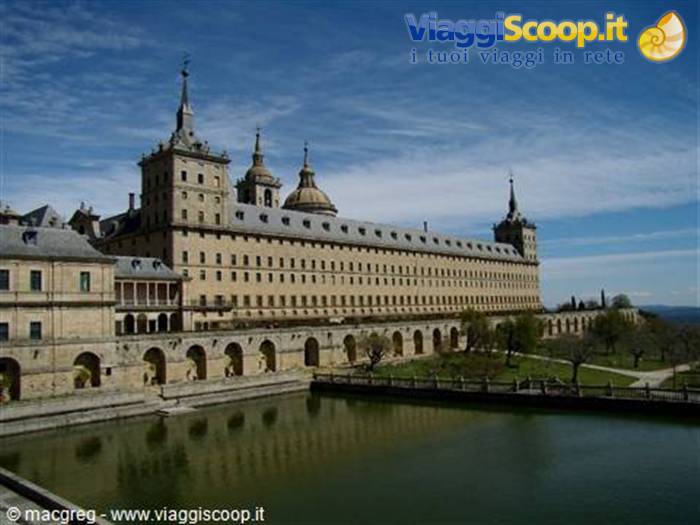
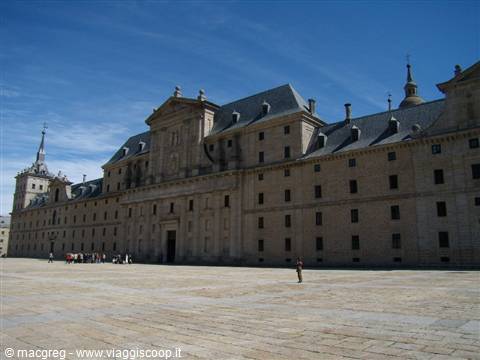
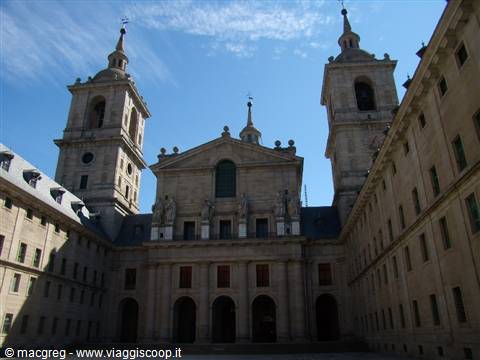
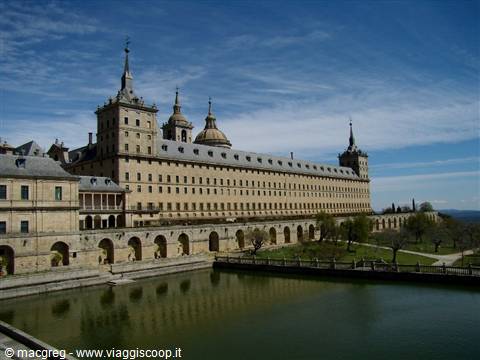
Today we leave Madrid for good. We reach the Avis office at the Melia Castilla Hotel where we pick up the car for the next 3 days (group A €110), which we'll return directly at the airport. Despite rush hour, we leave the capital without encountering much traffic, you just need to set the GPS avoiding the main arteries, such as the very busy Paseo de la Castellana, and in just under an hour we reach San Lorenzo de El Escorial, where we visit the imposing complex (€8) made up of the Basilica, the Royal Palace with the Chapter Rooms and the Monastery (not visitable).
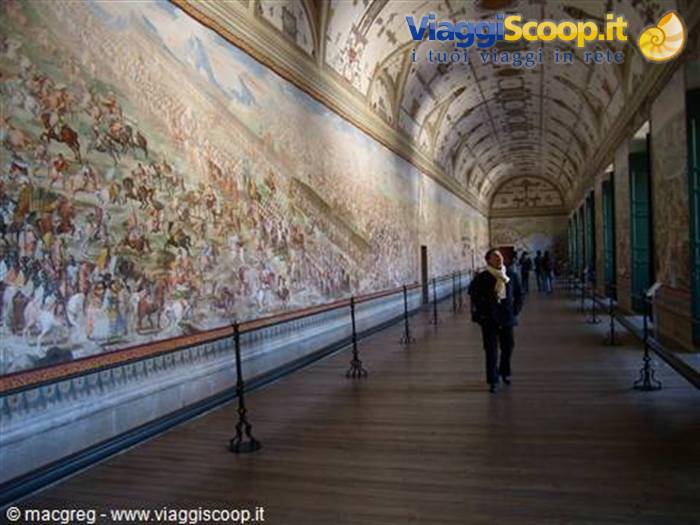
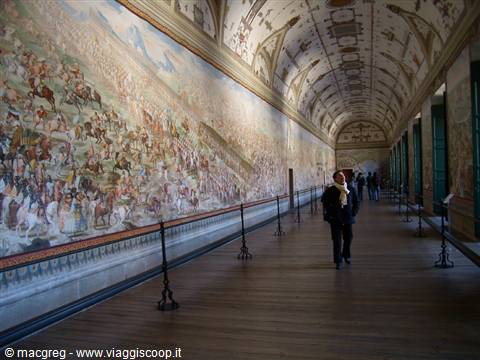
Starting from the ticket office you access, after passing through the museum and the decorated Sala de Batallas, the royal apartments of Philip II, soberly furnished. From here you go down to the solemn Royal Pantheon, a mausoleum where the remains of all the Spanish royals and their consorts are kept.
You then move on to the most elegant part of the complex, the Chapter Rooms, spacious and bright, with richly decorated ceilings, which house numerous works of art by El Greco, Goya, Titian.
At the end you move on to visiting the grandiose Basilica (the only building with free entry), where the immense dome is striking and the Patio de Los Reyes in front allows you to admire the splendid facade.
The best overview of the immensity of the complex and the gardens is from the C 505 state road that leads to Avila. The state road, after an initial short winding stretch, flows quickly through the mountains and it takes less than an hour to cover the 60 km separating the two towns.
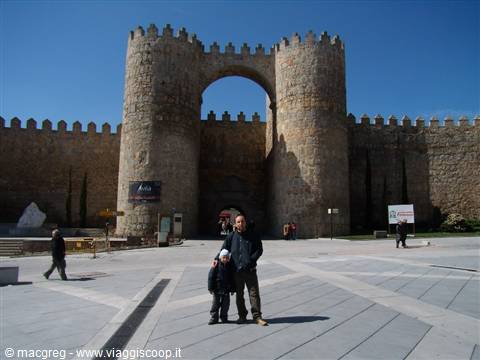
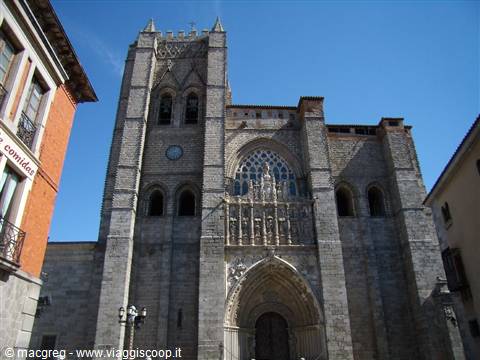
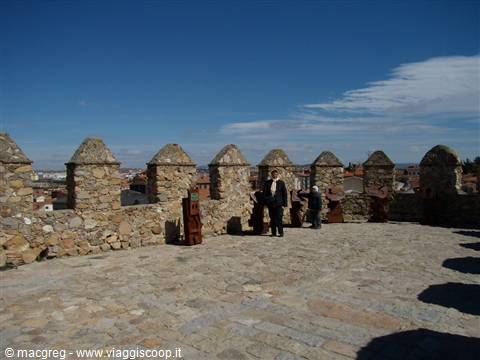
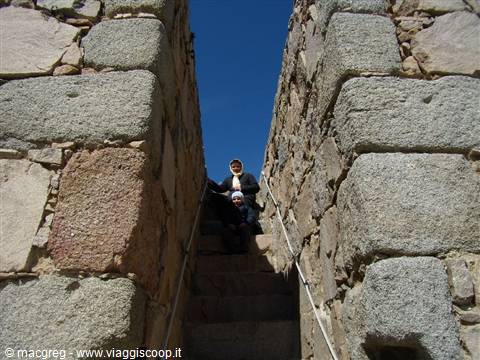
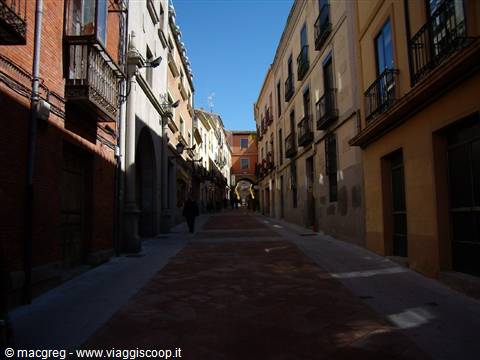
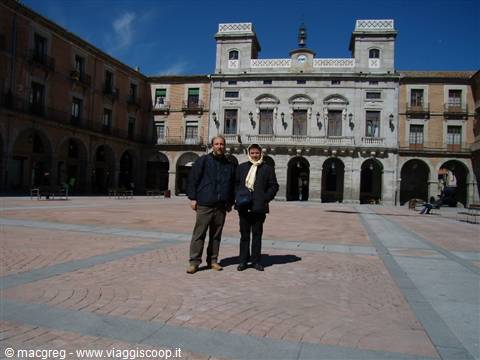
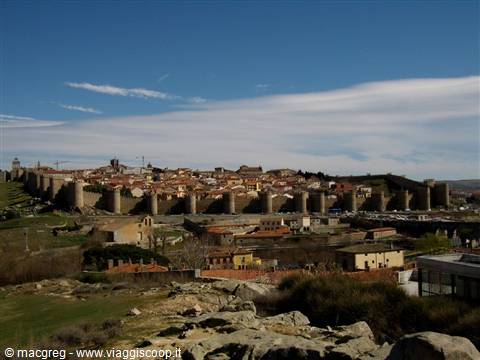
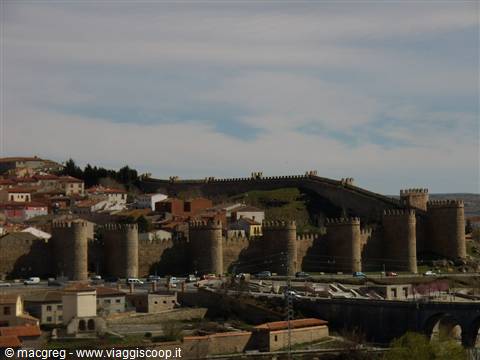
Avila is truly splendid: it stands at 1,100 metres above sea level, entirely surrounded by perfectly preserved medieval walls that follow the perimeter of the historic centre for over 2 km, with nine entrance gates and over 80 towers. We enter the city through the solemn Puerta de Vincente and follow the walls to the beautiful Cathedral. From here you can access a long stretch of the walls (€4.50) and climb various towers, until you reach the opposite side of the city. We cross the centre passing by the Convent of Santa Teresa de Avila, a native of the place, and the Town Hall square. In its restaurants you can taste the delicacies mainly related to roasts and game. Unfortunately, snack time isn't really the right time to test their quality.
Leaving the city, a stop at Los Cuatro Postes, on the road to Salamanca, is unmissable: from here you get a magnificent view of the centre and all the walls.
We take the A51 motorway and then the A61 that leads to Segovia, until we reach our Hotel, Tryp Comendador, about 25 km from the provincial capital in the locality El Espinar - Los Angeles de los Rafael (not even marked on the maps). The hotel, 3 stars but deserving at least 4, is really charming. In mountain style, with a fireplace area and rustic furniture, it has a nice fitness centre with a heated indoor pool and steaming hot tub. Nice and spacious triple room booked on booking.com (€80). The price includes breakfast, one of the tastiest I've ever had, with all the specialities of Castilian cured meats (jamon iberico). The hotel has a rather expensive restaurant, but outside you can find two, one Argentine and one with Spanish specialities and a few Italian dishes. The latter has an excellent quality-price ratio (dinner for 3 at €40 with a jarra of Sangria).
The only particular thing, constant in this area, is that the kitchen opens at 20:45!!!
Segovia, Alcazar
Day 323 Mar 2007
Segovia
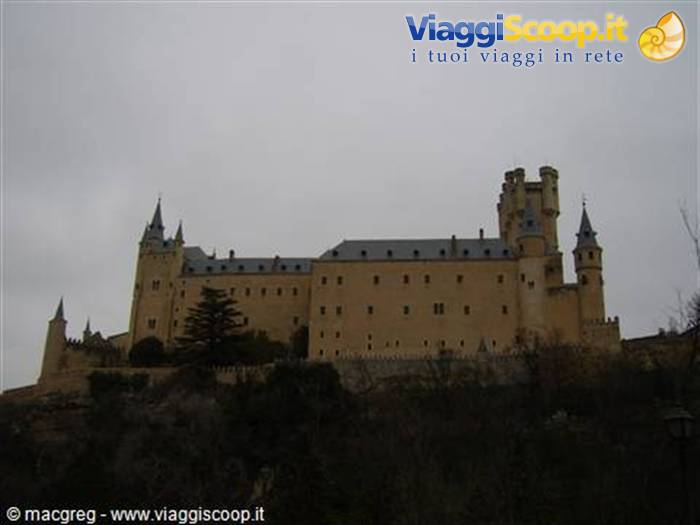
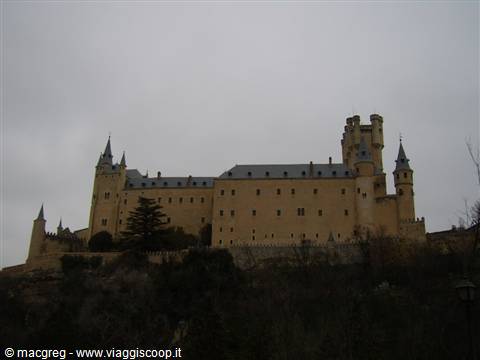
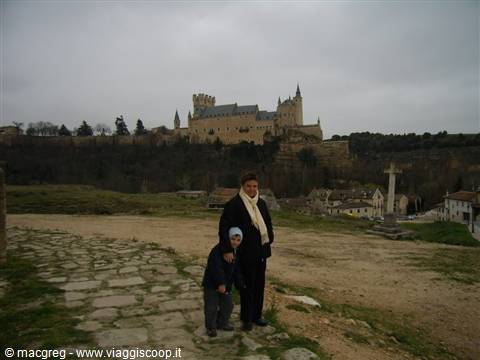
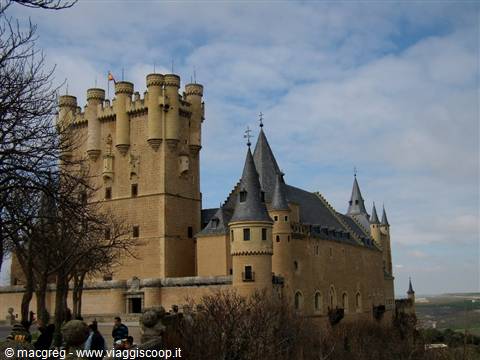
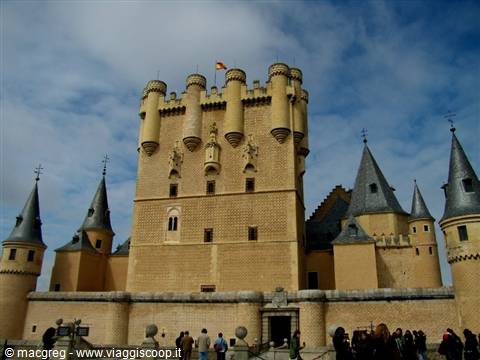
The last stop of our trip is the city of Segovia, perhaps the most beautiful in all of Castile. It's certainly the city in the most spectacular position in all of Spain, on top of a rocky spur dominated by the famous Alcazar, a splendid castle that Walt Disney wanted to imitate to create the famous Cinderella castle.
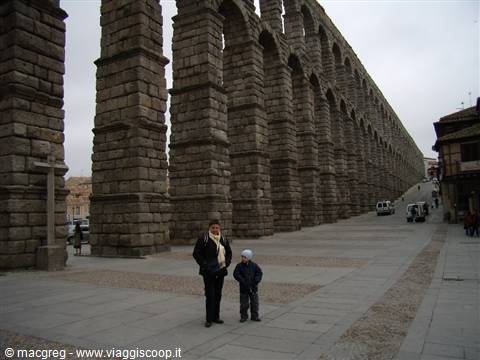
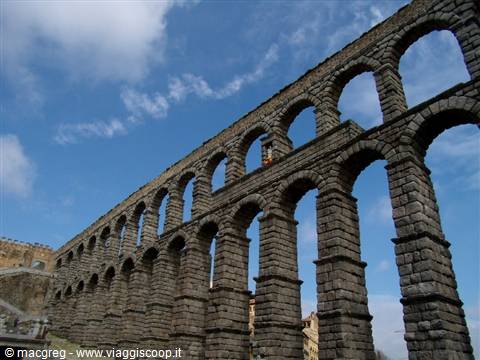
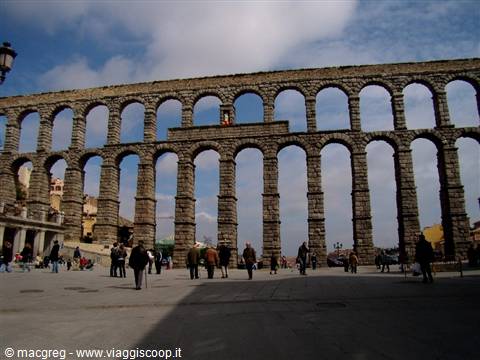
We start from the square where the majestic Roman aqueduct is located, entirely built without using any kind of mortar or cement, up to 29 metres high for a total length of almost 800 metres, it carried water from a distance of 15 km.
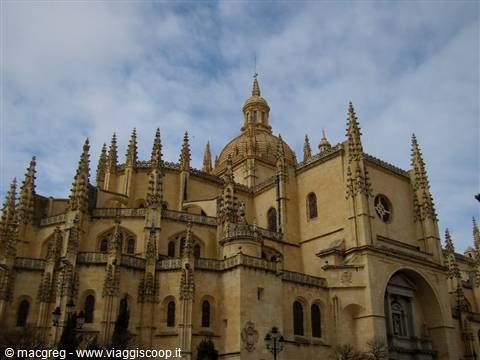
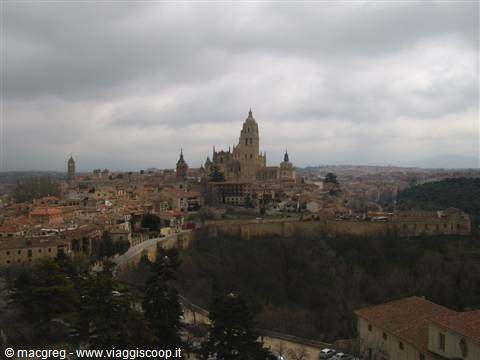
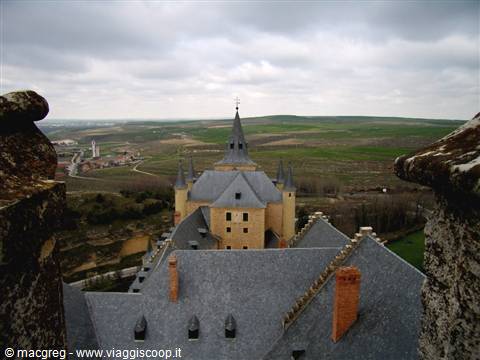
We walk along the characteristic Calle Colon passing by the bizarre house with granite spikes of Los Picos and the Church of San Martin, a temple rich in arches and capitals. You arrive at the stupendous Plaza Major, where the masterpiece of the Gothic Cathedral stands out, with its spires rising into the sky, the dome and the majestic bell tower. You continue uphill to the edge of the city, where the Alcazar dominates, characterised externally by the sloping roof, the numerous turrets, the battlements and the deep moat: truly a fairytale castle.
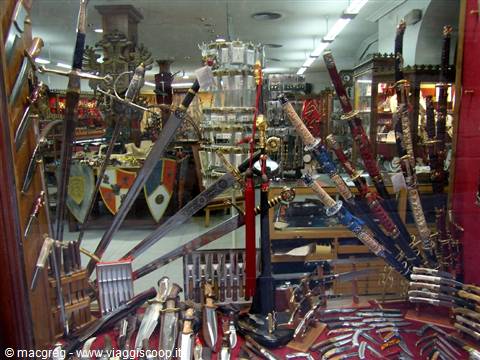
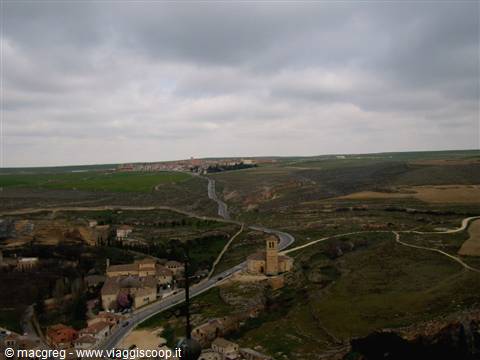
Inside (€6 including the climb to the tower), you can visit the museum with the weapons and the luxurious apartments, including the throne room and the Gothic-style King's room, and walk the strenuous climb up the narrow spiral staircase that leads to the main tower, where you get a splendid view of the whole city and the endless surrounding countryside.
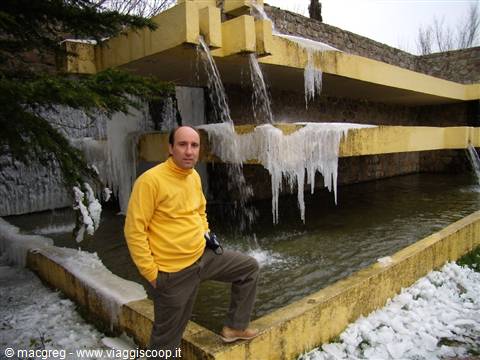
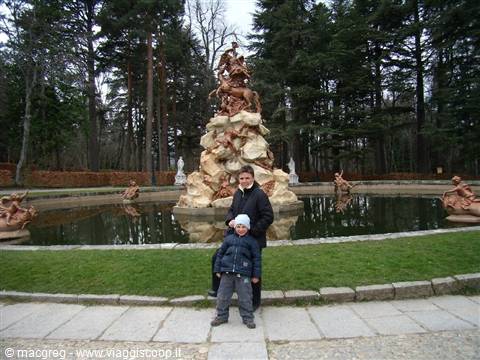
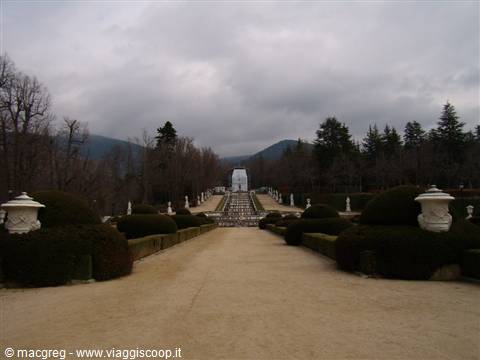
A few km from Segovia you reach La Granja de San Ildefonso, a sumptuous royal palace built on the slopes of the Sierra de Guadarrama, famous in particular for its endless gardens (entry to the gardens alone is free), where there are 26 monumental fountains, somewhat under restoration, and which are turned on only during certain afternoons in summer.
All that's left is to return to the airport to drop off the car and wait for the flight that will take us home.
So ends this adventure of ours in Spain, which we bid farewell to with the promise of returning as soon as possible, perhaps to visit one of its most intriguing areas, the northern part from Asturias to Santiago de Compostela, and thus savour again the atmosphere and the surprising beauties of this unmistakable country








0 reader comments