The story
A land rich in charm and quite evocative, Andalusia encloses within itself the influence of Christianity together with the impact of Moorish art. The cultural and architectural wealth of Andalusia, with its palaces, flamenco, art and literature, is immense. The buildings that survived Christianity are few, but those that remain (the Mezquita in Córdoba, the Alhambra in Granada and the Giralda in Seville) are among the most beautiful in the world. Andalusia wouldn't be itself without flamenco. This form of music and dance originating in the region began to be played by the gitanos at the end of the 18th century and expresses their condition of marginalisation. Andalusia has inspired many composers (Manuel de Falla, born in Cádiz, Albéniz and Granados) and artists (Zurbarán, Velázquez, Goya and Picasso).
MUST-SEE:
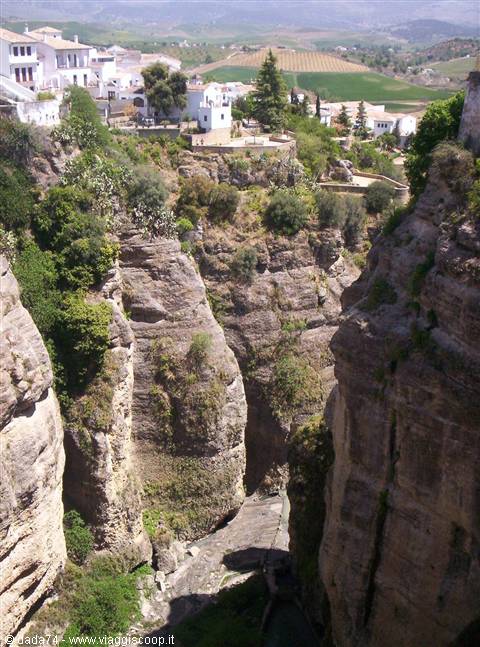
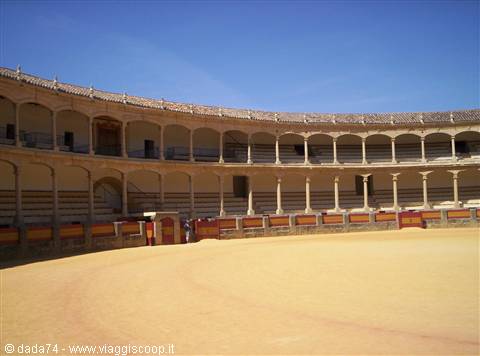
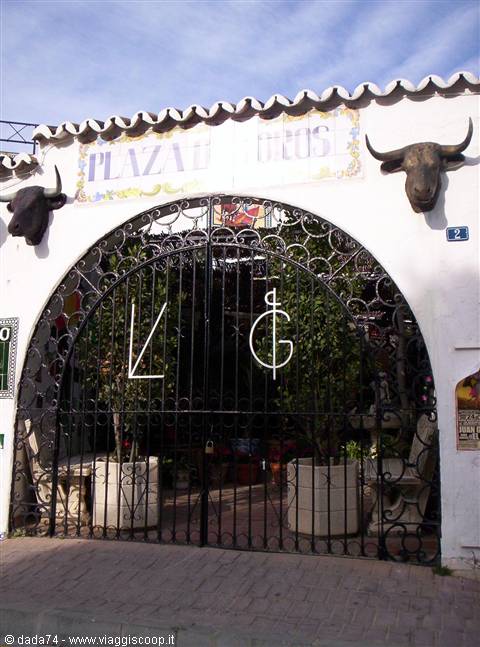
RONDA: a splendid little town literally split in two by the gorge known as "El Tajo". Beautiful too is the Plaza de Toros, famous for being the only one in all of Spain to have a stone parapet instead of a wooden one.
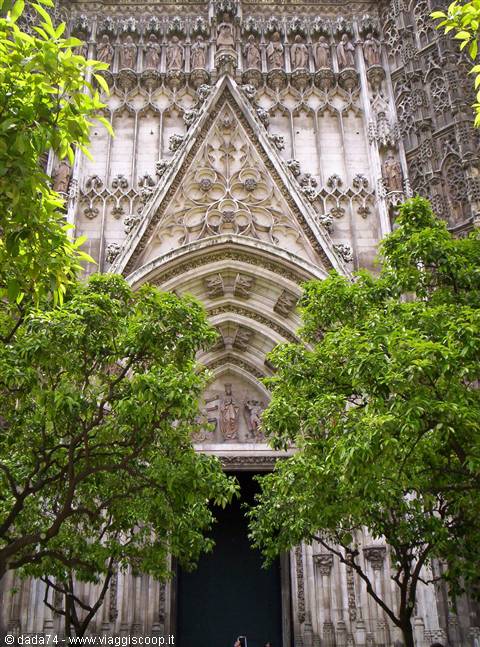
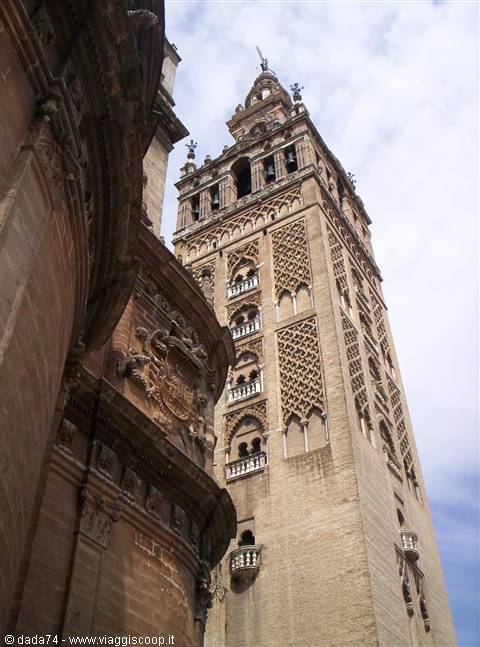
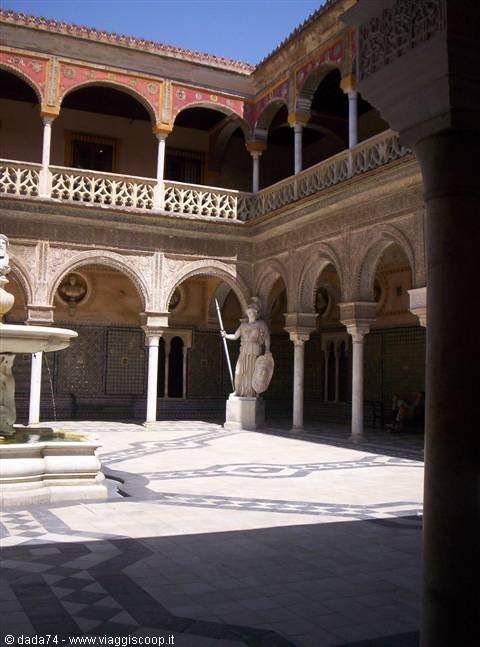
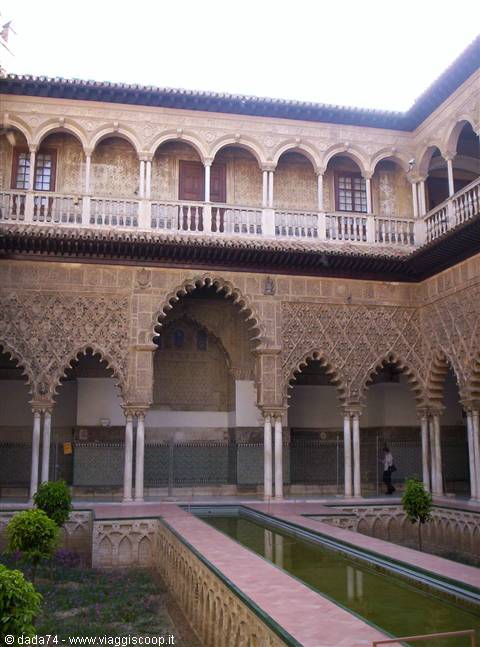
SEVILLE: Land of flamenco and bullfighting, rich in Islamic monuments and beautiful gardens, Seville is the largest city in Andalusia: a historic and artistic masterpiece inhabited by people who love to have fun and where it's very hard to get bored. An absolute must is the vast cathedral, built on the site where the great Almohad mosque once stood, and the famous Giralda, the ancient brick minaret 90 m high, on which there is a bronze weathervane representing Faith, the symbol of the city. Recently the original, worn by time, has been replaced by a copy. South of the cathedral stands the Alcázar palace, residence of many kings of Spain, which houses the Museo de Bellas Artes, where paintings from Spain's golden age are exhibited.
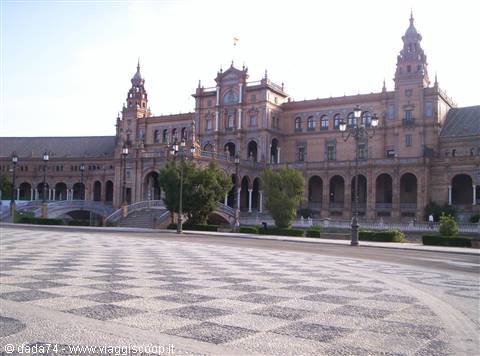
If you prefer, you can let yourself be seduced by the old alleyways of the medieval Jewish quarter, the Barrio de Santa Cruz, once inhabited by gitanos and now completely renovated, where trendy bars and cafés line up. Not to be missed: the Macarena district; the Archive of the Indies, which preserves documents from the New World; the Tower of Gold, so called because its façades were once covered in golden azulejos that reflected the light; Maria Luisa Park; the Plaza de España, built for the 1929 Ibero-American Exposition; the Cartuja (the city's technology hub) and the Isla Mágica theme park.
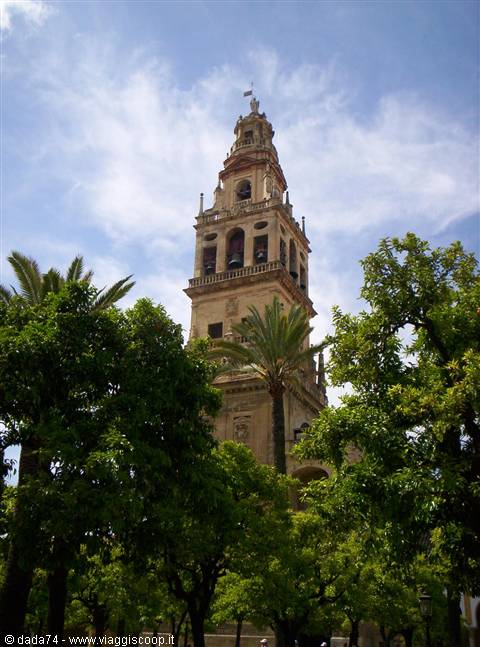
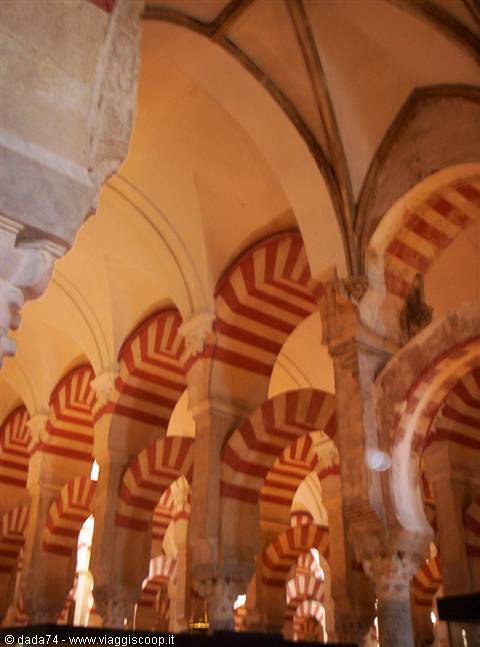
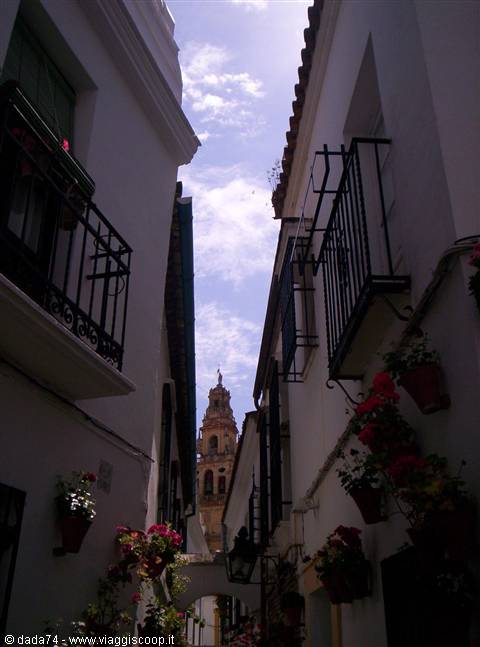
CORDOBA: Bathed by the Guadalquivir river, the province of Córdoba is the northernmost of all the Andalusian provinces and is about 166 km from Granada. The Great Mosque is the most famous monument of the Muslim era. Work began in 780 under Abd Al Rahman I and was later enlarged several times. The Mosque is characterised by the presence of simple columns that form the building's sole supporting base. What strikes you particularly in the Mezquita is the fact that the ceilings, reaching 13 metres, were higher than any column could be. The problem was solved by placing one order of arches above another and resting a column or pier on top of another column. In the Mezquita there were 850 columns and perhaps more, while today, after the desecration carried out inside the Mosque to build a Christian altar there, about half remain.
The columns follow one another in ordered rows like trees in a plantation. Round arches predominate and the pointed arch is missing, though elsewhere it is typical of Islamic architecture. The extraordinary beauty of this building lies precisely in its measured relationship of dimensions and proportions.
Not to be missed: • The Alcázar of the Catholic Monarchs, a short distance from the Mosque, was commissioned in 1328. It appears as a square fortress with towers at the corners • The synagogue (the only one in Andalusia), located in the Judería district
GRANADA: Capital of the province of the same name in Andalusia, Granada stands at the foot of the Sierra Nevada along the Darro river.
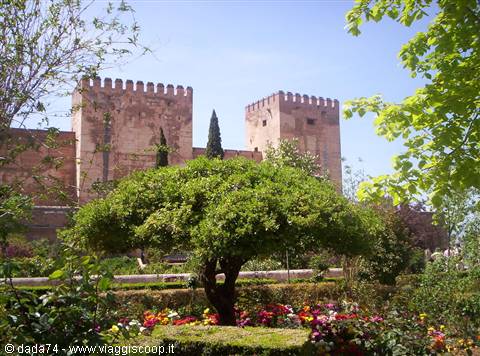
The Alhambra and the Generalife make up the route of the walk that goes from the city centre towards the red hill, where the most beautiful complex of Hispano-Arab art of Nasrid culture is found, consisting of a fortified complex, once a royal residence, set on the main height that dominates the city. (visits from 9am to 6pm (winter) or 7pm (summer)). The Generalife, erected in the 13th century as the summer residence of the Arab rulers, is famous above all for its enchanted gardens.
For the Alhambra you have to climb along the Cuesta de Gomérez; the Gate of the Pomegranates, built in 1536, has three arches. Once through it, you reach the poplar grove of the Alhambra, where three steep paths begin. Following the one on the right you come to the Vermilion Towers, the oldest fortress in Granada. The centre path leads to the Generalife and the left one to a beautiful fountain called the Pilar de Carlos V. Beside the Pilar is the Gate of Justice, the main entrance to the Alhambra on the southern side. Once through the gate, the Palace of Charles V stands, a massive building in the soberest Renaissance style. It houses the Museum of the Alhambra and the Fine Arts Museum. The Wine Gate is the one that gave access to the upper part of the Alhambra; the pointed arch of its main façade faces the Alcazaba, or Citadel.
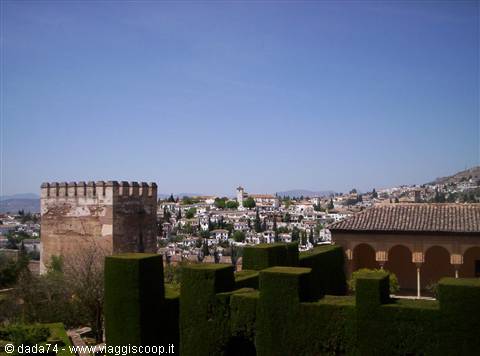
The Alcazaba is, together with the Vermilion Towers, the oldest construction of the Alhambra complex. Here several towers stand, the most famous being the Torre de la Vela, which measures 16 metres on a side and 25 metres in height, whose bells indicated the irrigation shifts of the fertile plain around it.
The Generalife, summer residence of the Nasrid rulers, dates back to the 14th century, surrounded by terraced gardens, water jets and fountains. Walking along the Cypress and Oleander walks you reach the Palace, a building made up of two pavilions joined by a gallery and some of the rooms. At the centre is the Patio de la Acequia, or courtyard of the channel.
The walk that connects the Sacromonte and the Albayzín starts in the Plaza Nueva and continues through Plaza Santa Ana, where the church of the same name stands, a building of Mudéjar influence. The Darro river flows here parallel to the street and the buildings on the right sink along its bank.
To go up towards the Sacromonte and the Albayzín you have to take the Cuesta del Chapiz. On its right stands the Palace of the Córdoba. Nearby are the Casas del Chapiz, a working-class quarter traditionally inhabited by gitanos. They are houses dug into the mountain and in some of these caves dance and song performances known as 'zambras' take place.
MINOR PLACES OF INTEREST
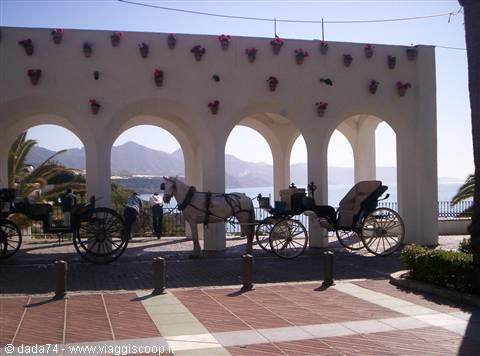
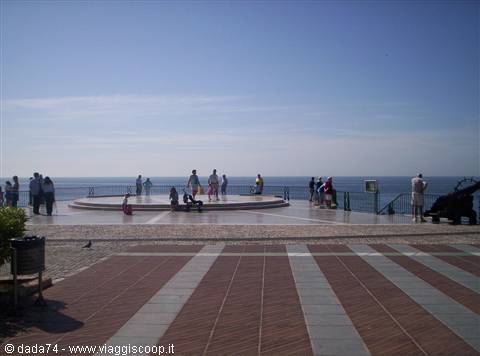
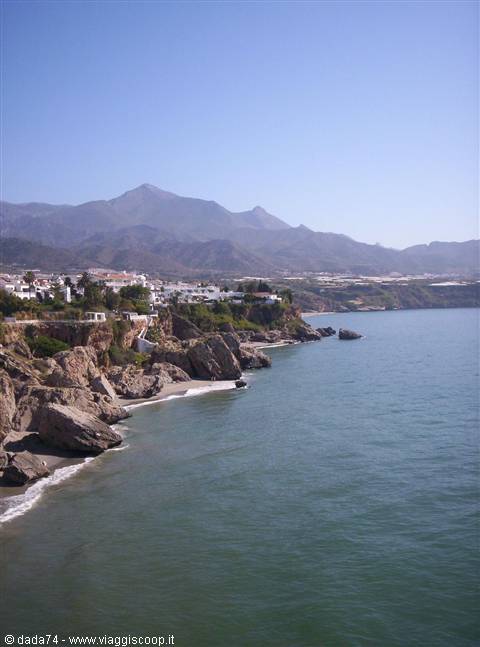
PUERTO BANÚS: known as the "Montecarlo" of Andalusia. Full of boutiques and trendy venues. NERJA: a splendid little town famous for the "Balcón de Europa", from which you enjoy fabulous panoramic views. MIJAS: a classic pueblo blanco in a timeless space.
Visiting this region requires at least two weeks' stay and hiring a car. To visit the ALHAMBRA it's advisable to book tickets well in advance, since entry is allowed in groups and at well-defined times. Extremely strict checks.
The journey's photographs
26 photographs · click to open them full screen







0 reader comments