The story
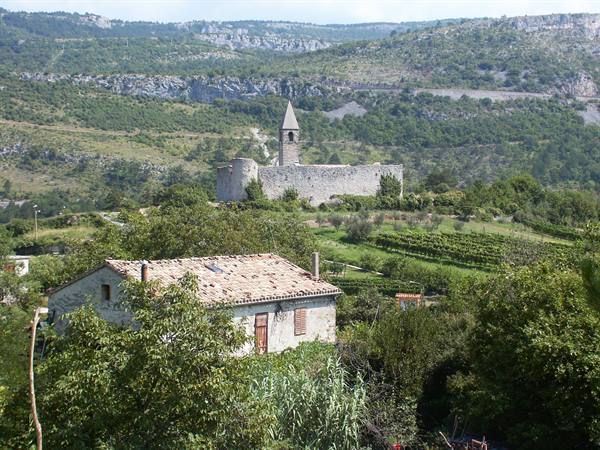
A couple of friends of ours had described the church of Hrastovlje to us as a masterpiece to visit, both for being fortified and for having its interior walls completely frescoed. Taking the opportunity of being at Santa Lucia as guests of our Slovenian friends, on 26 August 2010 we went with them to discover this marvel of medieval art. It is located at Hrastovlje, Cristoglie for us, the ancient Cristogliano. The road that leads to Hrastovlje, if you arrive from the Muggia - Capodistria side, is the state road 409 that goes to Ljubljana. Having passed Dekani and Rizana, you turn right taking the 208 for Kubed and shortly before this village you find the sign for Hrastovlje. You find yourself in an environment immersed in the greenery of the karst territory, interesting also on a geological level for the conformation of the rocky wall that forms the valley.
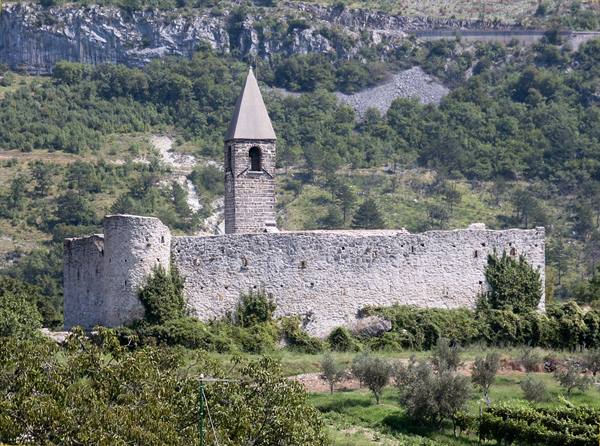
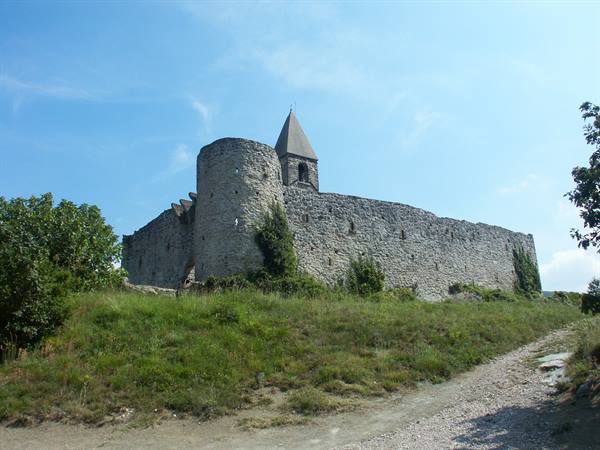
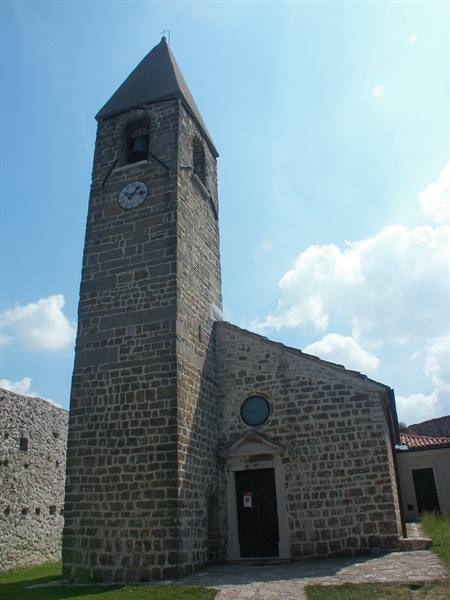
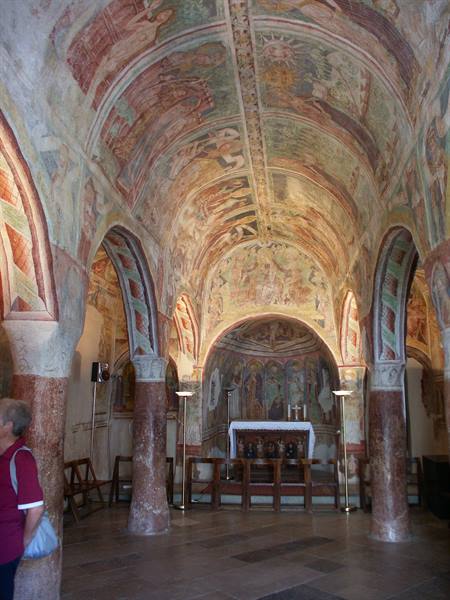
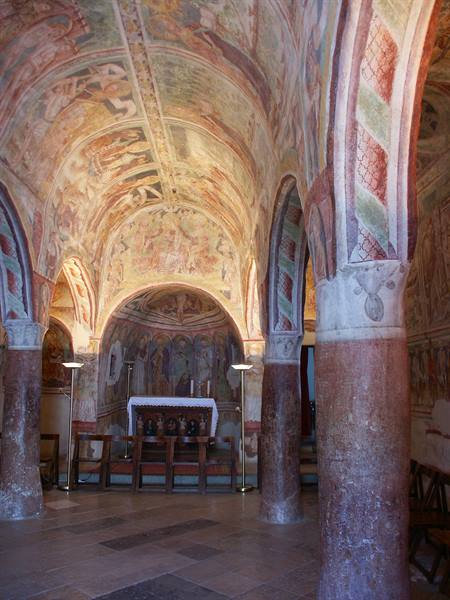
Arriving, the perimeter walls in stone and the bell tower that emerges from them immediately present themselves to the eye. The walls date back to the 16th century and were erected as a defence against the Turkish invasions of the time. Two towers at the opposite corners formed the guard over the surrounding territory in order to control the approach of the feared Turks, given the fact that these also used this valley to aim towards Austria. The church is in a Romanesque-Gothic style, erected on a previous construction of the 13th century and was consecrated in 1475 dedicating it to the Holy Trinity. The marvel of this small sacred building are its interior walls totally frescoed and that bear different scenes.
The most famous is the "Dance of Death" or "Danse Macabre", painted on the south side to express the equality of all men before death, an inescapable event that does justice to all equally, all 11 characters who represent the social classes of the time, each accompanied by a skeleton, will end up in the same tomb where a skeleton seated on a chair holds its lid raised. Other scenes represent the life of Jesus, the Passion, the Nativity, the Creation, the cycle of Adam and Eve up to the killing of Abel by Cain. Interesting are the ceiling frescoes that illustrate the months of the year and the work that the Istrian farmer did at that time. A jewel of the Middle Ages enclosed in the small casket that is the church of the Holy Trinity at Hrastovlje.
The entrance ticket costs a few euros and, by asking whoever will give you the tickets, it is possible to hear the explanation of the frescoes in Italian, have them illuminated and pointed out with a laser pointer. If you arrive close to lunchtime, I warmly recommend the local trattoria Costjlna Svab, where, in its cosy interior, you can taste the specialities of the place among which, not to be missed, the Bobici soup, a very tasty soup with beans, barley, fresh corn and pieces of ham. For food lovers the savoury Istrian ham and, if there is any and you like it, the truffle, all washed down with the excellent local wines. Happy travels. Wanda & Giancarlo
The journey's photographs
9 photographs · click to open them full screen



0 reader comments