il Maramures e la Bucovina
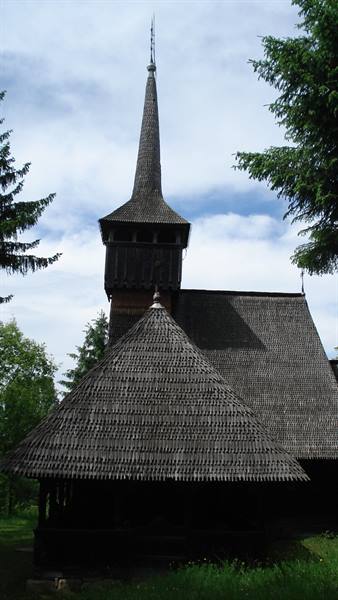
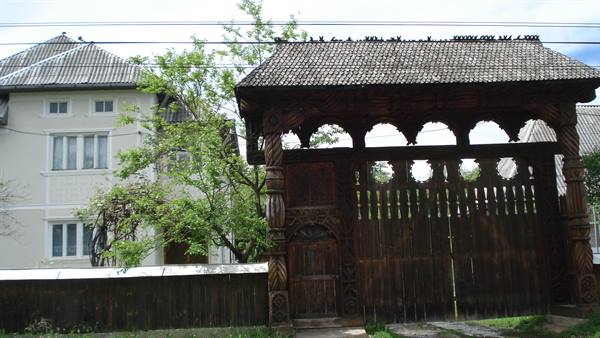
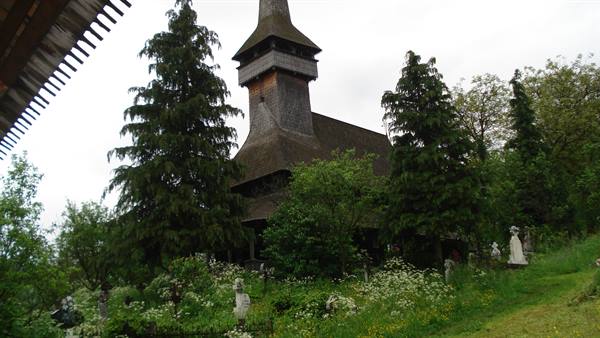
We enjoyed for only two days the beautiful region of MARAMURES, with its two valleys IZA and MARA, all its countless wooden churches (but seeing a couple is enough), admired its carved wooden gates in so many small towns: Voda, Ieud, Budesti, Calinesti, Surdesti, etc..
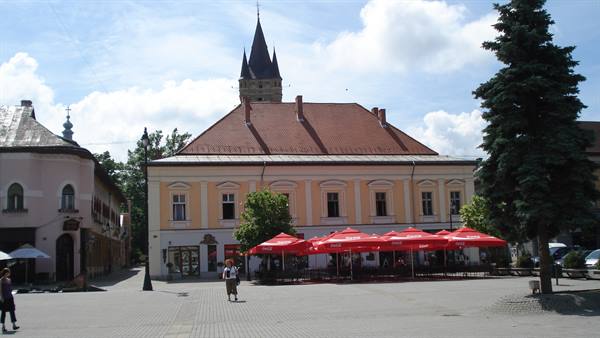
the town on the border with Ukraine, SIGHETU MARMATIEI, which has a beautiful elongated square with various flowered gardens, a synagogue and a Jewish cemetery and a sad prison where Ceausescu held thousands of political prisoners who today are remembered in the prison museum.
The merry cemetery of SAPANTA, that is, a cemetery created by a likeable local who in the 1930s decided to make passing away merrier by preparing for each deceased a nice witty account of their life with plaques and iron crosses, predominantly blue. In this same town there's also the wooden church with the tallest bell tower in Europe.
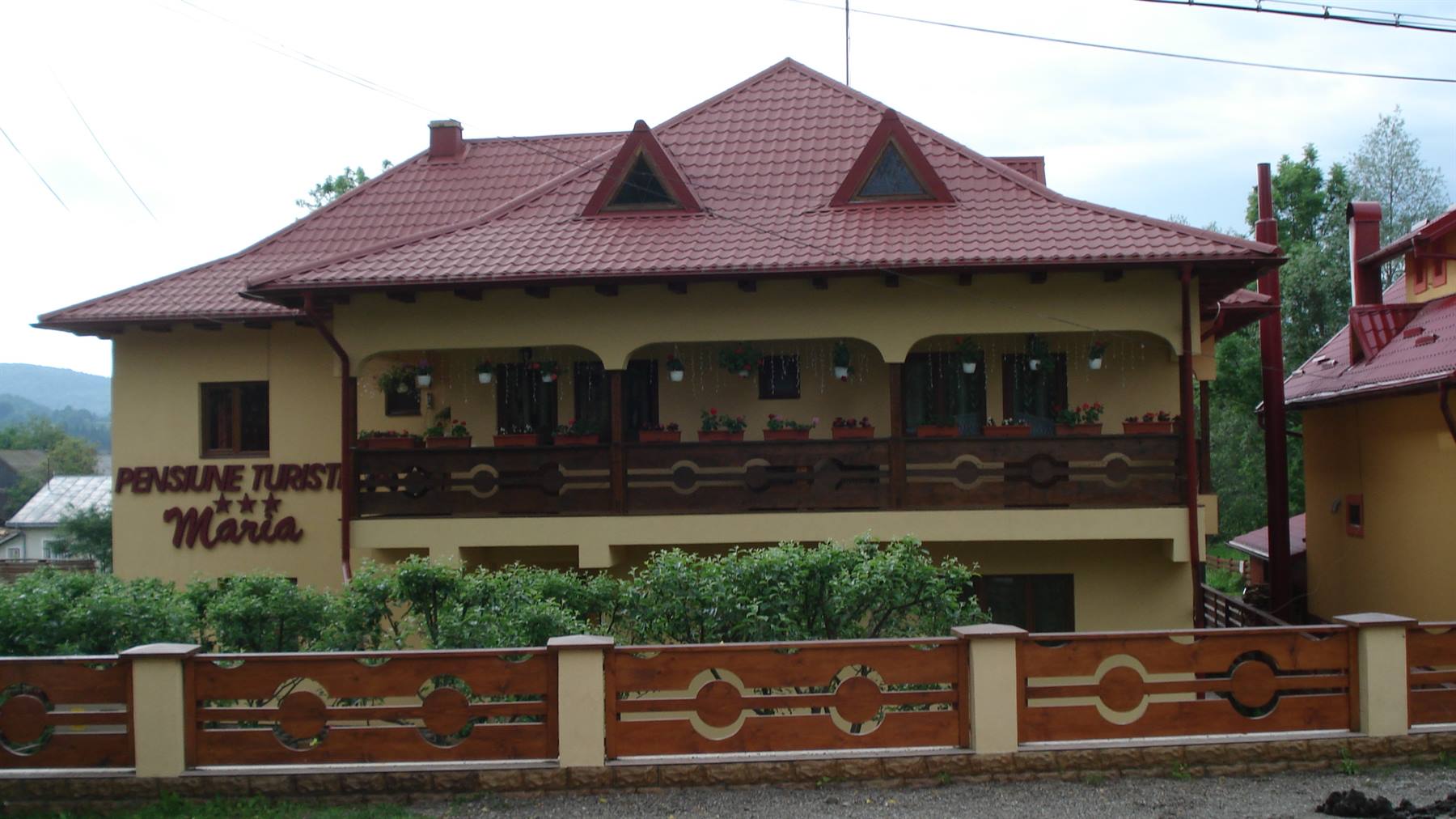
We stayed in two family-run guesthouses in Sapanta, our first night, welcomed warmly by the family and by the Italian host, a man from Belluno in the Veneto who has lived in the area for some years and works for a contract with our electricity company Enel, and in MOISIEI the second night, in the cheapest and craziest guesthouse of our Romanian trip.
In fact, that house at the edge of the road leading to the Prislop pass has rooms inside where kitsch reigns supreme, with brightly coloured furnishings, posters, embroidered blankets, rugs, dolls, etc.. while in the courtyard in front, alongside a rushing stream-river, there's a small vegetable garden and campsite and also a series of cellars where the likeable owner produces hectolitres of palinca, which he keeps drinking to excess, generously offering it to customers and guest friends, plus blueberry grappa and dishes of sausages and various vegetables.
I spent a pleasant evening in his company, along with his son and a friend of his, an engineer, who brought me up to date on the country's economic and political situation.
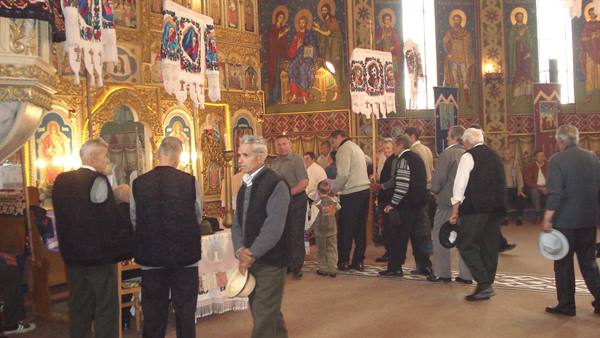
Before Moisiei we had visited the beautiful religious complex of BARSANA, recent and made up of a series of wooden churches and very beautiful large buildings that house the nuns within a flowered, very well-tended garden park. They were broadcasting the mass live over loudspeaker from a central kiosk, with the priest officiating, accompanied by the singing of the nuns and the presence of locals and tourists sheltered under umbrellas because it was raining.
We then reach Viseus de Sus and Jos (upper and lower), two pretty little villages on the edge of the region and preceding the Prislop Pass that separates Maramures from Bucovina.
In these villages it's possible to take the little local train that goes into a beautiful wooded valley and which in the past was used by woodcutters in search of timber and which today is used for this excursion, which we couldn't do because we happened to arrive on the day the little train had been completely chartered by a local agency for its clients.
What a shame, and so off to Borsa, a beautiful and wealthy town that seems not to belong to Maramures and that anticipates the wealth of nearby BUCOVINA, which looks like Switzerland compared to the poor but beautiful Maramures.
The PRISLOP PASS is easily reachable by driving its comfortable hairpin bends surrounded by woods. At the top there's a stone church and then you begin to descend and the surprise begins. Impeccable roads, just built, I think, with signage to make the most developed countries envious.
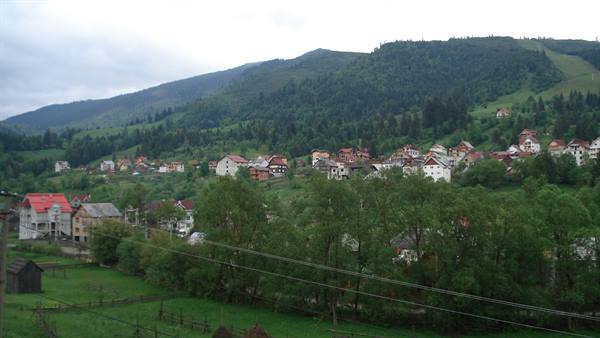
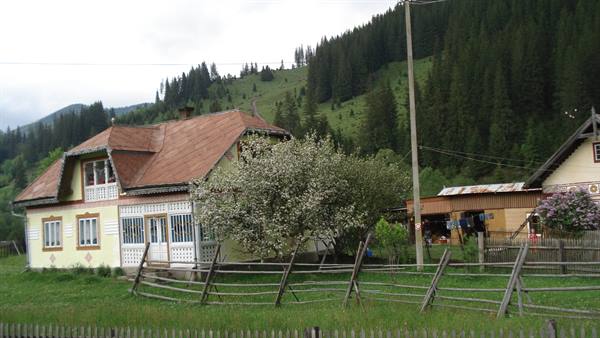
Beautiful houses decorated with floral and geometric motifs and embellished with gardens with lilac flowers and chalet hotels that recall our own South Tyrolean ones, or Swiss and Austrian ones.
We pass through the beautiful and modern CAMPULUNG MOLDOVENESC, but to be more relaxed we decide to continue and find accommodation in VAMA in a private house whose likeable owner tells us about his son, married in Italy in Civitavecchia, and his daughter, a lawyer, who has moved to Bucharest.
He gives us tips on the first visits to the stone monasteries and for dinner in a nice local restaurant with a trout dish.
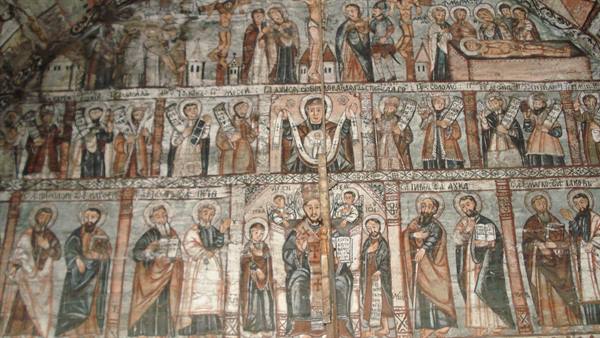
So after a refreshing shower we set off to see a long series of UNESCO-protected monasteries considered world heritage of humanity: Sucevita and Moldovita the first day, Voronet, the Sistine Chapel of Romania with frescoes predominantly sky blue in colour, Humor and Arbore the second day, passing through very beautiful landscapes with valleys, hills, meadows and countryside that are very pleasant to behold.
The monasteries are masterpieces of art that differ in the predominance of colour, sometimes green, sometimes blue, sometimes reddish brown, and are frescoed inside and out with biblical scenes and colours of great impact in a very relaxing setting of churches within parks protected by high walls and guarded by zealous nuns, very kind and discreet, who sometimes forget to charge for tickets or to scold those who take photos without having first paid the relevant fee.
The cost is in any case very low: around 1 euro for entry and 1 euro for photos.
Inside, precious icons, crucifixes, rich altars, frescoed walls and domes, and the three rooms, the first for women, the second for men and the third for the priest with the altar and the dome.
We head south, passing and skipping SUCEAVA, the big city of Bucovina, which doesn't seem interesting to us and whose passage and entrance is obstructed by considerable ongoing works.
After the series of monasteries comes the series of more recent convents inhabited by priests and students, again with beautiful churches, walls and parks, and the complex of AGAPIA near Targu Neamt with a rich church and surrounding palace with white colonnades and porticoes embellished with red geraniums and inhabited by hundreds of nuns who live in little white villas and personally tend the beautiful flowered gardens.
We arrive in the beautiful and modern PIATRA NEAMT with its orderly traffic, the river, the beautiful central square with the usual well-tended garden, a small hill with a pedestrian square, the old church, and other interesting buildings, before covering the long route that will take us to the BICAZ GORGE and LACU ROSU, that is, the red lake.
The gorge is reached after crossing a long green valley with small villages and a few guesthouses and hotels here and there. Then the road begins to climb and this perhaps unique spectacle begins: mountains that plunge into a narrow gorge with a road of hairpin bends that climbs through it. By now it's evening, there are a few tourists around and the countless shops selling junk at the edge of the road, leaning against the rock walls, are closing up. We remain enchanted by this particular vision, not knowing its extent and with the idea of returning the next day after staying at the red lake above.
We reach the top and another fascinating spectacle opens before our eyes: a small but long lake the colour of mud rather than red, with pieces of trees surfacing, cut off, pine forests all around, thinning meadows with little restaurants and bars and hotels of various shapes, some mastodons with parks and English lawns. We stay in a modest but still decent one and then go for a walk along the shores of the beautiful lake, which also has a small dock with boats and a well-positioned restaurant with a panoramic view, where we have an excellent but rather expensive dinner (120 lei for two, that is 30 euros, but we weren't used to that much) based on trout, various side dishes, placinta, the dessert I'd wanted so much but then disappointing, and our first bottle of Feteasca regale, the good Romanian white wine that alone accounts for a quarter of the cost of dinner.



0 reader comments