Transilvania, Delta Danubio, Mar Nero, Valacchia
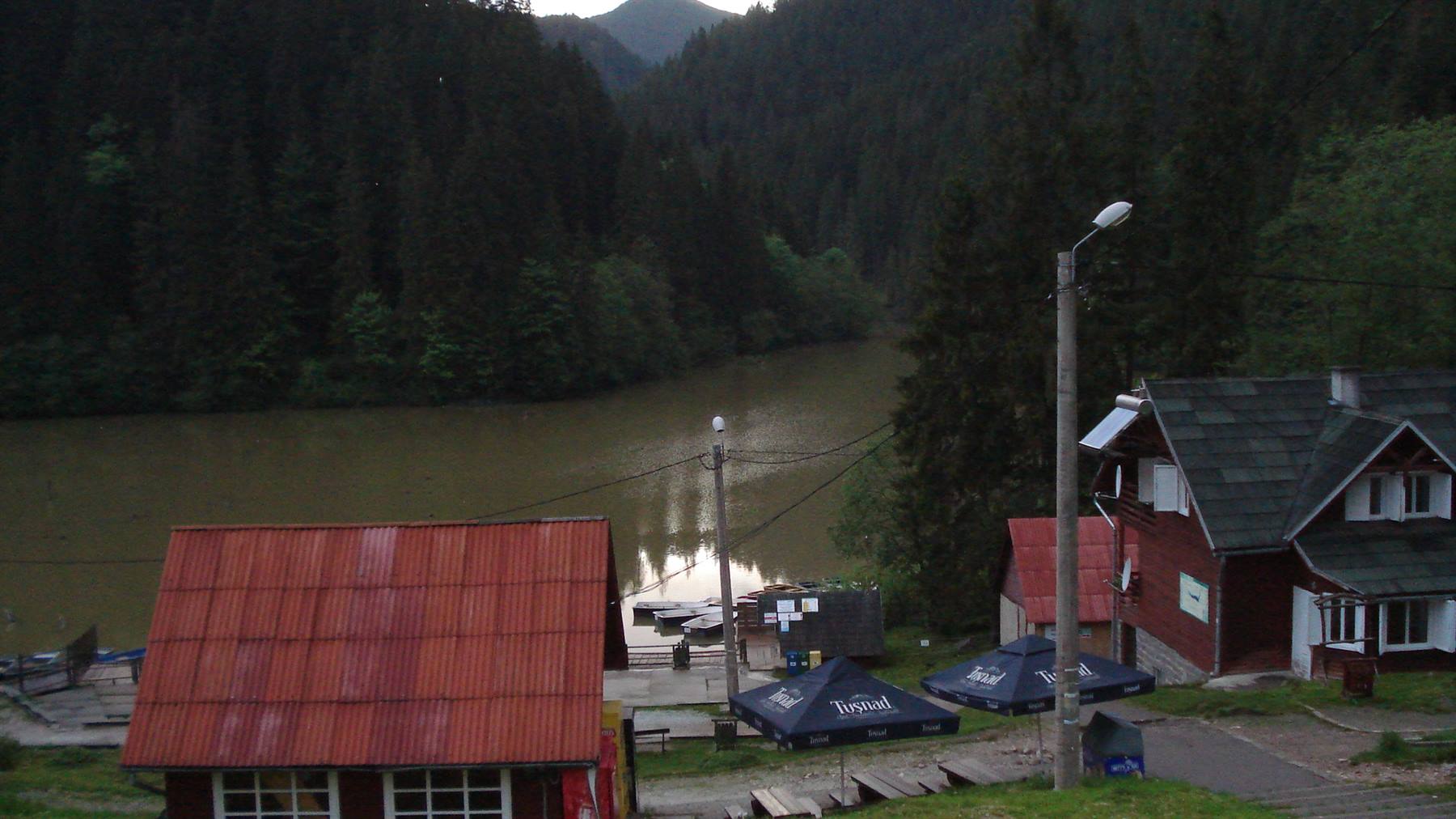
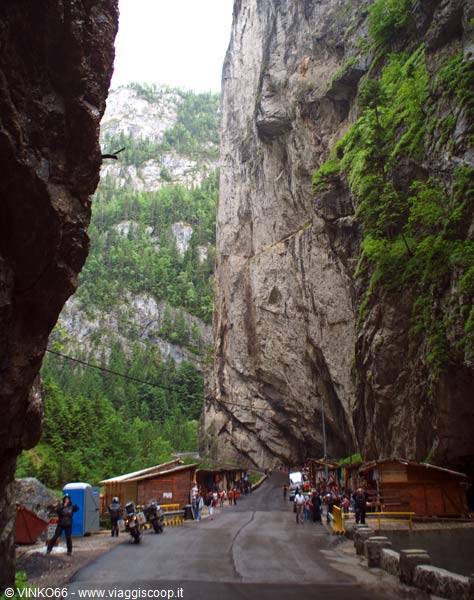
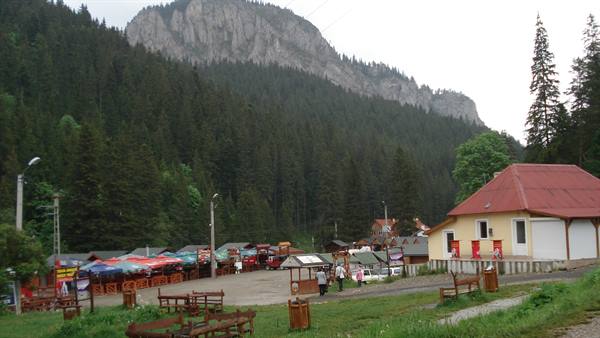
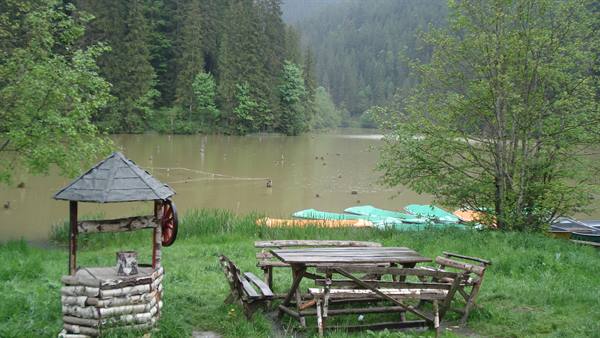
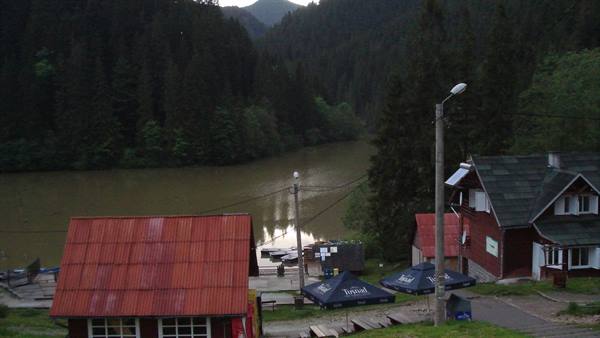
After visiting Maramures and Bucovina, we passed through the Bicaz Gorges and the red lake, arriving at PIATRA NEAMT, a beautiful modern city with the river and a lovely square with a garden and a small raised pedestrian citadel, with an interesting church and some well-built buildings. After the Red Lake you arrive in Transylvania; we passed through Gheorgheni, an insignificant town but with a previous route of woods and enjoyable hairpin bends. In Transylvania, which is like a basin, surrounded by the Carpathian mountains, we visited three medieval and historic cities, all very beautiful: SIGHISOARA, the smallest and most romantic, where the famous Vlad Tepes, aka Dracula, was born. In his birthplace they have made a beautiful but rather expensive restaurant.
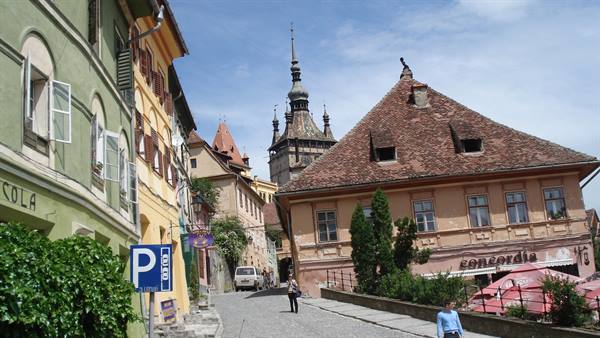
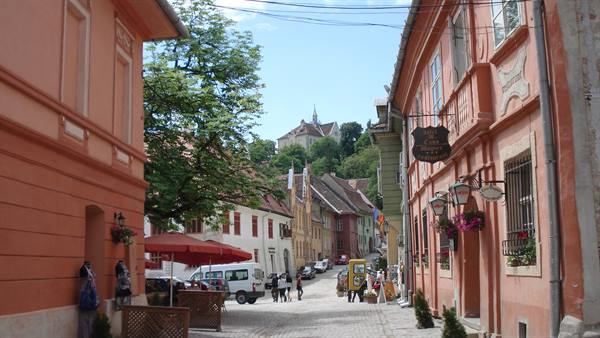
The citadel is traversed uphill passing through ancient stairs and gates of the old walls to reach the very beautiful and imposing clock tower. Around it there is a church with an enormous roof, various small squares, hotels and restaurants. At the top of an ancient and closed wooden staircase there is another important museum church and a German cemetery. Below, the city with various pastel-colored houses, considered a historic monument, buildings with ancient and interesting facades, a lovely park-garden, the river and beyond it a white Orthodox church with round domes.
From Sighisoara westward toward SIBIU, we stopped to admire MEDIAS which is truly a jewel of a town with its beautiful large square occupied mainly by a park-garden and an ancient fortified church. Here we are indeed in the area of fortified churches, that is, surrounded for defense by high walls like the imposing one of BIERTAN with next to it a lovely large village of low houses and huge roofs standing out.
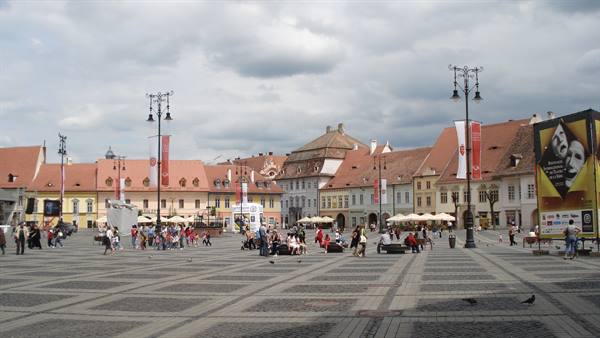
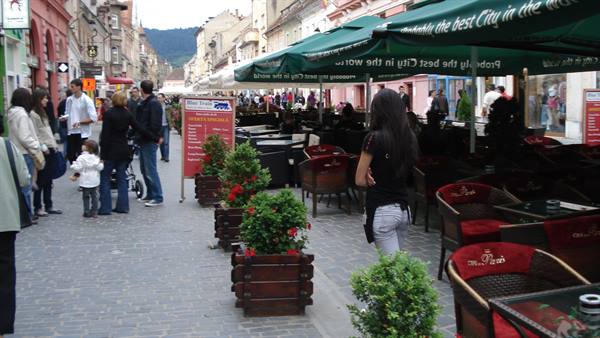
SIBIU, on the other hand, with about 200,000 inhabitants, is an elegant city with a fantastic square surrounded by very beautiful buildings and a pedestrian street full of bars and restaurants. In 2007 it was the European Capital of Culture and I believe the magnificently executed restoration of the historic center dates back to those years. There is also the BRUCKENTHAL palace which houses one of the most important picture galleries in the country and which deserves a visit. There are the ancient walls with a walkway and the towers of the guilds into which the city was once divided.
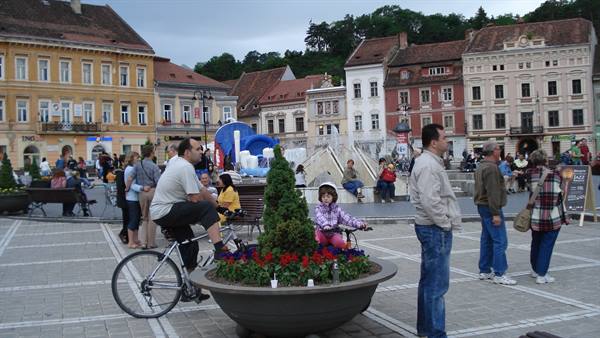
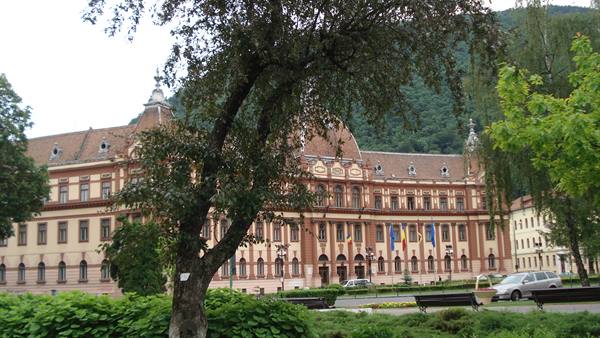
BRASOV, the old Saxon KRONSTADT (these cities were indeed founded by the Saxons called by the locals to defend themselves from the Turks) is the largest among these and in my opinion the most beautiful Romanian city. It has a German appearance, neat and very clean, with the usual beautiful central square with fountain, the Black Church, and very beautiful buildings. Here too a large pedestrian area, walls and up high a green mountain with the word BRASOV in huge letters at the top, Hollywood style. There is one of the narrowest streets in the world for those who don't know the Venetian calli, and many well-kept parks and gardens. Around the beautiful town hall there are the tombs of about twenty Romanian martyrs who fell during the 1989 revolution that led to the fall of Ceausescu's regime and a monument with a flame burning perpetually in memory of the fallen.
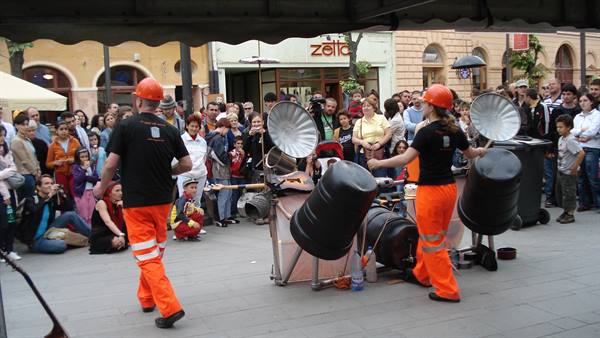
The square was crowded, with a stage and Jazz festival, while in the one in Sibiu there was the theater festival complete with a parade of young artists in colorful carnival costumes and a local band. In Cluj Napoca instead there was the film festival and another festival in another square in Bucharest; in short, the cultural life of Romanians is always very active and involves them in continuous events in which locals and passing tourists participate.
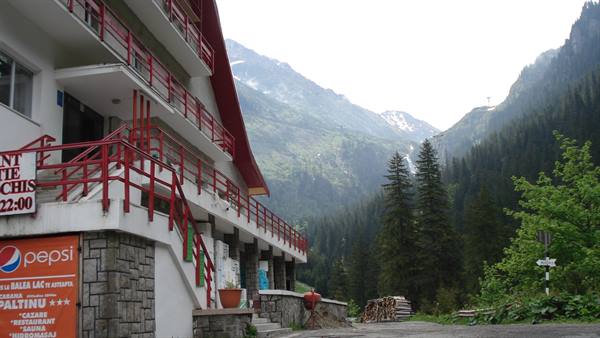
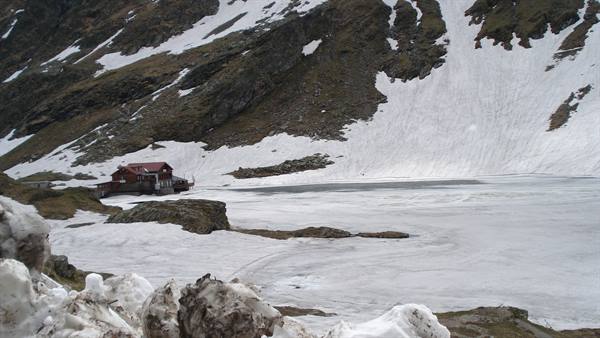
Finally a particular road, the TRANSFARAGARASAN, that is, a road that crosses the Faragarasan mountains and connects Transylvania with Wallachia below. This road was wanted and built by the communist regime with great expense and many human sacrifices. It seems that many political prisoners were forced to work on it. It is spectacular and....dangerous in the sense that we encountered many enormous stones fallen from the mountains, there are the usual potholes of Maramures to watch out for and at a certain point you come across snow, swept to the edges. You can barely get through, hoping not to meet someone coming the opposite way, before reaching the frozen lake above and the refuge. The day after our passage, impervious and reckless, a car was buried by an avalanche that had fallen due to the notable rise in temperature of those days.
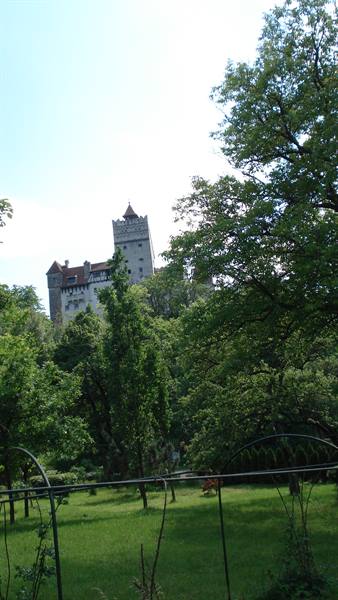
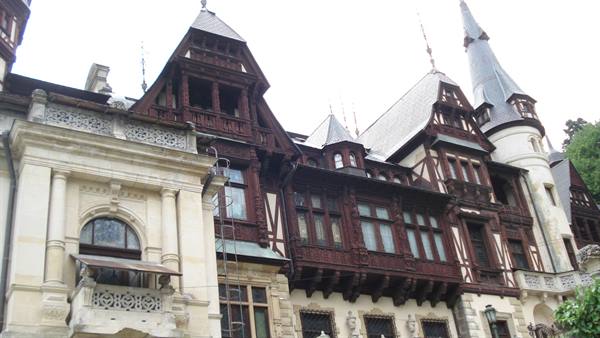
We were lucky but it would have been better to avoid that danger. Because of the missing road signs which are sometimes a real pain for the traveler, and the rented satellite navigator, which didn't work due to electrical problems, we missed along the way the famous castle of VLAD TEPES which has nothing to do with Dracula but takes its name from a local stream, namesake of the Romanian hero. We'll make up for it later at the end of the trip when we return to the area. Meanwhile we did not miss the castle of BRAN which is considered Dracula's but in fact belonged to his father, Vlad Tepes only spent a few months there as a child and more recently it became the summer residence of the Romanian monarchs. It is a decent tall white castle with a small inner courtyard and well, with modest and recently made furniture, not at all impressive and evocative as some would have you believe.
It seems that the real castle of Dracula is that of POIANIRI in Wallachia whose ruins stand on top of a mountain reached by climbing about 1,500 steps which we avoided because of the muggy heat and which we found while traveling in Wallachia along the famous Transfagarasan in the opposite direction from South to North after having risked our lives on the opposite stretch. For the record, in that area there is an imposing dam that gave rise to an enormous and spectacular artificial lake.
From Brasov we head toward Ploiesti, an industrial city north of Bucharest and from here passing through Buzau and Braila we reach GALATI which is pronounced Galaz. The 4-5 hour journey was easy because traffic was limited, the roads good, very long straight stretches surrounded by endless fields of cereals, hemp, tobacco and interspersed with red poppies and other purple flowers. At Galati we take a ferry that allows us to cross the Danube and once landed on the other side we arrive in a short time at TULCEA, the reference city for visiting the Delta. There is a real river port with many boats and ferry boats that organize excursions in the delta, but we continued to MUGHIROI, a small village where we stayed in the bungalows of Iulian's campsite, a young man who then took us around with his boat through the canals of the Delta.
It was a beautiful half-day trip during which we admired the banks of various canals and lakes immersed in greenery with trees growing in the water, lotus flowers, many birds but also fishermen's houses, small villas and tourist guesthouses. It was worth coming all the way here to admire one of the last paradises even though Ceausescu with his mad politics did everything to destroy this paradise and managed to divert the birds' migrations which are now only half a million while before they amounted to a good twelve million! Back in Tulcea we were sorry not to have gone to Sfante Gheorghe, on the coast since it is a beautiful place with a natural beach, but you have to be there on the right days of the ferry that goes there from Tulcea one day on and one day off and we of course were on the wrong day. From Tulcea we continue south and arrive at HISTRIA, the oldest Romanian Greek colony.
A nice surprise for me since I am from Istria! It is the Romanian Pompeii with fairly well-preserved remains of the walls near a large lake and a fine museum that preserves the best finds.
The time has come for the sea and rest after thousands








0 reader comments