POLAND - part one
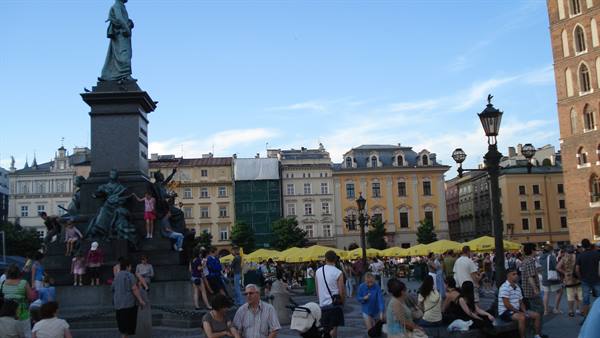
Krakow is one of the most beautiful cities I have seen in the world, and I must have set foot in at least a hundred important ones. For centuries it was the capital of Poland and to this day it is the country's cultural capital. Naturally it is the city of Pope John Paul II, whom you encounter everywhere, with his statues in churches and in parks. The city has around 600,000 inhabitants, and its historic centre is entirely surrounded by a very well-kept pedestrian ring park. The people of Krakow walk through it to reach the various parts of the city, because from the magnificent central square, the RYNEK, that is the market square, streets radiate out in every direction, many of them pedestrian only, all of which end up in the park.
Along the edges of the ring park there are wide roads where trams and buses pass, and then there are theatres, the railway station and the bus station, which you reach...on foot by walking through the park.
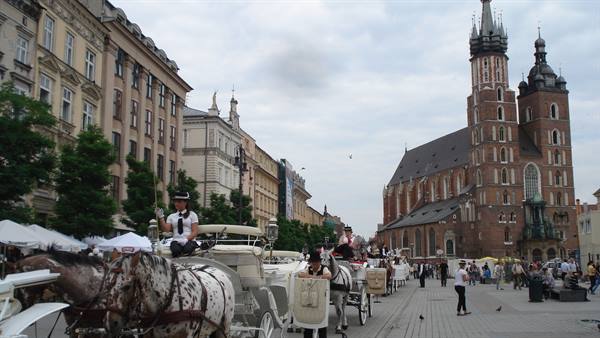
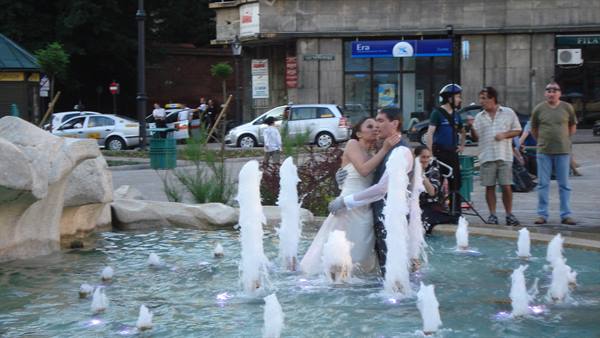
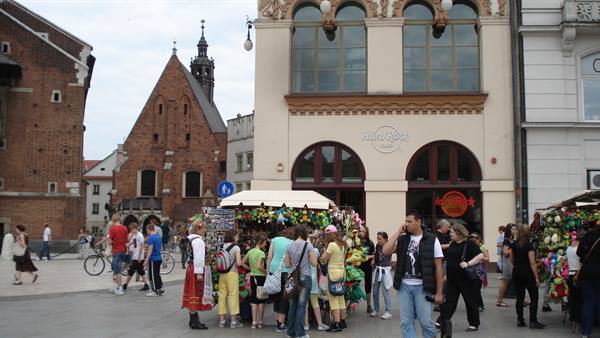
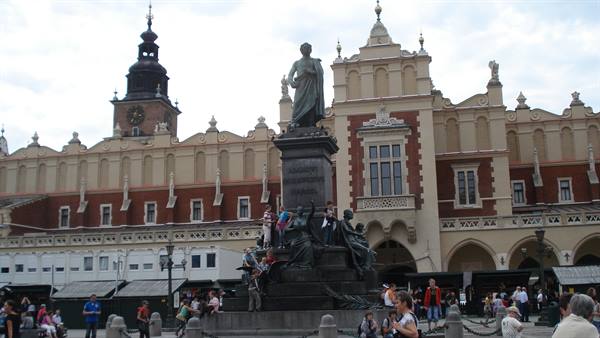
I was talking about the central square, which is the largest in Europe, about twice the size of Piazza Duomo in Milan and surrounded by classical buildings with very beautiful façades, the Cloth Hall in the centre and the Mariacka, the church with two bell towers on the north-west side, which is beautiful inside. All around there are outdoor bars and restaurants and elegant carriages with harnessed horses and drivers in traditional dress. From the square radiate various streets, some pedestrian with shops and elegant boutiques, others with nightclubs, pubs and cinemas. Nearby there is a recently restored square, Scepanska Plaz, with the fountain where children come to play and brides and grooms who get completely soaked as they kiss and embrace while a photographer films them. It seems to bring good luck.
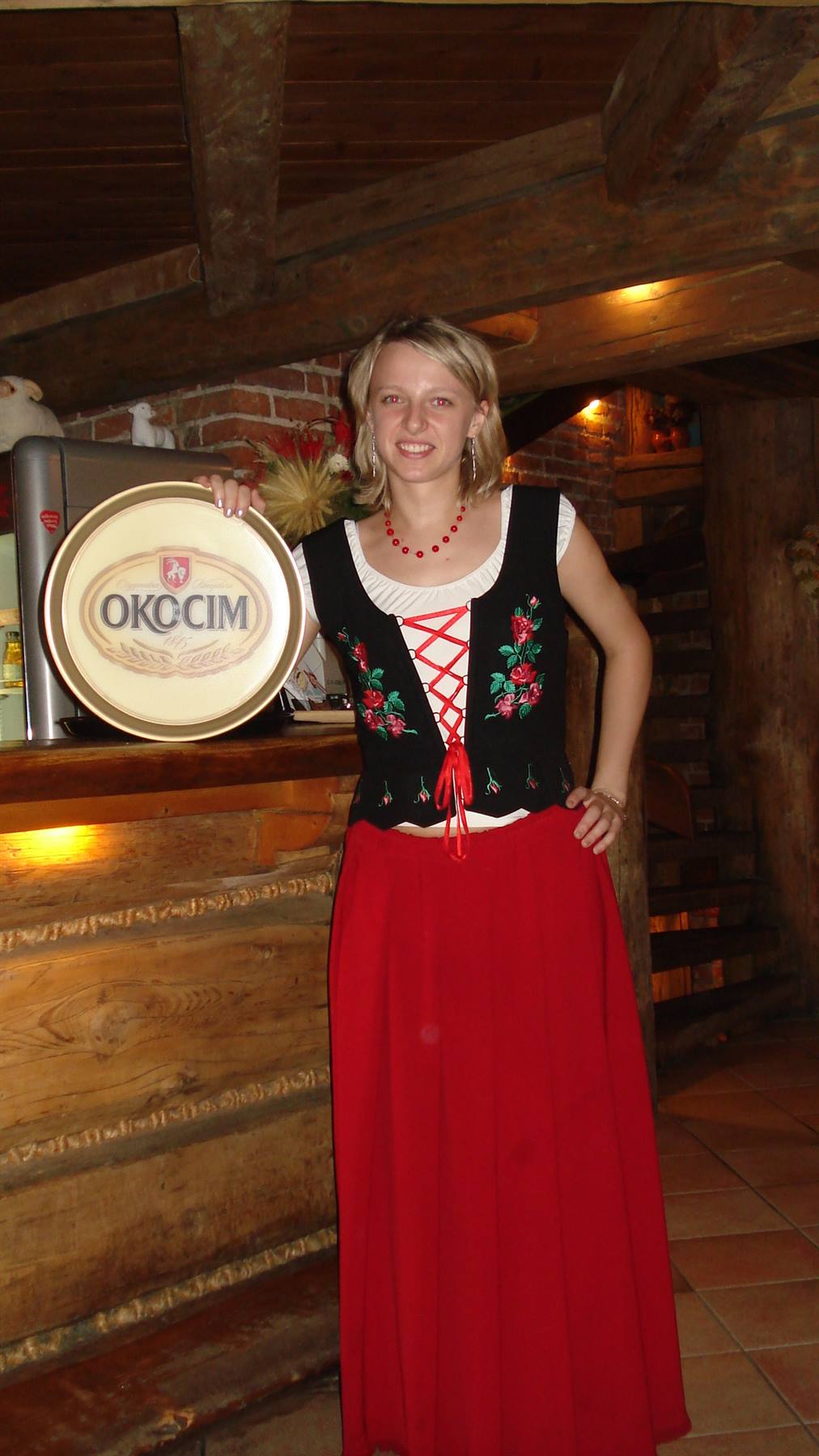
In that square there is a restaurant, the Morski, where I ate my first PIEROGI, that is dumplings filled with vegetables or meat, a Polish and Russian speciality (the latter are spicier). They eat excellent soups with vegetables and meat, fried potatoes, roast or boiled, and as vegetables lots of white, yellow or red cabbage and then carrots, tomatoes and cucumbers dressed with sour yoghurt. The beers are excellent and compete for customers by sponsoring film, theatre and music festivals that you come across in all the squares of the major cities. I especially liked OKOCIM, TISKIE and ZYWIEC. Excellent is the WYBOROWA vodka, drunk cold in small glasses.
Once again I had the impression that we Italians are behind compared to these new Europeans, who are travelling at a pace of improvement like the one we had in the 1950s and 60s, and who by now are overtaking us after rebuilding the country since the fall of communism in 1989. In 20 years they have redone almost everything, and today they have cities that are more beautiful, cleaner, better organised and better served than ours, which have been stuck for all these years and which take so much time and so much money for small jobs, whereas here they make big changes, quickly and without spending much. Culturally too they seem to be a step ahead, especially the young people, who all speak fluent English with perfect pronunciation, dress very well and are very polite and kind. You don't see tramps around, nor non-EU immigrants, only elegant, cultured and kind Poles.
Sooner or later the invasion will come for them too, but for the moment they are enjoying a wonderful country.
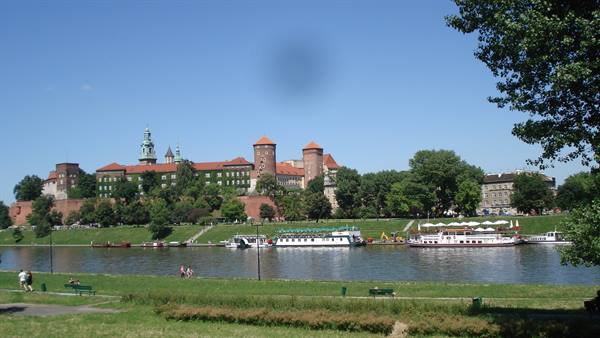
The main attraction of KRAKOW is the central square and its many churches, which you come across practically on every street, and they are very busy because Poles are very Catholic and practise their religion much more than we Italians do. The second jewel is WAWEL, that is the castle, which you reach on foot along a pedestrian street from the central square. This large complex on a panoramic hill close to the centre comprises the royal palace of the Polish monarchy, the cathedral and other buildings used as museums and exhibition spaces.
You queue for about an hour to get the various tickets and spend 12 euros for six visits: the royal palace with large, luxurious halls rich in furniture, paintings and above all enormous and splendid tapestries; then the visit to the treasures of Poland, royal jewels, crowns, sceptres; then the armoury, with a grandiose collection of swords, arquebuses, pistols, rifles and decorated armour from various periods. The exhibition I liked most was that of Oriental art, with porcelain, carpets, paintings and Chinese and Japanese furniture. The cathedral is very beautiful, sumptuously decorated in a style I had never seen before and which I find hard to describe.
Suffice it to say that I don't love Baroque churches, nor Gothic ones, but these Polish ones are a mix of those two styles and use a lot of dark and inlaid wood, beautiful religious paintings and often very colourful glass with designs in excellent taste and with great impact. Very full of flowers with splendid arrangements and quite a few statues that are never heavy. In short, an environment in which you feel at ease, cool and neither dark nor too bright, without too many frills but of excellent craftsmanship.
Below the castle flows the Vistula, the local river, which makes various bends within the city, and along these there are parks, pedestrian walks, excursion boats and others moored to serve as restaurants, bars and beer houses. Never did I have the sensation of chaos, noisy traffic, pollution, in short all the usual things that unfortunately characterise our cities. Here they have greatly limited entry and there are few cars around, almost exclusively those of the residents of the centre, plus loading and unloading of goods. The people of Krakow all use public transport and many also use bicycles. In fact there are excellent cycle paths on practically every street and there is also an abundance of parks, gardens, in short greenery that makes the city relaxing and cool.
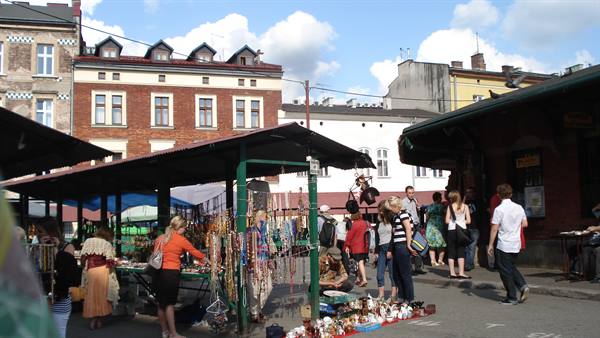
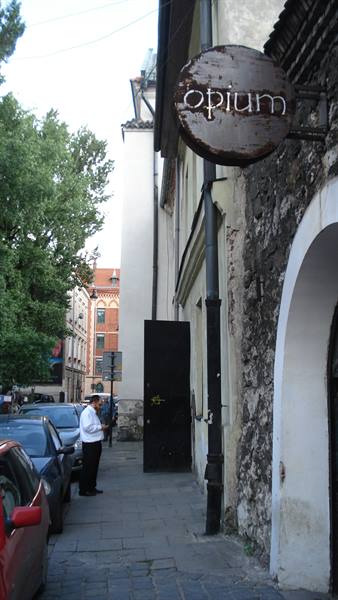
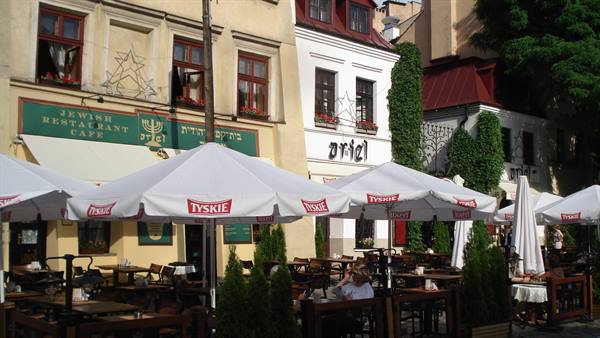
There is a southern district of Krakow, KAZIMIERS, which was the Jewish district before they were deported by the Nazi regime. In any case it has remained Jewish, since there are various synagogues and above all restaurants, bars and stalls run by Jews with their KOSHER specialities, and the warm Jewish bread cut in half (wide and long baguettes) and topped as you like with cheeses, cured meats, meats and various sauces or vegetables, in short the thing's we put on pizzas. Naturally you also eat lots of pizzas and above all kebab sandwiches, which you find everywhere and which Poles eat with the help of a little plastic fork.
Kazimiers is also the district of the young, the alternative crowd, the artists, the bohemians. There are lots of boutiques, little restaurants, pubs, showrooms, and in the evening people come from all over the city to enjoy the cool, drink beer, listen to music and chat outdoors. I went there every evening, preferring this area to the more polished and bourgeois central one. I spent a splendid evening in a pub, the STANTYA, decorated with period furniture and photos from the 1930s, full of wild young people who danced Latin American dances very well.
Another evening in NOVA Platz, sitting drinking beer and chatting with some young people at tables with the SINGER sewing machine! Another time I ate Jewish baguettes in the square in the company of a nice Neapolitan family who were on their way to Belarus, Russia and Ukraine because the father was a historian who was going to meet old colleagues in those countries. He told me that even in the 1970s in Krakow people almost went hungry and peasants would turn up improvising stalls to supply the population. In short, Poland has come a long way since then!

0 reader comments