Short trip to Norway, sailing with the fjord mail boat from Bergen to Kirkenes and visiting the capital: Oslo.
Text by Anna M. Photos by Marco G.
Wherever you read, wherever it is told, said or claimed, the cruise with the Hurtigruten is the most beautiful journey in the world.... What can I say about it? I think that, absolutely speaking, there is no journey and therefore no place that deserves the label "most beautiful in the world". Every place, every journey is different from another and the world is all beautiful, you just have to look around to discover it. So... as far as I am concerned, the journey with the Hurtigruten was a beautiful journey, a lovely cruise, and it is precisely its particular scenery, scrolling slowly by during the sailing, that makes it unique, but every corner of the world is beautiful, so I do not feel I can support such a strong claim.
The Hurtigruten as it is today still partly plays its historic role as a ferry, quickly connecting the people who live on the coast and on the islands of Norway, but tourism is now its main occupation. Historically it was born as a gamble to reduce mail delivery times (hence the nickname 'fjord mail boat'), bringing the time to send a letter from Trondheim to Hammerfest down to a few days, whereas overland it was about three weeks (five in winter [1893]). Later converted to tourism, turning its mail ships into real cruise ships, it now carries millions of tourists up and down the Norwegian coast... and that is what we did too... we scurried along the Norwegian coast from south to north. This year the time available to organise the trip, for various reasons, was not much, so we consulted the catalogues of a few operators in the sector to look for the one that suited us.
Comparisons of rates, services... and in the end we booked with Giver. Impeccable service, although we feared we might not leave, since the travel documents arrived just a few days before departure. For the record, we were unable to book directly on the Hurtigruten website; it redirected us to the corresponding tour operators
---- Interesting sites:
Guide used: The Rough Guide: Norway - Avallardi Editore - Second Edition Hurtigruten - Erling Storrusten - Distributed on the Hurtigruten
Day 125 Jul 2005
We leave on a Monday morning heading for Bergen, and to complicate things a bit we'll first stop over in Frankfurt and then in Oslo. The airline is Scandinavian Airlines, whose on-board service is paid: low-cost practices but normal airline prices! In Oslo things get a bit complicated. Despite our status as transit passengers, we had to retrieve our luggage from the arrivals side, go to the departures floor and redo the check-in from scratch. Us and the suitcases included. I haven't understood why this complication but whatever makes them happy. We arrive in Bergen in the late afternoon, the sky doesn't promise anything good, but Bergen, according to the guides, is a very rainy place, summer included. So... there's little to be surprised about. The Flybusses (65Kr), right outside the airport, takes us in just under 25 minutes, right into the city center.
Bergen rises on a peninsula surrounded by seven mountains and its pleasant atmosphere makes it one of the prettiest towns we saw during our trip. Although it has become an important industrial center and has an equally important port, it has kept the characteristics and the air of a small town. Having left the Flybussen, we head toward our hotel (Hotel Neptun). A serious, luxurious place. Not the place we would have chosen but by buying packages from agencies this is what we get. They assign us a room on the fifth floor, very nice but not at all suitable for us. It's a smoking room and the smell of smoke, as soon as we open the door, knocks us out. We immediately realized we had forgotten to specify to the tour operator the type of room we wanted, let's hope for the best for the cabin on the ship. Anyway...
we pick up our suitcases and our key and go back to the reception with the intention of getting the room changed. The hotel isn't full so they accommodate us. After this first mishap we go out for dinner. The streets are crowded with people, street artists, musicians, mimes. A liveliness and vitality more like Latin countries than a Nordic one. For dinner we make a quick stop at McDonald's just to see what it's like around here... just the same as the rest of the world, apart from the price which here is no small thing even for these synthetic meals!
Bergen
Day 226 Jul 2005
Today is a day for visiting the city of Bergen. The Hurtigruten departs at 20, so we have all day to get to know this city. Breakfast at the hotel is a preview of what awaits us in the coming days. Unfortunately we are not used to a 'savory' breakfast but a 'sweet' one, so we find some difficulty in choosing the food. We amuse someone when we use the egg holders, disposable type, to put the jam in. They were placed next to the jam jars, there were no other containers to use for this purpose... Bah... they served the purpose just fine even though a distinguished gentleman was looking at us as if we came from Mars. I start my series of breakfasts with cereal and yogurt while Marco despairs because he can't find warm milk. There's cold but not warm.
Just to amortize the cost of the hotel and the fact that I have a normal breakfast and not a huge feast like certain people who with what they eat in a single meal would feed an entire village in Africa. As I was saying, to amortize the costs a bit and to play 'the Italian' to the end, I make myself two little sandwiches for lunch. Having left our suitcases in storage at the hotel we go out to get to know the city. Alternatively we could have left our suitcases at the city information office for a cost of 20Kr per suitcase but at the hotel it's free so it's just as well to leave them here. Bergen offers many things to see, a very characteristic center, the fish market (Marco's favorite place, he who detests fish), various museums and buildings as well as churches and fortresses. And what do we start with? With none of all this. Bergen, as I said, is surrounded by 7 mountains.
Among the best known and most visited, Mount Floyen which can be reached comfortably by a funicular (60 Kr) and Mount Ulriken, the highest (642 m) in the area, reachable by cable car. After the necessary directions from a very kind young man at the information office we decide on the trip, on foot, up Mount Ulriken. From the city center we take bus number 31 which drops us near the Montana hostel, from here the path that leads to the summit of the mountain starts. Initially it presents itself as a dirt road that then becomes a rather steep path. In about an hour of walking we reach the arrival point of the cable car, from here, in less than a quarter of an hour we reach the actual peak of the mountain. The view of the surrounding mountains is beautiful. The landscape is very particular: it is an environment made up of small lakes and little hills.
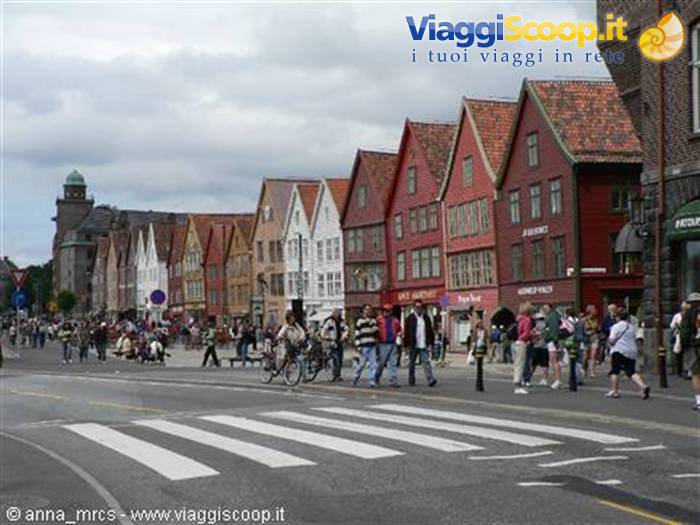
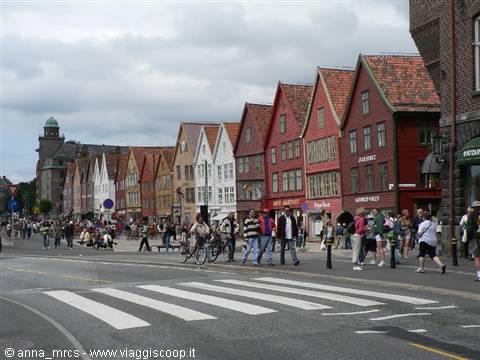
Just below the summit we see a mountain hare having breakfast, its paws still bearing traces of its 'winter coat'. From the cable car arrival you enjoy a beautiful view of the city and the sea. We return to the city by varying the route. Instead of going down the same path we choose another one that takes us exactly to the cable car arrival, it's a little less straight than the previous one but a little longer. Back in the city, we spend the rest of the day strolling through the streets of the center, observing the monuments and buildings. We also make a quick stop at the crowded fish market and in the Bryggen district to see the old wooden warehouses. This district has been included by UNESCO in the list of 89 international monuments to be saved. The fish stalls are teeming with fresh fish (or so they say). Shrimp, cod, and much more...
Next to the fish stalls other little stalls with myriads of baskets of strawberries and berries. Sitting by the harbor, lots of people enjoy the shrimp sandwiches sold at the market. Finally, sitting on the edge of the fountain, like many others, at Torgalmenningen, we watch the coming and going of people and tourists through the square. A pair of musicians intone country songs (in English, of course), a strange atmosphere that makes this stay pleasant. A small demerit note for the Norwegians. Eh eh eh... their bad habit of spitting on the ground, I understand it may be a leftover of some Viking custom but... it's not very nice. I'm not joking.. I've never seen so many people spitting on the ground. And as for cleanliness they don't shine either. They say our cities are dirty but it doesn't seem to me that theirs are much cleaner.
Toward evening, having retrieved our luggage, we head to the pier to board the Hurtigruten waiting in port for its passengers. In the check-in queue Marco starts to despair. Apart from a young couple we saw enter and one in the queue, the rest of the people present at check-in have long passed retirement age. 'I knew it was an old folks' thing', this is Marco's comment! And so at 20.00, the Hurtigruten MS Polarlys leaves the port of Bergen heading north promising an unforgettable journey, in the company of the Gulf Stream (they've written it everywhere, impossible not to remember it!). Just to play a bit of Piero Angela of the situation, the Norwegian coast is green and lush instead of covered in ice (in winter, I mean) like Greenland precisely because the Gulf Stream penetrates the fjords thus preventing the formation of ice during the winter.
Sailing…
Day 327 Jul 2005
On the Hurtigruten a guide is provided, in Italian, that describes the journey and daily flyers are distributed with the day's program, useful news and what will be seen, strictly in Norwegian, German, English and French. The ship travels even at night but it's not the case to do 24 hours non-stop to see absolutely everything. We go to breakfast rather early. The room is already packed with elderly people, most of German origin. The breakfast buffet is very rich, but with savory dishes. There are even sardines.. Sardines at breakfast seem a bit excessive to me but there are those who enjoy them. I get my usual orange juice and my little bowl of cereal with yogurt while Marco wanders in search of warm milk (which obviously isn't there and must be requested from the staff) and something sweet. He will find only jam and some black bread with lots of seeds.
And around us, many elderly people stuffing themselves with eggs and bacon, rivers of coffee, cheeses and cured meats. Don't they have cholesterol problems, these people? There are some who, if we asked for their passport, we'd risk discovering they were conscripts of Tutankhamun! Bah..
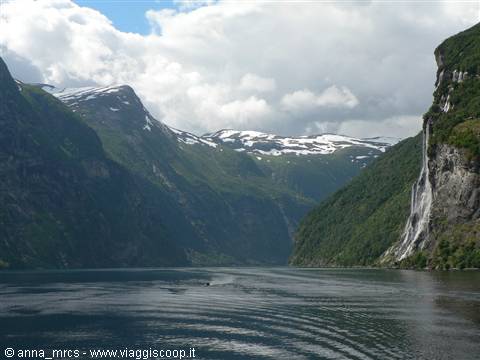
The highlight of the day is the Geirangerfjord. In the morning the ship enters this fjord and travels through it in both directions (there and back) over the course of the whole day. The fjords were formed thanks to the glaciers, which in the glacial era descended from the mountains to the sea. Once the glaciers disappeared these deep valleys were invaded by the sea. The Geirangerfjord is one of the most beautiful fjords in Norway. The Hurtigruten sails slowly toward Geiranger (the arrival point inside the fjord). The mountains plunging sheer into the sea are impressive, the waterfalls, including the seven sisters. It's a succession of postcard images (apart from the sky.. always between gray and less gray) until the arrival near Geiranger and from here we make the return. Toward evening the ship returns to Alesund, the starting point this morning, for this fjord.
The ship docks at the port allowing the tourists who boarded this morning, who wanted to see only the fjord, to disembark and continue their journey. The Hurtigruten is still a ferry, so it is possible to use it to move from one area to another, covering parts of the route or to do this type of excursion. On the ship, however, the day passed slowly. The panoramas to see were beautiful but we are not used to all this inactivity. While lunch is a buffet and people stuff themselves to no end, dinner is served at the table and consists of 2 courses plus dessert. This evening we also have a chance to discover the size of the group of fellow countrymen. All together we are 10 and we help lower the average age of those present in the room. My irony about the somewhat advanced age of the participants is not meant to be a negative criticism.
It's nice to know that German pensioners, unlike Italian ones, can afford trips of this kind and that they have the enterprise and the desire to do it. Our pensioners wouldn't lack that but with the fantastic pensions our government hands out at most they can take a cruise on a rubber dinghy along the Po.
The Stokksund Strait
Day 428 Jul 2005
At 8.15 the ship docks at Trondheim and makes a stop of about 4 hours. Trondheim was the first Norwegian capital and is now the third city of Norway. It is a suggestive and quiet city with a historic center still well preserved today and two of the largest wooden buildings in the north of the country. Very particular are the buildings of the port where they say salmon also abound, but we didn't see them. The jewel of the center is the cathedral, a beautiful medieval structure. And it is from here that we start our visit of the city. If you want, the Hurtigruten organizes an excursion to get to know the city, but we, like many others, equipped with map and guide, set off to discover the city on our own. The center is not far from the port where the ship docked. The Nidaros cathedral dedicated to Saint Olaf was, in the past, the destination of pilgrims coming from all over Europe.
Today it is the largest medieval building present in Scandinavia. Inside (35 kr) it houses the tombs of all Norwegian sovereigns and was the seat of all coronations until 1814. Behind the cathedral stands the Archbishop's Palace. After this immersion in history we resume the visit toward a destination much more suited to our interests and needs: Nidaro-Hallen. Having crossed the nearby Gandbrua bridge over the Nidelva river we stroll along the river. This is a quiet area used as a city park where we can, in all tranquility, give ourselves over to bird-watching. There are many species of birds and truly amusing gulls. They have their faces covered by a black mask. There's one that is also quite photogenic because it just stands there nicely posing almost as if it wants to be photographed.
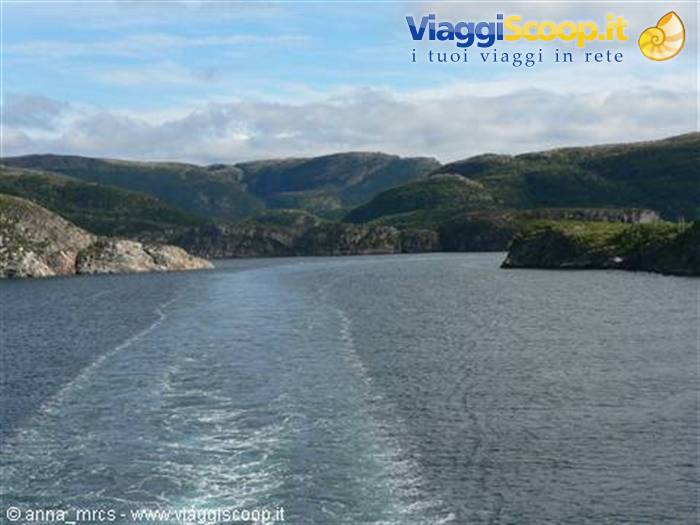
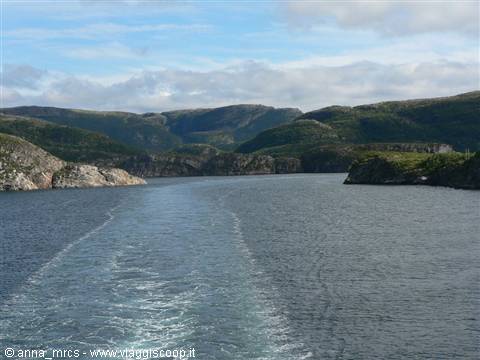
We then cross the Nidelva river again near the Nidereid bridge passing in front of another church and then move into the port area where many of the typical wooden buildings stand. Back on the ship, the navigation resumes toward the north. Looking west you can see many small islands, on some of these there are also oil extraction facilities. Considering that among the country's resources there is also oil, petrol costs more than in Italy, at least in this we don't hold a record. During the afternoon we cross the Stokksund strait which as the name says.. is really narrow!!! The closeness of the land and the cliffs is almost impressive, you have to wonder if they are sure of what they are doing. Anyway the passage through the strait is truly impressive and thank goodness the day is a little less gray than usual and a warm sun allowed us to enjoy the panorama directly from the deck.
The bridge at Finnsnes
Day 529 Jul 2005
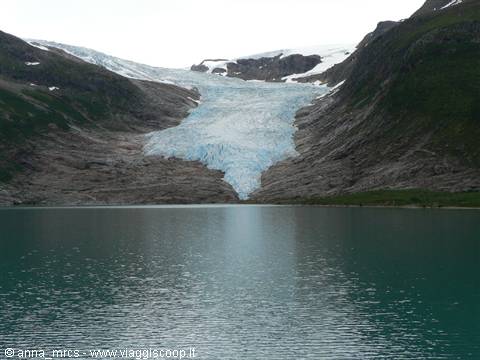
Shortly before seven in the morning the ship crosses the Arctic Circle and for this we were all given a personalized certificate reporting this important event (ooohhhhhh). As for us, we wake up around seven for breakfast and to get ready for our first excursion. Visit to the Svartisen glacier (840 Kr). Having left our ship, which continues its journey, on a small boat we head toward the interior of this area. In just over an hour, sailing among natural scenery and scanning mountains and glaciers in the distance, we arrive near the Svartisen glacier which presents itself in all its majesty. I should point out that what we see is only a small portion of this glacier. Svartisen is the second largest glacier in Norway, second only to the Jostedal glacier. Literally the name Svartisen means 'black glacier', the guide justified the origin of the name by its coloring.
During the boat ride we spotted two sea eagles, the proud and austere behavior of these animals is striking. Having left the boat, to get in front of the lake over which the glacier looms, it is possible either to go on foot in about ten minutes, along a dirt road, or to take a bus that will serve as a shuttle, following the same road. Apart from a few elderly people and a few lazy ones (not elderly) the others all go on foot. Once we arrive in front of the lake, a path skirts it entirely allowing us to reach the foot of the glacier, we walk a good part of it but we don't manage to get onto the glacier. The time we have available is not much and after a while we have to abandon our intention and turn back. We discover later that inside the visitor centre, which we didn't visit, a buffet with typical sweets had been prepared.
Having re-boarded the boat for a short stretch the excursion continues by bus with a young guide who speaks French and English and who illustrates all the things that flash by around us during our journey to the city of Bodo where we will re-board the ship. The area is very beautiful, other mountains, other fjords; but the bus doesn't stop and it's a shame because you see everything 'in passing', the only two stops it made were one of a very commercial nature, near a bar/shop in an area that wasn't much, and the other, also near a hotel/restaurant on the strait of the Salffjord where the famous (I didn't even know it existed) Saltstraumen current passes. Four times a day this current pushes 372 million cubic meters of water into this strait at an average speed of 29 km per hour.
As a consequence of this strong current the ships that must transit it have to pass through two hours after the flow and ebb of the water. Apart from all this nice theory what you see is this strait (150 meters) with a nice bridge over it and a few fishermen on the shore.
We return to the Hurtigruten in Bodo at 15. Bodo, which we couldn't visit because we were out on the excursion, is the capital of the Nordland region (what an original name!). Among the curiosities of the city I read that it is the seat of the headquarters of the Northern Norwegian defense and also the episcopal seat. The city is however very young, since it was founded in 1816 as a consequence of the numerous schools of herring that arrived there, thus guaranteeing a rapid development of the town. But then the herring left but the city was able to develop other economic activities. During the Second World War 2/3 of the city was destroyed by German aviation.
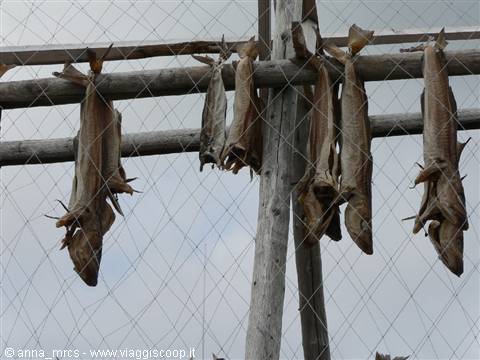
In the evening we reach the famous Lofoten Islands. This is a chain of large islands and sharp peaks of immense charm that extend into the Norwegian Sea. It has been one of the main winter fishing centers of Norway, in fact at the beginning of the year the Gulf Stream (always it) meets with the cold, let's even say freezing, waters of the ocean, thus attracting myriads of cod from the Barents Sea. Although the season lasts only from February to April, fishing remains one of the most important activities of the area even in the rest of the year. You can in fact notice the countless wooden racks used to dry the fish placed here and there in every port. Besides cod and fish, the islands host colonies of seabirds in the south, while in the north there are the beaches and fjords.
We hoped so much to be able to admire these places and instead thanks to these fantastic low fogs and the rain, visibility is rather poor. At 22, we arrive at Svolvaer and the rain continues to fall incessantly. On the port you can see the wooden cabins of the fishermen, called Rorbuer, used by fishermen to shelter during the fishing season, now they are rented as vacation homes to tourists. We resume navigation in the direction of the TrollFjord, one of the most beautiful fjords, according to the guides. The rain has stopped falling but the fogs haven't lifted much. The TrollFjord, or the fjord of the Trolls, is only 2 km long. The boats enter the narrow gorge of the fjord traveling slowly along all its length and then, with some maneuvering, turn the ship to head toward the exit of the fjord.
The stretch traveled is very suggestive, smooth stone walls that tower over the fjord to then arrive at the bottom where a postcard panorama, with the mountains embracing the sea, reigns supreme. My tourist guide, who at this point I believe was written by a masochist, claims that the landscape is much more suggestive and spectacular in bad weather. I say; but if with this darn drizzle and this fog keeping it company you can barely make out the shapes of the mountains and the fjord, how can one claim that the landscape would be more beautiful than with a clear sky? Surely this depressing climate gives the landscape a certain something mysterious and gloomy in perfect harmony with the most fervent stories about Trolls though..;.
In any case, all, or almost all, the passengers are out on deck enjoying the spectacle, the ship's staff distributes what they call 'Troll soup', a kind of reddish broth with a not at all inviting smell that I was careful not to taste. It is 24 and it's impressive how much light there still is. For those who don't know, but I think they are really few, since Troll figurines are now sold not only in Scandinavian souvenir shops but also in many gift shops in Italy. Trolls are spirits that live in the bowels of the earth. They are spirits that sometimes help and sometimes hinder men. Initially Trolls were described as gigantic creatures and then became the little monsters with pale skin due to life underground that we know now.
The sun, it is said, is capable of turning them to stone; in fact it is not unusual to hear that the formation of certain islands or mountains with rather strange and grotesque shapes is due to Trolls that have petrified. It is said that they forged the sword of Odin (god of war) and the hammer of Thor (son of Odin).
The Arctic Cathedral
Day 630 Jul 2005
The morning proceeds without anything to report apart from a somewhat tacky thing that seems to have pleased the elderly people on the ship a lot. At about 10, they announce the beginning of the Arctic baptism ceremony, or something like that. Marco obviously doesn't even dream of coming to stick his nose in, because anything that involves a large group of people crowded together is just not for him. So I leave him to read his book and I go out on deck to stick my nose in. It was a bit tiring to understand what was happening because the crowd was big and the chaos too. In practice, the Arctic baptism consists of pouring a nice mix of ice cubes down the neck of the unfortunate person right at the collar so that they can slide down the back. The thing amuses those present a lot, I don't find anything funny in it and it seems a bit tacky to me but this too is part of the journey!
Right after lunch the ship docks at Tromso, which has been called the Paris of the north. My goodness what big words. A beautiful city, without a doubt, but to really compare it to Paris seems a bit presumptuous to me, what do the Parisians think? In any case Tromso is the capital of Northern Norway and is also the most populous city in the area. It was born as a fishing port and trading center, it developed, toward the mid-nineteenth century, thanks to the earnings of its citizens, fur hunters who hunted the Arctic fox, the polar bear and the seal in Svalbard and resold the pelts here. Many of the Arctic expeditions also departed from here. The center of the city is lively even though there aren't many monuments to see. Having disembarked from the Hurtigruten we head immediately toward the Arctic cathedral.
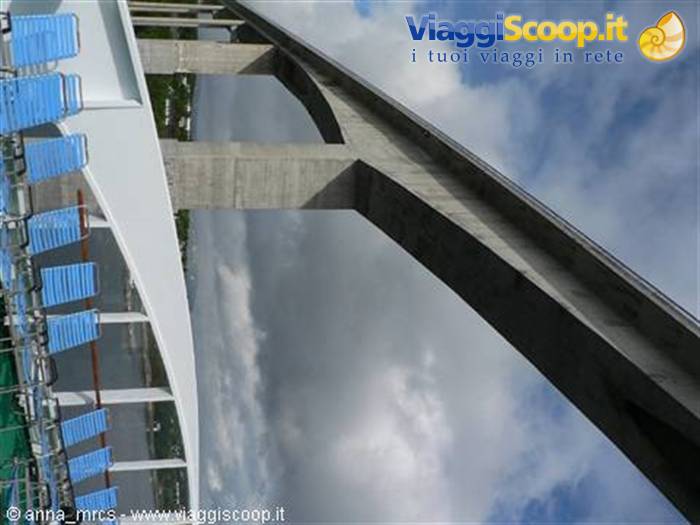
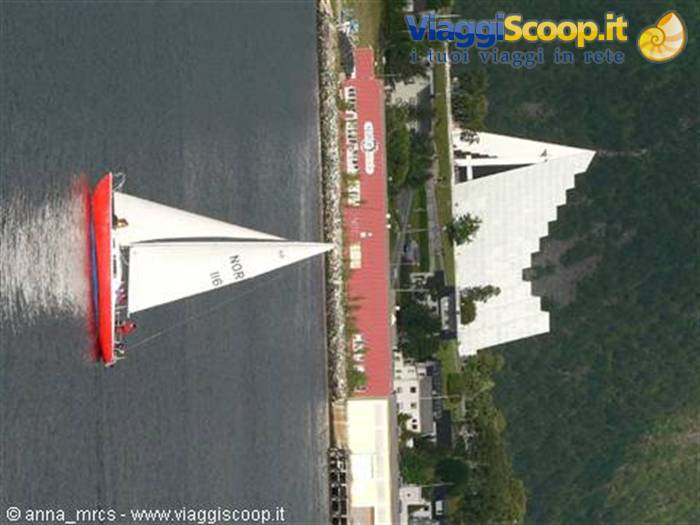
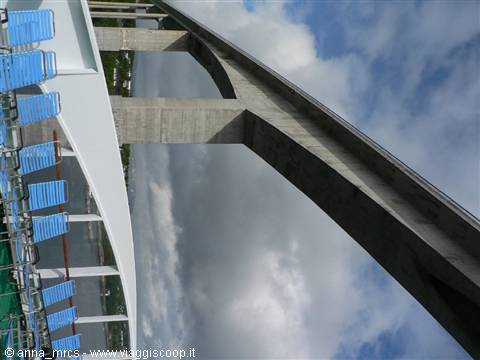
We cross one of these immense bridges that cross the strait (there are two, one 1235 m and the other 1016 m, and a tunnel crossing the strait is under construction). It is not possible to visit the interior of the Arctic cathedral due to a wedding taking place inside the church. If the day had been sunny we would certainly have opted for the cable car that takes you to 420 m above sea level from where you can admire a fantastic panorama. Among the interesting things in the city you can visit the center with its shops and the theme amusement park with the Arctic, Antarctic and Barents Sea: Polaria, a series of museums and the botanical garden. Back on the ship we resume navigation passing under the two majestic bridges that connect the strait. One of the things that impress most are precisely these immense bridges. True masterpieces of engineering.
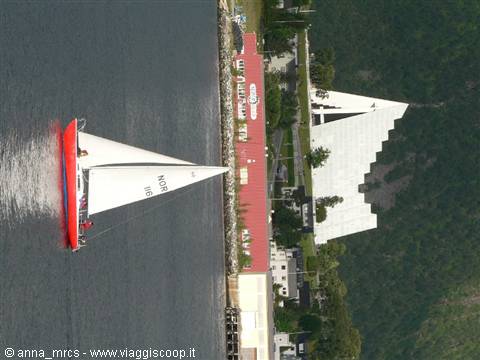
Arches that connect coast and islands and passing under them certainly has its charm.
Gjesvær
Day 731 Jul 2005
This morning we wake up with rough seas, we hadn't experienced this emotion yet. The ship rocks wonderfully, we try to go to breakfast but after having tried in vain to do the stairs we decide that the best thing is to go back to bed and wait for this swaying to calm down a little. In the morning the Hurtigruten arrives at Honningsvag, the starting point for two of the unmissable excursions (since the two things are simultaneous and no one has the gift of ubiquity, one of the two must inevitably be missed). As I was saying.. for those like us, passionate about nature, this morning there is the excursion to the Gjesvaer reserve, a marine reserve paradise for bird-watchers. While the vast majority of tourists choose the trip to North Cape. Well yes.. we got within a stone's throw of North Cape and we didn't go. Honningsvag is the capital of North Cape and has a good 2800 inhabitants.
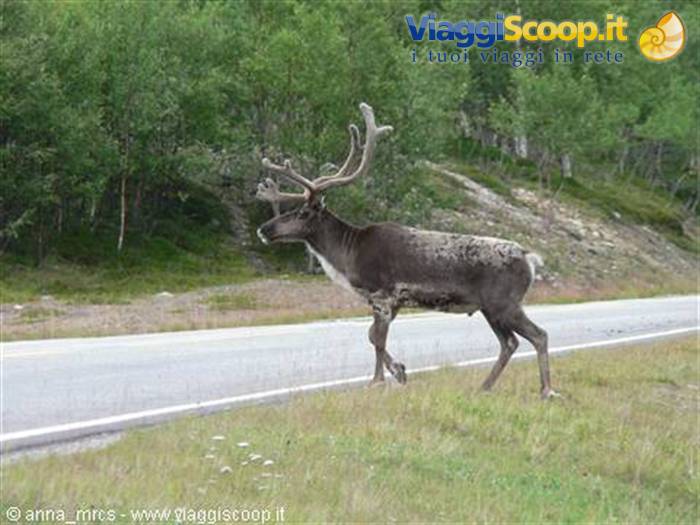
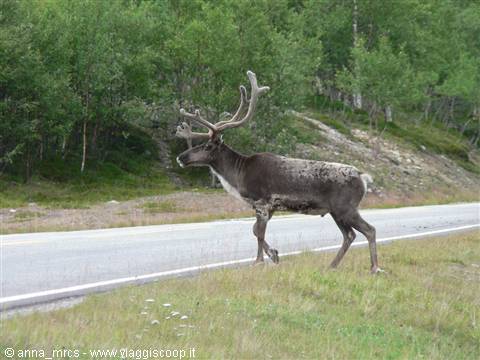
Considering the favorable climate of the area I'd say they are more than I would have imagined. It is connected to the mainland by an undersea tunnel, which obviously, arriving by ship, we didn't need to travel through. On the island there are fishing industries and in the green pastures it is not rare to encounter reindeer. In Honningsvag center there is really little to do. North Cape is connected to the town by a road 34 kilometers long. North Cape itself is nothing other than a plateau with a cliff plunging into the sea (305 meters high). The northernmost point of Europe however is a small point west of the plateau, Knivskjellodden point, reachable by a path to be walked on foot. I didn't go there but I was well informed! Coming back to us.. The day and the sea are really bad and since the excursion is conditioned by the weather conditions, we ask whether it has been canceled or not.
But we are mountain people and they are sea people so the excursion wasn't canceled. So here we are, barely twenty people, on the bus heading to the small village of Gjesvaer, where a small boat will take us to see this reserve. The guide speaks only English and Norwegian, because the one who knew Italian is leaving for North Cape with the rest of our fellow countrymen. The bus journey allows us to see this Arctic tundra better, with little lakes here and there and some reindeer grazing peacefully. The guide lets us know that a gray day like today's is not an exceptional event, on the contrary.. it's the days of beautiful sun that are considered exceptional. I don't know if she said that to make us happy or otherwise, the fact remains that the thing didn't change the trip one bit.
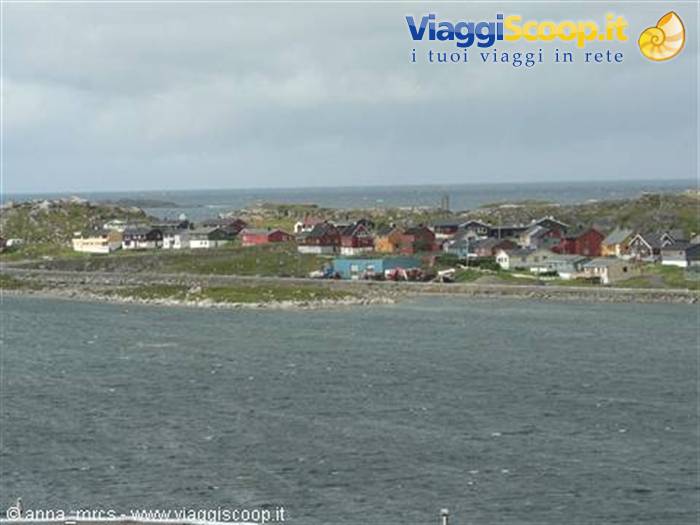
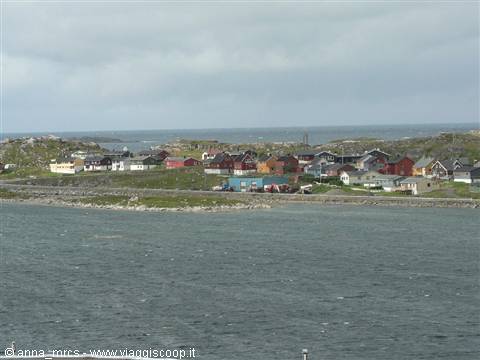
Arriving at Gjesvaer, a tiny fishing center, apart from us and the staff (2 people) of the boat and a cat with a very thick coat (I believe it, with this cold) there isn't a soul around. One thing that struck me about all these countries and houses seen along the navigation is the absence of external life. Let me explain, the houses are just there still and motionless, likewise the exterior, you don't see laundry hanging to dry, children in the yard or tricycles or bicycles leaning against the door of the house. I understand that the climate and the fact that for many months a year it's night doesn't encourage outdoor life but all this absence of life, used as we are to hearing the shouts of children in the street, the chatter of old people sitting on doorsteps, gives me the feeling of villages devoid of life, with a veil of melancholy.
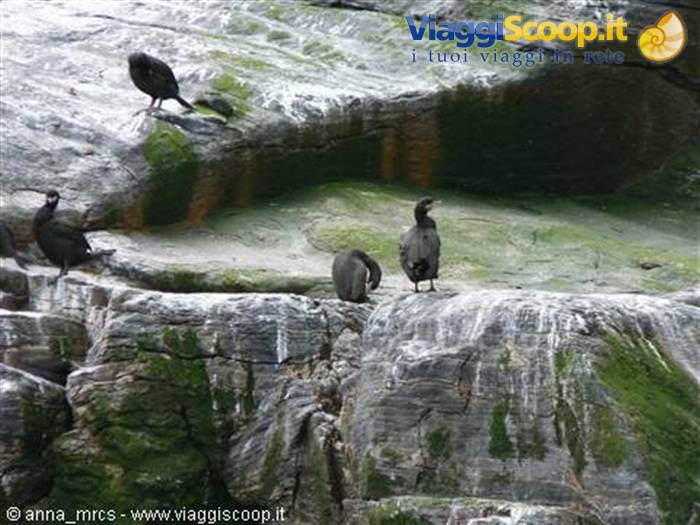
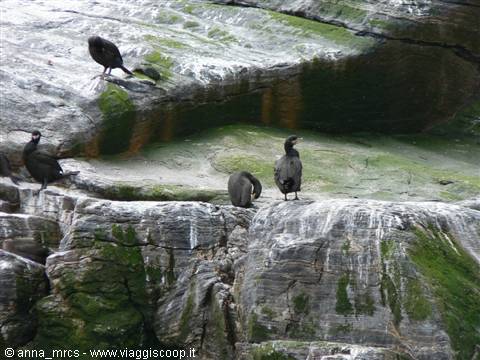
Coming back to our excursion, everything proceeds quietly until the boat, once it leaves the coast, gets out into open water.. oh right.. it's not like this reserve was located along the coast and so the rough sea wasn't a problem. These darn little islands, where cormorants, gulls, puffins and whatever else are perched, are in the middle of the sea. Once we left the coast the rough sea started to make itself felt and I'm not referring only to seasickness which was the smallest of our problems or the terrifying cold and the rain that had meanwhile started to fall but to the attempt not to end up in the sea. It should be pointed out that the boat or little boat (call it what you like but it's always small) was equipped with a mini cabin and a deck with a rather bare railing.
The boat oscillated at the mercy of the sea wonderfully, not to mention the 'jumps' it made when, against the current, it took the waves. People were all busy holding on to whatever they could to avoid slipping. Two elderly ladies tied themselves with a rope they found (excessive but not too much). In short.. rafting in open sea, that's the right definition. You might be wondering, but did you see those birds.. let's not talk about photographing them or seeing them with binoculars, as befits a bird-watcher, but since everyone was rather busy not going into the water the little birds ended up a little in the background.
In any case the boat couldn't get too close to the cliffs because the wind and the rough sea could hurl it against them (the last thing we needed), the fact of not being stable at all made sighting the animals difficult anyway, which perhaps due to the not particularly favorable weather conditions were rather agitated and in a ferment. In short.. a disaster on all fronts. Honestly, considering that on this ship there were also elderly people (and one of them was helped to disembark! Ed.) it seemed to me a little imprudent on their part to carry out this excursion given the weather conditions. In this case, I'm sorry to say it, but here, more than customer satisfaction, the need of the Hurtig
Cormorants
Day 81 Aug 2005
The weather conditions today too offer no possibility of being warmed by the sun's rays. The sky is as always overcast and it feels so much like autumn. Who knows what it's like here in autumn if it's already like this in summer! As scheduled the Hurtigruten docks at Kirkenes at 10:00. On the pier several buses are ready, those for the excursions, those for the airport and those for the city center. We, however, decide, like many others, to do it on foot; in less than a quarter of an hour we reach the tourist information office where we leave our suitcases in storage for 25 kr per piece. In my guidebook there was mention of the presence of a public bus that went as far as the border with Russia. So, just to poke around, we ask for information about this bus: it no longer exists.
With a couple of young Romans, met on the ship, we consider the possibility of all 4 of us going by taxi but the costs are high and it doesn't seem worth the trip, so we abandon this plan. Kirknes is an almost entirely modern town that overlooks the Bokfjord in the narrow inlet of the Barents Sea. A curious piece of news is the fact that the port, located at the bottom of the fjord, is not touched by the
Reindeer
Day 92 Aug 2005
Not too early a wake-up, so much so that at nine o'clock the woman who cleans the rooms comes to wake us. Oh well... no big deal, Oslo awaits us. A quick breakfast in every sense, because the waitress, when we ask for a cup of warm milk, dismisses us by saying she's run out and only has cold left!! I mean... don't you have gas or a microwave in this hotel? All those stars hanging outside, what are they there for if you can't bring a measly little glass of warm milk to a poor tourist who has no use whatsoever for cold milk to make coffee with instant coffee? Anyway... we head out to discover Oslo with a devil on our shoulders. Of course, today too the sun has gone off somewhere and the sky is grey. I'm starting to think that on the tourist brochures they went heavy on Photoshop, there's no other way to explain the beautiful blue skies in the brochures!
It's still early and the city is animated only by the comings and goings of those going to work; tourists, street artists and all the rest that enlivens city streets aren't out yet. Oslo is the oldest capital in Scandinavia; its name is made up of two Norwegian words, As and Lo, which mean respectively: God and field. We start our visit from the nearby cathedral Domkirke, which dates back to the end of the eighteenth century. The cathedral faces what was once Oslo's main square: Startorvet. Today it has lost much of that lustre and nothing remains but a square where little birds hop about and a few homeless people sleep on its flowerbeds. From here we move on towards the parliament (Stortinget).
The interior can only be visited by joining a guided tour, which we don't feel like doing, so we continue our visit along Johans gate, passing in front of the Nationaltheatret and then arriving in front of the austere university buildings. We go in looking for the Aula Magna mentioned in our guidebook but we can't find it; it's also August and there's no one around to ask for information. So we pick up our route again along Johans gate to reach the royal palace (Det Kongelige Slott). Built between 1825 and 1848, it has neither gates nor defensive walls. Some wings of the palace, during the summer period, are open to the public and can be visited with a guided tour. The long waiting lines for the visit don't tempt us at all to join in, while the garden can be visited for free without needing to queue.
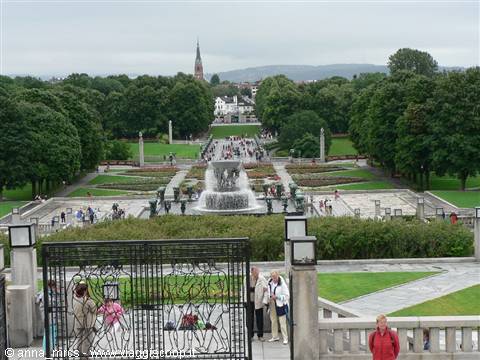
In front of the palace stands one of the many statues in Oslo; never have I seen a city with so many statues, and on every one of their heads the inevitable seagull—maybe they erected so many to provide plenty of perches for these birds. The park is a little paradise of greenery in the city centre; there's a small lake and lots of ducklings paddling about, there's even a rather pest-like little girl who has fun chasing them away, and at a certain point she slips on the wet grass and nearly ends up in the water herself. Justice has been served! We have to walk quite a lot around the city but in the end we arrive at the gardens of Frognerparken. There are trams to reach the park but after all the inactivity on the ship we really feel like walking. Inside the park is one of Oslo's most famous sites, the Vigelandsparken.
It's a section of this park dedicated to a modern Norwegian sculptor, a certain Gusta Vigeland. The park and the nearby museum display a good part of his works. In the park you can admire, among others, the statues that make up the fountain, the obelisk and those adorning the staircase and along the bridge leading to the fountain. These are statues representing women, men and children. Some are incredibly realistic. Vigeland, however, is not the only artist to whom Oslo dedicates a museum; one must also remember Edvard Munch. For those who don't know him, like yours truly before going to Oslo, he's the painter who painted that chilling painting titled 'The Scream'; his biography, given in my guidebook, outlines the profile of a man with a few screws loose—I had no doubt, judging by his works.
In any case, at his death he donated all his works to the city of Oslo, which now displays them in a museum dedicated to him. The park is enormous; once you leave the Vigelandsparken area the tourists disperse and the park, in its style and the people strolling peacefully through it, resembles a London park.
In the afternoon we decide to take a ferry (10 kr one way) and go to the nearby Bygdoy peninsula, where there are no fewer than five of the countless museums in the city, including the Viking ship museum (40 Kr), which we choose to visit. The museum displays the remains of three Viking ships. The nearby museum of Norwegian folk traditions, which I would have liked to see but which requires a lot of time available, features both an indoor section, where costumes, folk art artefacts, etc. are kept, and an outdoor section that reconstructs dwellings, granaries, stables, etc. from the 17th-19th centuries. Near the ferry dock, on the other hand, there's the maritime museum and the Kon-Tiki museum: where the raft is displayed with which a Norwegian navigator, a certain Thor Heyerdahl, made, in 1947, the famous crossing from Peru to Polynesia.
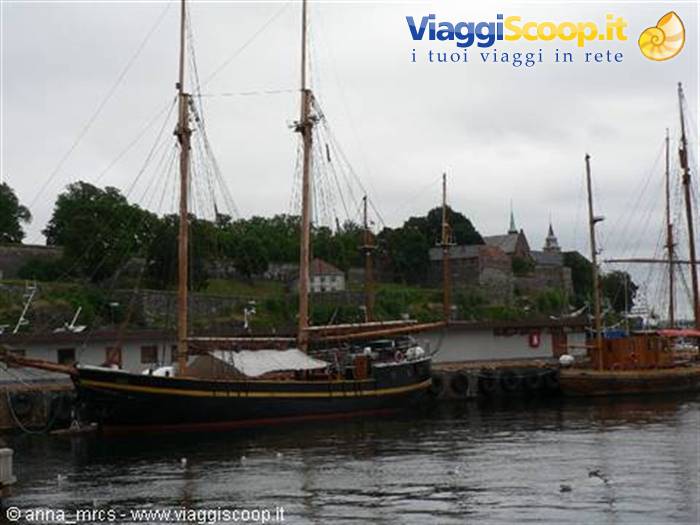
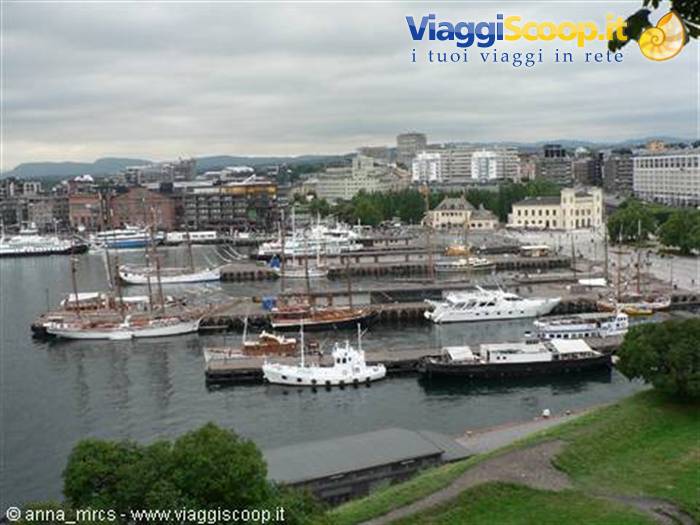
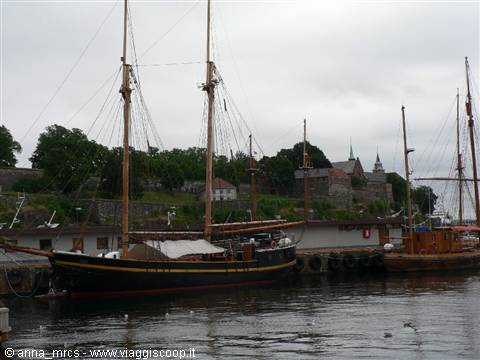
In front of the museum stands an enormous statue reminiscent of the statues on Easter Island. Back at the port, it's almost dinner time, but before choosing a place to go for dinner we go to see Akershus fortress; you can visit the fortress park and also the castle, but for the castle the closing time has already passed (18.00). For dinner we go to eat in the nearby Pale'et shopping centre; we have no idea where to go and after seeing so many places, very crowded, we decide to let our guidebook advise us. On the ground floor of the shopping centre there are quite a few establishments offering different types of menu, from Chinese cuisine to Italian, Greek and others. You choose what to eat and then look for a table.
Oslo - Akershus Fortress
Day 103 Aug 2005
Just to keep up its reputation, even today the sun is nowhere to be seen. After a good breakfast we leave our suitcases in the hotel lobby and go out to see the city for what's left of this last day. This morning our destination is the botanical garden, which also houses the natural science and zoology museum. Our guide doesn't even mention them but we have a map and a brochure where they're marked. It's not easy to get there but walk and walk we arrive at the entrance of the botanical garden. There's no one, apart from a few workers tending to a flowerbed. The garden is an enchantment, plants, flowers, a green corner in the middle of the city. The museums, belonging to the university, are closed, it's not clear whether they're just closed or whether they sometimes open, anyway we stroll and enjoy this green in the city.
To get back to the centre we change route and cross what could be called the Arab quarter of the city. Suddenly the Arab shops and venues have popped up out of nowhere and in the street, the features of the people, their clothes, undoubtedly the Arab quarter.
Our guide describes Oslo as a lively city that has nothing to envy other European capitals, one can only agree.
And so, the time comes to go home. Having retrieved our suitcases, we take the flybuss again which takes us to the airport. Norway is undoubtedly a beautiful country, the weather isn't the best but we'll definitely return to this country, overland of course.



0 reader comments