Why Amsterdam? Because I'd never been there.... Writing a diary about a city is never easy: a list of places, a detailed itinerary with the risk of rewriting part of a guidebook. A city's diary should tell a little about the city, about what you saw but above all about what struck you, fascinated you and what you jealously carried home among your travel memories.
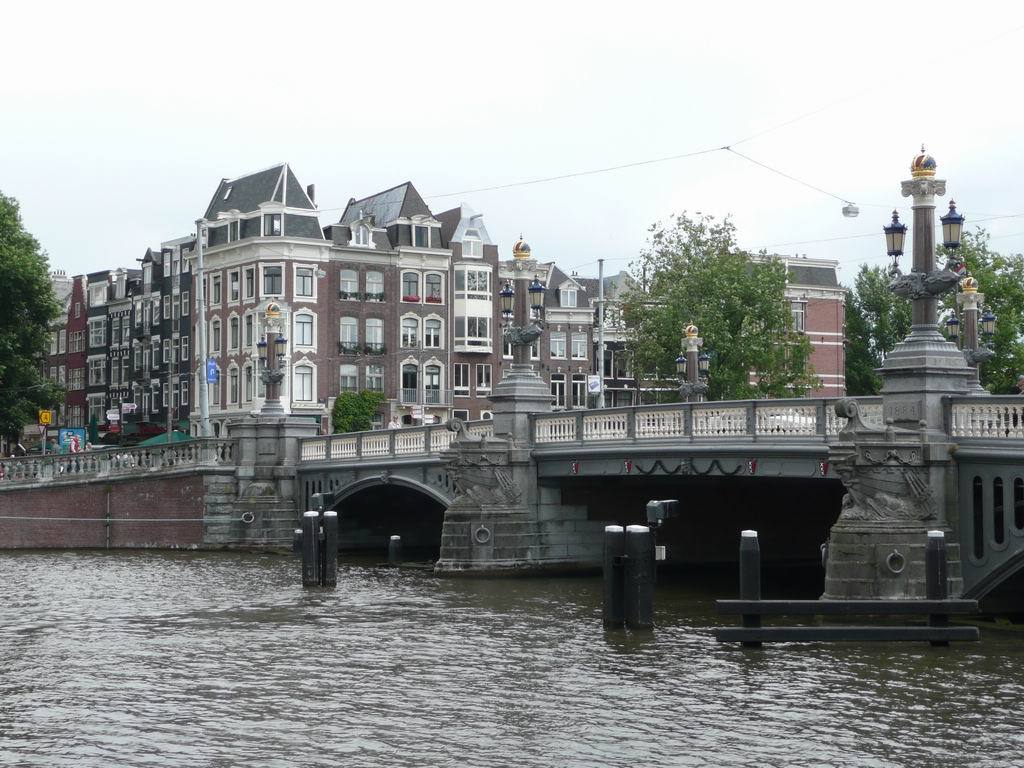
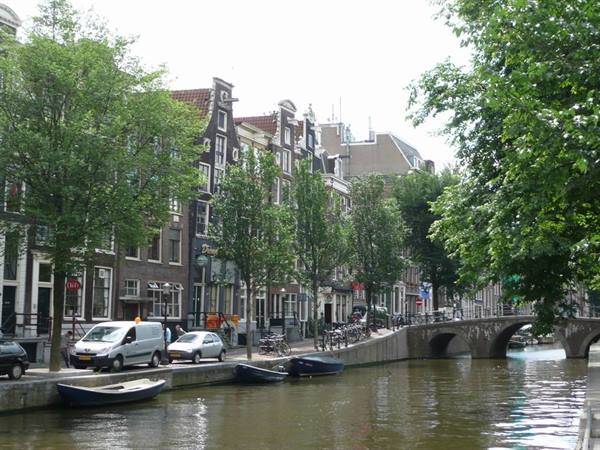
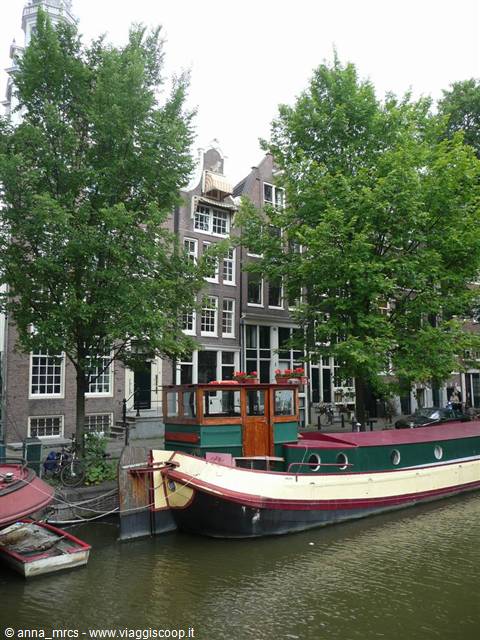
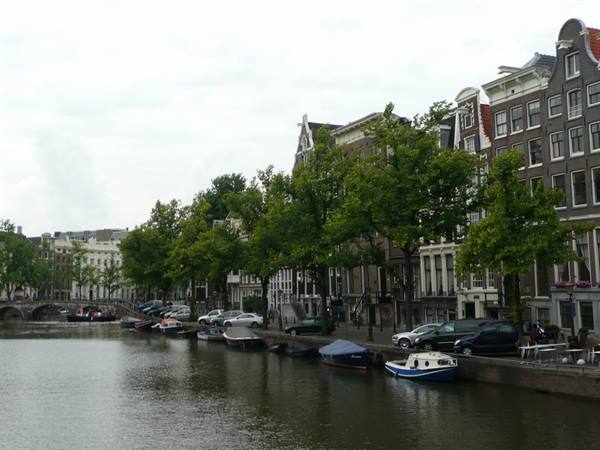
Amsterdam is the capital of the Netherlands and also one of the largest cities in northern Europe, with a population of over 750,000. It spreads over an area of low-lying land — hence the name Low Countries — and if it weren't for the defences built to protect the territory, these lands would be submerged by the sea for much of the year. And it is precisely all the canals, about 75 kilometres of them, on which the city is built, as well as its distinctive architecture and its extraordinary, quirky life, that give this city its special charm and attract millions of tourists every year, including the two of us! Distinctive and evocative is the architecture of the leaning houses, the Grachtenhuizen; there are around 7,000 of them, many facing the canals.
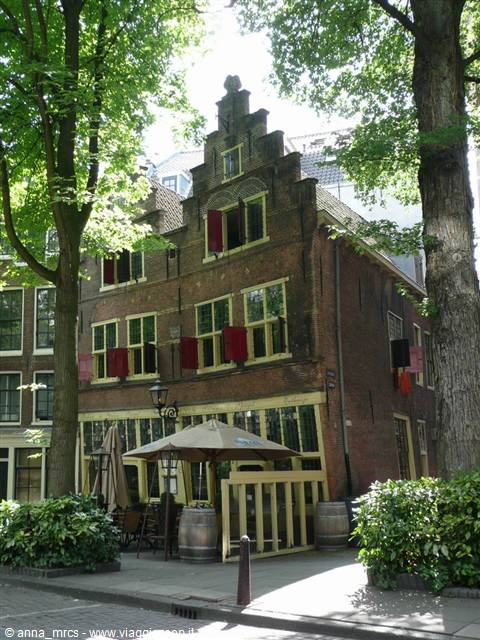
The houses built on piles — now of concrete, once of wood — sunk into the ground are all narrow and tall and end in a distinctive pointed shape. Their strange outward lean is unique too. At the top of the façade you can see the hook for attaching the pulley. In fact, these tall, narrow houses have very narrow staircases inside, and goods or furniture must be lowered or hoisted to the upper floors by means of this pulley, through the window. The distinctive outward lean kept the goods being lowered or raised away from the façade.
Historically the city's origins date to around 1200, on the banks of the mouth of the Amstel, where a fishing village grew up that later became a trading one. To avoid flooding, the first houses were built on mounds of earth and the windmills were also used to drain the land. The city saw rapid and flourishing development in medieval times, when the discovery of a method for drying herring (1385) allowed the city to expand its trade by exporting dried herring. The days of canned sardines were still far off! The 17th century was called the Golden Age, and many of the city's houses from that era bear witness to its sumptuousness and considerable growth, not only in terms of population but also in splendid houses and works of art that the city saw flourish. Perhaps not everyone knows that the city of New York originally took the name New Amsterdam.
A name given by the first Dutch conquerors who settled in the area. New Amsterdam, however, did not achieve the hoped-for economic development and was therefore ceded to the English, who changed its name to the current one — but that's another story and another place.
Although the Netherlands declared itself neutral in both world wars, during the Second World War it was nonetheless invaded by Germany, and numerous Jews were deported to Germany. Anne Frank was one of them; her story and her diary have gone and continue to go around the world, denouncing the brutality and absurdity of the Holocaust.
Day 112 Jun 2008
We were supposed to arrive in Amsterdam this night but due to a two-hour delay of the plane, already communicated at check-in and which then almost doubled due to the thunderstorm raging over Malpensa, we landed in Amsterdam (Schiphol) at around two in the morning of the following day. Unlike Malpensa where after ten they began to close shops, bars, and it was a close call that they even turned off the lights, Schiphol was much livelier and functioning. Once we collected our luggage, we went to take the train to reach the city center with the certainty that we would have to buy the tickets at one of the automatic terminals. Instead, to our surprise, one ticket office window was still open and the news that a train would leave in a few minutes also reassured us. Usually there's a train about every 10 minutes from 6 to 24, and one every hour in the remaining time slot.
The duration of the journey is estimated at 20 minutes. The station at night is guarded by the police who prevent entry to the homeless and non-passengers. It's almost three in the morning and the city is asleep, very few cars, very few people on bicycles. We are immediately struck by the enormity of the bicycle parking lot in front of the station and by the quantity of bikes crammed inside it! Unbelievable! Incredible! We quickly head along the Singel canal in the direction of the hotel we booked. In the darkness and silence of the night along the canal we also come across a display window with its accompanying ladies still at work, well... those will be the night shift ones.
We arrive at the hotel where the porter immediately gives us the key to our room and sends us off to sleep; we'll think about the rest tomorrow; it's so silent that we almost don't dare move for fear of making noise climbing the steep and narrow wooden staircase that leads to the rooms. The room is small, we certainly don't have enough space to hold receptions or parties, but for the two of us it's more than enough. To our sad surprise we discover that someone at Malpensa must have left the luggage in the rain. Most of the things contained in our trolleys are damp and wet. So before going to bed we also have to hang out the laundry!
Amsterdam
Day 213 Jun 2008
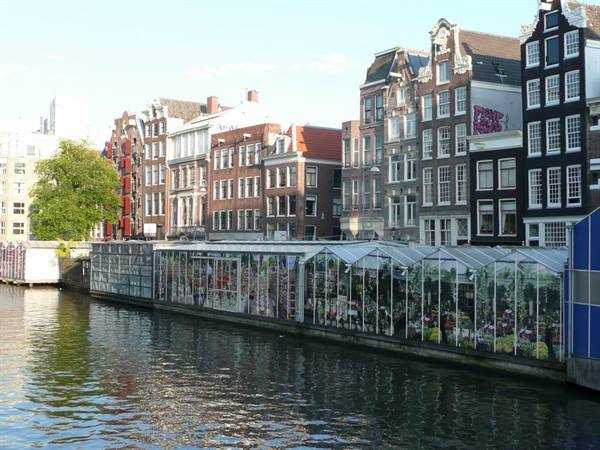
After a few hours of sleep we wake up at 8:30, ready to go and visit the city. Walking along the Singel canal we reach the Bloemenmarkt. It is the city's last floating market, even though the current floating stalls are all permanent, it retains some of its charm thanks to all the colours of the flowers on sale. There are tulips, roses, and many other flowers, bulbs and themed souvenirs. It makes you want to take up gardening! But maybe that's not a good idea, seeing as at my house the plants commit suicide out of despair! Not far from the market there is the Mint Tower (Munttoren), which was once part of one of the city's defensive gates.
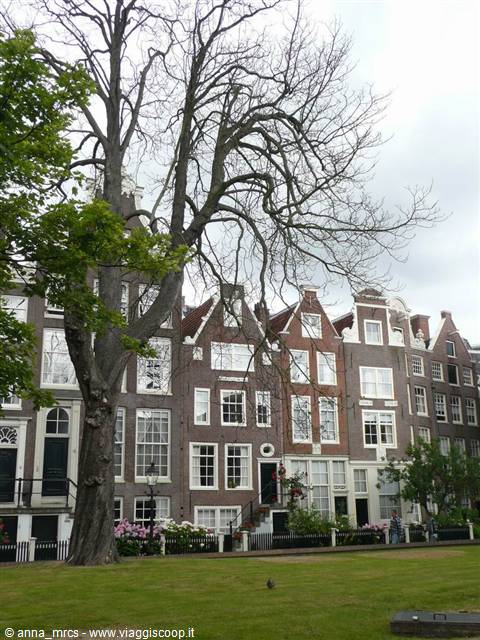
Entering the Begijnhof is a bit like stepping into a fairy tale from times gone by. This small cluster of houses gathered around a little garden, with birds singing sweetly in the trees, people walking slowly and the facades of the old houses, really looks like the setting of a fable; you wouldn't be surprised to see Snow White at a window or Alice in Wonderland dozing under a tree. This quarter was built in 1346 as a residence for the beguines, a sisterhood of women who lived like nuns without actually being nuns, who helped the poor and the sick. Among the buildings facing onto the courtyard you can see the oldest house in Amsterdam and the chapel of the Begijnhof: the clandestine church where the beguines prayed.
The Dam is one of the city's most famous squares; it is also the place where the first dam on the Amstel was built. Overlooking this lively square, packed with people and pigeons, are some of the city's most important buildings: the Koninklijk Paleis, the Nieuwe Kerk and Madame Tussaud's Amsterdam. On one side of the square stands an obelisk, a national monument erected in 1956 in memory of the victims of the Second World War. The Koninklijk Paleis is the royal palace; it was originally built as a town hall but is currently used by the royal family for official ceremonies. The Nieuwe Kerk is the new church. It was built in the 14th century to meet the needs of a city whose population was growing considerably and whose Old Church was no longer large enough to hold all the faithful.
Over the course of history the building was repeatedly devastated by fire and the bell tower was never completed. The church is currently used as a cultural centre; concerts, exhibitions and the coronations of Dutch sovereigns are held there, and admission is charged.
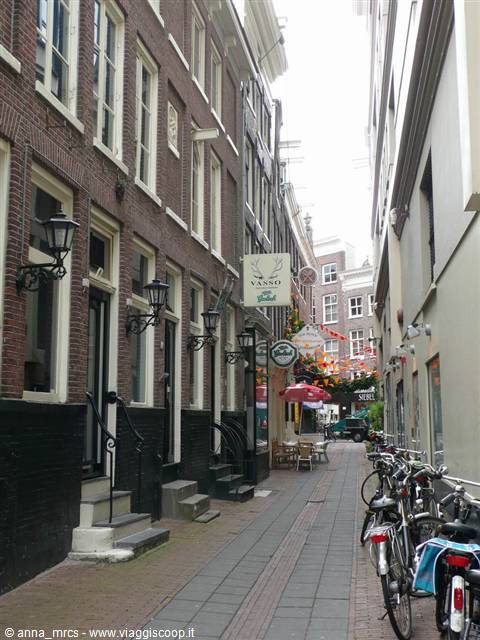
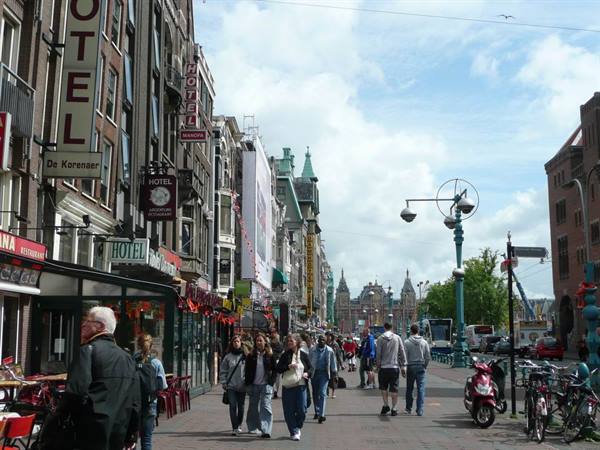
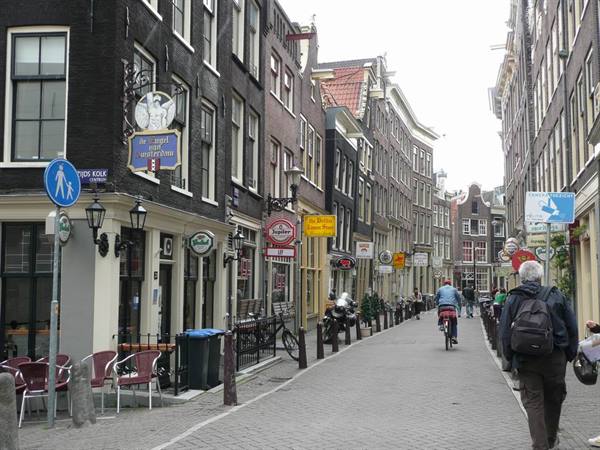
Walking along the Damrak, this crowded street, heading towards the station, is a succession of souvenir shops; the street is wide and packed with people, but although it is renowned and famous, it holds no charm for us. We prefer the narrow alleys along the canals, with the facades of the houses leaning slightly askew overlooking the streets and, now and then, a café or a little shop. We found a really nice one selling educational toys.
Walking around Amsterdam, if on the one hand it is the best way to observe the city and to discover its most suggestive corners, on the other it requires particular attention. Car traffic is not especially heavy and does not represent a problem for pedestrians, whereas bicycle traffic is rather intense; the city is built to the cyclist's measure, with cycle paths and priority lanes, and alas we poor pedestrians have to be very careful of cyclists, because stopping to give way to two-legged creatures is something they wouldn't even dream of! In fact…
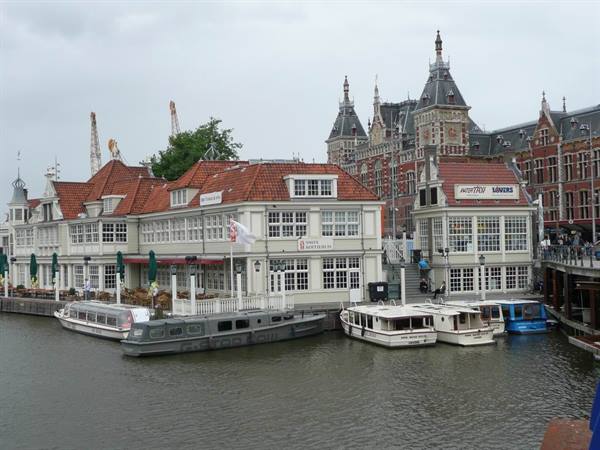
The station area, Central Station, is one big building site; there are works in progress on the facade and on the square in front of it. A little further on is the Sint Nicolaaskerk, one of the many churches dedicated to the memory of Saint Nicholas, the patron saint of sailors.
For many people Amsterdam is synonymous with transgression, with a place where sex and drugs are a lawful and omnipresent pairing. In the sixties it became the paradise of hippy culture and drug trafficking. Today, thanks to measures taken in the past, it is no longer so. Soft drugs have not been legalised in the rest of the Netherlands, but their sale is tolerated, and therefore their consumption inside particular establishments called Coffeeshops (better not go in just for a coffee!). By contrast, the consumption and dealing of hard drugs is considered a crime, as in the rest of the world.
Societies evolve, technology improves, in some ways the world becomes more and more civilised, people's lives improve, there are jobs that disappear, jobs that are invented, and there is one job, as old as the world, that despite everything, despite the attempts of governments, humanitarian associations, and all those others who believe in the immorality of this practice, has always remained exactly the same. It simply survives thanks to a banal law of the market: as long as there is demand, unfortunately there will be supply. In Amsterdam prostitution is permitted within particular establishments, let's call them that so as not to call them by their proper name.
Since even the Dutch have not managed to defeat this bent, they have opted to contain it by restricting it to these establishments, where the phenomenon can therefore be kept under control and some health and safety protection can be guaranteed to the ladies who decide to practise this ancient profession. Obviously they must all be of age, or all of them, depending on the establishment. In Amsterdam there is an area of the city that is a succession of these establishments; girls, and not only girls, scantily dressed, are displayed in windows trying to entice, to attract possible customers. I don't think words are needed to comment on this situation.
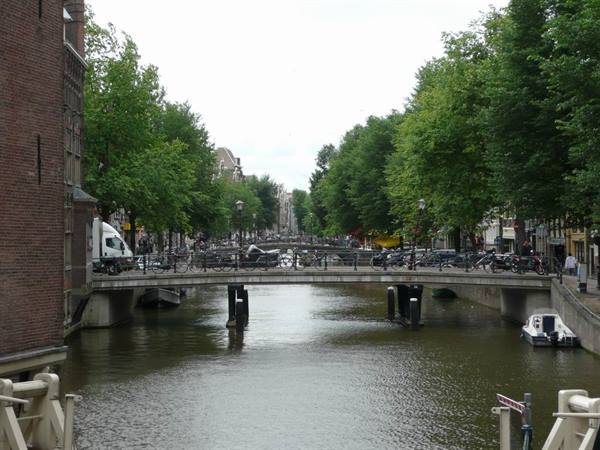
Despite the cold we walk all day; we stop just long enough to buy something for lunch; we turn this way and that, turn into streets and alleys, walk along canals, cross bridges, take photos and admire the enchantment of the buildings, observe the frenzy of passers-by, the confidence of cyclists and appreciate the green corners along the canals. This is our Amsterdam, the Amsterdam we will carry in our hearts and take home with us!
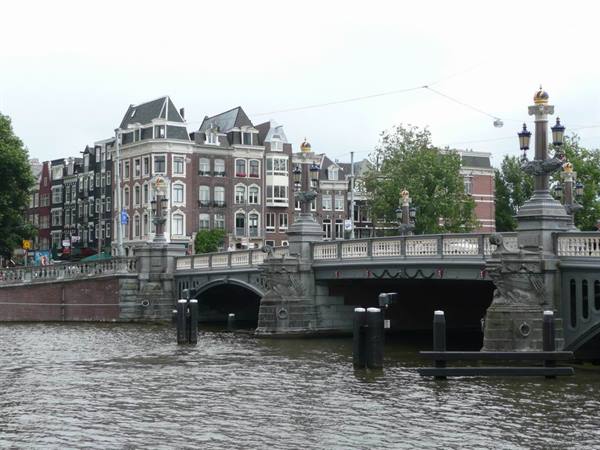
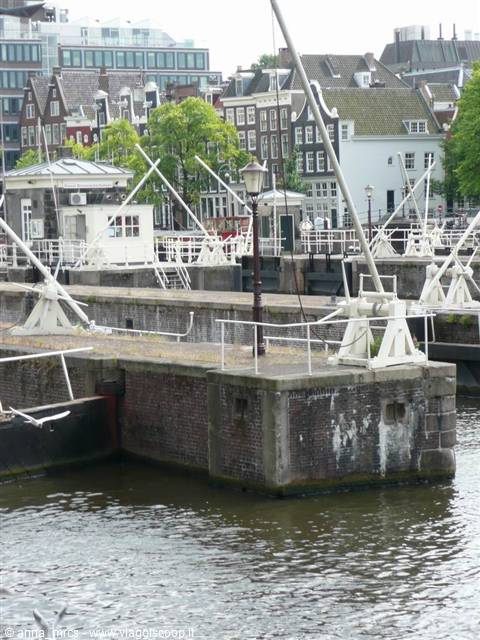
Of all the bridges in the city, the Magere Brug (eastern canal ring) is perhaps the most famous. It is a traditional Dutch drawbridge, and the one we can admire now is a reconstruction of the original, which was made of wood and was built in 1670.
Among the museums of Amsterdam we decide to visit the Van Gogh Museum. It is housed in a modern building, in the museum quarter. If I am honest, I was a little disappointed; I was expecting a much richer collection of the painter's works.
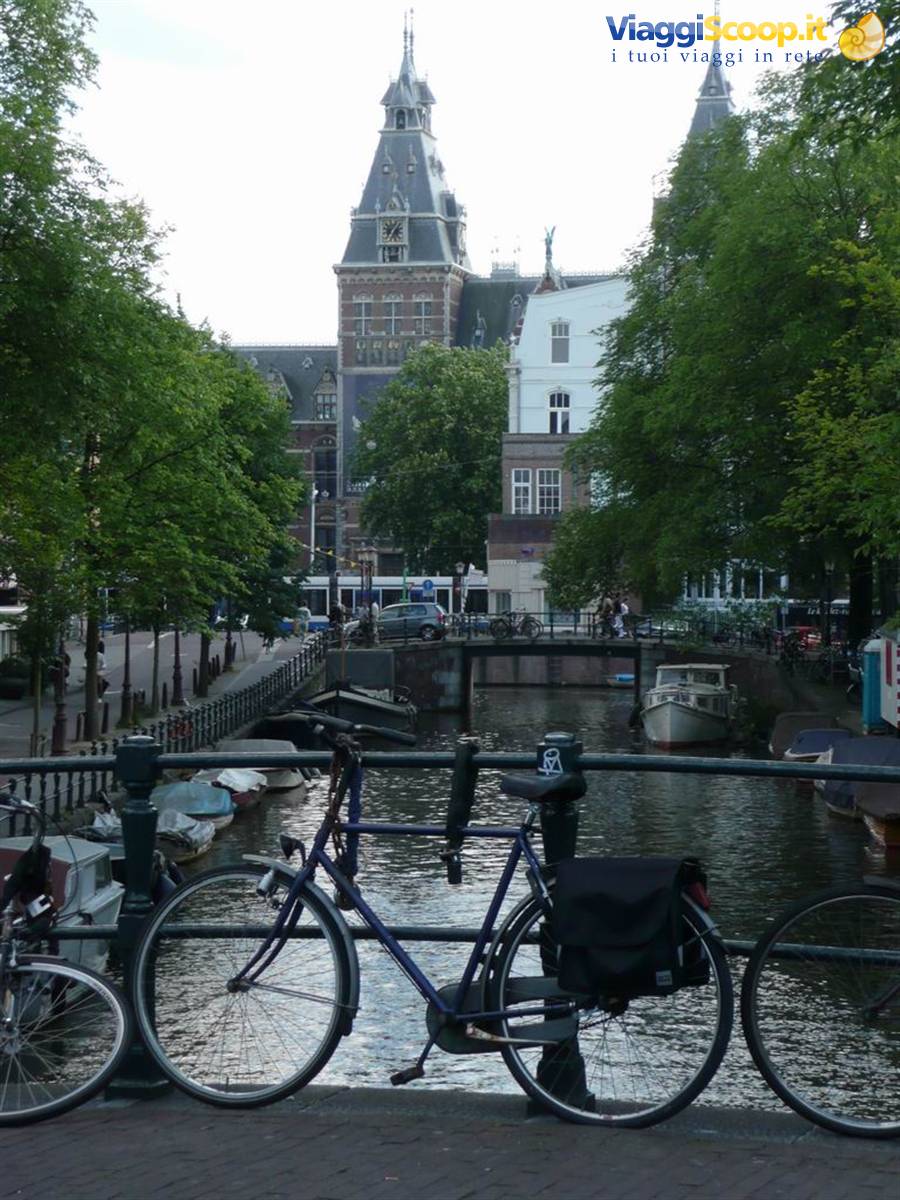
Another very popular art museum, as the queue we see at the entrance testifies — which makes us give up the idea of going in to visit it — is the Rijksmuseum. The building that houses it is very distinctive, a sumptuous neo-Gothic building. Inside is one of the largest collections of Dutch art.
Not far from this area is the Vondelpark, a beautiful public park that was opened to the public in 1865. It came about through the initiative of a group of important residents in the area who promoted the raising of money for the creation of a public park.
Haarlem
Day 314 Jun 2008
If there's one thing that works well in Holland it's the railway transport. Well... compared to the Italian ones they all work better, it doesn't take much to get trains to arrive on time! We decided to visit two cities near Amsterdam: Leiden and Haarlem. We'll do a loop, we'll take the train and go first to Haarlem and then to Leiden to then return to Amsterdam. We didn't even have to wander around the cities with the anxiety of missing a train; there are so many trains covering the routes we're interested in that more than an intercity transport system it seems an urban system. In short... the Pinerolo-Turin railway line, not even at the time of the 2006 Winter Olympics, saw so many runs connecting the two cities!
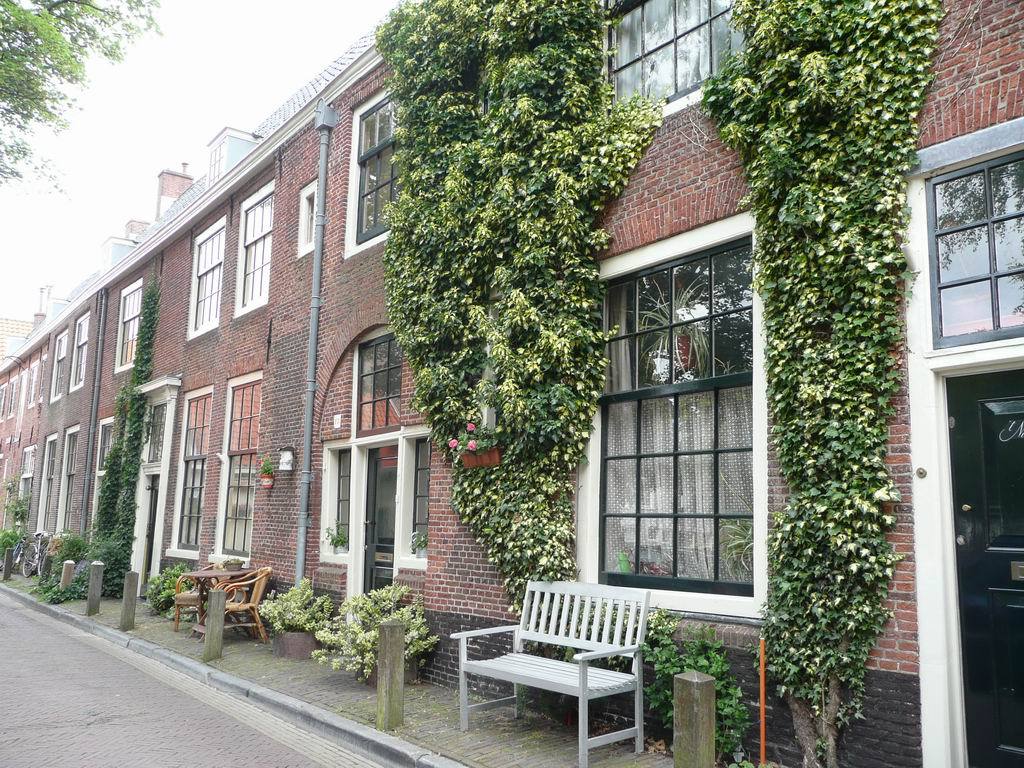
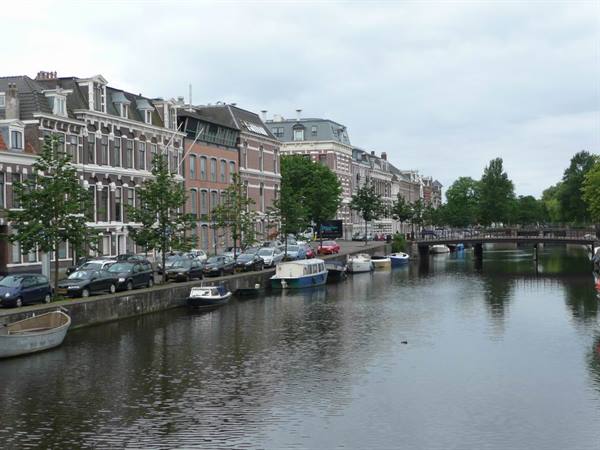
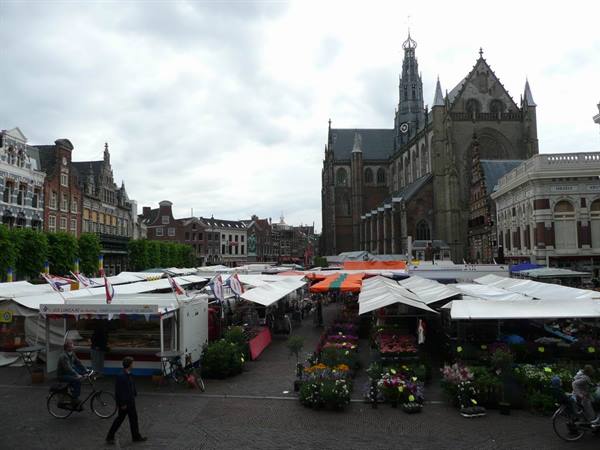
Haarlem, founded in 1245, is today the commercial capital of North Holland, it's also a flourishing center of the pharmaceutical industry, of bulbs and of Dutch printing. In short... to look at it, it seems a quiet provincial town, and instead it's the eighth largest city in the country. It must be said that despite everything it has preserved part of its seventeenth-century charm, and walking through its little streets is particularly evocative and pleasant. A curious thing is found 4 meters below sea level. On the Grote Markt the town market is underway, stalls of fruit and flowers color the square. At a kiosk we buy a nice little pastry to delight our palates; it's two nice cookies, like wafers, held together by a very sweet syrup, all served warm and it's truly a delight. Overlooking the square are the Grote Kerk and the Stadhuisi.
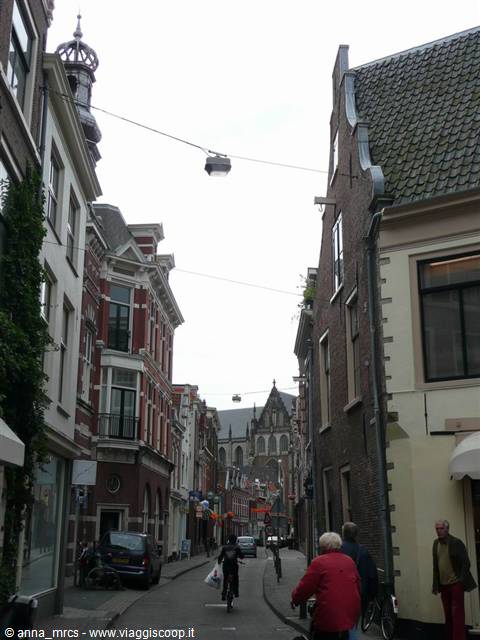
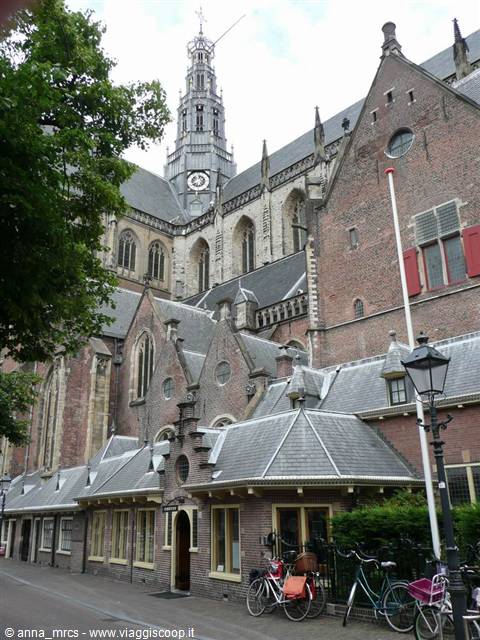
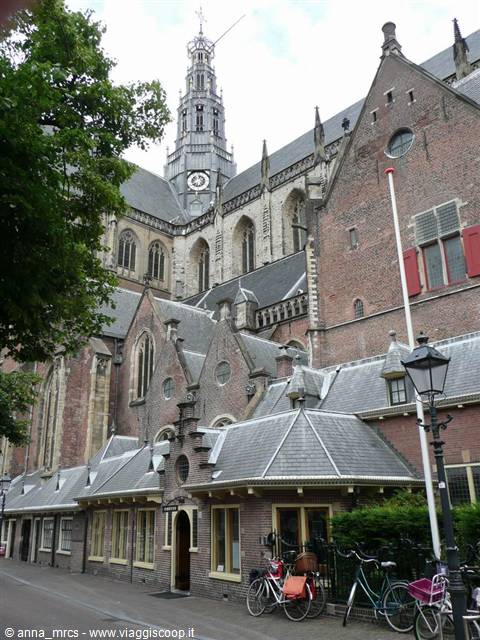
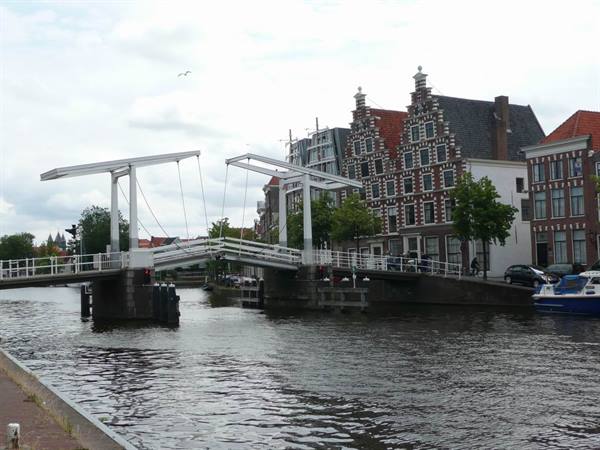
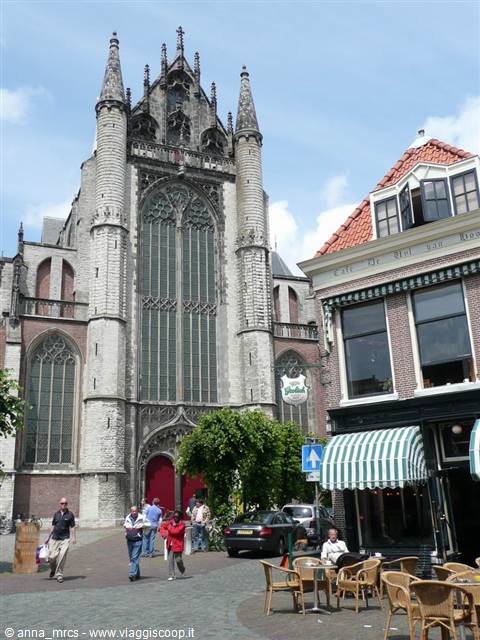
The Grote Kerk is the enormous church, in Gothic style, of the city. We take a nice walk around it because on one side there's a whole series of shops and houses leaning against the church, very particular. In an alley near the church, we come across a group of women busy knitting. They're sitting in a circle with their camping chairs and, chatting, they knit. What a strange thing... maybe it's the knitting circle of the area! While the Stadhuisi is the austere town hall of the city. Haarlem too has its own nice drawbridge, the Gravestenenbrug, which crosses the river Spaarne. We take a nice stroll around the city, first wandering in an orderly fashion following an itinerary marked in a guide and then at random, following our instinct. Sometimes, wandering without a destination, you come across the most evocative corners, the least visited but equally beautiful and noteworthy alleys.
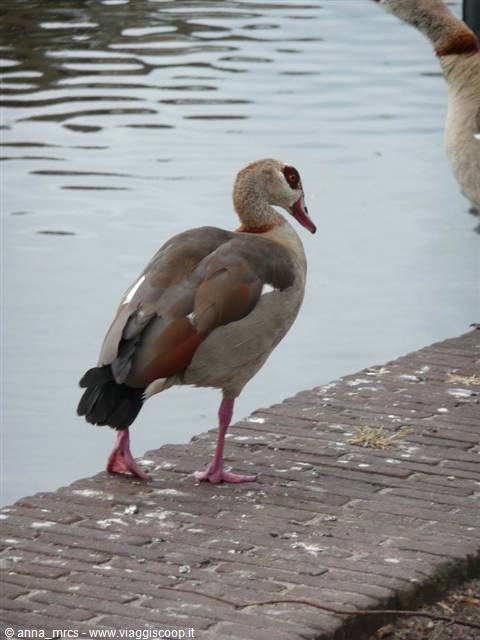
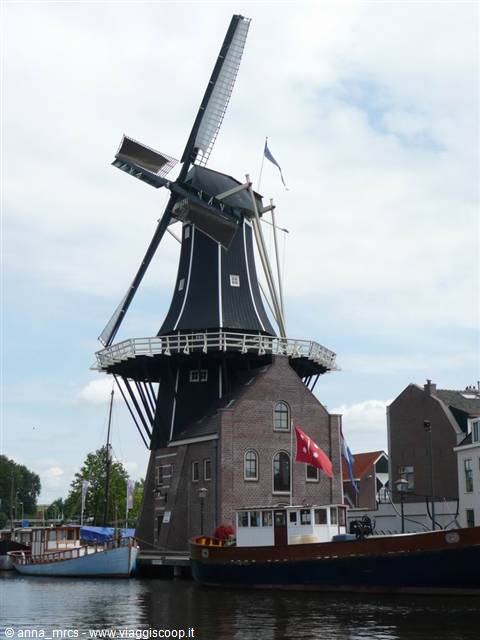
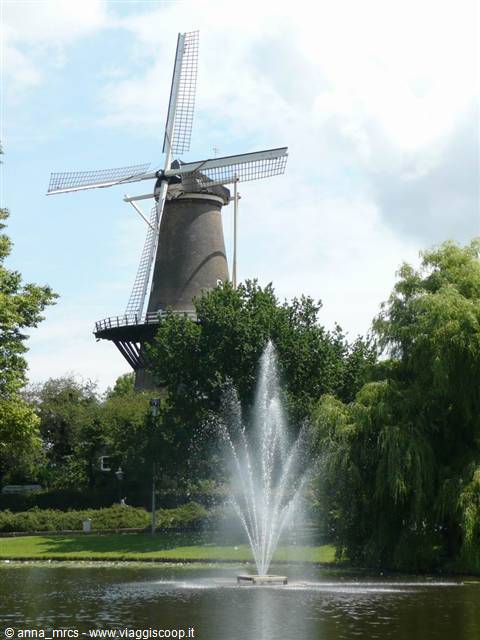
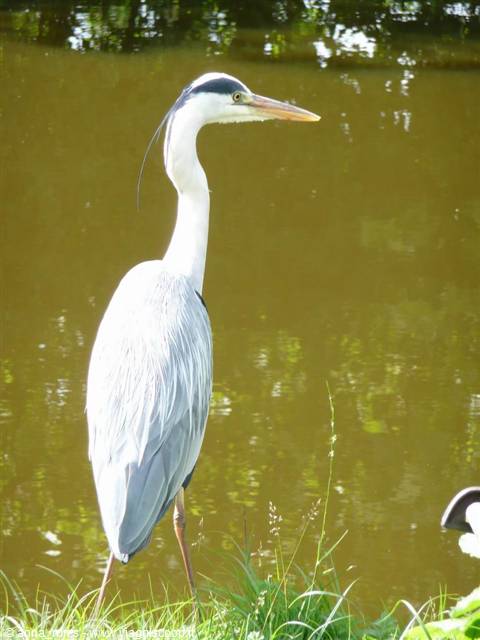
We arrive in front of a small square where a heron, completely undisturbed, walks in front of a bakery; some pigeons approach it but it doesn't even deign them a glance; with its long neck and its proud posture it moves its head and long beak left and right in search of something. In all this wandering we even find a nice windmill, but then time is pressing and we head toward the station, it's time to leave for our next destination.
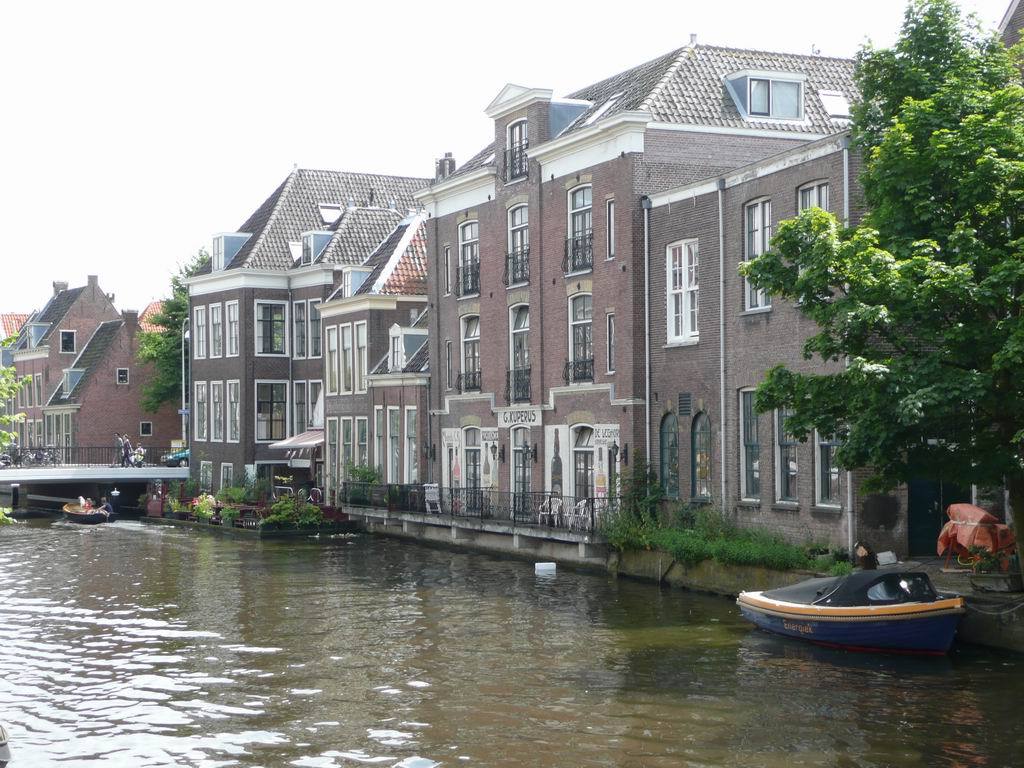
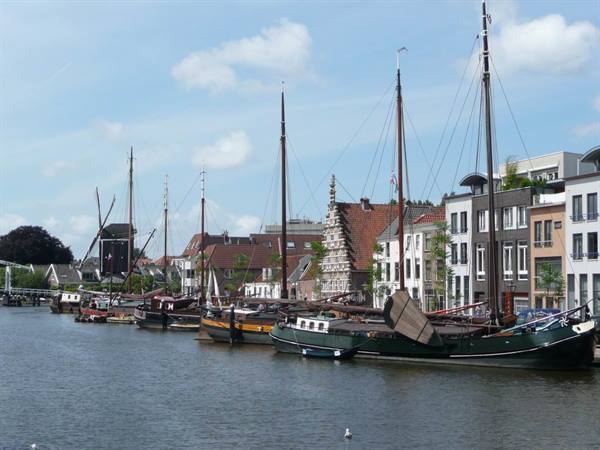
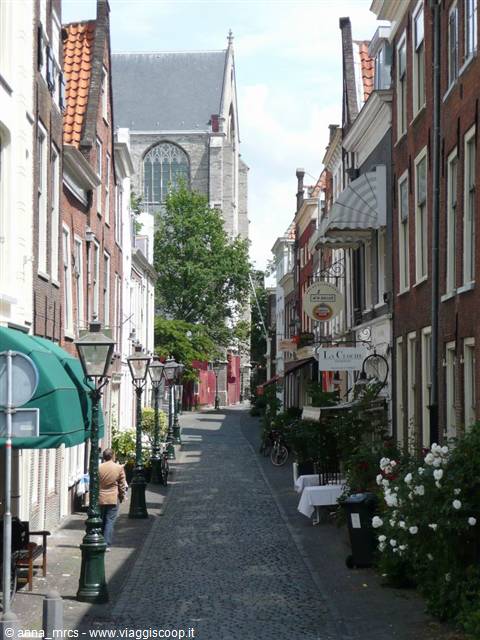
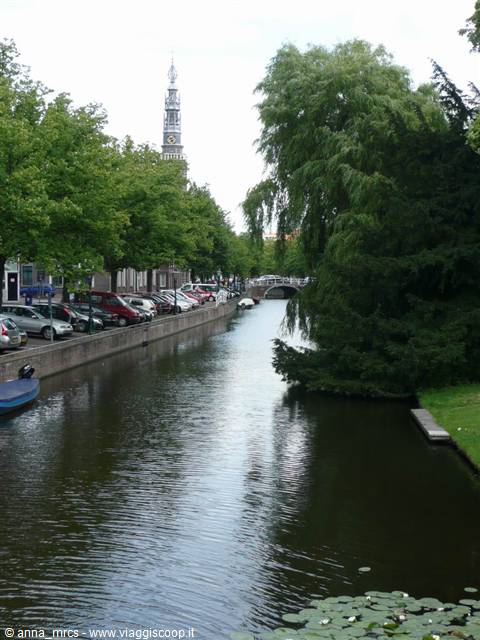
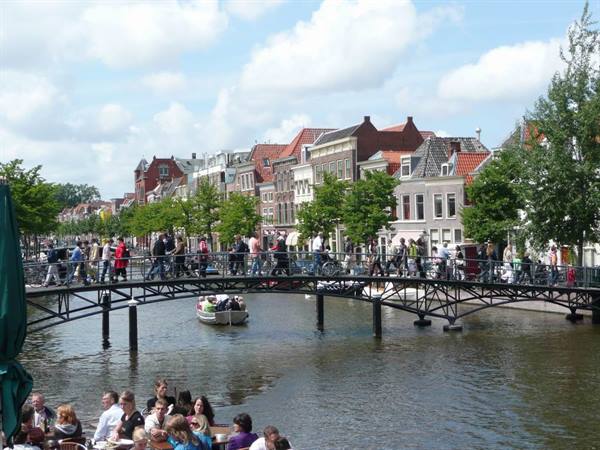
Leiden, our second destination today, is a prosperous university city. There are many canals, little streets and very evocative alleys. Compared to Amsterdam it has a simpler, more provincial charm and perhaps I like it precisely for this. While Haarlem seemed to us quiet, almost sleepy, Leiden immediately appears to us more alive, more vital. On a corner of a canal, in a small church, a wedding is about to be celebrated; the guests in elegant attire await the arrival of the bride, who arrives in a carriage drawn by two horses, as in the best fairy tales! Who knows which one among all these tall and blond little men, whom Roberta carefully scans, is her prince charming! In itself the city is very lively, shops, cafes, people crowding along the canals.
Hoogstraat is the street where the canals meet on the Rhine, it's a succession of cafes and restaurants and above all people, lots of people. Very evocative is De Burcht, a twelfth-century fortress with crenellated bastions. It sits on a grassy mound, a bit raised compared to the rest so as to allow a view over the entire city.
We return to Amsterdam just in time for a little stroll before dinner. So we choose one of the areas of the city we haven't visited yet and walk in that direction. Amsterdam is anyway Amsterdam, crowded with people, with tourists, frenetic even in the most hidden and remote corners. We also wanted to visit the Anne Frank House but the line in front of the entrance makes us change our minds. Whatever, having to stand in line for an hour to enter a museum is something I just don't conceive of, so we sit along the canal, in a quiet area, to enjoy a bit of rest and relaxation.
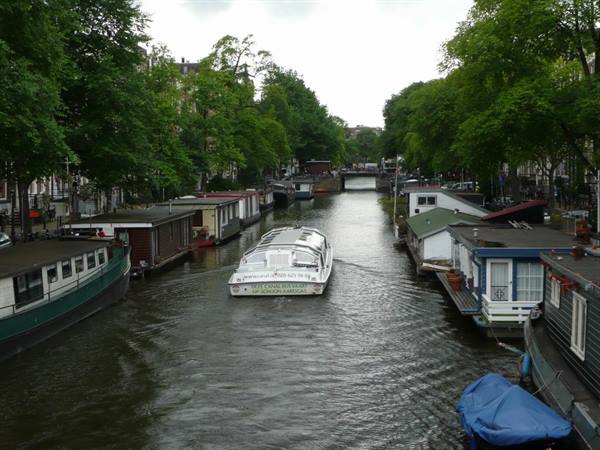
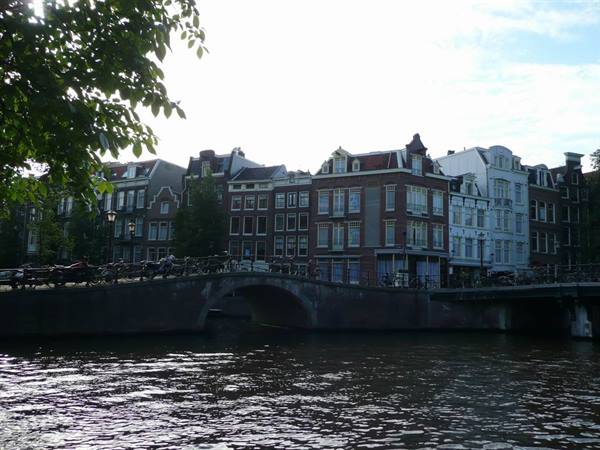
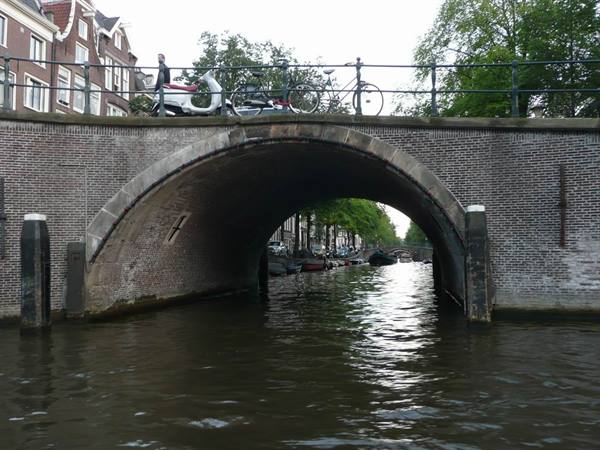
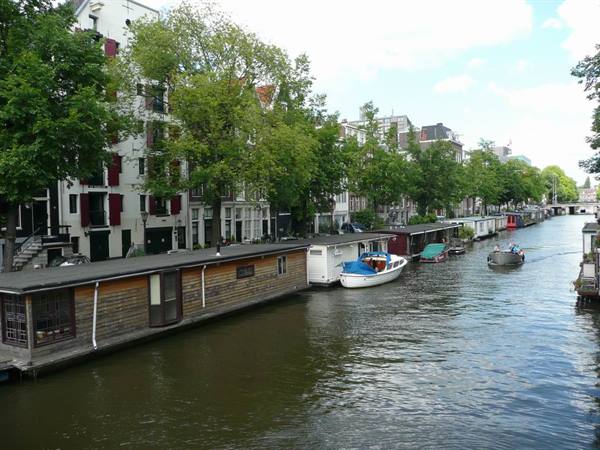
Many boats pass on the canal: tourist boats, private boats, boats where parties and revelries are underway, in short, life on the canals of Amsterdam is by no means a dead scene; will it be like this every day or only this evening, which is Saturday night? On some canals the houseboats are moored; some are beautiful and some are very showy or excessively decorated, or others again that instead need urgent renovation work; they are anyway an image and an icon of this city. Today the sun kept us company almost all day and, given that the weather was favorable, after dinner we too go for a nice cruise on the canals. Another way and another approach to get to know this city. The boat sails slowly, among canals and bridges the city flows and changes before our eyes while the first evening lights fall on the city and the innumerable bridges of Amsterdam light up with strings of lights.
Leiden
Day 415 Jun 2008
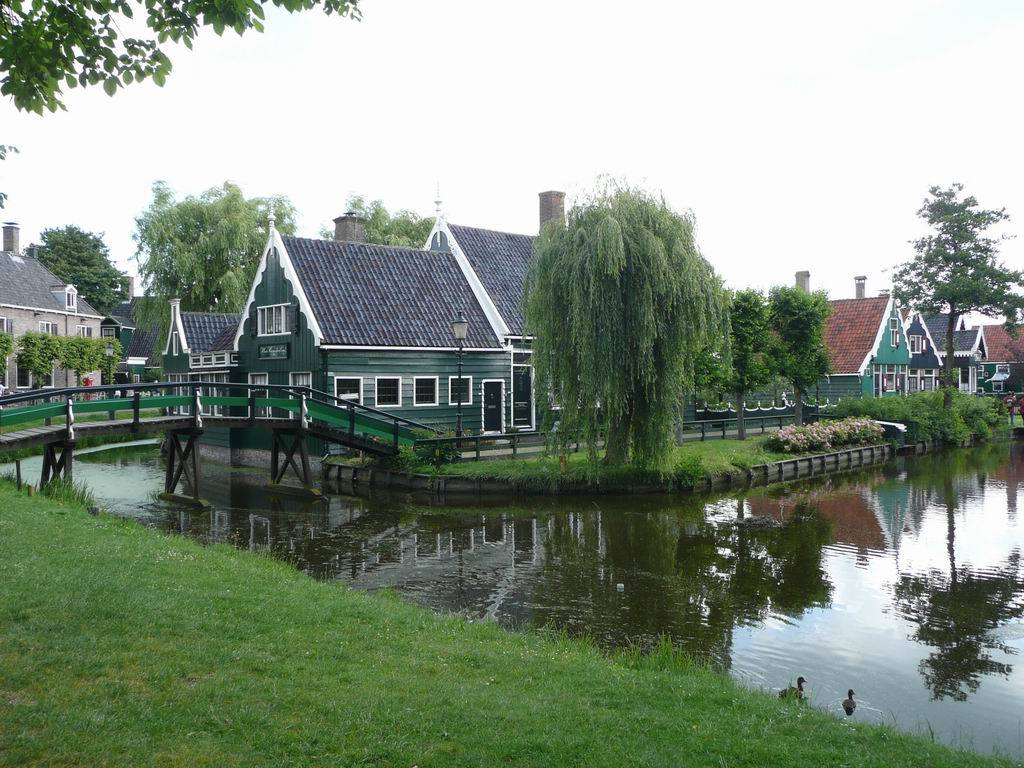
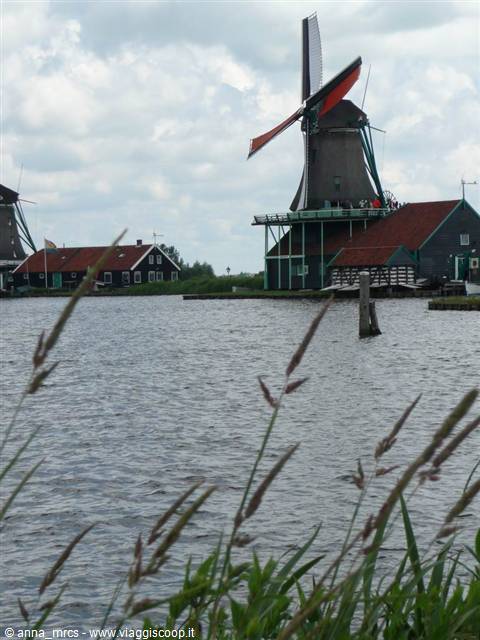
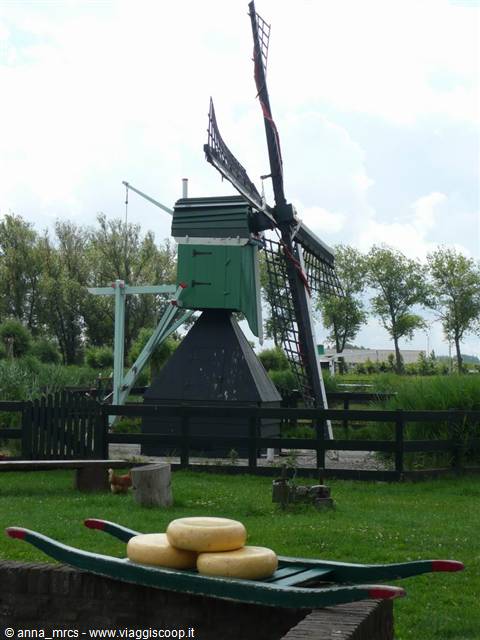
On the streets of Amsterdam you immediately notice that it's Sunday morning, the city is dozing and around you only see the street cleaners who clean the city of all its garbage. The day's program includes a visit to Zaanse Schans and then returning in the early afternoon and concluding the visit of the city. Zaanse Schans is an area of the town of Zaandam. This area was created in 1960 with the aim of depicting a seventeenth-century village. Its buildings: houses, shops and the historic windmills present in the Zaan area were moved and placed here to create this kind of village-museum, whose entrance is free. The village-museum is anyway inhabited, and people live and work there. To reach Zaanse Schans we first have to take a train to Zaandam, then continue on foot for a short stretch and take a ferry that takes us directly to this little village-museum.
It's not the only way; there's also a road used by cars and buses. Our journey, in itself simple, gets complicated due to the interruption of the railway line. Part of the route we'll have to cover with a replacement bus. Despite this little hitch we manage to reach Zaanse Schans without problems. The return, however, was much more eventful. Along with many others we stood in the rain waiting for a replacement bus; two arrived but were already full; in the end, squeezed in among the people, we managed to get on the third bus, also full. In short, yesterday we praised the Dutch railways, today we have to revise that definition a little. This management of replacement buses is a bit to be improved. The first impact with Zaanse Schans is fabulous, it feels like having entered a painting from another era.
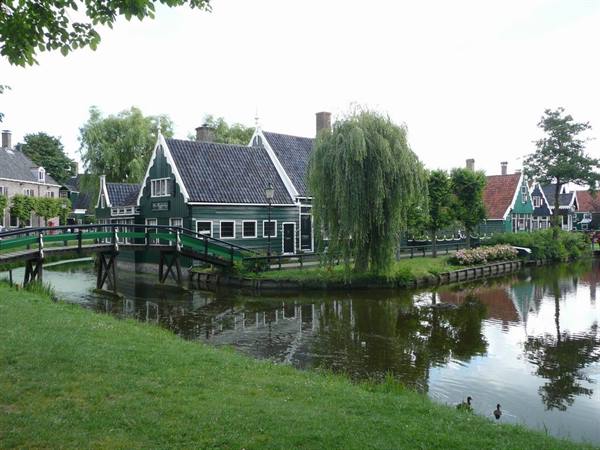
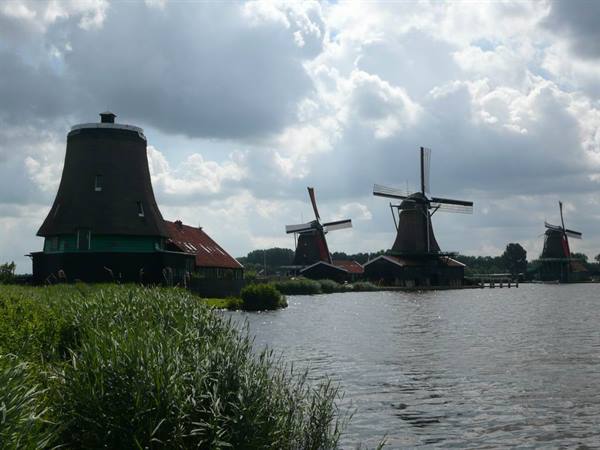
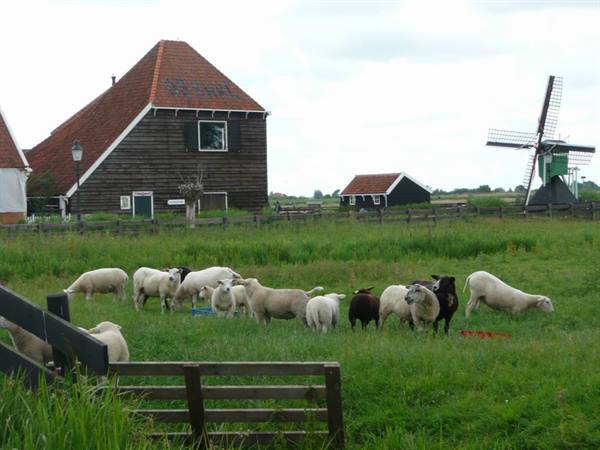
Period houses, with little picket fences, bridges over canals and English-style lawns surrounded by lush flower beds. Ducklings and birds that crowd the canals, stroll on the lawns, even a heron rests on the bank of the canal. There are also six windmills, some can be visited (for a fee). It really feels like having entered a fairy-tale book. The Dutch countryside with sheep and cows calmly grazing in the meadows with tall grass enriches with charm and poetry this already evocative landscape. There are also two farms and obviously a few souvenir and typical product shops. You can attend a lesson on how to make clogs or the famous Gouda cheese with its inevitable outer coating of red or yellow wax. In short, this open-air museum is a true little gem!
Back in Amsterdam we resume the visit of what we still have to see. Among other things we make a quick stop at the Museum Willet-Holthuysen. It's an ancient residence, the name is that of its last owners. It's located in the area of the canal ring Grachtengordel. At the entrance a booklet is provided, to be returned at the end of the visit, with the description and explanation of each room, so as to make the visit more interesting. Notable is the kitchen and the furnishing of some rooms, including the blue room and the dining room. Also the Museum Amsterlkring, located in the red-light district, is a perfectly restored house museum, inside it there's even a small church or chapel. As well as the Museum Van Loon on the Keizersgracht canal, which is entirely furnished with furnishings and goods belonging to the Van Loon family.
Finally, to close this day, we choose to go relax on a bench in the Ooster Park right next to the Tropen Museum, an important research center for tropical agriculture. What!?! We walk quite a bit to get to this park and to discover that we got the day wrong. It seems that all of Amsterdam has gathered here. There are stands, several stages with their respective musical groups, rock music, 'tunzi tunzi' music, food and drink kiosks and so, so many people of all kinds. Couples in Sunday dress, parents with strollers, kids, groups of hippies or whatever remains of this generation, women with long skirts walking on the grass without shoes, people who have raised their elbows a little and people who seem to have made a good supply of raw material in some coffeeshop. In short... so much for the quiet place to relax, it feels like being at a rave party except that here there are also families.
Along the canal that crosses the park we see many ducklings and birds, some are crouched sadly on the little islands in the canal, poor things... they must be wondering the reason for all this chaos. We take a little stroll too and then head back to the center, where the streets are crowded with tourists but at least we don't risk ending up like sardines in cans; here there really are too many people and sometimes passing among the stands is really difficult.
We have dinner in a somewhat particular place, a sort of Chinese self-service. You choose the type of pasta, rice or whatever else, the condiment and the ingredients you want to put in it and they prepare the dish on the spot, tossing it in the inevitable wok. Original as an idea. Since it's also our last evening in the city, we don't skip dessert. At a gelateria Roberta delights herself with ice cream while I satisfy myself with a very good Waffel covered with powdered sugar. It's a wafer of dough that is cooked in a special tool that gives it an all-checkered shape; it's served hot covered with powdered sugar, chocolate, syrup or ice cream, depending a bit on tastes. Today we really didn't pay attention to the diet, if we consider that at Zaanse Schans we ate a nice crepe (which here, however, has another name) with powdered sugar and syrup. Good it was good but a bit heavy.
The Waffel is definitely my favorite.
Zaanse Schans
Day 516 Jun 2008
We wake up very early; this vacation has been characterized by an arrival in the middle of the night and a departure at the first light of morning! We quickly sort out all our stuff and, without making too much noise, leave our hotel. Through the deserted and silent streets of a city that is still sleeping, you only hear the rhythmic noise produced by the wheels of our trolleys. Even though it lasted only a few days, this trip was a nice surprise and a pleasant experience. Amsterdam is a beautiful city, particular, frenetic and at the same time, sitting on the edge of a canal, you can savor a slow and quiet side of a capital; its surroundings are then all to be discovered and even though what we saw was only a taste of what Holland has to offer, our choice satisfied and pleased us. In short... goodbye Amsterdam and surroundings!







0 reader comments