The story
The locality of Purcari, situated about 120 km south-east of the capital, is recognised worldwide as the production area of the most delicious Moldovan wines, especially the reds. This area, which lies wedged between the self-proclaimed Pridnestrovian Moldavian Republic and Ukraine, enjoys a fantastic sun exposure of its vines as well as the influence of the relatively mild climate due to the proximity of the Black Sea, which brings just the right degree of salinity to the clay soil of the area. The regular slopes that roll gently along the right bank of the river Nistru near the village of Purcari once belonged to the Afono-Zagrafsky monastery. Thanks to these excellent characteristics this area has attracted many farmers since antiquity, who settled there to cultivate the vine.
Documented historical facts recount that the monastery obliged the peasants to pay a duty on grape production of around 1/10 of the total; moreover, the religious obliged the peasants to take extreme care of the vines to preserve their outstanding quality. It was during the period of the Russian Empire that this area received a great boost in the development of the wine industry. In 1827 the first production holding was created in Purcari, named Hermanson, after a German founder of Russian origin. From that moment Purcari became a point of attraction for many other foreigners who settled there: French (with their native vines), Germans and Russians.
Later, during the 19th century, the Russian prince Golytsin and count Vorontsov, who controlled the production of the area, had the inspired idea of replacing part of the native grapes (with low alcohol content) with some varieties from Western Europe (especially French) that fitted exceptionally well into the morphological and exposure context of this territory. Grapes such as: Cabernet-Sauvignon, Merlot, Malbec, Game Freo and Pinot, all grapes of very high yield as well as increased sugar accumulation. Nowadays Purcari is characterised by its high production of collectible wines such as the Negru and Rosu de Purcari, its excellent Cabernet-Sauvignon de Purcari, the Pinot Noir de Purcari and the dessert wine Kahor.
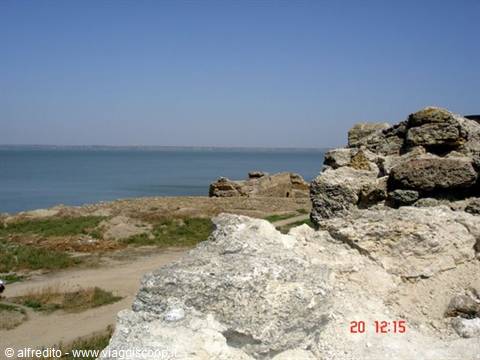
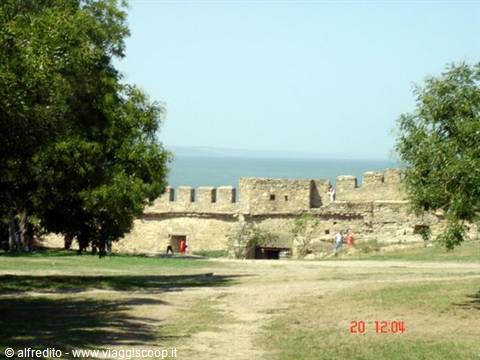
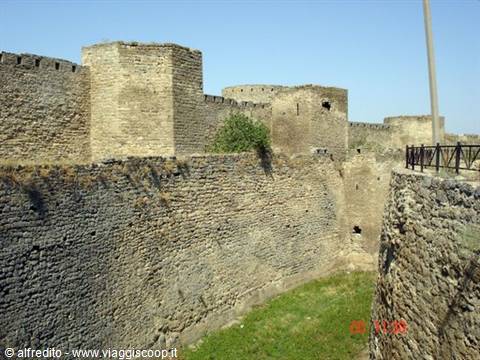
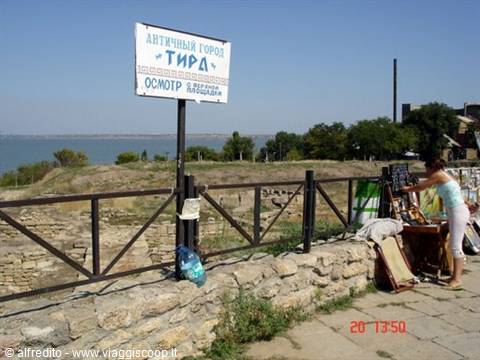
About 40 km south of the Moldovan-Ukrainian border of Tudora stands one of the oldest cities on the planet. “Cetatea Alba” (“White Fortress” in Italian), later called Belgorod-Dnestrovsky in the Soviet era when it passed under the administration of the Ukrainian Soviet Socialist Republic, has in fact over 2500 years of history! It was founded by Middle Eastern sailors coming from the historic city of Miletus, who built it right at the mouth of the estuary of the river Tiras (today Dniester) and originally called it Tyras. In the 13th-14th centuries, during the era of the Principality of Moldova, a very powerful fortress was erected by Stefan cel Mare which was named precisely “Cetatea Alba”. The “White Fortress” today represents one of the most majestic examples of medieval defensive architecture present in all of Europe.
Inside the Cetatea Alba one can see many buildings dating from different eras and among the most important are worthy of mention the remains of the minaret of the mosque erected by the Ottomans during the period of their domination, when the city took the name of Akkerman, a name that was replaced with the current Belgorod-Dnestrovsky only in the year 1944. The oldest part of the fortress consists of the Citadel, also called “Genoese Castle”, dating from the 13th century, the period in which it was erected by the merchants of the Maritime Republic of Genoa who renamed the city with the name of Moncastro.
The journey's photographs
9 photographs · click to open them full screen



0 reader comments