The story
We stayed at the Hotel Kennedy Nova, in Malta, in the Sliema area. We set off with our usual travel agency. The plane was a Meridiana one. We were very happy, even though the hotel bathroom was a little “oldish”. We each spent 672 euro. We highly recommend taking a good look at La Valletta with its Co-Cathedral, Gozo, the archaeological sites and Marsaxlokk, a little seaside village.
On 1 January 2012, Franca and I boarded a Meridiana plane that took us to La Valletta Airport. It takes exactly an hour and, since it was past 19, we had decided from Italy to have a “transfer” from there to the hotel, the Hotel Kennedy Nova, located in Sliema. The hotel is nice outside and inside. Everything seems renovated and clean, until you get to the room. Very spacious for two people, equipped with every comfort.
We had a frugal dinner in the room, also because we had received a little dinner on the plane.
In the morning we were surprised to see the good weather, also because we had spent the night in the cold. Seeing as the sun was out and people were walking around in “shorts”, we decided to take a ferry (Captain Morgan Cruises) to do the complete tour of all the inlets of Malta.
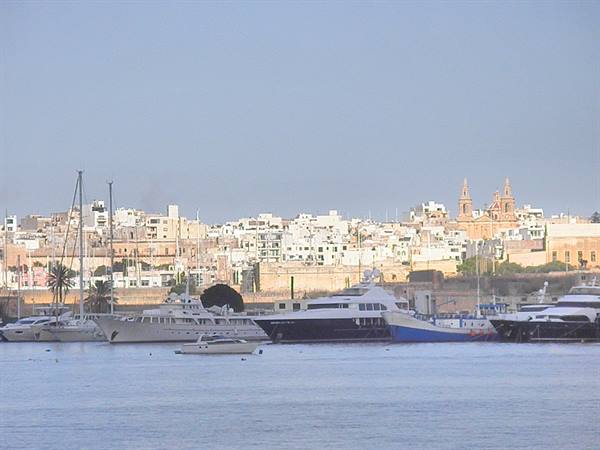
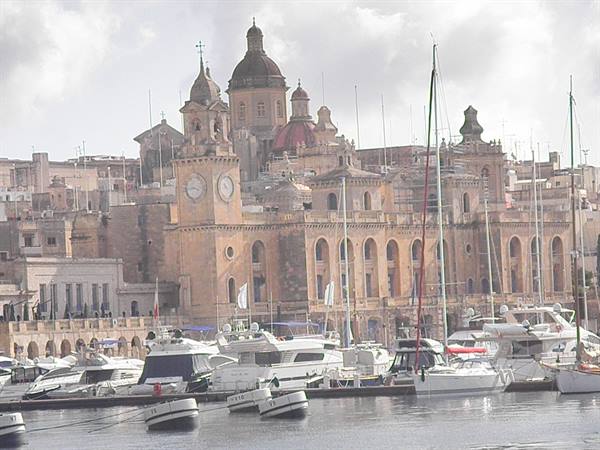
The mini-cruise departed from Sliema, where we were based, passed Fort Tigne, Fort Ricasoli, Vittoriosa, Fort Sant'Angelo, Senglea, Cospicua, Grand Harbour, Fort Sant'Elmo, Valletta, Pietà, Gzira, Fort Manuel and back.
After the tour and lunch, we decided to take a bus and went to the capital, La Valletta, where we stayed until late afternoon. So we were able to admire the wonderful Church of St John the Baptist, which is called the Co-Cathedral. From the entrance you are left amazed by the richness of the Church and by the imposing and majestic Baroque style. For over two hundred years it was the conventual church of the Order of the Knights of St John. The composition in white marble that represents the Baptism of Christ by St John the Baptist and that forms the main altar is very beautiful. Another great impression is given to the viewer by the walls and the floors. The walls are covered with gilded and inlaid limestone. In the floor there are about 400 (!) sepulchral stones of the aristocracy of the Order. These marble slabs are adorned with emblems, military trophies, religious motifs and symbols.
Each side chapel is dedicated to a “langue” of the Order, so there are eight chapels and each holds a treasure, as there are tombs, paintings, statues of remarkable value. To mention just those that struck me particularly, one is the chapel of Italy, where there is the painting of St Catherine of Alexandria with the toothed wheel of her martyrdom. Another is the chapel of Alvernia with St Sebastian and the chapel of Aragon with St George. A great impression, for the magnificence of the decorations, is made by the chapel of the Blessed Sacrament with a particular Black Madonna covered in silver in such a way that you can barely make out her face. Then we saw the Flemish tapestries, very beautiful, representing all the disciples of Jesus and others with “Episodes from the life of Christ”.
The most astonishing part of the Cathedral is the Oratory, as it contains within it two masterpieces by Caravaggio: the “Beheading of the Baptist” and “St Jerome Penitent”. I have no words to describe the first painting, which I already knew, but seeing it in person is quite another thing. The Co-Cathedral is famous throughout the world for this unique Italian work of art.
In La Valletta we also saw the main street of the city, called Republic Street, full of people and tourists. Then we saw the City Gate with the Triton Fountain in the middle, the Auberge de Castille which housed statues and figurines of the Baby Jesus from all over the island. And finally Republic Square with the statue of Queen Victoria in memory of the many centuries of English rule over the island.
In the late afternoon we went to Marsaxlokk, a beautiful and picturesque little seaside village with the boats with the “eyes”. They say they served to be able to return home safe and sound. You breathe a very healthy sea air. There is always a very characteristic little market, with typically Maltese objects.
In the evening we had dinner in a typically Maltese restaurant, family-run and, therefore, we ate not in the Italian way, but we were able to appreciate Maltese cuisine.
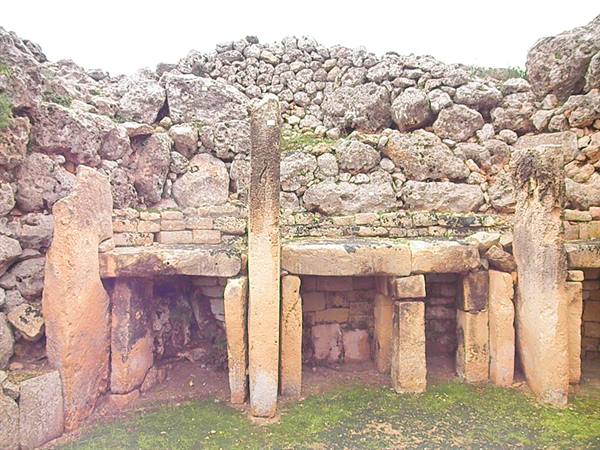
The next day we decided to go to Gozo with the hotel's organisation. Unfortunately the weather changed suddenly and the rain came. However, it was our wish to go to the island of Gozo and so it was. We arrived at Mgarr, the main port of Gozo, with a boat from Malta. On this island there are the remains of the “Temples of the Giants” or “Tower of the Giants”. The complex belongs to the Neolithic period, that is 5000 years ago. It is two temples enclosed within a perimeter wall. The whole is beautiful. We had lunch in Victoria, otherwise called Rabat by the Gozitans, the capital of Gozo.
The following day we went with the usual double-decker bus, open on the second floor, from which you could get off at the various stops, stop in a place for half an hour or a little more and get back on another “doubledecker” of the same Company. In fact, this getting on and off was called “hop on/hop off”.
This time it was about doing the tour of the North of Malta. We saw Mosta, in the heart of Malta. It is a city with a thriving market. In the centre of Mosta there is a magnificent church with a large dome. It is called the Rotunda of Mosta. During the Second World War it was hit by a German bomb, but it didn't explode.
Then we got off at Mdina, which is the old capital of Malta and whose origins date back to 1500 BC. Its medieval name – “Città Nobile” – is the one that does it most credit. It is an extraordinary city in its mix of medieval and Baroque architecture.
Last appointment in Malta at Rabat and the Domus Romana. Rabat had a role of prestige in the history of Malta. The large provincial town was part of the Roman city of Melita. It is very important for its archaeological and historical sites, such as the Domus Romana Museum, the Catacombs and the Grotto of St Paul. One cannot end the description of a trip to Malta without remembering the beautiful sun that shines and warms almost always; the brief little rains, the hospitality of the Maltese people and the cuisine which, speaking as Italians, is really good and with a home-style taste.
The journey's photographs
3 photographs · click to open them full screen
0 reader comments