The story
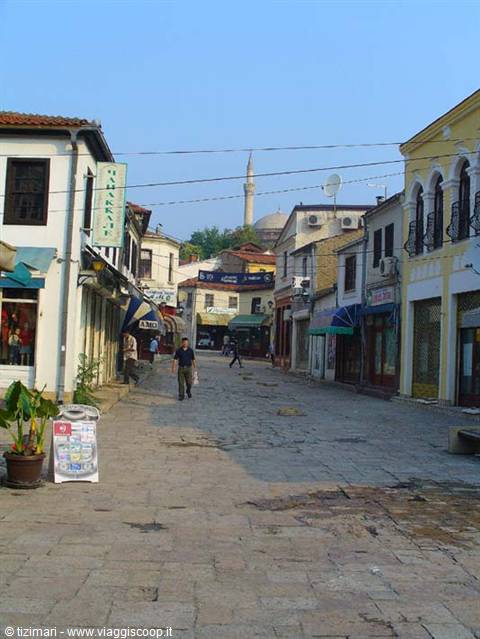
Arriving in Skopje we immediately notice the striking stone bridge over the Vardar river that links the old town to the new one. Walking through the city we can admire: the Daut Pasha Hammam baths, from 1466, which now house the city's Art Gallery; the Church of Sveti Spas, notable for being half underground, since in the 17th century no church could be taller than a mosque; the Museum of Macedonia, with works and finds from the region's history; and the old oriental bazaar quarter, which is said to be the largest, liveliest and most intact still surviving in Europe. The most renowned typical dishes of the area are based on pork, veal, lamb, chicken and fish, among them: Banitza filled with pumpkin "Tikvenik"; cheese flatbread "Sirene"; meat rolls "Sofiota"; grilled "Kebabcheta"; grilled "Kjuftentza"; chicken "Kjustendil" style; stuffed lamb shoulder and "Sopska" salad.
We also recall that interest in this country's wine wealth has lately been growing. Among the wines: Rhein Riesling, known as "rajnski rizling"; Italian Riesling, "italijanski rizling"; Chardonnay; Zilavka; Cabernet Sauvignon; Merlot; Burgunder, called "burgundy black"; Gamay; Vranec, called "vranac" or "vranac crnogorski" or "kratosija"; and Prokupec, known as "nisevka" or "kamenicarka" or "skopje black".
The journey's photographs
4 photographs · click to open them full screen

0 reader comments