The story
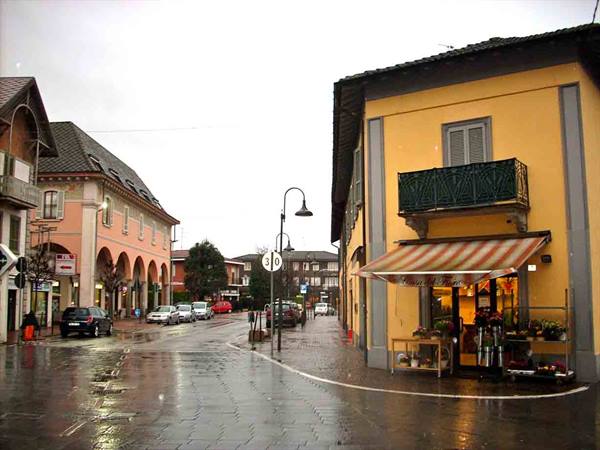
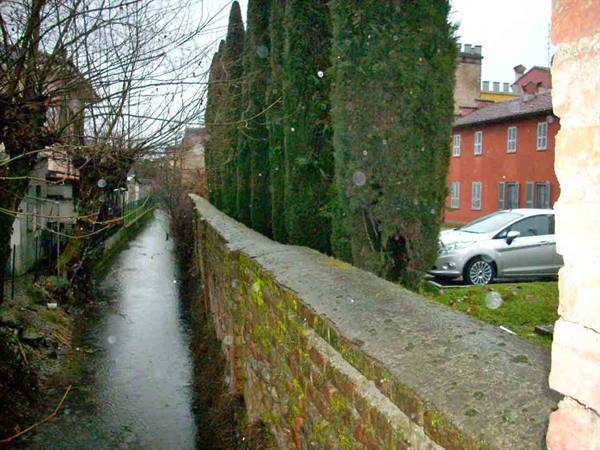
A charming town set in the Parco dell'Adda Sud, in the Cremonese area, where between natural and artistic beauties there is everything that can make a day out very pleasant. The name of the town may seem a little prickly and indeed it comes from the Latin "spinus", which indicates a thorny tree, the blackthorn. But while it is true that there is no rose without thorns, it is equally true that this plant has healing properties and is used in homeopathy. Our walk begins with a little tour in unspoilt nature along the riverbanks. The Parco Adda Sud offers a series of itineraries, which can be travelled both by bicycle and on foot. During the warm season this landscape turns into a little Paradise: in the heat, the coolness of the waters of the Adda, or rather of the nearby Vacchelli canal, a safe and swimmable stretch of the river, offers refreshment better than the sea.
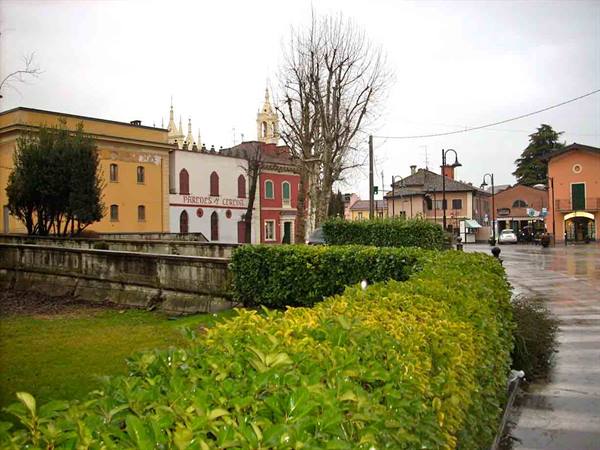
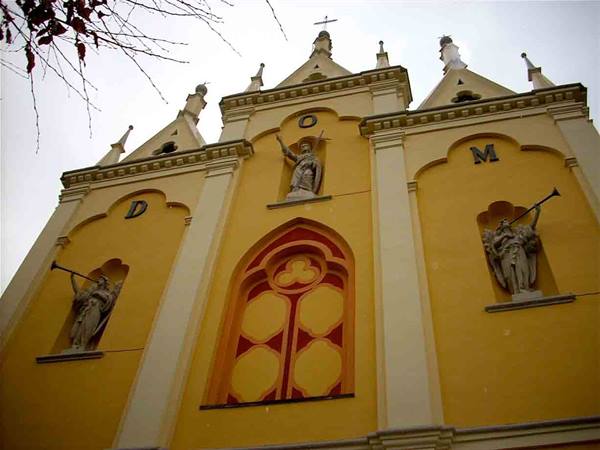
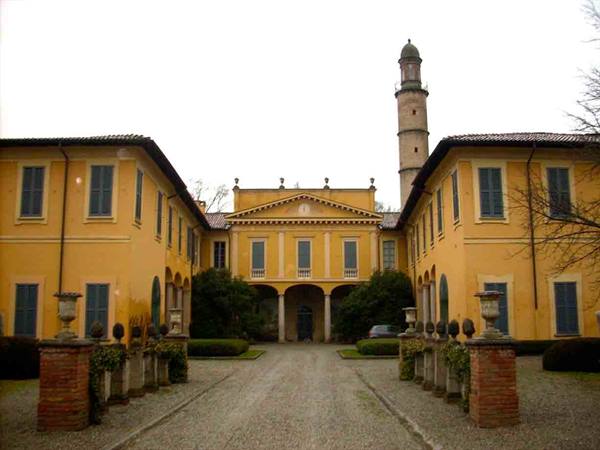
This lovely area has been inhabited since ancient times, as also shown by the discovery, in 1915, of as many as five Gallo-Roman tombs. Reaching the historic centre to the sound of the bells, we feel a little like citizens of Spino in the feudal era, when it was precisely the sound of the bells that summoned the assembly of the inhabitants, whose task it was to establish "what was appropriate" for the common good. We decide that for our own good it is absolutely appropriate to visit the most beautiful monuments of Spino d'Adda, starting with the Parish Church, which preserves inside it a series of valuable works of art. The quiet streets of Spino d'Adda lead to several other testimonies of the city's religious history. In the municipal territory there is in fact also a Sanctuary, dedicated to the Madonna del Bosco.
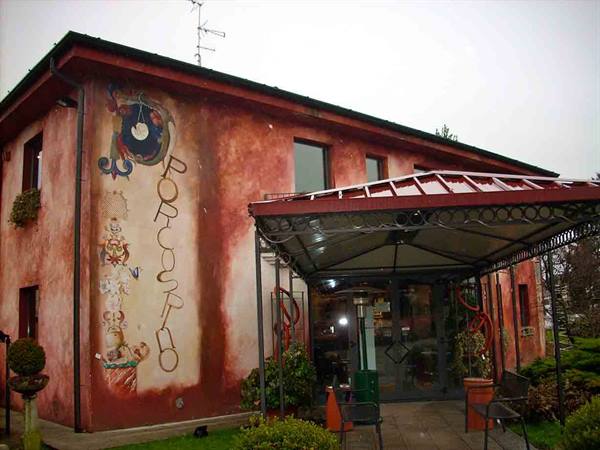
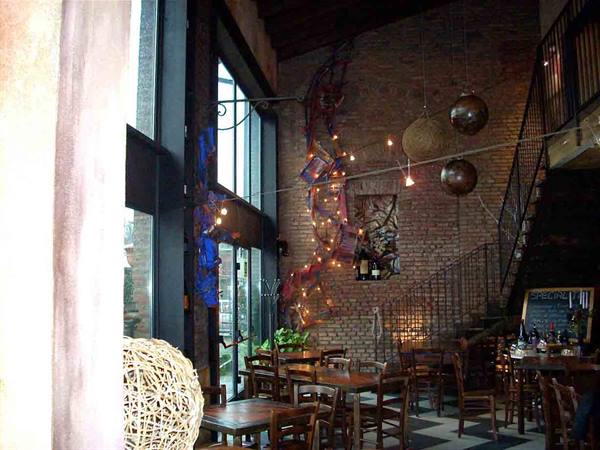
Legend has it that on the site in the fourteenth century there was a rural votive shrine. In those years a poor unfortunate man, one Alessandro Ciseri, was unjustly captured and chained by the gendarmes. While they were transporting him towards the prisons of Lodi, they passed near the sacred image and at that moment Ciseri's chains broke and the man managed to escape. In the countryside surrounding Spino d'Adda there are also the Church of Sant'Antonio and the Small Chapel on the site of the Battle, which preserves a fresco from the early sixteenth century. Our day in Spino d'Adda reserves a very pleasant conclusion for us, in the "company" of the Porcupine. It is a highly original restaurant, known to all as the "Kingdom of eating and drinking". "In 1900 the first milk collection point of the area operated in this building.
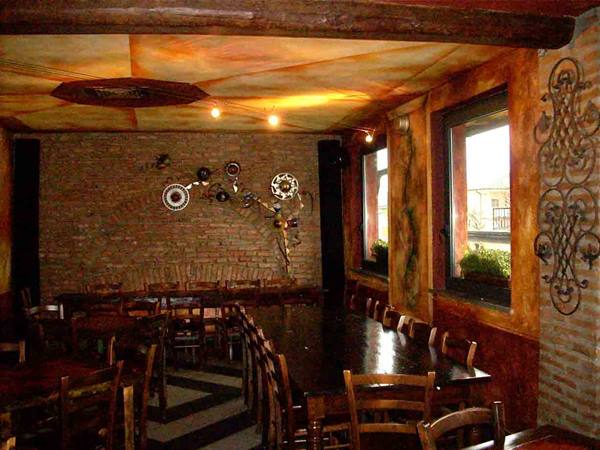
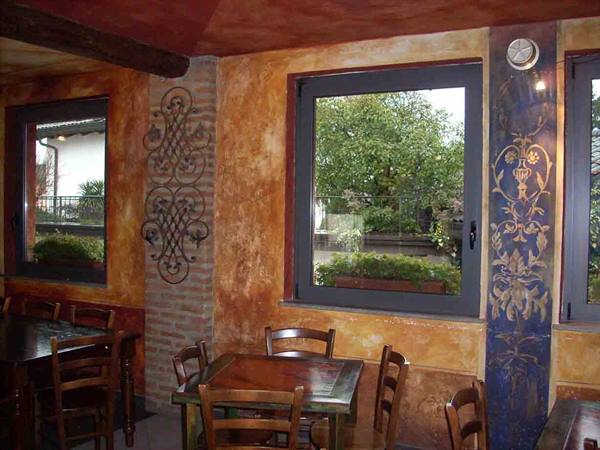
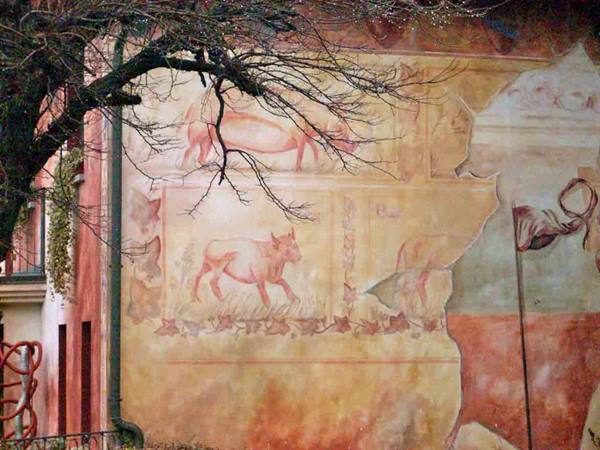
In the wall of the room you can very clearly distinguish the vaults of the warehouse, which were later closed off. At one time this was the only building on the street, all around you could see only woods and the ditch," the owner, Mr Francesco, tells us, who has run this place since 1997 together with his wife Antonella, his mother and his two daughters. We settle at the tables, laid in an informal style that recalls the origins of the restaurant, born as a wine bar, and still specialising in wines from all over Italy and the world. The walls have been frescoed by a highly original artist, Ennio Chiri, who also created several paintings that hang in the place. We start dinner with one of the flagship items of the place, the fried gnocco. We also taste the excellent schiaccine, a speciality originally from the Island of Elba.
Some of us also taste a small octopus flan and the puff pastry with mushrooms, porcini and taleggio cream. We continue with a typical dish of the area, the sweet Cremaschi tortelli. We can't even resist the ravioli with braised meat, while the rest of the group chooses the spaghetti allo scoglio and the timbale of yellow rice with porcini mushrooms and taleggio. As a main course, we jokingly let ourselves be won over by the name "porco-spino" (pork-porcupine), choosing the pork shank with roast potatoes and the suckling pig fillet with sweet mustard, while our friends opt for the braised meat with polenta, the excellent grilled meat and the lamb chops with roast potatoes. Our dinner culminates in the pleasures of sweetness with the fantastic chocolate cake, the true pride of the restaurant, as well as the amaretto zuccotto and the Monte Bianco.
"Tomorrow I'll tell all my friends how well we ate tonight!", exclaims at a certain point Giuseppe, the little son of a friend of ours. "Well, if they come here, we'll give them all, and their parents too, a ten per cent discount," replies Mr Francesco. As well as eating, we also drank well, thanks also to the very light bottled Belgian beers, despite a good alcohol content. The ladies, on the other hand, appreciated the natural and organic herbal teas, with citrus fruits. Coming back here next time, perhaps for a cycling weekend along the Adda, we won't miss the Porcospino's evening cocktails either: it will be a further treat to add to the colourful world we discovered in Spino d'Adda.
Francesca Bertha
FOR INFORMATION:
Restaurant Il Porcospino Via Roma 50/A Spino d'Adda (CR) 0373/980571
The journey's photographs
14 photographs · click to open them full screen



0 reader comments