The story
AEOLIAN CETACEAN RESEARCH research programme, 2011 edition: studying dolphins, whales, sperm whales and sea turtles in the waters of the Aeolian archipelago.
The NECTON Marine Research Society, starting from 1 April 2011, offers everyone the chance to take part in the cetacean courses organised within the only long-term research programme on cetaceans in the waters of the Aeolian Islands. The logistical base of the project is on the island of Salina, one of the seven pearls of the Aeolian Archipelago. The island was chosen because, besides being very beautiful, thanks to its lush vegetation (it is the greenest and highest island of the whole Archipelago), with the presence of very many animal and plant species, in some cases endemic, it lies at the centre of the archipelago, and its strategic position makes it possible to carry out monitoring across the whole area.
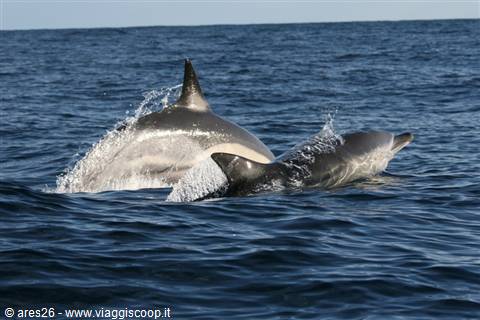
The Aeolian Cetacean Research is a research programme whose aim is to get to know as well as possible the habits that link marine mammals to this particular environment. The monitoring is carried out over a very wide area, employing human resources and more, to examine as well as possible two habitats of fundamental importance for the sperm whale, fin whale, common dolphin, striped dolphin, pilot whale, Risso's dolphin and bottlenose dolphin, the species under study, as well as for the sea turtle Caretta caretta.
- The pelagic environment, the area where mainly the sperm whale, the striped dolphin, the fin whale, Risso's dolphin, the common dolphin and the pilot whale are observed, represents the largest part of the marine environment of the Aeolian Islands, which have very steep seabeds with depths that quickly reach and exceed a thousand metres. - The coastal environment, small and confined almost exclusively to the part immediately near the coast, is instead the ideal place to study the presence of the bottlenose dolphin and the phenomenon of interaction between this species and fishing activity.
The reasons for the project
The need to understand the dynamics that link cetaceans and turtles to the marine environment of the Aeolian Islands, their behaviour and the areas of greatest concentration in these waters, combined with the many years of experience in the field of research applied to the sea and the direct activity carried out by the NECTON Marine Research Society, are the guiding lines of a research programme that also springs from the desire to give those with an interest and a passion for marine mammals and turtles the chance to study them directly in their natural environment. From the birth of this project in 2004 to today, the project has improved further also thanks to the precious collaboration of the non-profit association DELPHIS Aeolian Dolphin Center, which studies the marine ecosystem of the Aeolian Islands.
The choice of the site
The research project takes place between Capo Milazzo and the waters of the entire Aeolian Archipelago. The archipelago is made up of 7 islands of volcanic origin: Vulcano, Lipari, Salina, Stromboli, Filicudi, Alicudi and Panarea. The islands are surrounded by a very deep and rich sea, an area of considerable importance for the study of cetaceans. Few know, for example, that very many sperm whales gather in these waters to breed. The deep waters of the Archipelago are particularly rich in nutrients, which leads to a considerable presence of plankton, fish and cephalopods. These species are the preferred prey of cetaceans, which are found in very high concentrations in this area.
The logistical base is the island of Salina, which, set at the centre of the Aeolian Archipelago, is certainly one of the best places in the whole Mediterranean Sea to get close to cetaceans and sea turtles. The island's central position within the Archipelago makes it possible to move easily from one point to another of the same in search of these wonderful animals and is an excellent starting point both for those who have decided to begin a journey of discovery of this sea and its most fascinating inhabitants, and for those who (for study or work) are interested in deepening their knowledge of cetaceans. From the start of the project to today, the very important data collected are allowing us to understand ever better the population dynamics of the cetaceans and turtles that, for trophic or reproductive reasons, live permanently or pass through these waters.
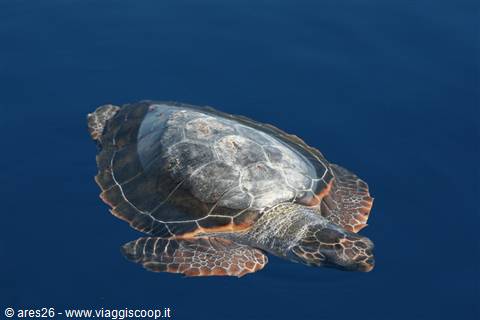
Besides cetaceans, in the waters of the Archipelago you may come across other marine species: birds such as herons, little egrets, great black-backed gulls, greater and lesser shearwaters, common and Audouin's gulls, many species of birds of prey. Fish: tuna, swordfish, sunfish, dolphinfish, pilot fish, manta rays, pelagic sharks. The presence of sea turtles is constant. In fact, during cetacean monitoring we come across numerous individuals of the sea turtle Caretta caretta and in this case too data are collected on geographical position, surface water temperature, size, presence of marks, scars, parasites, hooks, and tiny skin samples are taken for genetic analysis.
The research
Among the most important aims of the project are the monitoring of the different cetacean species that live or pass through the waters of the Aeolian Islands, the study of the phenomenon of interaction between cetaceans and fishing activity, the photo-identification of the three species that most frequent these waters, namely the sperm whale (Physeter macrocephalus), which breeds here, the striped dolphin (Stenella coeruleoalba) and the bottlenose dolphin (Tursiops truncatus), which is the species most involved in the phenomenon of interaction with fishing activity. Also important is the monitoring of sea turtles of the species Caretta caretta, numerous in the area and on which Necton has begun a few years ago a study on the relationship between the presence of this species and the surface temperature of the waters in different areas of the Mediterranean.
To carry out the research activity within this project, various techniques are used:
Photo-identification: This technique allows the recognition of individual animals through the photography of certain morphological features that change from species to species and from individual to individual. To recognise some delphinids such as striped dolphins, pilot whales, common dolphins or bottlenose dolphins, the particular feature photographed is the dorsal fin, which besides differing according to species, changes from individual to individual thanks to the presence of scratches, scars, depigmentations and often also because of its shape. To recognise Risso's dolphins and beaked whales, another important distinguishing feature besides the dorsal fin is the classic whitish stripes on the body.
In the case of the fin whale, besides photographing the dorsal fin, particular attention is paid to the lighter areas present on the right side of the head and behind the blowhole, called chevron and blaze. For the recognition of individual sperm whales, instead, the contours of the tail are photographed, as well as the different colourations present on the ventral part and the lighter and/or whitish spots often present on the body and near the mouth. Acoustic survey: All cetaceans emit sounds to communicate, hunt, mate, etc. Listening to, recording and analysing the sounds emitted is one of the techniques that can allow the recognition of individual species. As regards delphinids, such as the striped dolphin, the common dolphin or the bottlenose dolphin, vocalisations are recorded.
One of the certainly most effective techniques for following the sperm whale during its long dives is precisely the lis
The journey's photographs
2 photographs · click to open them full screen
0 reader comments