The story
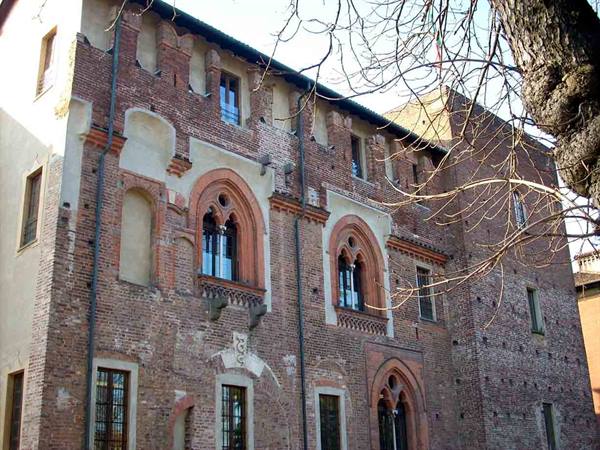
A quiet little town rich in historic monuments, where you get the impression that there are more bicycles than cars, where people stop to chat under the arcades that recall the style of Ligurian towns, and whose name sounds like a wish for prosperity: this is Abbiategrasso. And yet this corner of peace is just a short distance away, more precisely about twenty kilometres from the frenzy of the Lombard capital. Skirted by the Naviglio Grande, along which many people walk or play sport even on winter weekends, Abbiategrasso combines the merits of small centres with those that derive from its proximity to the metropolis. Our walk began right from the symbol monument of the city, the one that more than any other bears witness to the strategic role Abbiategrasso played in the past: the Visconti Castle.
Probably built in 1382 by Gian Galeazzo Visconti, the Castle is aligned with the Naviglio Grande and with the road that connects Milan with Vigevano. Since 1865 it has belonged to the Municipality and is the seat of various associations. Inside we admired frescoes dating from various eras, also noticing the inscription "A bon droit", the Visconti motto. A young man who works at one of the associations suggested we go and see a room in the east wing of the building, on the top floor, which is perhaps the most mysterious corner of the Castle. Centuries ago it was a prison and on the walls you can still see the graffiti of the prisoners. In this castle Gian Galeazzo Maria Sforza, duke of Milan, was born, though he was not particularly suited to filling that important role.
In fact, after his marriage to Isabella d'Aragona, he preferred to devote himself to the pleasures of ducal life, neglecting the rest and letting his uncle Ludovico Sforza, known as Il Moro, take on more and more of the duties. Besides the duke, Abbiategrasso also gave birth to several famous figures in more recent times, including the fashion designer Franco Moschino, the footballer Giovanni Invernizzi, after whom the stadium is named, the cyclist Marco Villa, bronze medal at the 2000 Olympics, while the singer Giusy Ferreri was born in Palermo but grew up here.
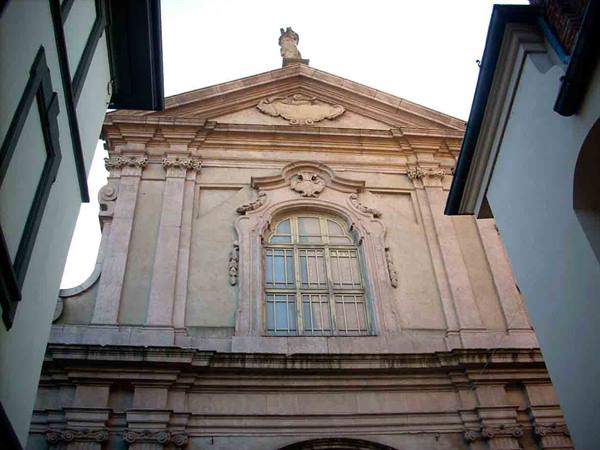
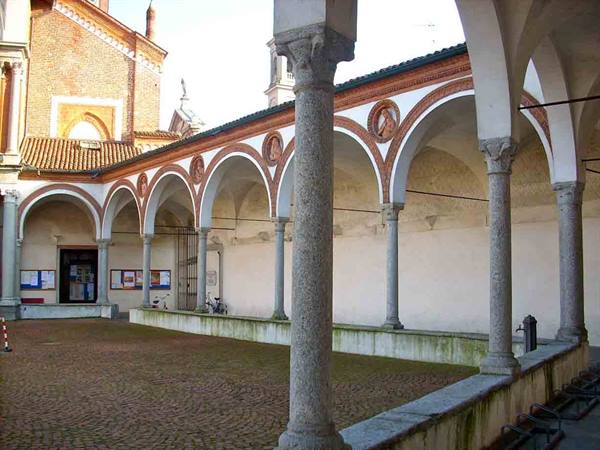
Visiting the most important religious monuments of the city, we were particularly struck by the beauty of the Basilica of Santa Maria Nuova, and of its cloister, also because, unlike several splendid cloisters of important churches in other cities, this one is open to anyone who wishes to visit it or stop for a while to meditate or reflect. When we were there, we shared this space of spiritual intimacy with a priest who was saying the rosary walking under the arcades of the cloister. The Basilica was built in 1388 on the occasion of the birth of the son of Gian Galeazzo Visconti, and underwent several modifications and renovations.
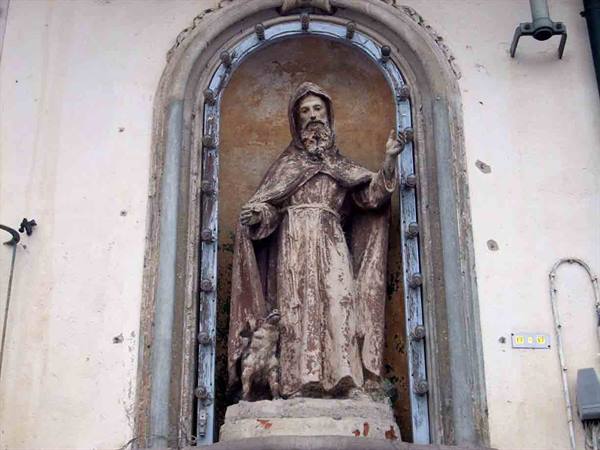
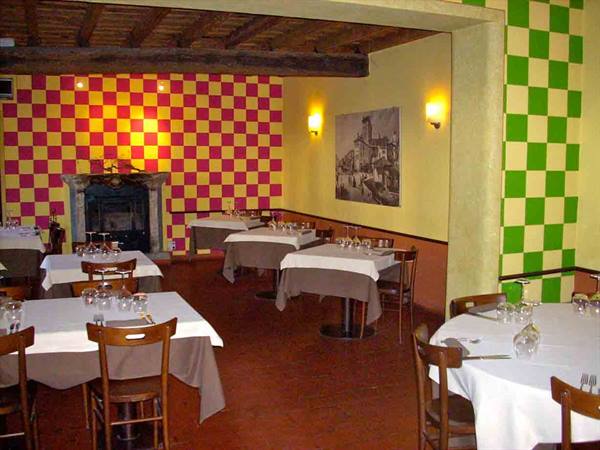
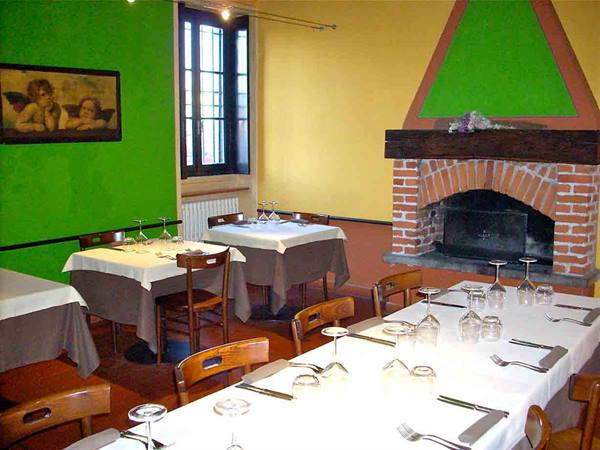
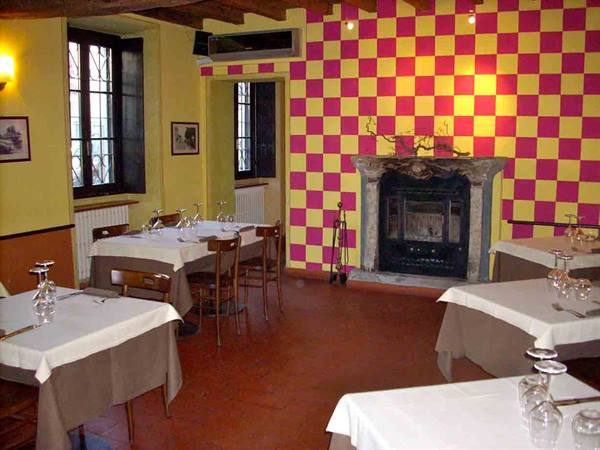
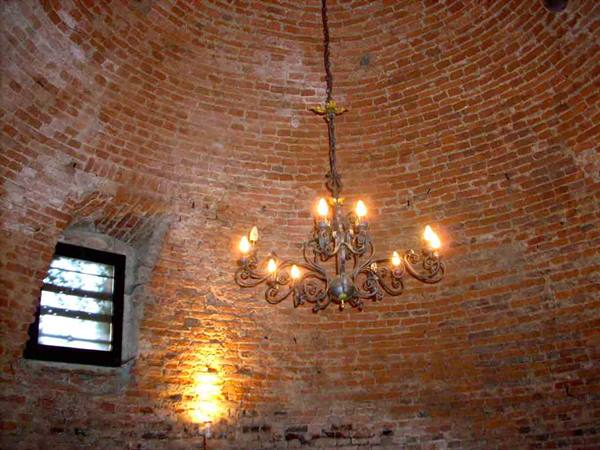
There is also the church of Santa Maria Vecchia, the ancient church of Abbiategrasso, where there was once a convent of Benedictine nuns, but it has been deconsecrated since the end of the eighteenth century, and we were told that it is now the seat of a dance school. After also visiting the Church of San Pietro and the Church of San Gaetano, which is the most recent of all the churches of Abbiategrasso, we decide to spend the evening at the table, "in the company" of another very important saint: Sant'Antonio. In fact, we go to dinner at the Osteria Sant'Antonio, a place with the warm and rustic atmospheres of the Lombard houses of the past, on the Alzaia Naviglio Grande. Inside the restaurant there is even an ancient ice house, an evocative round brick room.
"This is one of the historic places of Abbiategrasso, it dates back to 1411, and it still keeps the style of an inn of other times," the owner, Mr Corrado, tells us as we settle at our table near the fireplace. We start our dinner in the name of the authentic flavours of the area with cured meats and salamis, with a gorgonzola flan on pumpkin cream and walnut kernels, and the beef carpaccio with Grana raspadura. We continue with first courses of very fresh pasta, prepared in-house, taking the tagliolini with almond cream, chicken livers, quail egg and white truffle, the tagliatelle with salame paste and Grana raspadura, and the potato gnocchi with sausage ragù and fossa pecorino.
In choosing the main courses our group divides between the Milanese cutlet, the pork in a potato crust with leek cream, Port reduction and a cloud of crispy leeks, the beef tagliata with spinach flan and tasty potatoes, while a couple of our friends cannot resist the ossobuco Milanese-style with mashed potatoes. We wash these delicacies down with excellent wines from selected cellars, and conclude in sweetness with the Osteria's tiramisu, the tart with extra berry jam and the chocolate poker. It is really true: sometimes, to spend a nice day you just need to rediscover the treasures we have close to home.
Francesca Bertha
FOR INFORMATION:
Osteria S. Antonio Alzaia Naviglio Grande, 16 Abbiategrasso (MI) 02/94699293
The journey's photographs
16 photographs · click to open them full screen






0 reader comments