The story
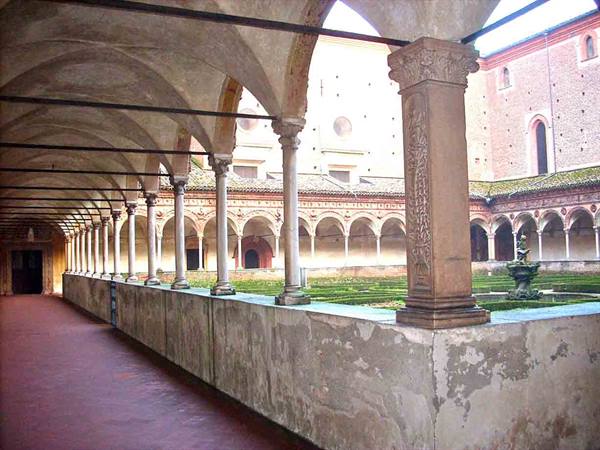
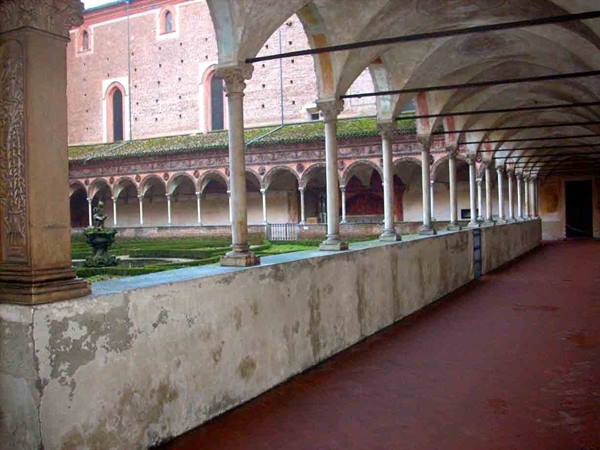
Sometimes, to make a spiritual journey from which you return a little changed in your soul, there's no need to go far. If reaching the fun, noisy destinations of summer holidays often means facing huge expenses and distances of thousands of kilometres, for a weekend of inner peace far less is enough: not even an hour's drive for those coming to Certosa di Pavia from Milan. Although the Carthusians have no longer lived in the Monastery since 1947, the history of this place is deeply steeped in the mystery of the contemplative life of the cloistered monks. Observing the Small Cloister, where much of the fathers' community life took place, you are swept into a world one usually knows only from books. Silence, solitude, the search for a deep dialogue with God through self-isolation from the noises of the outside world, are the best-known features of the Carthusians' life.
But their typical day is interesting too: between manual work and prayers, only a few hours are set aside for rest, and never all in a row. Indeed, if it's true that after 19.00 a period of rest begins, this lasts only until 23.45, when the "night rising" begins, with the Matins of Our Lady and the prayers to be recited in the cell, followed by Matins and Lauds in church, and the Lauds of Our Lady in the cell until about 3.30. The second rising is at 6.45, after which the day continues with mass, work, study and prayers, with a short break after lunch. The liveliest moment in a Carthusian monk's life is the so-called spaziamento: once a week a walk of three or four hours is allowed, during which one may talk freely. Usually they walk two by two and every so often change group, so as to be able to talk with different brothers.
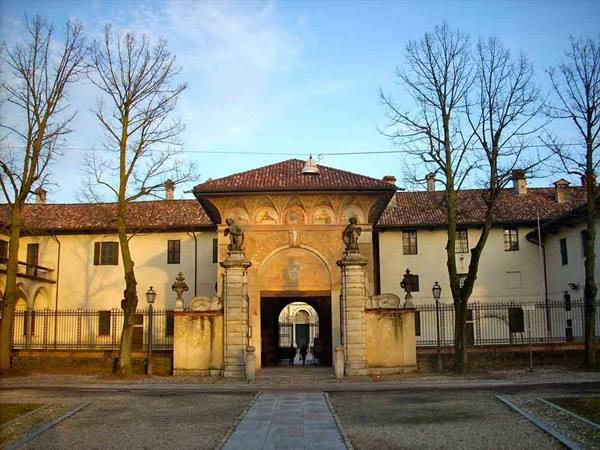
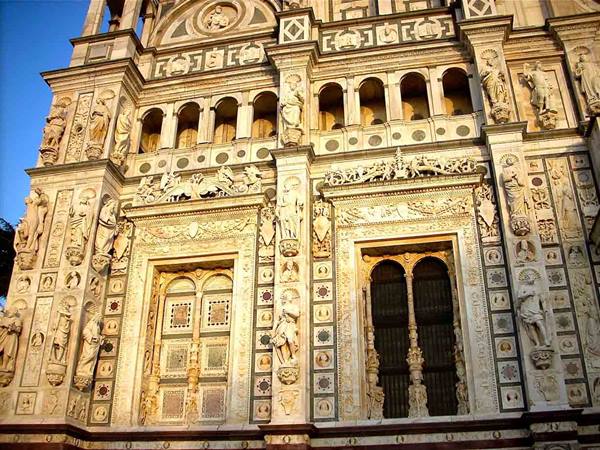
The monument that gives its name to the municipality, situated 8 km north of Pavia, was founded in 1396, by the will of Gian Galeazzo Visconti, and was intended to become the dynastic mausoleum of the Dukes of Milan. At the time this was the site of the Visconti Park of the Castle of Pavia, and the position of the monastery coincided with the northern edge of the park. To build the monastery an extensive enclosed wood had been chosen, linking the Visconti Castle of Pavia to the area where the lords of Lombardy went hunting. The Vernavola Park, north of Pavia, still preserves a trace of this park, even though it is no longer connected to the Certosa nor to the Castle. Today the Monastery is home to Cistercian monks, while in the Ducal Palace, which was once the summer residence of the Viscontis and the Sforzas, is the Museum of the Certosa di Pavia.
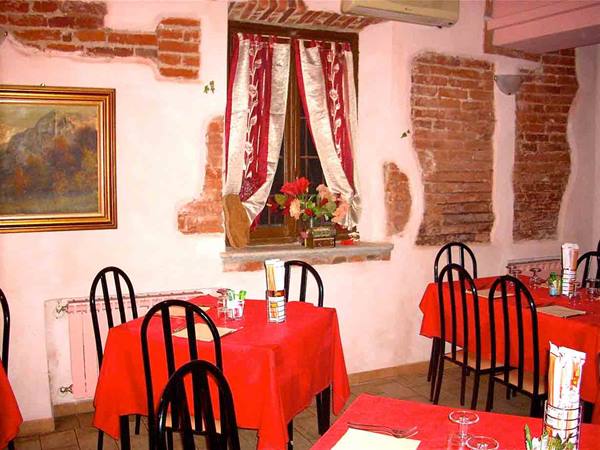
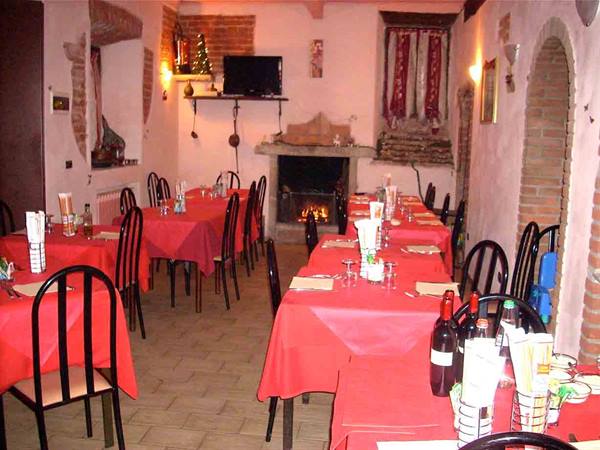
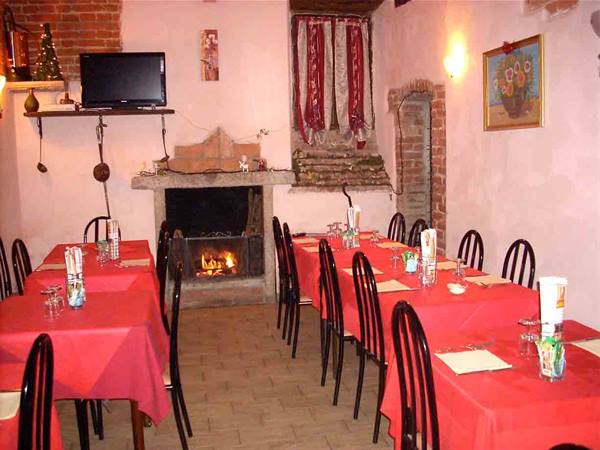
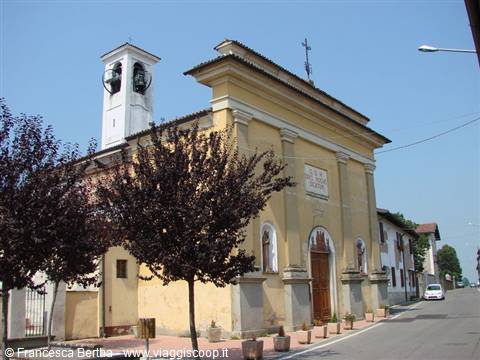
Here many works from the monastic complex are gathered. On the ground floor we admired the Gipsoteca, where about two hundred plaster casts taken from the reliefs decorating the Monastery are displayed, while on the upper floor there are paintings, vestments and sculptures. On the second day of our stay at Certosa di Pavia, we also toured the various hamlets, which until 1929 were independent municipalities. Torre del Mangano, Torriano, Cascine Calderari and Samperone are little gems where we saw some very beautiful churches, such as the Church of San Michele in Torre del Mangano, or San Rocco in Cascine Calderari. During our weekend in Pavia we stayed at one of the most historic establishments in the area, the Albergo Ristorante Milano, in Via Monumento. "This place opened about fifty years ago, and back then it was called Locanda Milano," the owners, Mr Vittorio and Mr Franco, tell us.
We are immediately won over by the family character of the place, a quality we appreciate during our dinner too. We start with mixed cold cuts with carpaccio, and vitello tonnato with Russian salad. We follow the starters with homemade ravioli alla boscaiola, risotto with mixed mushrooms, while some of us try a good frog risotto. The whiteness of the rice reminds us once more of the Carthusian tradition; indeed the monks favoured white foods because they symbolise purity. For the main courses we split between fried calamari and prawns, a meat fantasy with mushrooms, and fried frogs with mixed salad. Chatting with the owners, we discover that on request they also prepare a range of game dishes, based on hare or wild boar. There will be a chance to taste those delicacies too, since we intend to return to Certosa di Pavia soon, when some friends of ours from Central Italy come to visit.
Between spiritual inspiration, art and good food, a trip to the Monastery will be a very pleasant programme.
Francesca Bertha
FOR INFORMATION:
Albergo Ristorante Milano Via Monumento, 13 Certosa di Pavia (PV) 0382/925633
The journey's photographs
18 photographs · click to open them full screen








0 reader comments