Castles and mountains of the Aosta Valley (3-4-5 July 2010 – 11-12 July 2010) Text by Anna Marchisio - Photos by Marco Giovo
We often go to the Aosta Valley to walk on its splendid mountains, and it has already been the setting for many short holidays for precisely this reason. This year we decide to broaden our knowledge of the region by also visiting its cultural beauties; castles, fortresses and more. And so we spend two weekends in July in this small but rich region. The first is a long weekend (3 days) and we stay in a b&b, while we spend the second in a tent, immersed in the mountains, far from everyone.
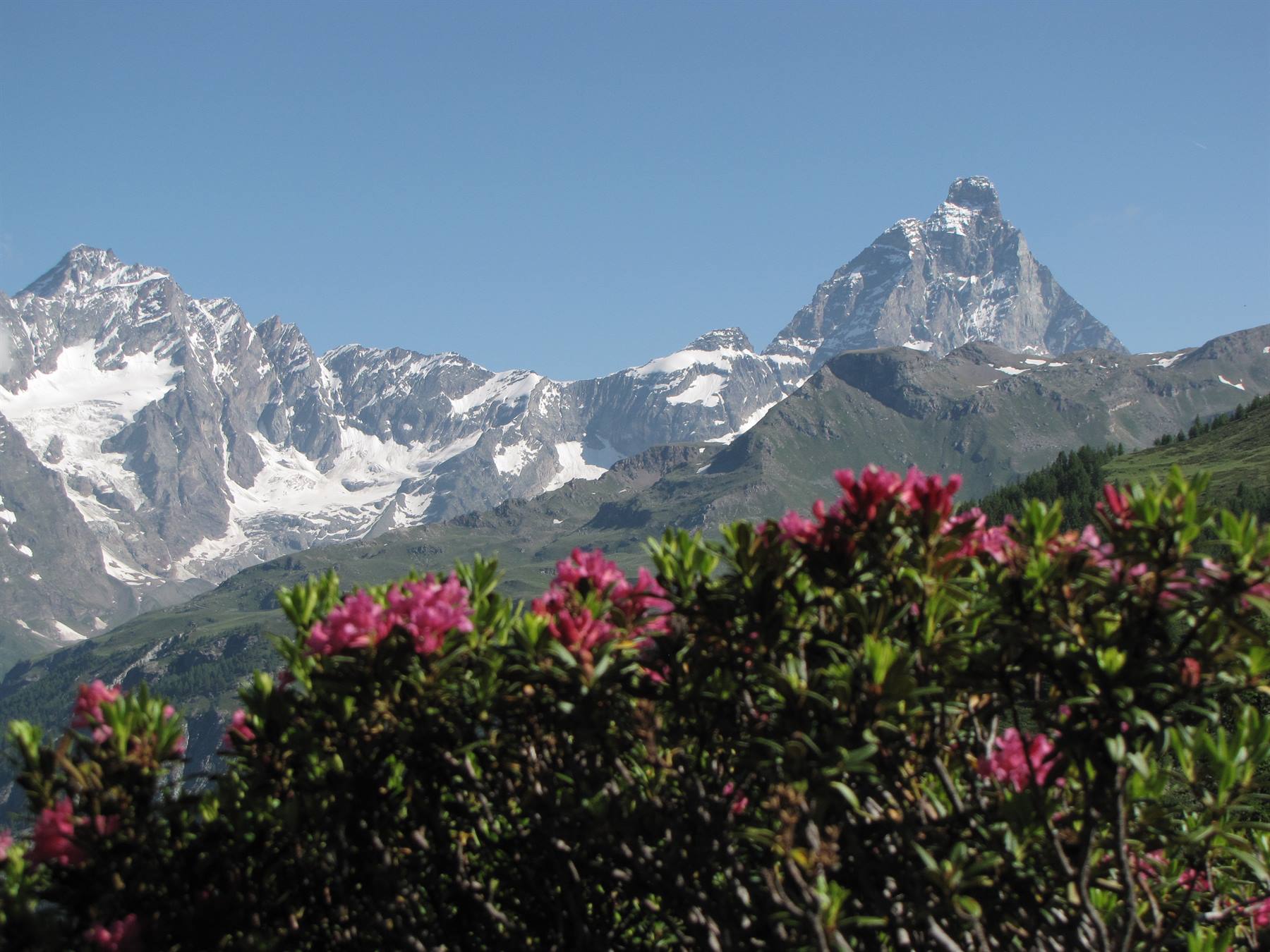
The autonomous region of the Aosta Valley is one of the smallest regions of Italy, but this small territory really has a lot to offer. The mountains, the Alps, are splendid. Mont Blanc, Monte Rosa, Gran Paradiso are only some of the highest mountains of the Alps that the Aosta Valley has the honour of hosting partly or entirely. In short.. for mountain lovers there is plenty to do both in winter and in summer. But even for those seeking a so to speak cultural visit there is plenty to sink their teeth into. Its ancient villages, its castles and its fortresses are just one example of what this region has to offer; in short... discovering it can be a pleasant surprise, and falling in love with these places will not be difficult at all.
Day 13 Jul 2010
Our first destination is the Fort of Bard. It stands proud and imposing in its strategic position. In fact it dominates the narrow Bard gorge and is a mandatory passage for all those who want to enter the Aosta Valley. Since the most ancient times the fort played an important role in the defense of the valley. Toward the end of the nineteenth century the fort lost importance, thus beginning its slow decline. In recent times it has been restored and brought back to its former splendor. Inside, exhibitions, conferences, concerts, etc. are held. The same Museum of the Alps is housed inside the fort. The museum is interesting, and the footage of the eagle's flight alone certainly makes the museum visit worthwhile (museum admission 8.00 - free for holders of the Piedmont Region museum card). To reach the fortress you can use the panoramic elevators or take the road on foot.
It's also worth strolling through the streets of the village of Bard. Narrow and suggestive.
Having left the Fort of Bard we head toward Aosta, not before stopping at the Fenis castle. Unfortunately they are filming a movie or a documentary so it's not possible to walk around much outside the castle, in any case... Its position, one notices right away, is not strategic as is instead the case for many other castles or fortresses in the Aosta Valley that tower on the summits of cliffs or hills. Fenis was built as a residence for the Challant family, the then lords of the Aosta Valley. The visit inside the castle is guided and lasts half an hour (admission 5.00 full and 3.5 with the Piedmont Region museum card). The castle of the Medieval Village of Turin was created taking inspiration from many castles of Piedmont and the Aosta Valley, so the courtyard of the Medieval Village castle is none other than a copy of the inner courtyard of the Fenis castle.
Having finished the visit to the Fenis castle we continue on to Aosta where we will spend the rest of the day.
Aosta is the capital of the Aosta Valley region but has nothing to do with the other large cities of the north that are regional capitals. You could almost call it a quiet provincial town. Geographically it lies in a beautiful alpine basin surrounded by Mount Emilius, the Becca di Viou and the Becca di Nona. The presence of the Great St. Bernard Pass has always given the region an important strategic role as a communication route; today the Mont Blanc and Great St. Bernard tunnels reinforce this role of the city as a strategic hub for transport.
Aosta is a corner of ancient Rome wedged into the Alps. It is said to be one of the most important examples of Roman architecture present today in northern Italy. Besides the Roman remains there are also many medieval remains due to the feudal lords who over the centuries fought over the dominion of this valley.
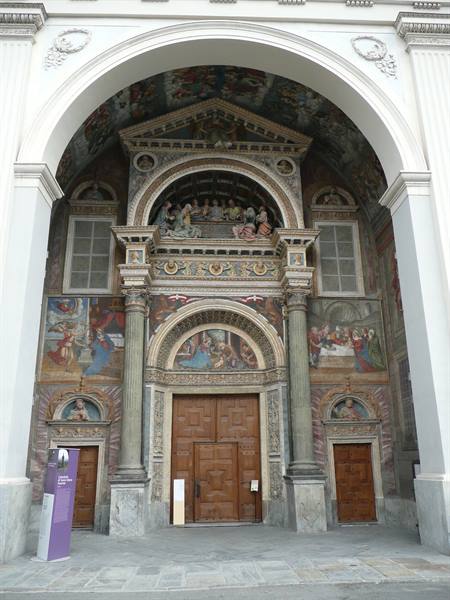
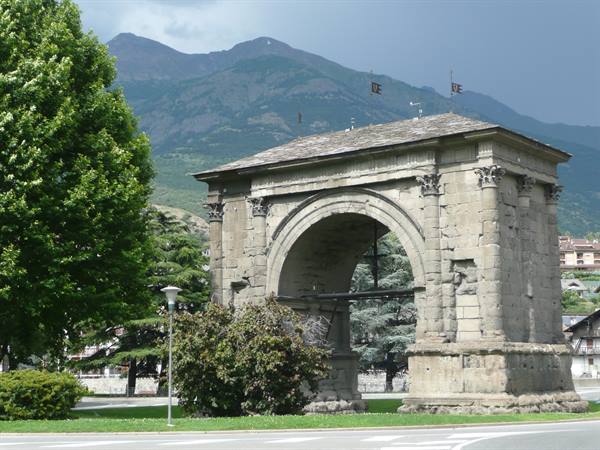
One of the most important monuments of the city is without a doubt the Arch of Augustus. Erected in 25 BC, it now stands in the center of a roundabout, past and present compared. The Roman theater is interesting, of which only the facade remains. It could hold up to 4000 people. The cathedral, which dates back to the 4th century, is also beautiful. Beside the cathedral you can visit, for free, the cryptoporticus gallery. A very long portico, almost entirely underground, where, in Roman times, the town's forum life took place.
The major monuments are connected by a pedestrian street that passes through Piazza Chanoux, the heart of Aosta. The town hall also faces onto this square.
We have dinner in a pizzeria in the center of Aosta. There are really many venues, various shops and souvenir shops in the heart of the city and there are also quite a few tourists.
The b&b where we stay is in the Ayas Valley in the hamlet of Villa di Challand Saint Victor. The property is very very beautiful, located in the center of the little village. It wasn't easy to find because there are no signs on the main road indicating roughly the direction. As I said, the property is beautiful, the room is very comfortable, a bit less can be said about the owners, a couple of retirement age. Besides breakfast, you can also have dinner, but given the friendliness of the owners, especially the man, we preferred to dine elsewhere. The welcome on our arrival was not warm, but that's not what you expect from a hotel property... you expect a minimum of kindness. We ring the bell and after a long wait, during which we begin to wonder if there is anyone home, the husband comes to open the door.
Without beating around the bush he points out that he was having dinner and that we had disturbed him during dinner (and don't be an innkeeper if you don't want to be disturbed!!!). He hands us the room keys and points out where our room is and tells us to meet him in the dining room, for registration, in no less than half an hour as he must finish his dinner. We were tempted to just up and leave so he could finish dinner and the after-dinner in peace too. Later we show up in the dining room, ask what time breakfast is and Marco almost falls over. We came to the Aosta Valley also to walk on its beautiful trails and not to laze in bed until late. To find out that breakfast is served at 8:30 because the other occupants of the room asked for it that way.
So what? If the others have nothing to do I don't see why we should adapt to the others and not the other way around! In the end we manage to get 8 o'clock. And then I don't understand where the problem was in having it earlier, since the lady, whose kitchen adjoined our room, was already in the kitchen at 6 in the morning rummaging with the pots! And making a racket... so... huh...
Ibexes
Day 24 Jul 2010
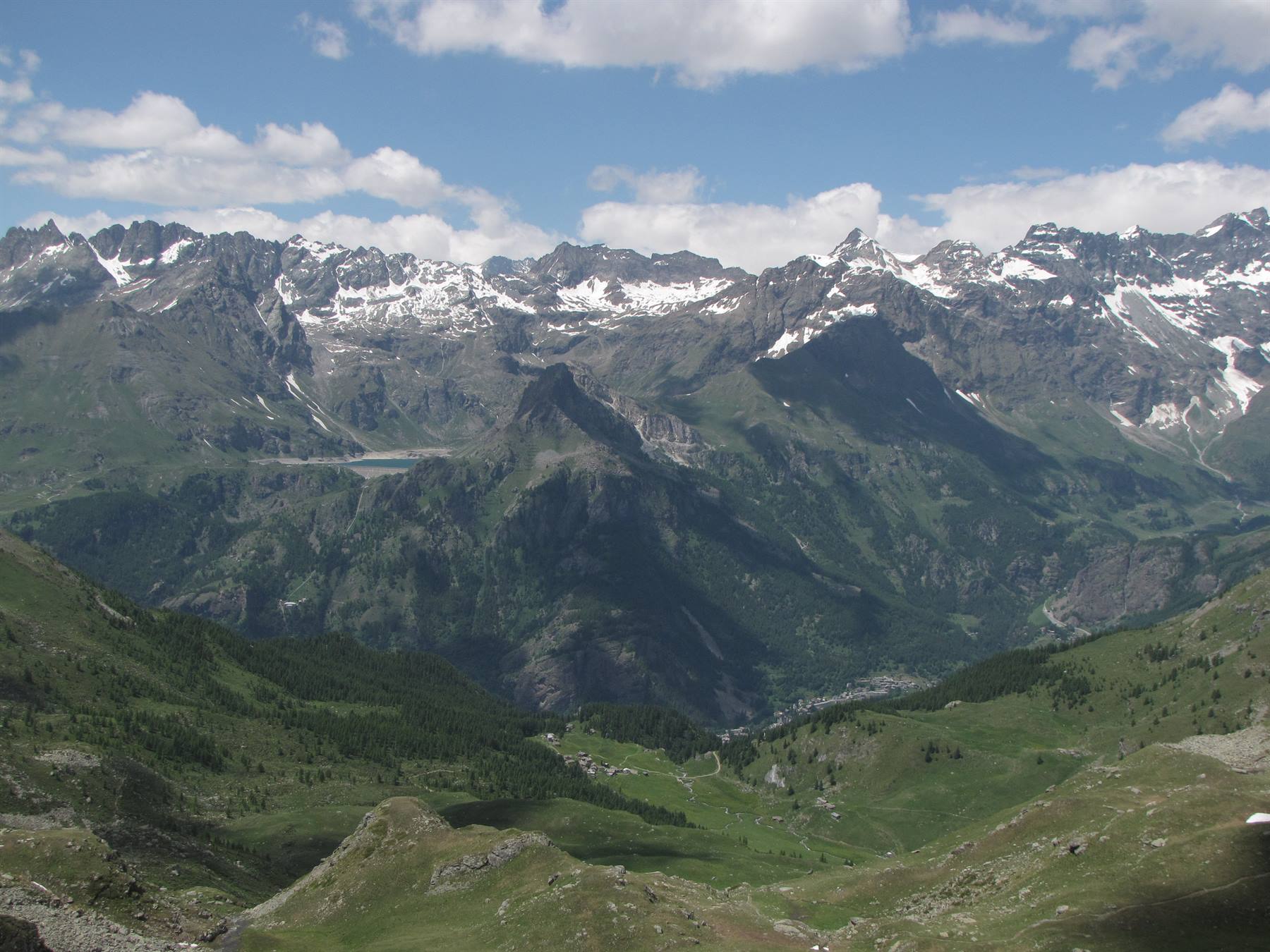
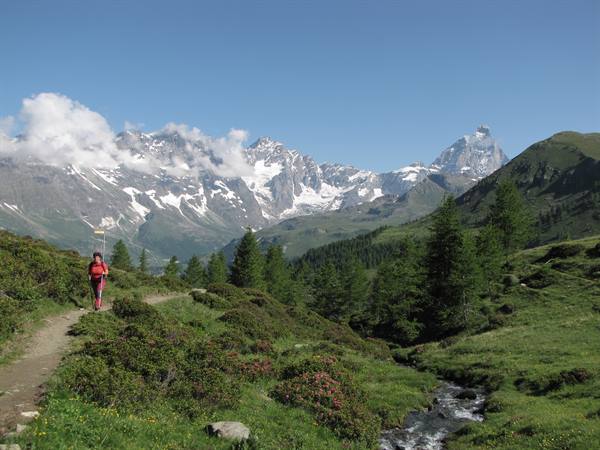
For today we have chosen to follow a trail in the beautiful Ayas Valley, certainly one of the most suggestive valleys of the Aosta Valley.
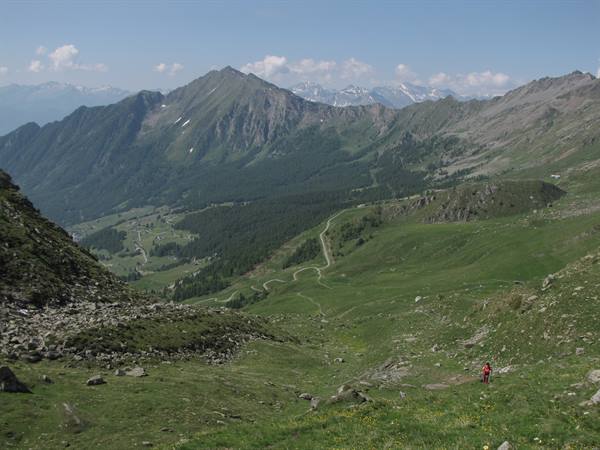
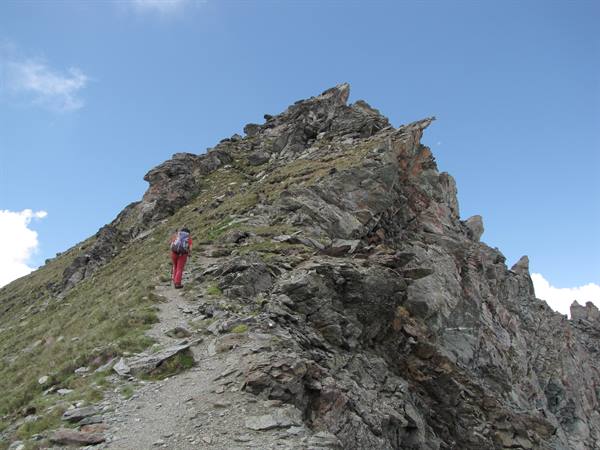
We drive to Mandriou, where the trail to the Vascoccia Pass begins (trail marker no. 3). From the pass I continue toward Mount Facciabella from which you enjoy a beautiful view, while Marco quickly climbs the SE ridge of the Bec de Nana. Lucky I didn't go with him because there were some climbing passages that perhaps weren't quite within my ability. We meet back at the pass, have a quick lunch and, given the gathering clouds that smell of a storm, quickly descend back to our car.
Since there's still time we decide to continue with our cultural visits. The Issogne and Verres castles await us. Just to continue drawing a parallel, the pomegranate fountain of the Issogne Castle is the one from which they drew inspiration for the creation of the one in the castle of the Medieval Village of Turin. It is indeed very beautiful. This castle too is not in a strategic position; in fact its construction and use were not for defensive purposes but purely residential for the then lords of the Aosta Valley, the Challant. The interiors are very beautiful as are the frescoes under the portico. We must thank, if today we can visit these places, a Turin painter passionate about the Middle Ages: Vittorio Avondo. At the death of the last member of the Challant family, which occurred in 1804, the castle had already been abandoned for some time, marking its slow decline.
In 1872 Avondo bought the castle, thus starting its renovation, trying to reacquire the manor's original furnishings. Later he gifted the castle to the Aosta Valley Region which completed the restorations and opened it to the public. The visit inside the castle is guided and lasts about half an hour (admission 5.00 full and 3.5 with the Piedmont Region museum card).
Having left Issogne, we go to visit the Verres castle. This one, instead, is placed on the summit of a cliff, in a very strategic position: it dominates the valley from above, both the Aosta Valley and the entrance to the Ayas Valley. Its construction in its current form is owed to Ibleto di Challant who wanted to create a residence worthy of his power and prestige. What a presumptuous man! The Verres castle, unlike many other Aosta Valley castles that are an aggregation of different buildings, is built in a single block. A certain Edmondo Aubert called it the most beautiful monument of the feudal age of the Aosta Valley. Its imposingness and its strength are certainly impressive. Currently the castle, completely bare, is used for the celebrations of the Historic Carnival of Verres.
The castle has been restored to bring it, almost, back to its initial splendor; already in the nineteenth century the castle had been in a state of abandonment for at least two centuries and the roof, partly already collapsed, was subsequently made to collapse entirely with the aim of not having to pay the state fee. And in this case too, as for the castles of Issogne and Fenis, for the restoration and recovery of these important works we must thank a group of Piedmontese intellectuals united by their passion for the Middle Ages. In this case too the visit is guided and lasts about half an hour (admission 3.00 full and 2.5 with the Piedmont Region museum card).
On a wall in front of the parking lot of the Verres castle we find a sign for a trattoria that offers, at truly interesting prices, a Valle d'Aosta tourist menu and the Valle d'Aosta merenda-sinoira (11.00 and 12.00 € each). Curious, we decide to go see what this trattoria Omens in the homonymous hamlet of Omens di Verres is like. What can I say... we left with our bellies completely full and we ate wonderfully. The place isn't exactly a stone's throw from the center but it must be very well known and appreciated because when we left it was full of people. As I said, the food was spectacular, it's definitely a place to recommend.
11-12 July
Day 35 Jul 2010
This morning we manage to get breakfast at 7:30 (but at 6 we are woken anyway by the usual clatter of pots and the starting up of the dishwasher). The tour we chose today is in the Valtournenche.
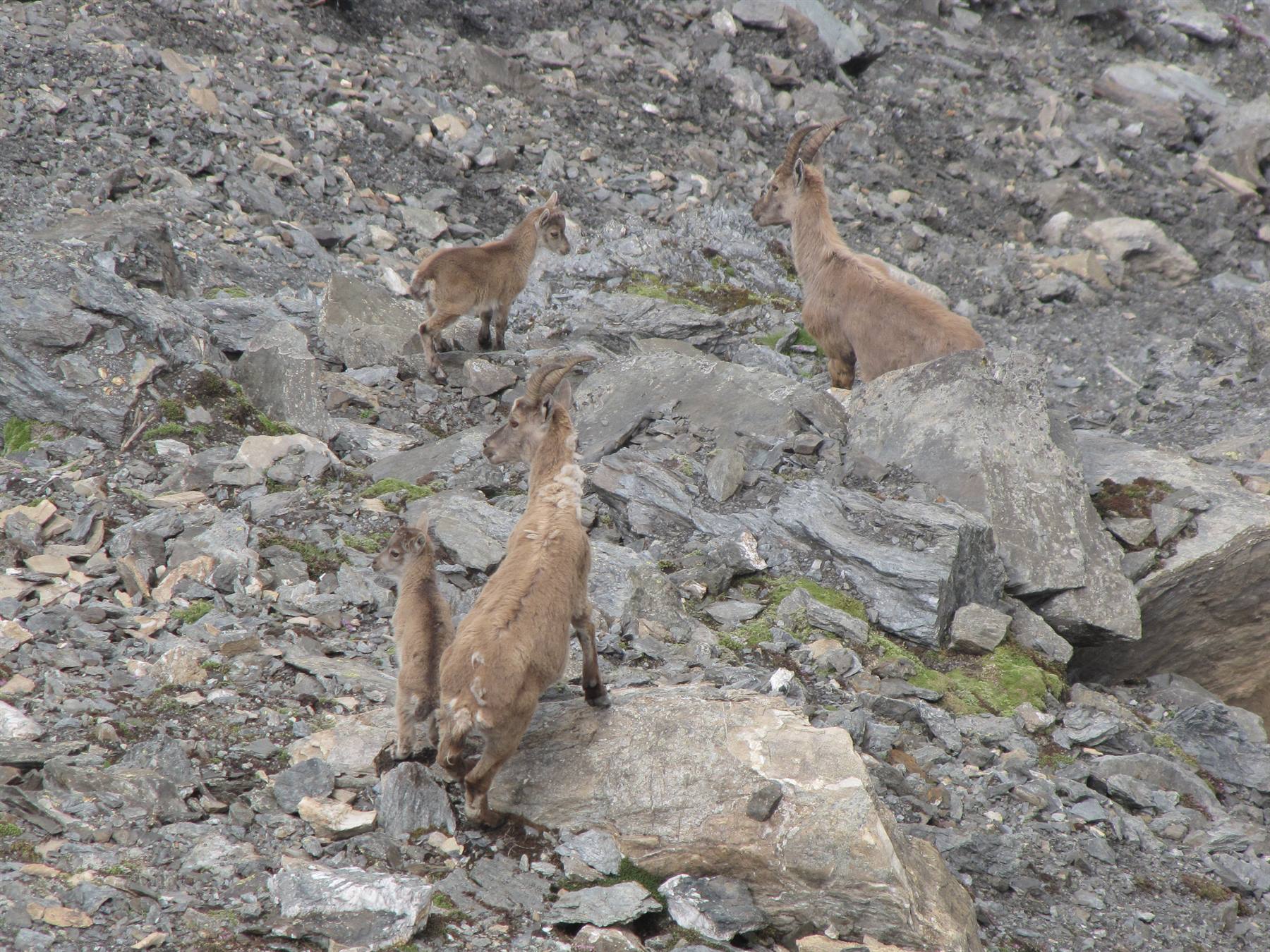
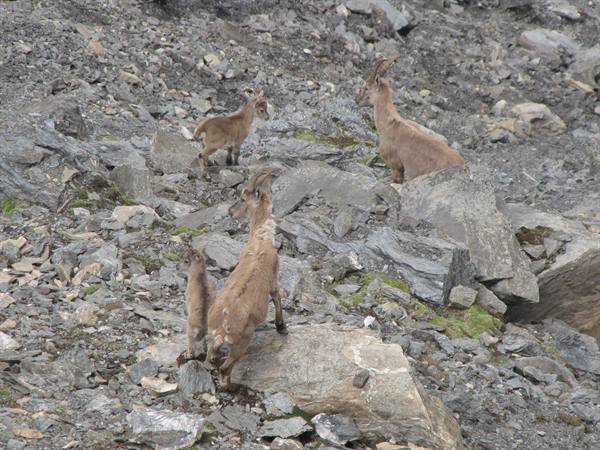
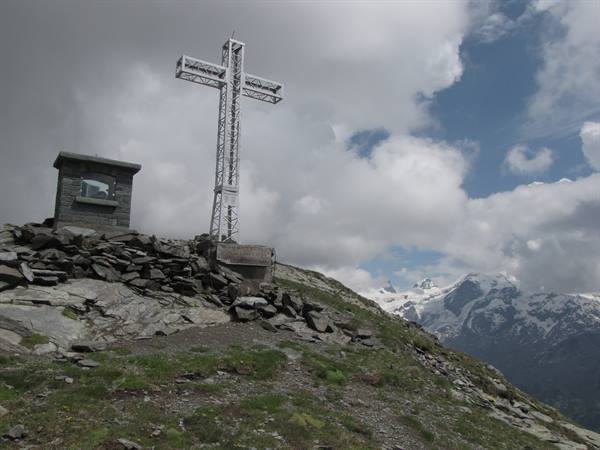
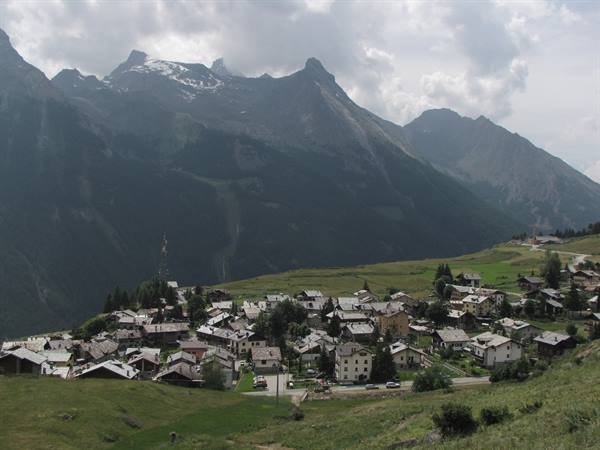
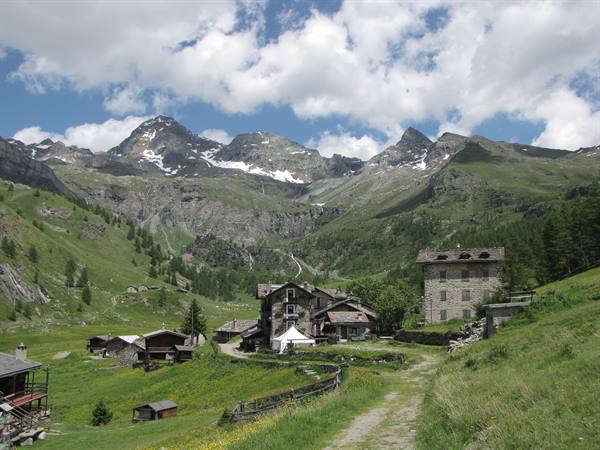
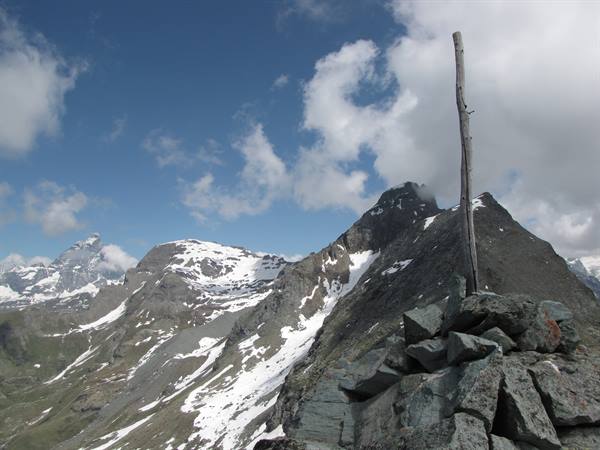
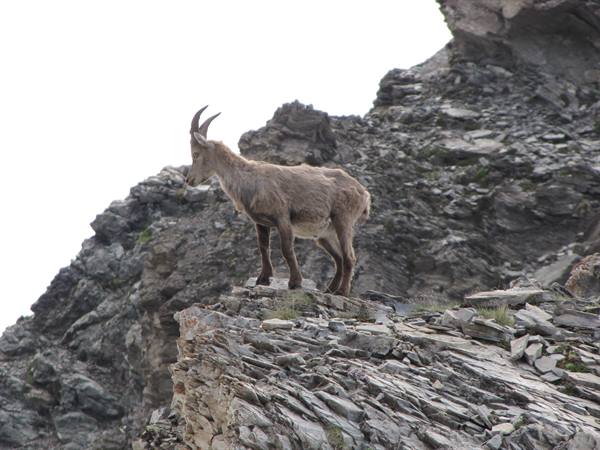
An extremely long and tiring excursion but highly rewarding! We leave the car at an altitude of 2023 in the parking lot at Barmaz. From here we reach the nearby village of Cheneil. Suggestive, immersed in greenery among the mountains, it really brings to mind Heidi and her world! From here we continue to the Croux (or des Fontaines) pass at 2696 m and I discover that the trail descends!!! Nooooo.... We continue... and after descending for about fifty meters (not many but it's always 50 too many!!!) it climbs back up to the Nana pass. From here we continue along the east ridge, which looks arduous and difficult and instead is nothing much at all, and we arrive at the top of the Becca Trècare at about 2950 meters! Wow! Beautiful view! On the way down we encounter the ibexes grazing just below the summit.
It's lovely to have lunch with the ibexes not far from us! We descend along the same trail we climbed and once we reach our car all that's left is to head home! And for this long weekend that's everything.
11-12 July
Day 411 Jul 2010
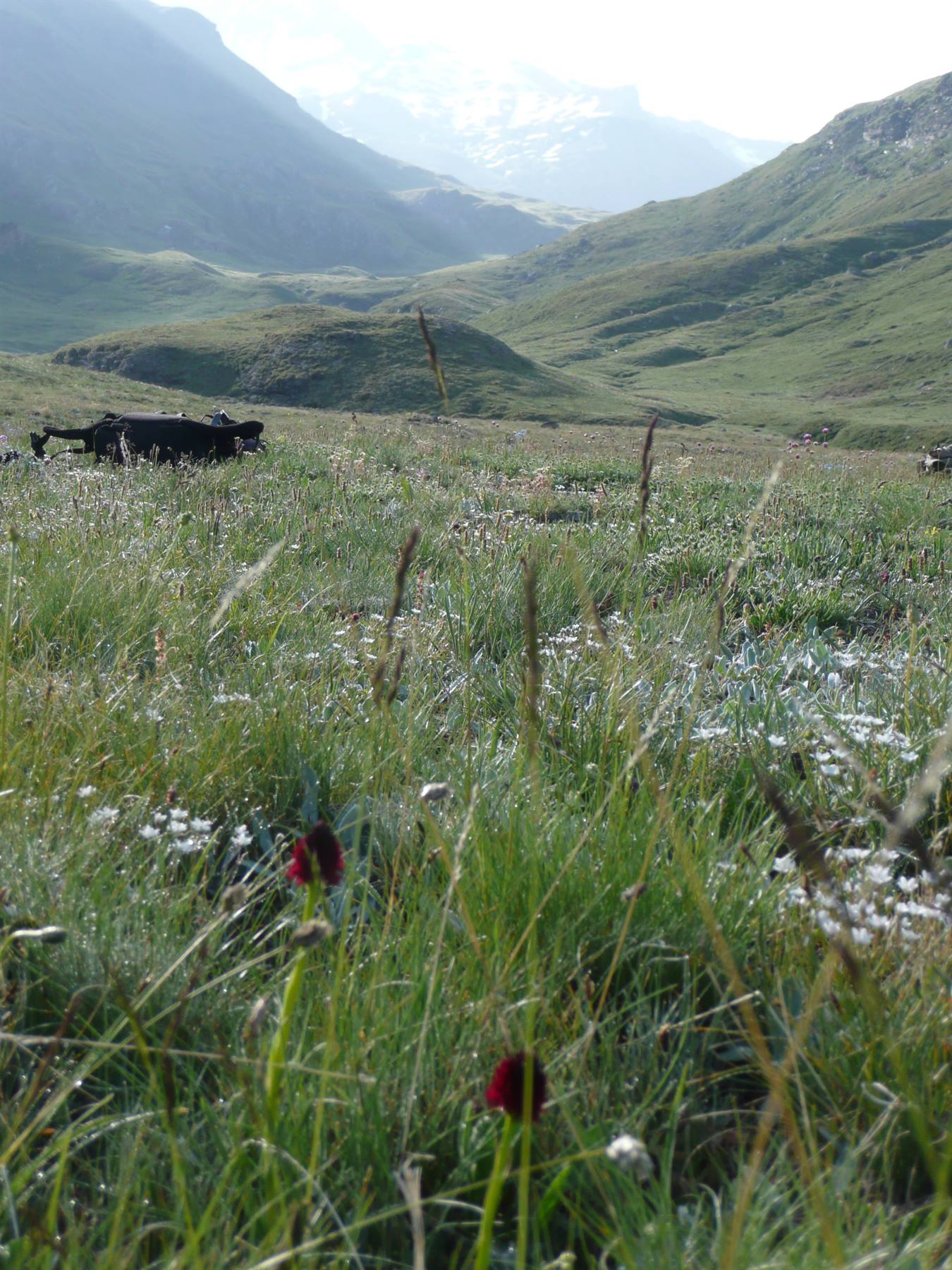
This weekend, as I said at the start, we will stay overnight in a tent, with our little trekking tent in the middle of nowhere. I absolutely love sleeping in a tent in the mountains. When evening falls and silence envelops everything I love to look around and savor that silence, savor the rustle of the wind on the grass, the sound of flowing water, I love listening to the silence.
Before starting our trekking we stop to see the Royal Castle of Sarre which dominates the entrance to the upper valley. Important and well narrated in the manor is the era in which the castle was 'elected' as a hunting residence by Victor Emmanuel II and then by Umberto I of Savoy. Purchased in 1869 by Victor Emmanuel II precisely to make it a hunting manor. His passion for ibex hunting is known to all. A passion that almost led the species to extinction. The two halls decorated with ibex and chamois horns are impressive. There are an enormous number of them and they were used as decorative elements of the rooms to create patterns. The visit to the castle is guided and lasts about half an hour (admission 5.00 full and 3.50 with the Piedmont Region museum card).
Having finished the visit we head toward Cogne, a beautiful locality in the heart of the Gran Paradiso park. We leave our car at Gimillan, a hamlet a little above Cogne.
We set off, backpacks on our shoulders, in the afternoon. The sun is very hot, I don't remember ever suffering so much heat while walking. I don't know if today is particularly hot, or what, but in some stretches I really felt like I was being cooked! Fortunately once we arrived at.. a light mountain breeze made the rest of the walk much less hot.
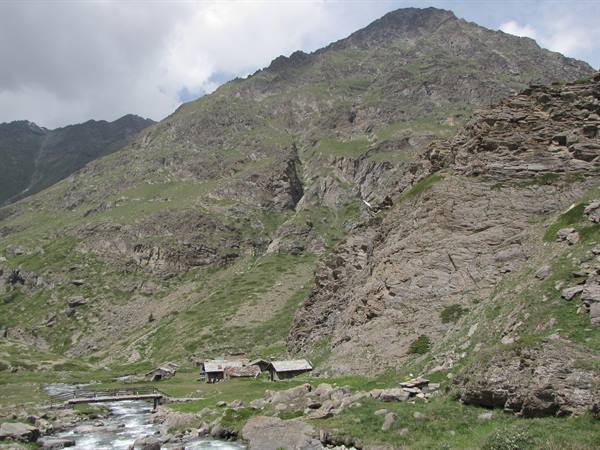
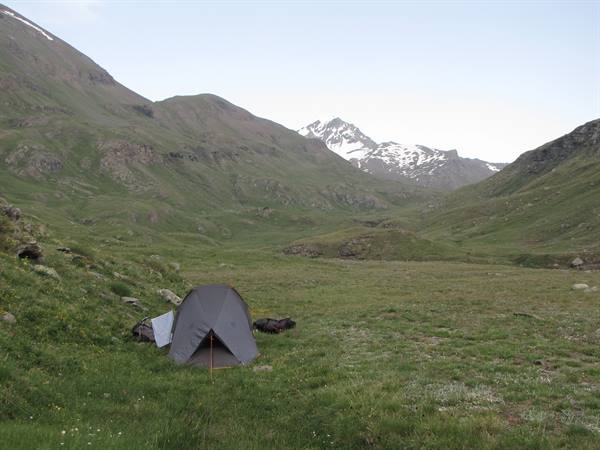
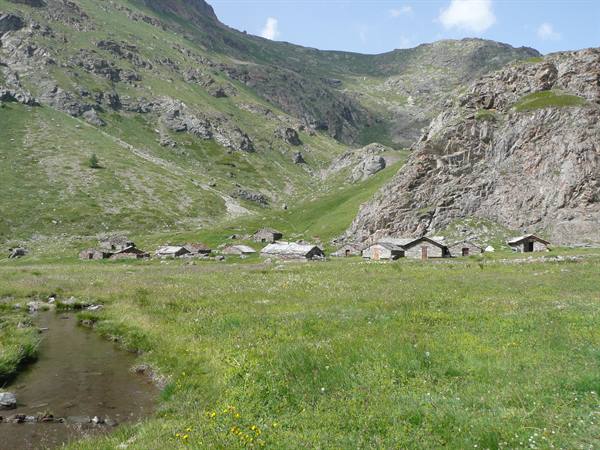
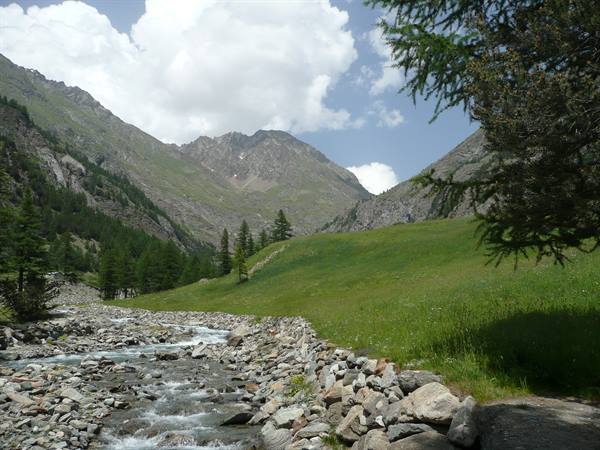
This valley is very beautiful, suggestive. A little beyond the Alpe Prolognan we look for a quiet little spot to pitch our tent and settle in for the evening. This kind of camping I really love. Contact with nature, being far from the world, even if it's just around the corner, in these moments it seems very far away. It's a beautiful experience that everyone should have at least once in their life! To hell with the comforts, the luxurious rooms, the phones, the televisions, to hell with everything... every now and then you have to live, even if only for a little while, in contact with the earth, with nature, with what we are a part of, so as not to forget that we are only a part of it, that we are only a tiny particle in the immensity of this world.
5 July
Day 512 Jul 2010
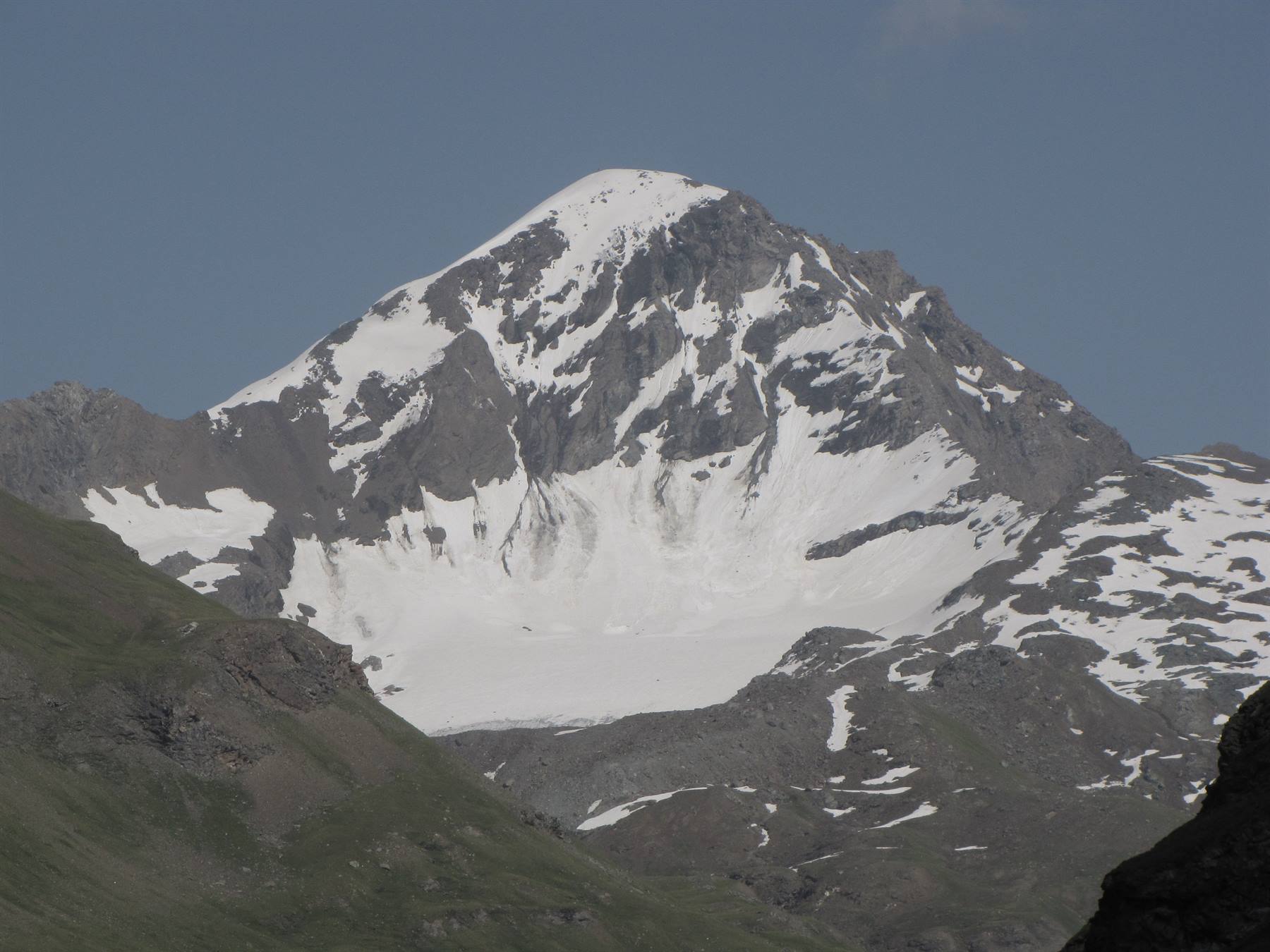
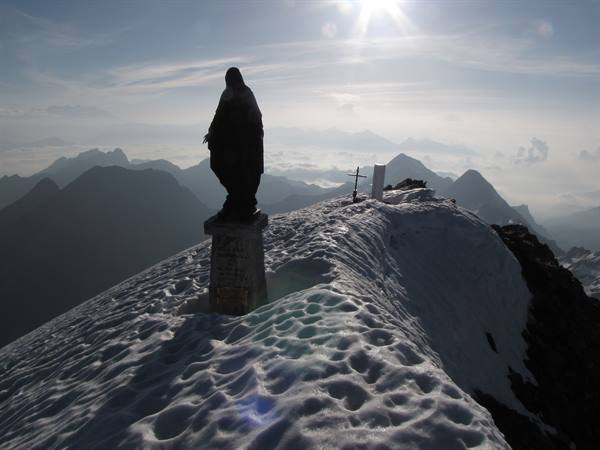
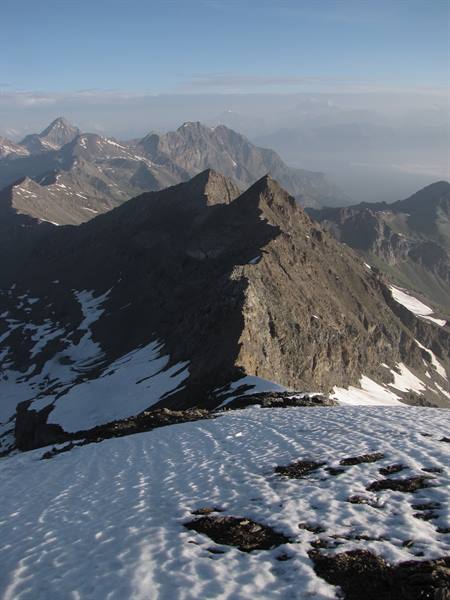
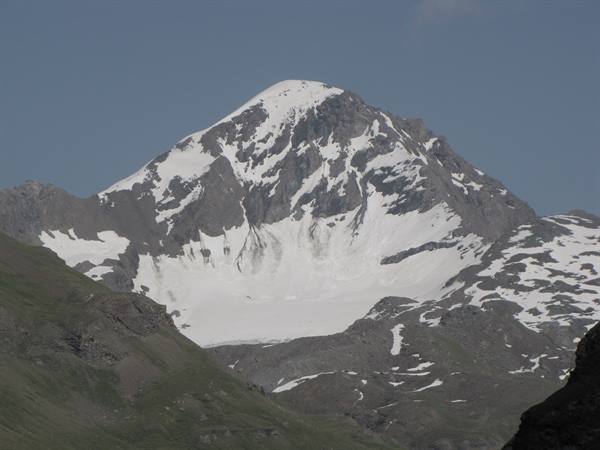
Marco wakes up first because he is determined to reach the summit of Mount Tersiva (3,512 m), so at 4:30 his alarm goes off. While I stay sleeping he sets off and thus reaches the summit of this mountain in the morning.
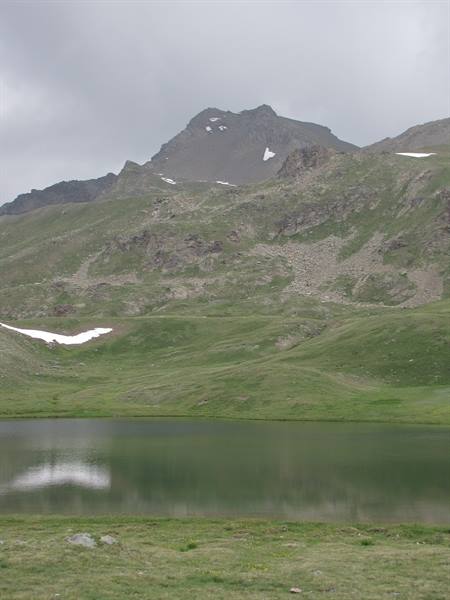
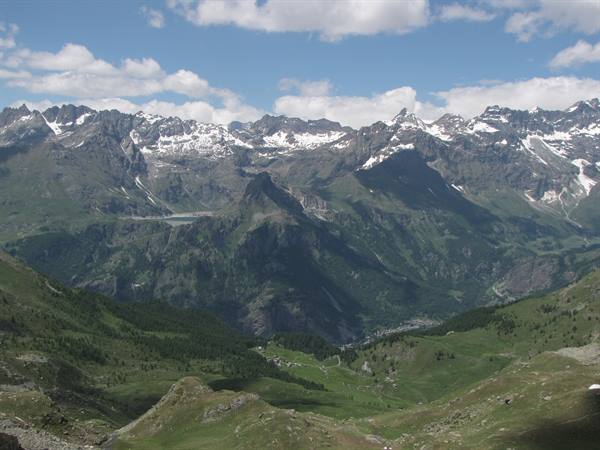
Later I wake up too and prepare all our things, so when Marco rejoins me in the middle of the morning, after having a little snack, we get ready and, backpacks on our shoulders, we continue our little tour. He isn't fully satisfied with his outing because the weather wasn't the best and the snow, which wasn't the best either yet. We set off toward the upper Alpe Grauson to do the lakes circuit. The day, however, turns bad immediately but we decide to do our circuit to the Corona and Lower Lussert lakes anyway.
The weather keeps getting worse as we climb, so much so that at a certain point it even starts to rain; we continue, armed with everything necessary not to get drenched; but finally it stops raining and we can have lunch. After lunch we head back toward Gimillan and from there the return route to our car.
A nice outing, I really enjoyed it! Apart from the rain, of course...
And so this weekend too has come to an end. We spent two splendid weekends in this valley. A valley we know but never stop wanting to discover. A friend of mine from Treviso, some years ago, came to spend her vacation in the Aosta Valley and was simply fascinated and enchanted by it. When I told her I would be coming for these weekends she said to me "Say hello to the splendid Aosta Valley for me!" Au revoir, Aosta Valley...





0 reader comments