Three days discovering the Apuan Alps nature park.
It was still winter when Roberta proposed this itinerary to us, a short trek organised by the Ciaspole association, in the Apuan Alps. We immediately took an interest in this itinerary but, unfortunately, the dates don't suit Marco's work, so I decided to go on my own. On my own so to speak, because in the end there were 51 of us.
Day 111 Jun 2010
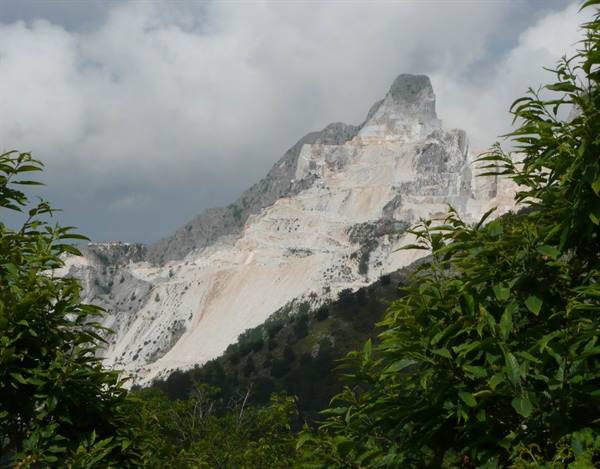
We leave at 7 in the morning heading for Levignani, where we arrive just before lunch. The day is sunny and pleasant, perhaps a touch hot for us who are used to the awful weather that has been hounding us for days now. Levigliani sits at an altitude of 650 meters, in a particular position at the foot of the Corchia, immersed in the green of the chestnut woods. Looking up toward the mountains we see the unmistakable marble quarries. As soon as we left the highway we had, in any case, a chance to come to grips with one of the main resources of this area. It is said that it was the Apuani, of clear Ligurian origin, who were the first to inhabit this territory, even before it became a Roman possession.
After lunch we split into two groups so we can visit the tourist caves of the Antro del Corchia. These caves, roughly 60 kilometers of galleries and shafts, are located in what can be described as the largest karst system currently known in Italy: the massif of Mount Corchia. Because of the presence of all these galleries and caves, Mount Corchia is also called "The Hollow Mountain." Since 2001 a route of about 2 km has been set up, with walkways and steps, to allow tourist use of the area, and this is the route that we too, accompanied by a guide, will follow inside this fantastic underground world. Our guide is very sharp and the visit, besides being interesting, is also very enjoyable.
When the guide is dull it amounts to a list of facts and information that the poor tourist listens to while yawning, but if the guide is sharp, as in this case, the same facts and information are absorbed by the tourist with immense pleasure and even with a bit of greed for what he is told.
From the village of Levigliani we take the shuttle bus that brings us to the entrance of the Antro and after putting on a sweater, inside the cave the temperatures hover around 6-7 degrees, and setting down our backpacks we are ready to follow the guide along the galleries and the wonders of this place. The first to explore the Antro del Corchia was a certain Emilio Simi, a naturalist originally from Levigliani itself, in 1840. Stalactites, stalagmites, columns, even a little lake, are an example of the wonders our eyes encounter as we make our way into the cave. The best part, in my opinion, is without a doubt the loop we walk about halfway through. Spectacular!
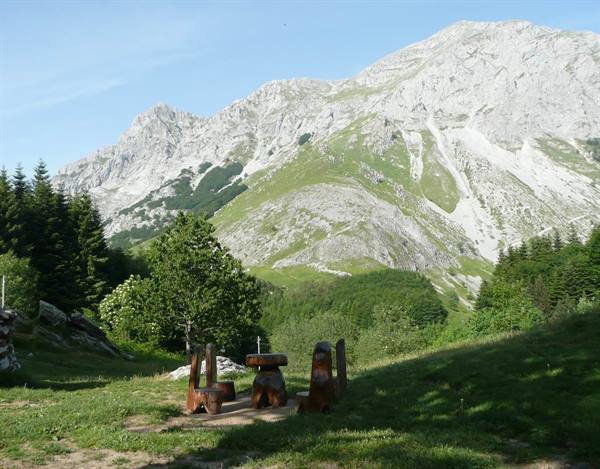
Once out of the caves we get ready for the climb to the refuge. The sun is really hot. We take the nearby trail that climbs zigzagging up the mountain. The heat is perhaps the worst aspect of this climb. Once we reach the Alpino pass (1,080 m) we immediately enjoy a fine view of what will be, in part, our itinerary for tomorrow: Monte Forato, Nona, Procinto. The day is splendid and the view is very beautiful. We continue our walk and arrive in the Mosceta valley where the Del Freo refuge (1,180 m) is located, where we will spend the night. From the caves you reach the refuge in a little under an hour. Not far from the refuge there is a fountain, which given the heat is taken by storm. There are also three cats wandering undisturbed among the people. They are nice and chubby!
We wait for the arrival of the second group to proceed with the assignment of the rooms. An arduous task for poor Walter who, standing in front of the entrance, tries to distribute the rooms while trying not to wrong anyone and trying to get all these good heads to agree. In all this commotion, Roberta, Fabrizio, Paola and I end up with the only small four-person room.
Time to get everyone settled in the rooms, to make the beds, and it's also time for dinner. On these occasions the meal times are always pleasant moments, of socializing, chatting, and also a way to get to know each other better. The dinner was excellent and plentiful. The pasta with Genoese pesto was spectacular! We end the dinner with a fantastic tart filled with chocolate and ricotta which, once at home, I promise myself I'll make too!
After dinner the group moves to the refuge courtyard, some sitting on the benches, some on the steps or some standing, and we spend what's left of this evening waiting to go to bed. At 10 p.m. the refuge lights are turned off, but given the long walk tomorrow it's not a good idea to stay up late. A small group decides to take a short walk in the direction of Monte Corchia.
Sleeping in refuges, who knows why, is never a great pleasure. It always happens that whoever snores falls asleep immediately and strangely also sleeps heavily. The poor light sleepers, including yours truly, are always the ones who stay awake because they can't fall asleep with the little concert produced by all the others. It is never easy to share a room among so many people, everyone's needs and habits don't always agree, what I think one should do on these occasions is try to adapt a bit to others too, perhaps setting aside selfishness or personal needs. At 10 p.m. the lights are turned off and in no time silence envelops the refuge, most of the group is now in bed, as are Paola and I, who can easily fall asleep.
Later Fabrizio and Roberta come back from their evening walk and even though they try to be quiet, the small noises of doors opening, whispers, the typical sound of hinges, bags, or just walking on the wooden floor wake me up. They also decide to make a change to the room's furnishings by moving the beds... huh...
Apuan Alps
Day 212 Jun 2010
Today is a demanding day. Wake up early, breakfast and departure at 7:30, this is the program for the start of the day. As soon as I wake up I quickly gather my things and decide to go arrange my backpack outside the refuge on a bench. The room is very small and there's already enough chaos and stuff scattered around that it's not worth adding to the confusion with my things too. Better the benches outside. While I'm arranging my backpack one of the big kitties, specifically a big female cat, of the refuge settles down next to my backpack and watches my work. It's really a big beautiful cat, while I take a few photos it almost seems to pose as if it were a diva. Cute!
A hearty breakfast and by 7:30 we are all ready in the refuge courtyard with our backpacks on our shoulders. Ready... go! This morning, fortunately, Walter is at the head of the group, and from my point of view he has an excellent pace and above all he is steady and consistent. Good, good... Definitely better than yesterday afternoon when the leader started at a pace as if we were going to miss the train!
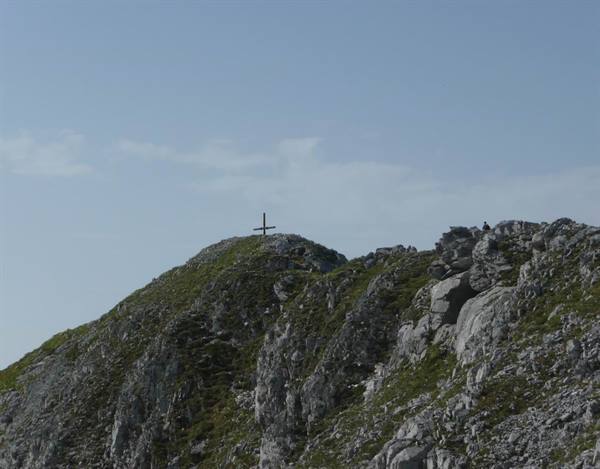
Our tour today begins with the climb up what is called the Queen of the Apuan Alps (some also call it the mother of the Apuan Alps), namely the Pania della Croce. From the refuge you can see its summit and the enormous cross placed on the top. The trail we follow climbs zigzagging on the western flank of the mountain. As we go up we encounter a group of mouflons (females and young), now and then some animal towers over the ridge. As in the Alps, the mouflons are not a native species but were introduced in past centuries. They are ungulates originally from Sardinia and Corsica. Introduced to the Alps and the Apuan Alps, they easily adapted even though the very snowy and harsh winters severely test these animals. They have a rather stocky body and a reddish-brown coloring, characteristic of this species.
Some people, seeing them, claim they are chamois, but the color and build are not at all similar to those of chamois and the females don't even bear horns. The males' horns resemble those of a ram and develop with this particular spiral shape throughout their lives. In the past these lands were inhabited by bears, wolves, lynxes and deer. Mammals no longer present in the park. As I said above, in the past mouflons were introduced as well as other species like wild goats, but of chamois there is not a trace. So anyone who claims they are chamois hasn't got it right at all! The alpine chough is the symbol of the park, but given my poor aptitude for recognizing birds, dictated by the fact that at home I can rely on my trusted wildlife expert, today I don't have much hope of managing to spot, or rather recognize, this bird. Too bad...
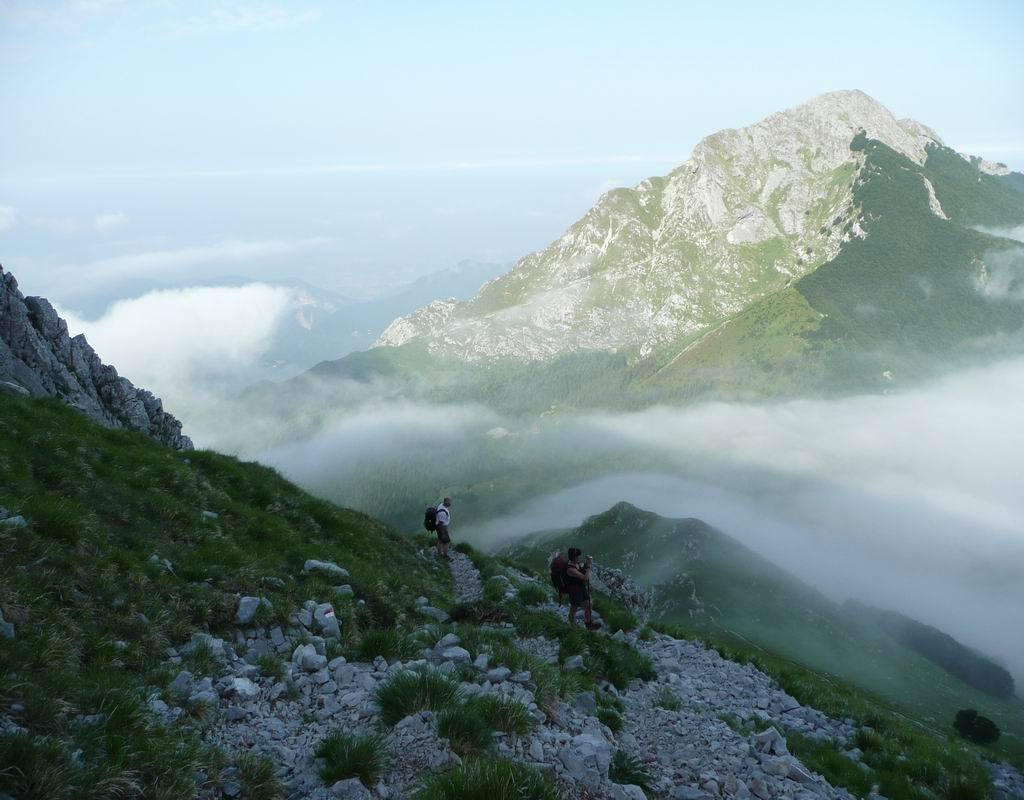
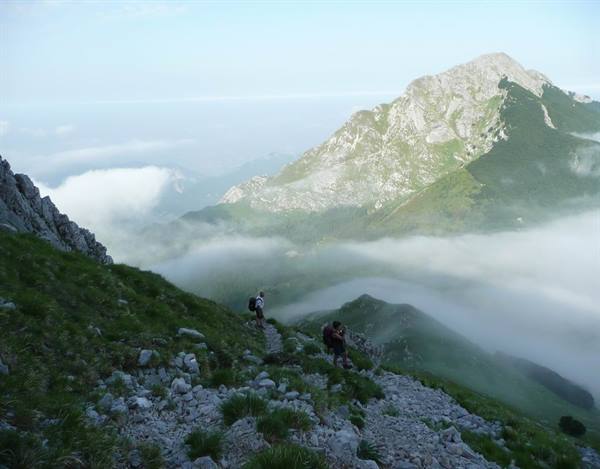
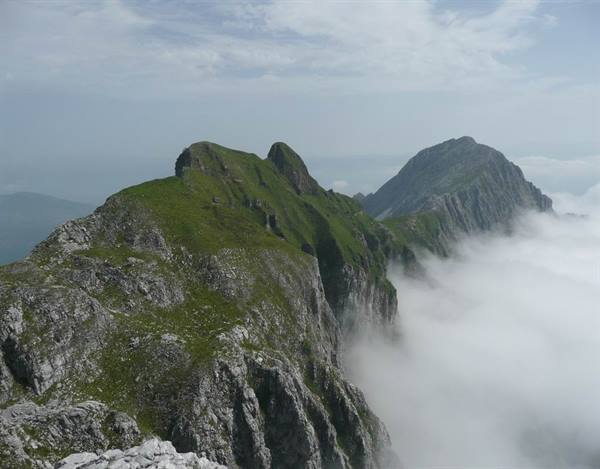
We take a break, for a few photos and to regroup the group a bit, scattered as it is over the whole mountainside, near the ridge on the false summit and then we continue toward the top. The trail is comfortable and panoramic, just the way I like it. Too bad the day isn't splendid out and the fog peeks out here and there, hiding the view. In any case, seeing the peaks emerge from the sea of fog is always a fascinating spectacle. So we reach the summit of the Pania della Croce (1,859 m). An enormous cross towers over the peak, that's why it was easily identifiable from a distance. The Pania della Croce is the fourth highest peak of the Apuan Alps.
We descend on the opposite side from the one we climbed, along a rather straight trail in the middle of a scree. We pass the junction toward the Rossi refuge (really nice) and continue on a gentle slope toward a small hill. Two points of the trail are equipped with chains to allow an easier passage, nothing difficult. Once past the first hill, what Walter had several times described to us as a very steep and nasty meadow awaits us... and indeed it is. Lucky there's fog so we can't see how long this descent is!!! The trail runs zigzag across this enormous, truly steep meadow. In a moment when the fog lifts we get a chance to see a group of animals, they look like mouflons, but they're far away and they run off immediately.
We stop near the foce di Valli to regroup the group that is scattered along the whole side of this steep big meadow. From here a trail, on a gentle slope, follows the whole ridge until it brings us to the foot of Monte Forato. The trail itself is unusual, at times it's a little more demanding because the ground is slippery and rocky, but overall it's a nice stretch of trail. It would be a beautiful balcony, too bad about the fog, otherwise it would have been very panoramic. But as they say... you can't have everything!!!
Monte Forato owes its name to the presence of a fine hole, which seen from a distance with the fog is a bit confusing. The hole is formed, topped by an enormous arch. It is truly suggestive, and the fog rising from the hole helps give charm to this particular place.
After eating our lunch we set off again. The trail still passes along the ridge and then leaves it on a little hill. From here the trail, a nice wide dirt trail, continues into the thick of the woods.
The mirage of a nice cool fountain makes us quicken our pace. Indeed the cool water is really pleasant after all these hours of walking. We realize we've quickened our pace when we don't see the rest of the group appear, and someone even wonders if they took a wrong turn somewhere, but then, after about twenty minutes, the others start showing up too.
Once back on the trail, another hour of walking awaits us. Arriving at Stazzema we cross through the village, in a typical summer heat, and finally reach our bus... finally...
By bus we cross the villages of Versilia, places that bring back to mind my summer vacations from when I was a child. Every year we spent 2-3 weeks camping in these places. The atmosphere is already vacation-like and the solitude of last night's refuge seems so far away, and it seems to me that since I was a child, although the world has moved on, little has changed. There are still the bathhouses along the road and the people coming and going spending their whole day on these sun-drenched beaches, there are still the pine woods and there are still the newsstands selling postcards, flip-flops and the usual beach things.
We stay overnight in a hostel near the sea and after taking a nice shower, while waiting for dinner time, Paola and I go to breathe a bit of sea air. Someone decides to take a swim too. For dinner we don't even have to move, in fact, a nice seafood dinner awaits us right in the hostel's restaurant. I'm not a fan of clams and their derivatives so I don't particularly appreciate it, but in any case the dinner was nice.
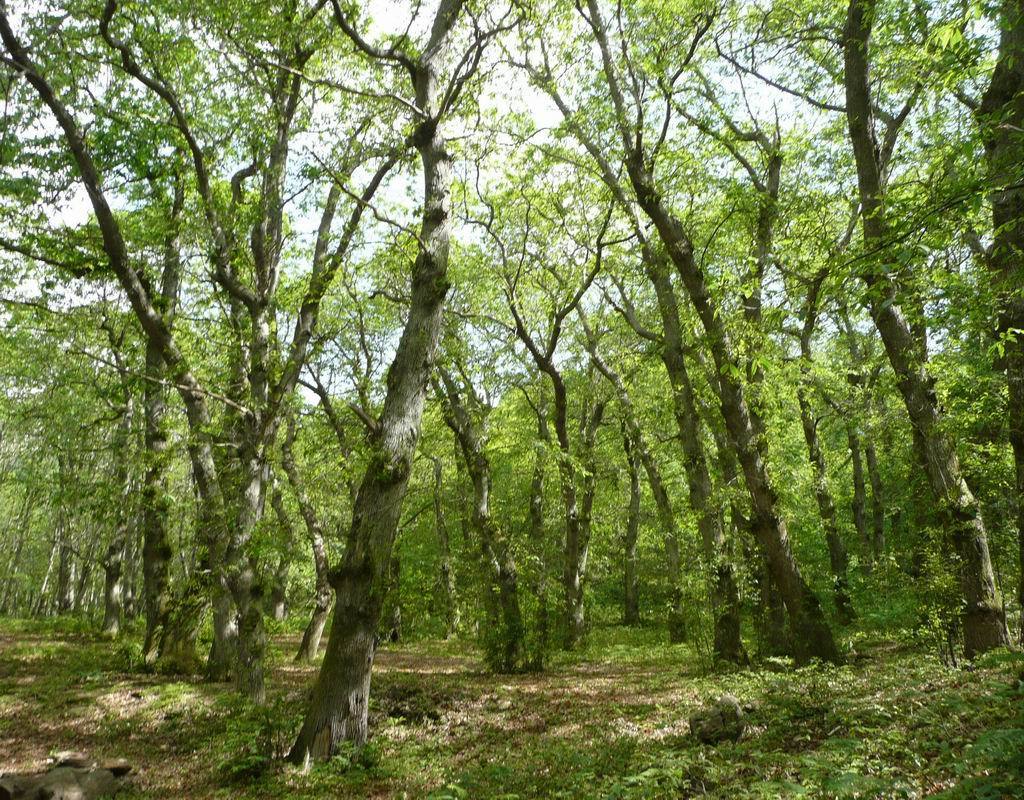
Chestnut groves near Colonnata
Day 313 Jun 2010
This morning's destination is the ancient village of Colonnata (523 m above sea level). Colonnata is part of the municipality of Carrara and lies on the slopes of the Apuan Alps in what is known as the Gioia basin, one of the major quarries producing in particular veined, arabesque and bardiglio marble. When you talk about Colonnata two things come to mind: lard and the quarries, and we will get to know both.
The origins of this village date back to around 40 BC, when a settlement arose to provide lodging for the slaves who were employed in the quarries. The origin of the name, according to some, derives from the Latin word columna, meaning column, which indicated the marble columns that were extracted here to be sent to Rome to decorate houses and palaces; according to others, however, it could be the fusion of two other Latin terms, collis or columen, meaning hill or summit. In short... an origin that is certainly Latin but with two different interpretations.
As in the past, even today the history of the village has always been characterized by the activity of the marble quarries. Marble that also finds use in the production of the famous lard. It is thought that pig farming was introduced by the Lombards and that the presence of rich chestnut woods certainly favored its development.
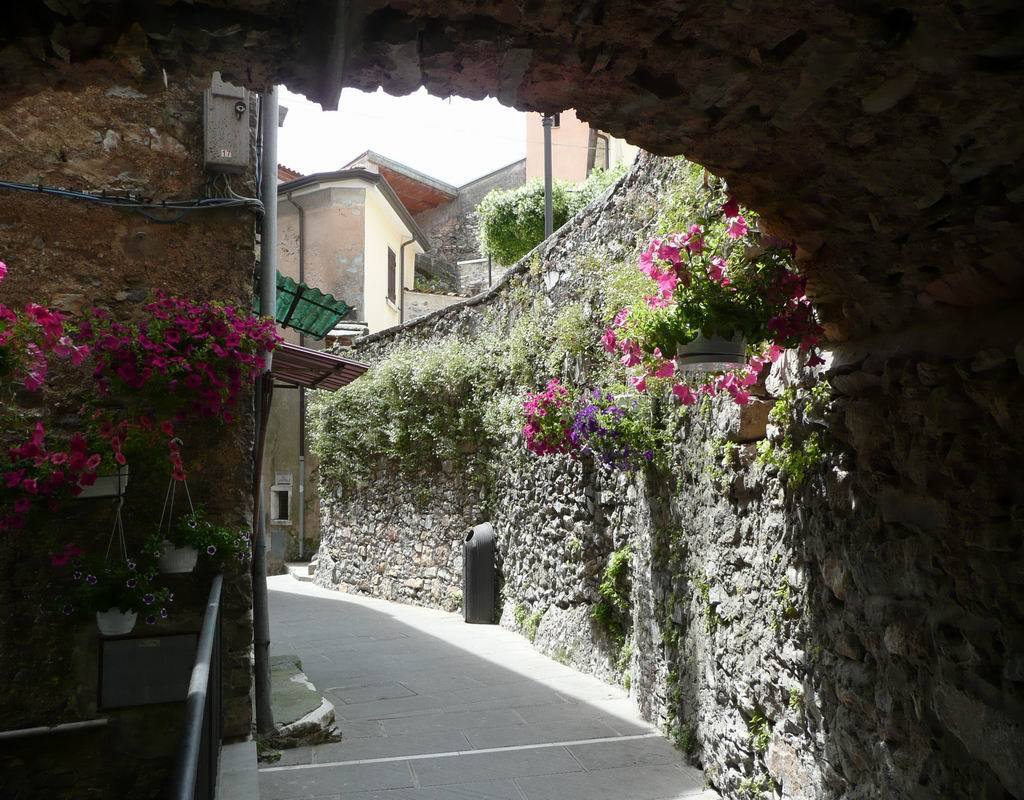
Two nature guides are waiting for us and will accompany us in discovering this area. The village has kept its original appearance, narrow stone alleys lined with stone houses. All very suggestive.
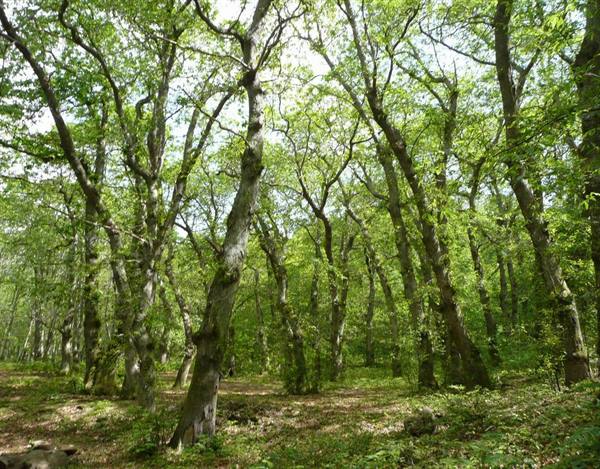
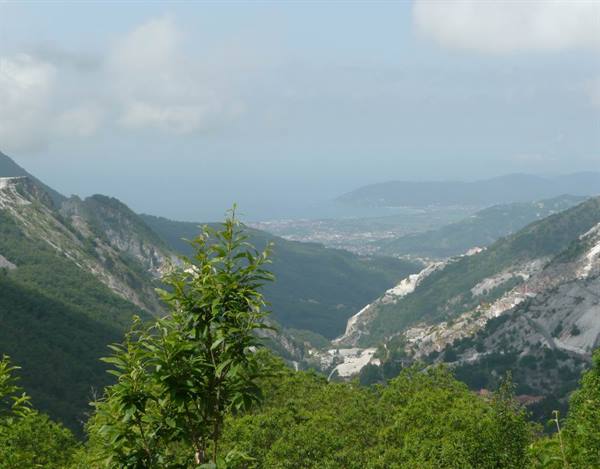
After crossing through the built-up area of Colonnata we leave it behind to follow a short trail that will take us to a panoramic point; the trail crosses a beautiful chestnut wood, some trees are truly imposing! From the panoramic point, the view that stretches as far as the sea lets us better see this area and its marble quarries. It's just really hot!
Once back down in the village, a nice lunch with cured meats and local products awaits us. The lard, served with flakes of dark chocolate, is the star dish of the lunch. The ancient tradition, which makes Colonnata lard a unique and exceptional product, dictates that the lard be placed, immediately after slaughter, to age in vats carved into blocks of marble. Each layer of lard is carefully sprinkled with salts and aromas. The lard remains in these vats or basins for about six months. It is said that this particular type of preparation gives it unique properties and characteristics.
After lunch, accompanied by another guide, very sharp and friendly, we go to discover the fascinating and harsh world of the marble quarries. It is thought that the quarries were already used during the Copper Age by the first inhabitants of these areas. They used marble to produce tools or decorative objects. It was only in Roman times that true quarrying activity began to develop. The white marble of these areas was an excellent element for adorning and embellishing Roman patrician homes. With the barbarian invasions the activity of marble extraction almost came to a halt, and it was again with the spread of Christianity, which required enormous quantities of marble to adorn and furnish religious buildings, that marble extraction resumed at full speed. Michelangelo, just to mention a very famous one, was only one of the artists who used this material in creating his works.
Even today marble extraction continues, and although the working conditions of the quarrymen are no longer the same as they once were, it remains nonetheless a very hard job that in the past killed many people. The conditions fortunately are no longer the same, today technology and progress allow the use of machines and equipment that didn't exist once, but despite this, there are some aspects of this world and this work that still maintain the harshness and the risk that this job entails. Most of the marble extracted today is exported or taken elsewhere for processing; a project is under study to ensure that most of the extracted product is processed in these areas and not taken elsewhere. In short, marble is a wealth that these areas must manage carefully and exploit in the best possible way.
We end our visit in front of a quarry. We still have time to buy, in the small shop across the way, a few souvenirs and then we resume our journey home. And so these three days too are about to end, this little trip too is about to close. It was a beautiful experience, a nice trip in a beautiful place together with many pleasant people.




0 reader comments